Hypoallergenic Mattress Guide for Better Sleep

Waking up congested in a clean-looking bedroom is a frustrating kind of mystery. The sheets are fresh, the room is tidy, and yet the nose is stuffy, the eyes itch, and sleep still feels rough. For a lot of families around Milwaukee, the mattress turns out to be part of the problem, because dust mites and other irritants can settle deep where a quick surface clean won't reach.
That's why the word hypoallergenic sounds reassuring, but also confusing. The term is not regulated, so manufacturers often use it to describe materials or construction that reduce exposure to common triggers rather than promise a clinical result. In other words, the label matters less than what the mattress is made of and how it's designed to stay cleaner over time.

A good place to start is the whole bedroom system, not just the bed itself. Covered bedding, moisture control, and regular washing all matter, and a mattress is only one piece of that bigger picture. For a practical home-cleaning companion, see these dust and allergen control tips for the bedroom.
By the end of this guide, readers will know what hypoallergenic mattress really means, which materials deserve attention, which labels are worth checking, and how to test a bed in person before bringing it home. That makes the search a lot less guessy, and a lot more useful.
What Hypoallergenic Really Means for Your Mattress
A mattress can be allergy-friendlier in two basic ways. First, it can be physically inhospitable to dust mites. Second, it can give off fewer chemical emissions that may bother sensitive lungs or skin.
That's a helpful way to think about it because the mattress is doing two jobs at once. It's not just a place to sleep, it's also a surface that can either shelter allergens or make them harder to settle in. A tightly woven cover works more like a rain jacket than a loose sweater, because it blocks more from getting through.
Practical rule: a mattress that resists dust mites and one that smells “clean” aren't always the same thing.
Dust mites are the dominant bedroom allergen, so the main job of a hypoallergenic mattress is to reduce their habitat, not to promise a magic allergy cure. That means shoppers should pay attention to the structure of the bed, the cover, and whether the design helps keep moisture and debris out. A mattress can be clean on the outside and still be a cozy home for triggers on the inside.
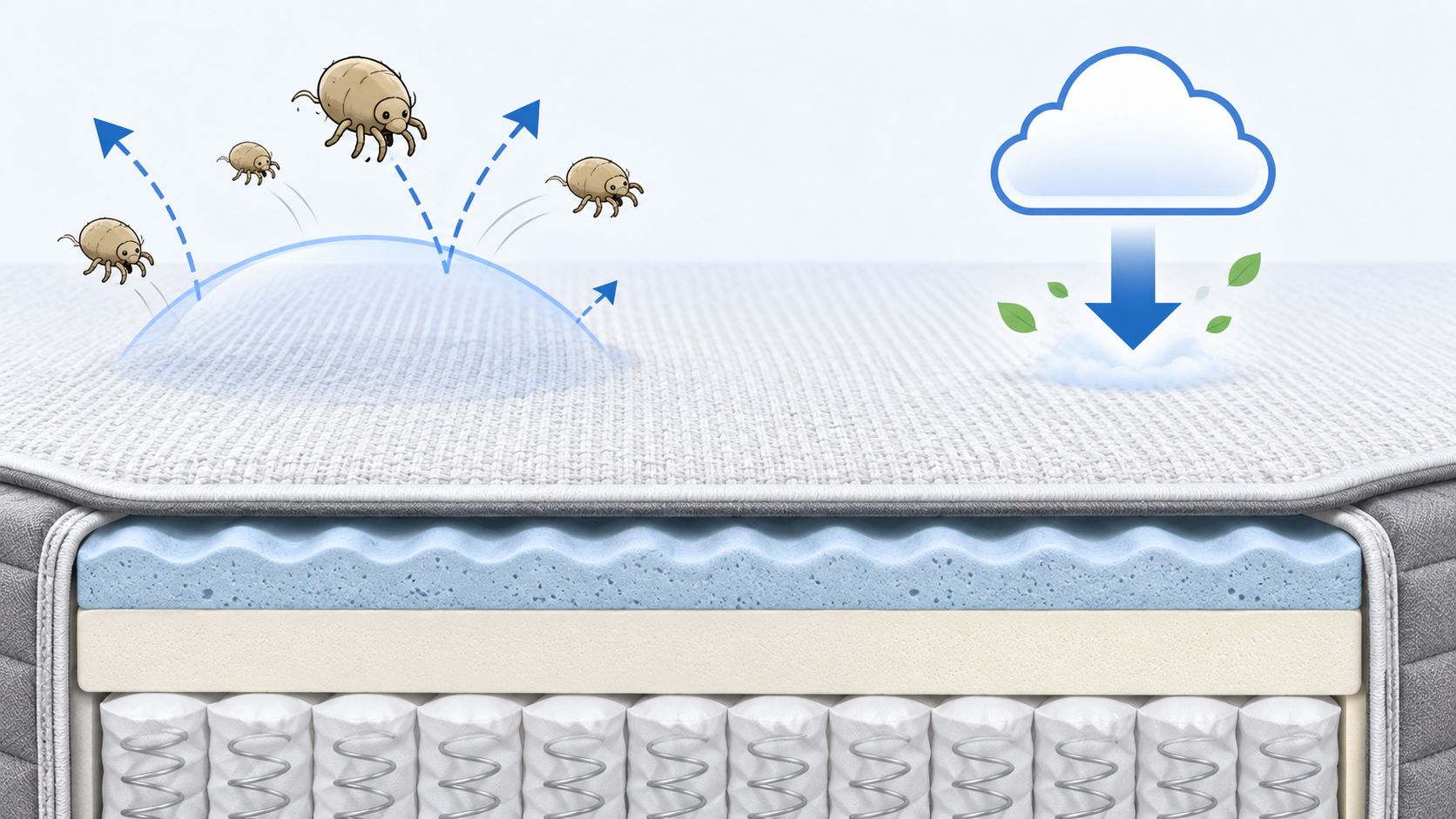
That's why the label alone doesn't tell the whole story. A buyer who understands the two mechanisms can ask sharper questions, compare options more calmly, and avoid paying extra for a word that sounds helpful but says very little by itself.
Common Allergens Lurking in Your Bed and Why They Thrive
A bedroom can look tidy and still hold the kinds of allergens that bother sensitive sleepers. Dust mites usually get the most attention, but pet dander, pollen, and moisture-related buildup can settle into bedding too. A mattress works a lot like a soft sponge with a long memory. Once warmth and humidity settle in, whatever lands there has a better chance of staying put.
The reason this matters is simple. Mattresses are one of the main places where dust-mite activity builds up, and research has found measurable mite levels in many U.S. mattresses. A review of mattress conditions also found that used mattresses can hold very large numbers of dust mites, while one study showed that mattresses without washable underblankets were more likely to exceed a proposed dust-mite risk level than mattresses with underblankets. Another analysis from CDC guidance on indoor allergens explains that dust mites grow best in warm, humid spaces, which is why bedding can become such a common trouble spot.
Why older mattresses become reservoirs
An older mattress has had more time to collect skin flakes, humidity, and settled debris. Over time, that turns the bed from a simple sleep surface into a place where allergens can gather. A mattress that seemed fine when it was newer can become a bigger trigger later, just because it has had more chances to trap what the room gives it.
Milwaukee weather makes that easier to understand. Dry stretches can make a mattress seem manageable, then heavier humidity can give mites and other allergens a better setting to settle in. That is why a smart allergy plan looks at the whole sleep space, not only the fabric on top.
The main idea is straightforward. A helpful setup has to deal with habitat, moisture, and cleanability together. If one of those pieces is missing, part of the problem is still there.
Allergy Friendly Materials and Construction Compared
Different mattress builds solve the allergy problem in different ways, and none of them solves every concern by itself. Natural latex is often considered because its dense structure can be less welcoming to mites. Memory foam tends to have fewer crevices than a more open build, and protected innerspring designs rely heavily on covers and barriers to keep allergens from settling in.
The controlled-clinical evidence behind covers matters here. In one evaluation, mattress covers produced a significant reduction in Der p 1 dust-mite allergen concentration after 1 year in the treated group, while the placebo group did not show a comparable change (source). That doesn't mean every cover works the same way, but it does show that construction and protection can change the allergen picture over time.
How common options compare
| Material Type | Why Allergy Sufferers Consider It | Care Considerations |
|---|---|---|
| Natural latex | Dense structure can be less hospitable to mites | Check whether the mattress uses a washable cover and whether latex suits the sleeper's sensitivity profile |
| Memory foam | Fewer gaps and a smoother core can help limit hiding spots | Look for low-emission materials and a cover that can be removed or protected |
| Protected innerspring | Works well when paired with a high-quality encasement and tight seams | Needs more attention to bedding hygiene and surface protection |
A removable, washable top gives the mattress a fighting chance because the surface can be cleaned instead of just admired.
Flip-able and two-sided designs also help because they spread wear more evenly and make airing out easier when the design allows it. That said, feel still matters. Some sleepers want a firmer surface, some want a contouring feel, and some want better temperature balance, so the best choice is the one that fits both comfort and maintenance.
For Milwaukee shoppers comparing builds in person, this latex-versus-memory-foam mattress guide can be a useful companion while they sort out feel, upkeep, and room for layered protection.
Certifications That Actually Matter When You Shop
Certification labels are useful because they turn vague promises into defined checks. A foam core, a fabric cover, and a finished mattress don't all need the same kind of testing, so shoppers should read the tags like a checklist rather than like a slogan. The right seal can tell you a mattress has been screened for something specific, while the wrong assumption can leave gaps.
The safest approach is to look for the actual certification name, not just the word hypoallergenic. A foam label doesn't tell the full story for the cover, and a textile label doesn't automatically tell the full story for the foam. That's why a layered approach makes more sense than chasing one magic badge.
- CertiPUR-US: useful for foam buyers who want a lower-emission starting point in the core.
- OEKO-TEX Standard 100: useful for textiles that have been screened for harmful substances.
- GREENGUARD: useful when low chemical emissions in indoor air are a concern.
Ask to see the certification tag on the floor model, then match it to the product details rather than trusting a loose claim on the sign.
Those certifications don't promise that a mattress will never trigger allergies. What they do is help narrow the risk. That's especially helpful for families who want a cleaner-feeling bedroom without turning shopping into a chemistry class.
Shoppers comparing American-made options can also ask a specialist to point out where the foam, cover, and stitching each fit into the certification picture. For a local example of where those conversations happen in one place, see BILTRITE's American-made mattress brand selection.
Keeping Your Mattress Fresh With Simple Care Habits
Buying the mattress is only half the job. The other half is keeping it inhospitable to mites and easy to live with, and that takes habits, not luck. Hypoallergenic covers and encasements can reduce dust-mite exposure, but they work best as part of a broader cleaning and moisture-control strategy, including hot-water washing and keeping bedding washable.
That matters because one layer of protection can't carry the whole load. The mattress cover helps, the sheets help, and moisture control helps, but the system only works when they're used together. In a humid stretch, that system matters even more because warmth plus moisture is exactly the kind of environment mites like.
A simple care rhythm that helps
- Wash bedding regularly: hot water helps, especially for sheets and pillow covers that can handle it.
- Use an encasement: a snug cover limits how much settles into the mattress itself.
- Keep things dry: humidity control helps reduce the microclimate mites prefer.
- Vacuum the room carefully: a HEPA filter is useful for keeping surface dust from cycling back into bedding.
- Rotate or flip when allowed: even wear and better airflow make maintenance easier.
Dry winter air and humid summer air call for different habits. In summer, the main job is moisture control. In winter, the focus shifts to keeping bedding clean and not over-layering the bed until it traps heat and moisture.
For a more detailed home-maintenance routine, these mattress cleaning and lifespan tips give a practical next step for keeping a bed in shape after purchase.
Your Milwaukee Buying Checklist and How to Test at BILTRITE
A smart shopper starts at home before heading to the showroom. The first questions are simple. Who's sleeping on the bed, what kind of allergies are involved, and does the room tend to run humid or dry? Those answers help narrow the search before anyone lies down on a floor model.
Then it's time to test for the details that matter. Edge support tells the sleeper how stable the bed feels when getting in and out. Cover feel matters because a rough or stiff encasement can be annoying long before it becomes a health issue. Compatibility with a protector also matters, because a mattress that fights the extra layer isn't much help in real life.
BILTRITE's mattress center gives Milwaukee shoppers a place to compare those details in person, with over 60 models and 500+ mattresses in stock at 5430 West Layton Avenue in Greenfield. The showroom team brings 400+ years of combined experience, and the store has been family-owned since 1928, so the advice comes from a long local history instead of a rushed sales pitch. BILTRITE also offers free white-glove delivery on qualifying purchases, old mattress removal in donatable condition, and select sets that include a protector or heavy-duty frame.
A showroom checklist worth using
- Feel the cover: check whether it's removable, washable, or tightly finished.
- Ask about construction: look for flip-able, two-sided, or encasement-friendly designs.
- Test the edges: sit, shift, and get up the way a real sleeper would.
- Look at the labels: ask staff to point out the exact certification names.
- Match the room: if the home runs humid, ask how the mattress design helps with moisture control.
For a step-by-step in-store routine, this mattress testing guide makes a useful companion before a final decision.
A few myths come up over and over. Does hypoallergenic mean allergy-proof? No, because no mattress can guarantee that. Does protection last forever? No, because covers, bedding habits, and room conditions all matter. Does durable mean harder to maintain? Not necessarily, because a well-built mattress can be easier to care for when the cover and core are designed together.
BILTRITE is closed on Sundays and Mondays so the family can have time together, and that family-first rhythm matches the way many shoppers want to buy, locally and with real guidance. Ready to compare a few options side by side? Come on down to the showroom in Greenfield and talk through what fits the room, the sleeper, and the allergy concerns.
BILTRITE Furniture-Leather-Mattresses offers a large in-stock mattress selection, helpful in-person guidance, and floor models you can test for comfort, cover feel, and support. If a hypoallergenic mattress is on the list, visit BILTRITE Furniture-Leather-Mattresses in Greenfield and let the team help narrow the choices the old-fashioned way, in person.