Latex vs Memory Foam Mattresses: Your Perfect Sleep Guide

A Milwaukee shopper usually starts this search the same way. They wake up stiff, kick off the blankets at 2 a.m., or feel their partner roll over and think, “This mattress isn't cutting it anymore.”
That's where the latex vs memory foam mattresses question gets real. It isn't about mattress jargon. It's about whether the next bed helps a busy family sleep cooler, move easier, and stop replacing a mattress sooner than expected.
Since 1928, BILTRITE has helped Metro Milwaukee families sort through choices like this in person, the old-fashioned way. As a 4th generation, family-owned business in Greenfield, the focus has always been simple. Help neighbors find comfort that fits their home, their body, and their budget. No pressure. No mystery. Just honest guidance from a team with over 400 years of combined experience and a mattress department with over 60 models to try.
Table of Contents
- Finding Better Sleep in Milwaukee
- A Quick Look at Latex vs Memory Foam
- The Feel Factor A Detailed Comparison
- Durability and Value The Long-Term Investment
- Health and Home Your Mattress Materials
- The BILTRITE Buyer's Checklist
- Frequently Asked Questions From Our Neighbors
Finding Better Sleep in Milwaukee
A lot of Milwaukee-area families walk into a mattress store after months of putting off the decision. The old mattress still “works,” technically. But backs ache in the morning, sleep gets lighter, and nobody feels rested.
That's usually how this conversation starts in Greenfield too. A couple comes in from Franklin, Oak Creek, Wauwatosa, or Bay View. One sleeper runs hot. The other wants pressure relief. One likes a bed with bounce, and the other wants that deep sink-in feel. They aren't looking for a lecture. They want someone to cut through the noise and tell them what makes sense.
Sleep problems are usually comfort problems
People often assume bad sleep is just part of getting older, handling stress, or juggling family life. Sometimes that's true. But a worn-out mattress can make everything worse. It can hold heat, lose support, and turn bedtime into a nightly wrestling match.
That's why the latex vs memory foam mattresses debate matters so much. These two materials feel different, wear differently, and fit different kinds of sleepers.
A mattress decision is personal. The right answer for one Milwaukee household can be the wrong answer for the next one.
Why local guidance still matters
Online descriptions can only go so far. “Responsive.” “Contour.” “Cooling.” Those words sound helpful until a shopper lies down and realizes one bed feels springy and easy to move on, while another feels slow and cushioned.
That hands-on difference matters, especially when a family is spending real money on something they'll use every night. BILTRITE has been part of the Metro Milwaukee community since 1928, and that long history shows up in the way the mattress department operates. The goal isn't to rush anyone through. It's to help people compare, test, and narrow it down properly.
For shoppers who want direct advice, here it is. Latex is usually the smarter choice for durability, cooler sleep, and long-term value. Memory foam is usually the stronger pick for that deep body-hugging feel and strong motion control. Shoppers often decide fast once they feel both in person.
A Quick Look at Latex vs Memory Foam
A lot of Milwaukee shoppers walk into BILTRITE thinking they need more time to sort this out. Usually, they need a clearer starting point.
Here it is.
| Feature | Latex Mattress | Memory Foam Mattress |
|---|---|---|
| Feel | Responsive, buoyant, lightly contouring | Deep contouring, slower response, closer body hug |
| Ease of movement | Easier to turn and change positions | More sink, often harder to move on |
| Temperature | Usually sleeps cooler and more neutral | Often holds more heat, though some cooling models help |
| Lifespan | Often lasts longer | Often wears out sooner |
| Upfront price | Higher in many cases | Lower in many cases |
| Long-term value | Strong pick for shoppers who want longer use | Better for lower upfront spend, but replacement may come sooner |
| Best fit for | Hot sleepers, combination sleepers, shoppers focused on longevity | Sleepers who want deeper cushioning and stronger motion control |
That table handles the first cut. It helps you rule out what does not fit before you spend half an afternoon second-guessing every mattress on the floor.
The fast takeaway
Latex feels lighter, springier, and easier to live with night after night. Memory foam feels slower, softer, and more body-hugging.
That difference gets obvious fast in-store. A shopper lies on one bed and feels lifted. Then they try another and notice their shoulders and hips sink in more. Neither feel is wrong. One is usually a much better match.
If you want a little more background before testing beds, this guide on what a latex mattress is and how it performs in everyday use is a helpful place to start.
The advice we give neighbors every day
Start with sleep habits, not marketing terms or a sale tag.
- Choose latex if you want easier movement, cooler sleep, and a mattress that usually holds up better over time.
- Choose memory foam if you want more contouring around pressure points and less motion transfer from a partner.
- Test both in person if two sleepers want different things. That is where BILTRITE helps most. You can compare real models, including USA-made and flip-able options, and get direct advice from someone who has helped Milwaukee families make this choice for years.
Practical rule: If a mattress feels comfortable at first but makes you work to roll over, pay attention to that. It matters more at 2 a.m. than it does in a showroom for 30 seconds.
The Feel Factor A Detailed Comparison
A lot of Milwaukee shoppers settle this decision in the first five minutes on the floor. One mattress lets you roll onto your side and back without effort. The other slowly shapes around you and holds you there a bit more. You feel the difference right away.
How latex feels on the body
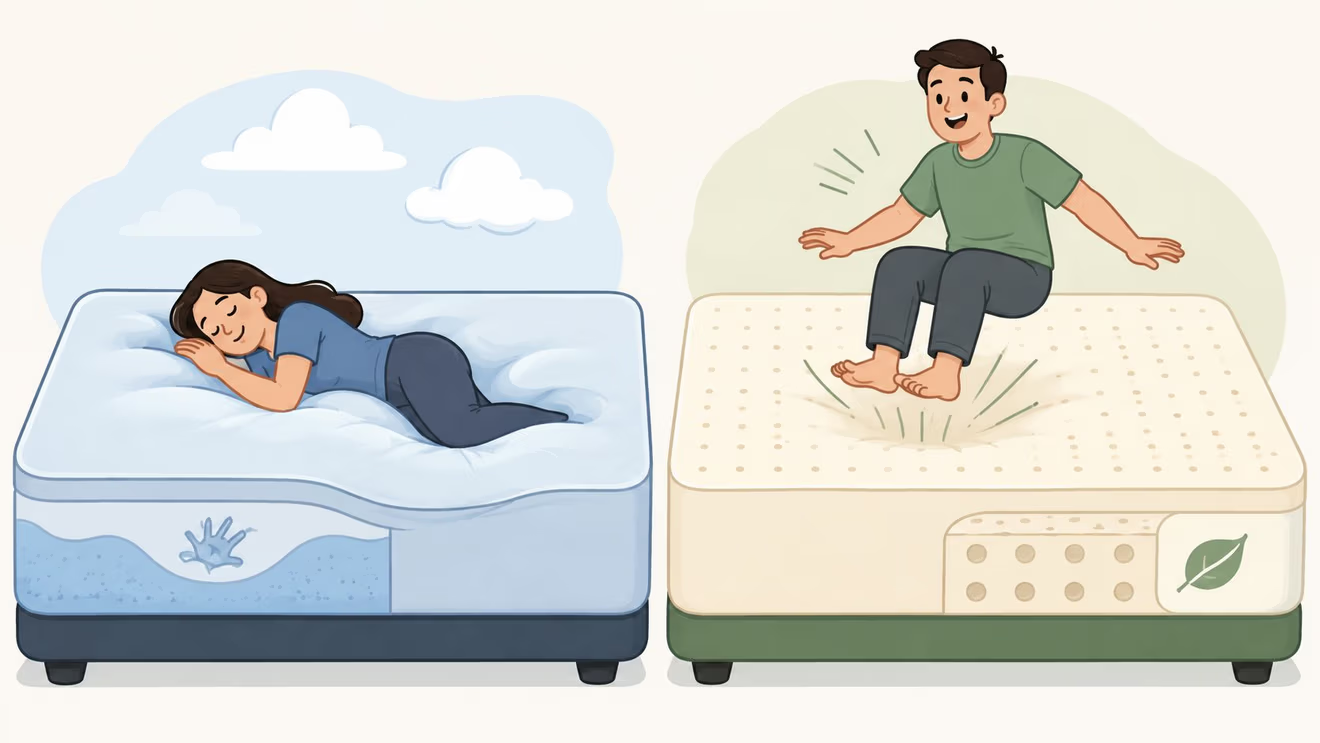
Latex feels buoyant and supportive. It conforms enough to cushion your shoulders and hips, but it does not give you that slow, deep sink some people dislike after a full night.
That matters for sleepers who change positions often. Back sleepers, stomach sleepers, and combination sleepers usually do better on a surface that helps them turn instead of making every movement a chore. In our showroom, that is one of the first things people notice on latex models, especially if they have been sleeping on an older foam bed that feels harder to move around on.
Here is the plain-English version of latex:
- Pressure relief: Cushions joints without an exaggerated body imprint
- Support: Keeps your body on a more level plane
- Response time: Quick recovery when you move
- Overall sensation: Light, springy, and lifted
If you are trying to connect feel with firmness, our mattress firmness guide for different sleep positions and comfort preferences will help you narrow it down before you visit.
How memory foam feels at night
Memory foam goes in the other direction. It contours more closely and responds more slowly, so you get a deeper cradle around the body.
Some sleepers love that feeling. Side sleepers often like the extra cushioning around sharper pressure points, and couples often notice that movement stays more contained. If your partner gets up before dawn, memory foam can do a better job of keeping that motion from traveling across the bed.
The tradeoff is simple. A close hug can feel calming, or it can feel restrictive.
We hear both reactions in the store all the time. One person says, “This feels great on my shoulder.” The next person says, “I can already tell I'd fight with this bed at 2 a.m.”
What couples and hot sleepers should pay attention to
Trying beds in person helps more than any online description. Two mattresses can both be labeled medium, yet one feels cool, quick, and easy to move on, while the other feels quieter, denser, and more enveloping.
For shared beds, memory foam usually does a better job with motion isolation. For sleepers who run warm, latex usually feels better because it tends to hold less heat and allows more airflow through the surface.
At BILTRITE, that side-by-side test is what clears things up. You can try real models instead of guessing from marketing copy, and you can compare options that many online-only sellers do not offer, including flip-able and USA-made mattresses.
| Sleep need | Material that usually fits better |
|---|---|
| Wants easy movement | Latex |
| Wants a deeper body contour | Memory foam |
| Sleeps warm | Latex |
| Shares a bed with a restless partner | Memory foam |
| Changes positions often | Latex |
My advice is simple. If you like to feel “on” the mattress, start with latex. If you want to feel “in” the mattress, start with memory foam. Then lie there long enough to notice what your shoulders, hips, and lower back are telling you.
Durability and Value The Long-Term Investment
A lot of Milwaukee shoppers walk into BILTRITE with the same question. Should I pay less now, or buy the mattress that is more likely to still feel good years from now?
My advice is simple. If durability is high on your list, start with latex.
Why the cheaper mattress can cost more
Price tags only show today's cost. They do not show how a mattress will hold up after years of nightly use, changing sleep positions, shared sleeping, and the steady wear that happens in a busy household.
Latex usually keeps its support and shape longer. Memory foam often starts out at a lower price, but it is more likely to soften sooner and show body impressions with time. That difference matters more than the sticker on the showroom floor.
The better question is not, “Which one costs less?” It is, “Which one will I still be happy sleeping on years from now?”
Why latex usually wins on lifespan
Latex is springier by nature. It pushes back, recovers faster, and generally handles repeated compression better than memory foam. That is a big reason many shoppers who want long-term value end up preferring it.
Memory foam can still be a smart buy. It just makes the most sense for shoppers who care more about a lower upfront price or a specific slow-response feel than the longest usable life.
Here is the practical way to look at it:
- Choose latex if you want a mattress that is more likely to keep its comfort and support for the long haul.
- Choose memory foam if keeping the initial price lower matters more than getting the longest lifespan.
- Pay close attention to construction because materials are only part of the story.
That last point gets missed online all the time.
Why construction matters as much as material
At BILTRITE, we can show Milwaukee shoppers something many online-only retailers do not offer much of anymore. Flip-able and 2-sided mattresses.
That matters for value.
A mattress that can be flipped and rotated has a better shot at wearing evenly over time. For families, guest rooms, and primary bedrooms that get used every single night, that design can stretch the useful life of the bed in a very real way. It is one of those details that sounds small until you live with the mattress for years.
We also carry USA-made options, and that gives shoppers more ways to compare how a mattress is built, not just how it feels in the first five minutes.
If you are considering foam, it helps to compare memory foam mattress brands and what to look for in long-term support. Some foam mattresses are built better than others, and that is exactly the kind of difference we help people sort out in the store.
My recommendation is direct. Buy latex if your goal is better long-term value. Buy memory foam if you love that feel and want to spend less upfront. If you are not sure, come test both side by side and pay attention to support, recovery, and build quality, not just the first impression.
Health and Home Your Mattress Materials
You sleep on this thing every night. Your kids may pile onto it on Saturday morning. Your dog may claim the foot of the bed. So yes, the material inside the mattress matters.
At BILTRITE, Milwaukee shoppers ask this question all the time. They are not only asking which bed feels better in the showroom. They want to know what they are bringing into their home, how it is made, and whether it fits the way their family lives.
What natural latex actually is
Natural latex starts as sap from rubber trees. Synthetic latex is made from man-made rubber compounds. Blended latex uses a mix of both.
That is the first question to ask if a mattress is labeled "latex."
Material science resources make the distinction clear. Natural and synthetic latex are different materials, and they do not carry the same appeal for shoppers who care about natural-origin content. If you want natural latex, ask the salesperson exactly what kind of latex is in the bed. Do not settle for a vague "latex feel" description.
Why this matters in a family home
Memory foam is a synthetic foam product. Plenty of people sleep well on it and never think twice about that. Others strongly prefer a mattress built with more natural-origin materials.
That preference is reasonable.
For some Milwaukee families, the bedroom is not just about comfort. It is also about keeping the home simple, practical, and aligned with what they want around them every day. Latex usually makes the stronger case there, especially for shoppers who walk into our store asking about cleaner material stories and long-term peace of mind.
If you are comparing synthetic foam options, our guide to gel mattress vs memory foam differences can help clarify what changes and what stays the same.
A few smart questions will keep you out of the weeds:
- Ask what the latex is. Natural, synthetic, and blended latex are not interchangeable.
- Ask why the material fits your household. A guest room, a child's room, and a primary bedroom may call for different priorities.
- Be honest about what you care about most. If material origin matters, put that near the top of your list. If body-hugging pressure relief matters more, memory foam may still be the right pick.
My advice is simple. Choose latex if your household puts a high value on natural-origin materials. Choose memory foam if feel and price matter more than the material story. If you are shopping in Milwaukee, come test both in person at BILTRITE and ask direct questions. That is still the fastest way to separate marketing talk from what is inside the mattress.
The BILTRITE Buyer's Checklist
A Milwaukee shopper usually figures this out fast. Two mattresses can sound similar online and feel completely different the second you lie down. That is why this part of the process should happen in a showroom, not in a browser tab.
What to do before visiting the showroom
Come in with a short list of priorities. You do not need mattress jargon. You need clarity.
- Identify the core issue. Heat, sore shoulders, partner movement, sagging, or trouble getting comfortable all point shoppers in different directions.
- Set a budget you can live with. Latex often sits at a higher price point than memory foam, so it helps to know early whether you are shopping for the lowest upfront cost or better long-term value.
- Know who is using the bed. A solo sleeper, a couple, a guest room, and a kid's room all call for different choices.
- Write down your must-haves. Cooling, easier movement, two-sided construction, USA-made materials, and stronger edge support are easier to judge when you know what matters most.
If you want to get organized before you stop in, read our guide on how to choose the right mattress for your sleep style and budget.
What to test once in the store
BILTRITE Furniture-Leather-Mattresses gives Milwaukee-area shoppers a real advantage here. You can compare more than 60 mattress models in Greenfield, including flip-able options, USA-made selections, and a large in-stock mattress department. That beats guessing from online product names and staged photos.
Use this checklist on the floor:
- Lie down the way you sleep. Stay there long enough to feel pressure at the shoulders, hips, and lower back.
- Change positions a few times. Latex usually feels quicker and easier to move on. Memory foam usually gives more of that slow, close contour.
- Sit on the edge. That quick test matters if you tie your shoes on the bed, read before sleep, or want an easier time getting up in the morning.
- Shop with your partner if you share the bed. Couples should never choose a mattress one person loves and the other tolerates.
- Ask what is inside the mattress. Foam type matters, but so do the cover, support core, and whether the mattress is one-sided or flip-able.
- Ask which models are in stock. If you need the mattress soon, that answer can narrow the field fast.
Our advice is simple. Do not buy based on a label alone. Come test latex and memory foam side by side, ask direct questions, and let an experienced local team help you sort out what fits your body, your budget, and your home. That is still the smartest way to shop for a mattress in Milwaukee.
Frequently Asked Questions From Our Neighbors
The mattress itself is only part of the decision. Milwaukee shoppers usually have a few practical questions once they narrow down their options.
Can shoppers try both types in person
Yes, and they should.
Reading about latex vs memory foam mattresses helps, but lying down on both tells the full story. A mattress can sound right on paper and feel wrong in seconds. That's why an in-store visit matters so much, especially for couples, hot sleepers, and anyone deciding between a more buoyant surface and a deeper contouring feel.
Does BILTRITE help with delivery and old mattress removal
Yes, qualifying purchases include free white-glove delivery, and old mattress removal is available when the old mattress is in donatable condition.
That matters more than people expect. Mattress shopping is easier when the logistics are handled clearly, especially for busy families, seniors, and anyone replacing a bed that's overdue.
Why is the store closed on Sundays and Mondays
Because family time matters.
That schedule reflects the values of a 4th generation family business that has served Metro Milwaukee since 1928. Plenty of stores talk about family. BILTRITE builds it into the calendar. For a lot of local shoppers, that says something important about how the business treats people.
What's the simplest recommendation
For most shoppers, the short answer is easy.
- Pick latex for cooler sleep, easier movement, and stronger long-term value.
- Pick memory foam for deeper contouring and better motion control.
- Visit in person if the household is split, because feel decides more mattress purchases than specs do.
A mattress is too important to guess on. Milwaukee shoppers deserve to test, compare, ask questions, and work with people who listen.
Shoppers who want honest guidance, a big in-stock selection, and real help from a local team can visit BILTRITE Furniture-Leather-Mattresses in Greenfield. Come on down to the showroom, say hi, and let the team help narrow the choices to a mattress that fits the home, the budget, and the way the household sleeps.