Dining Chair Styles Explained Find Your Perfect Match


A dining room can look ready from across the room, then feel wrong the second everybody sits down. Maybe the chairs are too tall for the table, maybe the backs dig in during a long meal, or maybe the setup feels tight every time someone pushes back to stand up. In a Milwaukee home, where a dinner table might have to handle homework, holiday dishes, and a quick weeknight meal all in the same week, dining chair styles matter for much more than looks.

The good news is that chair choice gets a lot easier once the styles stop feeling like a blur of shapes and fabrics. A chair's history, height, material, and back design all tell a story about how it will work in real life. At BILTRITE, we've helped Metro Milwaukee families sort through those choices since 1928, and the same simple pattern shows up again and again, the right chair is the one that fits the room, the table, and the people using it.
Welcome to the Wonderful World of Dining Chair Styles
A dining chair that looks right from across the room can still feel wrong the moment someone sits down. The seat may be too high for the table, the back may push into the shoulders, or the chair may take up just enough space to make a narrow dining area feel crowded. In a Milwaukee home, where one table may handle homework, holiday meals, and weeknight dinners, dining chair styles have to do real work as well as look good.
History helps explain why the choices are so different. The earliest known seating dates to Skara Brae in Scotland, about 3,200 BC, and Egyptian tomb paintings around 3100 BC show chair-like forms used for seated dining and status display. Historical records from the Design Institute of San Diego also show that by the 12th to 15th centuries, chairs had moved beyond simple stools and benches into backed, four-legged forms, and by the 17th century upholstered seats were established in Europe. Comfort became part of the story, not just structure.
That matters because the chairs people use today were shaped by real changes in daily life, the way meals were served, and the level of comfort people expected at the table.
Practical rule: if a chair looks beautiful but makes people fidget, the style is winning over the function. That is backward for everyday dining.
For Milwaukee homes, the test is plain. A chair has to work for the person who sits there every night, the guest who stays for dessert, and the kid who slides down halfway through dinner. Good dining chair styles solve those everyday problems without making the room feel fussy or cramped. They also need to hold up to heavy use, fit a smaller room without crowding it, and support the simple ease of standing up and sitting back down. Solid-wood Amish craftsmanship often fits that job well because it brings durability and a steady, grounded feel to the room.
How Centuries of Design Shaped the Chairs We Love Today
The story becomes clearer once the timeline reaches the years when the chair shapes people still recognize today started to settle in. The 18th century is widely described as the golden age of chair design, with France and England setting the fashion and makers such as Chippendale, Hepplewhite, and Sheraton shaping dining and side chairs that still echo through modern homes. That is why so many current chairs still carry familiar lines, curved backs, slatted forms, and decorative details that feel traditional even now.
A chair from that period often reads like a well-fitted coat. The shape is familiar right away, but the details tell you where it came from.
From craft to factory changed the whole market
Industrialization was the turning point. Thonet's bentwood chairs, developed in the mid-19th century, could be mass-produced from steam-bent wood and became globally significant because they were used worldwide in the 19th and 20th centuries. Historical records document them as a major innovation in chair making. Around 1849, the Thonet bentwood chair was identified as a light, linear development of the Windsor chair, which shows how older vernacular forms were translated into factory production.
The American Hitchcock chair followed a similar path. By the 1825 to 1830 period, it had already become a factory-made dining chair with stencilled decoration, which helped standardize dining chair style for broader middle-class markets. That shift matters because it explains why today's homes can choose from classic wood, bentwood, and manufactured forms without leaving the same basic dining room category.
The modern chair aisle is a mix of old ideas made new, not a random collection of unrelated shapes.
By the 20th century, the story widened again. The 1928 Breuer cantilever chair introduced tubular steel, and the 1935 Charlotte Perriand chair controversy showed how modernist dining seating had become a design statement in its own right. That is why the modern market can comfortably hold traditional wood chairs, bentwood pieces, and minimalist metal or plastic forms at the same time. Once the timeline is clear, the style choices stop feeling confusing.
Meet the Major Dining Chair Styles You Will See Everywhere
A showroom floor can feel crowded until the main chair families start to make sense. One chair may look formal, another relaxed, and another built to stay visually quiet so the table does most of the talking. The back is the first thing to check, then the seat, then the overall visual weight. A tall, enclosed back anchors a room, while an open slatted back lets sightlines travel through.
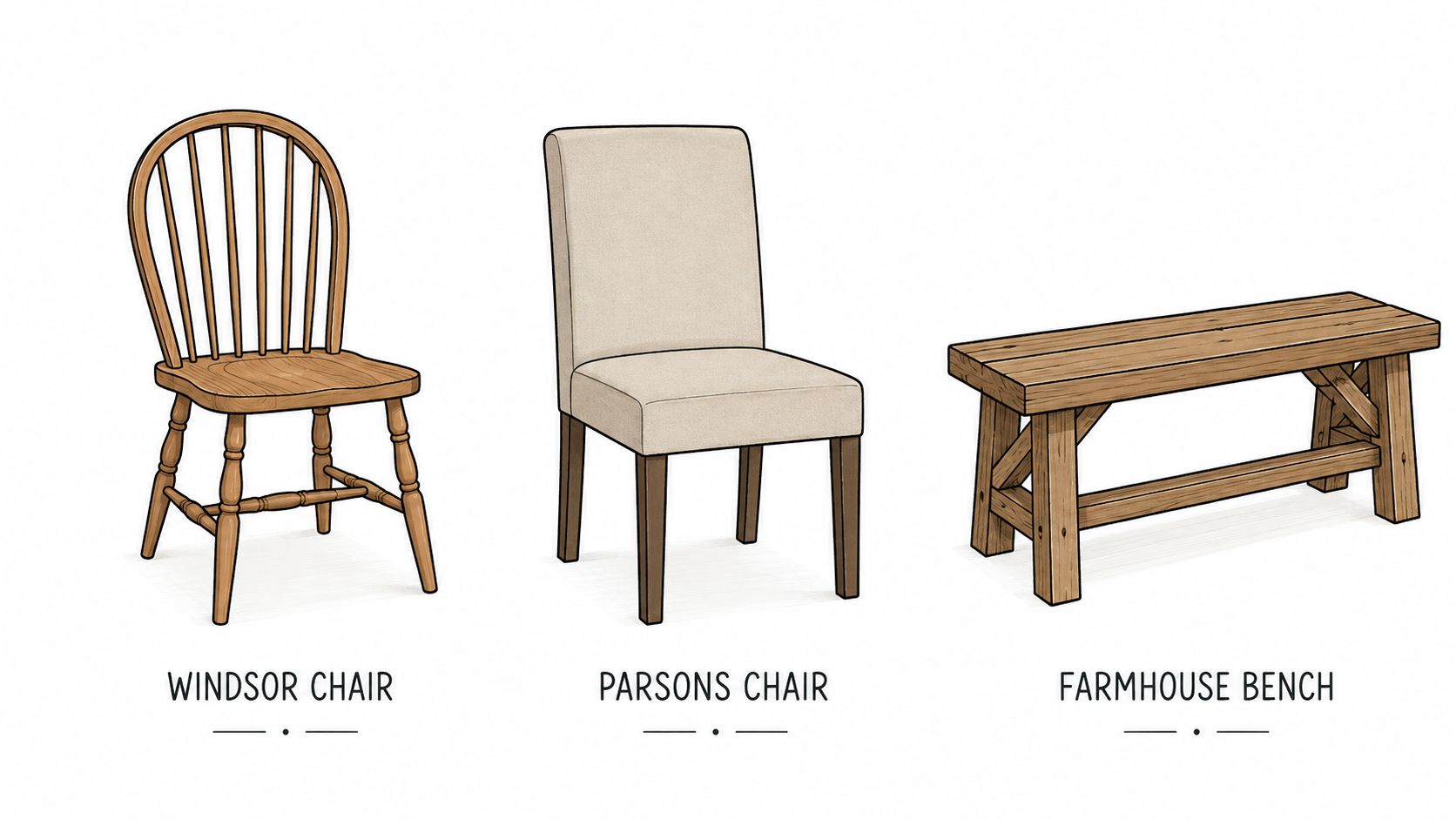
The chairs people usually recognize first
A Windsor chair is easy to spot once you know the shape. It usually has a rounded top rail with exposed slats, and the open back gives it a lighter feel in the room. A Parsons chair is usually armless and upholstered, which makes it read as softer and more refined. A splat-back chair has a centered vertical rod or panel in the back, unlike side-mounted arm supports or slatted construction. Those three shapes give a good starting point because they show how one dining room can feel open, padded, or more structured depending on the chair.
A ladder-back chair uses horizontal back slats, so it feels familiar and relaxed. A Chippendale-derived chair usually brings more ornament, with a formal shape that still keeps some historic character. Bentwood seating looks lighter and more linear, which helps in rooms that already have strong visual lines.
For a room that needs softness, a fully upholstered host chair can anchor the ends of a table and make the setup feel more finished. That approach also helps when the room needs comfort without adding too much bulk. If you want a closer look at upholstered seat options, this upholstery-focused chair page is a useful reference.
Matching the mood to the shape
Straight, lighter shapes usually work well in a casual or compact room, especially where you want the chairs to stay visually quiet. Thicker, upholstered, or more decorative chairs fit better when the dining area is meant to feel richer and more formal. A square, plain-back chair tends to fade into the background more easily. A curved, upholstered, or carved chair becomes part of the room's visual story.
That is why style names matter. They point to how the chair will behave in a home with real people, real traffic, and real meals, which matters a lot in Milwaukee homes where chairs need to fit small spaces, handle daily use, and still feel good when someone gets up from the table. Solid-wood Amish craftsmanship also tends to show up in these choices, because buyers often want a chair that feels sturdy, steady, and built for everyday standing and sitting.
Getting the Fit Right With Height Scale and Proportion
A chair can look right on the showroom floor and still feel off at the table if the height or scale misses the mark. A good fit follows a few steady measurements, and once those are clear, the guesswork drops fast. The chair, the table, and the person using them all need enough space to work together comfortably, which is where real ease starts.
The dimensions that do the heavy lifting
For standard dining chairs, the usual ergonomic range puts seat height at about 18 inches (45 cm), with seat width around 16 to 20 inches and seat depth around 15 to 18 inches; leaving the seat roughly 25 to 30 cm below the tabletop helps keep knees clear and makes it easier to sit upright while eating, according to standard dining chair dimensions. In plain terms, the chair should not press into the underside of the table or force a sitter to reach up for a plate.
Counter-height chairs usually sit at 24 to 27.5 inches, and bar-height chairs at 28 to 30 inches. A chair that feels fine at one table can feel awkward at another, even if the shape itself is appealing.
| Seating Type | Seat Height | Best Paired Table Height |
|---|---|---|
| Standard dining | About 18 inches (45 cm) | Standard dining table |
| Counter-height | 24 to 27.5 inches | Counter-height table |
| Bar-height | 28 to 30 inches | Bar-height table |
What room size changes in practice
A deeper seat can feel welcoming, but it also needs more room behind the table. Arms add comfort, yet they can make a tight dining area harder to move through and harder to slide in and out of. Lower backs keep a room feeling open, while taller backs bring more presence and a more formal look.
That is why measuring before falling in love with a shape matters. The table, the chair, and the body all have to line up.
For a quick reference while comparing widths, this chair-width guide can help keep the proportions straight. Once the measurements make sense, the style choice gets much easier.
Materials Construction and Everyday Comfort Choices
Style gets a lot of attention, but a chair's feel usually comes from what is inside it. Two chairs can look similar across the room and still behave very differently once someone sits down, shifts weight, or wipes off crumbs after dinner. Material and construction shape comfort, cleanup, and how the chair ages, so the details matter in daily use.
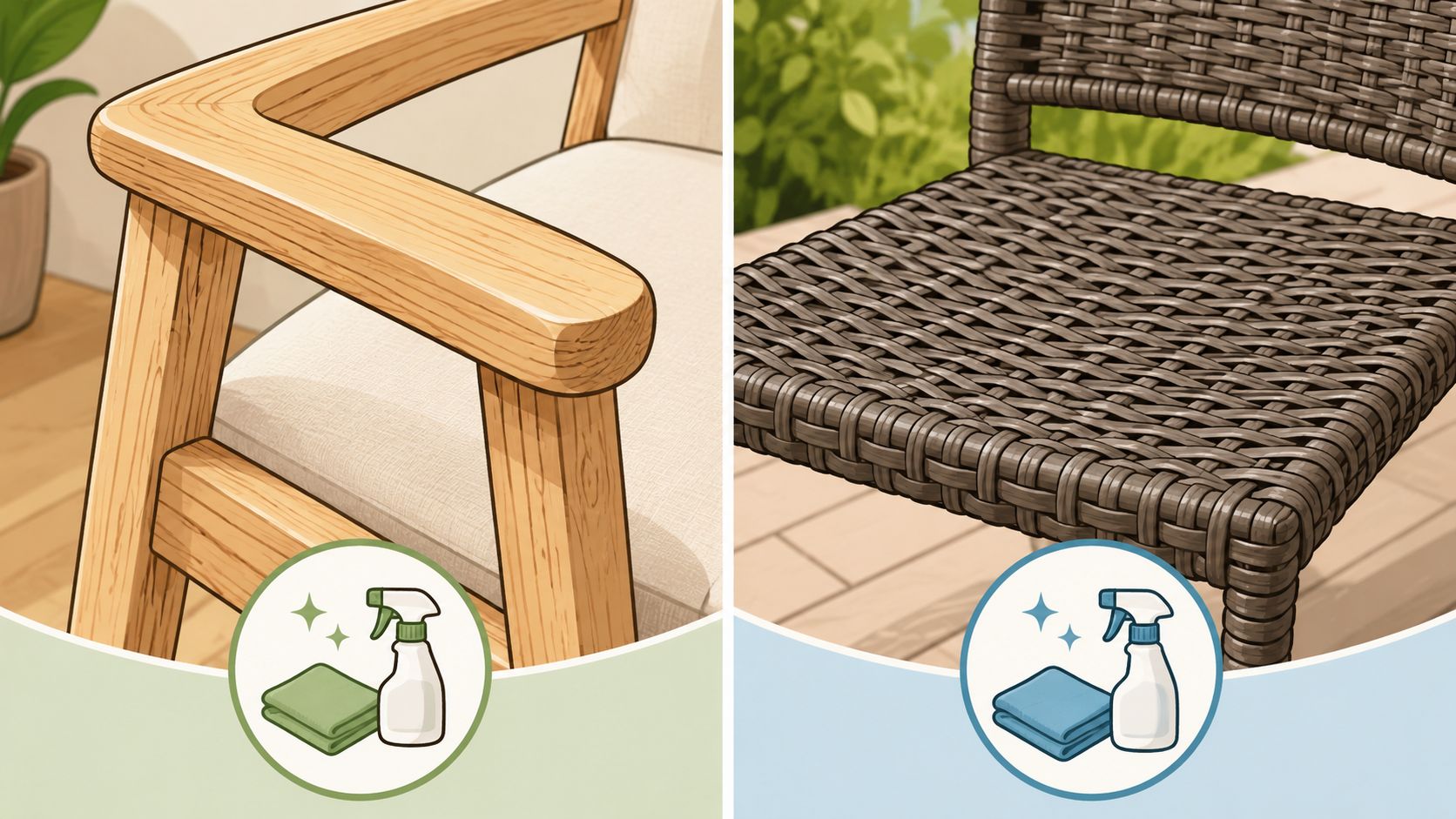
What the seat is doing under the surface
A good seat should support the body without feeling hard, flat, or tired too soon. In upholstered seating, commercial chairs commonly use 50 to 55 kg per cubic meter foam density to help the cushion retain its support longer, while a typical solid-wood dining chair may weigh about 6 to 7 kilograms and measure roughly 51 centimeters wide by 57 centimeters deep by 99 centimeters high. Those are the sorts of build details that tell you how a chair is likely to feel after repeated use.
Wood chair construction can also shape comfort in simple ways. A double-saddle seat rounded in front helps reduce pressure at the edge of the seat, which matters when people stay seated through a long meal. A 47 cm seat height keeps the chair in the familiar dining range, and a solid-wood frame can feel firm and steady while still being light enough to move without a struggle. That balance is part of why well-made wood seating works so well in busy homes.
Comfort versus cleanup, a real tradeoff
Upholstered chairs usually win when the goal is a softer sit for longer meals. Solid wood and metal-frame styles usually win when durability, wipe-down cleanup, and easy moveability matter more. That split shows up most clearly in family kitchens, where someone is always sliding a chair back, spilling a little something, or shifting seating for guests.
The upholstery choice matters too. Fabric, faux leather, and performance covers each handle spills and daily wear in different ways, and the right answer depends on how much use the room really gets. A useful guide to upholstery materials can help sort out what feels soft, what wipes clean, and what is likely to hold up over time.
Practical rule: if the room gets used hard every day, the chair needs to handle the wear without becoming a burden to clean or move.
That is where solid-wood Amish craftsmanship stands out for many Milwaukee homes. A well-built chair can take daily use, be easy to stand up from, and still fit a smaller dining area without feeling bulky. The best choice is the one that matches the room, the routine, and the kind of comfort you want to live with every day.
Pairing Chairs With Tables and Rooms Like a Pro
A good pairing makes the table look intentional instead of accidental. That does not mean every piece has to match exactly. It does mean the room should feel balanced, with enough visual harmony that the seating looks like it belongs with the table and the people using it.
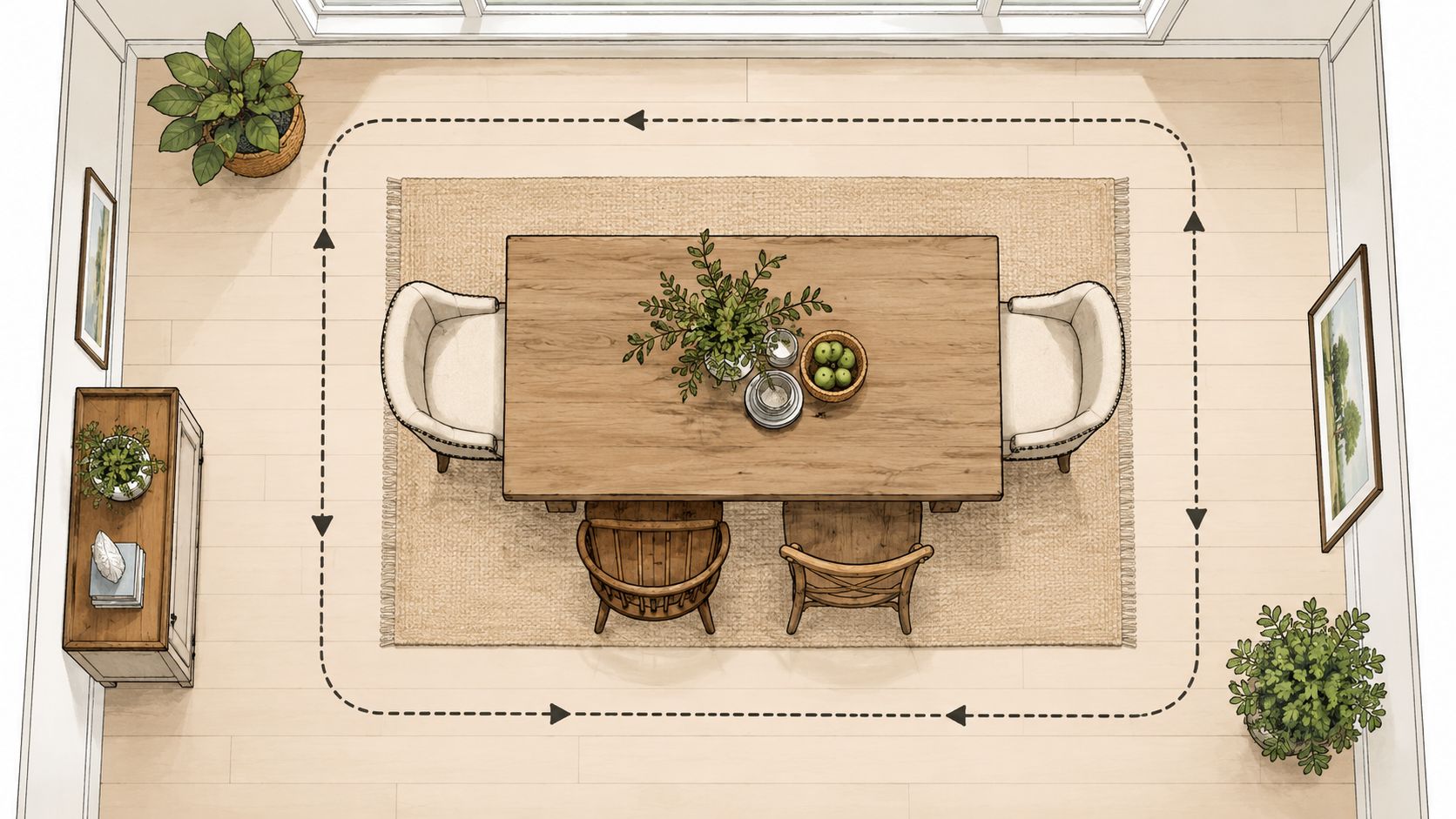
How to keep the room from feeling crowded
A chair's silhouette affects circulation as much as its size. In apartments, condos, senior living spaces, and narrow Milwaukee dining rooms, the challenge is often not owning chairs, it is fitting chairs around real daily traffic. Some styles are easier to pull out and slide back in, while others take up more visual and physical space.
That is where visual weight matters. A chair with thick arms, deep upholstery, or a broad back can make a small room feel tighter, even if the footprint on paper looks reasonable. Slender wood frames, slimmer legs, and cleaner lines leave more open sightlines, so the room feels easier to move through and less crowded at the table.
Armless chairs often make sense in tighter layouts because they keep the outline lighter. Armed chairs can add comfort and help a table feel more finished, but they need more clearance. The same table can feel completely different depending on whether the chairs look compact or bulky, which is why scale matters as much as shape.
For a deeper look at how table height and chair choices work together, this dining table height guide pairs well with the fit rules above. The room feels better when those two pieces are considered together instead of separately.
Mixing styles without losing the thread
Matching chairs to a table can be simple. Mix the ends with upholstered or host chairs, then use side chairs along the length. A little contrast in wood tone or fabric texture can make the room feel layered instead of flat.
The goal is coordination, not sameness.
That approach helps in homes where the dining room has to do more than one job. A setup that looks graceful and moves easily usually comes from choosing pieces that agree on scale, even when they do not share the exact same finish. Bar-height chairs rise to 28 to 30 inches, making them suitable for counter-height tables. When the room needs to serve a quick breakfast, a long dinner, and everyday family traffic, the right mix is the one that keeps the table comfortable, the walkway open, and the overall look steady.
Smart Buying Tips and Caring for Chairs Built to Last
A dining chair has to do more than match the room. It needs to feel steady when someone sits down, support the body through a long meal, and still look presentable after daily use, family gatherings, and the occasional scrape from a backpack or shoe. Families prioritize frames that feel solid, seats that stay supportive, and chairs that look good after years of use, because style alone does not tell you how a chair will age.
What to check before the chair comes home
Start with the frame. A chair can look refined on the showroom floor and still feel loose if the joints are weak or the construction is too light for regular use. Solid wood, metal, and upholstered designs each bring different strengths, but the main question is whether the chair feels steady when you shift your weight, sit down, and stand back up.
That same practical check matters for the people who use the chair every day. Armrests can help older adults or anyone who wants a little extra support when rising from the table. Weight capacity matters, too, because a chair that looks sturdy is not always built the same way underneath. These small checks keep a dining room useful, not just attractive.
The room size matters as much as the chair itself. A compact chair can make a tight dining area feel easier to move through, while a heavier profile can crowd the table and make everyday traffic feel awkward. For a step-by-step way to compare fit, comfort, and build quality, this chair-selection guide is a practical place to start.
Caring for the chair after the sale
Good care keeps the chair working the way it should. Wood needs regular dusting and careful wiping so the finish does not wear unevenly. Fabric needs quick attention when spills happen, and removable cushions or easier-clean materials can take some stress out of family meals.
Daily use is easier to live with when maintenance stays simple. A chair that wipes clean without much effort, or a seat cushion that handles spills without a lot of fuss, is more likely to stay in the dining room for the long haul. That is especially true in busy homes where chairs get used for homework, snacks, and every meal in between.
BILTRITE Furniture-Leather-Mattresses carries dining seating for different needs, from solid-wood and Amish-made pieces to small-scale options for tighter rooms and heavier-duty choices for busy households. Our sales associates bring more than 400 years of combined experience, and they help compare fit, feel, and function without pressure.
Visit our Greenfield showroom on West Layton Avenue, see the chairs in person, and sit down in the ones that might live at your table for years.
BILTRITE Furniture-Leather-Mattresses carries dining chairs, dining sets, and other home furnishings for Milwaukee families who want comfort, durability, and solid-wood craftsmanship. Come visit BILTRITE Furniture-Leather-Mattresses in Greenfield and compare dining chair styles in person, so you can find the right fit for your table, your room, and the way your family really lives.