Mattress Buying Guide: How to Choose the Right Bed

You've walked into a mattress showroom expecting a simple choice and found rows of beds, unfamiliar labels, and several sales tags pointing in different directions. One mattress feels soft, another feels firm, and a third seems comfortable for the few seconds spent sitting on its edge. Suddenly, choosing a bed feels less like shopping and more like taking a test with no answer key.
A useful mattress buying guide should remove that pressure. The right decision comes from matching construction, firmness, support, sleep position, durability, and total ownership value. At BILTRITE, a fourth-generation, family-owned business serving Metro Milwaukee since 1928, the focus is on helping shoppers make that decision in person, without hiding behind confusing mattress jargon.
Why Mattress Shopping Feels Overwhelming and How to Fix It
A shopper can research for hours and still feel stuck at the showroom door. The problem usually isn't a lack of information. It's the sheer volume of information, with similar-looking beds described using different terms and firmness labels that don't always feel consistent from one model to the next.
A survey found that 54% of mattress shoppers considered the experience complex or very complex, while 68% of those shoppers found the number of options overwhelming. The same research identified comfort and fit, firmness comparison, and difficulty testing mattresses as major obstacles. The mattress shopping research also found that many shoppers wanted to try the product and receive expert advice, which makes sense for a purchase that affects every night at home.
Start with the sleeper, not the sales tag
A better showroom conversation begins with practical questions:
- Sleep position: Does the shopper spend most of the night on the side, back, stomach, or a mix?
- Pressure points: Do shoulders or hips feel sore after sleeping?
- Partner movement: Does one person wake easily when the other turns?
- Body size and mobility: Does the mattress need stronger edge stability or easier movement?
- Current problems: Is the existing bed sagging, too warm, too soft, or uncomfortable?
Those answers narrow the field faster than a long list of technical specifications. A shopper who sleeps mostly on the side may need more contouring, while someone who sleeps on the stomach may need more restrained sink. A couple may care as much about motion isolation and usable edge space as surface softness.
Practical rule: A mattress should be judged by how it supports the actual sleeper, not by how impressive its label sounds.
BILTRITE's sleep specialists use that kind of guided process in the showroom. The team has more than 400 years of combined experience, and the purpose of that experience is assistance, not pressure. Instead of sending a shopper from bed to bed without direction, an associate can help reduce the selection to a manageable group based on comfort needs and sleeping habits.
That approach matters because confidence comes from a clear comparison. A shopper doesn't need to understand every mattress term before visiting. The shopper needs honest explanations, enough time to test the choices, and a team willing to say when a certain feel or construction doesn't fit the person's needs.
Understanding the Main Mattress Types
Most mattress decisions become easier once shoppers understand the basic construction categories. Innerspring, all-foam, and hybrid mattresses each create a different balance of responsiveness, cushioning, airflow, and motion control. The goal isn't to choose a category because it's popular. The goal is to identify which structure fits the way the sleeper uses the bed.
Innerspring mattresses
An innerspring mattress uses a coil-based support core beneath upholstered comfort materials. It usually feels more responsive, with easier movement across the surface and a traditional buoyant sensation. The open structure can also suit sleepers who prefer a less enveloping feel.
Innerspring models often work well for back or stomach sleepers who don't want to sink into the mattress. They can also appeal to people who change positions frequently. The trade-off is that a highly responsive design may transfer more movement than a mattress with thicker foam comfort layers.
All-foam mattresses
An all-foam mattress relies on foam layers for both cushioning and structural support. It can provide close contouring around the shoulders, hips, and other pressure points, which many side sleepers appreciate.
Foam can also help reduce movement across the surface, a useful feature for couples with different sleep schedules. The trade-off is a slower, less springy response, and some sleepers may prefer a cooler, more open-feeling construction.
Hybrid mattresses
A hybrid mattress combines a coil support system with foam or other cushioning layers. That blend can provide pressure relief without eliminating the responsive feel of coils. Hybrids are often a strong starting point for shoppers who want a middle ground between foam's contouring and innerspring's airflow and movement.
The trade-off is that hybrids can feel very different from one another. The coil design, comfort materials, and overall layering matter more than the word “hybrid” by itself.
BILTRITE's Mattress Center carries over 60 models and more than 500 mattresses in stock, giving shoppers room to compare these constructions rather than relying on descriptions alone. A useful guide to mattress types can help narrow the categories before a showroom visit.
Mattress Types at a Glance
| Type | Typical Feel | Best For | Durability Range |
|---|---|---|---|
| Innerspring | Responsive, buoyant, easier to move on | Back and stomach sleepers, people who prefer airflow and bounce | Varies by construction and care |
| All-foam | Contouring, quieter, less springy | Side sleepers, couples seeking reduced motion | Varies by foam quality and care |
| Hybrid | Balanced cushioning and responsiveness | Shoppers who want a blend of foam and coils | Varies by materials and construction |
The table provides a starting point, not a final verdict. Two mattresses in the same category can feel completely different. That's why the next step is testing how firmness and support work together.
Firmness vs Support and How to Match Both to Your Body
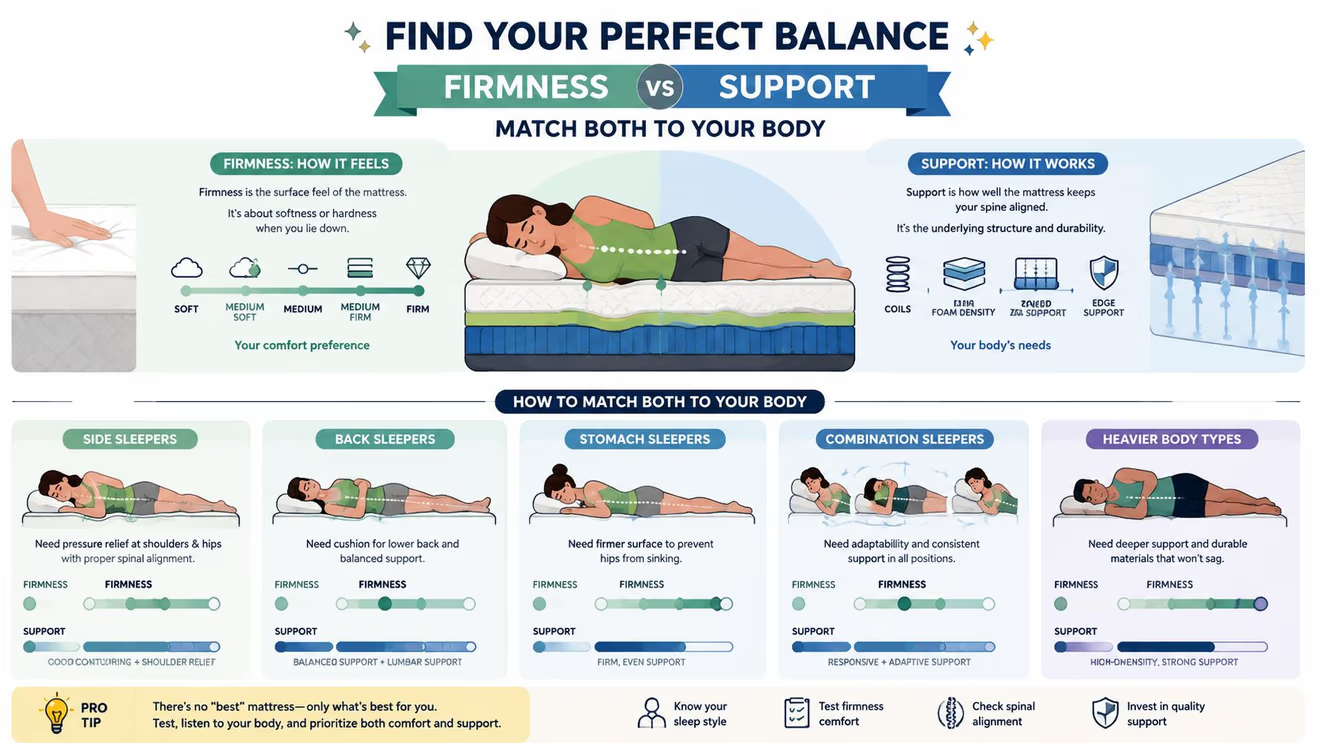
Firmness and support aren't the same thing. Firmness describes how hard or soft the surface feels, while support describes how well the mattress holds the body and keeps the spine in neutral alignment. Comfort layers usually influence firmness, while the core or base layer does much of the structural support work. This firmness and softness guide explains why a plush mattress can support the body well, and why a firm mattress can still allow poor alignment.
A shopper who presses a hand into a bed is testing surface resistance, not spinal support. The test happens when the body lies in its normal sleep position.
Match the feel to the sleep position
Side sleepers generally need enough contouring to cushion the shoulders and hips. If the surface is too firm, those areas may carry too much pressure. If it's too soft without sufficient underlying support, the torso can twist or the hips can sink too far.
Back sleepers need the mattress to fill and support the natural curves of the body without letting the middle sag. A surface that feels moderately cushioned can work well when the core prevents the hips from dropping too far.
Stomach sleepers typically need stronger alignment control and less sink beneath the midsection. Excessive softness can allow the body to bow, which may leave the sleeper uncomfortable.
Combination sleepers should test more than one position. A bed that feels excellent on the side may feel restrictive when turning onto the back, while a mattress that works well on the back may create pressure at the shoulder.
Use three alignment checks
During a trial, the shopper should ask:
- Is the spine neutral? The back shouldn't feel arched or forced into a curve.
- Are the shoulders and hips cushioned? Side sleepers shouldn't feel sharp pressure or torso twisting.
- Does the support stay consistent? The mattress should hold the body across the center and near the edges.
Body weight also changes how a mattress feels. A heavier sleeper may compress the comfort layers more, while a lighter sleeper may remain closer to the surface. This is why a firmness rating can't replace an in-person test. BILTRITE's mattress firmness guide offers another way to organize the decision, but the sleeper's actual alignment remains the final measure.
The Long-Term Value of Flippable and Two-Sided Mattresses
A mattress that can be used on both sides deserves serious attention from anyone thinking beyond the first night. Two-sided, flippable construction spreads wear across two sleep surfaces, rather than asking one side to absorb the same pressure year after year.
Care is straightforward. Independent mattress guidance commonly recommends rotating a flippable mattress every 3 months and flipping it every 6 months to help reduce body impressions and sagging. Some care guidance says this routine can add 2 to 3 years of usable life compared with similar single-sided mattresses. This overview of flippable mattress construction explains why regular rotation and flipping matter.
Compare ownership, not just checkout price
A single-sided mattress may feel attractive because it meets a short-term budget. But the purchase price doesn't tell the whole story. If the mattress develops uneven wear sooner, the household may face another replacement earlier than expected.
Independent buyer guidance commonly places well-maintained double-sided mattresses in a 7 to 12 year lifespan range, while single-sided models are often cited at 3 to 8 years, depending on construction and care. This comparison of double-sided and single-sided mattresses provides that durability context.
| Construction | Care approach | Long-term consideration |
|---|---|---|
| Two-sided | Rotate and flip according to the care schedule | Wear can be distributed across both surfaces |
| Single-sided | Rotate only if the manufacturer allows it | One sleep surface carries the regular compression |
Those ranges aren't promises for every mattress. Materials, foundation quality, sleeper weight, usage, and maintenance all affect performance. Still, the construction gives a flippable mattress a practical advantage when durability is a priority.
BILTRITE carries an exclusive selection of flip-able and two-sided mattresses, which gives local shoppers access to a design many mattress departments don't emphasize. That matters for families, guest rooms, heavier-use bedrooms, and anyone who'd rather make one thoughtful investment than chase short-lived comfort claims.
The sensible question is, “How will this bed perform after years of regular use?” Comfort still matters, but it shouldn't be the only consideration. A mattress that combines comfortable cushioning with durable construction and a realistic care routine can deliver stronger value over its ownership period.
How to Test a Mattress In-Store Like an Expert
A quick sit on the edge tells very little. A proper showroom test should last 10 to 15 minutes, using the sleeper's normal position, because pressure relief and alignment can change after the body settles. Consumer mattress-buying guidance recommends giving the body enough time to evaluate the bed rather than deciding immediately after contact.
Follow a simple testing routine
Start by removing bulky coats and shoes. A shopper should lie down as naturally as possible, using the same position used at home. Couples should test together because a mattress that feels fine alone may react differently when both people move or settle onto it.
Begin on the back. Notice whether the lower back feels supported without an exaggerated arch. The body shouldn't feel as if it's sagging into a hollow or balancing on a hard ridge.
Turn to the side next. The shoulder and hip should receive cushioning, but the torso shouldn't twist. If the shoulder feels compressed or the waist lacks support, the surface may not match that sleeper's shape and position.
Don't ignore the perimeter
Edge support affects the usable area of the mattress. Sit near the edge, lie close to the perimeter, and notice whether the surface remains stable or makes the body slide outward.
This checkpoint matters for couples who use the full width of the bed, heavier sleepers who need consistent support, and anyone who sits on the bed to dress. It also helps shoppers evaluate whether the mattress feels dependable beyond its center.
A good showroom test isn't awkward. It's the closest available preview of how the bed will behave at home.
The associate should welcome questions about materials, firmness, support, motion isolation, edge stability, foundation requirements, and care. A shopper shouldn't feel rushed through the process. The best choice is the mattress that supports the sleeper's body across the positions and areas that matter, not the one that wins a thirty-second first impression.
BILTRITE provides a practical mattress testing guide for shoppers who want a clear routine before visiting the showroom. Bringing a partner and noting which models feel comfortable after sustained testing can make the final comparison much easier.
Value Bundles, Delivery, and Sleep Consultation Services
The mattress is only one part of the purchase. The foundation, protector, delivery, old-bed removal, and in-store guidance can determine whether the new setup fits your room, budget, and routine.
Bundle pricing deserves a close look. A U.S. survey of 2,501 adults who had purchased a mattress within the previous four years found that 65% bought a new foundation at the same time, while 21% purchased a mattress within the past year. It also reported that 66% of Millennials spent less than $1,000 on the purchase, compared with 53% of Boomers. The mattress satisfaction survey provides useful context for comparing a mattress with the complete sleep setup.
Look at the complete setup
Ask what the set includes and which services cost extra. At BILTRITE, qualifying purchases may include free white-glove delivery, room-of-choice setup, packaging removal, and removal of an old mattress in donatable condition. Select sets may also include a complimentary protector or heavy-duty frame. Those extras can change the value of one mattress package versus another.
White-glove delivery generally means more than leaving a box at the front door. The service may include bringing the bed to the selected room, setting it up, removing packaging, and taking away the old mattress and foundation when offered. Review BILTRITE's white-glove delivery service and this explanation of white-glove mattress delivery before scheduling, then confirm exactly what your purchase includes.
Old-bed removal often has conditions. Some retailers charge a per-item removal fee, often around $30, and may exclude adjustable bases, bed frames, headboards, or stained mattresses. The retailer's delivery policy illustrates why shoppers should confirm eligibility, fees, and condition requirements in advance.
Use the consultation to settle practical questions before delivery. Ask whether the existing frame is rated for the new mattress weight and whether a box spring or foundation is required. Also confirm protector sizing, delivery access, setup location, and what happens if the old mattress does not meet removal conditions. Clear answers prevent a comfortable showroom choice from becoming a difficult bedroom setup.
Visit BILTRITE in Greenfield and Find Your Best Night's Sleep
A mattress decision becomes less intimidating when a shopper can lie down, ask direct questions, compare feels, and take time to notice how the body responds. That's the experience waiting at BILTRITE's Mattress Center in Greenfield, where the selection includes over 60 models and more than 500 mattresses in stock.
BILTRITE Furniture-Leather-Mattresses is a fourth-generation, family-owned business serving the Metro Milwaukee community since 1928. The showroom carries affordable, better-quality furniture, with a strong focus on USA-made, Amish-made, and solid-wood pieces, along with small-scale furniture for apartments and senior living spaces and heavy-duty options for demanding households.
The mattress department reflects the same practical approach. Shoppers can compare all-foam, innerspring, hybrid, and flippable designs with help from associates who understand that comfort is personal. The store doesn't sell online, so the in-person showroom visit is central to the process.
BILTRITE is closed on Sundays and Mondays to support family time. That local, family-first choice is part of the store's identity and its commitment to serving Metro Milwaukee neighbors, including households in Greenfield and surrounding communities.
A shopper doesn't need to arrive with a final answer. Arriving with a sleep position, a few comfort concerns, and a willingness to test the beds is enough. The team can help narrow the selection and explain the trade-offs plainly.
Come on down to the showroom at 5430 West Layton Avenue in Greenfield, WI, take the time to test a mattress properly, and let the decision be guided by real comfort and stable support rather than showroom confusion.
BILTRITE Furniture-Leather-Mattresses offers a large mattress selection, expert in-store guidance, flippable and two-sided options, and value services that help make delivery easier. Visit BILTRITE Furniture-Leather-Mattresses in Greenfield to test the beds, compare support, and find a mattress setup that fits the household's comfort and long-term value needs.