Mattress No Turn Explained for Better Sleep and Care


A shopper spots “no turn” on a mattress tag and pauses. Does that mean the mattress never needs attention, or is there still a care routine hiding behind the label? The confusion is understandable, especially when older mattresses came with familiar advice to flip them regularly.
The short answer is simple: a no-turn mattress shouldn't be flipped upside down, but it usually should be rotated head-to-foot. That small distinction can make a meaningful difference in how evenly the mattress wears, particularly around the shoulder and hip areas where the body places repeated pressure.
BILTRITE has helped Metro Milwaukee families make comfortable, practical furniture choices since 1928. A mattress purchase is personal, so the right guidance should be just as clear as the conversation in a showroom. For broader shopping advice, the guide to choosing the right mattress can help shoppers think through comfort, support, size, and household needs before focusing on the care label.
Table of Contents
- Introduction to Mattress No Turn and Why It Matters
- What a No Turn Mattress Really Is
- How No Turn Became the Standard
- No Turn Versus Flippable Mattresses Compared
- How to Care for a No Turn Mattress the Right Way
- Longevity Comfort and Warranty Implications
- Finding Your Best Fit at BILTRITE in Greenfield
Introduction to Mattress No Turn and Why It Matters
The phrase mattress no turn describes a construction style, not a promise of maintenance-free ownership. A typical shopper may see the label while comparing beds, press the top, and wonder why the mattress can't be turned over like an older two-sided model. The answer comes from what's inside the mattress and where its comfort materials sit.
A no-turn mattress is generally built with the cushioning and comfort system on the top surface only. The underside supports the mattress on the foundation or frame, but it isn't designed to become the sleeping surface. Turning it over would place the sleeper on a surface that wasn't built for comfort.
That design has become common because it allows manufacturers to focus the construction around one carefully arranged sleep surface. The tradeoff is that the upper layers receive the repeated compression from sleepers, bedding, and daily use. Wear doesn't automatically disappear just because flipping is no longer part of the routine.
The practical rule: “No turn” means rotate, don't flip.
Rotation moves the head end to the foot end while keeping the sleeping surface facing upward. It gives the most-used areas a chance to receive pressure from a different part of the body, helping reduce uneven wear. The correct schedule can depend on the mattress materials, the sleeper's weight, how often the bed is used, and whether the base supports the mattress properly.
That distinction helps shoppers make a more informed choice. A no-turn bed may suit a household that prefers a straightforward care routine, while a two-sided mattress may appeal to someone who values the ability to distribute wear across both sleeping surfaces. Neither choice is automatically right for every room or sleeper.
The rest of this guide explains the construction in plain language, shows why no-turn designs became widespread, compares them with flippable mattresses, and outlines a sensible care routine. The aim is a comfortable decision, not a confusing list of mattress jargon.
What a No Turn Mattress Really Is
A no-turn mattress is easiest to understand as a layered cake. The top layer is the part designed for comfort, pressure relief, and the feel a sleeper notices first. Beneath it are support materials that help hold the body and maintain the mattress shape. The bottom is made to rest on a suitable base, not to cushion a sleeper.
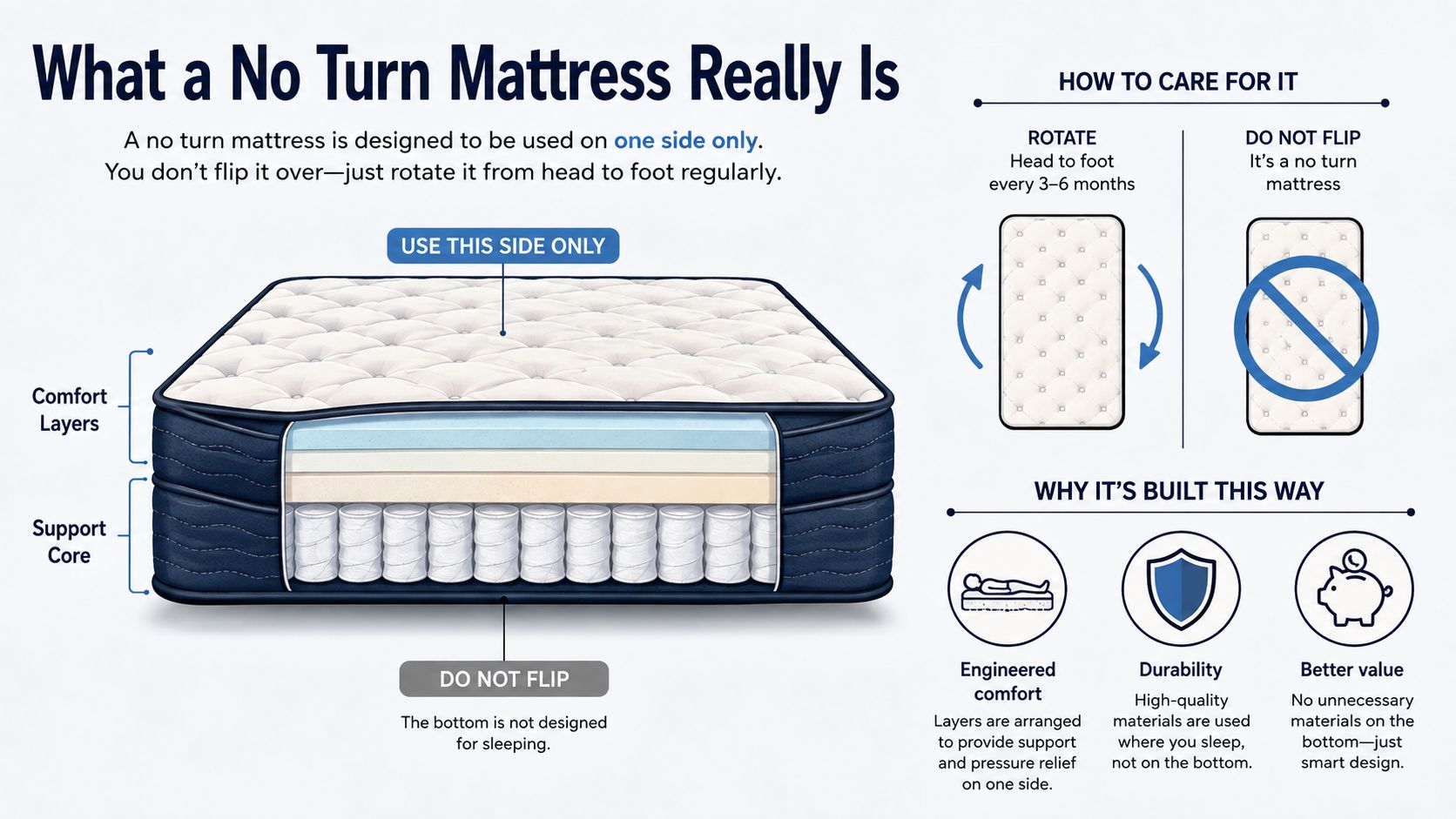
The top is the comfort side
Think of the mattress as a cake sitting on a serving board. The cake has the soft frosting and filling on top, while the board provides a firm surface underneath. Turning that cake upside down wouldn't create a second comfortable cake surface, and the same basic idea applies to a one-sided mattress.
The comfort system may include quilting, foam, padding, and other cushioning materials arranged only above the support core. The underside may have a firm cover or a surface intended to sit against the foundation. Sleeping on it could change the feel and may place pressure on materials that weren't selected for direct body contact.
This is why “no turn” shouldn't be interpreted as a defect or an incomplete mattress. It identifies how the mattress is meant to be used. A tight-top mattress is one example of how the surface design contributes to the overall feel and appearance of a bed.
Why one-sided construction changes wear
The construction also explains the main care concern. No-turn mattresses are typically one-sided constructions that cannot be flipped because the comfort system is built only on the sleep surface. That arrangement can reduce manufacturing complexity, but it means the upper layers handle all compression cycles instead of sharing them between two faces, as explained in this overview of no-turn mattress construction.
Repeated pressure tends to concentrate where the body makes the most contact. For many sleepers, those areas include the shoulders and hips. Over time, body impressions or softening may become more noticeable in those zones if the mattress stays in exactly the same orientation.
Rotation addresses that pattern without changing the mattress design. Moving the head end to the foot end changes where the sleeper's shoulders and hips land relative to the mattress layers. The top remains the top, but the pressure map shifts.
A no-turn mattress therefore has a clear operating instruction. Use the intended sleep surface, keep the base appropriate, and rotate the mattress rather than flipping it. That simple routine respects the way the layers were built.
How No Turn Became the Standard
The modern bedding market gradually moved toward one-sided construction, which is why shoppers now see no-turn labels so often. An industry-facing summary reports that 95 percent of mattresses sold since 2010 are non-flippable, and it notes that many manufacturers recommend rotating a mattress head-to-foot every 3 to 6 months instead of turning it over. The figures and historical context appear in this summary of mattress design changes.
A change in the retail default
Older mattress traditions often centered on flipping. Two sleeping surfaces allowed manufacturers to place comfort and support materials on both faces, giving households another way to distribute wear. As foam, hybrid, and many modern innerspring designs became more common, manufacturers increasingly arranged the mattress around one primary sleep surface.
That shift changed the advice shoppers heard. Instead of turning the mattress over, owners were asked to rotate it from head to foot. The routine became less about changing sleeping sides and more about moving the main pressure zones to different areas of the comfort layers.
The change also simplified the shopping conversation in one respect. A buyer usually doesn't need to guess which side of a no-turn mattress is the top. The finished sleep surface is visible, while the underside is designed for the base.
Why flippable beds still matter
Only a small minority of mattresses remain intentionally flippable today, mainly certain all-latex or specialty constructions. Those options can still appeal to households that prefer a mattress with two usable faces and a care routine built around alternating surfaces.
The market shift doesn't make two-sided mattresses obsolete. It gives shoppers two different design philosophies to consider. A no-turn mattress focuses its comfort system on one face and asks the owner to rotate it. A flippable mattress makes both faces part of the usable design and can distribute wear across them.
For families, the important takeaway is practical rather than historical. A tag saying no turn reflects the dominant modern format, but it doesn't remove the need to understand mattress care. The label tells shoppers what not to do, while the care instructions explain what to do instead.
No Turn Versus Flippable Mattresses Compared
The clearest comparison starts with two simple movements. Flipping means turning the entire mattress over so the sleeping surface changes. Rotating means switching the head and foot ends while keeping the same top surface upward, a distinction explained in this mattress care guide.
A no-turn mattress is built for rotation only. A flippable mattress is designed for use on both faces, so it can support a different maintenance pattern. The best fit depends on whether the household values a simpler one-surface routine or the ability to spread use across two sleeping sides.
No Turn vs Flippable Mattress Comparison
| Feature | No Turn Mattress | Flippable Mattress |
|---|---|---|
| Usable surfaces | One intended sleeping surface | Two intended sleeping surfaces |
| Main care movement | Rotate head-to-foot | Flip and rotate according to the care guidance |
| Wear distribution | Pressure remains within one comfort system, then shifts with rotation | Wear can be shared across both faces |
| Construction | Comfort materials are concentrated on the top | Both sides are designed for sleeping use |
| Convenience | Usually lighter and simpler to orient during care | May require more effort to turn safely |
| Best match | Shoppers who prefer a straightforward routine | Shoppers who value alternating surfaces |
Which design fits a household?
A no-turn model can make sense for a shopper who wants a familiar top surface and doesn't want to manage two different sleeping faces. It can also suit a room where moving a mattress is difficult, provided the owner still has enough space to rotate it safely.
A flippable mattress may appeal to sleepers who want to alternate surfaces as part of regular care. Families should remember that two-sided beds still need an organized routine. One care recommendation suggests flipping or rotating a two-sided mattress every three months, alternating the actions over time, as described in this explanation of two-sided mattress maintenance.
BILTRITE's two-sided mattress selection gives shoppers a way to explore that alternative in person. The main decision isn't whether one design is universally superior. It's whether the mattress construction matches the household's preferred comfort feel, available space, physical ability, and willingness to follow the care routine.
A showroom test can make the distinction easier. A shopper can lie on the bed, compare the surface feel, and ask how each model should be rotated or flipped. That conversation often clears up more than a label alone.
How to Care for a No Turn Mattress the Right Way
A no-turn mattress needs a routine, but the routine is straightforward. The mattress should stay right-side up and move from head to foot at a regular interval. One mattress-care guide recommends every three months for daily-use beds, noting that rotation helps protect against sagging and localized body impressions, as explained in this no-turn mattress care guide.
A simple rotation routine
A household can make rotation easier by treating it like a seasonal home-care task. Before moving the mattress, clear the bedding, check the path around the bed, and ask for help if the mattress is heavy or the room is tight.
Mark the starting direction. A small removable label on the bed frame can identify which end is at the head. This prevents guesswork and makes the next rotation easier to remember.
Lift rather than drag. Dragging can strain the mattress cover and may disturb the foundation. Two adults should coordinate the movement, keeping hands clear of pinch points.
Turn it head-to-foot. The former head end goes to the foot of the bed. The top surface stays facing upward, and the mattress shouldn't be turned upside down.
Check the alignment. Once the mattress is back in place, center it on the base and confirm that no corner is hanging over the edge.
Record the date. A note on a calendar or household reminder can prevent the routine from disappearing during a busy season.
A useful habit: Rotate before visible impressions become the reason for action. Regular care is easier than trying to correct a deeply uneven sleep surface.
Pay attention to the base
The mattress and base work as a pair. A suitable foundation should support the mattress evenly and remain compatible with the mattress care instructions. If the base flexes, shifts, or leaves unsupported areas, the mattress may not wear evenly no matter how consistently it's rotated.
A protector can also help shield the cover from spills, perspiration, dust, and everyday household mess. It shouldn't replace rotation, though. The protector guards the surface, while rotation changes where repeated body pressure lands.
BILTRITE's mattress maintenance and cleaning tips can help households build a broader care routine. The most important point remains easy to remember: no turn means no flipping, not no maintenance.
Longevity Comfort and Warranty Implications
A no-turn mattress concentrates its comfort materials on one sleeping face, so the way a household uses and supports it affects how that surface feels over time. Repeated compression naturally occurs where sleepers place the most pressure, often around the shoulders and hips. Rotation helps redistribute those zones across the mattress, which can slow localized fatigue in foam, quilting, and fiber layers.
That doesn't mean rotation can prevent every change in feel. Mattress materials soften with use, and different construction types can respond differently to pressure. Sleeper weight, sleeping position, how often the bed is used, and base compatibility all influence the pattern a household notices.
Comfort depends on consistent care
The biggest misunderstanding is treating “no turn” as “leave it alone.” Existing guidance often explains that a no-turn mattress shouldn't be flipped, but the rotation schedule receives less attention. This consumer guide to no-turn mattresses highlights why rotation still matters when one sleep surface carries the wear.
A heavier sleeper may create stronger compression in the same zones than a lighter sleeper. A bed used every night may also need more consistent attention than a guest mattress used occasionally. These factors don't create a universal schedule, but they do give households a reason to follow the care directions closely and consider more frequent rotation early in ownership.
Warranty language deserves a careful read
Warranty coverage usually depends on the written terms for the specific mattress. Shoppers should review requirements related to the approved foundation, visible sagging or impressions, stains, protector use, and proper handling. A missed rotation may not automatically cancel coverage, but ignoring the care instructions can complicate a service conversation if a concern develops.
Photos, receipts, care instructions, and notes about the base can help a household explain how the mattress has been used. The exact warranty decision belongs to the applicable written policy, not to a general rule about every no-turn design.
Before a concern becomes a claim: Keep the mattress care instructions and warranty information together, then follow the recommended base and handling requirements.
Good care supports comfort, but it isn't a substitute for choosing the right construction in the first place. A sleeper who dislikes a certain feel won't necessarily become comfortable through rotation, and a base that doesn't suit the mattress can undermine an otherwise careful routine.
Finding Your Best Fit at BILTRITE in Greenfield
The key distinction is easy to carry into a showroom: rotate a no-turn mattress, don't flip it. Shoppers who prefer a single finished comfort surface can explore no-turn models, while those who want to alternate sleeping faces can ask about two-sided, flip-able designs.
BILTRITE's Mattress Center includes over 60 models and 500+ mattresses in stock, giving Metro Milwaukee households room to compare feels, heights, support styles, and care requirements. The showroom also includes options for different living situations, from small-scale furniture for apartments and condos to heavy-duty choices for families and senior living needs.
The team brings over 400 years of combined experience among its sales associates. Their role is to listen, explain construction in everyday language, and help shoppers compare options without pressure. A practical way to begin is with the guide to testing a mattress, then visit the showroom to try the surfaces personally.
BILTRITE is a fourth-generation, family-owned business serving the Metro Milwaukee community since 1928. The store focuses on affordable, better-quality furniture, including USA-made, Amish-made, and solid-wood pieces, alongside its mattress department. Qualifying purchases may include value services such as white-glove delivery, old mattress removal in donatable condition, or a complimentary protector or heavy-duty frame on select sets.
The showroom is located at 5430 West Layton Avenue in Greenfield, Wisconsin. Since BILTRITE doesn't sell online and closes on Sundays and Mondays for family time, an in-person visit gives shoppers the chance to feel the differences, ask care questions, and make a choice that fits the household.
BILTRITE Furniture-Leather-Mattresses offers a wide mattress selection, including no-turn and two-sided options, along with guidance on rotation, flipping, bases, and everyday care. Visit BILTRITE Furniture-Leather-Mattresses in Greenfield to test the options in person and talk with a knowledgeable team about a mattress that suits the household.