What Is a Good Coil Count for a Mattress


About 400 coils for a queen mattress is a sensible starting floor. A full-size mattress should have at least 300 coils, while a king should have at least 480 coils, but coil construction and gauge matter more than chasing the biggest number.
That answer challenges the most popular mattress-shopping advice. A larger coil count can sound impressive on a tag, yet the number doesn't tell a shopper whether the springs work independently, whether the steel feels firm or flexible, or whether the support is reinforced where the body needs it most.
BILTRITE Furniture-Leather-Mattresses has helped Metro Milwaukee families sort through furniture and mattress choices since 1928. The practical approach is simple: treat coil count as a minimum quality floor, then examine the rest of the support system. A well-built mattress with fewer, stronger, better-positioned coils can feel more supportive than a poorly designed mattress with a much higher count.
Table of Contents
- Why Coil Count Alone Does Not Tell the Whole Story
- Coil Count Guidelines by Mattress Size
- Coil Types and How They Change the Math
- Coil Gauge and the Feel of the Mattress
- Zoned Support and Pocketed Coil Designs
- Why More Coils Is Not Always Better
- A Practical Checklist for Mattress Shoppers
Why Coil Count Alone Does Not Tell the Whole Story
Three well-chosen ingredients can make a better meal than ten ingredients tossed into a pot without a plan. Mattress coils work much the same way. Coil count matters, but the design, materials, and arrangement determine how those coils perform under a sleeper's shoulders, hips, and lower back.
For a queen, about 400 coils is a useful baseline, not a finish line. Typical queen coil counts often range from 400 to 1,200, depending on the mattress design, according to this overview of coils in a mattress. A mattress below that floor may be underbuilt for its surface area, but a count far above it isn't automatically superior.
The number needs context
Coil count is most useful when comparing mattresses of the same size and similar construction. A queen with individually wrapped pocketed coils distributes support differently from a queen with interconnected Bonnell springs, even if both units contain the same number of coils.
The important questions include:
- What type of coil is used? Pocketed, Bonnell, offset, and continuous-wire systems don't respond alike.
- How thick is the wire? Gauge changes firmness, resilience, and the amount of weight each spring can handle.
- Are there support zones? Zoned construction can place firmer support under the lumbar region and more flexible support near the shoulders.
- How is the steel treated and assembled? Tempering and overall engineering influence how the spring unit behaves over time.
Practical rule: A coil count can tell shoppers whether a mattress clears a basic threshold. It can't tell them whether the mattress suits their body or sleeping position.
A 400-coil queen may feel steady and responsive, or it may feel bouncy and imprecise. An 800-coil queen may offer finer contouring, but only if the wire, pocketing, comfort layers, and support layout work together. The best question isn't “What mattress has the most coils?” It's “What kind of support do these coils create?”
Coil Count Guidelines by Mattress Size
A mattress has to support the entire sleep surface, not just the middle section where a sleeper lands. Larger beds need more support points to spread weight across the frame and reduce concentrated stress. That becomes especially important for couples, since two people can create different pressure patterns across the same surface.
A practical floor for a full-size mattress is about 300 coils, and a queen should have at least 400 coils. A king should start around 480 coils, with some practical comparisons reaching toward 600 coils depending on the construction and the way the manufacturer counts the unit. The historical size-based baseline is outlined in this mattress size chart.
| Mattress Size | Minimum Coil Count | Recommended Range |
|---|---|---|
| Twin | About 200 | At least the size-appropriate floor, with construction considered |
| Full | At least 300 | Around 300 or more, depending on coil type |
| Queen | At least 400 | Often 400 to 1,200, depending on design |
| King | At least 480 | Roughly 480 to 600 as a starting comparison range |
The twin figure is a practical scaled estimate rather than one of the specific historical thresholds listed for full, queen, and king. Shoppers should use it as a rough starting point, not a universal specification.
Why size changes the comparison
A queen with 400 coils and a king with 400 coils don't provide the same density of support. The king spreads those springs over a larger area, so each coil may cover more surface and respond less precisely.
That doesn't mean a king needs the highest possible number. A lower-count pocketed unit may distribute weight and limit movement more effectively than a higher-count basic Bonnell unit because each pocketed spring works with greater independence. Compare like with like, and consider how the coil unit is engineered before treating a larger number as an advantage.
Coil Types and How They Change the Math
The same coil count can describe very different experiences. Coil shape and connection determine whether the mattress acts like one large spring network or a collection of smaller support points.
Four common constructions
Bonnell coils have an hourglass shape and connect to neighboring springs. They create a traditional, lively bounce and can suit shoppers seeking a straightforward, budget-conscious design. Because the springs move together, movement can travel more easily across the surface. A 400-count Bonnell queen won't feel the same as a 400-count pocketed queen.
Offset coils use a hinged shape that allows more controlled flex than classic Bonnell coils. They still connect with neighboring springs, but the design can contour more smoothly under pressure. This construction often appeals to shoppers who want a firmer, traditional feel with some added adaptability.
Continuous-wire systems form rows from a connected wire structure. Their count can look substantial because the wire creates many linked turns, but those turns don't behave like the same number of independent springs. The feel tends to be stable and bouncy, with less precise contouring than individually wrapped coils.
Pocketed coils place individual springs inside fabric sleeves. Each coil can compress with more independence, which helps the mattress follow body shape and reduce the spread of movement. A shopper comparing pocketed and traditional construction can find a useful plain-language explanation in this guide to what a pocket coil mattress is.
Ask what the number includes
A tag may count the primary support coils, or it may include smaller coils in an upper comfort layer. Some designs also use different coil diameters and arrangements, making raw totals difficult to compare across categories.
Before trusting the number, a shopper should ask:
- Which coil system does the mattress use?
- Are the coils individually wrapped?
- Does the total include micro-coils?
- Are the compared mattresses the same size?
- What gauge steel supports the coil unit?
The count becomes more meaningful after those questions have clear answers. Without that context, the number is closer to a label than a prediction of comfort.
Coil Gauge and the Feel of the Mattress
Coil gauge describes wire thickness, and it works backward from what many shoppers expect. A lower gauge number means thicker steel and generally firmer spring action. A higher gauge number means thinner wire and usually a softer, more flexible response. One guide explains this relationship directly in its discussion of mattress coil count and gauge.
A 12-gauge coil feels sturdier than a 15-gauge coil because the 12-gauge wire is thicker. The difference resembles a thick garden hose compared with a thin telephone wire. Both can bend, but the thicker material resists pressure more strongly.
Read count and gauge together
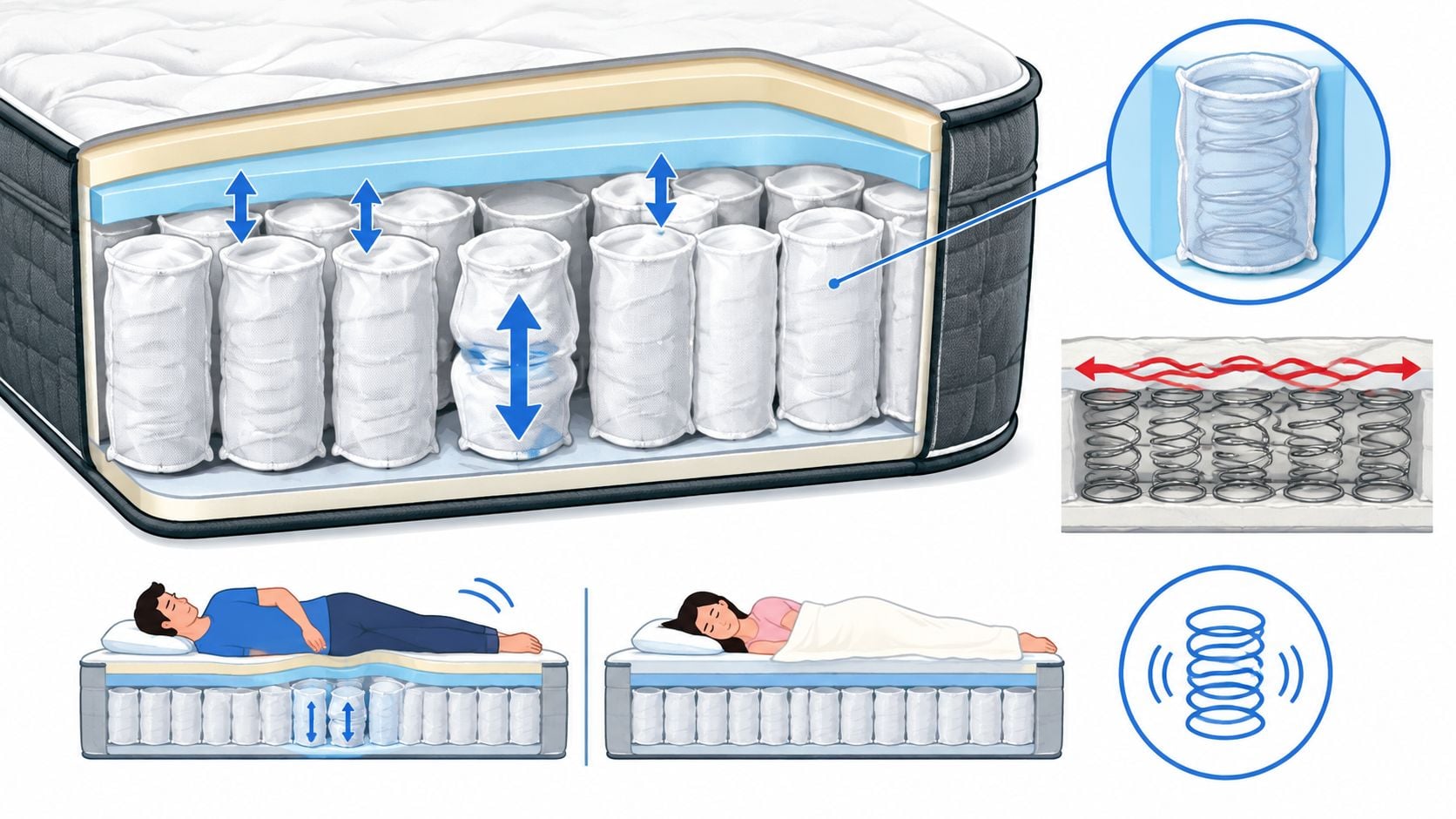
A mattress with 600 thin-gauge coils may feel softer than one with 400 thicker-gauge coils. The first mattress has more support points, but each spring may flex more easily. The second has fewer points, yet each spring may offer a firmer, steadier response.
Many quality innerspring designs fall within the 12- to 15-gauge range, but the right choice depends on the comfort layers, sleeping position, body weight, and preferred firmness. A side sleeper may prefer more give around the shoulder, while a back or stomach sleeper may want a flatter, more resistant surface.
The mattress firmness guide can help connect construction details with the feel a shopper wants. Gauge isn't a quality grade by itself. It's one of the main controls that shapes how the support core compresses.
Gauge also interacts with coil type and zoning. A thick wire in an interconnected system won't isolate movement like a thinner pocketed spring, and a uniformly firm coil unit won't provide the same regional support as a thoughtfully zoned design.
Zoned Support and Pocketed Coil Designs
Pocketed coils change the basic behavior of a mattress because each spring can respond more independently. Instead of one movement spreading through a connected grid, a wrapped coil compresses closer to the point where pressure is applied. That can help a mattress contour around the body and reduce partner disturbance.
Zoned support adds another layer of planning. A mattress may use firmer or denser coils beneath the lumbar and hip area, while allowing more flexibility beneath the shoulders. The aim is to keep the spine from dropping too far without making the entire surface feel rigid.
Three zones, five zones, and more targeted layouts
A three-zone arrangement generally divides the mattress into broad regions, often using different support beneath the upper body, torso, and legs. A five-zone design can make the transitions more specific, with separate attention to the shoulders, waist, hips, and lower body.
The exact number of zones matters less than whether the layout suits the sleeper. A side sleeper may appreciate softer give at the shoulder and firmer support near the waist. A back sleeper may prefer a more even surface with reinforcement beneath the lumbar region.
Micro-coils can appear above the main support unit as a thinner comfort-layer system. They add responsiveness and can refine pressure relief without replacing the primary support coils. Their inclusion may also increase the advertised total, so shoppers should ask whether the displayed count includes these smaller springs.
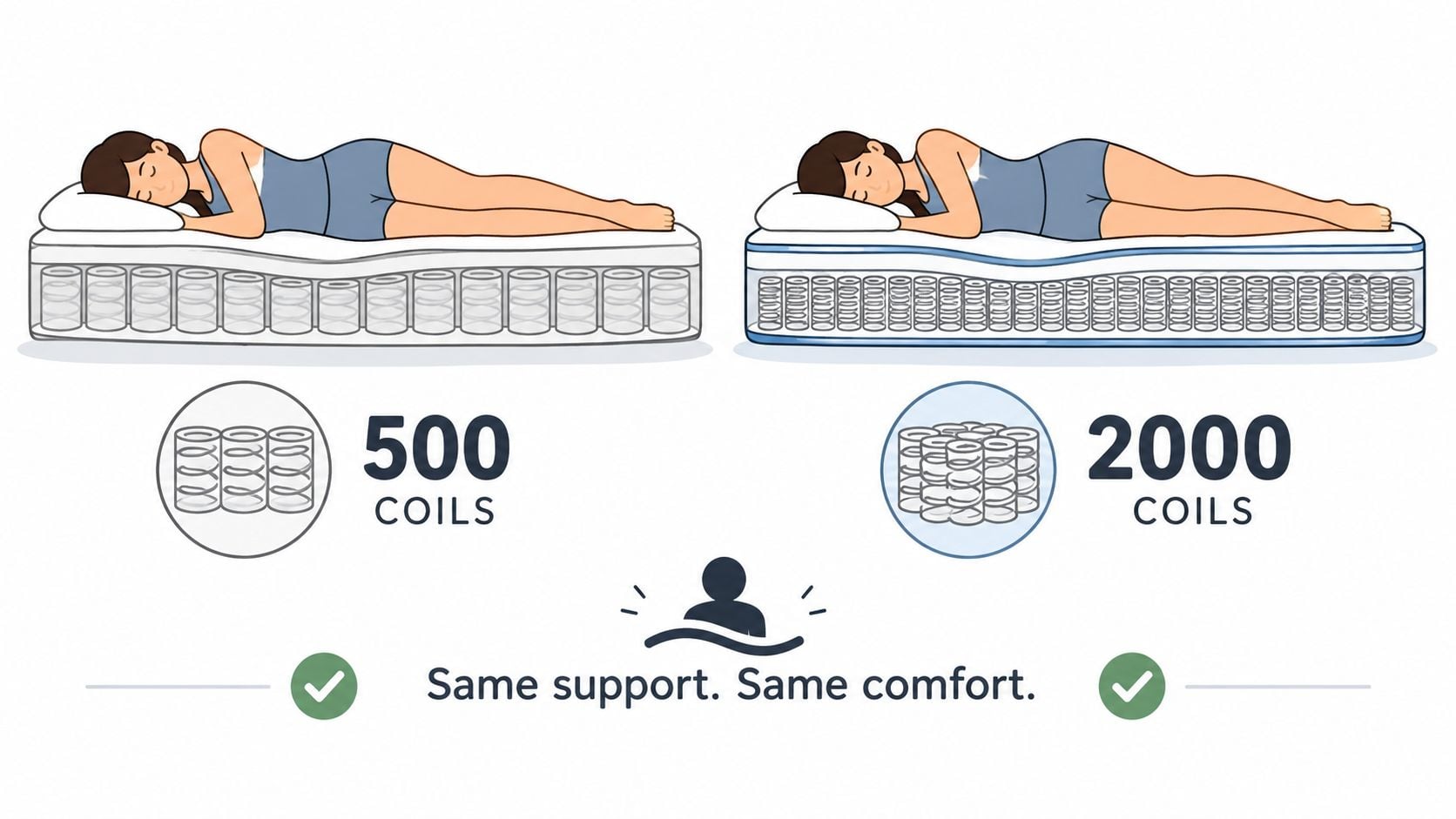
A 600-coil pocketed mattress with thoughtful zoning can support spinal alignment better than a flat 1,000-coil Bonnell unit. The first design directs support where the sleeper needs it and allows springs to respond separately. The second may contain more coils, but its interconnected structure can spread pressure and movement across a wider area.
A comparison of pocketed coil mattresses and innerspring designs helps clarify why construction can outweigh raw totals. Coil count tells shoppers how many springs exist. Zoning tells them how those springs are assigned to the job.
Why More Coils Is Not Always Better
A coil count shouldn't become a trophy number. Once a queen mattress reaches roughly 800 to 1,000 quality pocketed coils, additional springs may offer little noticeable benefit unless the rest of the build is also carefully engineered, as explained in this advanced mattress guide.
More springs can increase material use, weight, and complexity. Tightly packed coils may also have less room to move freely, especially when the design relies on small springs or counts comfort-layer coils in the total. If neighboring coils don't have enough independent movement, a larger number may not create a more adaptive feel.
Quality matters during real-world wear
A mattress can look perfectly normal in a showroom and still experience internal weakening under repeated weight-bearing stress. A 2022 study found that mattress coil springs can weaken under load in ways that aren't visually obvious when the mattress is unused, which supports evaluating gauge, coil design, and construction, not just the printed total. The findings are available in this study on mattress coil spring weakening.
The practical concern is not that every high-count mattress will fail. It's that a high count can't guarantee durability. Steel quality, tempering, comfort-layer materials, edge reinforcement, and the way the unit handles concentrated pressure all influence how the mattress ages.
A showroom test beats a bragging number
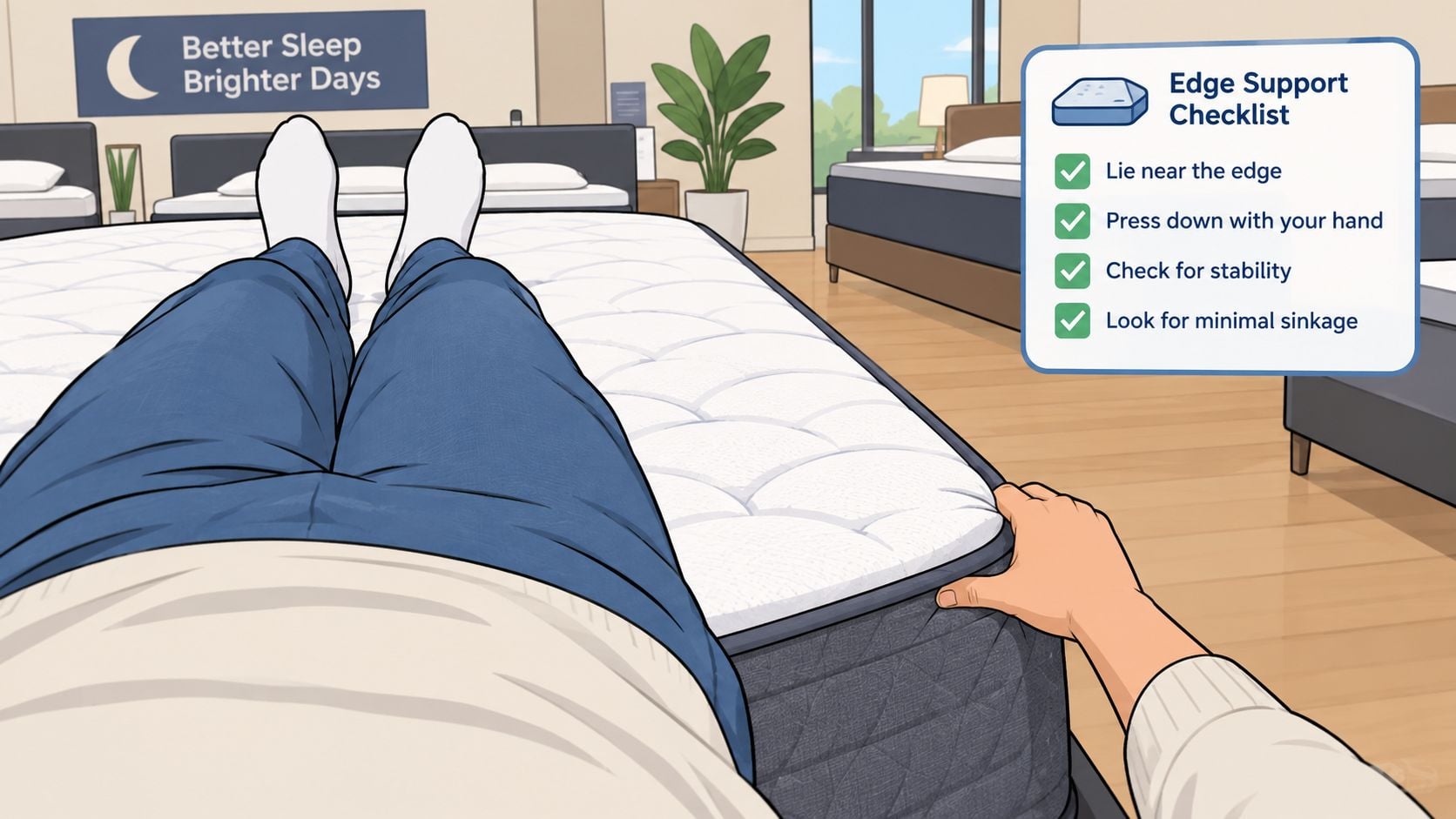
A shopper can press the mattress near the edge, sit on the border, and lie in the preferred sleeping position. A partner can shift on the opposite side while the other person notices whether movement travels across the bed.
A mattress should earn approval through support and comfort, not through the largest number on its label.
The right target is enough coil density for the mattress size, combined with appropriate gauge, coil type, zoning, and comfort layers. That approach treats coil count as a floor, not a finish line.
A Practical Checklist for Mattress Shoppers
A spec sheet can narrow the field, but a mattress still needs to feel right under the body. A useful in-store test combines comfort, movement, and support instead of relying on a quick sit at the edge.
Start with the body test
A shopper should lie on the mattress in both the usual side and back positions for at least 10 minutes. That gives the comfort layers time to settle and makes it easier to notice pressure around the shoulders, hips, and lower back.
Then check the following:
- Edge support: Sit near the border and press down with a hand. The edge should feel stable enough for getting in and out of bed.
- Motion isolation: If a partner will share the mattress, have one person change position while the other notices how much movement travels.
- Spinal alignment: In a side position, check whether the body stays reasonably level. A hand placed beneath the lower back can reveal excessive space or unwanted pressure.
- Pressure comfort: Notice whether shoulders and hips feel cushioned without allowing the middle of the body to sink too much.

Match the experience to the specifications
After the feel test, verify the construction details. The guide to shopping for a mattress can serve as a companion checklist.
- Confirm the coil type. Ask whether the mattress uses pocketed, Bonnell, offset, or continuous-wire construction.
- Check the gauge. A range between 12 and 15 gauge is a useful quality reference, but the intended firmness still depends on the entire build.
- Verify the size-appropriate minimum. Check that the mattress clears about 300 coils for a full, 400 for a queen, and 480 for a king.
- Review the zoning map. Look for reinforcement beneath the lumbar and hip regions, along with appropriate shoulder flexibility.
- Ask about wear coverage. Confirm how the warranty addresses coil sagging or support failure.
- Clarify the trial and return terms. A written policy should explain the testing period, return conditions, and any associated requirements.
Different sleepers may prioritize different details. A couple may place motion isolation first, a side sleeper may focus on shoulder pressure, and a guest-room shopper may care most about balanced support and value. BILTRITE Furniture-Leather-Mattresses offers over 60 mattress models, so Greenfield shoppers can compare these differences in person with sales associates who have over 400 years of combined experience.
BILTRITE Furniture-Leather-Mattresses offers a large mattress department, including pocketed-coil and supportive designs, along with USA-made, Amish-made, solid-wood, small-scale, and heavy-duty furniture for Metro Milwaukee homes. Visit BILTRITE Furniture-Leather-Mattresses in Greenfield to test mattresses, ask about coil count and gauge, and speak with the team in person.