Are Flippable Mattresses Better? a Friendly Milwaukee Guide

Are flippable mattresses better, or does “two-sided” sound better because older mattresses worked that way? The honest showroom answer is straightforward: a flippable mattress isn't automatically better. It can be the smarter long-term choice when both sleeping surfaces use strong, well-matched materials and the owner flips and rotates the mattress as directed.
The primary question isn't only whether a mattress can be turned over. It's whether the foam, quilting, coils, edge support, and foundation can preserve comfort and support under repeated use. That construction-first approach matters to BILTRITE, a fourth-generation, family-owned business serving Metro Milwaukee since 1928. A mattress should earn its place in a home through dependable materials and sensible care, not through a label alone.
| Dimension | Flippable mattress | One-sided mattress |
|---|---|---|
| Usable surfaces | Designed for sleeping on both sides | Designed for sleeping on one side |
| Main advantage | Spreads wear across two sleep surfaces | Offers convenience and more freedom in top-layer design |
| Maintenance | Requires flipping and rotating | Usually requires rotation only |
| Comfort options | May offer different feels on each side | Can provide taller, plusher, or more specialized top layers |
| Best buying question | Are both sides built to the same quality standard? | Will the single comfort stack retain support over time? |
The Short Answer and Why It Used to Be Obvious
A well-built flippable mattress often has a durability advantage because body weight doesn't compress the same comfort stack forever. Once the mattress is turned, the other side takes its share of the work. That can help reduce concentrated wear, but only if both surfaces are usable and the mattress receives regular care.
For much of the twentieth century, that construction was normal. Historical industry summaries describe mattresses in the United States and other major markets as commonly using springs and cotton on both sides from the early innerspring era through about the 1970s. The market then moved toward one-sided designs in the late 1990s and early 2000s, with 2000 standing out as an inflection point when Simmons introduced a major one-sided innerspring line. The historical overview of two-sided mattresses traces that shift from ordinary household practice to specialty category.
Why one-sided designs took over
Older flippable beds generally used a central spring unit with matching padding above and below it. Turning the mattress helped distribute wear, and families were commonly told to flip as well as rotate. The design was familiar, practical, and built around using the entire mattress rather than treating one surface as the only finished side.
One-sided construction changed the manufacturing equation. With padding concentrated on top, manufacturers could create taller comfort layers, thicker pillow-top profiles, and more specialized pressure-relief designs without duplicating those layers underneath. The result was a mattress that was easier for the owner to maintain, but one that placed all nightly loading on the same comfort stack.
The practical rule: Flippability is valuable only when the second side is built for real sleep, not merely included to support a marketing claim.
By the early 2000s, one-sided construction had become dominant, and two-sided mattresses moved into a specialty role. Today's serious flippable models are usually deliberate builds. Both sides need enough padding, the core needs reliable support, and the border needs to remain stable whichever surface faces upward.
That's why the short answer is “sometimes.” A strong flippable mattress can be a better value for a household planning to keep its bed for years and willing to maintain it. A well-made one-sided mattress can be the better fit for someone who wants a very specific plush feel, specialized zoning, or simpler handling.
What Makes a Mattress Flippable
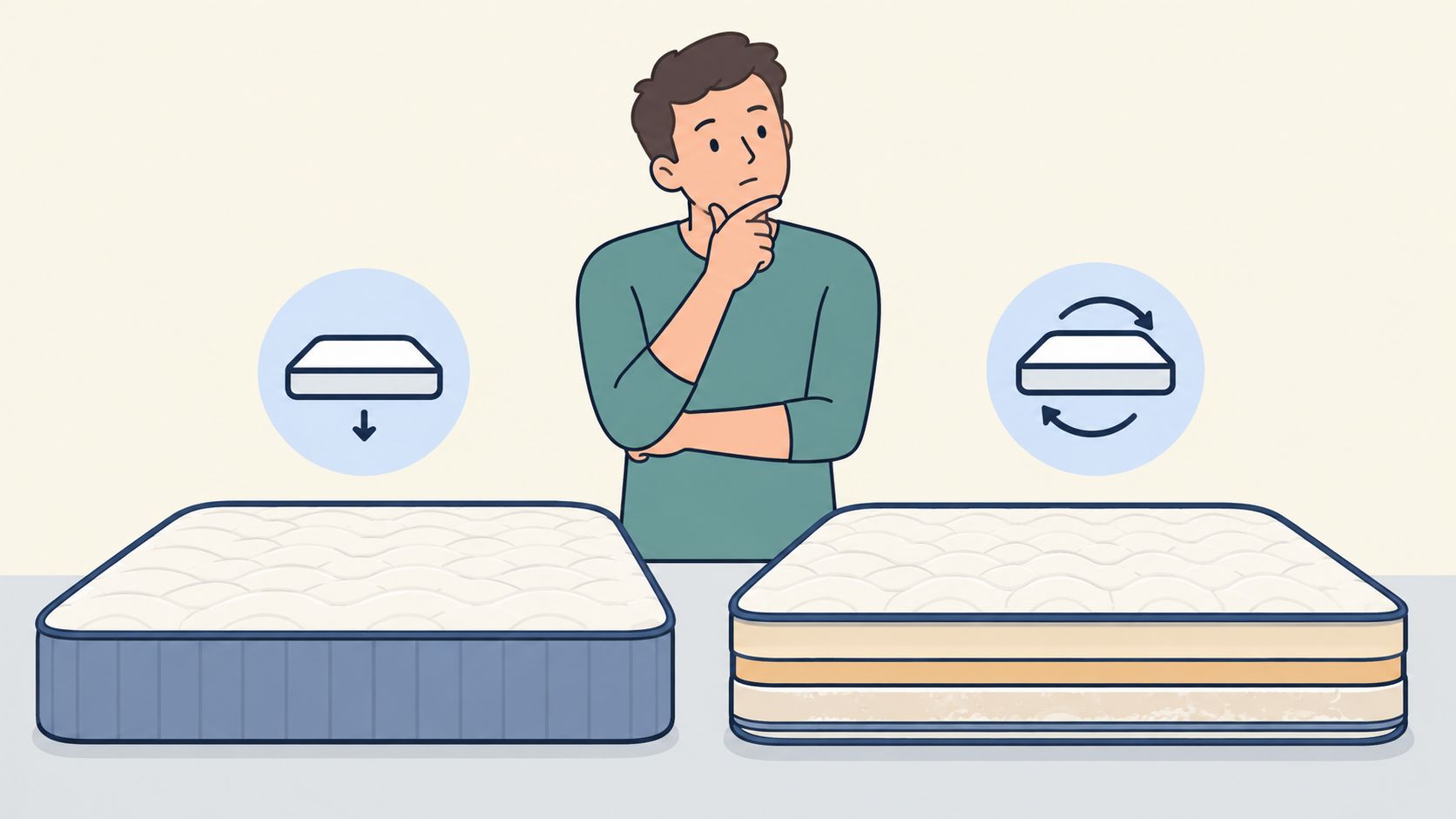
A genuine flippable mattress has two usable sleeping surfaces. Do not stop at the word “flippable.” Check whether the materials, border, and support core were built for regular use on either side.
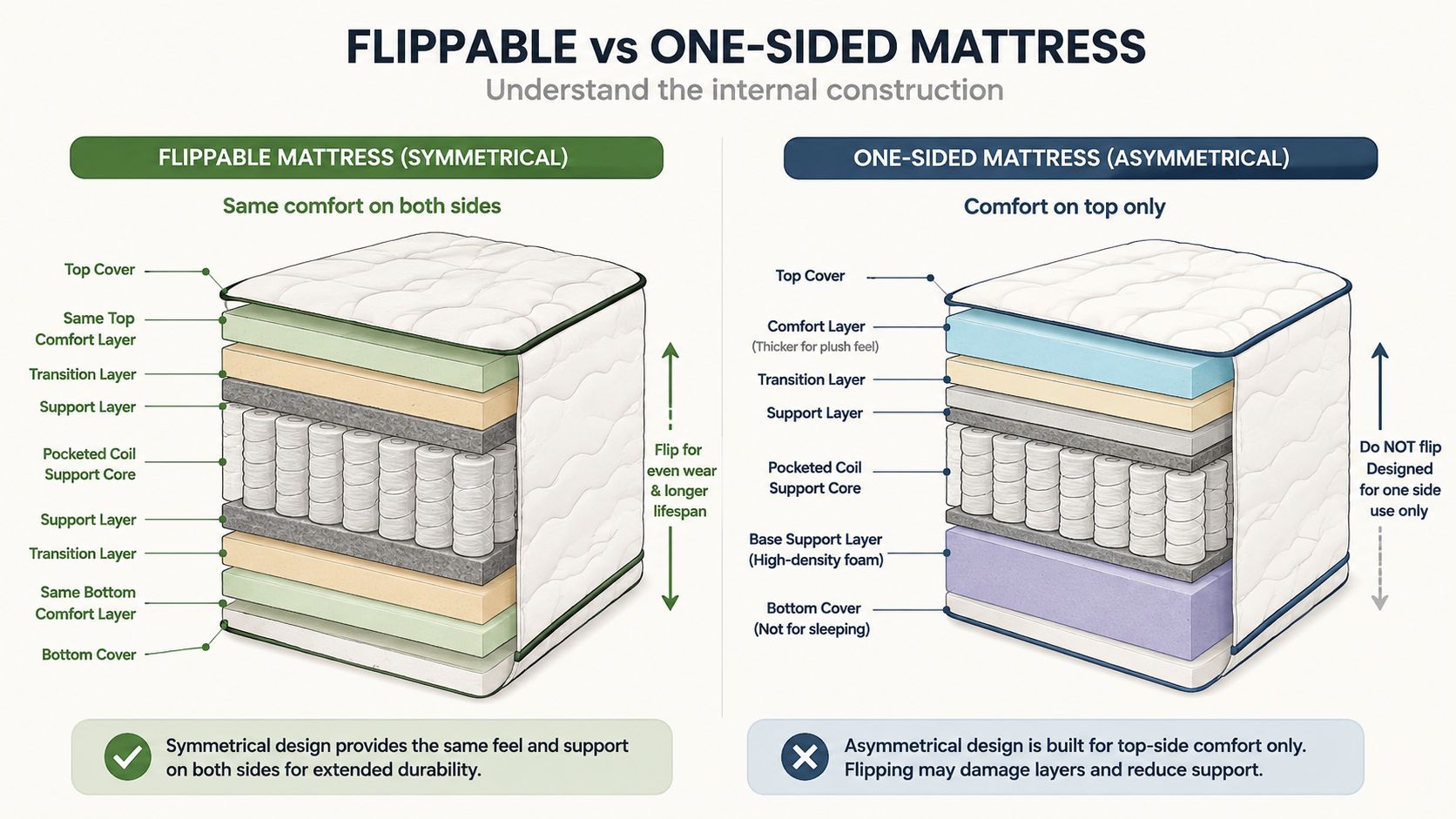
The construction usually places a substantial support core near the center, often made with coils or another structured support system. Comfort layers sit above and below that core. The two faces may feel similar, or one may be medium and the other firm, but both must provide a finished sleep surface. A stable border helps the mattress lie flat on its foundation in either orientation.
The construction difference
A one-sided mattress concentrates its comfort layers above the support core. Its underside may have firm fabric or reinforcement, but that surface is made to face the foundation, not a sleeper. Turning it over can place your body against materials that were never designed for comfort. Flip a one-sided mattress only when the manufacturer specifically approves it.
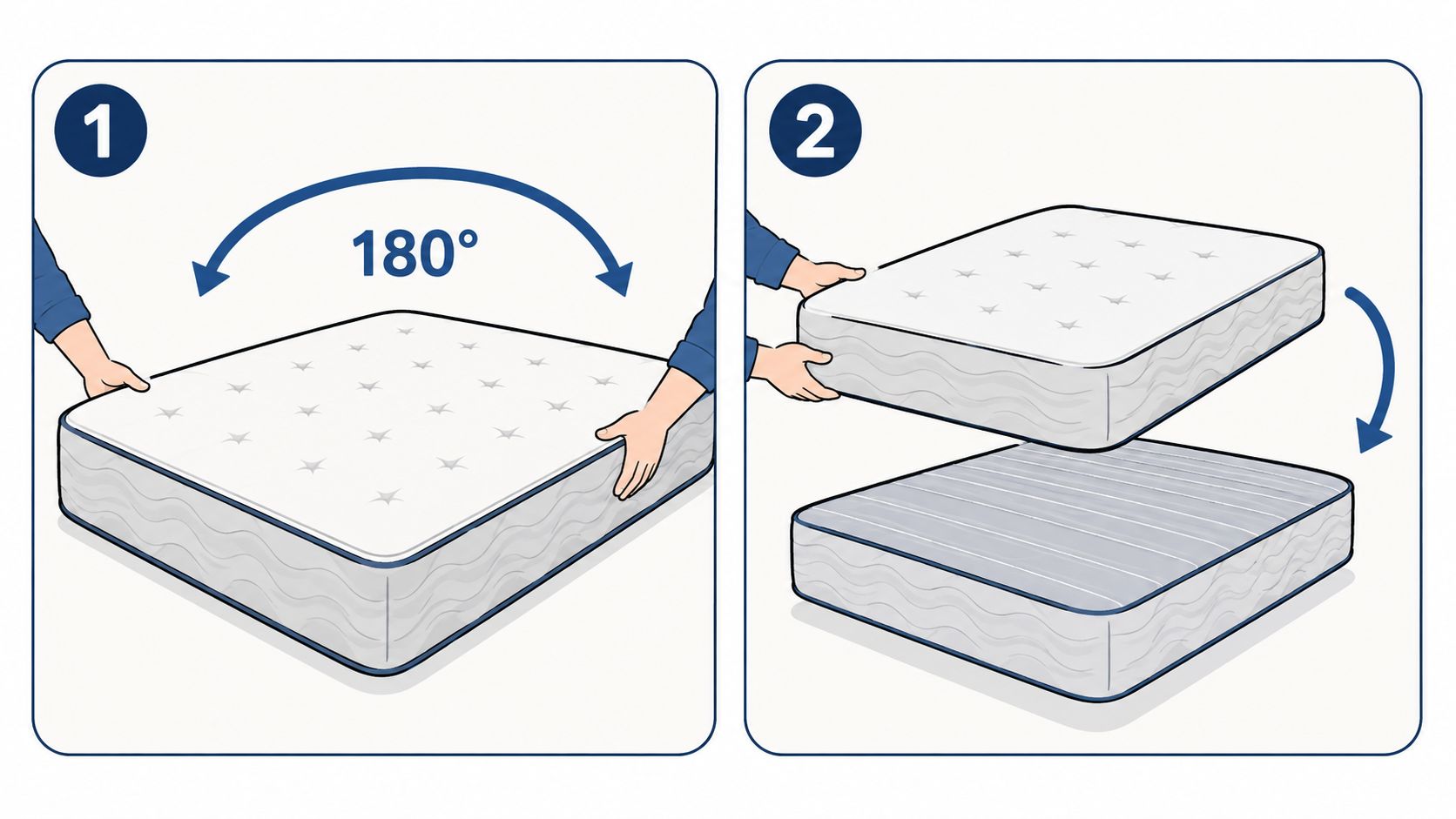
Rotation is different. Rotating turns the head end toward the foot end, while flipping turns the mattress completely over. This guide to flipping and rotating a mattress explains why care instructions must match the mattress construction.
Traditional spring designs also deserve a closer look at the relationship between the support core and the comfort layers. An explanation of innerspring mattresses can help shoppers identify how those parts work together.
Cues visible on the showroom floor
Look for these signs of a two-sided design:
- Matching faces: The ticking, quilting, and surface finish look the same or nearly the same on both sides.
- A usable underside: The bottom has finished upholstery rather than a rough foundation cover or exposed support base.
- A finished border: The edge feels structured and should lie flat whichever side faces up.
- Care instructions: The sewn-in tag explains whether to flip, rotate, or do both.
- A purposeful firmness difference: A medium side and a firm side offer useful choice, provided the firm side still has proper sleep padding.
Construction quality matters more than the label. A side-sleeper who needs pressure relief may prefer deeper, more specialized padding on a one-sided model. A back or stomach sleeper may value a firmer, well-supported flippable surface. Independent roller or barrel testing, such as methods that check changes in height, firmness, support, and physical damage, gives shoppers a better durability question: which build holds up for this body type?
The showroom test is straightforward. Ask whether both surfaces are approved for sleeping, then ask what each side contains. Vague answers are a warning sign.
Durability, Comfort, Cost, and Care Compared
Durability is the strongest argument for a flippable mattress, but it isn't a free pass. Independent mattress guidance commonly estimates that flipping and rotating can add about 2 to 3 years of usable life, with a total lifespan often cited around 7 to 12 years when materials and care are good. Historical comparisons describe older two-sided mattresses lasting 15 years or more, while many modern one-sided models are cited at roughly 5 to 7 years. The two-sided versus one-sided mattress comparison also cites a Sleep Doctor survey in which 29.6% of adults never flip their mattress, while adults who do tend to flip or rotate about every 6 months, or 183 days.
Those figures point to a condition that matters more than the sales pitch: the owner has to use both surfaces. A flippable mattress left in the same position year after year won't receive the main benefit of its design.
What testing should measure
Independent testing focuses on the signs of real wear rather than the label on the cover. Which? simulates years of use by rolling a heavy barrel over the mattress thousands of times, then scores changes in height, firmness, body support, and physical damage. The testing-methodology discussion makes the useful point that a flippable design matters only when it preserves those performance measures after repeated loading.
Consumer Reports evaluates shape retention, firmness, and support after simulated use. Its 2026 lab methods include a roller weighing more than 300 pounds running 30,000 cycles, according to its mattress testing coverage. This Consumer Reports mattress evaluation illustrates why testing a mattress under repeated loading tells shoppers more than counting its usable sides.
The most relevant takeaway is this:
- Support retention: Strong foam density, quality quilting, and a capable coil unit can matter as much as reversibility.
- Sagging resistance: Flipping can distribute pressure and reduce localized compression, but weak materials can still lose shape.
- Comfort consistency: A mattress that retains its height and firmness will usually feel more dependable than one that develops a deep impression.
- Body-type fit: A construction that works for a lighter sleeper may not preserve support as well for a heavier sleeper.
Comfort and price involve trade-offs
Flippable mattresses can offer two feels in one purchase. A medium side and a firm side may help a sleeper adjust after an injury, a change in comfort preference, or a shift in support needs. Partners should remember that both people share the same upward-facing side, so dual firmness doesn't create two separate feels across one bed.
One-sided mattresses have more freedom to build a tall, plush comfort stack, including specialized pressure-relief arrangements. That can make them more appealing to sleepers who want a deep, cushioned surface rather than the more balanced feel common in a symmetrical design.
Industry guidance commonly frames two-sided models as a durability play, with service-life ranges around 7 to 12 years versus 3 to 8 years for many single-sided models when properly maintained. Some coverage also claims 40% to 50% longer life with regular flipping, but those claims depend heavily on foam density, spring quality, quilting, core construction, and whether the mattress is symmetrical. The flippable mattress guidance from Sleep Foundation supports treating reversibility as one factor rather than a guarantee.
For a broader look at replacement timing and wear, BILTRITE's guide to how long mattresses last gives shoppers another useful checkpoint before choosing a construction.
Which Sleepers Tend to Prefer Each Side of the Debate
A mattress decision gets easier when it starts with the sleeper instead of the product category. The same flippable design that helps one household may frustrate another, especially if lifting, firmness, or specialized comfort features matter more than long-term maintenance.
| Sleeper profile | Best fit | Why it works |
|---|---|---|
| Back sleeper under 230 pounds | Quality one-sided mattress or either construction | A sound comfort stack can keep lumbar support level without requiring a reversible design |
| Back sleeper over 230 pounds | Well-built flippable mattress | Two usable surfaces can distribute repeated loading across the mattress |
| Side sleeper changing firmness preferences | Dual-firmness flippable model | A medium and firm side provide adjustment as pressure needs change |
| Hot sleeper | Breathable flippable innerspring or hybrid | Coil-based construction and alternating surfaces can support airflow and surface recovery |
| Guest-room owner | Flippable mattress | Occasional use spreads compression over a longer period |
| Allergy-sensitive sleeper | One-sided model with washable cover | Cleaning and cover removal are simpler than lifting and airing the underside |
A few household scenarios
A back sleeper under 230 pounds often does well on a quality one-sided mattress when the lumbar support remains level and the comfort materials hold their shape. That sleeper may have no reason to pay for the extra construction or maintenance of a reversible design.
A heavier back sleeper, particularly someone over 230 pounds, places more repeated load on the same regions of the mattress. A well-built flippable model can make sense because the owner can distribute that load across two finished surfaces. The construction still needs to be strong, though. Reversibility won't rescue weak foam or an underbuilt support core.
Side sleepers sometimes need a different feel as shoulder and hip pressure changes. A dual-firmness flippable mattress can provide a medium side and a firm side, giving the sleeper a practical adjustment without replacing the whole bed. It won't provide two different firmness levels to partners lying on the same side at the same time.
Hot sleepers should look closely at materials rather than assuming every flippable mattress sleeps cool. Flippable innerspring and hybrid models can offer breathable construction, while dense foam designs may still feel warmer. A one-sided hybrid can also breathe well, so the material choice remains central.
Guest rooms make a strong case for reversible construction. Since visitors use the bed intermittently, each side may see less concentrated compression, and a sturdy mattress can remain useful for a long time. Growing families and rental-property owners often value the same durability logic because replacement work is inconvenient.
Allergy sufferers may lean toward a one-sided mattress with a removable, washable zippered cover. Flipping and airing out a large mattress isn't as simple as removing fabric, vacuuming it, and putting it back on.
For more help matching construction to posture and pressure points, BILTRITE's guide to the best mattress for a sleep position can help narrow the showroom conversation.
A Practical Flipping and Care Schedule
A flippable mattress rewards a simple routine. The recommended approach is to rotate the mattress 180 degrees at the start of each season, then flip it to the opposite side at the six-month mark. That alternates end-to-end rotation with side-to-side flipping without asking the household to remember a complicated calendar.
Write the flip date directly on the manufacturer's care tag with a permanent marker. A visible note turns an easy-to-forget chore into a record that stays with the mattress.
The maintenance sequence
- Rotate first when the season changes. Move the head end to the foot end so the same shoulder and hip zones don't remain in the same locations.
- Flip at six months. Turn the mattress over only if the manufacturer built both sides for sleeping.
- Vacuum the surface. Use an upholstery attachment while the mattress is exposed.
- Inspect the foundation. If the bed uses a slatted base, rotate the foundation where the design allows it and check for movement.
- Check the frame legs. Each leg should sit squarely and support the frame without rocking.
- Air the underside. Give the newly exposed surface time to breathe before remaking the bed.
Safety first: A large mattress can be awkward to move. Two adults should handle a flip, and anyone with lifting limitations should arrange help rather than risk a strain.
The foundation deserves as much attention as the mattress. A weak box spring that sags in the middle, slats that don't provide adequate support, or a frame with loose legs can shorten the life of even a carefully maintained mattress.
Use a breathable waterproof protector rather than one that traps moisture. Keep bedroom humidity between 30% and 50% to help protect foam layers, and let a new mattress off-gas for 24 hours before adding sheets. BILTRITE's mattress-care guidance offers a useful reminder that flipping and rotating are separate tasks.
The common mistakes are predictable: skipping rotation, leaving one edge under constant load, using a non-breathable protector, and flipping back without airing the underside. A flippable mattress isn't maintenance-free. Its advantage depends on following through.
Choosing the Right Model at BILTRITE
The showroom decision should begin with three details: body weight, primary sleep position, and whether a partner prefers a different feel. Those answers quickly separate shoppers who need durable load distribution from those who want a plush, specialized top layer or a lighter, easier-to-handle bed.
BILTRITE's Mattress Center has over 60 models and more than 500 mattresses in stock, including roughly a dozen two-sided models. That gives shoppers a useful side-by-side test. A buyer can lie on both surfaces of a flippable candidate, then compare it with a one-sided mattress in a similar price range instead of judging reversibility in isolation.
What the showroom conversation should cover
- Feel on both sides: Does each surface provide genuine comfort, or is one side only technically usable?
- Support under the hips: Does the mattress keep the body level in the preferred sleep position?
- Edge stability: Does the border feel secure when sitting or sleeping near the edge?
- Maintenance reality: Can the household safely flip and rotate the mattress?
- Foundation compatibility: Will the existing frame support the mattress correctly?
BILTRITE's sales associates bring over 400 years of combined experience, and the store has served the Metro Milwaukee community through four generations since 1928. The team can discuss USA-made, Amish-made, solid-wood, small-scale, and heavy-duty furniture alongside the store's large mattress selection, without turning the visit into a pressure-filled sales pitch.
For shoppers specifically comparing reversible construction, the Flip-able and 2-Sided Mattress collection provides a focused starting point. Qualifying purchases may include white-glove delivery, setup on the correct foundation, and removal of an old mattress in donatable condition. Confirm the current service details with the showroom team.
The best recommendation is direct. Choose a flippable mattress when its materials are strong, both sides are finished for sleep, and the household will follow the care schedule. Choose a one-sided model when convenience, a specific plush profile, or specialized comfort layers matter more.
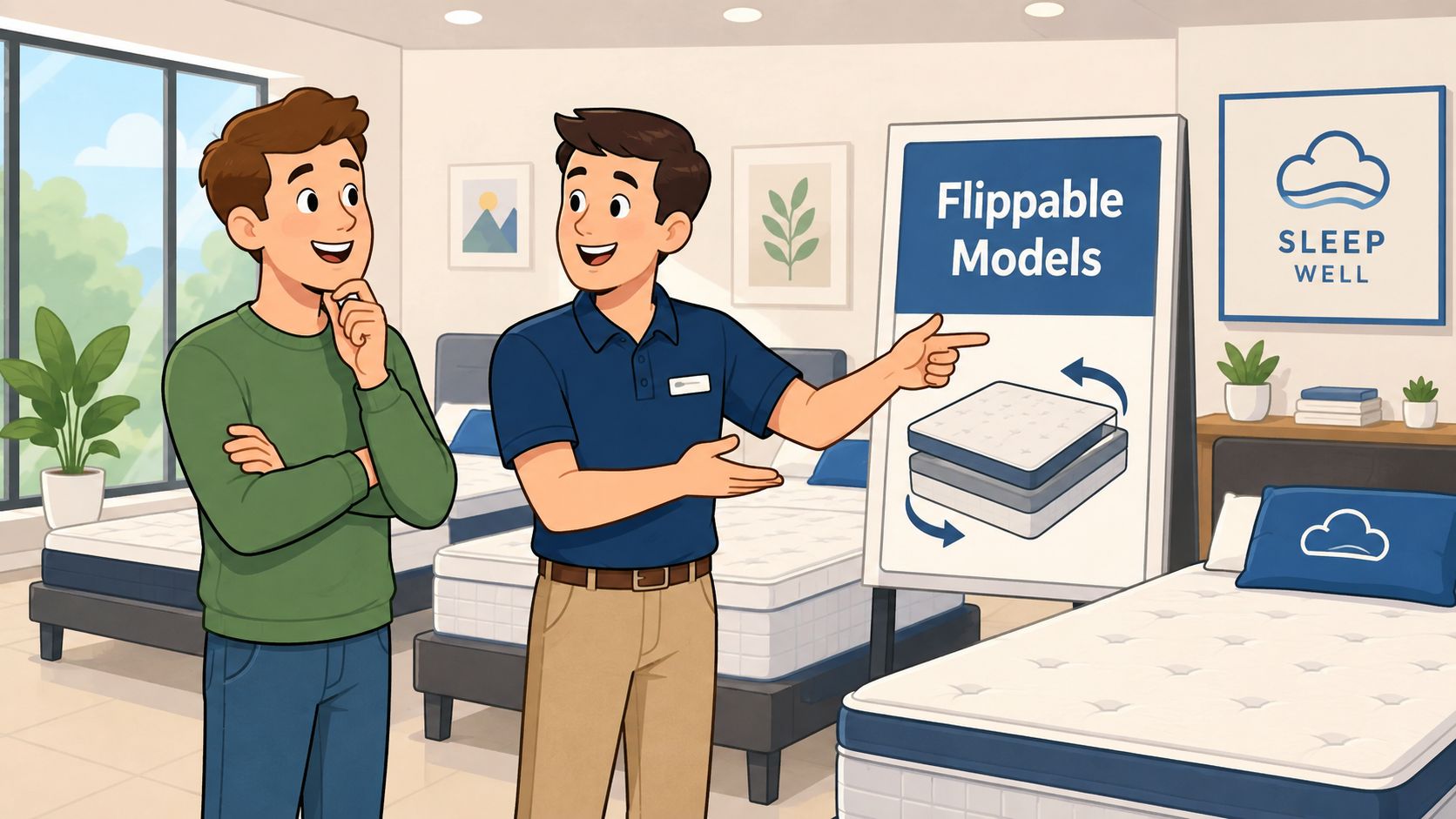
BILTRITE Furniture-Leather-Mattresses offers a large in-stock mattress selection, including two-sided and flip-able designs, with knowledgeable associates ready to compare both sides with shoppers. Visit BILTRITE Furniture-Leather-Mattresses in Greenfield, bring the household's sleep preferences, and test the construction in person before choosing.