Flippable Mattress for Heavy Person: A Buyer’s Guide


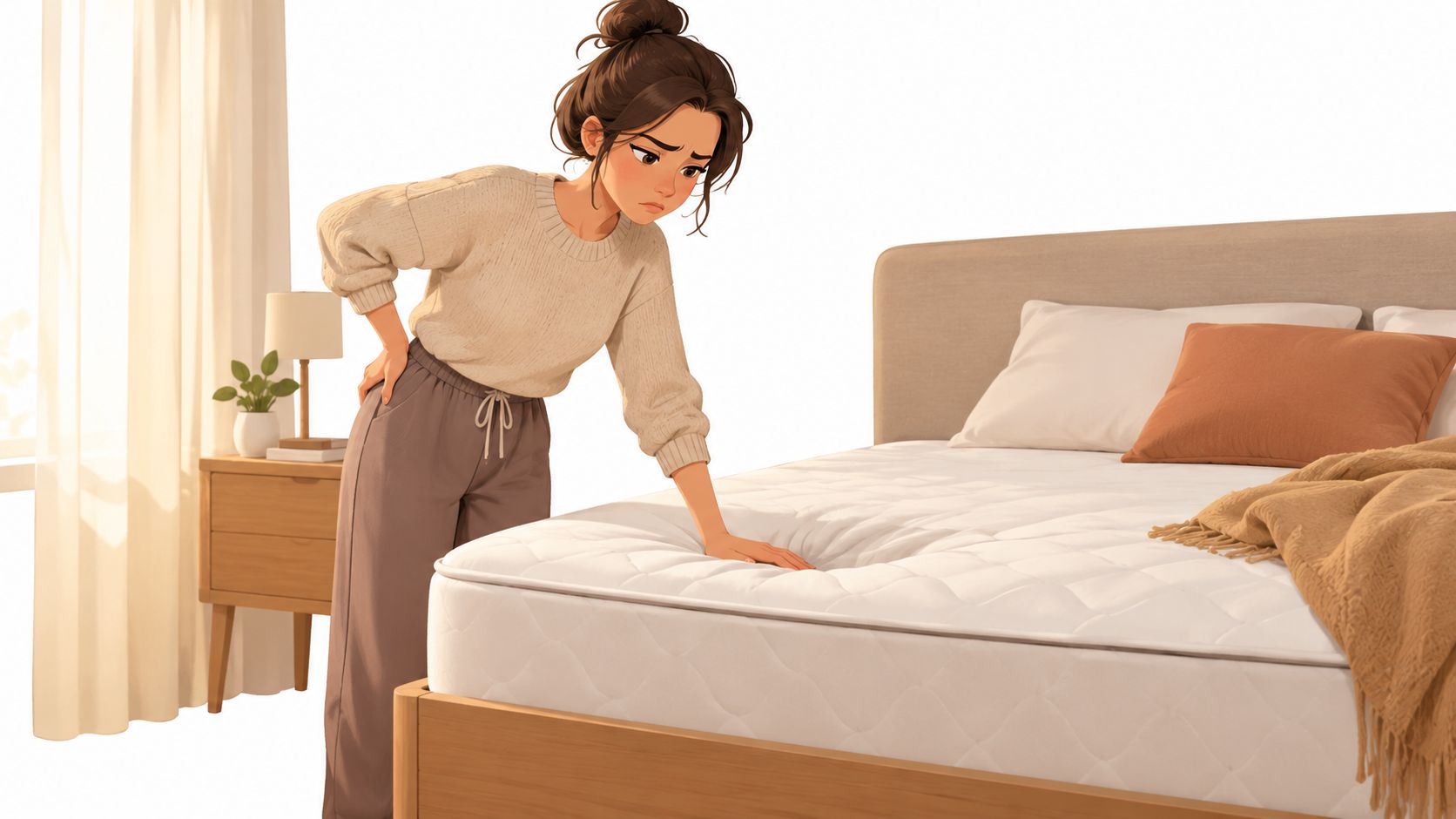
A hand presses into the middle of the bed and finds a hollow where hips used to be supported. The mattress looked fine in the store, felt fine for a few months, and then started folding around the sleeper instead of holding the sleeper up. For anyone shopping for a flippable mattress for heavy person use, that dent is the starting point. The goal isn't just a softer or firmer feel on day one. The goal is a sleep system that keeps its shape, spreads load, and can be maintained before one sleeping spot wears out first.
Table of Contents
- Why Weight Changes the Mattress Conversation
- What Makes a Mattress Truly Flippable
- Matching the Core Construction to Your Body
- A Showroom Test Protocol You Can Actually Use
- Reading the Spec Sheet Without Getting Lost
- Flipping, Rotating, and Caring for the Long Haul
- The Foundation Checklist Before You Buy
Why Weight Changes the Mattress Conversation
The frustration usually starts at home, not in a showroom. A heavier sleeper wakes up in a shallow valley, rolls toward the middle without meaning to, and sits on an edge that gives way too far while putting on shoes. None of that means the shopper chose poorly the first time. It means repeated loading found the weak points first, in the comfort layers, the support core, the edges, or the foundation underneath.
Weight changes the math because the same spot gets compressed night after night, mostly under the hips and shoulders. A lighter sleeper may float on top of foam that a heavier sleeper pushes through. Once comfort material stays compressed, alignment shifts, pressure builds, and the bed starts feeling both too soft in the middle and too hard at the pressure points. That's why thickness alone tells shoppers very little.
A Common Need, Not a Niche Request
The market context is broad. CDC data for 2023 on adult obesity prevalence by state found that at least 20% of adults in every U.S. state were living with obesity, while 23 states had adult obesity prevalence of at least 35%. Those figures don't set a mattress weight limit for any individual. They do explain why durability and load distribution belong near the top of the shopping list for so many households.
A true two-sided mattress answers part of that problem with maintenance. Usable comfort material on both faces lets the owner alternate surfaces and rotate the mattress instead of compressing one side every night. Wear gets spread across more material, and impressions are less likely to lock into one dominant sleeping position. Shoppers comparing options can start with guidance on mattresses built for heavier sleepers and then narrow the field in person.
Practical rule: Shop for a load-bearing system, not a showroom feel. Mattress, edges, foundation, and frame either work together or fail together.
BILTRITE has served Metro Milwaukee as a fourth-generation, family-owned business since 1928, and that long view shapes the advice given on the floor. The right questions come before any recommendation. How does the sleeper sleep? Where does the current bed dip? Is a partner sharing the surface? What's underneath the mattress right now? A flippable design matters for a heavier person only when those answers point to even wear, solid support, and a base that won't undo the mattress from below.
What Makes a Mattress Truly Flippable
Plenty of shoppers assume every mattress can be flipped. Most modern models can't, and flipping the wrong one puts the sleeper on a surface never meant for sleeping. A genuine flippable mattress places usable comfort layers on both sides of the support system. Either face can go up. Either face is built to cushion shoulders and hips while the core does the lifting.
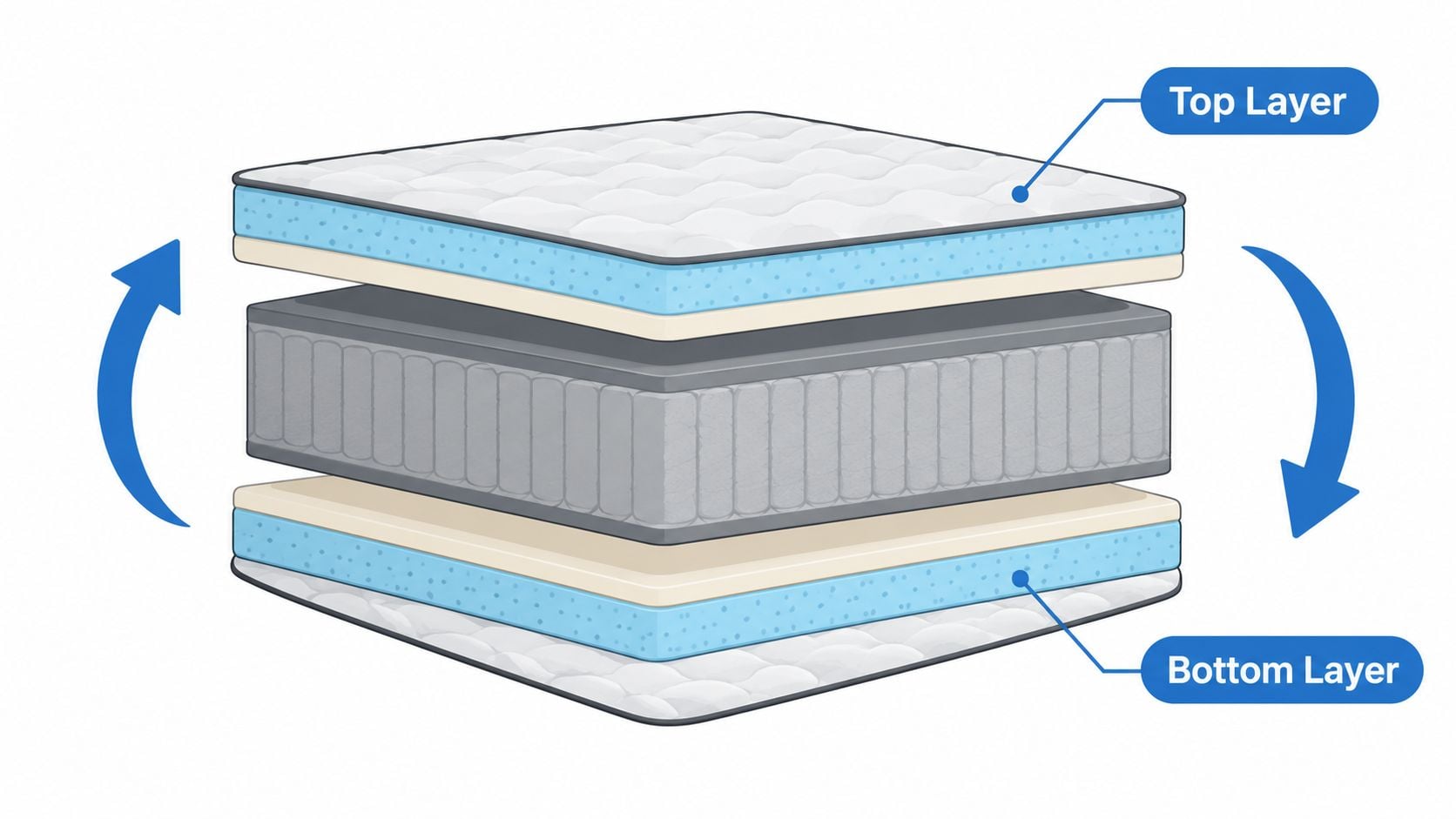
Two-sided construction used to be the norm. Earlier mattresses commonly used comparable spring and cushioning materials on both faces, so households flipped and rotated them as routine care. The industry shifted toward one-sided designs around the turn of the twenty-first century, with a single-sided introduction in 2000 often cited as a milestone in reporting on why mattresses stopped being flippable. Changing manufacturing economics pushed the same direction, and the 2007 federal mattress flammability standard, 16 CFR Part 1633, added testing and documentation that made simpler one-sided construction more attractive.
Flip and Rotate Versus Rotate Only
The hangtag matters more than a confident nod. Shoppers should look for clear language that both surfaces are sleep surfaces, then check that each side has comfort material rather than a thin, flat underside. Handles on the sides, finished quilting top and bottom, and care instructions that mention flipping all point the right way.
- Flip and rotate: Both faces are usable, so the mattress can be turned over and turned head to foot on a planned schedule.
- Rotate only: Comfort layers sit on top of support layers in one intended order, so the mattress turns head to foot but never over.
- Designated top and bottom: Flipping puts the wrong layer under the sleeper and can undermine comfort and durability.
Neutral consumer guidance makes the same distinction. Most modern mattresses aren't designed to be flipped because pressure-relieving layers sit above support layers, while double-sided models can reduce wear on each surface when flipped regularly, as explained in guidance on rotating versus flipping a mattress.
One honest trade-off deserves attention before purchase. A substantial two-sided mattress is heavy, and turning it is a two-person job for most households, especially in a tight room or up a narrow stairway. Handles help with grip, not with physics. Shoppers who live alone should think through who helps on flipping day. Flipping is a maintenance tool, not a magic trick, and it only works when both sides are built for sleeping and the owner can move the mattress safely.
Matching the Core Construction to Your Body
No single core wins for every heavier sleeper. Each construction spreads load differently, handles edges differently, and treats a restless partner differently. The smarter move is matching the core to the sleeper's build, position, and household, then confirming the choice by lying down long enough for the materials to respond.
Coil cores push back. Traditional innerspring and pocketed coil systems resist deep sinkage and usually make repositioning easier, which many heavier sleepers appreciate during the night. Pocketed coils move more independently, so one partner's turn tends to travel less across the bed. Shoppers who want the mechanics explained can review how a pocket coil mattress is constructed before testing models side by side.
Core Construction at a Glance for Heavier Sleepers
| Core Type | Edge Support | Motion Isolation | Best For |
|---|---|---|---|
| Traditional innerspring | Often firm when reinforced | Lower, movement carries | Sleepers who want lift and easy turning |
| Pocketed coil | Strong with a reinforced perimeter | Better, coils respond independently | Couples with different body weights |
| High-density foam | Varies, check the perimeter build | High, foam absorbs movement | Sleepers who prefer a still, contouring surface |
| Latex | Responsive and buoyant | Moderate | Sleepers who want cushion without a stuck feeling |
| Hybrid | Depends on coil and edge design | Moderate to high | Sleepers balancing pressure relief with support |
Foam cores ask harder questions about density. A soft, low-density comfort layer may feel welcoming for thirty seconds and then let hips drop through to the firmer material below. Heavier sleepers should ask about foam density, not just foam thickness, and watch whether the pelvis stays level after several minutes. Latex tends to feel more buoyant than slow-responding foam, so turning over takes less effort, though the livelier surface isn't for everyone.
Hybrids combine a coil support unit with foam or latex comfort layers, and in a two-sided build that comfort material appears on both faces. The appeal is balance. Coils carry the load and help the edges hold, while the top layers cushion pressure points. The risk is assuming the word hybrid guarantees durability. It doesn't. Coil design, foam quality, and edge reinforcement still decide the outcome.
Heavy-duty doesn't automatically mean comfortable, and the firmest bed on the floor isn't automatically the most supportive one in the bedroom.
Three questions sort the field quickly. Does the sleeper sink in the middle first, or slide toward a soft edge? Does heat build up when the body settles deep into foam? Does a partner wake when the other person gets up? Answers point toward a core type far better than any label. BILTRITE stocks heavy-duty and two-sided options among its mattress selection, and the floor team can walk shoppers through each build in plain language. The right bed earns its place by fitting the body in front of it, not by winning a spec sheet contest.
A Showroom Test Protocol You Can Actually Use
Honesty helps here more than hype. There's no strong clinical evidence that a particular mattress type is best for heavier sleepers. A Northwestern University physical-therapy expert noted that no randomized controlled trial or cohort study has established whether heavier people sleep better on a specific bed type, a gap described in reporting on mattress guidance for plus-size sleepers. Since no label can decide the purchase, a repeatable test has to do the work.
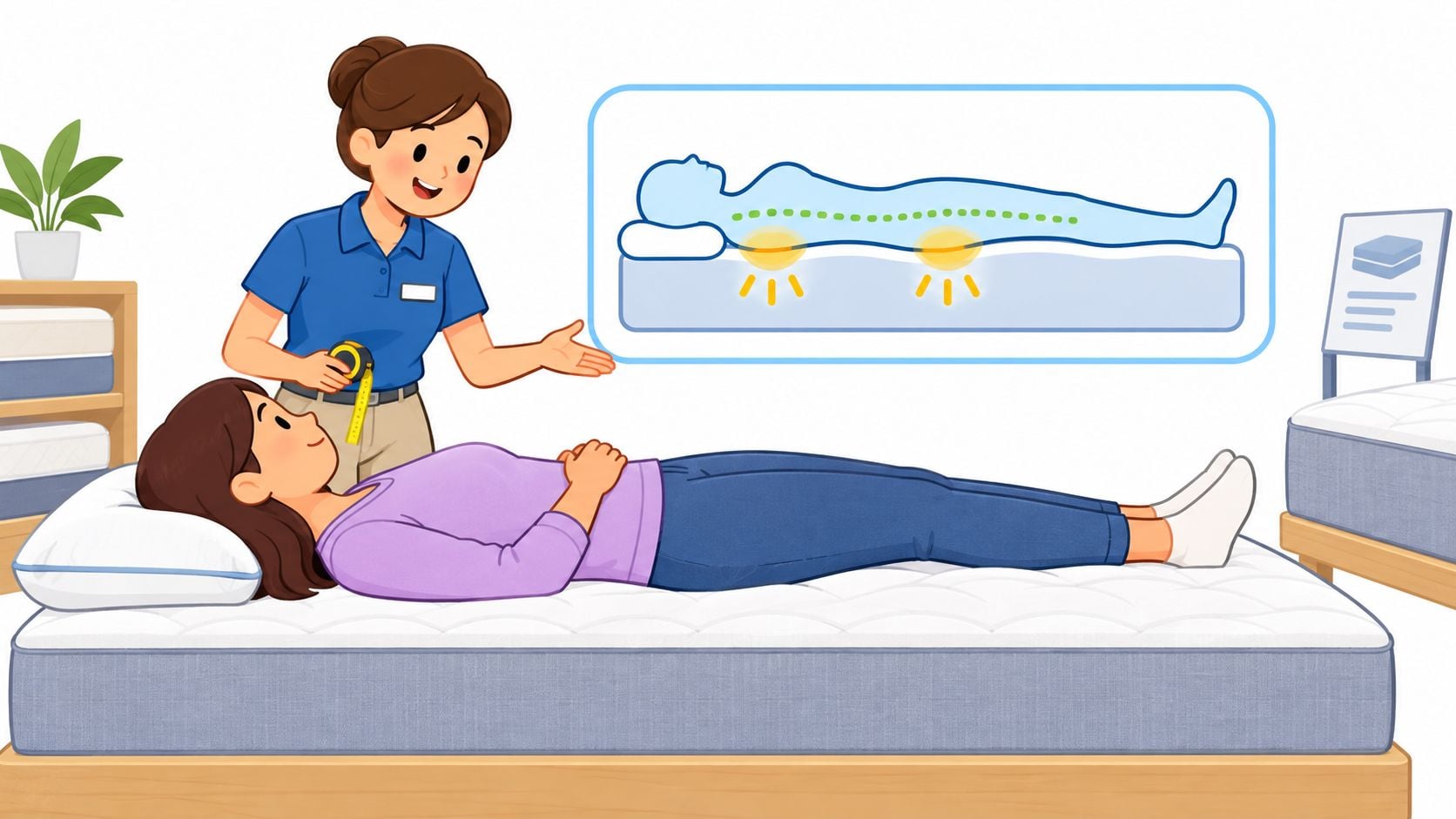
Start with body weight and shape, then choose the firmer, more supportive side first on any flippable model with two different feels. Lie down in the normal sleep position and stay there. The first thirty seconds measure surface softness. The next several minutes measure support. Shoppers who want a refresher before arriving can read a step-by-step approach to testing a mattress in store and bring the same routine to every bed.
The Ten-Minute Test, Step by Step
- Check spinal alignment: On the side, hips and shoulders should settle without the waist collapsing. On the back, the pelvis shouldn't drop below the rest of the body.
- Scan the pressure points: Shoulders, hips, and heels take concentrated loading. Discomfort, numbness, or visible pelvic sink signals a side that's too soft or under-supported.
- Sit on the edge: Sit where shoes get tied every morning. The edge should hold the sitter up well enough to stand without a struggle.
- Roll and reposition: Turn from back to side to stomach. A surface that traps the sleeper in a hollow will feel worse at 3 a.m.
- Flip and repeat: Ask the team to turn the mattress over, then run the same checks on the second surface.
Research on firmness supports testing both faces rather than following a single rule. In a study of 59 healthy participants assessing spinal alignment, people with higher body weight showed more neutral alignment on a firmer mattress, while lower-weight participants aligned better on a softer one, according to the study record on mattress firmness and spinal alignment. Height influenced results too, which is exactly why personal testing beats a universal firmness rating.
Partners should test together whenever possible. Combined weight, different sleep positions, and motion transfer only show up when both people are on the bed. A shortlist built this way, two or three models that pass every step, beats a snap decision made standing up with a hand pressed into the corner.
Reading the Spec Sheet Without Getting Lost
Spec sheets reward shoppers who know which numbers describe testing and which words describe marketing. Heavy-duty is a phrase. A documented test method with a load, a cycle count, and measured results is evidence. The difference matters most for a heavier sleeper, because concentrated hip loading and frequent edge sitting can push a mattress past a generalized durability estimate.

ASTM F1566 evaluates mattresses and mattress sets for firmness, firmness retention, durability, impact response, and height change, as outlined in the ASTM F1566 standard listing. A commonly cited rollator protocol uses a 240-pound cylindrical roller and 30,000 passes. Those figures describe a laboratory method, not a personal weight rating, and shoppers shouldn't treat them as a pass or fail guarantee unless the manufacturer names the exact standard and acceptance criteria.
What the Cycle Counts Actually Mean
Under EN 1957:2012 procedures, a mattress receives 100 pre-conditioning cycles followed by 29,900 additional durability cycles, roughly 30,000 cycles overall, using a rolling mechanism applying a total static load of 1,400 ± 7 newtons, with a separate 4,900-cycle edge-loading assessment possible in the sequence, per the EN 1957:2012 standard catalogue entry. That's useful comparison information. It still isn't a promise that a specific mattress supports a specific person indefinitely.
A separate approach described in a technical summary of ASTM F1566 mattress testing extends evaluation of firmness retention and surface deformation to 100,000 cycles. The Cornell Test in that summary is intended to simulate performance after approximately 10 years of use. Intended to simulate is the key phrase. Foundation quality, construction, and nightly use patterns move real results in either direction.
- Ask for post-cycle results: Height loss and firmness change after cycling say more than the cycle count alone.
- Ask which sides were tested: On a two-sided model with different feels, both surfaces need evaluation.
- Ask for the weight capacity in writing: A tested load range beats vague heavy-duty language every time.
- Ask what the warranty excludes: Foundation requirements and care instructions often sit in the fine print.
Independent testing on a specialized clinical support surface shows how specific good documentation gets. That testing used a 175-kilogram, 385-pound mannequin and evaluated performance across loads from 175 to 454 kilograms, 385 to 1,000 pounds, documented in clinical performance testing for a bariatric pressure-redistribution surface. A household mattress isn't a clinical surface, but the lesson transfers. Shoppers can ask any seller what load range and test method support the claim on the tag. A clear answer inspires confidence. A shrug is also an answer.
Flipping, Rotating, and Caring for the Long Haul
A flippable mattress only spreads wear if somebody flips it. That sounds obvious, yet it is where many two-sided beds lose their advantage. The mattress arrives, life gets busy, eighteen months pass on one face, and the same hip impression forms anyway. A written schedule, kept with the warranty paperwork, prevents that drift.
Follow the manufacturer's instructions for timing, since constructions differ. Many households settle into flipping and rotating on a planned seasonal rhythm, alternating the two moves so each surface and each end takes a turn under the heaviest load. Shoppers who want the reasoning laid out can check guidance on how often a mattress should be flipped and then match it to the care tag on the specific model purchased.
Moving a Heavy Mattress Without Getting Hurt
Plan the flip like moving furniture, because that's what it is. Strip the bedding, clear the nightstands, and confirm there's room to stand the mattress on its long edge without hitting a ceiling fan or a dresser. Two adults grip the handles, lift together, and walk the mattress over rather than dragging it across the foundation. Anyone with a bad back or a tight stairway at delivery should raise the subject before buying, not after.
- Keep a simple log: Date each flip and rotation, and note any impression or loss of support noticed that day.
- Use a protector: Moisture and spills degrade comfort materials and can complicate warranty claims.
- Watch the early months: New comfort layers settle, so the first year deserves closer attention to even wear.
- Recheck the base annually: Loose center legs and flexing slats show up as mattress problems that aren't the mattress.
Showroom advice: Put flipping dates on the family calendar the day the bed arrives. Memory is a poor maintenance plan.
Foundation compatibility can't wait until delivery day. A durable mattress can't compensate for inadequate base support, and a slat system with wide gaps lets a heavy mattress flex where it shouldn't. Center support under larger sizes keeps the middle of the bed from becoming the low point. The frame, foundation, and mattress carry the sleeper together, so care for one piece while ignoring the others only protects part of the investment. Done consistently, flipping and rotating stay simple. Ten minutes a few times a year keeps both surfaces working and gives the owner a regular look at how the whole setup is holding up.
The Foundation Checklist Before You Buy
The strongest argument in mattress shopping is also the least glamorous. The foundation matters as much as the mattress. A heavier sleeper loads the entire stack, mattress, foundation, frame, and floor contact points, and the weakest layer decides how the bed feels within a year. Shoppers who budget for the mattress and hope an old frame survives usually end up shopping twice.
Start with capacity for the complete sleep system, not just the mattress label. Get the manufacturer's documented maximum for each sleeper and for the combined mattress and foundation setup. Then confirm the frame isn't the limiting component. A heavy-duty mattress frame with proper center support keeps larger sizes from sagging between the side rails, and center legs should touch the floor firmly on a level surface.
Paperwork Worth Reading Before Money Changes Hands
Warranty terms decide what happens if an impression forms early. Shoppers should confirm what depth of impression qualifies as a defect, which foundations keep coverage valid, and whether flipping and rotating on schedule is required. Return and exchange terms deserve the same attention. A bed that passes a ten-minute showroom test still needs a fair path forward if the third week at home tells a different story.
Testing documentation for both faces belongs on the list too. EN 1957:2012 states that both sides shall be tested when the manufacturer identifies one side as softer and the other as firmer, a requirement noted in the EN 1957:2012 standard record for two-sided testing. That gives shoppers a concrete question. Were the two comfort surfaces independently evaluated for firmness and durability, or was only one side measured?
- Maximum sleeper weight: Get the per-person and combined figures in writing.
- Foundation requirements: Confirm slat spacing, center support, and approved base types.
- Warranty conditions: Note impression thresholds, care requirements, and exclusions.
- Exchange window: Understand the timeline and any conditions before delivery.
- Delivery path: Measure stairways, doorways, and tight turns for a thick, heavy mattress.
- Flipping plan: Confirm handles, mattress weight, and who helps turn it at home.
Historical expectations put the purchase in perspective without promising anything. One manufacturer's comparison reports that mattresses in the 1990s were often expected to last 15 to 20 years, while current expectations are commonly described as roughly 5 to 7 years, with actual life depending on materials, construction, foundation, maintenance, and sleeper weight. A well-built two-sided mattress, flipped on schedule and sitting on proper support, gives a heavier sleeper the best shot at the long end of any realistic range. No honest seller guarantees a number of years.
The takeaways fit on an index card. Think sleep system, not just mattress. Test both sides, in the sleep position, for longer than feels polite. Treat the foundation and frame as part of the purchase. Ask which claims have test methods behind them. Then maintain what was bought. Shoppers who follow that sequence rarely end up pressing a hand into a dent and wondering what went wrong.
BILTRITE's mattress department carries over 60 models with 500+ mattresses in stock, including two-sided flippable and heavy-duty options, plus USA-made and Amish-made furniture for the rest of the room. The sales team brings over 400 years of combined experience, and the approach stays the same as it has since 1928. Come in, lie down, ask hard questions, and take the time the decision deserves. The Greenfield showroom is open Monday through Saturday and closed Sundays for family time, and nobody gets rushed toward a register. A neighbor deserves a bed that fits, and finding one starts with a real test on a real mattress.
Ready to put the test protocol to work on real two-sided and heavy-duty models? Visit BILTRITE Furniture-Leather-Mattresses to plan a trip to the Greenfield showroom, where the family-owned team can walk through cores, foundations, and flipping schedules in person. Come say hi, lie down on both sides, and leave with a shortlist built on evidence instead of guesswork.