Best Flippable Mattress for Side Sleepers at BILTRITE


Waking up with a sore shoulder and tight hip can make side sleeping feel like a nightly negotiation. A mattress that feels comfortable at first may still leave pressure concentrated in the very places that carry the most weight, especially when its comfort layer has softened unevenly.
A flippable mattress offers a different approach. Instead of sleeping on one finished surface until it develops impressions, the design gives the sleeper two usable sides and, in some models, two distinct firmness choices. For households that value durability but still need cushioning at the shoulder and hip, the best flippable mattress for side sleepers is one that combines a supportive center with adaptive comfort on both surfaces.
At BILTRITE, a fourth-generation, family-owned Greenfield furniture and mattress showroom serving Metro Milwaukee since 1928, shoppers can test that balance in person. The guide to who makes flippable mattresses can help explain the category, while an in-store visit lets side sleepers compare how different surfaces feel beneath the body.
Table of Contents
- Introduction to Flippable Mattresses for Side Sleepers
- Why Two Sided Mattresses Benefit Side Sleepers
- Construction and Firmness Options Explained
- Comparison of Flippable Mattress Options
- Choosing the Right Type for Your Side Sleeping Style
- Pros and Cons of Flippable Mattresses
- How to Shop Flippable Mattresses at Our Showroom
Introduction to Flippable Mattresses for Side Sleepers
A side sleeper usually notices a poor mattress quickly. The shoulder may feel compressed, the hip may press into the support core, and the waist may lack enough support to keep the spine comfortable. Changing pillows can help in some cases, but a mattress that doesn't cushion the upper body properly remains a problem.
Flippable mattresses deserve consideration because their construction is intended for use on both sleep surfaces. A two-sided bed can distribute repeated body loading across the mattress rather than concentrating it in one place, which makes flipping part of the design instead of an afterthought.
Why the category still matters
Flippable mattresses were common through much of the twentieth century, particularly in spring-and-cotton two-sided builds. The industry shifted toward one-sided construction in the late 1990s and early 2000s, with 2000 often cited as a key turning point after a major manufacturer introduced a mainstream one-sided line. By 2007, federal flammability requirements under 16 CFR Part 1633 had increased compliance complexity and helped make one-sided construction more economically attractive, according to Biltrite Furniture's history of two-sided mattresses.
That history explains why true flippable beds are now a specialty category. It doesn't make them old-fashioned. It makes their construction especially useful for shoppers who want a mattress designed for alternating surfaces, even wear, and long-term service.
Why Two Sided Mattresses Benefit Side Sleepers
Side sleeping creates a simple test for a mattress. The shoulders and hips need enough room to sink into the comfort layers, while the midsection needs enough resistance to prevent the body from bending out of alignment. A two-sided mattress can support that need when both surfaces include meaningful cushioning rather than placing all comfort materials on only one side.
Pressure relief has a practical meaning
Lower pressure readings generally indicate that the mattress is spreading the sleeper's weight more evenly. One independent review reported average PSI readings of 14.94 for side sleepers and 12.4 for back sleepers as benchmarks for good pressure relief, as documented in side-sleeper pressure-relief testing. Those figures aren't a promise that every sleeper will feel the same way, but they give shoppers a useful frame of reference when comparing pressure maps.
The same source discusses a 2016 peer-reviewed study in which latex reduced mean peak body-contact pressure by 35.1% at the side torso versus polyurethane foam. It also reported a 28.2% reduction at the side buttocks. For a side sleeper, those are the areas that often need the most thoughtful cushioning.
Two surfaces share the work
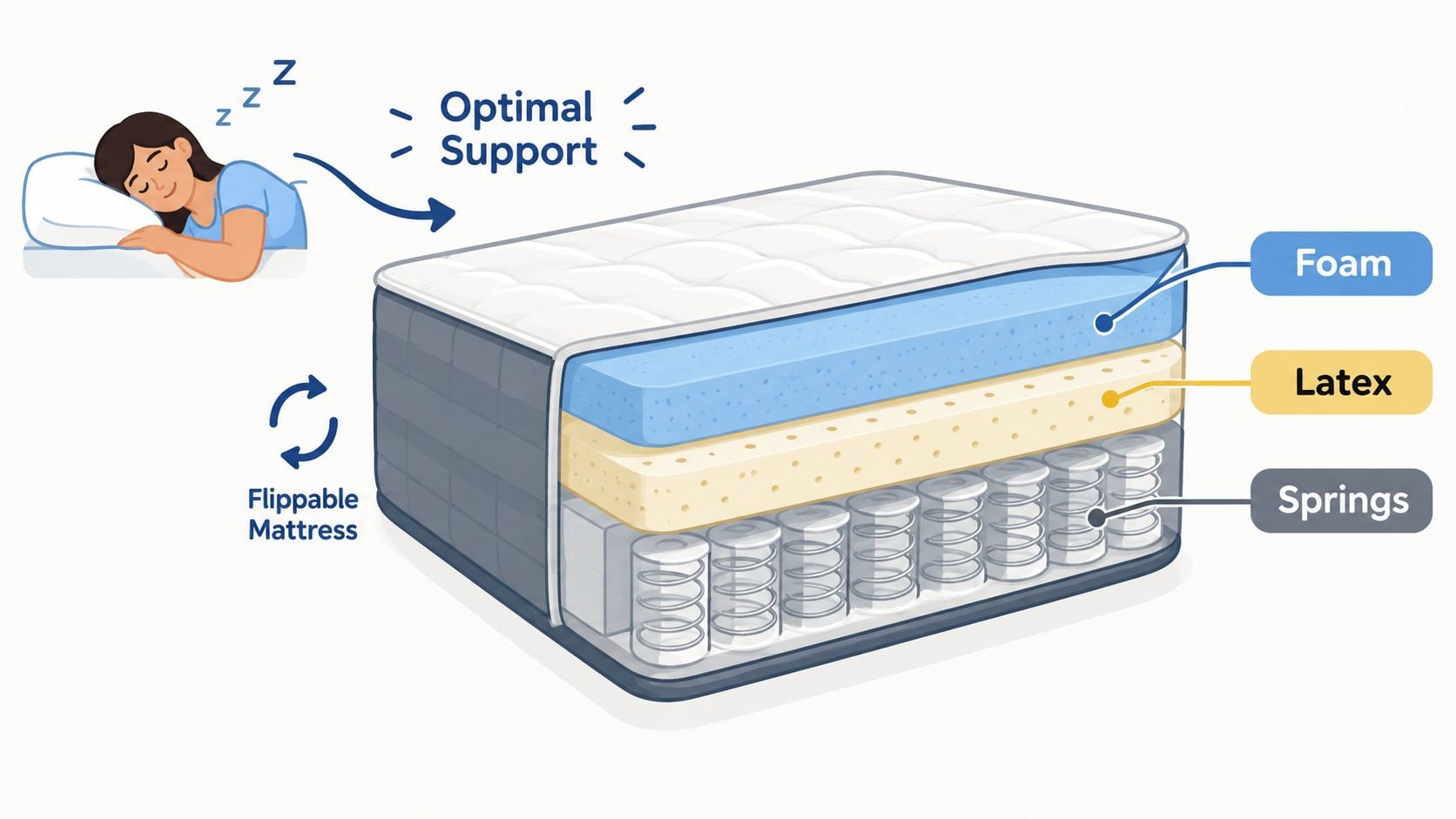
A conventional one-sided mattress asks the same comfort layers to absorb the sleeper's load night after night. A flippable model lets the household alternate surfaces, giving the unused side time to recover its shape and air out. Guidance on the benefits of a two-sided mattress describes this shared-load design as a way to slow body impressions and premature sagging.
That advantage only matters when the mattress is built for sleeping on both sides. A decorative bottom panel isn't enough. Side sleepers should look for comfort materials on each surface, a stable support core, and a firmness difference that reflects how each side is intended to perform.
Practical rule: A flippable mattress is a strong side-sleeper choice only when its softer side cushions the shoulder and hip without allowing the midsection to sink excessively.
The best construction therefore combines adaptive upper layers with reliable central support. Foam or latex can create the needed cradle, while springs, dense foam, or a firm latex core can provide resistance beneath the pelvis and waist. Durability and pressure relief work together, but neither one replaces the other.
Construction and Firmness Options Explained
A true flippable mattress has a comfort system on both sides and a support structure between them. That core may use foam, latex, springs, or a combination of materials. For side sleepers, the category name matters less than how each layer responds beneath the shoulder, hip, and midsection. We recommend judging the mattress by pressure relief, support, and how confidently you can rotate it over time.
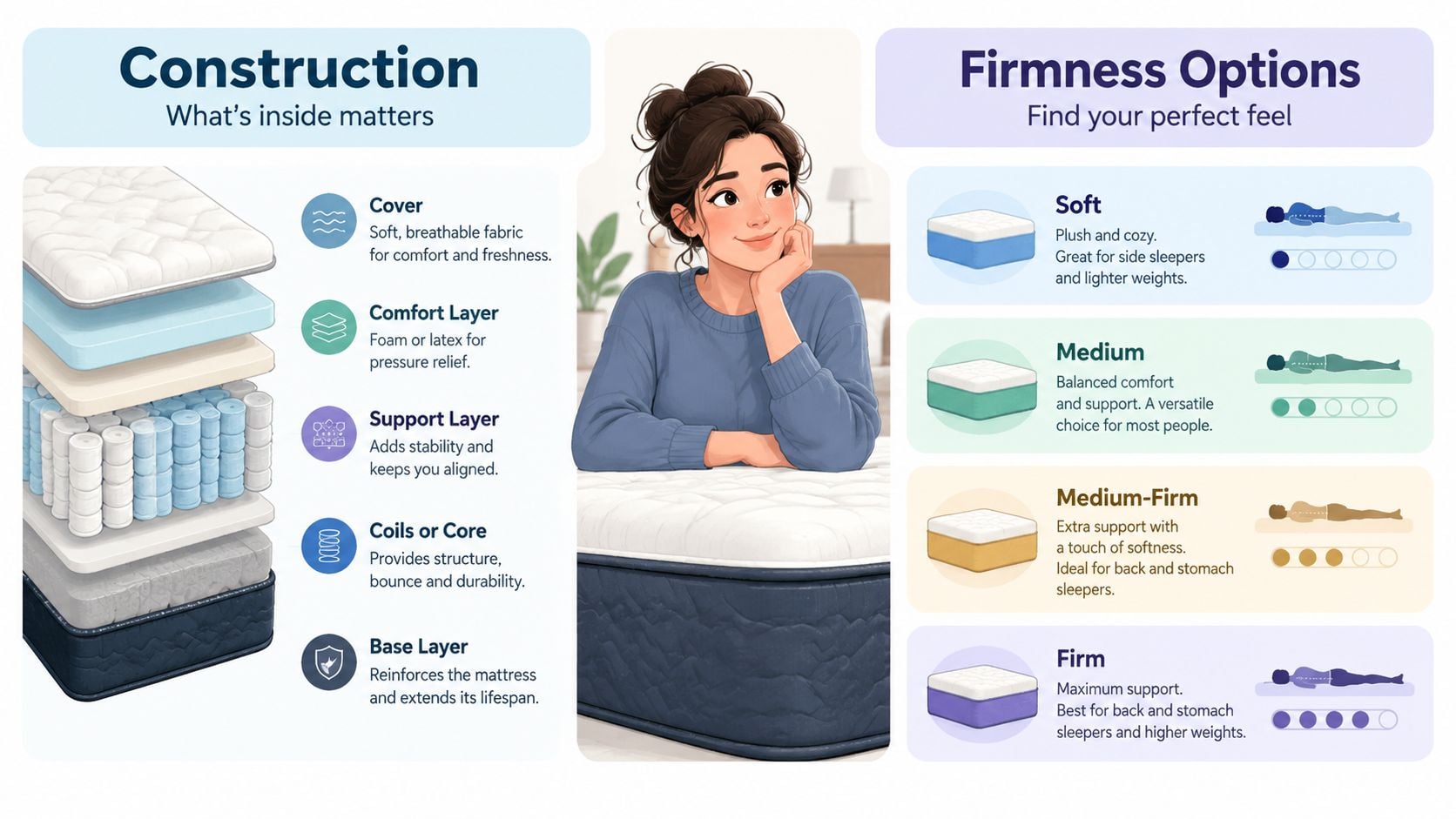
Read the layers from the outside in
Foam comfort layers generally create the closest contour. Memory foam lets the shoulder and hip settle gradually, which can reduce pressure at those contact points. More responsive foam makes changing positions easier. All-foam designs may also be simpler to turn than latex or spring models, although the complete build determines the weight.
Latex comfort layers offer a springier feel. They cushion the body while making movement across the surface easier, so side sleepers should test whether the response feels comfortable at the shoulder and hip. Latex mattresses can be heavy. Arrange help before flipping one.
Hybrid construction pairs a spring support core with substantial comfort layers. A flippable hybrid can feel buoyant and offer useful edge support, but the two-sided build may make it taller and harder to rotate.
Traditional innerspring construction feels open and supportive, yet its spring unit usually provides less contouring by itself. If you choose this design, inspect the padding on both surfaces. The thickness and responsiveness of those comfort layers determine whether the bed cushions side-sleeping pressure.
Use firmness as a starting point
Firmness is commonly described on a scale from 1 to 10. Lower numbers feel softer, while higher numbers feel firmer. Expert guides commonly place side sleepers in the medium-soft to medium range, around 4 to 6, balancing pressure relief with spinal support. Review this mattress firmness guide for side sleepers and our BILTRITE mattress firmness guide before testing specific models.
Body weight and shape still affect the result. A lighter side sleeper may need more surface cushioning because the body does not compress firm materials as much. A heavier sleeper may need a softer upper layer with stronger support underneath. Choosing the firmest side alone does not solve that fit.
Test the firmness difference
Some flippable mattresses offer a soft side and a firm side. Others use similar firmness on both surfaces, prioritizing a longer usable rotation rather than a dramatic change in feel. Dual firmness suits sleepers whose preferences may change, guest rooms serving different people, or couples who cannot agree on one surface.
Lie in your normal side-sleeping position during the showroom trial. Your shoulder and hip should settle without a hammock effect, while the waist remains supported and the upper body does not feel pushed upward. At BILTRITE, use the in-store trial to compare both sides directly, then ask about turning guidance and ongoing service. Those practical checks reveal durability and fit more clearly than online reviews alone.
Comparison of Flippable Mattress Options
A useful comparison starts with construction, not marketing language. Side sleepers need to know whether a mattress offers a true soft surface, how much the opposite side changes the feel, and whether the materials can maintain support as the bed is used and maintained.
The table below provides a category-level shopping framework. Exact firmness, pressure performance, lifespan, and pricing vary by individual model and size, so the figures that follow are not assigned product specifications. They are deliberately marked as items to verify at the showroom rather than invented ratings.
| Mattress Type | Soft-Side Firmness | Firm-Side Firmness | Pressure Relief Score | Price Range |
|---|---|---|---|---|
| Flippable foam | Confirm in showroom | Confirm in showroom | Test shoulder and hip contact | Confirm current price |
| Flippable hybrid | Confirm in showroom | Confirm in showroom | Test cushioning over the spring core | Confirm current price |
| Flippable latex | Confirm in showroom | Confirm in showroom | Test responsive contouring | Confirm current price |
| Two-sided innerspring | Confirm in showroom | Confirm in showroom | Check whether added padding relieves pressure | Confirm current price |
How to use the table
Flippable foam is usually the first place to look for a deep cradle. It suits side sleepers who want the mattress to mold closely around the shoulder and hip, but shoppers should still check whether the midsection receives enough support.
Flippable hybrid construction is a practical middle ground for people who want cushioning without feeling buried. The spring core can add responsiveness, while comfort layers on both sides make the design suitable for alternating use.
Flippable latex is a strong option for shoppers who prefer a lifted, responsive feel. It may not provide the same slow contouring as memory foam, so the in-store test matters. The material's documented pressure-relief performance makes it especially worthwhile for side sleepers to try.
Two-sided innerspring designs can favor durability and airflow, but side sleepers should be selective. If the comfort padding is too thin or too firm, the shoulder and hip may still experience concentrated pressure.
Service changes the shopping calculation
The mattress itself is only one part of the purchase. BILTRITE's Mattress Center has over 60 models and more than 500 mattresses in stock, with sleep specialists available to help shoppers compare feels in person. Qualifying purchases may also include free white-glove delivery, removal of an old mattress in donatable condition, and a complimentary protector or heavy-duty frame with select sets.
Those services should be confirmed with the store because eligibility depends on the purchase. The broader point is practical: a local showroom lets shoppers evaluate the mattress before arranging delivery, ask how the model should be flipped, and discuss the right frame or foundation for the construction.
Choosing the Right Type for Your Side Sleeping Style
Body weight changes how much a sleeper compresses a mattress. Sleeping habits matter too. Someone who stays in one side-sleeping position needs a different surface response from someone who moves between the side and back throughout the night.
Lightweight side sleepers
A lighter sleeper may not sink adequately into a firm comfort layer, which can leave the shoulder and hip feeling unsupported rather than cushioned. A flippable foam or softer latex surface often deserves the first test because it can provide more noticeable contouring.
The support core still matters. A soft surface that lacks structure beneath the waist can allow uncomfortable bending, even when the shoulder feels comfortable. The right feel should cushion the upper body while keeping the spine in a reasonably neutral line.
Average-weight side sleepers
Average-weight sleepers usually have the widest range of workable choices. A flippable hybrid can offer a balanced combination of contouring, edge support, and easier movement, while a foam model may feel more pressure-relieving for someone who prefers a close hug.
The useful question isn't whether one category wins. It's whether the sleeper can settle into the softer side without feeling stuck, then move comfortably when changing positions. A showroom test in the actual sleeping posture can reveal that difference better than a quick sit on the edge.
Heavier side sleepers
Heavier sleepers need a comfort layer that cushions the shoulder and hip without allowing the pelvis to drop too far. A supportive hybrid or resilient latex build may provide the stronger underlying structure needed for alignment, while a properly cushioned top keeps the surface from feeling harsh.
Tall sleepers should pay close attention to support beneath the hips and waist, particularly if they tend to sleep near the center of the mattress. Couples should also test edge stability and movement because both partners can create more concentrated loading across the surface.
Deep contouring isn't enough. The strongest flippable designs pair cushioning above with midsection support that helps protect spinal alignment.
The guide to choosing a mattress for a sleeping style can help organize the decision before a showroom visit. A shopper should bring the details that shape the choice, including usual sleep position, whether the sleeper runs hot, whether movement during the night is common, and whether the mattress will serve one person or two.
Pros and Cons of Flippable Mattresses
A two-sided mattress makes the most sense for a shopper who values maintenance and wants comfort options. It isn't automatically the right answer for every side sleeper, but its benefits are clear when the construction includes useful cushioning on both surfaces.
The advantages
- More even wear: Alternating sleep surfaces spreads repeated compression across the bed instead of concentrating it in one comfort layer.
- Firmness flexibility: Dual-sided models can offer a softer side for side sleeping and a firmer side for a different preference or sleep position.
- Long-term value: A mattress designed for flipping can delay the appearance of body impressions when the owner follows the care instructions.
- Better showroom testing: Shoppers can compare two feels within the same construction, which makes the purchase less dependent on guessing.
Regular flipping is part of the intended maintenance system for a two-sided mattress. Guidance on double-sided mattress maintenance explains that sharing the load across both sides can slow body impressions and premature sagging.
The trade-offs
Flippable mattresses can be heavier because both sides need usable comfort materials. Turning one safely may require two people, particularly with a thick hybrid or latex construction. The mattress may also cost more upfront than a basic one-sided design because it contains a more substantial build on both faces.
Maintenance matters, too. A flippable mattress won't deliver its durability advantage if the household never turns it. One consumer-testing source states that flipping at least once a year can help a mattress last 5 to 7 years longer, as reported in this flippable mattress maintenance guidance.
Some side sleepers may still prefer a one-sided hybrid with a highly specialized comfort system. That choice can make sense when the sleeper wants one carefully tuned feel and doesn't plan to manage the weight or routine of a two-sided bed. For shoppers who want a durable surface rotation system, however, the benefits generally outweigh the extra work.
How to Shop Flippable Mattresses at Our Showroom
The best way to choose a flippable mattress is to test it in the position used at home. A side sleeper shouldn't judge a bed only by sitting on the edge or lying flat for a moment. The shoulder, hip, waist, and ease of movement all need attention.
A simple showroom process
- Start with the sleeping position. Lie on the side in a relaxed posture and notice whether the shoulder feels crowded or the hip presses sharply into the surface.
- Check the waist. The body should feel supported through the middle rather than sagging toward the center of the mattress.
- Try both surfaces. A softer side may relieve pressure, while the firmer side may provide more pushback. The comparison shows whether the difference is useful or excessive.
- Change position naturally. Roll toward the back, return to the side, and notice whether the surface releases the body or makes movement difficult.
- Discuss the foundation. Ask whether the existing frame is appropriate and whether a heavy-duty option would better support the mattress and the household.
- Confirm delivery details. Review qualifying white-glove delivery, old mattress removal, and any included protector or frame offer before scheduling delivery.
The guide to testing a mattress offers additional practical direction for evaluating comfort in person. Shoppers should wear comfortable clothing, take time on each side, and avoid deciding based on the first few seconds.
BILTRITE has served the Metro Milwaukee community since 1928 as a fourth-generation, family-owned business. The showroom carries over 60 mattress models, along with USA-made, Amish-made, solid-wood, small-scale, and heavy-duty furniture for different homes and budgets. The sales associates bring more than 400 years of combined experience, and their role is to help shoppers compare options without pressure.
The Greenfield showroom is closed on Sundays and Mondays so the BILTRITE team can protect family time. Planning a visit on another day gives side sleepers the chance to test two-sided options, ask about flipping and rotation, and make a decision based on actual support rather than a description on a screen.
BILTRITE Furniture-Leather-Mattresses offers a broad mattress selection, including two-sided flippable designs, in-store testing, sleep specialists, and qualifying delivery and setup services. Visit BILTRITE Furniture-Leather-Mattresses in Greenfield to compare soft and firm surfaces for side sleeping and find a durable mattress that feels right in person.