Amish Furniture USA: What It Really Means for Buyers


A family walks into a furniture showroom with a familiar mission. The dining table needs to handle homework, holiday meals, and everyday spills. The bedroom furniture should remain useful through changing homes and changing tastes. The living room needs to feel comfortable today while standing up to years of ordinary family life.
That search often starts with price and appearance, but it quickly becomes more meaningful. Where was the piece built? Is it made from real wood? How are the drawers joined? Can the surface be repaired instead of discarded? Those questions help explain why Amish furniture USA has become such a useful search for shoppers who want American craftsmanship in plain, practical terms.
Table of Contents
- Walking Into a Furniture Store That Feels Different
- What Amish-Made and USA-Made Actually Mean
- The Craftsmanship Behind Every Solid Wood Piece
- Where Amish Furniture in the USA Gets Built
- Why Buying Local Supports Jobs and Quality
- A Friendly Checklist for Your Showroom Visit
- Come See It for Yourself in Greenfield
Walking Into a Furniture Store That Feels Different
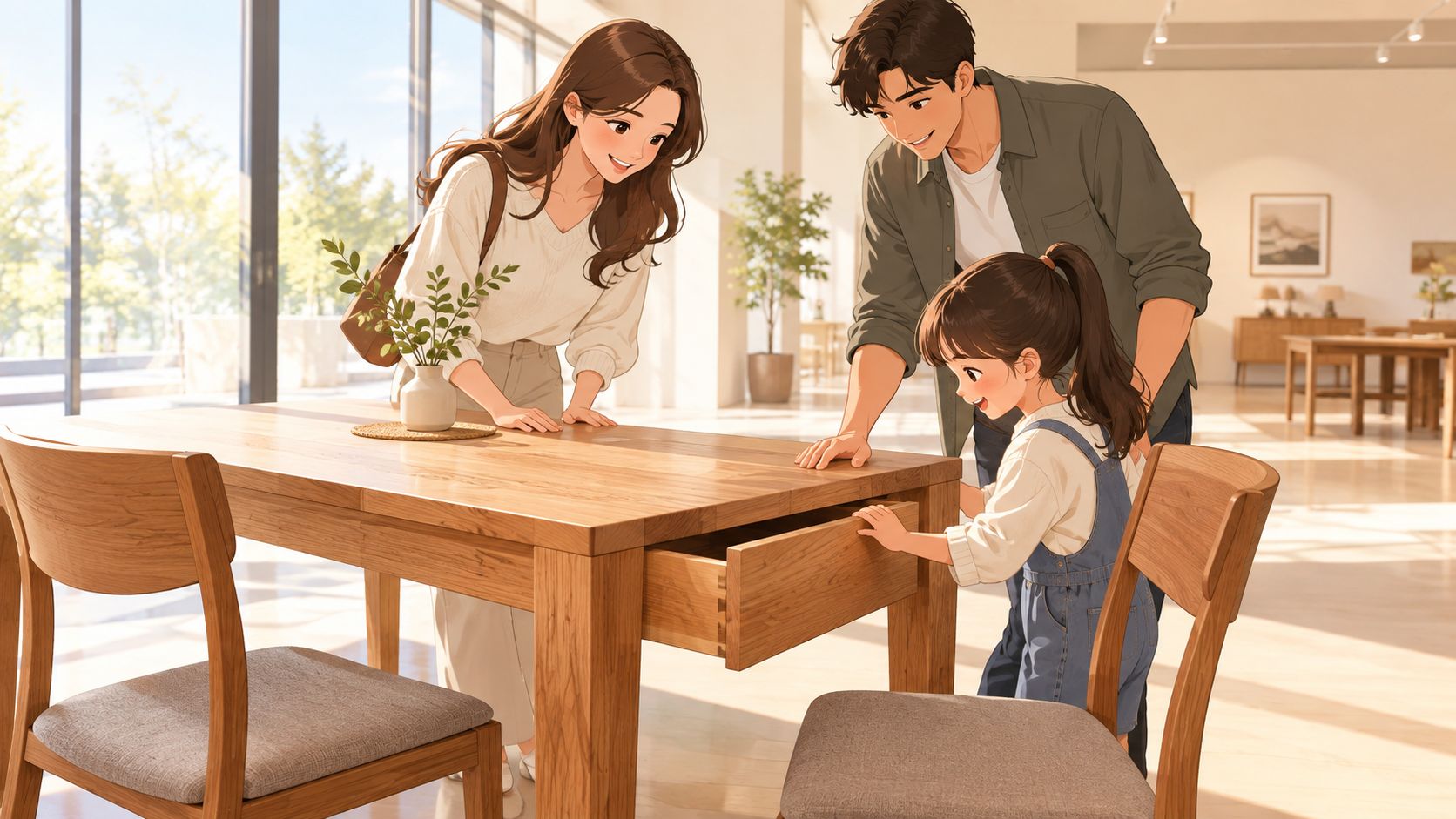
The family gathers around a dining table, running their hands across the top and studying the edges. One person opens each drawer. Another crouches to inspect the underside. The children test the chairs, while a parent checks whether the table will fit through the home's doorway. This kind of shopping feels less like choosing a temporary decoration and more like evaluating something the family may live with for a long time.
That change in attention is important. Amish-made furniture is generally associated with pieces built by Amish craftspeople in small woodworking shops, particularly in Midwestern and Mid-Atlantic communities. USA-made furniture is a broader category. It means the furniture is manufactured in the United States, but it doesn't automatically mean Amish-made, handmade, or made entirely from solid wood.
The questions that reveal more than a label
A shopper doesn't need to recognize every woodworking term. A good showroom conversation should make the answers understandable:
- Origin: Who built the piece, and where?
- Materials: Which wood species are used in the frame, top, drawer boxes, and back?
- Construction: Are the joints dovetailed, mortise-and-tenon, doweled, glued, or fastened another way?
- Finish: How was the surface finished, and what care does it need?
- Options: Can the size, wood, color, or hardware change?
BILTRITE's in-store icons and product information give Greenfield shoppers useful starting points. A piece marked with an Amish Made, USA Made, or Solid Wood icon can begin the conversation, but the details still matter. The word “solid” alone doesn't tell a buyer whether every component uses solid wood, so the sales associate should be able to explain what the label means for that particular piece.
Families comparing construction details can also review BILTRITE's guide to the benefits of solid wood furniture. The point isn't to create a simplistic divide between domestic and imported furniture. It's to help shoppers match the furniture's materials, origin, and construction to the way their household will use it.
What Amish-Made and USA-Made Actually Mean
The two terms answer different questions. Amish-made identifies the builders and the production tradition. USA-made identifies the country where the furniture is manufactured. A piece can be USA-made without being Amish-made, while Amish-made furniture is generally produced within the United States.
Amish furniture is commonly connected with family-run or small-shop production in communities across areas such as Ohio, Indiana, Pennsylvania, Iowa, and nearby regions. These shops often emphasize solid materials, woodworking skill, hand-fitting, and joinery intended for long service. Still, the phrase “Amish-made” doesn't automatically specify the wood species, finish, hardware, or amount of customization.
How to read the label carefully
A USA-made piece may combine several materials. It could include solid wood, veneer, engineered panels, metal components, and hardware from different parts of the supply chain. That doesn't make the furniture unsuitable. It means the buyer should ask what was manufactured in the United States and which components came from elsewhere.
In a showroom, the clearest approach is to compare the label with the physical construction. BILTRITE's in-store icons can point shoppers toward products that fit their priorities, while product descriptions and a conversation with an associate can clarify the builder and materials.
A buyer can ask:
- Is the case, frame, or top solid wood?
- Which parts use veneer or engineered material, if any?
- Who built the furniture?
- What joinery appears in the drawers and frame?
- What finish and care instructions apply?
- Can the piece be ordered in another size or finish?
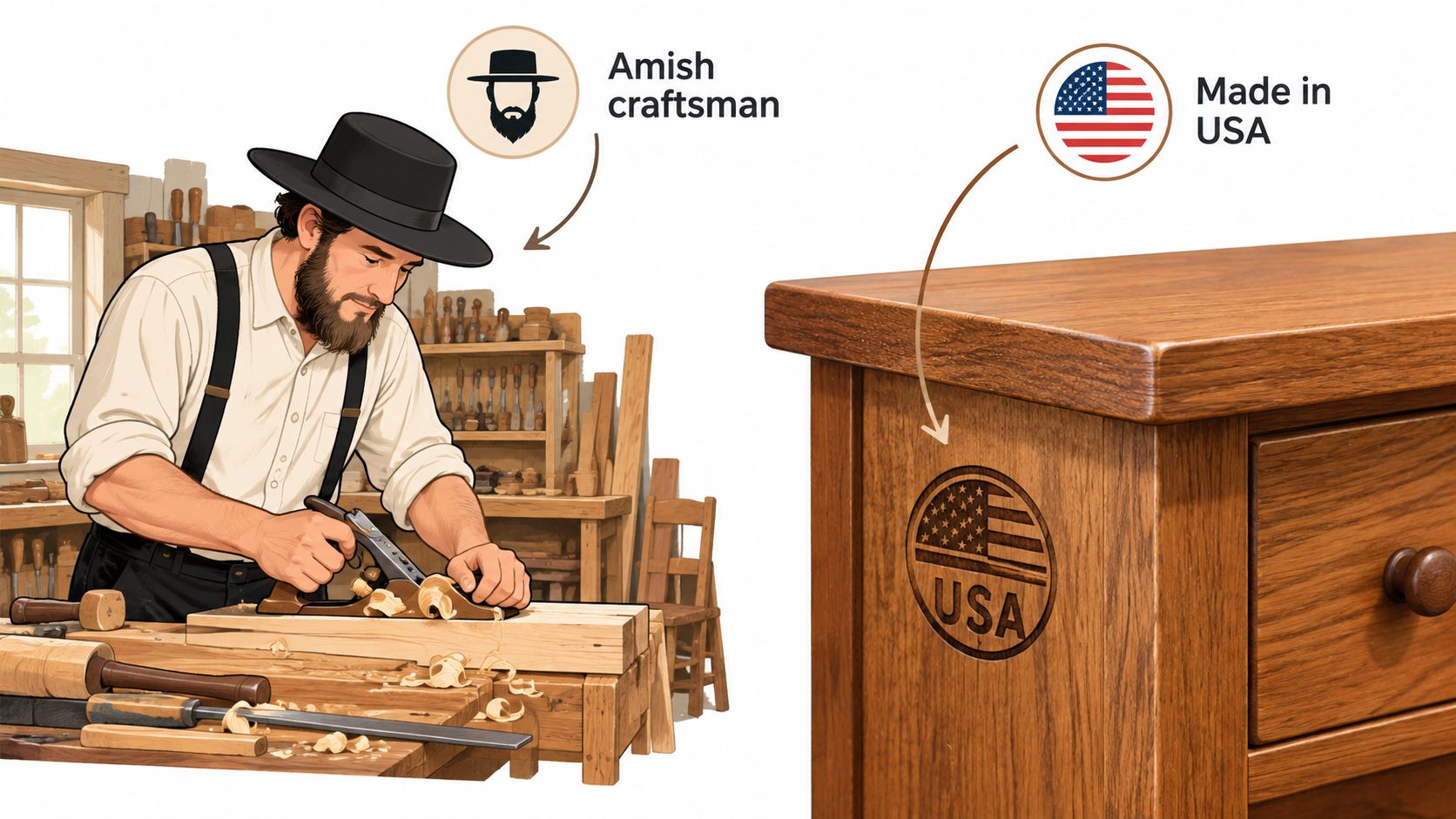
A useful shopping rule: A trustworthy label should lead to a clear explanation, not end the conversation.
BILTRITE shoppers can use the guide to what Amish furniture means as background before visiting the Greenfield showroom. Side-by-side comparison makes the difference between a broad marketing phrase and a documented construction detail much easier to understand.
The Craftsmanship Behind Every Solid Wood Piece
A solid wood piece tells its story through preparation and construction. Craftspeople select boards for grain, color, and natural character, then prepare the material so it can function inside a home. Wood remains a natural material, so it responds to changes in temperature and humidity. Proper preparation helps control that movement.
One important step is kiln-drying. Independent buyer guidance describes kiln-dried hardwood as typically stabilized around 6% to 8% moisture content before assembly, a range that helps limit seasonal shrinkage and warping in homes with changing indoor humidity. The figure comes from buyer guidance on traditional joinery techniques, and it gives shoppers a practical reason to ask how the lumber was prepared.
Look where shortcuts are easiest to hide
The strongest clues often appear in places guests rarely see. A drawer's construction, the underside of a tabletop, and the back corner of a cabinet can reveal more than a polished front.
- Mortise-and-tenon joints: One piece fits into a shaped opening in another, allowing the joint to distribute force mechanically.
- Dovetail joints: Interlocking wood shapes help keep drawer corners together under repeated pulling.
- Grooved drawer bottoms: A drawer bottom set into a groove is supported differently from one attached only with staples.
- Solid hardwood frames: Properly prepared hardwood provides a substantial foundation for tables, chairs, and case goods.
These joints matter because interlocking parts distribute load rather than relying only on fasteners. That can reduce loosening under repeated shear and pulling forces. Shoppers who want a closer look can review BILTRITE's explanation of the mortise-and-tenon joint.
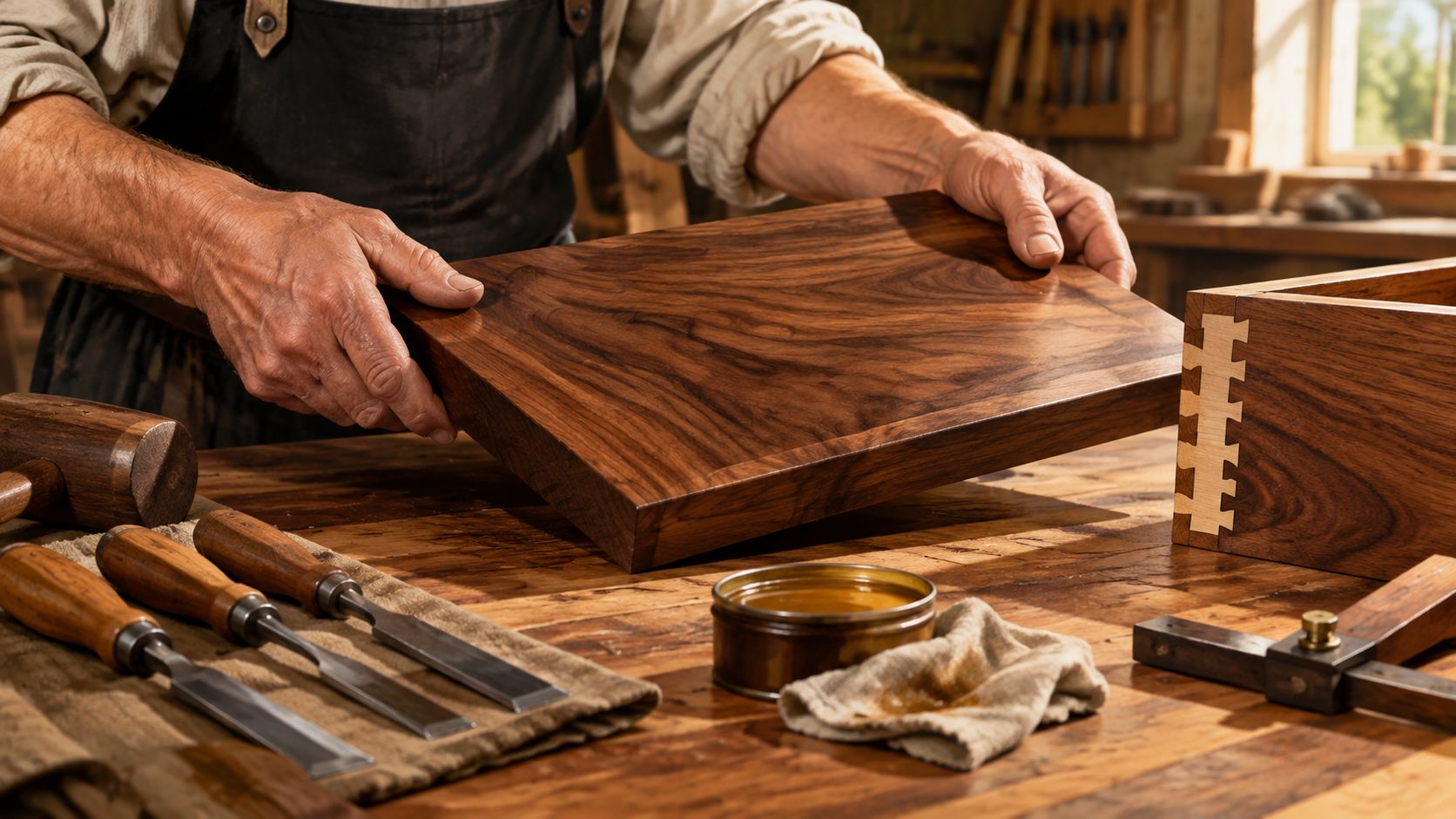
What the homeowner feels over time
Good construction affects ordinary use. A well-fitted drawer should move smoothly and sit squarely. A substantial table should feel stable when someone leans against it. A finished surface should protect the wood while allowing the grain and natural variation to remain visible.
Grain differences aren't flaws. They're evidence that the material came from a natural tree rather than a printed pattern. Many solid wood surfaces can also be sanded and refinished when wear eventually appears, although the specific finish and repair method should always be confirmed with the retailer or builder.
At BILTRITE's Greenfield showroom, a buyer can open drawers, inspect back corners, feel the weight, and ask about species, drying, joinery, finish, and care. Those actions provide more useful evidence than a general promise that a piece is “built to last.”
Where Amish Furniture in the USA Gets Built
Amish furniture production has long been concentrated in a handful of Midwest and Mid-Atlantic regions. Ohio, Indiana, and Pennsylvania are especially important to the category, with workshops connected to established communities, local woodworking knowledge, and networks that support furniture production.
Holmes County, Ohio, offers a clear example. USDA Forest Service research estimated that the county's Amish furniture cluster had about $280.7 million in shipment value, representing nearly 3% of total U.S. production of nonupholstered wood household furniture. Another analysis estimated the cluster's total gross sales at about $282.5 million in 2007. The same research noted that Amish-made furniture could account for over 10% of the hardwood lumber used in U.S. furniture production, showing how a concentrated regional group can influence a much larger industry. These figures come from the USDA Forest Service research on the Holmes County cluster.

Why clusters help craftsmanship survive
A furniture cluster places skilled workers, suppliers, finishers, and related services within reach of one another. Younger workers can learn from experienced craftspeople. Shops can share knowledge and maintain familiar standards. Builders can also develop relationships with lumber suppliers and finishing specialists without depending on a distant, centralized production line.
The regional story includes more than Ohio. Indiana's Amish communities are associated with furniture-making areas such as northern settlements, while Pennsylvania has a long furniture tradition connected with communities in the central and southeastern parts of the state. Each region can have its own preferred styles, shop practices, and relationships with local suppliers.
Buyers shouldn't assume that geography alone proves quality. A regional label is a helpful clue, not a substitute for inspecting the furniture. The better question is whether the product's maker, materials, and construction can be explained clearly.
Shoppers interested in the regional background can explore where Amish furniture is made. In the Greenfield showroom, staff can help connect that broader map to the specific pieces on the floor, including dining, bedroom, and living room furniture.
Why Buying Local Supports Jobs and Quality
American-made furniture is part of a substantial domestic industry, not a tiny side category. Industry data summarized in 2025 reported 5,649 furniture and fixtures manufacturers in the United States, employing 269,177 workers. The same data placed 33% of manufacturers in the South and 28% in the Midwest, while reported average industry sales stood at $104 billion. Those figures are presented in U.S. furniture manufacturing statistics.
That footprint includes more than people who assemble frames. Domestic furniture production can support woodworking, machining, finishing, upholstery, design, warehousing, delivery, and repair work. The regional concentration matters because a buyer's purchase can help sustain the skills and businesses that make custom and repairable furniture possible.
Domestic doesn't mean completely isolated
A USA-made label doesn't necessarily mean every raw material or component originated in the United States. The same industry data reports that 23% of furniture companies have international distribution and 15% import raw materials. That distinction gives shoppers a more honest way to think about domestic furniture. The important questions are where the product is manufactured, which components are imported, and how much of the construction takes place domestically.
The Amish cluster's performance also shows why small regional networks deserve attention. USDA research reported that 71% of firms in the Amish furniture cluster expanded during 2006 to 2008, even while the broader U.S. nonupholstered wood household furniture sector contracted sharply. In the same study, Bureau of Labor Statistics data showed employment in that sector fell 67%, from 116,626 workers in 2001 to 38,246 in 2011. The figures appear in the USDA study of the Amish furniture cluster.
For a homeowner, the practical benefit is accountability. A piece made through a documented domestic network may offer clearer communication about sizes, finishes, repairs, and delivery than an anonymous product with little information about its builder.
The local value is practical: buyers aren't only supporting a place on a map. They're helping keep specialized making, finishing, and service skills connected to the communities that use them.
The advantages of buying furniture made in the USA become easier to evaluate when shoppers connect the national industry to their own needs. A table that can be discussed, customized, maintained, and repaired has a different ownership experience from a piece chosen only for a low initial price.
A Friendly Checklist for Your Showroom Visit
A showroom visit works best when shoppers examine furniture in a deliberate order. The process doesn't need special expertise. It only requires a few minutes of hands-on attention and questions that invite specific answers.
Start with the parts everyone can feel
Begin with the overall presence of the piece. Lift a drawer if the design allows it. Press gently on a tabletop or chair arm. Open and close doors several times. A sturdy piece should feel stable and purposeful rather than loose or flimsy.
Then inspect the details:
- Study the top: Look for visible grain, clean edges, and a finish that feels even.
- Check the drawers: Look for square corners, smooth movement, and dovetail construction where applicable.
- Inspect the underside: Ask whether the unseen surfaces use the same material as the visible areas.
- Examine the back: Look for secure construction, tidy finishing, and a clear explanation of any panels.
- Feel the hardware: Handles, hinges, and slides should feel appropriate for the furniture's size and intended use.
A hollow sound or a lighter feel doesn't automatically prove that a piece is poorly made, and a heavy piece isn't automatically high quality. Those observations are clues. The salesperson should connect them to the actual materials and construction.
Bring a short question list
A phone flashlight can help with back corners and shaded areas. A tape measure helps a family compare the floor model with doorways, stairs, and available wall space. Photos of the room, fabric samples, and stain preferences can make the discussion more useful.
Ask the associate:
- Which wood species is used?
- Was the hardwood kiln-dried before assembly?
- What joinery holds the frame and drawers together?
- Can the dimensions change?
- Which stain and finish options are available?
- What is the expected delivery timeline?
- What care instructions should the household follow?
Make room for modern preferences
Amish furniture doesn't have to mean a dark, heavily rustic look. Coverage of newer Amish-made styles points toward lighter finishes, airy silhouettes, coastal influence, low-sheen surfaces, performance fabrics, and contemporary forms. That matters for shoppers who like solid wood but want a piece to feel comfortable in a modern home.
Ask for the version that fits the room, not the stereotype. A lighter finish, simpler profile, or mixed-material design can change the entire mood of a solid wood piece.
BILTRITE's showroom includes options for different room sizes and household needs, from small-scale furniture for apartments and condos to heavy-duty choices for active families. A shopper can also discuss come-apart seating when narrow hallways or tight doorways make delivery a concern.
Come See It for Yourself in Greenfield
The simplest way to understand Amish and USA-made furniture is to handle it. A buyer can read about mortise-and-tenon joints, dovetail drawers, kiln-dried hardwood, and solid wood construction, but those ideas become clearer when a drawer opens with a reassuring fit or a dining table shows its grain under the showroom lights.
A Greenfield visit also helps separate style from construction. One family may prefer a lighter, cleaner dining set. Another may need a heavy-duty bedroom piece for everyday use. A condo owner may need small-scale dimensions, while a growing household may need furniture designed around frequent meals, homework, and guests.
BILTRITE's in-store icons help shoppers identify Amish Made, USA Made, Solid Wood, and Heavy Duty pieces. Product information and one-on-one conversations can then clarify the details behind each label. Many models also offer choices involving size, wood, finish, fabric, leather, or hardware, so the furniture can respond to the room instead of forcing the room to respond to a fixed product.
The showroom experience includes more than dining and bedroom furniture. BILTRITE has living room, home office, entertainment, and home décor selections, along with small-scale furniture, lift chairs, come-apart sofas and sectionals, and a large mattress department with over 60 models. Mattress shoppers can also ask sleep specialists about the differences among the available options rather than trying to judge comfort from a product page.
BILTRITE has served the Metro Milwaukee community as a fourth-generation, family-owned business since 1928. The sales associates bring over 400 years of combined experience, and the store doesn't sell online because the in-person process matters. The showroom is also closed on Sundays to support family time, a choice that reflects the store's family-first and buy-local values.
An Amish or USA-made purchase doesn't need to be treated as a slogan. It can be a careful decision based on origin, material, joinery, finish, size, delivery, and the way the family expects to use the piece. Come down to the Greenfield showroom, open the drawers, inspect the edges, ask plain-language questions, and see which construction details feel right for the home.
BILTRITE Furniture-Leather-Mattresses offers affordable, better-quality furniture, Amish-made and USA-made solid wood pieces, custom options, and a mattress department with over 60 models. Visit BILTRITE Furniture-Leather-Mattresses in Greenfield to explore the construction in person and talk with a knowledgeable team about furniture that fits the household, the room, and the budget.