Comfort First Furniture: A Guide to Better Sleep


You're standing in a furniture showroom, pressing a sofa cushion with one hand and trying to picture how it'll feel after a long day. The plush one feels inviting, but will it support your back? Will it fit through the doorway? And for a mattress, how can you tell whether “soft” means restful or just too soft for your body?
Comfort first furniture starts with a better question than “Which one feels softest?” It asks whether a piece fits the people who'll use it, the way they live, and the space they have. That's the approach BILTRITE has brought to Metro Milwaukee families since 1928, through four generations of family ownership.
Table of Contents
- What Comfort First Furniture Really Means
- The Science Behind Sitting and Sleeping Well
- Choosing the Right Mattress Construction for Your Body
- How to Test a Chair or Sofa Before You Buy
- Recliners Lift Chairs and Sectionals Side by Side
- Built to Last Why Construction and Origin Matter
- Your Milwaukee Showroom Visit and Delivery Checklist
What Comfort First Furniture Really Means
A comfortable sofa isn't a soft sofa. It should support your body when you sit back, leave room for your legs, and make it easy to settle in or stand up. A mattress should distribute pressure and support your spine in your usual sleep position. A recliner should feel good while you're using it and work with your home and mobility needs.
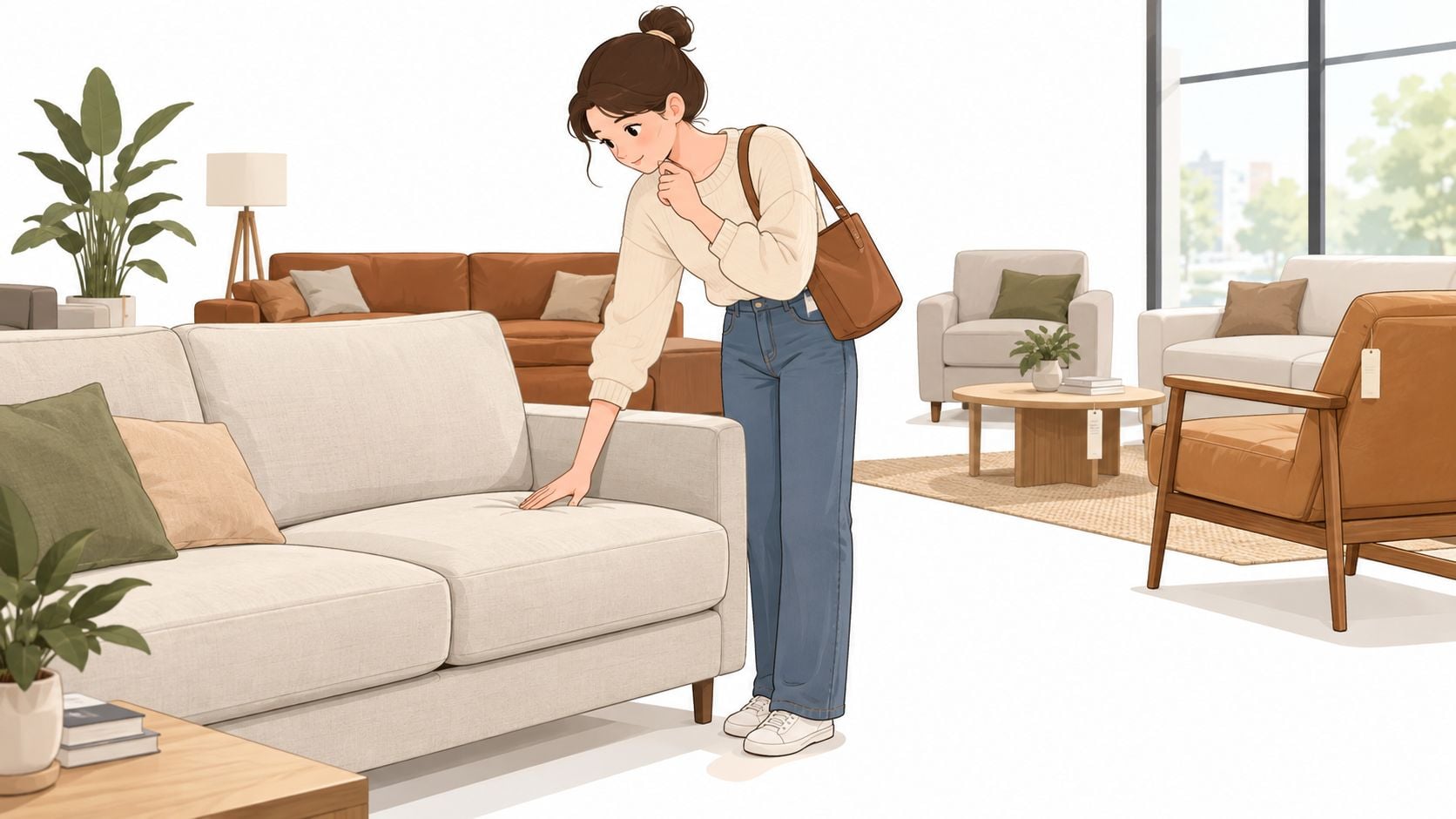
Comfort can be thought of as a fit problem, not a decorating trend. For sitting, fit includes seat height and depth, back support, and whether your feet rest comfortably on the floor. For sleeping, it includes the feel of the surface, pressure at the shoulders and hips, and how well the mattress supports your sleeping posture. Daily routines matter, too. The best living-room seat for movie nights may not be the right choice for someone who needs armrests to get up safely.
Comfort first means choosing furniture that supports the way your body moves, rests, and lives at home.
That practical mindset has guided BILTRITE through four generations of family ownership. Irwin and Frieda Kerns founded the business in Milwaukee in 1928 as an upholstery shop making custom sofas. The family's furniture knowledge grew along with the business, and today the store serves the Metro Milwaukee community from its Greenfield showroom.
When shoppers compare pieces, we encourage them to sit, recline, and lie down rather than judge by appearance alone. Bring the person who'll use the furniture most often, and consider any mobility or support needs before settling on a size or style. Comfort first furniture is furniture that works for real life, not just a quick showroom impression.
The Science Behind Sitting and Sleeping Well
Picture a chair that looks inviting but leaves your feet dangling when you sit all the way back. That mismatch matters: an overly deep seat can pull you away from the backrest, reduce lower-back support, and press against the backs of your thighs. Cornell ergonomic guidance puts the upper limit for supported seat-pan depth at about 43 cm, though the right fit depends on the person (Cornell ergonomic chair guidance).
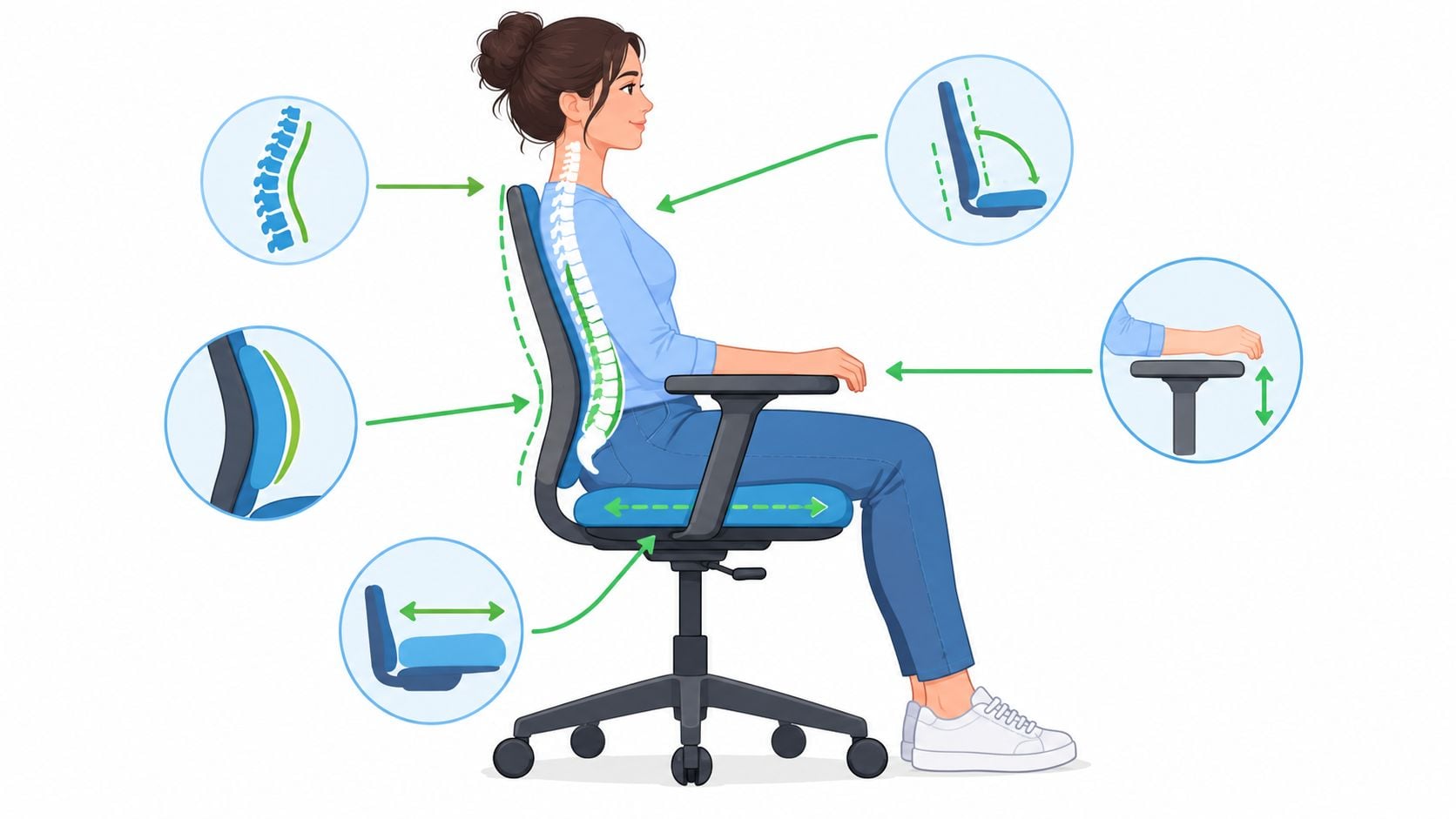
A supported posture can include a reclined backrest. Cornell guidance describes backrests at roughly 110–130 degrees, paired with lumbar support, as one way to reduce pressure on the lumbar discs. A slight rearward seat-pan tilt of less than 5 degrees, combined with arm support, may also reduce loading, per the same Cornell guidance. Treat these measurements as fit clues, not a formula. Your feet should rest comfortably, your back should meet the support, and the seat edge should not press into your thighs.
Medium firmness is a starting point, not a rule
Mattress firmness also affects how the body is supported. A systematic review found that medium-firm mattresses generally supported comfort, sleep quality, and spinal alignment, with some studies reporting better pain and disability outcomes than firmer alternatives (systematic review of mattress firmness). Your sleeping position, body mass, pain history, and sensitivity all affect what feels right.
In the showroom, sit fully back, check your feet and lower-back contact, and notice where pressure builds.
Use the same care on a mattress. Lie in your usual sleeping position long enough to notice whether your shoulders and hips settle while your spine stays supported. A surface that feels soft at first may not keep your body comfortable through the night.
Choosing the Right Mattress Construction for Your Body
If your shoulder aches when you wake, or you keep shifting to get comfortable, start by matching the mattress construction to your sleeping habits. Construction affects cushioning, support, heat, and how much movement you feel from a partner. The label alone won't tell you which one fits.
A U.S. mattress satisfaction study reported that surveyed adults used all-spring, all-foam, hybrid, and air-chamber mattresses in varying proportions (U.S. mattress satisfaction study). Those results show a range of preferences, not a prescription for your body. Compare more than one construction before deciding.
| Mattress type or firmness | What to consider | Comfort-first takeaway |
|---|---|---|
| All-spring | A more familiar spring feel | Compare it if you prefer a responsive surface. |
| All-foam | How the surface cushions pressure | Check whether the feel suits your sleeping position. |
| Hybrid | A combination of spring and cushioning layers | Try it alongside foam and spring options. |
| Air-chamber | Adjustable support | Consider whether changing the feel matters to you. |
| Medium versus soft mattress | Medium firmness is a comparison point, not a guarantee of the right fit (see the research discussion above). | Let your body's response guide the choice. |
Match the mattress to your sleep habits
Lie in your usual sleeping position. Check whether your shoulders and hips settle without leaving your back feeling bent or unsupported. If you sleep on your side, pay close attention to pressure at those joints. If you sleep on your back, notice whether the surface supports your body without an uncomfortable gap.
BILTRITE's mattress selection includes more than 60 models to compare in person. For a closer look at two foam options, read this guide to gel mattresses and memory foam.
A two-sided, flippable mattress gives you the option to turn it and distribute wear across both sides. That feature can help with upkeep, but it cannot correct a poor fit. Spend several minutes on each mattress you're considering. A spec sheet describes the construction; your body tells you whether it works.
How to Test a Chair or Sofa Before You Buy
Don't test a chair by leaning forward and bouncing on its cushion. Sit the way you'd sit at home: all the way back, with your feet down and your shoulders relaxed. A few small checks can tell you more than a quick glance at the silhouette.
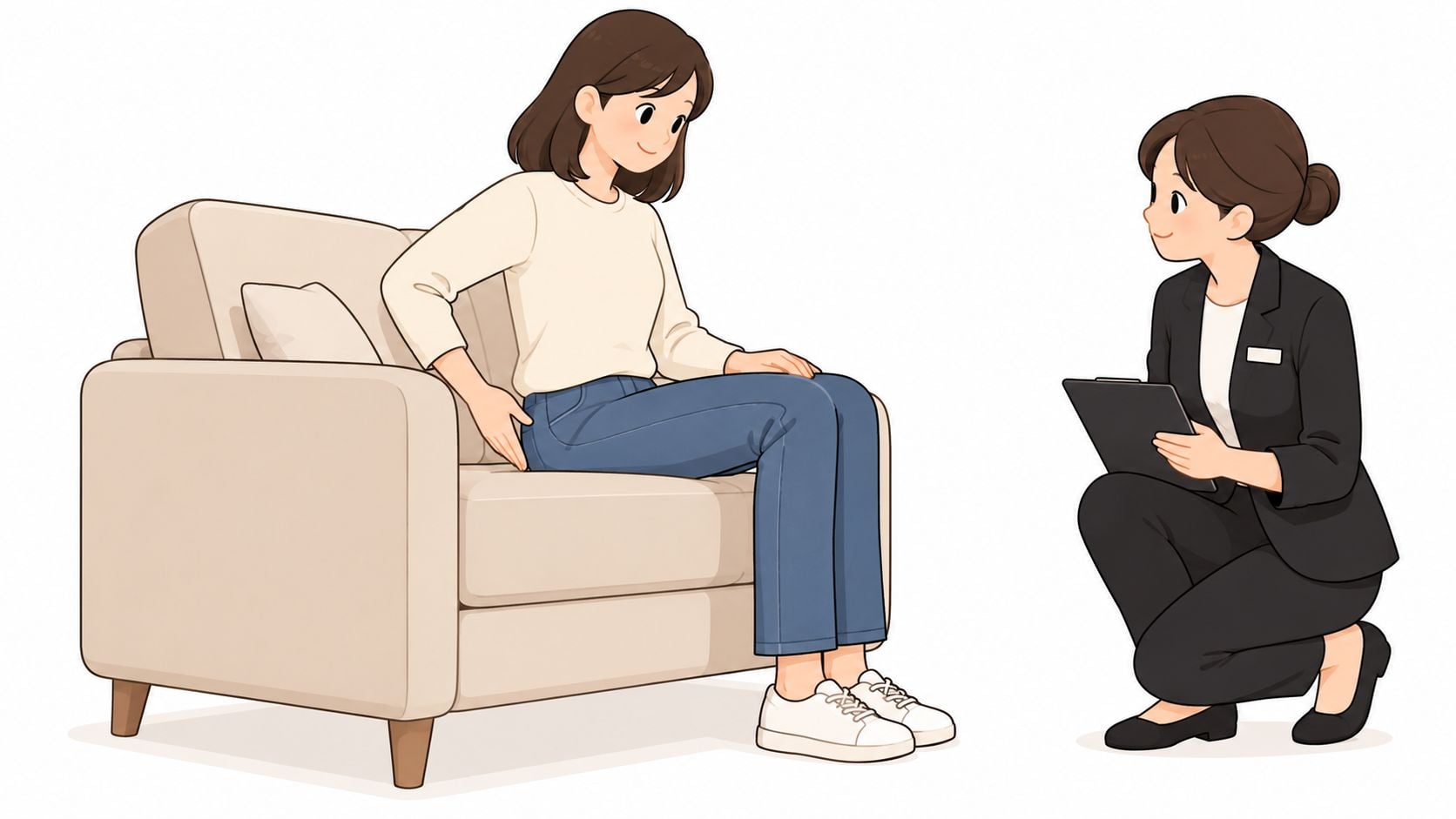
Check seat height. Sit with your back against the cushion and see whether your feet rest flat. Guidance for adults aged 61–70 found the best reported comfort around a seat height matching the user's lower-leg measurement or up to 25 mm lower, alongside a 105-degree backrest angle (study of chair comfort for older adults). Use that as a reference, not a substitute for trying the chair yourself.
Check seat depth. Sit fully back and look for a small gap behind your knees. If the seat pushes into the backs of your legs or leaves you reaching for the backrest, the depth may not suit you.
Check back and arm support. The lumbar contour should meet your lower back without pushing you into a slouch. Armrests should let your shoulders relax and provide support when you stand.
Try getting up. Very soft, deep cushions can feel cozy but make standing harder. Get up without pulling yourself forward on a table or another piece of furniture.
For petite shoppers, a shallower seat may help maintain backrest contact and foot support. Taller shoppers should make sure the seat and back give their legs and upper body enough room. Anyone with mobility needs, or anyone shopping for an older family member, should prioritize stable armrests and an easy, controlled way to rise. Larger-bodied shoppers should try the seat rather than assume that a broad-looking frame will provide the support they need.
When researching back support, BILTRITE shoppers can also read about adjustable lumbar support. The store offers small-scale and heavy-duty options, so different family members can compare what fits instead of settling for one size for everyone.
Recliners Lift Chairs and Sectionals Side by Side
A standard recliner, a power recliner, and a power lift recliner can all offer a place to put your feet up, but they serve different needs. The right choice depends on how someone uses the chair, how they move, and whether the piece can get into the room.
| Seating choice | What it does | Consider before choosing |
|---|---|---|
| Standard recliner | Reclines without powered movement. | Check the operating mechanism, support, and room needed behind or around the chair. |
| Power recliner | Uses powered adjustment for reclining. | Test the controls and see whether the support and recline suit the person using it. |
| Power lift recliner | Gently tilts forward to help the user rise to a standing position. It doesn't swivel. | Practice the motion in person and consider who will use it and where it will sit. |
| Come-apart sofa, loveseat, sectional, or recliner | Separates into sections to help with delivery through tricky spaces. | Measure doorways and passageways before choosing the furniture. |
For an older adult or caregiver, a lift recliner can be a practical option when standing up is difficult. In Wisconsin, BILTRITE's power lift recliners are exempt from sales tax. The lift mechanism helps the user move toward standing by tilting forward, rather than turning the chair around.
A power recliner may be more suitable when the priority is powered reclining and the user doesn't need lift assistance. A standard recliner can suit a household looking for a simpler way to put their feet up. Whichever type is under consideration, test how the back, seat, and arms feel in the positions the user will use. BILTRITE's guide to recliners for back support can help shoppers prepare questions before visiting.
Measure the route, not just the room
A sofa or sectional can fit the living room and still fail at the front door, on a stairway, or in a narrow hallway. Measure entryways and tight turns, then tell the sales associate about upstairs rooms or other tricky access. BILTRITE carries sofas, loveseats, sectionals, and recliners that come apart for easier delivery through small or difficult spaces.
For apartment dwellers, that delivery detail can matter as much as the furniture's footprint. Growing families may want a sectional that suits the shared living space, while empty nesters may prefer a recliner that matches their daily routine. Caregivers should involve the person who'll use a lift chair in the showroom test, so the chair's motion and controls feel clear before it comes home.
Built to Last Why Construction and Origin Matter
A chair or mattress should fit the body, but the frame and materials matter to long-term value. BILTRITE offers USA-made and Amish-made furniture, including solid-wood options. In the showroom, shoppers can look for the USA Made, Amish Made, and Real Solid Wood icons to identify pieces by origin or material. The store also uses icons for Heavy Duty and Small Scale furniture, making it easier to spot options built for different needs.
Solid wood, domestic origin, or handcrafted construction alone can't guarantee that a piece will suit someone's body or home. A heavy piece may be harder to move, and a durable sofa with the wrong seat depth still won't feel right. Evaluate the construction and comfort together. BILTRITE's guide to Amish furniture quality is a starting point for learning about craftsmanship.
Buyers also deserve clear answers when a product is described as sustainable or built to last. In a survey, 57% of U.S. adults said they'd be likely to buy furniture labeled sustainable, while 27% raised durability and quality concerns, 23% cited limited availability or styles, and 15% said they lacked information about sustainability claims (Furniture Today survey report). The practical response is to ask what's behind a claim rather than rely on a label alone.
Ask before buying: What materials and joinery are used? What's the weight capacity? Can cushions be replaced? Does the piece come apart, and what does the warranty cover?
BILTRITE's family history began with custom sofas, and the store has grown into a full-line furniture and mattress showroom. For shoppers, the useful point is straightforward: assess how a piece is built, how it feels when tested, and whether it can be delivered and maintained in the home where it'll live.
Your Milwaukee Showroom Visit and Delivery Checklist
A little preparation makes a showroom visit more useful. Bring the measurements and habits that shape the decision, then test the furniture as it'll be used at home.
- Bring context: Note your usual sleep position, room measurements, doorway widths, and a photo of the space.
- Test mattresses: Lie down in your normal position for several minutes and compare comfort levels.
- Test seating: Sit fully back, check your feet and lower-back support, and practice standing from a lift recliner if that's a possibility.
- Ask about delivery: Discuss white-glove delivery, old mattress removal when it's in donatable condition, and whether a complimentary protector or heavy-duty frame is available with select sets. The white-glove delivery guide explains what to ask about.
- Confirm store hours: BILTRITE is closed Sundays and Mondays so the team can spend time with their families.
BILTRITE's Greenfield showroom is at 5430 West Layton Avenue. The team includes sales associates with more than 400 years of combined experience, ready to answer questions without pressure. Bring the family member who'll use the furniture most, especially when mobility or mattress comfort is part of the decision.
BILTRITE Furniture-Leather-Mattresses offers furniture, mattresses, lift recliners, and in-person help comparing comfort and fit at its Greenfield showroom. Come by to test the options, ask your questions, and find out what feels right for your home, with no pressure to buy.