Benefits of Solid Wood Furniture: A Lasting Investment

Your dining table sees a lot. Homework. Takeout night. Holiday meals. Board games that get a little loud. Maybe a laptop during the workday and a science project by evening.
That is real life in a real home.
A lot of families around Metro Milwaukee come in looking for furniture because the piece they bought a few years ago is already showing it. A chair starts to wobble. A tabletop peels. A dresser drawer drags. That cycle gets old fast.
That is one reason the benefits of solid wood furniture still matter so much. Solid wood is not just about looks. It is about bringing home furniture that can handle daily use, age with grace, and stay part of your home story for a very long time.
Welcome to Furniture That Lasts a Lifetime
A family of four sits down for dinner. One kid taps a fork on the table. Another leans back in the chair. Somebody spills a drink. Later that same table becomes a puzzle station, then a homework desk, then the place everyone gathers when relatives come over.
That is how furniture gets used. It is not staged. It is lived on.

When people feel frustrated with furniture, it usually is not because they chose the wrong color. It is because the piece did not hold up to normal family life. If that sounds familiar, you may enjoy our thoughts on how long furniture should last.
Furniture should work as hard as your family does
We have been part of the Metro Milwaukee community since 1928, and as a fourth-generation family business, we think about furniture a little differently. We do not see a dining table as a quick purchase. We see birthday candles, card games, Sunday breakfast memories made on Saturday, and the everyday moments that make a house feel like home.
That is the heart of the buy-it-for-life mindset.
Big-box furniture often aims for fast style and fast turnover. Families usually want something else. They want a bed that stays solid. A dresser that still opens smoothly years from now. A dining set that can handle real dinners, not just showroom lighting.
Why this idea still matters
Solid wood furniture fits that need because it is built for use, not just display. It has substance. It has repair potential. It has character that grows instead of wearing out.
Tip: If you want furniture that feels steady when you touch it, look first at the material. The base material often tells you more than the finish or the price tag.
For many households, “forever furniture” does not mean every single piece must last forever. It means choosing key pieces, like your table, bed, or dresser, that are worth bringing home once and living with for years.
That approach feels especially right to us because our own story spans generations too. Families pass down values. Sometimes they pass down furniture right along with them.
What Exactly Is Real Solid Wood Furniture
The term solid wood gets used a lot, and that can be confusing. Some pieces look like wood on the surface but are built very differently underneath.
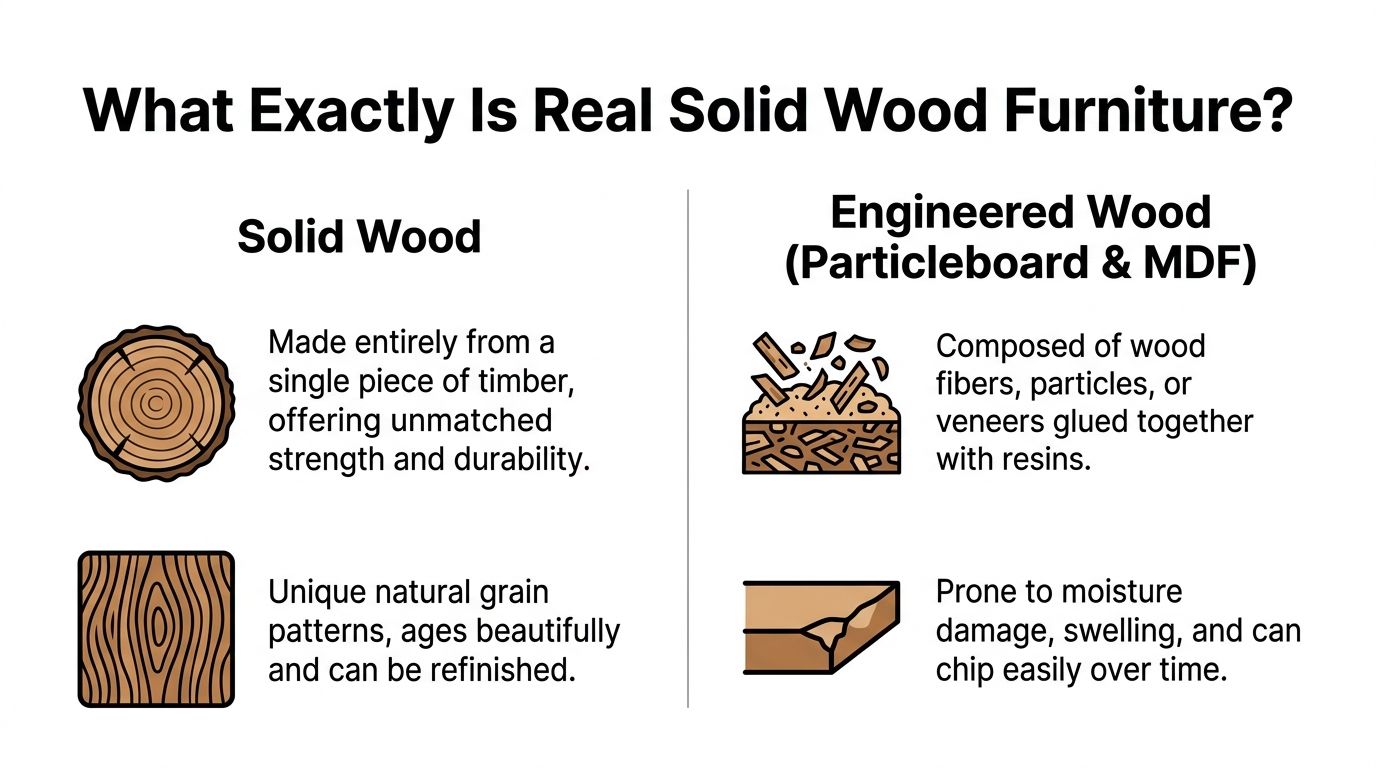
Real solid wood furniture means the main structural parts are made from actual lumber, not a mix of wood particles pressed together with binders.
If you want a deeper look before you shop, this guide on how to tell if furniture is real wood can help.
A simple way to think about it
Consider the difference between a whole apple and applesauce pressed into a shape. Both come from the same general source, but they behave very differently.
Solid wood is the whole apple.
Engineered wood, such as particleboard or MDF, is more like the pressed version. It can look smooth and neat. It can work well in some situations. But it does not offer the same feel, repairability, or long-term performance.
Solid wood versus look-alikes
Here is a plain-language comparison:
| Material | What it is | What shoppers often notice |
|---|---|---|
| Solid wood | Cut from real lumber | Natural grain, sturdy feel, can often be refinished |
| Particleboard | Wood particles bonded together | Lower weight, edges can be vulnerable, often covered with laminate |
| MDF | Fine wood fibers compressed with binders | Smooth surface for paint, heavier than particleboard, not the same as hardwood |
A veneer can add another layer of confusion. Veneer is a thin slice of real wood applied over another core material. It can look attractive, but the inside construction still matters.
Why shoppers get mixed up
A lot of furniture is designed to resemble solid wood. On the sales floor, that can make two pieces seem similar at first glance.
Look closer and you may notice things like:
- Grain repetition: Printed or repeated patterns can signal a manufactured surface.
- Edge treatment: The top may look like wood, while the edge shows a different core.
- Weight and feel: Some pieces feel hollow or less grounded.
- Underside clues: The bottom or back often reveals more than the front.
At our showroom, shoppers can look for the Real Solid Wood icon to spot pieces built from the genuine article. That makes browsing easier, especially if you are comparing dining tables, bedroom furniture, or storage pieces and want to know what you are really bringing home.
Key takeaway: If a piece only looks like wood on the outside, it will not usually behave like solid wood over the long haul.
The Unbeatable Durability and Long-Term Value
Let’s talk plainly about price.
Solid wood furniture often costs more upfront. That is the part everybody sees first. What many shoppers miss is the long view.
According to Boston Mills on reasons to select solid wood furniture, solid wood furniture made from quality hardwoods like oak, cherry, maple, and walnut can last decades, if not centuries, while engineered wood and particleboard alternatives typically last only a few years before showing signs of damage. The same source notes that a well-crafted solid wood piece that remains functional for 50+ years dramatically lowers annual ownership cost compared with furniture replaced every 3 to 5 years.
Why cost per use matters
If you buy a dresser once and use it for decades, that piece keeps earning its place in your home. If you replace a cheaper dresser again and again, the lower sticker price starts to lose its appeal.
This is the idea of cost per use.
A dining table is a good example because it gets constant use. Meals, schoolwork, conversations, crafts, laptop time, guests. A sturdier table may cost more on day one, but it often gives back in years of service.
Buy once, then live with it
Families who choose solid wood are often not chasing trends. They want furniture that feels stable, useful, and worth caring for.
That can mean:
- A bed frame that stays solid through moves, kids, and room updates
- A dresser that still functions well after years of opening and closing
- A dining set that handles busy evenings without feeling disposable
A lot of our shoppers like Amish-built collections for this reason. If you are comparing construction methods, our article on the advantages of Amish furniture explains why these pieces appeal to people who value long-term ownership.
It can become part of your family story
Some furniture gets replaced and forgotten. Solid wood often does the opposite.
A well-made piece can stay in the family, move to a new home, or be refreshed instead of discarded. That gives it a different kind of value. Not just financial value, but family value.
Tip: When you shop for high-use furniture, ask yourself one question. “Do I want this piece for now, or do I want it for the years ahead?” That answer often points you toward the right material.
This is one reason we have always believed in affordable, better-quality furniture instead of throwaway furniture. Spending carefully does not have to mean buying cheap. Sometimes it means buying fewer things, but buying them better.
A Beautiful and Healthy Choice for Your Home
One of the nicest things about solid wood is that it never feels flat or generic. Every board has its own grain, color shifts, and small natural details.
That is a big reason people fall in love with it.
Natural beauty you can see
A solid wood table in oak does not look exactly like one in cherry. Maple feels different from walnut. Even two pieces made from the same species will not look identical.
That variety gives your home warmth. It also helps furniture feel personal instead of mass-produced.
Many shoppers enjoy choosing details such as:
- Wood species: Lighter, darker, more rustic, or more refined
- Finish color: Something airy and casual, or richer and deeper
- Style details: Clean lines, farmhouse touches, classic shaping, or something in between
These choices matter because your furniture should fit your space and your life, not just a catalog page.
A material many families feel good about bringing home
There is also a practical side to this. Solid wood uses a more natural material base than products that depend heavily on composite construction.
According to Pindel Handicraft on why investing in solid wood furniture pays off, solid wood requires lower chemical usage during production than particleboard and MDF, which rely on adhesives and synthetic compounds. That same source notes that wood is easier to recycle and repurpose, and that responsible sourcing supports a renewable cycle with less waste.
For families, that often translates into a simpler question. What do you want in your home every day?
A good fit for everyday living
If you are furnishing a bedroom, dining room, or living area, solid wood offers more than appearance. It adds a sense of calm and substance that many people notice right away.
The piece does not have to be fancy. It just has to feel honest.
Key takeaway: Solid wood gives you two things at once. A richer visual look and a material choice that many households view as more natural for indoor living.
That combination is hard to ignore, especially if you want your home to feel grounded, welcoming, and made for real family life.
The Craftsmanship of USA and Amish Made Furniture
Material matters, but craftsmanship matters too.
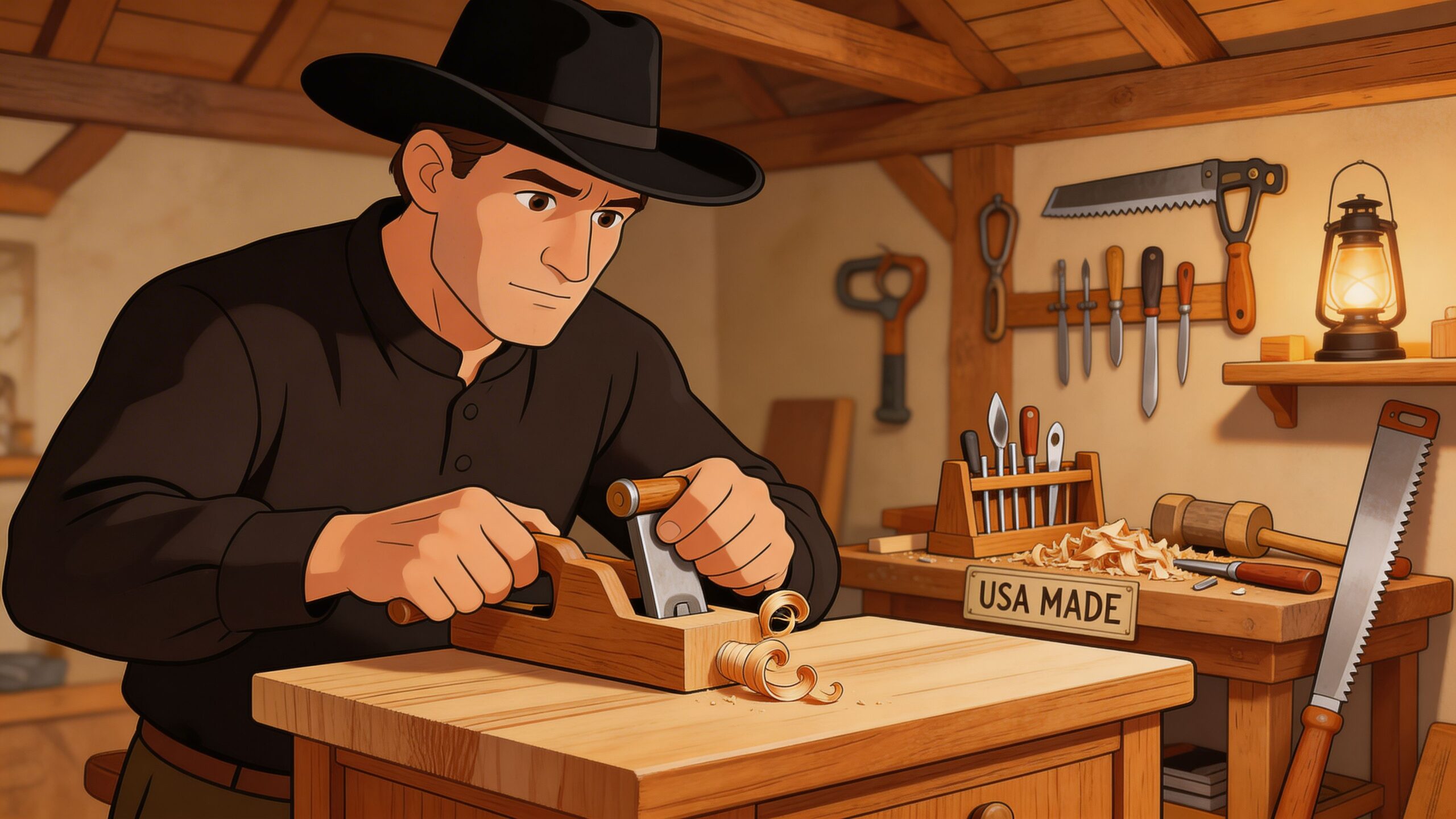
A solid wood board still has to be shaped, joined, sanded, and finished well. That is where USA-made and Amish-made furniture stands apart for many shoppers.
Why the build process matters
Furniture built with care tends to feel different the moment you open a drawer or put your hand on a table edge. The lines feel cleaner. The weight feels more grounded. The details make sense.
That often comes from slower, more deliberate construction.
Amish and American builders are known for focusing on durability, practical joinery, and wood selection. If you are curious about one classic technique, this explanation of the mortise and tenon joint shows why traditional joinery has such a strong reputation.
Furniture with a story behind it
Many people do not just want a piece of furniture. They want to know who made it and how it was built.
That is part of the appeal here.
When a piece is crafted by skilled woodworkers, it carries a sense of pride. It reflects time, training, and a commitment to getting the details right. For shoppers who care about where their furniture comes from, that means a lot.
At BILTRITE Furniture-Leather-Mattresses, shoppers can identify selections with USA Made, Amish made, and Real Solid Wood icons in the showroom. Those markers help people compare construction and origin while they browse.
Why this fits our family values
As a fourth-generation family business, we connect strongly with furniture that honors tradition. We appreciate work done carefully. We appreciate products built to stay useful. We appreciate makers who take pride in their craft.
That is one reason our local, buy-local mindset pairs so naturally with USA-made and Amish-made solid wood furniture.
For many families, this choice also supports something bigger:
- American craftsmanship: Skills that continue from one generation to the next
- Community-minded shopping: Keeping dollars closer to home
- More meaningful ownership: Buying something built with intention, not speed
Owning a solid wood piece made by skilled hands feels different from owning something pulled flat from a box. You see it in the details. You feel it in the structure. You notice it every time the furniture does exactly what you need it to do.
How to Care For and Identify Solid Wood
Solid wood is durable, but it still deserves basic care. The good news is that caring for it is usually simple.
You do not need a complicated routine. You just need a few good habits.
How to spot it when you shop
If you are standing in a showroom and trying to figure out what a piece is made of, start with your eyes and hands.
Look for clues like these:
- Check the grain flow: On solid wood, the grain often looks natural and varied rather than repeated.
- Look at edges and undersides: These spots can reveal whether the visible wood surface continues or covers another material.
- Notice the weight and feel: Many solid wood pieces feel grounded and substantial.
- Ask direct questions: What is the top made from? What are the drawer fronts made from? What about the sides?
Easy care habits that help
Day-to-day care is refreshingly straightforward.
- Dust gently: Use a soft cloth and keep buildup from sitting on the surface.
- Wipe spills soon: Everyday life happens. Quick cleanup helps protect the finish.
- Skip harsh cleaners: Strong chemicals can do more harm than good.
- Use common sense with heat and moisture: Coasters, placemats, and a little caution go a long way.
If you want product-specific guidance, our guide on how to clean wood furniture walks through the basics in plain language.
Tip: Good wood furniture is meant to be used. The goal is not to keep it untouched. The goal is to care for it so it keeps serving your home well.
A small scratch or minor mark does not mean the piece is ruined. In many cases, solid wood gives you options that surface-only materials do not. That is one more reason so many homeowners feel confident choosing it for everyday spaces.
Your Solid Wood Furniture Questions Answered
Shoppers ask great questions about solid wood, and they should. Furniture is a meaningful purchase.
Here are a few of the questions we hear most often.
Is solid wood too heavy for an apartment
Not necessarily. Solid wood is often heavier than engineered materials, but that does not mean it only works in large homes.
Plenty of apartment and condo shoppers choose solid wood for key pieces like a nightstand, dining table, or bedroom chest. The main thing is to match the scale of the furniture to the room and your access points. Smaller-scale solid wood options can work very nicely in tighter spaces.
Can solid wood furniture be repaired if it gets scratched
Often, yes.
That is one of the practical advantages people appreciate. A scratch on solid wood is not always the end of the story. Depending on the finish and the depth of the mark, a piece may be touched up, refreshed, or refinished. That repair potential is one reason people view solid wood as a long-term home choice.
Is all Amish furniture made from solid wood
Not automatically. Many Amish-made pieces are known for solid wood construction, but it is still smart to ask about the exact materials used in the specific piece you are considering.
Good shopping starts with clear questions. What wood species is this? Are all exposed parts solid wood? What type of joinery is used? A helpful sales associate should be able to answer those clearly.
Will solid wood go out of style
Usually, no. Styles change, but wood has a steady, timeless quality that works with many looks.
A simple wood table can lean farmhouse, traditional, modern, transitional, or somewhere in between based on its shape, finish, and the chairs or décor around it. That flexibility helps it stay relevant as your home evolves.
Is solid wood hard to maintain
Not for most households.
Regular dusting, quick spill cleanup, and avoiding harsh products cover most of the routine. Solid wood is meant to live in a home, not in a museum.
If you have been weighing the benefits of solid wood furniture and want to see the difference in person, we would love to help. Come visit our Greenfield showroom, talk with our team, and take your time looking at the grain, the construction, and the feel of the pieces for yourself.
We’d love to see you in our store. Visit BILTRITE Furniture-Leather-Mattresses in Greenfield to explore solid wood, USA-made, and Amish-made furniture in person, ask questions, and find a piece that fits your home and family life.