Small Scale Lounge Chairs: A Guide for Small Spaces


A new apartment can feel wonderfully settled until the seating arrives. The sofa fits one wall, but the extra chair crowds the walkway. A larger recliner may offer welcome comfort, yet it can make a cozy room feel pinched. The right small scale lounge chair solves both problems by giving a room a comfortable place to read, rest, or visit without taking over the floor.
Small scale doesn't mean flimsy or uncomfortable. It means the chair's outer dimensions, seat depth, height, materials, and structure have been chosen with tighter rooms in mind. For homeowners in apartments, condos, smaller houses, and senior living spaces, that thoughtful balance can make the difference between furniture that merely fits and furniture that feels at home.
Table of Contents
- Finding Comfort in Compact Living
- Understanding the Right Dimensions
- Choosing Between Solid Wood and Upholstery
- The Value of Quality Construction
- Styling Your Small Space
- Visit Our Showroom Today
Finding Comfort in Compact Living
A sunny corner beside a window can seem perfect for reading, until a full-size lounge chair blocks the walkway. A narrow accent seat may fit the available footprint, yet leave the sitter perched upright. Small scale lounge chairs address both needs by keeping the relaxed shape of lounge seating while reducing the chair's visual and physical bulk.
Mid-century lounge designs helped establish that a chair can feel substantial and supportive without taking over a room. One reference point lists a chair at about 31.5 inches high, 33.5 inches wide, and 35 inches deep, with a 16-inch seat height and a 300-pound weight capacity, as shown in this Eames Lounge Chair size and materials guide. The useful lesson is about proportion. A chair's comfort comes from how its seat, back, arms, and frame work together, not from a large outer footprint.

Comfort starts inside the frame
The outside width gives only part of the answer. Usable seat width, arm placement, back angle, seat height, and seat depth determine whether someone can sit naturally or feels confined. Guidance for compact lounge seating places seat widths around 20 to 24 inches and depths below 36 inches. Tighter designs may measure about 28 to 32 inches wide, according to small-space lounge chair guidance.
These details affect how the chair works every day. A compact model can create a reading nook, add a conversation seat beside a sofa, or provide a comfortable place to watch television while preserving the room's traffic path. The right choice matches the sitter's body as well as the room's available space. A tag that says “small” cannot explain whether the chair will support your posture or leave your knees and shoulders cramped.
Materials and construction matter, too. A sturdy frame can support repeated use, while appropriate cushioning and upholstery help the chair remain comfortable over time. Use this small-space furniture solutions guide as a starting point, then sit in the chair before choosing it. Check that your back and thighs feel supported, entry and exit feel easy, and enough open space remains for normal movement around the seat.
Understanding the Right Dimensions
A chair can look small in a showroom and still crowd a living room. Before visiting, use painter's tape to mark its proposed footprint on the floor. The outline shows whether it blocks a walkway, presses against a table, or leaves enough space for a lamp and footrest. It gives the room a practical test before you move furniture or place an order.
Typical lounge seating has a seat height between 12.5 and 17 inches. Related deep-seating pieces often measure 14 to 17 inches high and about 28 to 32 inches wide. Standard lounge chairs commonly measure roughly 30 to 40 inches wide and 35 to 50 inches deep, with seat heights of 15 to 20 inches, as described in this lounge chair sizing guide. The lounge chairs dimensions guide helps put those measurements into context. Small-scale models reduce the outer footprint while keeping the relaxed posture associated with lounge seating.
A simple measuring sequence
-
Measure the placement area. Record the open width and depth, then mark the chair's intended position. Include space for the arms, nearby tables, and a clear path around the seat. A chair may fit within the taped outline yet make daily movement awkward if those surrounding areas are ignored.
-
Check the interior fit. Small-scale chairs commonly measure around 28.5 to 31.5 inches high, 28.75 to 35 inches wide, and 35 to 36.5 inches deep. Seat heights may sit near 16 to 17 inches, with seat depths around 21.25 to 24.3 inches, based on the Eames Lounge Chair product dimensions. Seat depth works like the space needed for your legs at a desk. Too much can press behind the knees, while too little leaves the thighs unsupported.
-
Measure the delivery route. Use the doorway's clear opening, not the frame, to judge access. A standard doorway is often about 32 inches of clear width, while recliners may range from 34 to 40 inches wide and 36 to 40 inches deep. Removing a recliner back can reduce its pass-through depth to about 24 inches, according to this furniture measuring guide. Check hallways and turns as well as the front door.
Recliner details deserve extra attention
Compact recliners commonly measure about 29.1 to 30 inches wide, 33.5 to 37.4 inches deep, and 39.8 to 42.8 inches high. Petite versions may have seat depths of 19 to 21 inches and seat widths of 18 to 22 inches, as outlined in this small-scale recliner guide. Reclining also requires space behind the back unless the design supports close wall placement. Measure both the delivery route and the chair's operating area so comfort does not create a delivery problem.
Choosing Between Solid Wood and Upholstery
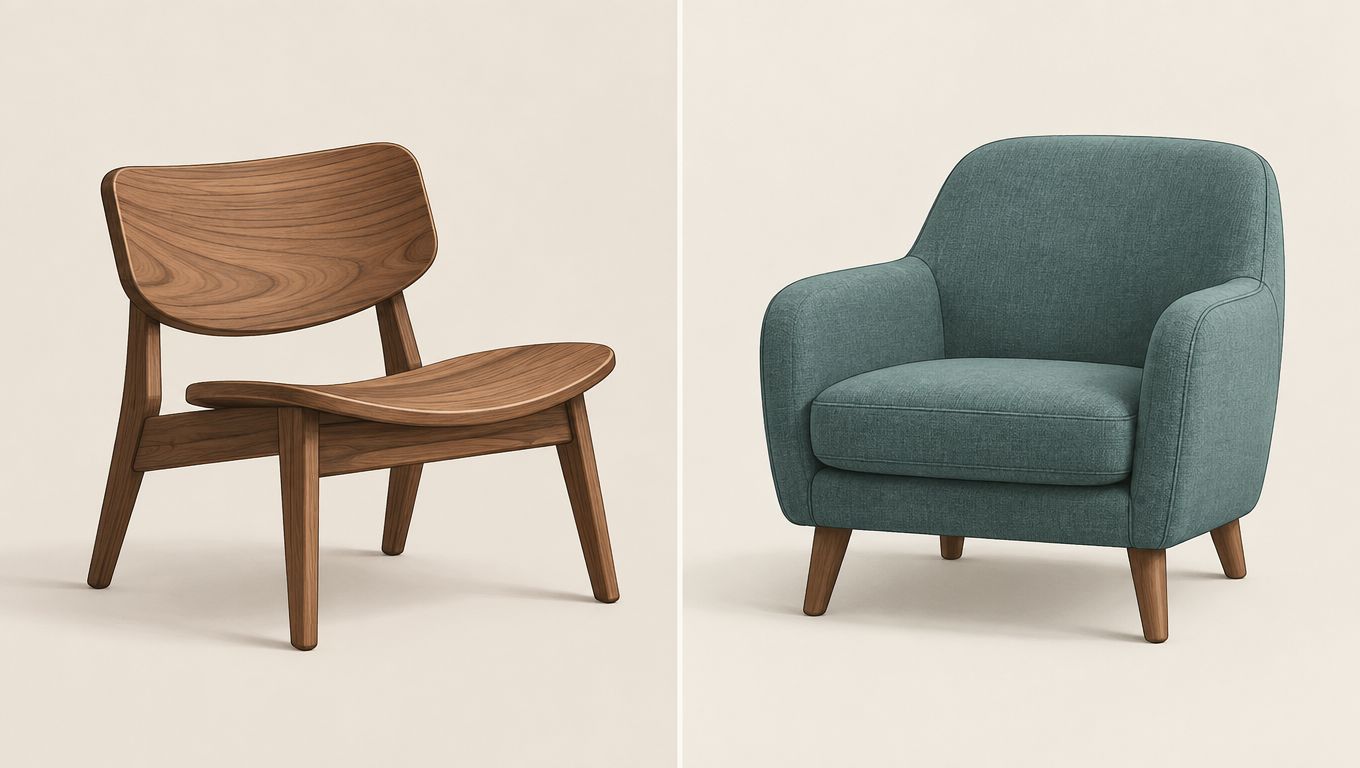
Material changes both the chair's personality and its daily experience. A solid-wood lounge chair brings visible grain, warmth, and a clearer connection to traditional or rustic interiors. Upholstery creates a softer visual landing and often offers more cushioning for reading, resting, or long conversations.
Solid wood works well for households that value natural texture and a lighter visual profile. Exposed arms or legs can make a compact chair look less bulky, while a carefully built frame can provide a steady feel when someone sits down or stands up. Wood also pairs easily with a small table, woven rug, or warm lamp.
Upholstered seating takes a different path. Fabric can add color, pattern, or texture without requiring another large decorative piece. Leather offers a smooth, structured surface that can be wiped clean more easily than many fabrics and can develop changing character over time. The choice depends on the room, the household, and the type of use rather than on appearance alone.
Match the surface to everyday life
A reader who wants a firm, sculptural seat may prefer wood with a separate cushion. A household seeking a soft movie-night chair may lean toward upholstery. Families should also consider pets, children, spills, sunlight, and how often the chair will be used. The surface is only one part of comfort, since the cushion, frame, suspension, and arm height shape the sitting experience as well.
The upholstery materials guide can help shoppers compare fabric and leather characteristics before testing chairs in person. A showroom sit test remains valuable because two chairs with similar outer dimensions can feel completely different once the cushion and arms are experienced.
Material rule: A compact chair should look right from across the room and feel right after several quiet minutes of sitting.
The Value of Quality Construction
A compact lounge chair has less material to distribute the work of supporting someone. Each sitting session places repeated pressure on the frame, joints, cushion, and suspension. Like a small bridge carrying regular traffic, it needs sound structure even when its footprint is modest. Construction therefore affects long-term comfort as much as the chair's shape.
A well-built chair may combine a solid wood frame, carefully joined components, dependable support beneath the cushion, and upholstery finished neatly around seams and stress points. USA-made and Amish-made furniture may appeal to shoppers who value domestic craftsmanship, solid wood, and furniture intended for long service rather than quick replacement. Those features do not guarantee a comfortable fit for every person, so inspect the chair and test it directly.
Look beyond the visible fabric
Upholstery can conceal the parts that control support. In a showroom, press the seat near its front edge and notice whether it returns to shape. Gently shift the chair to check for unwanted movement. The arms should feel secure, the back should support your body without forcing an awkward angle, and the chair should stay steady as you sit down or stand up.
Small-scale lounge seating also deserves careful foam selection. Residential seat foam is commonly listed around 1.8 to 2.5 pounds per cubic foot, while firmer or higher-use applications may move toward 2.5 to 3.0 pounds per cubic foot, with ILD ranges around 24 to 36, as described in this foam density buyer's guide. Lower-density foam may compress permanently within 6 to 12 months under daily use, while higher-density foam is described as more resistant to deformation across thousands of compression cycles. Since a compact cushion concentrates repeated loads in a smaller area, ask showroom associates which foam and support system the chair uses.
Quality should fit the household
A chair used occasionally for reading has different demands from one occupied every evening. Senior living spaces may benefit from firm support and arms that make standing easier. A busy family may place greater value on resilient upholstery and a stable frame. Usage is the bridge between construction details and practical comfort.
Use this guide to buying quality furniture as a checklist while comparing frames, joints, cushions, and support systems. Then ask showroom associates how the chair is built, how its materials are expected to perform, and what kind of daily use it is intended to handle. A confident choice comes from matching the chair's construction to real household routines, not from judging its appearance alone.
Styling Your Small Space
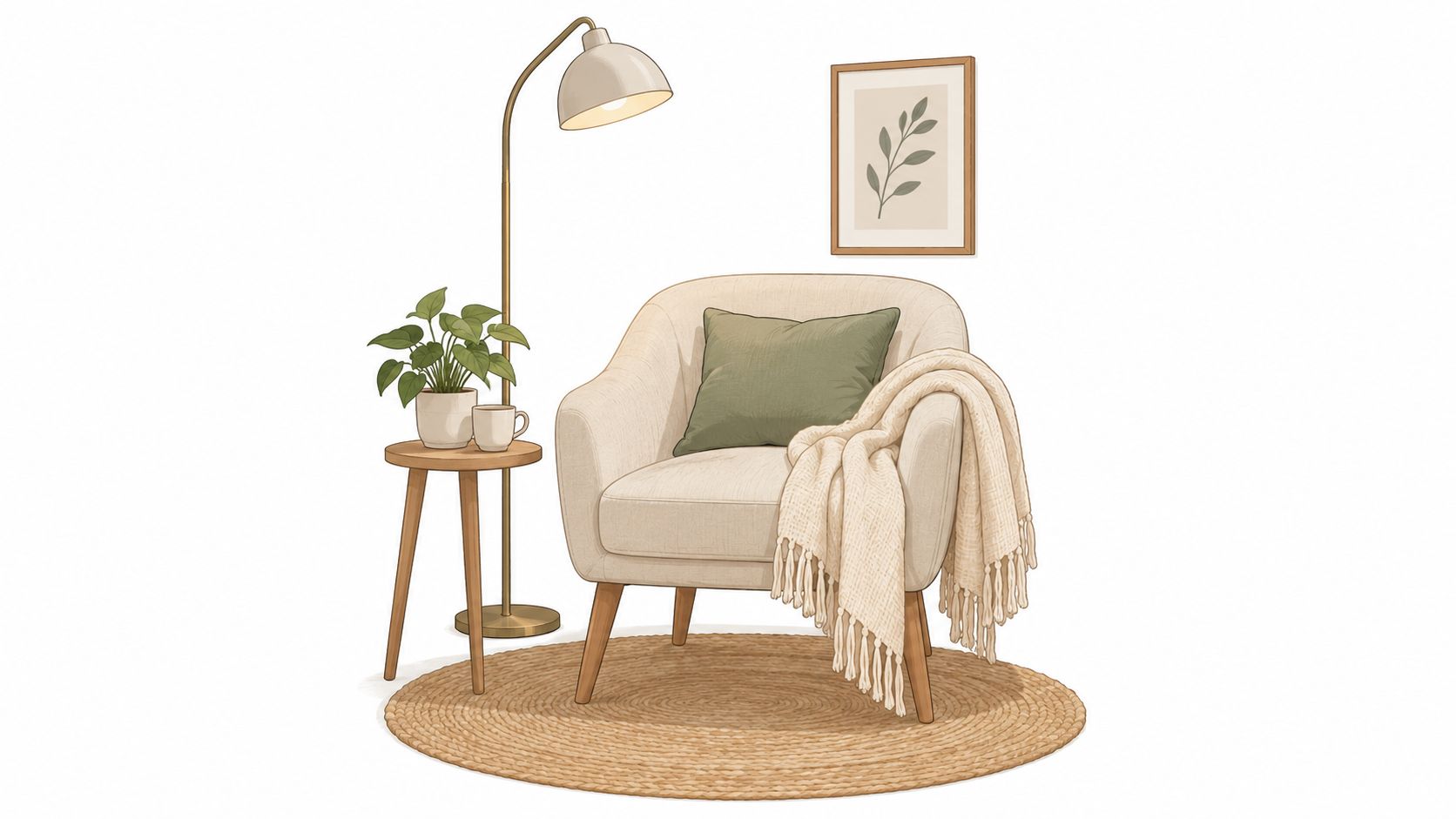
A compact chair can become the room's most useful accent when the surrounding pieces respect its scale. In a bedroom corner, it can create a quiet place for putting on shoes or reading. In a living room, it can face a sofa slightly rather than pointing directly at it, making conversation feel more natural. In a home office, it can provide a comfortable change of position without adding another large work surface.
The strongest arrangements usually begin with function. A chair for reading needs a lamp and a small table. A chair for conversation should face other seats. A chair for occasional guests can sit near the edge of the room, where it remains available without narrowing the main walkway.
Build around the chair's footprint
A few intentional choices keep a small room from feeling crowded:
- Choose a proportional table: A slim side table can hold a drink and book without competing with the chair's arms.
- Use layered lighting: A floor lamp or table lamp gives the seat a clear purpose and makes the corner useful after sunset.
- Keep textiles purposeful: A small rug can define the chair area, while a throw adds softness without requiring another piece of furniture.
- Balance visual weight: Exposed legs, open table bases, and lighter colors can help the arrangement feel more spacious.
- Repeat one detail: A wood tone, upholstery color, or metal finish shared with nearby furniture can make separate pieces feel connected.
Let the room guide the finish
A solid-wood chair may anchor a room filled with soft fabrics and pale colors. A richly upholstered chair may soften a space that already contains wood floors, shelving, or hard surfaces. A patterned fabric can serve as the focal point, while a neutral finish lets artwork or a rug take the lead.
The accent chair styling guide offers additional ideas for placing a chair beyond the usual living-room corner. The most successful arrangement leaves room for real life. Doors should open freely, people should be able to walk past, and the chair should remain easy to reach instead of becoming a decorative obstacle.
Room-planning reminder: Measure the chair in the position where it will actually be used, not only in the spot where it looks attractive in a floor plan.
Visit Our Showroom Today
Photographs can suggest a chair's style, but they can't show how the seat supports a particular body. A showroom visit allows shoppers to test cushion firmness, arm height, seat depth, back support, and the amount of effort required to stand. Those details matter even more when a compact chair needs to serve as a reading seat, television chair, guest seat, or daily retreat.
A fourth-generation, family-owned furniture business serving the Metro Milwaukee community since 1928 can bring practical local knowledge to the conversation. Its Greenfield showroom offers affordable, better-quality furniture, including USA-made, Amish-made, solid-wood, small-scale, and heavy-duty options. The team includes sales associates with over 400 years of combined experience, and the goal is guidance without pressure.
The showroom also gives households a chance to plan the full delivery path. A chair can be measured beside a sofa, compared with a table, and checked against the room's walking routes before a decision is made. Families can find location details through the Greenfield showroom locations page, then arrange a visit during regular open hours. The store is closed on Sundays and Mondays so the family-owned team can protect time with their families.
BILTRITE Furniture-Leather-Mattresses offers small-scale seating alongside USA-made and Amish-made furniture, solid-wood pieces, supportive options, and a mattress department with over 60 models. Visit BILTRITE Furniture-Leather-Mattresses in Greenfield to sit in small scale lounge chairs, compare materials, and speak with a knowledgeable team about a comfortable fit for the home.