Where Is Amish Furniture Made? Authenticity & States


Most Amish furniture is made in community workshops in Ohio, Indiana, and Pennsylvania, and many pieces are built to order with typical lead times of 4 to 12 weeks for many products. That's a big part of what makes it feel different from factory furniture. It comes from a regional tradition of woodworking, not one giant plant turning out identical pieces all day.
A lot of Milwaukee-area shoppers ask this question when they're standing in a dining room, staring at a table, and thinking, “Is this the kind of furniture that'll still look good years from now?” That's the right question. “Where is Amish furniture made?” sounds simple, but it usually leads to a better one. What kind of hands made it, and what kind of shop did it come from?
For families who want furniture with a real story behind it, Amish-made pieces stand out because the origin matters. The workshop matters. The wood matters. And the way the piece gets from a Midwestern shop to a home in Metro Milwaukee matters too.
Table of Contents
- A Warm Welcome from Our Family to Yours
- The Heartland of Amish Craftsmanship
- A Look Inside an Amish Workshop
- How to Spot Genuine Amish-Made Quality
- Bringing Amish Tradition to Your Milwaukee Home
- Your Amish Furniture Questions Answered
A Warm Welcome from Our Family to Yours
A dining table says a lot about a home. It's where school papers land, birthdays happen, and somebody always leaves their coffee cup just a little too close to the edge. When that table is solid wood and built with care, it doesn't just fill a room. It becomes part of family life.
For a family business that's served Metro Milwaukee since 1928, that idea still means a lot. Generations of local shoppers have come in looking for furniture that feels honest, sturdy, and worth bringing home. Amish furniture comes up often because it checks those boxes in a way that's easy to see once someone gets close to it.

Why the question matters
People often expect a one-word answer. Ohio. Or Indiana. Or Pennsylvania. The full answer is broader than that because Amish furniture is tied to communities, family workshops, and a woodworking tradition that has stayed rooted in the Midwest for a long time.
That's why the question isn't only about geography. It's also about values. Furniture from this tradition is connected to skilled labor, smaller production settings, and a slower, more careful approach than mass manufacturing.
Amish-made usually means a regional craft tradition centered in Amish communities, not a single famous building with a big sign out front.
What Milwaukee shoppers usually want to know
Most readers aren't trying to memorize a map. They're trying to avoid buying something that looks good for six months and disappoints after that. They want to know whether “Amish-made” is a real thing, where it comes from, and how to tell if a piece has the quality people talk about.
That's where a local showroom helps. Families can compare wood species, feel the finish, check the drawers, and ask practical questions without pressure. That turns a vague label into something much more useful.
The Heartland of Amish Craftsmanship
A dining table built in Amish country often starts its life a morning's drive from Milwaukee, in the woodworking regions of Ohio, Indiana, and Pennsylvania. Those states are the best-known centers of Amish furniture because large Amish communities have lived and worked there for generations, passing shop skills from one family to the next.

Why these states became furniture centers
The pattern is pretty practical. Furniture building grew where there were skilled hands, strong community ties, and ready access to hardwoods. Over time, those conditions created clusters of small woodworking shops that stayed rooted in place instead of shifting into large-scale factory production.
That history matters because it helps explain what Milwaukee shoppers are buying. A solid wood bed or dining set in our showroom at BILTRITE usually traces back to a regional craft tradition, not a distant mass-production pipeline. Our family has spent decades bringing that workmanship to local homes, so you can experience Midwestern Amish craftsmanship without having to travel farm road by farm road to find it.
If you want a practical look at cost along with origin, our guide to Ohio Amish-made furniture and affordability helps connect where a piece is built with what that means for real household budgets.
A regional tradition, not a single maker
“Amish furniture” can sound like one company name stamped on every table and dresser. It works more like a network of independent family shops, each with its own specialties, tools, and building habits. One shop may focus on dining sets. Another may be known for bedroom storage. Another may do especially nice office furniture.
That setup is a lot like visiting a farmers market instead of one giant food plant. The shared standards are there, but the individual makers still matter.
Here's what that means for shoppers:
- Styles vary by builder. Some shops favor cleaner modern lines, while others stay close to Mission, Shaker, or traditional looks.
- Construction details vary too. Joinery, hardware choices, and finish schedules can reflect a shop's own methods.
- The retailer's role matters. A knowledgeable showroom helps you compare builders, woods, and options side by side, which is a lot easier than trying to decode an online label.
Practical rule: If a store describes Amish furniture as if it all comes from one giant production line, that explanation doesn't capture the full picture.
For families in Milwaukee, that regional network is part of the appeal. The furniture is made in the American heartland, and BILTRITE has long served as the bridge between those skilled shops and the homes here that want lasting, heirloom-quality pieces.
A Look Inside an Amish Workshop
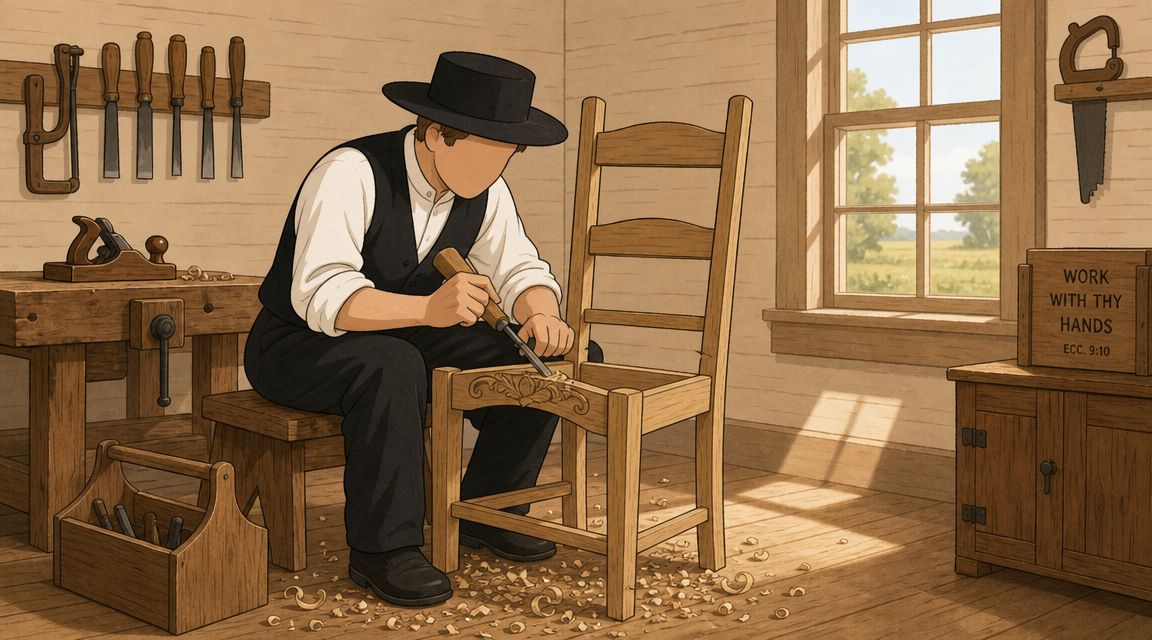
The workshop itself helps explain why Amish furniture feels different. Instead of long assembly lines and stacks of lookalike parts, the process usually centers on smaller shops where craft comes before volume.
What made to order really means
Amish production is known for a made-to-order model. One dealer reports that American-made Amish furniture can be custom built and typically requires a 4 to 12 week lead time for most products, reflecting small-batch manufacturing instead of mass assembly, according to this summary of Amish custom production and lead times.
That lead time surprises some shoppers at first. They're used to hearing “in stock” or “ships now.” But made to order means the shop is building a piece for a specific home, often with choices in wood, stain, size, or layout.
For readers who want a broader overview of the category itself, this Amish furniture guide gives helpful background on what defines the style and construction.
Why the pace is part of the value
A slower timeline isn't a problem when someone understands what's happening behind the scenes. A table may be cut, assembled, sanded, finished, and checked by people in a workshop that handles smaller runs instead of trying to push as many units out the door as possible.
That changes the shopping mindset. Instead of asking only “How fast can it get here?” buyers often start asking better questions:
- Will the size work for the room
- Does the wood fit the household's style
- Is the finish right for daily use
- Will this still feel right years from now
Good Amish furniture often asks for a little patience up front so the household can enjoy it much longer on the back end.
That human pace is part of the appeal. It reminds shoppers that a piece of furniture can still be built for someone, not just shipped at someone.
How to Spot Genuine Amish-Made Quality
Not every shopper knows what to look for at first glance, and that's completely normal. A well-lit showroom can make a lot of furniture look nice from ten feet away. The useful clues show up when someone gets closer.
What shoppers can notice right away
Start with the wood. Amish furniture is often associated with solid hardwood construction, visible grain, and a finish that lets the character of the wood show instead of hiding it under a heavy plastic-looking surface. Touch matters too. A carefully sanded surface tends to feel smooth and substantial, not thin or hollow.
Joinery is another giveaway. Drawers, table bases, and chair frames should look deliberate and well-fitted. Hardware should feel like it belongs to the piece, not like an afterthought.
A lot of shoppers also appreciate learning the basics of traditional construction. This simple guide to mortise and tenon joints helps explain one of the classic woodworking details associated with long-lasting solid-wood furniture.
Signs of Authentic Amish Craftsmanship
| Characteristic | What to Look For |
|---|---|
| Solid wood feel | The piece feels weighty and substantial, with natural grain variation rather than a repeated printed pattern. |
| Clean joinery | Drawer corners, legs, and frames fit together neatly without looking rushed or flimsy. |
| Smooth finish | Surfaces feel carefully sanded and finished, especially on edges, drawer fronts, and tabletops. |
| Consistent detail | Chair slats, table aprons, and cabinet doors look balanced and well-proportioned. |
| Customization options | The seller can explain wood species, finish choices, and size options in clear terms. |
| Clear origin story | The retailer can describe the workshop network or builder relationship instead of giving a vague answer. |
A smart shopper doesn't need to become a woodworker overnight. A few practical checks go a long way.
- Open the drawers: They should move with confidence and feel well-aligned.
- Look underneath: Hidden areas often reveal how carefully the piece was built.
- Check the grain flow: On a quality wood piece, the visual character usually feels natural, not fake or repetitive.
That's often the moment when shoppers stop comparing only price tags and start comparing actual furniture.
Bringing Amish Tradition to Your Milwaukee Home
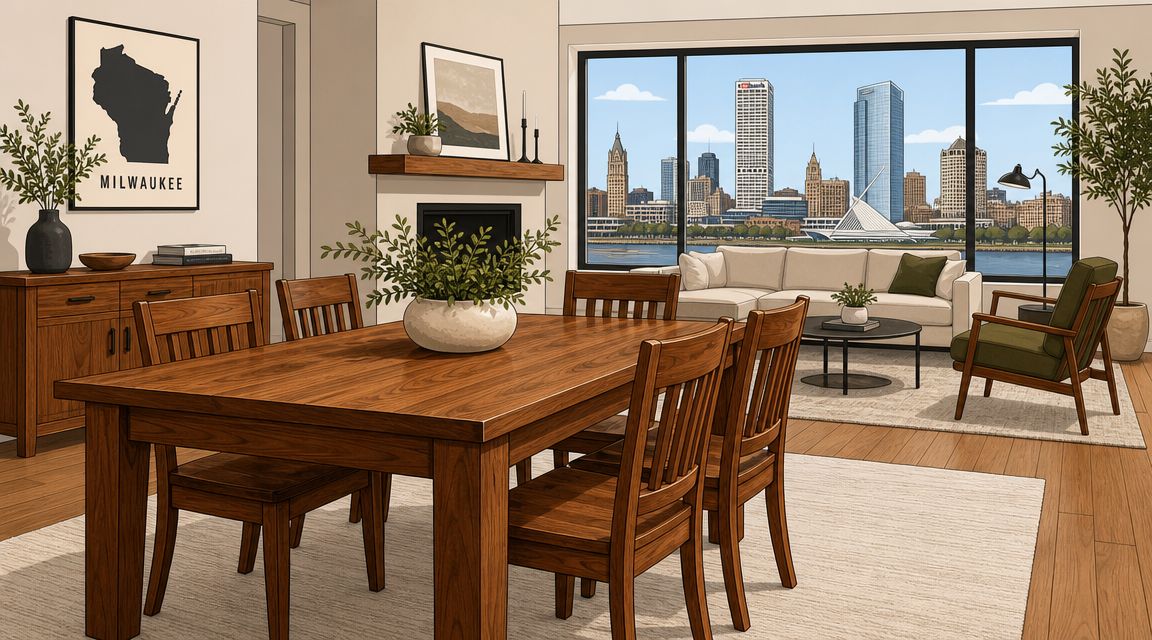
A Milwaukee family can admire Amish furniture in Indiana or Ohio, then still wonder how that piece will fit their dining room, their wood floors, and their everyday life. That gap matters. Fine craftsmanship only becomes a good purchase when someone helps connect the workshop to the home.
Why this matters in a local showroom
Our family has served Metro Milwaukee since 1928, and one thing never changes. People want furniture that looks right in the room and feels right for the way they live.
That is where a local showroom earns its keep. A photo can show style, but it cannot tell you whether a chair feels comfortable through a long dinner, whether a table edge feels too sharp for young kids, or whether a stain reads warm or cool under your home lighting. Amish furniture deserves that kind of hands-on shopping because the details are the whole story.
At BILTRITE, we help turn a broad idea like "Amish-made" into practical choices. A condo owner may need a narrower table with clean lines. A busy household may want a tougher wood species and a forgiving finish. Someone updating one room at a time may need a new piece that works with trim, flooring, or cabinets already in the house.
If you want to see what that looks like locally, our Milwaukee-area Amish furniture selection gives you a good starting point.
A better way to shop for something lasting
Shopping for Amish furniture works a lot like buying a well-built pair of boots. The materials matter, the fit matters, and the small construction details matter even more after years of use.
That is why showroom shopping helps. You can sit in the chair instead of guessing from dimensions on a screen. You can open the door on a china cabinet, look at the color in natural light, and compare one wood species to another without relying on a phone display. Questions get answered on the spot, which makes custom decisions feel much less intimidating.
Metro Milwaukee homes also ask for different solutions. A bungalow dining room, a lake-country great room, and a downtown condo rarely need the same scale or profile. Amish furniture fits those spaces well because the focus stays on proportion, function, and long-term use.
For our family, that has always been the rewarding part. We bring the craftsmanship of Amish builders within reach here in Milwaukee, so owning a piece of American furniture tradition feels straightforward, personal, and grounded in real life.
Your Amish Furniture Questions Answered
A few questions come up almost every time shoppers start considering Amish furniture. The answers are usually simpler than people expect.
Can it be customized
Often, yes. Amish furniture is commonly built from North American hardwoods like oak, cherry, maple, and hickory, and customization is a key part of the supply chain in Midwest workshop networks, as described in this overview of Amish furniture materials and nationwide shipping.
That usually means a shopper may be able to adjust wood species, finish color, size, or a few design details depending on the builder and piece.
Why does it usually cost more
The price difference usually comes down to materials, labor, and the way the furniture is made. Solid wood, smaller-batch production, and custom options tend to cost more than furniture built for quick turnover.
That doesn't make it right for every household. It does make sense for buyers who care about longevity, repairability, and getting something that feels more personal than a standard boxed item. This article on the advantages of Amish furniture explores that value in more depth.
How long does it take
Lead time depends on the builder, the piece, and the level of customization. Since Amish furniture often comes from workshop networks rather than mass production, timing can vary. Delivery planning matters too, especially for homes with tighter access, stairs, or city parking concerns.
That's why it helps to ask practical questions early. Is the piece built after the order is placed? Is it moving through a regional dealer network? Does the home need special delivery planning? Those details matter just as much as the style.
Shoppers who want to see Amish craftsmanship up close can visit BILTRITE Furniture-Leather-Mattresses in Greenfield and talk with a knowledgeable team in person. The showroom has served Metro Milwaukee since 1928, focuses on affordable, better-quality furniture and mattresses, and offers a chance to compare Amish-made, USA-made, and solid-wood pieces the old-fashioned way, by seeing and feeling them before bringing them home.