3 DAY MATTRESS SALE! THURSDAY - FRIDAY - SATURDAY!
98TH ANNIVERSARY SALE-A-BRATION ENDS SATURDAY, NOVEMBER 7TH AT 5PM!
NO CREDIT CARD FEES!
1000's of Items IN-STOCK + 500 Mattresses!
Largest selection of USA Made Furniture & Mattresses + Amish Made!
FREE In-Store Design Services!
BUY LOCAL & LOVE YOUR HOME!
Tuesday-Thursday 10am to 6pm | Friday 10am to 7pm | Saturday 10am to 5pm | Sunday Closed To Be With Family & Friends | Monday Showroom Closed
5430 West Layton Ave, Greenfield - Metro Milwaukee
Two dining sets can look nearly identical across a showroom floor: similar wood tones, matching chair shapes, and polished tabletops. Move in closer and the story can change. One set may use solid-wood components with carefully fitted joints, while the other mixes materials and relies on different construction choices. That difference is easy to miss from a few steps away, yet it can matter when drawers get daily use, a tabletop meets changing humidity, or a family wants to repair a piece rather than replace it.
A solid wood furniture set works more like a system than a material label. Long-term value depends on how the wood itself, the joinery, the finish, the hardware, room conditions, and everyday care fit together. A finish that slows moisture exchange, a joint that can be tightened after years of use, and a surface that can be refinished rather than discarded each play a part. At BILTRITE, where USA-made, Amish-made, and solid-wood pieces can be compared side by side on the showroom floor, a useful way to shop is to look past appearance and ask what each part is made of, how it is assembled, and how it can be cared for.
A set's label may tell only part of the story. A dining table could have a solid-wood top while its leaves, apron, or chairs use other materials. A bedroom set might include solid-wood drawer fronts but different construction inside the drawer box. None of those combinations automatically makes a piece unsuitable. The important thing is knowing what the label applies to and whether the construction fits the way the furniture will be used.
Look at the whole piece
Natural grain variation can help identify solid wood, especially along an exposed edge or unfinished-looking underside. But appearance alone isn't enough. Ask whether the top, legs, rails, drawer sides, shelves, and other working parts are solid wood, veneer over a core, or a combination. Then check how the pieces are joined and whether doors, drawers, and leaves feel aligned and operate smoothly.
BILTRITE's guide to Amish furniture quality offers another set of practical questions to bring into the showroom. A broad description such as “handcrafted” can be a starting point, but details such as wood selection, joint design, finish, and repair support make it easier to compare one set with another.
Think beyond the material name
Solid wood can be repaired or refinished, but that doesn't mean every scratch or structural problem is a simple home project. A worn surface, loose joint, and split panel call for different solutions. Good shopping starts with an honest conversation about what the set is made of and what kind of care it may need over time.
Solid Wood Veneer and Engineered Wood Compared
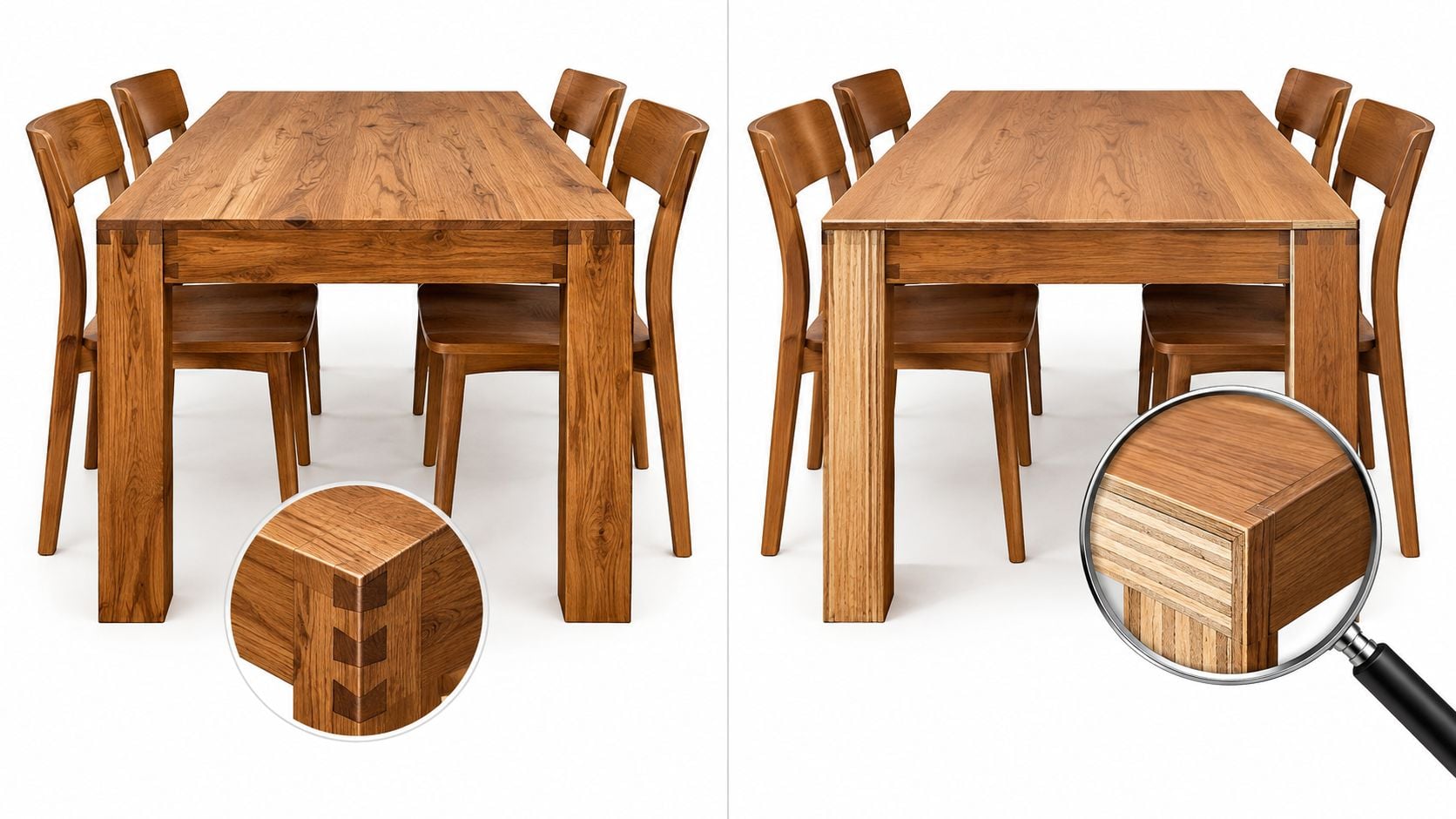
Think of solid wood as a board cut from a tree. Its grain continues through the thickness of that board, though the pattern changes naturally from one board to another. A veneer is a thin layer of real wood applied to a different material, so the visible surface can show genuine wood grain without the entire component being solid wood.
Engineered wood describes products made by joining or compressing smaller wood pieces or fibers. The term covers several materials, and they aren't interchangeable. Plywood consists of thin wood layers bonded together. MDF, or medium-density fiberboard, is made from wood fibers pressed into a panel. Particleboard uses smaller wood particles bound together. Each can have different construction qualities and uses in furniture.
Check where each material appears
Veneer can be used on broad surfaces, with a core beneath it. Engineered panels may be used for cabinet sides, shelving, drawer bottoms, or other components, depending on the design. Solid wood can appear in exposed edges, legs, frames, tops, and drawer parts. A single set can combine these materials, so the right question is not "Is it solid wood?" but "Which parts are solid wood, and what are the other parts made from?"
Grain direction and exposed edges offer clues, but shoppers don't need to act like detectives. A clear answer from the sales associate is more useful than guessing from a finish. For context, U.S. wood household, upholstered, and wood office furniture manufacturers employed about 243,000 people across 4,500 establishments in 1990, reflecting a longstanding network of specialized domestic production (Congressional Research Service industry overview).
Ask in plain language
A useful question is: “Which parts of this piece are solid wood, and where are veneer or engineered panels used?” That invites a specific answer without assuming one material is always better. The best fit depends on the component, its job, the set's construction, and the buyer's priorities.
How Each Material Performs in Daily Life
Materials influence how furniture looks and how it may be maintained, but construction and use matter too. Solid wood often shows natural changes in grain from piece to piece. Those differences are part of its character, not necessarily a flaw. Its repair potential can be appealing, though the repair options depend on the finish, how deep the damage is, and whether matching parts or stain are available.
Veneer uses a real-wood surface over a core. That can create a consistent appearance across a set, but a thin surface may limit how much it can be sanded if damaged. Engineered materials vary: plywood, MDF, and particleboard have different structures, and their suitability depends on how a particular piece is designed and finished.
Compare priorities, not labels
Material
What It Is
Common Strength
What to Ask
Best-Fit Priority
Solid wood
Natural wood boards or components
Visible grain and repair potential
Which parts are solid, and how are they joined?
Natural variation and the option to repair
Veneer
Thin real-wood surface bonded to a core
Real-wood appearance across a surface
How thick is the veneer, and how should damage be handled?
A consistent wood look
Plywood
Layers of wood bonded into a panel
Layered panel construction
Where is it used, and how are edges finished?
A panel suited to its role in the piece
MDF or particleboard
Pressed wood fibers or particles
Panel-based construction
Which components use it, and how are they protected?
A specific design or budget need
A furniture-longevity framework treats durability as more than surviving use. Technical longevity also includes the ability to repair and remanufacture a product across multiple life cycles (furniture longevity framework). That's a helpful way to compare sets: consider whether a piece can keep serving its purpose if a surface wears or a component needs attention.
For more guidance on evaluating service life, BILTRITE's furniture longevity guide can help frame the questions. There's no universal winner among materials. A thoughtful choice matches construction and care needs to the home, the budget, and the way the furniture will be used.
Wood Species Joinery and Finishes
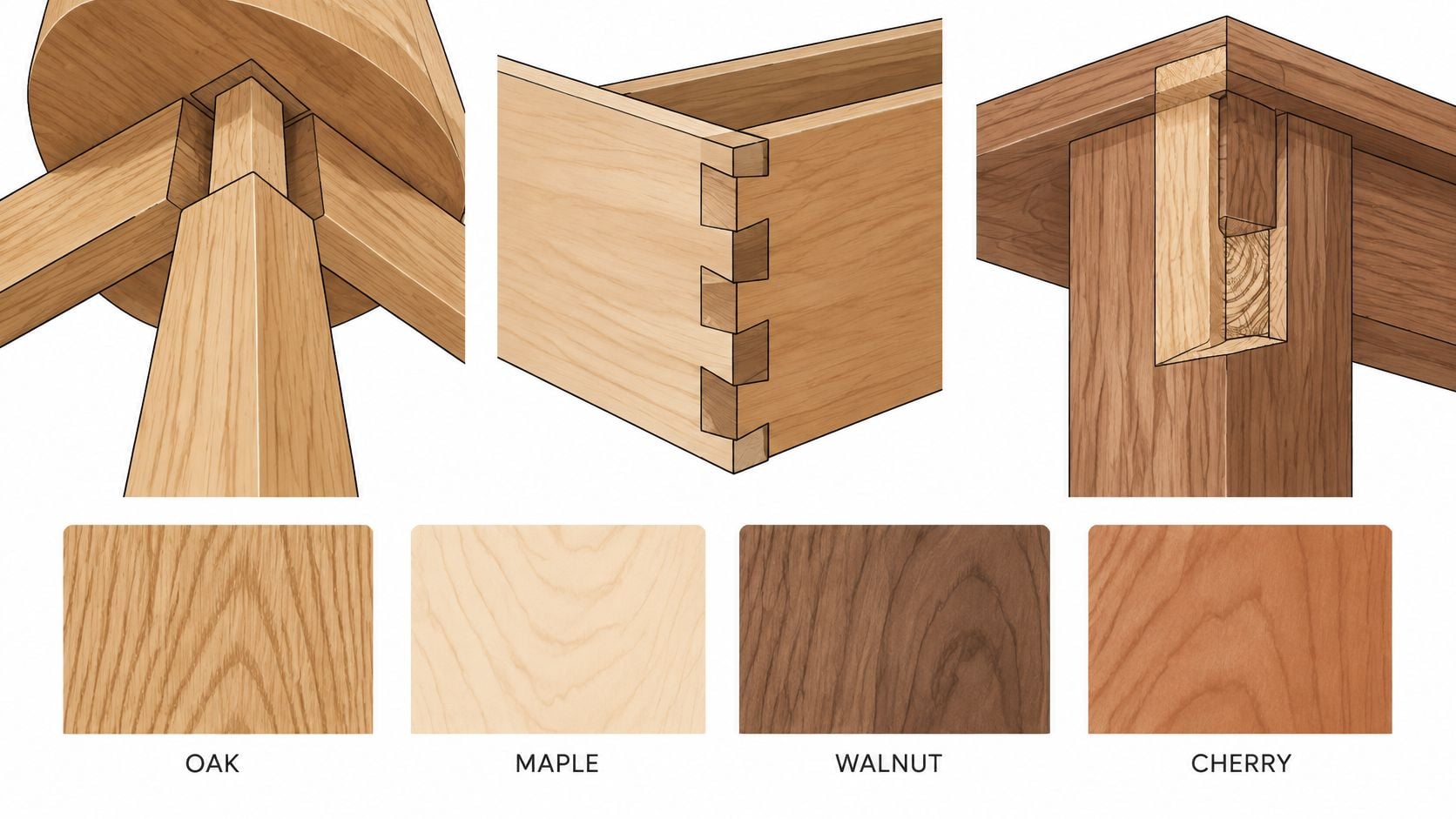
Wood species shape the grain and appearance of a set, but species alone can't predict how well the furniture will perform. Hardwood families such as oak, maple, walnut, and cherry each bring their own visual character. The maker's decisions matter just as much: how the boards are selected and prepared, how components connect, what hardware is fitted, and how the finish is applied.
Ask what “well built” means
A specific description is more useful than a broad promise. One detailed Amish furniture example used 5/8-inch-thick hardwood drawer-box sides with dovetailed corners, along with dadoed, double-glued face frames (reported Amish furniture construction details). Dovetail corners fit together through interlocking shapes. A dado is a channel that helps fit one piece into another. These details give shoppers concrete things to ask about, but they shouldn't be assumed to apply to every Amish-made piece.
The same principle applies to other joints. A shopper can ask whether a table's construction is designed for repeated everyday use, how a drawer bottom is supported, and whether hardware can be adjusted or replaced. BILTRITE's explanation of mortise-and-tenon joints can help make one common joinery term easier to discuss.
Finish and hardware count, too
A finish affects the wood's appearance and provides a protective surface, but it doesn't make the underlying construction irrelevant. Ask how the finish should be cleaned, what kinds of damage can be addressed, and whether the maker can help with repair or matching parts. The same goes for hinges, slides, and pulls: understand what's included and what support is available if something needs adjustment.
BILTRITE's in-store icons for solid wood, USA-made, Amish-made, and heavy-duty furniture can help shoppers identify categories to explore. They're useful prompts, not substitutes for asking about the particular set. Value comes from the whole system, not a species name or handmade label by itself.
Why Solid Wood Needs Thoughtful Care
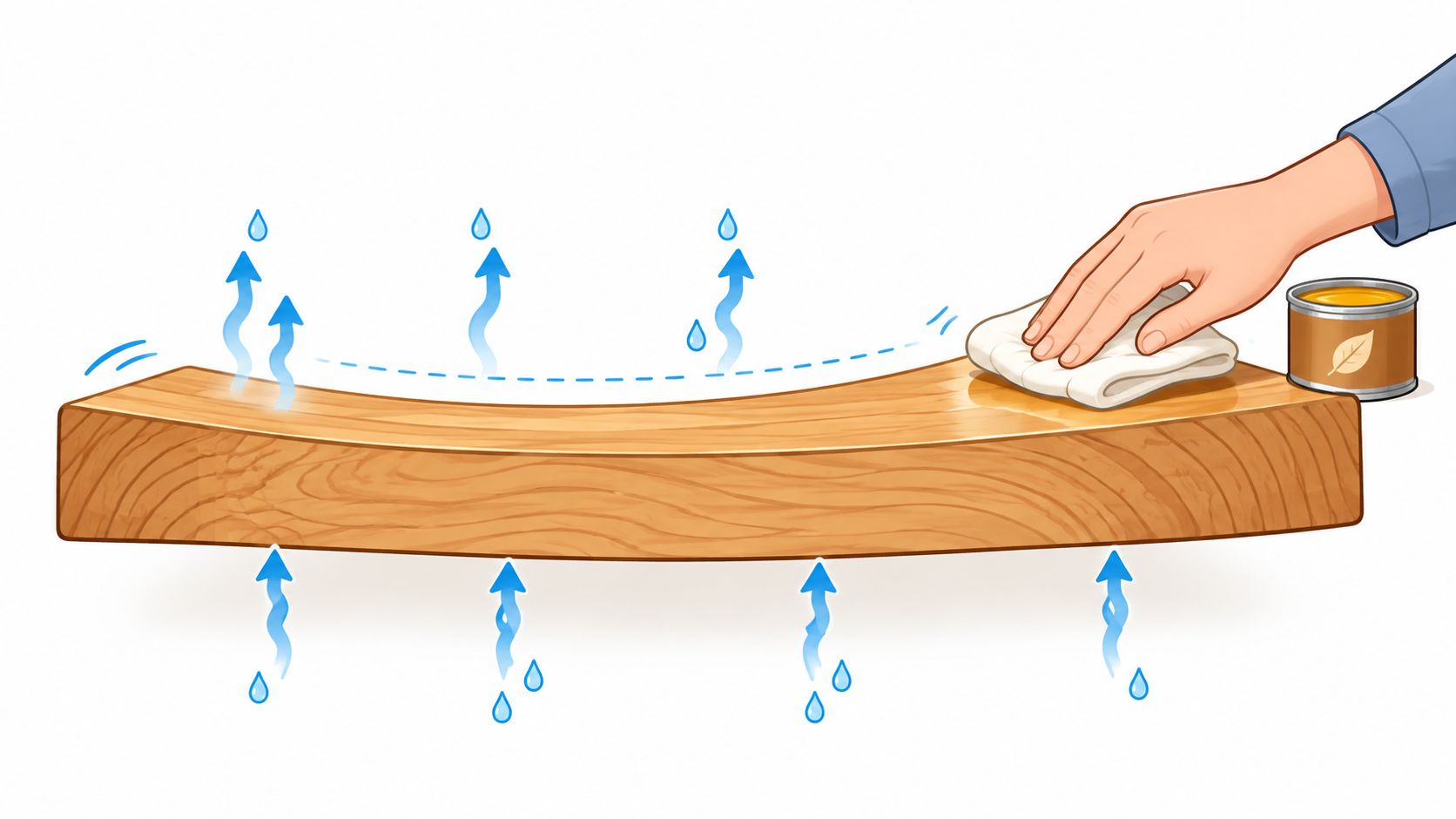
Solid wood isn't maintenance-free. Wood exchanges moisture with the surrounding air, and that exchange can cause it to expand or contract as indoor humidity changes. Wide tops, cabinet doors, drawer fronts, and other broad components need construction that allows this movement instead of locking the wood rigidly in place.
The USDA Forest Products Laboratory specifies approximately 6–8% final moisture content for hardwood lumber used in furniture, cabinetry, and millwork. Keeping the wood near the moisture level expected in service can help reduce distortion, joint stress, and panel cracking (USDA Forest Products Laboratory guidance). A finish slows moisture exchange, but it can't stop wood from responding to its surroundings.
Give the wood room to move
Floating panels, elongated screw holes, and tabletop attachments designed to permit movement can help a wide board expand and contract without pulling against its fasteners. A table placed beside a heat register or radiator, an exterior door, or a persistently humid wall may face larger changes in its surroundings. A relatively stable indoor environment and sensible placement help reduce avoidable stress.
Coasters, prompt spill cleanup, and appropriate cleaning also protect the finish. A seasonal gap or a slightly proud edge isn't automatically a manufacturing defect; wood movement may affect fit as conditions change. If a part sticks, splits, or develops a loose joint, the cause and the right fix should be assessed rather than assumed.
Know when to call for help
Small surface marks may be manageable with suitable care, but a deep scratch, damaged finish, split panel, or structural joint problem may need a furniture repair professional. Refinishing can also depend on the finish type and the depth of damage. Before buying, ask what the manufacturer or showroom can advise about repairs, matching stain, and replacement hardware. BILTRITE's wood furniture maintenance advice can support a practical care routine.
How to Choose Within Your Style and Budget
A solid wood furniture set has to fit the room as well as the household. Start with the space: measure the area where the furniture will sit, then check the route it must travel through the home. Doorways, halls, stairs, and turns can matter as much as the room itself, especially in an apartment or an older home.
Match the set to real routines
Consider who uses the furniture and how. A dining set used for family meals and homework may have different needs from one used mainly for occasional entertaining. A bedroom set needs storage that suits its owners. A living-room piece should work with the room's layout and daily habits, not just look attractive in isolation.
Style can come from the wood tone, profile, hardware, finish, and proportions. Traditional, rustic, modern, and transitional looks can all work with wood furniture. There's no need to match every piece exactly; the practical question is whether the set feels cohesive with the home and the items already there.
Compare the whole cost and construction
Set a budget that accounts for the complete purchase and its care, not just the furniture itself. Ask about delivery, floor protection, and any future maintenance or refinishing needs. If custom choices are available, clarify which wood, finish, stain, and hardware options apply to the specific piece.
A useful showroom checklist includes:
Materials: Which components are solid wood, veneer, or engineered panels?
Construction: How are drawers, frames, and wide tops assembled?
Care: Which cleaners and routines suit the finish?
Repair: What damage can be addressed, and who can help?
Fit: Will the pieces clear the delivery route and work in the room?
No single price tag tells the whole story. Comparing details helps shoppers understand what they're paying for and whether the set fits their priorities. A good conversation should clarify the choices without pressure.
Choosing for Different Homes and Lifestyles
A family furnishing a busy home may focus on dependable construction, usable storage, and surfaces that suit everyday meals and activities. A generous dining table can be useful for gatherings, but the right scale depends on room clearance and how people move around it. A heavy-duty option may suit a home with demanding daily use, but shoppers should still ask what the label means for the specific item.
An apartment or condo presents a different puzzle. A compact set may make better use of the floor plan, while doorway and hallway measurements help prevent delivery surprises. BILTRITE's small-scale furniture guide offers ideas for thinking about function in a tighter footprint.
Let the room set the priorities
Frequent entertainers may care most about seating, table capacity, and the way a dining area connects with the rest of the home. Someone arranging a home office may prioritize storage and a work surface that fits the room. A senior living space calls for individual attention to access, stability, and comfort; each person's needs are different, so it helps to test furniture in person.
Delivery also affects the choice. Some sofas and sectionals are designed to come apart for easier delivery into tight spaces, but that feature shouldn't be assumed on every piece. Confirm the available construction and delivery options for the actual item.
BILTRITE offers a broad showroom selection that includes USA-made and Amish-made furniture, along with choices for smaller spaces and heavy-use homes. The sales associates bring extensive combined experience and can help shoppers compare dimensions, construction, and finish without pushing a one-size-fits-all answer. A useful visit leaves the household clearer about what fits, not just with a style picked from a distance.
Make Your Final Furniture Decision
A solid wood furniture set works as a system, and the final check is where every part of that system gets a hands-on test. Start with materials: confirm which components are solid wood and which use veneer or engineered panels. Then open the drawers, examine the joints, check the hardware, and run a hand across the finish. Ask how the wide panels are allowed to move as the room's humidity shifts, and find out what repair support exists if a surface gets scratched or a joint loosens years from now.
Durability works the same way. Material matters, but joinery, finish, room conditions, and care all share the load. A furniture-longevity framework also counts repair and remanufacture as part of a product's technical life, so a piece that can be fixed may outserve one that cannot.
Treat testing as useful context
A 2023 study compared chairs under repeated loading. One wood-based chair supported 350 pounds and completed 173,326 cycles before failure, while a fast-furniture example supported 250 pounds and failed after 135,823 cycles (study of wood-based chair durability). Results like these show what repeated-use testing can reveal that a quick showroom glance cannot.
Those numbers describe test chairs, so treat them as context rather than a lifespan promise for a dining, bedroom, or living-room set.
For a confident choice, match the construction details against the household's needs and budget. Bring your measurements, your room photos, and the checklist above; a hands-on look at drawers, joints, and finish will tell you more than any label can. The showroom closes on Sundays and Mondays to support family time, so plan a visit during open hours.
BILTRITE Furniture-Leather-Mattresses offers USA-made, Amish-made, and solid-wood furniture for homes around Metro Milwaukee. Visit the Greenfield showroom to see the construction in person, try pieces at your own pace, and ask the team questions with no pressure.