Wheelchair Accessible Furniture Guide for Comfort


A sofa can look beautiful in a room and still make daily life harder. A seat that's too low can turn a simple transfer into a tiring maneuver, while a coffee table placed too close can block a wheelchair from reaching a drink, book, or remote. The same problem appears at desks, dining tables, beds, and storage cabinets. The furniture may be attractive, but the room doesn't work.
Wheelchair accessible furniture is about more than a label. It's about approach, reach, transfer safety, legroom, and clear paths working together. A well-planned room should support independence while still feeling like home, with comfortable materials, welcoming colors, and pieces that suit the family's style.
BILTRITE has served the Metro Milwaukee community as a fourth-generation, family-owned furniture store since 1928. That long history brings a practical perspective to furniture choices. A piece has to fit the person, the room, the delivery route, and the way the household lives every day.

The guide below explains the measurements that matter, how to compare seating and tables, why whole-room clearance is just as important as furniture dimensions, and how customization can help balance accessibility with personal taste. Readers looking for supportive sleep solutions can also explore beds for people with disabilities as part of a broader bedroom plan.
Table of Contents
- Introduction to Wheelchair Accessible Furniture That Works at Home
- What Wheelchair Accessible Furniture Really Means
- Key Measurements and Clearances That Make Furniture Usable
- How to Choose and Adapt Furniture for Wheelchair Users
- Room Layout and Safety Tips for Everyday Accessibility
- Customization and Durable Options Built to Last
- Delivery Installation and Aftercare Made Simple
Introduction to Wheelchair Accessible Furniture That Works at Home
A comfortable home starts with ordinary moments. Someone reaches for a mug, pulls up to the dining table, transfers from a wheelchair to a sofa, or gets close enough to a nightstand to turn on a lamp. If the furniture blocks that movement, the person may need to lean farther, ask for help, or skip the activity altogether.
That's why accessible design belongs in everyday residential furniture conversations. It doesn't have to look clinical, oversized, or out of place. The right sofa, desk, bed, table, or storage piece can support mobility while blending naturally with the rest of the home.
Comfort begins with the whole interaction
A wheelchair user doesn't experience a table as a tabletop alone. The experience includes the open space beneath it, the route toward it, the position of nearby chairs, and whether the user can reach what's on the surface without uncomfortable leaning. A bed isn't only a mattress and frame. It also affects transfers, caregiver access, bedside storage, and circulation.
Small details can make a meaningful difference:
- Seat height: A very low sofa may be difficult to leave safely.
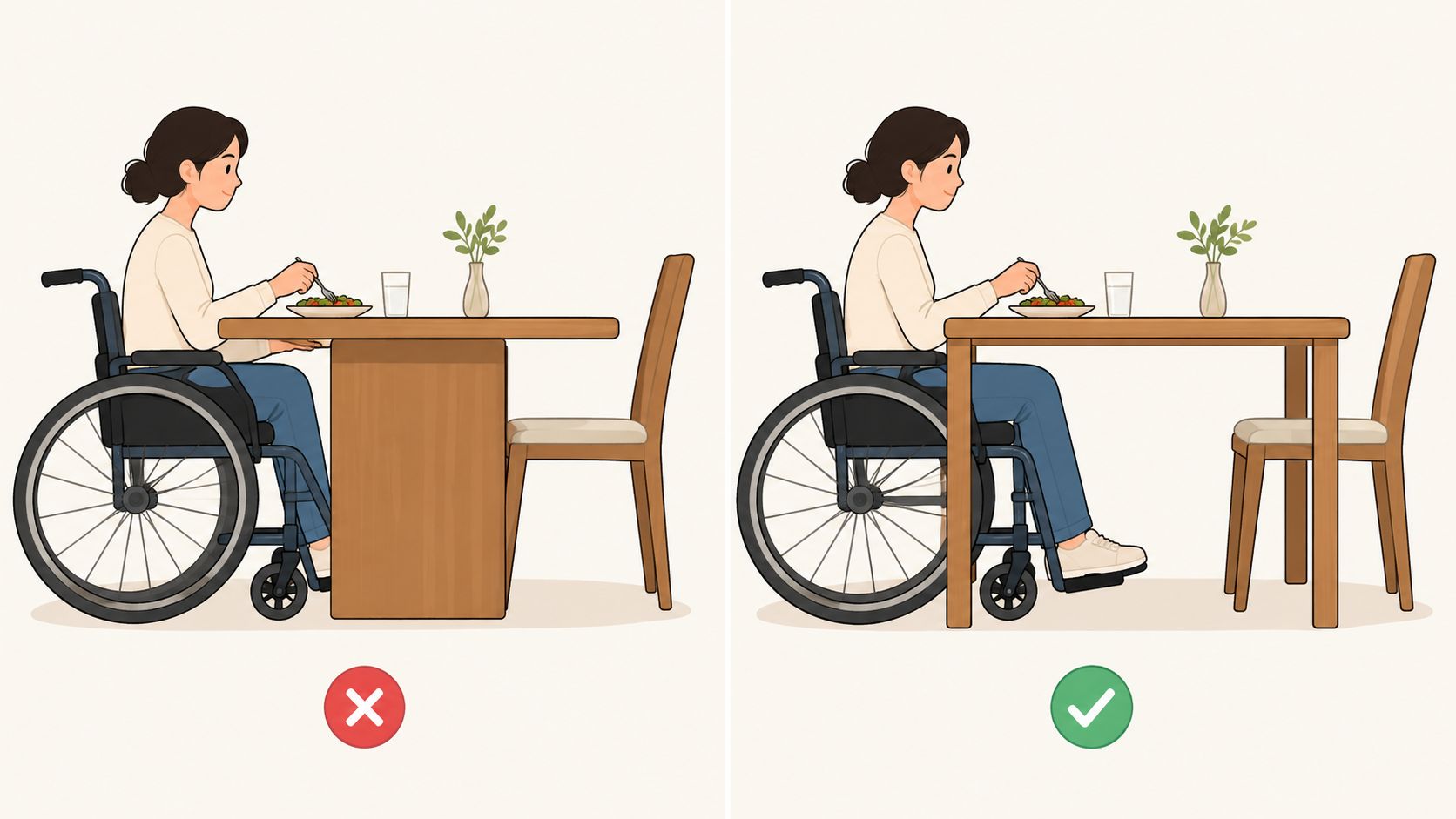
- Open bases: A table without obstructive stretchers can make forward approach easier.
- Reachable storage: Low drawers and easy-grip hardware can reduce unnecessary stretching.
- Stable support: Firm cushions and supportive arms can help during transfers, depending on the user's needs.
- Clear routes: A well-chosen piece still creates a barrier if it narrows the path through the room.
Practical rule: A furniture label can start the conversation, but the person's chair, transfer method, reach, and room layout determine whether the piece actually works.
Why the history matters
Furniture designed around mobility needs isn't new. Wheelchair-type furniture and rolling beds were already being used in China by at least the 7th century AD, more than a millennium before modern accessibility law. In the United States, accessible design became more formalized through the release of ANSI A117.1 in 1961, the Architectural Barriers Act in 1968, and the signing of the Americans with Disabilities Act in 1990, as described in this historical overview of accessible design milestones from the Journal of Humanities and Social Sciences.
The Department of Justice explains that accessible equipment and furniture have always connected with broader program accessibility, reasonable modification, auxiliary aids and services, and barrier removal requirements. Those rules mainly shape public and commercial environments, but they also influence how families think about furniture at home.
The most useful approach is simple: start with the person, measure the room, then choose furniture that supports daily routines. There's no need to sacrifice warmth or personality to make a space easier to use.
What Wheelchair Accessible Furniture Really Means
Wheelchair accessible furniture is furniture that allows a person to approach, use, transfer beside, and move around a piece with less obstruction. The definition focuses on the interaction between the person and the furniture, not on a special appearance.
A dining table offers a clear example. A table can have a suitable surface height, yet remain difficult to use if a thick apron blocks the knees. A desk can have plenty of tabletop space, but fail in practice if the wheelchair can't roll far enough underneath. A sofa can have sturdy arms, but still create problems if the seat is too deep or too soft for a safe transfer.
Start with approach and reach
The first question is whether the wheelchair can get close enough. A forward approach usually requires open space beneath a table or desk for the footrests, knees, and chair frame. A side approach may work better for some transfers, but it depends on the user's chair, strength, balance, and preferred technique.
Next comes reach. Handles, drawers, shelves, lamps, and controls should be positioned where the user can access them without excessive leaning or twisting. Sliding doors and pull handles can make storage more manageable, while low or adjustable shelves can keep everyday items within reach.
A useful way to think about it is the difference between a doorway and a chair. A doorway needs enough clear width for passage. A chair needs the right height, firmness, depth, and arm support for the person using it. Both must work together with the surrounding space.
Accessible isn't always the same as compliant
The ADA provides important standards for public and commercial spaces, but private homes aren't automatically subject to every federal accessibility standard. Families can still use ADA-influenced measurements as a helpful starting point, then adjust choices for comfort, transfer habits, caregiver access, and the existing room.
That distinction matters because “accessible” is a broad description, while “ADA compliant” refers to meeting specific legal requirements in applicable settings. A product page may call a table accessible, but the buyer still needs to inspect the base, measure the approach area, and check whether the table works with the actual wheelchair.
Look beyond the label
A careful furniture review should consider:
- The user: How does the person transfer, turn, reach, and sit?
- The piece: Does its height, depth, base, and hardware support those movements?
- The room: Can the wheelchair approach and leave without bumping into another piece?
- The routine: Will the furniture remain usable during meals, rest, dressing, work, and caregiving?
This approach keeps accessible furniture from becoming a one-feature purchase. The best choice may be a purpose-designed item, a standard piece with the right dimensions, or a customized design that meets both mobility and style needs.
Key Measurements and Clearances That Make Furniture Usable
Measurements turn a promising furniture idea into a practical decision. A wheelchair user needs space to approach the piece, position the chair, move the legs and footrests, and reach the surface without being stopped by the frame. A difference of a few inches can change whether a person pulls in comfortably or remains too far away.
The ADA's accessible floor-space rule uses a minimum clear area of 30 inches by 48 inches for a stationary wheelchair occupant. The U.S. Access Board's ADA resource identifies this as a core clear-floor-space standard for planning.
For tables and desks, the surface typically sits 28 to 34 inches above the finished floor, with open knee and toe space below. The 1991 ADA design standards describe the 30-inch by 48-inch clear floor space and the need for usable forward approach beneath an accessible surface in the official table and desk requirements.
The clearance quick check
| Feature | Accessible Guideline | Why It Matters |
|---|---|---|
| Clear floor space | 30 in by 48 in | Gives a stationary wheelchair user room to position beside or in front of furniture. |
| Table or desk surface | 28 to 34 in high | Supports a practical working and dining height for forward approach. |
| Knee clearance | At least 27 in high | Allows the user's knees to pass under the surface rather than hitting the apron. |
| Clear width beneath surface | At least 30 in | Provides room for the wheelchair to move into position. |
| Clear depth beneath surface | At least 19 in | Creates usable legroom and supports closer reach. |
| Accessible position under a fixed table | About 19 in | Helps provide legroom and usable reach without forcing excessive torso lean. |
The table-height, knee-clearance, width, and depth figures are summarized in this wheelchair-accessible furniture measurement guide. The exact fit still depends on the chair and the person, so measurements should be checked with the user's actual equipment whenever possible.
Forward approach and fixed seating
A forward approach works best when the chair can roll under the table without a stretcher, support bar, or deep apron stopping it short. If fixed seating sits across from the wheelchair user, the clear space may need to expand to 42 inches by 48 inches, rather than the more space-efficient 30-inch by 48-inch wheelchair position. The ADA seating layout guidance illustrates these different arrangements.
Measure the path, not just the product. A table can meet a height guideline and still fail if a nearby chair, wall, or cabinet prevents the wheelchair from lining up.
Before shopping, a household can use painter's tape on the floor to mark the planned clear space. Measuring the chair's width, footrest reach, seat height, and turning needs adds useful context. A furniture measurement guide such as BILTRITE's advice on measuring furniture can help families record room dimensions before visiting a showroom.
How to Choose and Adapt Furniture for Wheelchair Users
Choosing furniture becomes easier when each piece is judged by the movement it needs to support. Seating should help with sitting and rising. Tables should allow approach and legroom. Beds should leave room for transfers and assistance. Storage should keep daily items reachable without forcing awkward stretches.
A dining chair with firm cushioning and stable arms may help one person transfer from the side. Another person may prefer an open-sided seat that keeps the transfer area clear. A deep, soft sofa may feel cozy for lounging, but it can be difficult to exit if the user sinks too far into the cushion.
Compare the job each piece must do
| Furniture type | Helpful features | Potential concern |
|---|---|---|
| Sofa or loveseat | Firm seat, supportive arms, manageable depth | Low seating or excessive softness can make rising difficult. |
| Dining table | Open base, usable knee space, stable surface | Aprons, stretchers, or pedestal placement may interfere with approach. |
| Bed | Transfer space, reachable bedside surface, suitable mattress support | A crowded bedroom can make an otherwise workable bed difficult to use. |
| Dresser or nightstand | Pull handles, sliding storage, reachable surfaces | Deep drawers or high shelves may require excessive leaning. |
| Desk | Open knee area, stable work surface, accessible controls | Fixed shelves or crossbars can block the wheelchair. |
Adapt the piece without losing its character
Some furniture can be adjusted rather than replaced. Carefully selected risers may raise a seating surface, though they must remain stable and compatible with the furniture. Removable arms can open a transfer side, while pull handles can make drawers easier to operate than small knobs.
Adjustable tables can help households with more than one user, but adjustment mechanisms should remain simple and secure. A fixed table may offer better stability and a cleaner look, while a customized table can combine the desired height, base design, finish, and clearance.
The person's transfer method should guide the decision. A side transfer may require open space beside the seat. A forward approach may prioritize unobstructed clearance beneath a table. A caregiver may need room to stand, assist, and move around the furniture without crowding the wheelchair.
Families exploring made-to-order options can review custom furniture made simple to see how material, finish, hardware, and dimensions can be considered together. The goal isn't to make every item look specialized. It's to make the room easier to live in.
Room Layout and Safety Tips for Everyday Accessibility
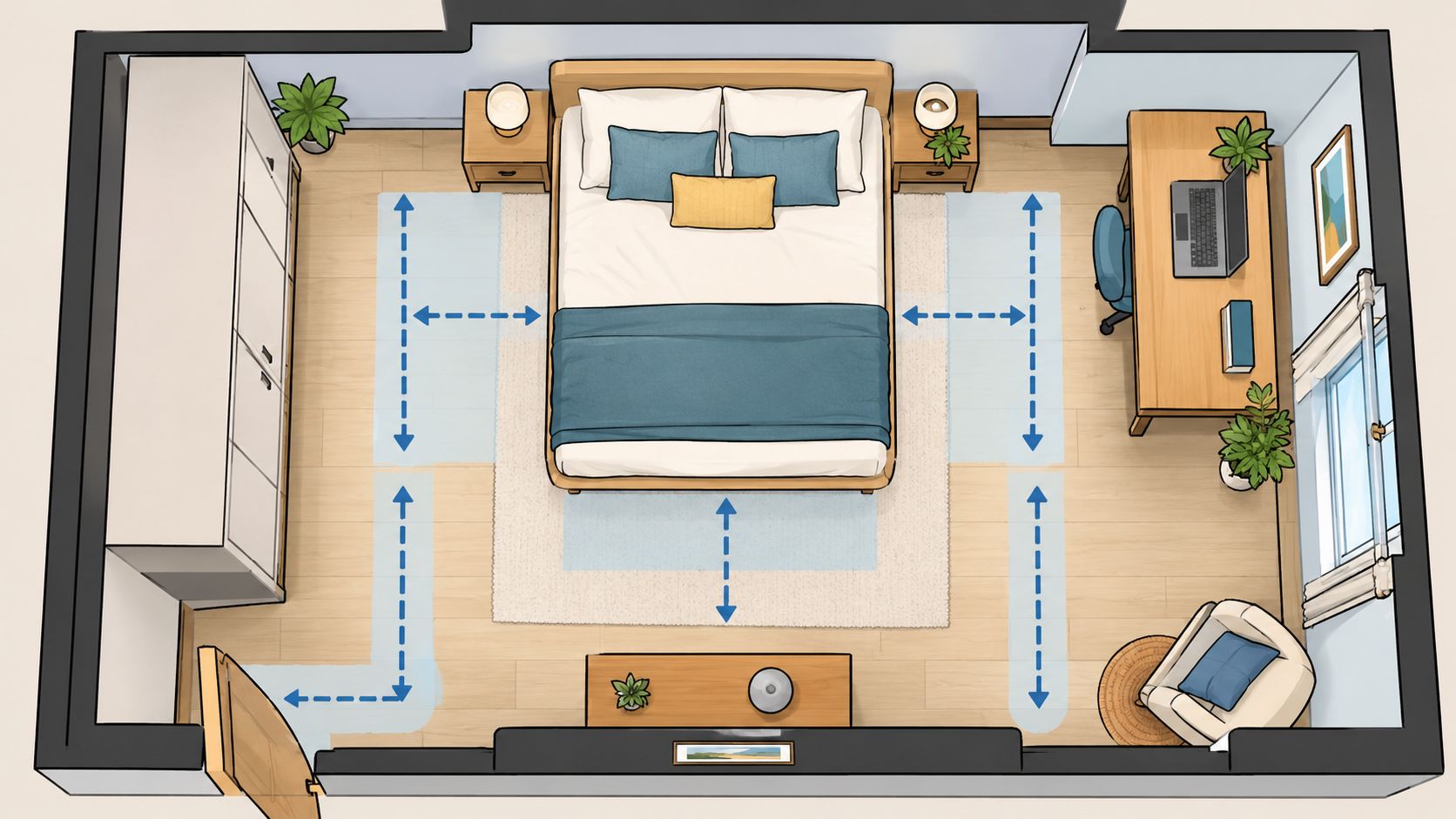
A wheelchair-friendly table can become unusable when another chair blocks its approach. A supportive bed can become difficult to transfer into when a dresser crowds the side. Whole-room clearance determines whether the furniture works outside the showroom.
A simple room audit can reveal barriers before a purchase is made. Start at the doorway, follow the route to the furniture, and trace the user's movement around it. The route should account for the wheelchair, footrests, caregiver position, and the actions that happen at the destination.
Bedroom
The bed needs more than a suitable height. Independent home-accessibility guidance recommends 36 inches of side clearance around beds for transfers, along with clear wheelchair passage through the room. The home accessibility guidance from Shirley Ryan AbilityLab also emphasizes practical features such as sliding drawers and doors, pull handles, and low or adjustable storage.
A bedside table should stay close enough for reach but not intrude into the transfer area. A lamp switch, phone, water, and frequently used items should be positioned according to the user's reach and preferred side.
Living and dining areas
In the living room, a coffee table should leave enough room for the wheelchair to approach seating and move away again. Open space around the sofa can support transfers, while a compact table may be more practical than an oversized design with sharp corners or a heavy base.
Dining areas need a clear route to the accessible position. Fixed chairs shouldn't prevent the wheelchair from pulling in, and table legs shouldn't create a surprise obstacle at footrest level.
Work and storage areas
Work surfaces should maintain at least 29 inches of leg clearance, according to the same home-accessibility guidance. Storage works better when everyday items sit within easy reach, doors slide rather than swing into a path, and handles provide a clear grip.
A room-by-room family room furniture layout guide can help households consider spacing and furniture placement before bringing a large piece home.
Walk the route before approving the layout. If the wheelchair can reach the furniture but can't leave it safely, the arrangement still needs work.
Customization and Durable Options Built to Last
Accessibility and style don't have to compete. A household may need a certain seat height, open base, firm cushion, or reachable storage, but that doesn't mean the room has to look institutional. Custom furniture can bring those practical needs into a design that feels personal.
BILTRITE specializes in USA-made, Amish-made, and solid-wood furniture, with choices in fabric, leather, wood, finish, and hardware. Those options give families more room to balance transfer support, caregiver access, maintenance needs, and visual style. A warm wood finish can suit a traditional room, while a cleaner silhouette may work better in a smaller apartment or senior living space.
Match construction to daily use
Durability matters when furniture receives frequent transfers, repeated repositioning, or extra support from caregivers. Heavy-duty furniture and mattresses can be considered when a household needs additional construction strength. Solid wood may also appeal to families looking for long-term furniture with a substantial feel, though the frame design and dimensions still need to suit the user.
Small-scale furniture can help in apartments, condos, smaller homes, and senior living communities because it leaves more usable room around each piece. A compact sofa isn't automatically accessible, but the right scale can protect circulation space that a larger piece would consume.
Solve delivery and layout challenges early
Come-apart sofas, loveseats, sectionals, and recliners can help when a hallway, doorway, or stair route makes delivery difficult. This feature doesn't replace room planning, but it can expand the range of furniture that fits a challenging home.
Lift chairs may support senior living needs by assisting with standing and sitting, while fabric and leather choices affect cleanability, comfort, and appearance. Nightstands can be designed around equipment and reach, and dressers can be selected with clearance for footrests when that feature is needed.
The broader disabled furniture market is projected to reach about $25 billion by 2033 from $15 billion in 2025, with smart features, personalized solutions, and aesthetic appeal identified as key trends in industry coverage of accessible design. That projection points to a useful shift in expectations. Families increasingly want furniture that supports mobility without announcing it.
Affordable better-quality furniture is the sensible middle ground for many households. The cheapest piece may not offer the construction or customization needed for daily use, while a carefully chosen USA-made or Amish-made piece can provide a more considered combination of function, materials, and finish.
Delivery Installation and Aftercare Made Simple
Furniture planning doesn't end at the showroom. Doorways, hallways, elevators, corners, and room entrances all affect whether a piece can arrive safely. A come-apart design may solve a tight entry, while a careful delivery plan can prevent a large item from blocking the very path it was chosen to improve.
Because BILTRITE doesn't sell online, shoppers can sit in furniture, inspect the base, test a lift chair, compare cushion firmness, and discuss measurements in person. The sales associates bring over 400 years of combined experience, and their role is to help verify fit without pressure.
Plan the service details
White-glove delivery may include bringing furniture into the home, placing it, and setting it up. Families can learn more about white-glove delivery service and confirm which service details apply to a purchase.
Mattress care also matters. Flip-able and two-sided mattresses can be flipped and rotated to encourage even wear, following the care instructions provided with the mattress. BILTRITE's mattress department includes over 60 models, giving shoppers an opportunity to compare support and comfort in person. The store also offers service extras such as old mattress removal in donatable condition and selected delivery or mattress-set benefits.
BILTRITE Furniture-Leather-Mattresses is located at 5430 West Layton Avenue in Greenfield, Wisconsin and remains closed on Sundays and Mondays for family time. That schedule reflects the store's family-first, buy-local character while leaving the rest of the week open for practical furniture guidance.
BILTRITE Furniture-Leather-Mattresses offers USA-made, Amish-made, solid-wood, small-scale, heavy-duty, lift-chair, and mattress options that can support a more usable home layout. Visit BILTRITE Furniture-Leather-Mattresses in Greenfield to test furniture in person, review clearance needs with the experienced team, and find a comfortable solution that fits both the household and the room.