Amish Furniture Made to Order: A Step-by-Step Guide

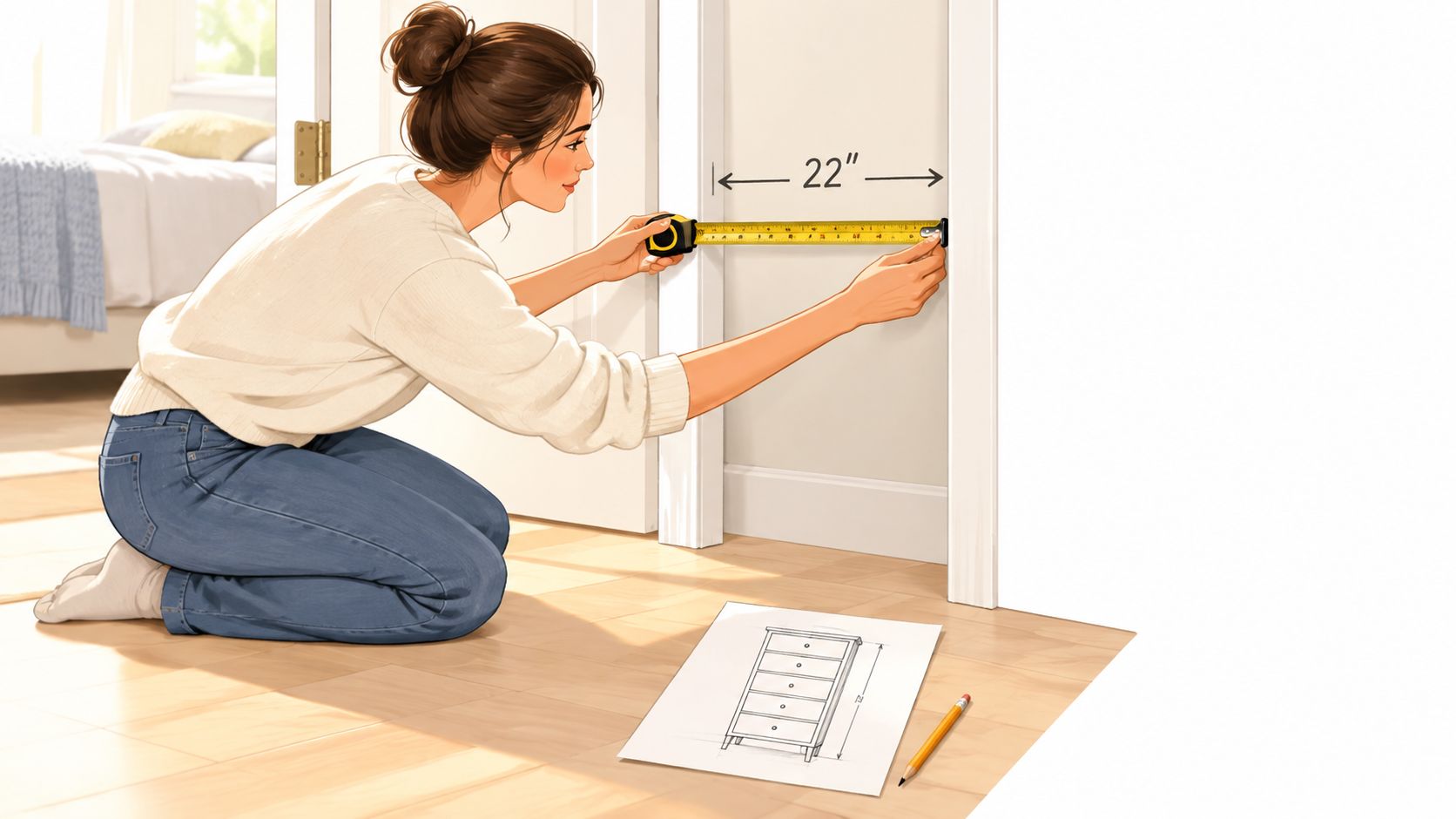
A dresser in stock looks right until the tape measure comes out at home. The bedroom door swings into the wall, the baseboard eats another inch, and the 22 inch gap beside the door turns into the whole project. That's usually the moment Amish furniture made to order enters the conversation, not as a luxury, but as a practical fix. The order works best when it's treated like a written specification, with dimensions, wood, finish and construction settled before a board is cut.
Table of Contents
- How Long an Amish Made-to-Order Piece Takes
- Made-to-Order Versus Truly Custom Changes
- Choosing Wood, Finish and Hardware
- How to Measure and Approve Your Order
- What Drives the Price of Your Order
- Delivery, Care and Warranty Expectations
- Confirm Your Order at Our Greenfield Showroom
How Long an Amish Made-to-Order Piece Takes
Say a homeowner measures that bedroom wall and finds no in-stock dresser fits beside the door. A narrower dresser solves the space problem, but it starts a different clock. Made to order means production starts after purchase, so wood selection, building, finishing and drying all happen after the order is confirmed, not before it sits in a warehouse.
That sequence explains the wait. A piece isn't pulled from a shelf and stained on the way out. The workshop confirms drawings and specifications, procures wood, builds the case, finishes it, lets the finish dry, and inspects the result. Each step has to happen in order, and rushing the drying or inspection step doesn't help anyone.
What the Published Windows Look Like
A published ordering guide for Amish furniture states that standard pieces may take approximately 11 to 12 weeks, while specialty pieces can take 14 to 16 weeks. The same guide places customer approval of detailed drawings and specifications before production begins. Those two facts belong together, because the approval step is part of the timeline, not paperwork after it.
Other quoted windows sit around that range rather than contradicting it. Simpler builds can finish sooner, complex builds take longer, and the builder's current queue matters as much as the design. A shopper comparing two quotes should compare the scope behind each date, not just the number of weeks.
| Order situation | Typical window | What can stretch it |
|---|---|---|
| Custom build with a simpler stain change | 8 to 12 weeks | Stain choice and build complexity |
| Standard piece | 11 to 12 weeks | Wood procurement, drying and finishing |
| Specialty piece | 14 to 16 weeks | Complex joinery or unusual construction |
| Production window quoted by one builder | 12 to 14 weeks | Builder schedule, season and order complexity |
| Stain matching added to any order | Adds 2 to 4 weeks | Matching the color to an existing piece or finish |
| Range quoted by other ordering sources | 2 to 6 months | Estimates are not guaranteed |
Why One Quote Runs Longer Than Another
Three things stretch a schedule most often. Builder workload comes first, because a small workshop builds in sequence and a full queue pushes every start date back. Season comes next, since demand rises and falls through the year. Complexity comes third, because unusual dimensions, extra drawers, or joinery outside the standard design add bench time that a catalog piece doesn't need.
Finish work deserves its own mention. A standard stain from the offered samples moves through a familiar routine. A matched stain, built to sit beside an existing dining set or bedroom group, needs test boards and approval before the piece itself gets sprayed. That extra loop is worthwhile when the match matters, but it belongs in the plan from day one.
Planning Backward From a Real Deadline
The reliable method is simple. Pick the date the furniture is actually needed, for a move, a renovation, or guests arriving, then count backward by the quoted window. Add a two week buffer on top of that. If the math lands in the past, the honest options are an in-stock piece, a simpler specification, or a later delivery date.
Practical rule: Get the build window in writing, with the start point named. A window that starts at drawing approval is a different promise from one that starts at deposit.
Shoppers can also review tips for special order furniture before signing anything, since deposit and approval steps affect when the clock starts. A quoted date is an estimate built on current workload, not a guarantee. The right questions are how updates will be shared, what happens if the workshop runs late, and whether delivery can shift without penalty. A shop that answers those questions plainly, before taking a deposit, is giving the timeline the respect it deserves. That honesty is worth more than an optimistic date that slips without warning.
Made-to-Order Versus Truly Custom Changes
Two phrases get mixed up constantly, and the mix-up causes real disappointment. Made to order means the piece is built after it's bought. Custom means the design itself changes. A dresser built after purchase in a standard size is made to order. That same dresser rebuilt four inches shallower with drawers rearranged is custom work, and not every builder accepts it.
The frequently asked questions from an Amish furniture retailer reflect that split, since some makers build every piece after purchase but don't offer custom construction, and others permit only minor modifications to an established design. Special requests can also be turned down because they slow production or fall outside a builder's capabilities. Knowing which tier a request falls into, before paying a deposit, prevents most of the friction.
Three Tiers of Change
- Menu choices: Wood species, stain and finish from the offered samples, and hardware styles. These are routine selections the workshop makes every week, and they usually add little or no extra time.
- Minor dimension changes: A few inches of width, depth or height, or altered drawer spacing. These need a revised drawing and written confirmation, because cut lists and drawer boxes all change with the case size.
- New designs or impossible requests: A shallow bookcase needing different joinery, a sofa table narrower than the builder's frame allows, or a lower dining table that changes the leg structure. These may be declined or priced as a fresh design.
Three Problems, Sorted by Tier
A shallow hallway bookcase sounds like a simple depth change. It isn't always. Cutting depth can change shelf span, back construction and how the case resists tipping, so it often lands in the third tier even though the request sounds small.
A lower dining table for a small kitchen usually sits in the second tier. Shortening legs is straightforward, but apron height and knee clearance change with it, so the drawing needs a second look. A narrower sofa table behind a couch can go either way. If the frame design tolerates the new width, it's a dimension change. If the legs and stretchers have to move, it's a redesign.
More one-off changes are not automatically better. Each special request adds lead time, narrows resale flexibility, and makes corrections harder if something arrives wrong.
That trade-off deserves a clear head. A standard size can be resold, moved to another room, or matched with a second piece later. A one-off size built for one wall in one house does a single job. Sometimes that job is exactly what's needed, and the custom charge is money well spent. Sometimes a standard piece placed differently solves the same problem for less money and a shorter wait.
Questions That Sort It Out Early
Three questions settle most cases at the showroom counter. Is this size on the standard list? If yes, the order stays simple. What does this change do to the timeline? The answer reveals whether the builder treats it as routine or as new work. Will every dimension be confirmed in writing? That confirmation protects both sides.
One menu choice breaks the pattern. Stain matching is selected like a routine option, but it adds roughly 2 to 4 weeks, so it should be planned as its own step rather than a quick pick. Everything else on the menu, species, standard stain and hardware, moves at the normal pace. Sorting a request into the right tier early, with clear expectations, is what keeps Amish furniture made to order from turning into a long wait for the wrong piece.
Choosing Wood, Finish and Hardware
Hardness is a useful place to start, because it shapes how a surface handles keys, toys, serving dishes and daily bumps. The table below runs from hardest to softest among the common choices. Grain and color matter too, but a wood that dents easily in a busy entry will frustrate its owner no matter how handsome it looks in the showroom.
| Species | Look and grain | Best fit |
|---|---|---|
| Hickory | Bold grain with light and dark streaks | Chairs and high-wear surfaces |
| Hard maple | Light, fine grain that can blotch under dark stain | Desks, dressers and light finishes |
| White oak | Tighter grain with pale to gray-brown tone | Heavy-use pieces and clean, modern looks |
| Red oak | Open grain with strong figure and golden-brown tone | Busy family living and dining rooms |
| Black walnut | Rich chocolate tones with straight grain | Statement tables and cabinets |
| Black cherry | Warm reddish tone that deepens with age | Bedrooms and formal dining |
Matching Species to the Room
Black cherry warms and deepens as it ages, which suits bedrooms and formal dining rooms where a softer surface takes less abuse. Owners should expect the color shift and enjoy it, because a cherry piece photographed on delivery day won't look identical a year later. Sunlight speeds the change, so rotating items on a cherry top early on keeps the tone even.
Red oak and white oak carry strong grain and handle busy family rooms well. Red oak shows a golden brown tone with open figure, while white oak reads tighter and paler, which fits cleaner, more modern rooms. Both take stain predictably, making them forgiving choices for large dining sets where many boards have to read as one color.
Hard maple stays light and clean, a good fit for desks and dressers with pale finishes. Its fine, tight grain can blotch under dark stain, so a shopper who wants a deep espresso color should look at oak instead of fighting maple's nature. Black walnut brings rich chocolate tones that need little stain at all, which is why it earns its place on statement tables and cabinets. Hickory is the toughest option on the list, with bold light and dark streaks, and it earns its keep on chairs and high-wear surfaces where softer woods would show every knock.
Finish Decisions Belong on Sample Boards
Stain or clear finish should be chosen from a physical sample board in the showroom, not from a screen. Screens shift color, and the same stain reads differently on oak than on maple. A sample on the actual species, viewed under light similar to the room at home, removes most of the guesswork.
Stain matching takes longer. A custom furniture design center advises customers to request stain matching as soon as possible because the process can add approximately 2 to 4 weeks to the timeline. That time goes into matching the requested color against an existing piece or finish instead of applying a standard catalog stain. Anyone planning a coordinated set should hand over the sample or the piece being matched at the start, and treat the delivery date as tied to that finishing work.
Bringing a fabric swatch or paint chip helps more than most shoppers expect. Wood undertones, warm or cool, either harmonize with upholstery and wall color or fight them, and the clash is obvious once the samples sit side by side. The showroom's wood stain and color options give a head start, but the final call belongs on real boards.
Hardware, Decided Early
Pulls, hinges and drawer glides should be chosen at the start, not after the case is built. Hardware affects boring patterns, drawer construction and the finished look, and swapping it late can leave visible holes or delays. Keeping the hardware finish consistent across a bedroom group or dining set also matters, since mixed metals bought months apart rarely match.
At BILTRITE, fabric, leather, wood, finish and hardware can all be selected with the team for affordable custom pieces. In-stock pieces on the floor let shoppers test chair comfort, drawer action and finish color in person before committing. That hands-on comparison is the safest way to choose, because a finish that looks right on a sample and a chair that feels right for a full meal are decisions no catalog photo can make.
How to Measure and Approve Your Order
A custom order succeeds or fails on paper before the workshop touches wood. USDA Forest Service guidance on wood in service emphasizes that wood should be installed near the equilibrium moisture content expected in service to reduce later dimensional movement, with interior furniture commonly around 6 to 10% moisture content and hardwood stock prepared around 6 to 8%. The measuring steps below serve the same goal, preventing problems instead of fixing them.
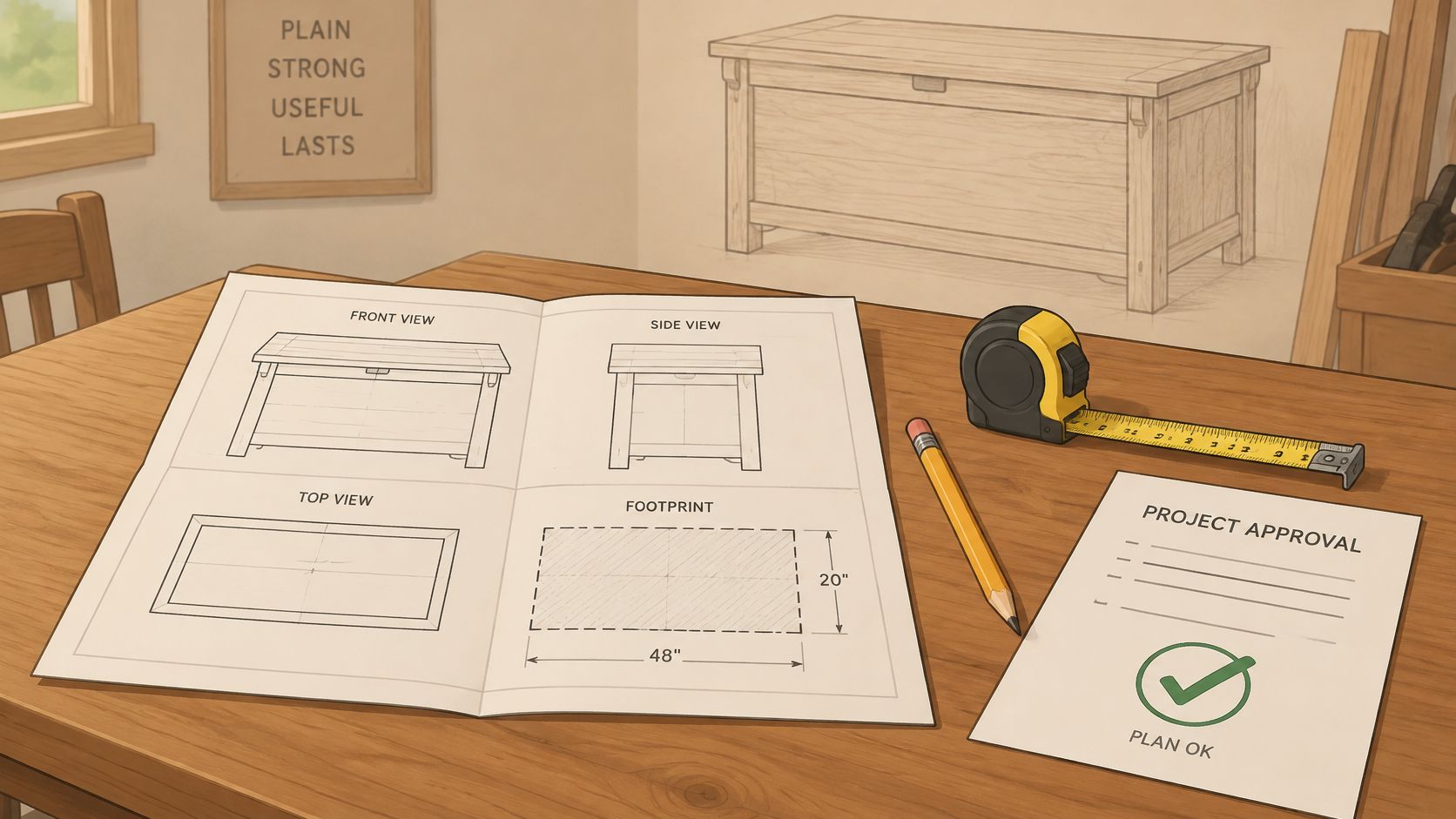
- Measure the room. Record room dimensions and mark the finished footprint with tape, including door swing and baseboards. The common slip is measuring only the open floor and forgetting what swings into it.
- Map the delivery route. Measure every doorway, stair turn and hallway corner the piece must pass through, since a custom size that can't be moved in is hard to fix. The slip is assuming the front door is the only tight spot.
- Review a scaled drawing. The drawing should show overall width, depth and height, overhangs, drawer clearances, hardware and finish. The slip is approving it without checking whether drawers clear the bed or the wall.
- Approve a physical sample. Boards differ in grain and color, so the species and stain sample gets signed off in person. The slip is choosing color from a phone photo.
- Specify construction. State solid wood or veneer, joinery type, removable components and the load each shelf or top must carry. The slip is assuming a shelf handles heavy books without saying so.
- Get written confirmation. Every nonstandard dimension goes on the order before production begins. The slip is relying on a verbal promise made at the counter.
The showroom's guide to measuring furniture covers the tape work in detail. At delivery, the check covers finish defects, racking, drawer alignment and stable contact with the floor. The irreversible problems, a piece that won't fit through the door or a stain that misses the sample, are prevented in steps one through six. Afterward, options get expensive and slow. A tape measure, a drawing and a signed sample cost almost nothing, and they carry the whole order.
What Drives the Price of Your Order
Made-to-order pricing is built from choices, so a single tag on a single model doesn't tell the whole story. Two dressers with the same outside dimensions can carry different prices because one is red oak with standard hardware and the other is walnut with upgraded glides and a matched stain. Comparing quotes means matching specifications first and numbers second. A lower total that covers a smaller size or a plainer finish without saying so isn't a bargain, it's a different purchase.
| Price component | What you choose | Effect on price | Effect on timeline |
|---|---|---|---|
| Piece and size | Standard or nonstandard dimensions | Standard sizes cost least; custom dimensions add to the price | Nonstandard sizes need extra confirmation before production |
| Wood species | Oak, maple, cherry, walnut or hickory | Price differs by species, so ask each quote to show the wood cost | Standard species on the offered list keep the quoted window |
| Stain and finish | Standard stain or a matched color | Matching may carry its own charge; ask for it in the quote | Stain matching adds 2 to 4 weeks |
| Hardware | Standard or upgraded pulls, hinges and glides | Upgrades add a per-piece cost | Stocked hardware keeps the window; special orders wait on delivery |
| Upholstery or leather, where offered | Fabric or leather grade | Price is set by grade and yardage | Nonstocked coverings add ordering time before upholstery begins |
| Delivery | Delivery, pickup or tight-space handling | Quoted separately; ask before you order | Scheduled after final inspection and finish drying |
Turning Each Row Into a Question
Size is the first lever. Standard dimensions use established cut lists and fixtures, so they cost least. A nonstandard size adds drawing time, new cut lists and confirmation steps, and the quote should show that charge plainly rather than burying it.
Species is the second lever, and it's the one shoppers most often compare badly. A quote in oak and a quote in walnut aren't competing prices for the same dresser. Asking each quote to name the species and show the wood cost keeps the comparison honest. The showroom page on Amish furniture prices lays out how those choices stack up before a visit.
Stain matching can carry its own fee on top of its extra weeks. That fee pays for test boards and a finisher's time spent dialing in a color, and it's fair to ask whether it applies and what happens if the first test board misses. Hardware upgrades add a per-piece cost that's easy to overlook on a six-drawer dresser, where the pull count doubles the line item. Fabric or leather grade, where offered, prices by the yard and the grade, so a higher grade on a large piece moves the total more than the same upgrade on a side chair.
Habits That Keep a Quote Honest
- Ask for an itemized quote: Size, wood, stain, hardware and every custom change listed with its own line, so nothing hides inside a single total.
- Ask about the deposit: The deposit amount and payment schedule should be clear before signing, along with what happens if the order changes.
- Compare like for like: Same size, same species, same finish, same delivery terms. Anything else is guesswork dressed as savings.
Write down the top three must-haves, such as size, wood and budget, before asking for a quote. The list keeps attention on what the room actually needs.
On value, honesty helps. BILTRITE pieces aren't the cheapest on the market, and they aren't trying to be. The quality is top-notch for the price, and solid wood construction is where that value lives, in drawers that can be repaired, tops that can be refinished, and frames that stay tight for decades. Affordable custom options and in-stock pieces on the floor let shoppers set a custom quote beside a ready piece and judge the difference with their own hands. Paying only for the options the room needs, rather than every upgrade on the list, keeps Amish furniture made to order priced like a tool instead of a trophy.
Delivery, Care and Warranty Expectations
The trip from workshop to living room matters more than most buyers realize, and moisture is the reason. Solid wood keeps trading moisture with indoor air for its whole life. USDA Forest Service guidance places typical hardwood furniture lumber at approximately 6 to 8% moisture content, while interior furniture service conditions commonly average about 8%, with a typical 6 to 10% range. A piece moved straight from a warm, humid workshop into a heated Wisconsin home in January can develop panel gaps, cupping or splits as it adjusts.
The fix is asking for the right specification. Not merely kiln-dried, but moisture-conditioned for the destination climate, with the target range and acclimation step documented. Wide tabletops and panels should also allow cross-grain movement through clips, buttons, elongated fastener holes or floating panels, instead of being rigidly fixed on every edge. Rigid fixing doesn't stop wood from moving. It just decides where the crack appears.
At home, care is mostly about steadiness. Indoor humidity held fairly stable, pieces kept away from heating vents and direct sun, and a few days of settling before judging fit will handle most of it. A drawer that sticks slightly in August and frees up in October is wood behaving like wood.
Delivery and warranty terms belong in writing before the deposit. The questions are who moves the piece, whether stairs and tight turns are included, what the delivery window is, how long the warranty runs, what counts as a defect, and who pays for repairs and travel. Coverage shouldn't be assumed from a friendly conversation. Details on the showroom's white glove delivery service help frame those questions. The delivery-day inspection, drawers opened, finish checked, stability tested, is the moment to catch problems while the crew is still in the room.
Confirm Your Order at Our Greenfield Showroom
A showroom visit settles questions that photos can't. Chairs can be sat in for a real test, finish samples can be compared side by side under the same light, and measurements can be talked through with a tape in hand. BILTRITE's sales associates bring over 400 years of combined experience, and they're there to help, not to pressure.
The store has been family-owned and operated since 1928, proudly serving Metro Milwaukee with USA-made and Amish-made solid wood pieces built to last. BILTRITE doesn't sell online, so the Greenfield showroom is where the experience happens. The store is closed on Sundays for family time, so checking hours before a visit is a smart move. The huge mattress department with over 60 models is worth a walk-through while finish samples are being pulled, and shoppers considering a power lift recliner for a family member get a break worth knowing, since power lift recliners are exempt from sales tax in Wisconsin.
A short list makes the visit count:
- A tape measure: Plus the written room and doorway dimensions from home.
- Photos of the room: Including the delivery route, stairs and tight turns.
- A must-have list: Size, wood and budget, in that order of priority.
Come on down to the showroom and see for yourself! The team would love to help find the right piece for the home, at whatever pace feels comfortable.
Bring the tape measure, room photos and must-have list to Greenfield, where the family behind BILTRITE Furniture-Leather-Mattresses has helped Metro Milwaukee neighbors order USA-made and Amish-made solid wood furniture since 1928. Sit in the chairs, compare the stain boards in person, and confirm every dimension of an Amish made-to-order piece with a team that's happy to answer questions with no pressure at all.