What Is Leather Furniture? a Milwaukee Buyer’s Guide

Leather furniture is furniture upholstered with tanned animal hide, most commonly bovine hide, that has been chemically stabilized so it resists decay and stands up to everyday use, and the frame and cushioning beneath that covering matter just as much as the hide itself. If two sofas are both labeled leather, why can one feel supple and natural while the other feels uniform and coated, and why can their prices be so far apart?
That question is where most shoppers get stuck, and it's a fair one. A label rarely explains what part of the piece is leather, what finish is on the surface, or how the sofa is built underneath. Once those pieces are clear, choosing gets a whole lot easier, and neighbors can shop with confidence instead of guessing.
Table of Contents
- What Leather Furniture Actually Is
- Where Leather Furniture Comes From
- The Main Types of Leather Explained
- How Durable Is Leather Furniture Really
- Leather Versus Fabric for Milwaukee Homes
- Caring for Leather Furniture the Right Way
- How to Choose Leather Furniture in Person
- Your Next Step Toward Leather Furniture
What Leather Furniture Actually Is
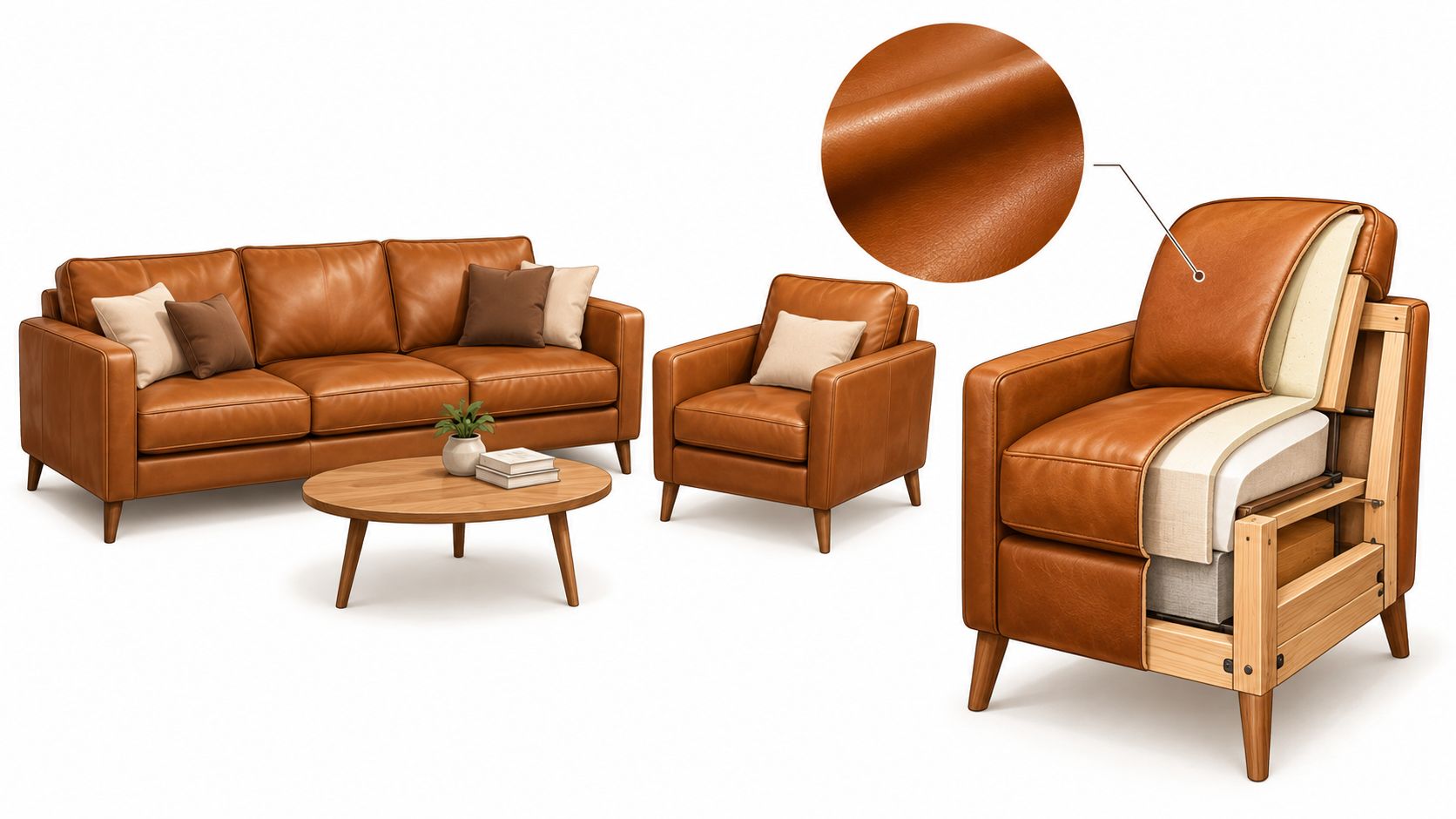
At its simplest, what is leather furniture comes down to a covering, not a solid material. Leather is an animal hide or pelt transformed through tanning into a nonputrescible, durable material, and tanning stabilizes the hide's natural fibrous structure so it resists biological decomposition, as explained in the federal definition of leather referenced by Cornell Law. Bovine leather matters most for furniture because cattle hides provide relatively large, strong surfaces suited to sofas, chairs, recliners, and ottomans.
Think of a leather sofa like a body. The frame is the skeleton, the cushioning and suspension give it shape and comfort, and the hide is the skin wrapped over the top.
Why Tanning Changes Everything
Raw hide would decay quickly if it were merely stretched over a frame. The U.S. Environmental Protection Agency describes tanning as a process where chemical substances react with collagen fibers, helping prevent decay while improving resistance to wetting and preserving suppleness and durability, in its EPA overview of leather tanning.
That's why two pieces can both be called leather and still perform differently. Hide quality, usable surface area, tanning, finishing, tailoring, and construction all shape the final result and the price.
A leather sofa isn't made entirely from leather. It's a built piece of furniture wearing a finished hide, so shoppers should judge both the covering and what's underneath it.
Full-grain, corrected-grain, split, and coated leathers also vary in durability, breathability, texture, and care needs. The word leather alone doesn't settle any of that, which is why the specification matters more than the sales tag.
Where Leather Furniture Comes From
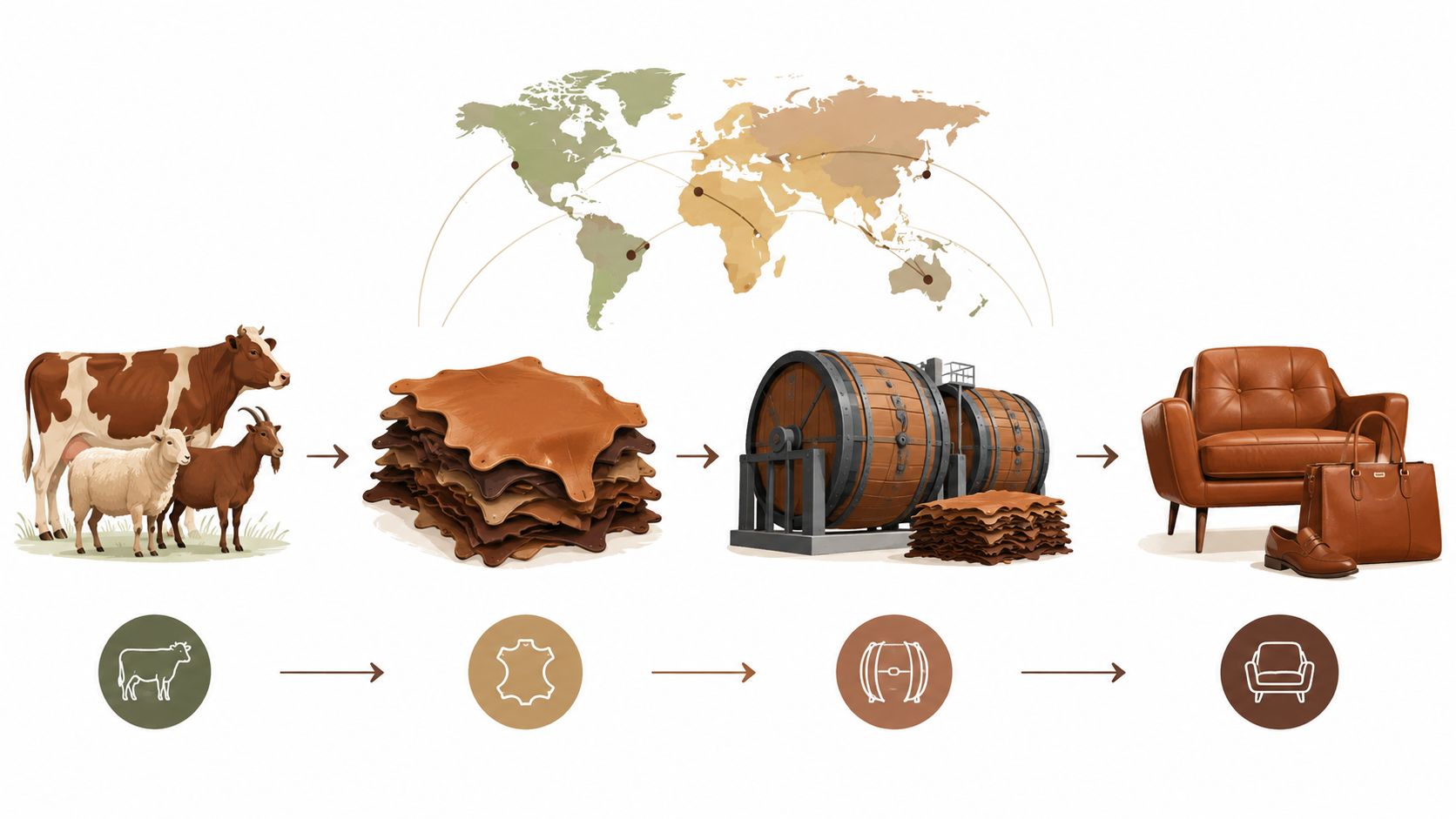
Leather furniture doesn't start in a furniture factory. It starts in a worldwide hide and skin economy tied to agriculture, tanning, and trade, and upholstery is only one of several major uses competing for that material.
During 1999 to 2001, approximately 1.5 billion cattle produced about 5.7 million tonnes of raw hides on a wet-salted basis, with an average hide weight of 18.1 kilograms, according to the Food and Agriculture Organization review of world hides and skins. Processing those hides yielded about 495,200 tonnes of heavy leather and 10,999 million square feet of light leather, including split leather, in that same FAO reporting.
Furniture Competes With Footwear
Footwear absorbed roughly 56% of light leather output, while the remaining 44%, about 4,840 million square feet, went into garments, furniture, travel goods, and handbags. That split helps explain why hide supply and processing capacity affect what upholstery leather is available and what it costs.
- Global scale: World leather production was valued at approximately US$28 billion in 2000, while hides and skins production exceeded US$14.5 billion.
- Growing supply: World bovine hide output increased 14.4% from the early 1980s to the late 1990s.
- Shifting tanning: Developing countries increased their share of light bovine leather tanning to more than 55%.
Those figures give local shopping a global backdrop. When families look at USA-made leather furniture options, they're also choosing how a worldwide material gets finished, shaped, and built into a piece for daily life. Origin, craftsmanship, and construction turn a commodity hide into furniture that has to sit well, wear well, and fit a Milwaukee home.
The Main Types of Leather Explained
Shoppers hear full-grain, top-grain, corrected-grain, split, bonded, and faux as if they're simple quality rankings. They're not. These terms describe where the material comes from in the hide, how the surface was treated, and what finish sits on top, and each part affects feel and upkeep.
Upholstery leather is selected for mechanical strength, flexibility, softness, air and vapor permeability, and resistance to wear, not appearance alone, as detailed in technical research on upholstery leather performance. Finish is the clearest place to start because it changes daily life the most.
Leather Types and Finishes at a Glance
| Leather Type | Surface Treatment | Natural Character | Best For |
|---|---|---|---|
| Aniline | Transparent dye, little or no coating | Pores, scars, and grain stay visible | Controlled use, natural patina |
| Semi-aniline | Light protective layer | Soft look with some variation | Balanced feel and resistance |
| Pigmented or protected | Opaque color and stronger topcoat | More uniform color | Families, pets, heavy contact |
| Corrected-grain | Mechanically treated before finishing | Imperfections reduced or disguised | Heavier household use |
| Bonded | Leather fibers with adhesive under coating | Leather-like surface, not continuous hide | Budget shoppers who understand limits |
| PU leather | Polyurethane over textile backing | Embossed grain imitates leather | Consistent color, easy cleaning |
Finish Versus Hide
Aniline leather preserves natural grain but stays more vulnerable to water, grease, scratching, and sunlight. Pigmented leather trades some of that natural variation for uniformity, stain resistance, and color consistency, a distinction also outlined in manufacturer guidance on aniline and pigmented leather care.
Bonded and PU options need plain talk too. PU leather is manufactured by applying polyurethane layers over a textile backing and embossing a grain pattern, while bonded leather typically combines leather fibers with adhesive beneath a polyurethane coating, as explained in a buyer's guide distinguishing PU and genuine leather.
Full-grain isn't automatically right for every household, even if it sounds fancier. Families comparing grain options can dig deeper with an explanation of top-grain versus full-grain leather, then match the surface to kids, pets, and entertaining habits.
How Durable Is Leather Furniture Really
Durability shouldn't rest on how pretty a hide looks under showroom lights. A natural surface can be beautiful and still be the wrong choice for a busy family room, while a coated leather can hold up better where seating gets constant contact.
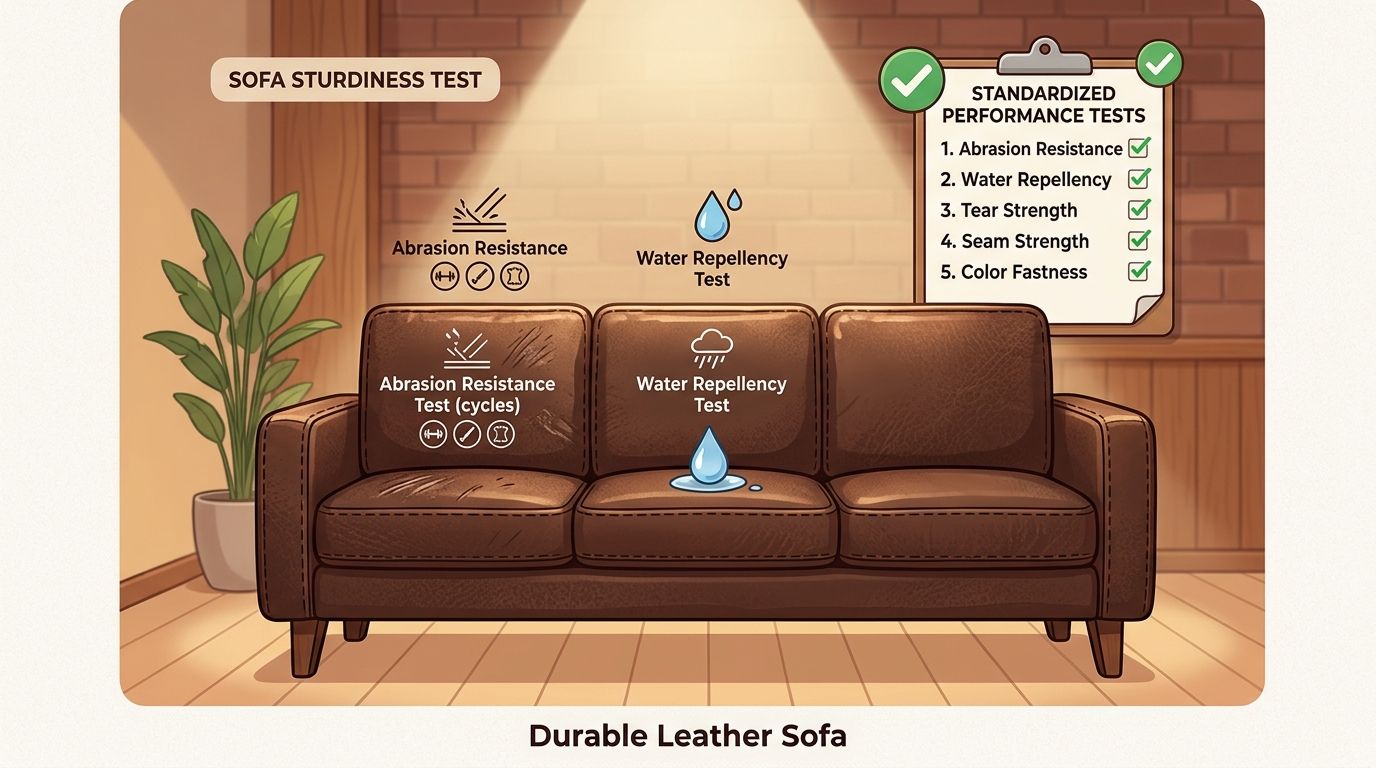
Technical evaluation works better than visual grading alone. The EN 13336:2022 upholstery leather framework identifies pH, tear load, color fastness to rubbing and perspiration, resistance to artificial light, dry flex resistance, finish adhesion, and water-spotting resistance as selection criteria, according to the EN 13336:2022 upholstery leather standard listing.
What Flex Testing Shows
A published furniture specification based on those methods lists 20,000 dry-flex cycles for aniline leather without a pigmented finish and 50,000 cycles for protected finishes, with no finish damage or cracking under the stated test conditions. That gap doesn't make aniline bad. It shows why protection matters when cushions flex thousands of times as people sit, shift, and get up.
Practical rule: Ask what tests support a durability claim, not just what the leather is called.
Useful questions stay simple. Is the upholstery intended for residential or intensive use, are seating surfaces all leather or leather-match, and which abrasion, flex, lightfastness, and finish adhesion tests were used?
Service life belongs in the value conversation too, since furniture impacts depend partly on how long a piece remains in use, a point explored in life cycle assessment research on sustainable furniture design. Shoppers who want help translating test language into plain English can review what goes into leather sofa quality before they sit down in person.
Leather Versus Fabric for Milwaukee Homes
There's no universal winner here, and honest advice starts there. Leather and fabric ask for different habits, feel different in January, and age in different ways, so the better choice depends on how a household actually lives.
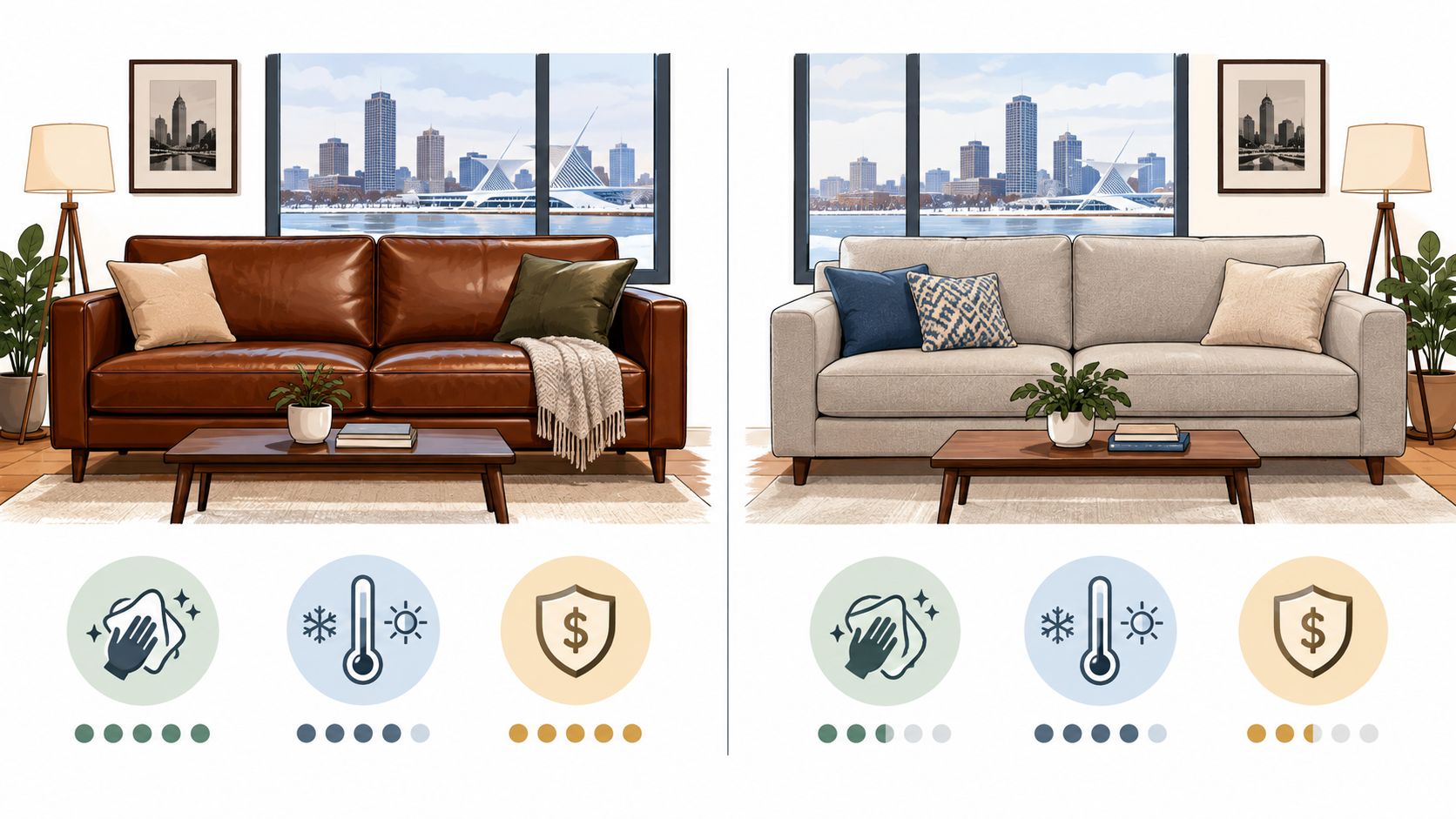
Leather can wear gracefully and wipe clean more easily after many everyday spills, especially in a protected finish. Fabric can feel warmer on first contact during a Wisconsin winter and offers a softer, cozier first impression for some families.
Trade-Offs Worth Knowing
Leather readily absorbs body oils, darker colors may bleed, and heat can affect the material, while dry-cleaning solvents can remove natural oils and disturb the finish, according to Utah State University Extension upholstery guidance. That same guidance warns furniture polish, oil, and varnish may make leather sticky.
- Cleaning: Protected leather usually handles prompt wipe-ups well, while fabric may need deeper cleaning after spills soak in.
- Temperature feel: Leather can feel cool at first in winter, then warm to body heat as someone settles in.
- Pets and kids: Claws, snacks, and constant climbing argue for protection and realistic expectations with either material.
- Sun and heat: Leather seating needs distance from strong sunlight, radiators, and heating vents.
Fabric isn't a lesser choice, and leather isn't carefree. Families weighing both can compare daily habits against guidance on leather versus fabric upholstery, then test the feel in person. A sofa that suits a quiet den may not suit a room where grandkids, dogs, and movie nights all land on the same cushions.
Caring for Leather Furniture the Right Way
Good leather care is mostly prevention, and it isn't complicated once the finish is known. The mistake we see most often is a well-meaning owner grabbing a general household cleaner that doesn't belong anywhere near upholstery leather.
Start with dust. Regular dusting with a soft cloth keeps grit from working into the surface, and prompt attention to spills keeps small accidents from becoming lasting marks.
A Simple Routine by Finish
- Dust regularly: Use a soft cloth, and reach seams and cushion edges where crumbs gather.
- Blot spills promptly: Don't rub liquid deeper into the surface or spread it wider.
- Use the right cleaner: Choose a soft damp cloth and a finish-compatible, pH-balanced cleaner made for that leather type.
- Follow the manufacturer: Care varies among aniline, protected, corrected, and coated leather, so written directions take priority.
Some products cause harm fast. Abrasive pads, strong degreasers, and alcohol-heavy products can dry or damage surface layers, and prolonged heat exposure can do the same.
Keep leather away from radiators, heating vents, and strong direct sunlight. Placement protects a hide every day without any extra work.
That placement advice matters in Milwaukee homes where heating runs for months and seating often ends up near a vent by default. A little distance helps the finish stay more stable.
Conditioning and deeper cleaning should match the specific finish rather than a generic internet recipe. Our team points neighbors to step-by-step guidance on caring for leather furniture and, just as often, asks what finish they own before recommending any product. With the right routine, leather stays attractive and comfortable for years. With the wrong cleaner or excessive heat, even expensive upholstery can be permanently discolored.
How to Choose Leather Furniture in Person
Photos can't answer the most important leather question, which is what exactly covers each part of the piece. A description that says only leather may not reveal whether every upholstered area uses leather or whether some surfaces use a matching synthetic material.
That's why we encourage a hands-on checklist. It takes a few minutes, and it turns a vague label into a clear purchase.
The Showroom Checklist
- Ask about coverage: Confirm whether seats, backs, arms, sides, and cushions are leather, and distinguish leather-match from all-leather construction.
- Identify hide and finish: Ask for the hide type and protective finish in writing, not just words like real or genuine.
- Inspect tailoring: Look closely at seams, cushion edges, and how panels meet around arms and corners.
- Sit and shift: Test cushion support, back angle, and seat depth the way the family will use it.
- Request the cleaning code: Match the manufacturer's care directions to the household routine before buying.
At BILTRITE, we've been family-owned and operated since 1928, and our fourth-generation team serves Metro Milwaukee from our Greenfield showroom. Our sales associates bring over 400 years of combined experience, and they're here to help, not to pressure.
We specialize in affordable, better-quality furniture, including USA-made and Amish-made solid wood pieces, plus custom choices of fabric, leather, wood, finish, and hardware. Small-scale options suit apartments and condos, heavy-duty builds suit busy families, and come-apart sofas and sectionals help with tight doorways.
We don't sell online, by design. Leather needs to be touched, sat on, and compared side by side, and that happens best in person with someone who'll answer questions plainly.
Your Next Step Toward Leather Furniture
The big idea is simple enough to carry into any showroom. Leather furniture is a frame, cushioning, suspension, and finished hide working together, and satisfaction comes from matching all four to real household life.
A protected finish may suit a family room that hosts pets, snacks, and frequent guests. An aniline hide may delight someone who values natural grain and patina and can keep use more controlled. Neither answer is right for everybody, and that's exactly why labels alone shouldn't decide.
Questions That Prevent Regret
Before buying, a shopper should know what material covers every surface, what finish protects it, how it should be cleaned, and how the frame and cushions feel after a real sit test. Those answers reveal value far better than a single word on a tag.
Durability and care belong together. Life cycle research identifies animal husbandry and leather processing, including chemical use and energy consumption, as impact hotspots, while longer service life can reduce impact per year of use, as discussed in research on leather life cycle impacts and durability. Buying a repairable, well-built piece and keeping it in service can be a responsible choice, though durability doesn't erase upstream impacts.
We'd love to help neighbors sort through those trade-offs in person at 5430 West Layton Avenue in Greenfield. Come sit on the pieces, feel different finishes, ask about USA-made and Amish-made craftsmanship, and take time deciding. We're closed on Sundays and Mondays to be with our families, and we'll be glad to see folks when doors open again.
Come on down to our Greenfield showroom and see leather furniture for yourself, with no pressure to decide on the spot. At BILTRITE Furniture-Leather-Mattresses, our family team can explain leather coverage and finishes in plain language, help compare USA-made and Amish-made pieces, and let shoppers test comfort firsthand. We'd love to say hi and help each family find the right piece for home.