Sofa Bed Mechanism Guide: Types, Durability, and Buying Tips


A guest is due to arrive, the coffee table needs to move, and the sofa bed has to become a sleeping space before bedtime. That familiar moment is when the upholstery stops mattering and the sofa bed mechanism takes over. If the frame catches, the hinges feel loose, or the sleeping surface sags, a good-looking sofa can become a frustrating piece of furniture.
BILTRITE Furniture has served Greenfield and the broader Metro Milwaukee community since 1928. Across four generations, the store has seen plenty of furniture trends come and go, but one lesson remains steady: the hidden frame, hinges, rails, and supports deserve as much attention as the fabric. A sofa bed should fit the room, suit the household's routine, and operate without a wrestling match.
Table of Contents
- Why the Internal Mechanism Matters Most
- Common Sofa Bed Mechanism Types
- Durability and Cycle Ratings
- Sizing and Mattress Thickness Considerations
- Maintenance and Troubleshooting Tips
- What to Ask When Shopping in Milwaukee
Why the Internal Mechanism Matters Most
The upholstery catches the eye first. That's natural. Color, arm shape, cushion style, and overall size help a sofa bed fit the room, but the internal mechanism determines how the piece behaves after it arrives home. A sofa bed mechanism is the system of frames, hinges, rails, supports, or motors that changes a sofa from seating into a sleeping surface, as described in this overview of sofa bed construction.
A shopper should test the furniture in both positions. Sitting tells only half the story. The bed needs to open smoothly, lock securely, sit level, and leave enough clearance for people to walk around it. If the conversion feels awkward in a showroom, it usually won't become easier after a long day or during a late-night guest visit.
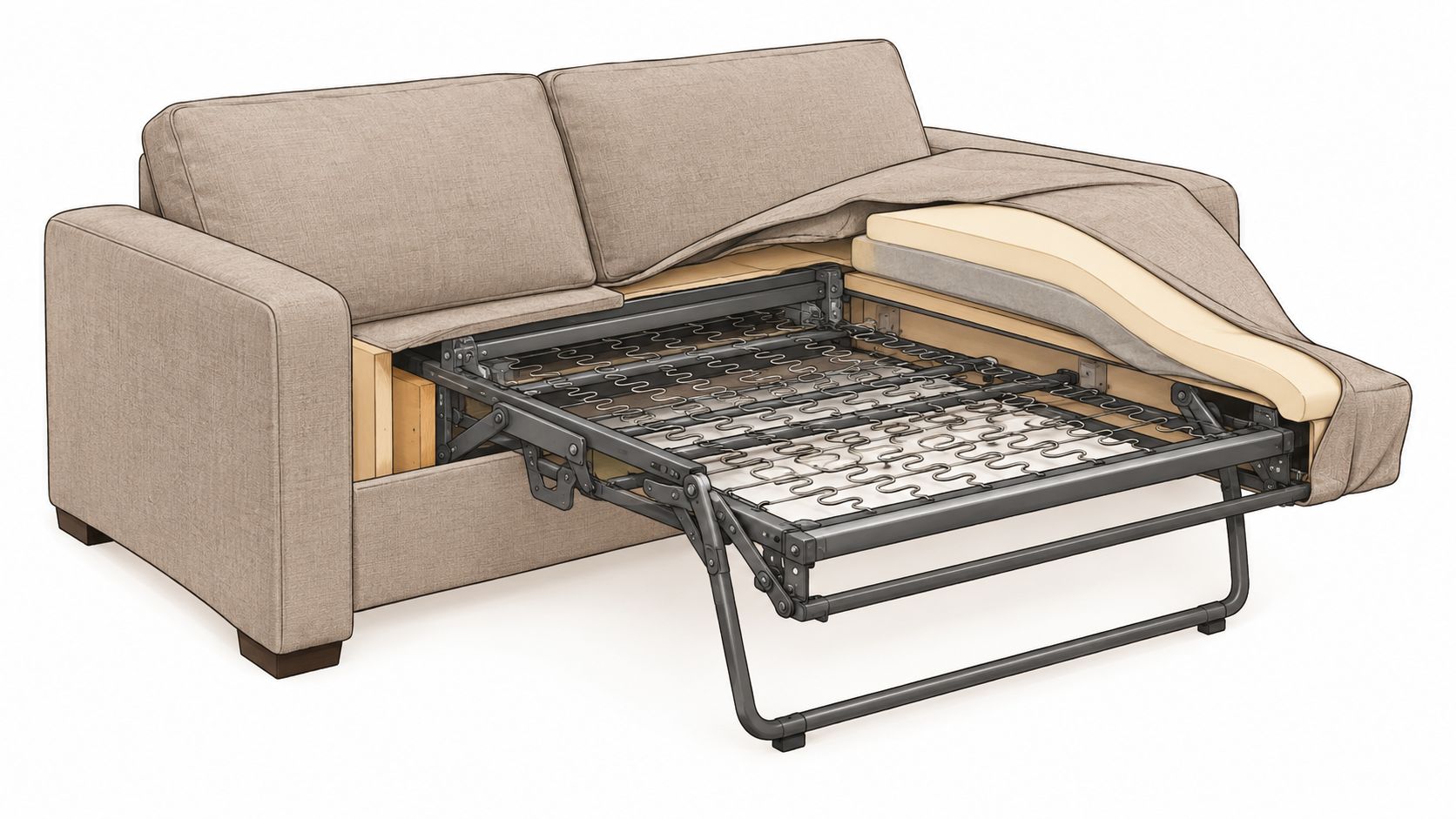
What the mechanism controls
The internal design affects several everyday details:
- Conversion effort: A well-fitted system should guide the frame through its movement without sudden drops, binding, or excessive lifting.
- Sleeping support: Hinges, rails, springs, and the frame beneath the mattress determine whether the surface feels stable or uneven.
- Clearance needs: Some beds extend toward the room, while others fold down or slide in a way that needs space behind or beside the sofa.
- Long-term wear: Repeated movement places stress on hinge joints, locking hardware, rails, springs, and connection points.
The basic engineering challenge isn't new. Google Patents records a sofa-bed patent, US501602A, dated July 18, 1893. Later patents included a reverting back sofa bed in 1954, a sofa bed folding mechanism in 1959, and a sofa-bed mechanism with antitopple means in 1965, showing more than 70 years of continued work on stability, linkage, hinge geometry, and support structure within the historical patent record.
Practical rule: A sofa bed should be judged as both a sofa and a bed. If either mode feels like an afterthought, the mechanism isn't doing enough of the work.
For Milwaukee households, the right choice often depends on use rather than appearance. A guest room that opens occasionally can tolerate a different design from a family room that converts regularly. A compact apartment may need a quick fold-down system, while a household expecting frequent overnight visitors may value a separate mattress and a stronger frame.
A useful starting point is BILTRITE's guide to the transformer sleeper sofa, which helps shoppers think about the conversion itself rather than stopping at the sofa's exterior. The goal isn't to choose the most complicated mechanism. It's to choose one that matches the room, the sleepers, and the amount of work the furniture will perform.
Common Sofa Bed Mechanism Types
Sofa beds don't all open the same way, and the physical motion tells a shopper a great deal about comfort, clearance, and maintenance. The main families include pull-out, click-clack, fold-out, trundle, sectional, and power designs. Each solves the space problem differently.
Pull-out and fold-out systems
A pull-out sofa stores a folded mattress and support frame beneath the seat. The cushions move, the frame glides outward, and the sleeping surface unfolds into place. This approach creates a more bed-like experience because the sleeper rests on a dedicated mattress rather than directly on the sofa cushions.
The trade-off is space and moving parts. The bed needs open floor area in front of the sofa, and the frame, rails, legs, and mattress all need to work together. A pull-out can suit regular overnight use, but it deserves careful testing because a smooth first movement doesn't tell the whole story about long-term wear.
A fold-out design uses a related idea, though the mattress or support surface may fold from the back or seat instead of sliding from beneath the base. Terminology varies by retailer, so the important question is simple: what moves, where does it move, and what supports the sleeper once the bed is open?
BILTRITE's guide to a pull-out bed couch is a useful place to review this style before visiting a showroom.
Click-clack and futon-style designs
A click-clack sofa bed folds the backrest down until it lies flat with the seat, forming one continuous sleeping surface. These models generally don't hide a separate mattress, which keeps the design simpler and often lower-profile, as explained in this guide to click-clack mechanisms.
The strength is speed. A click-clack can work well in a small apartment, office, or guest room where the room changes jobs often. There are fewer large components to pull from the base, but the sleeper may feel seams, firmer areas, or the underlying frame more directly. That makes the flatness and support of the specific model especially important.
Futon-style designs operate in a similar family, with a backrest that locks at sitting, reclining, or flat positions. They can be practical for casual guests and everyday lounging, but the sleeping surface deserves a close inspection if adults will use it regularly.
Trundle, sectional, and power options
A trundle design stores an additional sleep surface below the main seating area and pulls it forward. It can save vertical and visual space, though the lower bed may have different access and support characteristics from the main surface.
Sectional conversions use separate seating sections or platforms to create a larger sleeping area. They can offer useful flexibility in a broad living room, but the connection points between sections need to remain stable when the bed is open.
Power mechanisms use motors and controls to move the sofa into a bed position. They can reduce manual lifting, but they still need clear space, dependable electrical components, and careful operation around moving parts. Convenience doesn't remove the need to inspect the frame.
For sleep quality, current buying guidance generally places pull-out, fold-out, and hybrid designs ahead of click-clack styles for frequent sleeping, while click-clack designs make more sense when compact size and quick setup lead the decision. The right mechanism is the one that fits the household's actual routine, not just the one with the shortest product name.
Durability and Cycle Ratings
A sofa bed mechanism wears through movement. Every opening and closing cycle asks the frame, hinges, rails, springs, and locks to handle load in a specific sequence. A mechanism can feel sturdy in a showroom yet develop looseness later if its hardware and geometry aren't suited to the household's use.
Independent guidance cites minimum cycle-life targets under EN 12520 seating testing of 20,000 cycles for click-clack mechanisms, 15,000 for bi-fold mechanisms, and 10,000 for pull-out mechanisms in this mechanism durability guide. Those figures aren't a promise that every product will fail at a particular point. They provide a useful comparison of tested endurance targets and explain why different architectures need different expectations.
Reading the rating correctly
The higher target for a click-clack design reflects its relatively direct folding motion. A bi-fold system has more folding interaction, while a pull-out system adds rails, a stored frame, legs, and a mattress that must all move into alignment. More components create more places where wear, misalignment, or loosened hardware can appear.
A buyer comparing models should ask:
- What was tested: Find out whether the rating applies to the complete mechanism or only a component.
- What the use case is: Occasional guests place different demands on the frame than nightly conversion.
- Which parts are replaceable: Modular rails, springs, or mattress inserts can make future service more practical.
- What the warranty covers: A warranty that excludes the moving mechanism may leave the most important part unprotected.
A lower cycle target isn't automatically a bad choice. It may suit a room that hosts visitors occasionally. It becomes a concern when the same mechanism will open and close every day.
A manufacturer-facing specification describes 20,000 cycles as typical for residential use, translating to roughly 5 to 7 years of nightly deployment, and places the global sofa bed mechanism market at $1.8 billion in 2022, with projected growth at a 6.4% CAGR from 2023 to 2030 in this industry specification. Those figures point to a mature, high-volume category where durability and ease of operation matter alongside compact design.
The practical takeaway is straightforward. A daily-use sofa bed deserves reinforced hinge geometry, strong locking hardware, and a frame rated for repeated conversion. A guest-only piece may prioritize simple operation and room fit, but it still shouldn't wobble, pinch, or require excessive force.
Sizing and Mattress Thickness Considerations
A sofa bed can fit against a wall and still fail the room test. The bed position usually extends farther into the living area, and the open frame may need space for legs, bedding, and a person walking around the end. Measuring only the closed sofa is one of the most common ways shoppers end up with a piece that works on paper but not in daily life.
Measure both positions
Before visiting a showroom, record the room's usable dimensions and identify anything the bed could contact. That includes a coffee table, ottoman, radiator, doorway, cabinet, wall, and nearby seating. Marking the likely open footprint with painter's tape gives a much clearer sense of traffic than looking at a floor plan.
Use this quick check:
- Measure the sofa's closed width and depth.
- Measure the full open length or depth.
- Keep a walkable route to the doorway, bathroom, and kitchen.
- Check whether the front legs will land on a thick rug edge.
- Decide where loose cushions, pillows, and bedding will go.
The mattress thickness creates a separate fit question. A thicker mattress may offer more cushioning, but it also has to fold, slide, or store inside the frame. If the mechanism wasn't designed for that thickness, the bed may resist closing, strain the hinges, or leave the mattress compressed in an unhealthy position.
Match the mattress to the frame
A shopper shouldn't assume that a replacement mattress or topper will fit just because its width and length look right. The folded height, flexibility, edge construction, and support deck all matter. The safest approach is to ask for the mechanism's approved mattress specifications before making a change.
Weight capacity deserves the same attention. The relevant limit applies to the complete open bed, including the frame, supports, mattress, and locking points. A household with heavier sleepers or frequent adult guests should ask for the actual capacity instead of relying on a general description such as “heavy duty.”
The sofa bed dimensions guide can help shoppers prepare measurements before visiting a Greenfield showroom. A good fit leaves enough room to open the mechanism without bumping nearby furniture and enough support beneath the sleepers to keep the frame stable.
The best room test happens with the bed open. A sofa's closed footprint tells only half the story.
Maintenance and Troubleshooting Tips
A sofa bed mechanism doesn't need complicated care, but it does need attention. Dust, loose hardware, and uneven mattress wear can make a sound design feel rough. Small problems are easier to address before a rail binds or a hinge begins carrying load at the wrong angle.
Start with a simple inspection whenever the sofa feels different:
- Look for loose fasteners: Check accessible screws and bolts, then tighten them carefully without stripping the hardware.
- Clear the moving path: Vacuum beneath and around rails, hinges, legs, and support points so debris doesn't interfere with travel.
- Listen during conversion: Squeaks, clicks, or scraping can reveal friction, misalignment, or a loose connection.
- Check the open position: Confirm that every leg sits firmly and that the frame lies level before anyone uses the bed.
A small amount of silicone-based lubricant on appropriate rails and hinges can help with squeaking or resistance. Oil-based products are a poor choice because they can attract dust and turn a clean moving surface into a gritty one. The lubricant should never replace an inspection when the frame bends, a lock fails, or the sofa suddenly requires unusual force.
Mattress care also affects the sleeping experience. Flipping or rotating a compatible mattress helps spread wear and preserve support, but the manufacturer's instructions should guide the process. A mattress that can't be flipped shouldn't be forced, and no topper should remain inside a frame if it prevents the mechanism from closing correctly.
For problems involving sagging cushions or damaged support components, BILTRITE's information on repairing couch springs offers a useful starting point. A bent metal frame, snapped spring, damaged rail, or failed lock calls for professional assessment rather than repeated force.
What to Ask When Shopping in Milwaukee
A showroom test should feel practical, not rushed. In Greenfield, shoppers can sit on a sofa, open the bed, lie on the mattress, and repeat the motion while a sales associate explains what each component is doing. That hands-on process reveals details photographs can't show, including handle position, clearance, frame noise, mattress feel, and the amount of lifting required.
BILTRITE Furniture-Leather-Mattresses is a fourth-generation, family-owned store serving Metro Milwaukee. Its selection includes USA-made and Amish-made furniture, with options that emphasize solid wood construction, handcrafted work, small-scale dimensions, and heavy-duty support. Those categories don't eliminate the need to inspect the mechanism, but they give shoppers useful construction choices for different homes and budgets.
Questions worth bringing along
A few direct questions can separate a convenient sleeper from one that becomes difficult to live with:
- What is the open-bed measurement? Closed dimensions won't tell whether the room has enough clearance.
- What is the weight capacity? Ask for the rating of the complete sleeping system.
- What cycle rating applies? Request the rating for the actual mechanism, not a general statement about the sofa.
- Which parts can be serviced or replaced? Rails, springs, hinges, mattress inserts, and locks may have different service options.
- What does the warranty cover? Ask specifically about the mechanism, frame, mattress, and labor.
- How should the mattress be maintained? Learn whether it can be rotated, flipped, or replaced later.
Sales associates at BILTRITE bring more than 400 years of combined experience to the showroom. That knowledge is useful when a shopper needs to compare a compact apartment piece with a sturdier family-room option, or when the same room must handle everyday seating and overnight guests.
Test the entire routine
The right test includes more than opening the frame once. The shopper should remove cushions, pull or fold the bed, check the locks, lie down across the sleeping surface, and convert it back into a sofa. If the piece is intended for a smaller room, checking delivery access matters too. Come-apart furniture can help with narrow hallways and tight doorways, while the store's range of sizes supports apartments, condos, family rooms, and larger homes.
A full sleeper sofa may suit households that want a dedicated mattress and a more traditional bed feel. The full sleeper sofa selection gives shoppers another starting point for comparing room size, sleeping surface, and mechanism operation in person.
BILTRITE also has a large mattress department with over 60 models, along with more than 500 mattresses in stock, so the mattress conversation doesn't have to stop at the sofa frame. The showroom is closed on Sundays and Mondays so the family can spend time together, a choice that reflects its local, family-first approach.
BILTRITE Furniture-Leather-Mattresses offers sofa beds, USA-made and Amish-made furniture, small-scale and heavy-duty options, and a large mattress department for households that care about lasting comfort. Visit BILTRITE Furniture-Leather-Mattresses in Greenfield to open the mechanisms, test the sleeping surfaces, and talk through the right fit for a Metro Milwaukee home.