Tilt Back Chair and Ottoman Guide: Find Your Perfect Fit


The living room is finally quiet, a movie is ready, and the chair by the window looks inviting. Then the practical questions arrive. Will the chair support the back without forcing a slump? Can an older family member get up safely? Will the ottoman leave enough room to walk through the space?
A tilt back chair and ottoman can become a favorite place to read, nap, visit, or watch television, but comfort depends on more than soft cushions. The chair, ottoman, room layout, body fit, and entry-exit movement all need to work together. After serving Metro Milwaukee families since 1928, BILTRITE has learned that the most comfortable choice is usually the one that fits the person and the room, not just the one with the deepest recline.
Table of Contents
- Why We Love the Tilt Back Chair and Ottoman Combo
- Understanding How Tilt-Back Mechanisms Work
- Choosing the Right Materials and Frames
- Measuring for Proper Fit and Room Placement
- Safety Considerations for Every Household
- Making the Most of Your New Seating
Why We Love the Tilt Back Chair and Ottoman Combo
A chair that tilts back and a separate ottoman can change how a room works through the day. The chair supports the torso and hips, while the ottoman takes pressure off the lower legs and feet. Because the pieces move independently, one family member can stretch out while another keeps both feet on the floor. That flexibility also helps households plan a safer path around the seating.
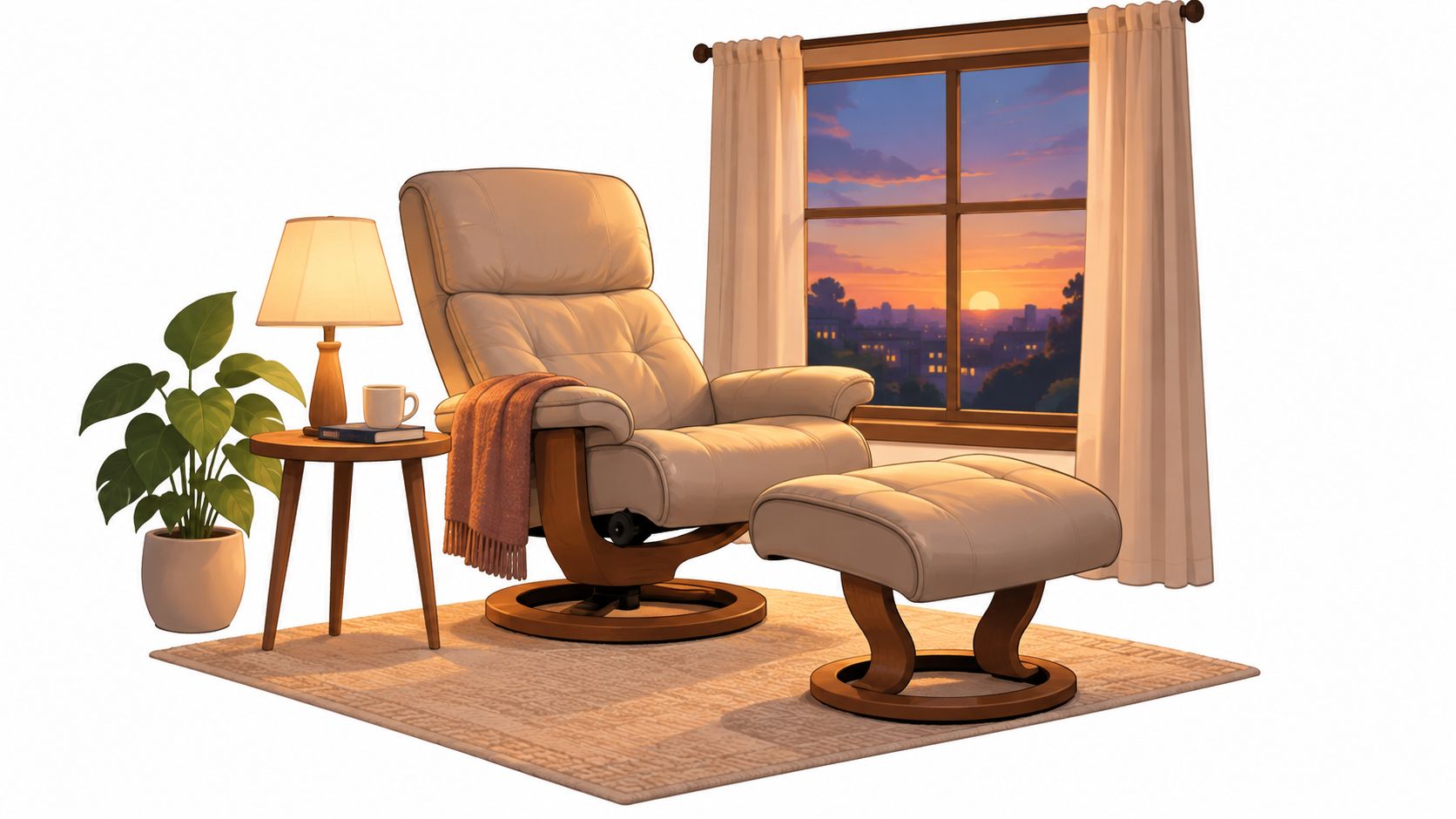
Comfort that adapts to the evening
A Milwaukee family may use the same chair in several ways. During conversation, keep the back mostly upright and move the ottoman aside. For a movie, bring the ottoman close enough to support the calves. While reading, a moderate recline can relax the shoulders while preserving an easier position for standing.
That last point matters for seniors and anyone who needs a clear transfer route. A separate ottoman can move away before the user rises, giving the feet and walker more room. Caregivers also gain a better view of the person's movement instead of working around a permanently extended footrest.
The arrangement suits a living room, bedroom, home office, or smaller apartment when the full chair-and-ottoman footprint stays clear. In Milwaukee homes with compact rooms or busy walkways, measure the open space in front of the chair as carefully as the chair itself. Leave room for the ottoman to shift without blocking a doorway or the route to another seat.
Practical rule: Judge the chair and ottoman as a pair, then test them in separate positions. Their value comes from independent placement.
Why the back-and-leg relationship matters
Reclining changes how the body carries its load. Ergonomic seating research indicates that lumbar-disc pressure and back-muscle activity are lowest in a supported recline of approximately 110° to 130° according to Cornell's ergonomic seating guidance.
A deep angle alone does not guarantee comfort. If the backrest tilts too far without preserving lumbar contact, the lower-back curve can flatten and the user may slide into the seat. The ottoman should raise the legs without pushing the knees sharply upward or rotating the pelvis backward. Try several positions and check whether the body remains supported and stable.
A family-friendly choice when sized correctly
Seniors often appreciate the open feel of a separate ottoman, while caregivers can move the leg support away before a transfer. Check the chair's arm support, base stability, and seat height with the intended user. Entry and exit should feel controlled, with enough space for feet, mobility aids, and a helper when needed.
BILTRITE is a fourth-generation, family-owned store, and our showroom team has helped generations of neighbors compare seating in person. We focus on the complete setup, including the person's fit, the ottoman's position, and the room's walking paths. The right combination should feel restful during a quiet evening and manageable when the evening is over.
Understanding How Tilt-Back Mechanisms Work
A tilt-back chair may use manual movement, a lever-assisted recline, or a multi-position mechanism. The label matters less than the motion. The backrest should follow the user's body smoothly, keep contact through the lower and upper back, and stop securely at useful angles. For older adults, that controlled stop also matters during entry and exit. A chair that shifts unexpectedly can make standing harder, especially when an ottoman blocks the usual foot path.
Recline should support the body through its full tilt
As the body moves from upright sitting toward reclining, pressure shifts away from the sitting bones and toward the lumbar and thoracic areas. Seating research on pressure distribution explains how tilt range and pivot mechanics affect the transfer of weight into the backrest the published ergonomic analysis describes this pressure shift.
A chair can feel plush at first and lose support as it tilts. Test several positions and check whether:
- The lumbar curve stays supported, without a hollow gap.
- The shoulders remain relaxed, without pushing the head forward.
- The pelvis stays stable, rather than sliding or rotating backward.
- The backrest remains in contact, from the lower back through the upper back.
A body-to-thigh relationship near 135° is commonly used as a design target because a reclined posture can reduce strain associated with prolonged upright sitting. Treat that angle as a reference, not a promise of comfort for every body.
The ottoman completes the posture
An ottoman that's too high raises the knees and increases hip flexion. That can rotate the pelvis backward and weaken the support gained from reclining. An ottoman that's too low leaves the heels unsupported and may increase pressure beneath the lower legs.
The useful position supports the lower legs while the pelvis remains settled. Sit fully back, tilt the chair, place both feet on the ottoman, and check that the knees feel naturally supported rather than sharply lifted. Leave a clear path for both feet when standing. In Milwaukee homes, where living rooms often serve several purposes, measure the chair and ottoman together, including the open space needed for walking and mobility aids.
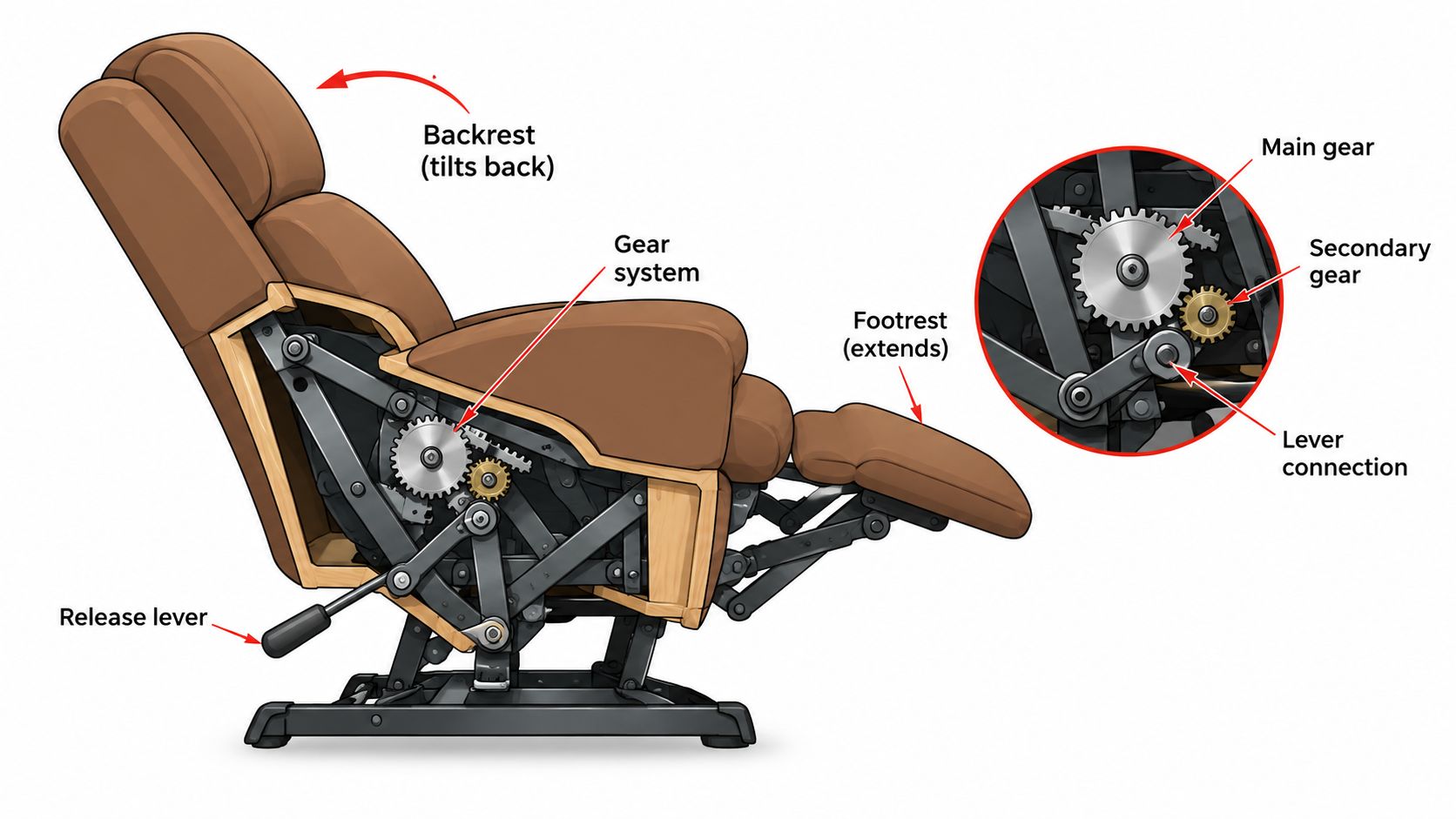
BILTRITE's ultimate recliner buying guide reviews movement types and shopping considerations. In our showroom, we test manual chairs for controlled motion and powered models for accessible controls, steady movement, and a smooth stop.
Choosing the Right Materials and Frames
Materials affect how a tilt-back chair looks, feels, and holds up to daily use. The right comparison isn't just leather versus fabric. It includes the frame, joinery, cushion behavior, upholstery maintenance, and the amount of use the chair will receive.
Frame construction sets the foundation
A solid wood frame offers a different ownership experience from a lighter engineered structure. Real wood can bring visible grain, repairable character, and a substantial feel, while a well-built upholstered frame can offer dependable support with a softer visual profile. The frame should feel stable when the user sits, shifts weight, and rises.
BILTRITE specializes in USA-made and Amish-made furniture, including solid-wood pieces. Shoppers can look for signs of careful construction such as secure joints, a stable base, consistent alignment, and a mechanism that operates without abrupt catches. A heavy-duty option may suit a household that expects frequent use or wants additional structural resilience.
Construction check: Sit down, lean back, return upright, and shift from side to side. A quality chair shouldn't feel loose or hesitant during ordinary movement.
Upholstery is a lifestyle decision
Leather and fabric each have practical strengths. Leather offers a smooth surface that's easy to wipe and can develop character over time. Fabric provides a broad range of textures and visual warmth, which can work especially well in a busy family room. Neither choice removes the need to check seams, cushion firmness, and cleaning requirements.
Pets, children, sunlight, and the frequency of use should guide the decision. A chair used every evening deserves upholstery that fits the household's cleaning habits, not just a finish that looks attractive under showroom lighting. The team can place material samples side by side and help shoppers compare hand feel, texture, and maintenance expectations.
A more detailed discussion of everyday upholstery choices is available in BILTRITE's guide to upholstery materials.
Value means examining the whole chair
A lower purchase price may look appealing if the frame, cushions, or mechanism receive less attention. Better value comes from balancing initial cost with expected use, repairability, comfort, and durability. BILTRITE isn't the cheapest furniture store, and that distinction is intentional. The focus is affordable, better-quality furniture that gives families a stronger construction story for the money.
The showroom includes choices for apartments, larger households, and shoppers who want American craftsmanship. Comparing chairs in person makes small differences easier to notice, especially when two pieces have similar silhouettes but behave differently under the body.
Measuring for Proper Fit and Room Placement
A tilt-back chair may fit the user well and still crowd the room. We regularly see shoppers measure the upright chair, then discover that the back, footrest, and separate ottoman occupy much more space during everyday use. That extra footprint also affects how safely someone enters, turns, and stands.
Measure the complete relaxation zone
Measure from the wall behind the chair to the farthest point reached when the back tilts and the ottoman is positioned for support. A fully reclined chair may need roughly 60 to 65 inches of front-to-back clearance recliner sizing guidance identifies this approximate need.
Published furniture guidance gives typical ranges for recliner width, depth, height, seat depth, seat height, and fully reclined length the complete dimension overview is available from a furniture measurement guide. Use those figures only as starting points. The specific chair's manufacturer measurements take priority, especially when planning a smaller Milwaukee home, condo, apartment, or senior-living space.
Record these five measurements before visiting a store:
- Closed footprint: Measure the chair's full width and depth in its upright position.
- Open footprint: Measure the maximum space required as the back tilts and the footrest extends.
- Ottoman zone: Add room for the ottoman, including enough distance for the user's feet and legs to move clear when standing.
- Circulation: Keep a clear route beside and around the arrangement. A route of roughly 36 inches is a practical planning target for accessible movement small-space planning guidance discusses this circulation principle.
- Room conflicts: Check door swings, vents, outlets, rugs, tables, and nearby walkways.
Leave more room around the chair if an older adult will use it. A tight ottoman position can force awkward foot placement, while a chair placed too close to a wall or table can make turning and rising harder.
Fit the seat to the person
Seat height should approximate the user's popliteal height, the distance from the floor to the crease behind the knee. The right height helps the user sit and rise without placing unnecessary strain on the knees. Seat depth should support the thighs while leaving a small gap behind the knees.
Shorter users may need a shallower seat or an adjustable footrest so their legs do not dangle. Taller users often need greater seat depth, a higher back, and an ottoman that reaches the calves and heels. General seating guidance may cover a broad range of body sizes, but personal measurements remain more useful than a generic standard. Test the complete sitting and standing movement rather than judging comfort from a brief lean-back.
Plan for delivery, not just placement
Measure entry doors, hallways, stairways, elevators, and tight turns. Include the chair's widest point, not only its boxed dimensions. Come-apart furniture can suit smaller Milwaukee homes, condos, apartments, and senior-living spaces, but the delivery route still needs checking before the order is finalized. Use BILTRITE's furniture measurement guide to organize those measurements before delivery.
Safety Considerations for Every Household
A tilt-back chair can feel comfortable once seated yet still be difficult to leave. That trade-off deserves attention for older adults, people with limited mobility, and anyone who rises often. In our Milwaukee-area showrooms, we encourage families to test the full movement, not just the reclined position.
Test the complete sit-to-stand sequence
Research on chair transfers found that lower seat height, greater posterior seat tilt, increased backrest recline, and softer cushions can increase the time, body movement, and perceived difficulty required to stand the published study examines these entry and exit factors. A plush, reclined chair may feel inviting while making independent transfers harder.
During a showroom test, follow the same sequence the user will use at home:
- Sit down slowly: The cushion should support the user without a heavy drop.
- Set both feet firmly: Move the ottoman far enough away to clear the feet.
- Use the arms: Armrests should offer support without pushing the shoulders into an awkward position.
- Return upright: The backrest should come forward smoothly before standing.
- Repeat naturally: Try the sequence several times, since one successful rise proves little.
For caregivers: A chair that requires help every time the user stands may not suit that household, even if it feels exceptionally comfortable.
Keep the ottoman out of the transfer path
A separate ottoman adds flexibility, but its position affects safety. Too close, it can block foot placement or shift when pushed. Too far away, it may encourage stretching or unstable steps. Choose a stable base and a manageable weight, then leave enough space for the user to approach, sit, and stand without catching a foot.
For seniors, look for accessible controls, firm arm support, smooth stops, and a mechanism that does not depend on a rapid spring-assisted motion. Families should also distinguish a traditional tilt-back chair from a power lift recliner. Powered assistance may help someone who needs support rising, while a standard chair suits users who can transfer independently.
Inspect moving parts and openings
Reclining mechanisms, leg rests, pinch points, stability, and entrapment all deserve inspection. Guidance referenced by the U.S. Consumer Product Safety Commission notes that UL 962 addresses reclining mechanisms and stability when furniture includes a foot or leg rest, while ANSI/BIFMA X5.4-2020 includes provisions for leg-rest durability, leg-rest strength, recliner pinch points, and stability. The same CPSC staff material also references guidance that openings between an upholstered seat and leg rest should be no more than 5 inches the CPSC staff material outlines these considerations.
Children and pets need extra caution around moving parts. Keep hands, fingers, paws, and limbs clear while the back or leg support operates, and review this guide to kid-friendly and pet-friendly furniture when planning for durability and household safety.
Making the Most of Your New Seating
A tilt-back chair and ottoman should make daily routines easier, from a morning coffee to an evening book. For seniors, the best arrangement also leaves a clear path to the chair, enough room to place both feet, and space to stand without twisting around the ottoman. Comfort depends on the whole setup, not the chair alone.
Match the setup to the room
Small rooms need careful planning. A narrow chair may save width, yet the ottoman can still obstruct circulation or force the user into an awkward position. Measure the chair upright, the space needed when tilted, and the ottoman's footprint. Leave a clear route beside the arms so the user can approach, sit, and rise without stepping around furniture.
In Milwaukee-area homes, older houses, condos, apartments, and senior-living rooms often present different access challenges. A compact frame may suit an apartment, while a larger household may need a wider chair with firm arm support. Delivery access matters too. Check doorways, halls, corners, and elevator dimensions before choosing a heavier piece.
The person using the chair should test the entry and exit motion. Feet should reach the floor, arms should offer dependable support, and the ottoman should stay close enough for comfortable leg support without becoming a trip hazard.
Give the ottoman a second job
A separate ottoman supports the feet and can also hold a snack, book, or remote when paired with a suitable surface. A large wood tray for an ottoman keeps those items organized without turning the seating area into a permanent workstation.
Keep the tray easy to remove. The user should be able to move both feet, return the back upright, and stand without reaching around an obstacle. Test those movements before deciding where a nearby table or lamp belongs.
Plan the arrival as carefully as the purchase
Some chairs come apart for delivery through tight doorways. That can help in older Milwaukee homes, condos, apartments, and senior-living rooms, but measure the route before delivery day. Include the chair's upright dimensions, its open relaxation zone, and the ottoman's travel path on the same floor plan.
BILTRITE Furniture-Leather-Mattresses offers small-scale furniture for apartments, larger options for families, USA-made and Amish-made pieces, and a large mattress department with over 60 models the showroom's mattress selection is described on its site. The store's sales associates have over 400 years of combined experience, giving shoppers practical help comparing comfort, fit, and function without pressure.
A visit to BILTRITE Furniture-Leather-Mattresses lets Milwaukee-area families test the chair, practice sitting and rising, and judge the full chair-and-ottoman footprint in person. Visit the Greenfield showroom to find seating that fits the room and the people who use it.