Leather Sofa Quality What Really Matters


A leather sofa can look just right under showroom lights, then raise questions once it becomes the family's everyday landing spot. Will the seats keep their shape? Is the leather on the arms the same as the leather on the cushions? And does a polished surface mean the sofa is built to handle real life?
Leather sofa quality isn't a single grade or label. It's the combined performance of the upholstery, finish, frame, suspension, cushions, seams, hardware, and fit for the home. BILTRITE is a fourth-generation, family-owned business serving Metro Milwaukee, and its family-first perspective starts with a practical idea: the right sofa is the one that suits the people who'll use it and the way they live.
Table of Contents
- Start With What Leather Sofa Quality Means
- Choose the Leather for Your Home
- Check Durability With Tests and Details
- Inspect the Sofa Inside and Out
- Match Leather Sofa Choices to Daily Life
- Plan for Leather Sofa Care
- Make Your Final Leather Sofa Decision
Start With What Leather Sofa Quality Means
From across a showroom, two brown leather sofas might look nearly identical. Up close, one may have even stitching, supportive cushions, and upholstery that's clearly specified for the seat, arms, sides, and back. The other may have a smooth, consistent surface but leave basic questions unanswered, like what's under the cushions or whether every visible panel is leather.
That's why the word “leather” can't do the whole job. Leather has a long history of use and processing, and the methods used to preserve and finish hides have changed over time. A brief history of leatherworking and tanning helps explain why the material's origin, hide layer, tanning chemistry, and surface finish all matter. A finished sofa also depends on its construction and whether its materials suit the room where it'll live.
Look at the whole sofa
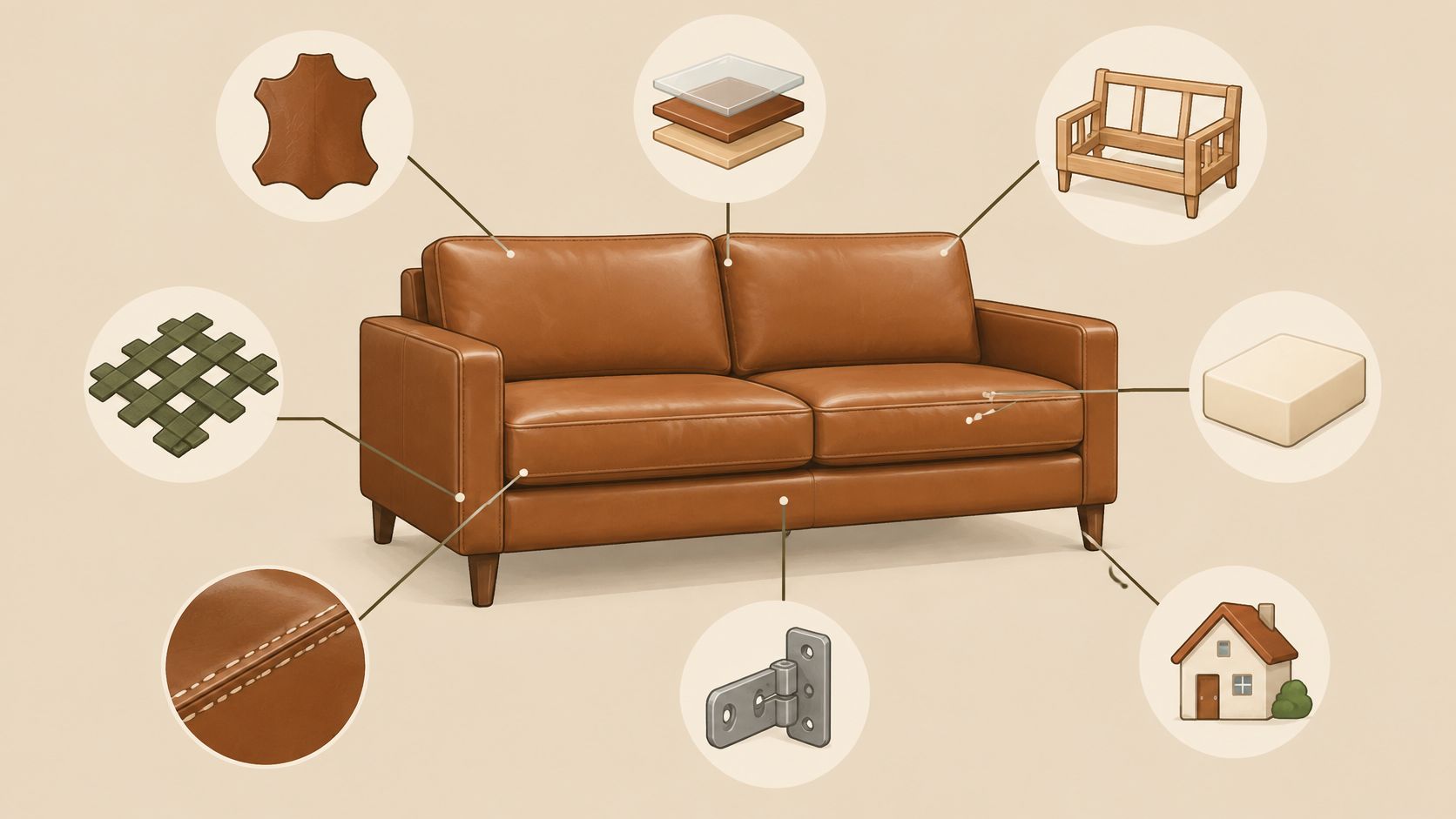
A useful showroom habit is to check the sofa as a system. Start with the leather specification, then look at the frame, support beneath the cushions, cushion feel, stitching, and the places where upholstery materials may change. A sofa's attractive grain pattern won't answer questions about its hidden structure, just as a strong frame won't tell a shopper whether a particular finish is easy to care for.
The difference between bonded leather and genuine leather is one part of that conversation. The label is a starting point, not a complete verdict.
A useful showroom rule: Compare the details you can inspect, then ask about the parts you can't see.
That approach helps a household decide whether a sofa's look, feel, construction, and care demands are a match. A formal sitting room, a busy family room, and a home with pets may call for different trade-offs. Before choosing a leather type, take in the whole sofa and consider who'll use it, where it'll go, and what kind of upkeep feels realistic.
Choose the Leather for Your Home
Leather terms can sound like a simple ranking, but they describe different things. Some refer to which part of the hide is used. Others describe how much the original grain surface has been altered or how the leather has been finished. Understanding that distinction makes it easier to compare sofas without assuming one label answers every quality question.
Decode the material description
Full-grain leather keeps the hide's original grain surface, including natural markings. Top-grain leather comes from the upper portion of the hide and may be sanded or corrected to reduce visible blemishes. Split leather comes from a lower layer after the grain portion has been separated; it doesn't have the same original grain surface and generally has a looser fiber structure than upper-layer leather. Hide-layer terms and upholstery-leather specifications can help clarify what a label means, but it won't tell the whole story about a finished sofa.
Correction is another detail to ask about. Corrected-grain leather is sanded to reduce visible imperfections, then embossed with a grain pattern and coated with pigment. That can create a more uniform appearance and practical surface protection, while leaving less of the hide's original grain visible. A household that values natural markings and changes over time may prefer a different look from one that prioritizes consistent color and easier day-to-day cleanup.
Check where each material appears
Ask whether the sofa uses the same upholstery on its seats, arms, sides, and back. Some sofas combine genuine leather on body-contact areas with a matching upholstery material elsewhere. That doesn't automatically make a sofa unsuitable, but shoppers should know exactly what covers each part before comparing price or making a decision.
A lightly used sitting room may suit someone who enjoys natural variation and is prepared to handle the care that comes with it. An active family room may lead shoppers to consider a more protective finish, especially on areas that see frequent contact. A home with pets calls for an honest conversation about scratching, oils, claws, and the household's tolerance for marks.
How top-grain and full-grain leather differ offers another helpful way to think about the labels. Neither “full-grain” nor “corrected” can tell a family whether the frame, cushions, seams, or material placement suit its needs. The better question is not just which leather sounds most prestigious. It's which combination of hide, finish, upholstery coverage, and construction fits the room and its daily routine.
Check Durability With Tests and Details
A soft hand or attractive grain can make a sofa appealing, but neither tells a shopper how the finished upholstery responds to repeated rubbing, bending, or cleaning. Test information can add useful detail, as long as the shopper understands what each test measures and what it can't prove.
Abrasion resistance measures how a material responds to repeated rubbing. In a Martindale test, an abrasive material rubs against a sample under controlled pressure, and the result is recorded in cycles. Common reference ranges classify about 15,000 cycles as light residential use, 25,000–40,000 cycles as residential or contract-level performance, and 50,000–80,000 cycles as commercial heavy-use performance. Those figures are test results, not promised years of sofa life, and an upholstery leather technical guide notes that use, care, sunlight, and other conditions affect how upholstery wears.
A high cycle count doesn't prove the entire sofa is well built. A family should also ask whether the test applies to the actual finished upholstery leather and which method, abrasive, load, and endpoint were used. Results from different instruments or testing setups shouldn't be treated as interchangeable.
| Test or Check | What It Evaluates | Question It Helps Answer |
|---|---|---|
| Abrasion test | Surface response to repeated rubbing | Which test method was used, and does the result apply to this finished leather? |
| Flex resistance | The finish's response to repeated bending | Does the surface crack or show early damage at bend points? |
| Finish adhesion | How well a coating holds to the leather | Could the finish peel or separate from the hide? |
| Colorfastness to rubbing | Whether color transfers during contact | Could the color rub off onto clothing or other surfaces? |
| Visual inspection | Visible grain, color, and finish condition | Are there noticeable defects, and how severe are they? |
Ask what the test can tell you
Flex resistance, finish adhesion, and colorfastness each answer different questions. A test sequence can combine a visual review, mechanical checks, finish adhesion, and abrasion and colorfastness checks, then record where any issues appear. Leather testing methods and inspection practices describe relevant approaches, including tests for flex resistance and finish adhesion.
Another test to ask about is ASTM D2097-03(2023), which evaluates flexibility and adhesion of upholstery-leather finishes by flexing a sample and checking for cracking. The ASTM method description gives shoppers a way to ask about finish performance rather than relying on appearance alone.
A test result is most helpful when the seller can explain what was tested, how it was tested, and what the result means for the sofa being considered.
Inspect the Sofa Inside and Out
A showroom inspection doesn't require taking a sofa apart. It does take a little time, a seat test, and a few direct questions. The outside can reveal clues about fit and finish, while details about the frame, suspension, and cushions help fill in what the eye can't verify.
Start with structure and support
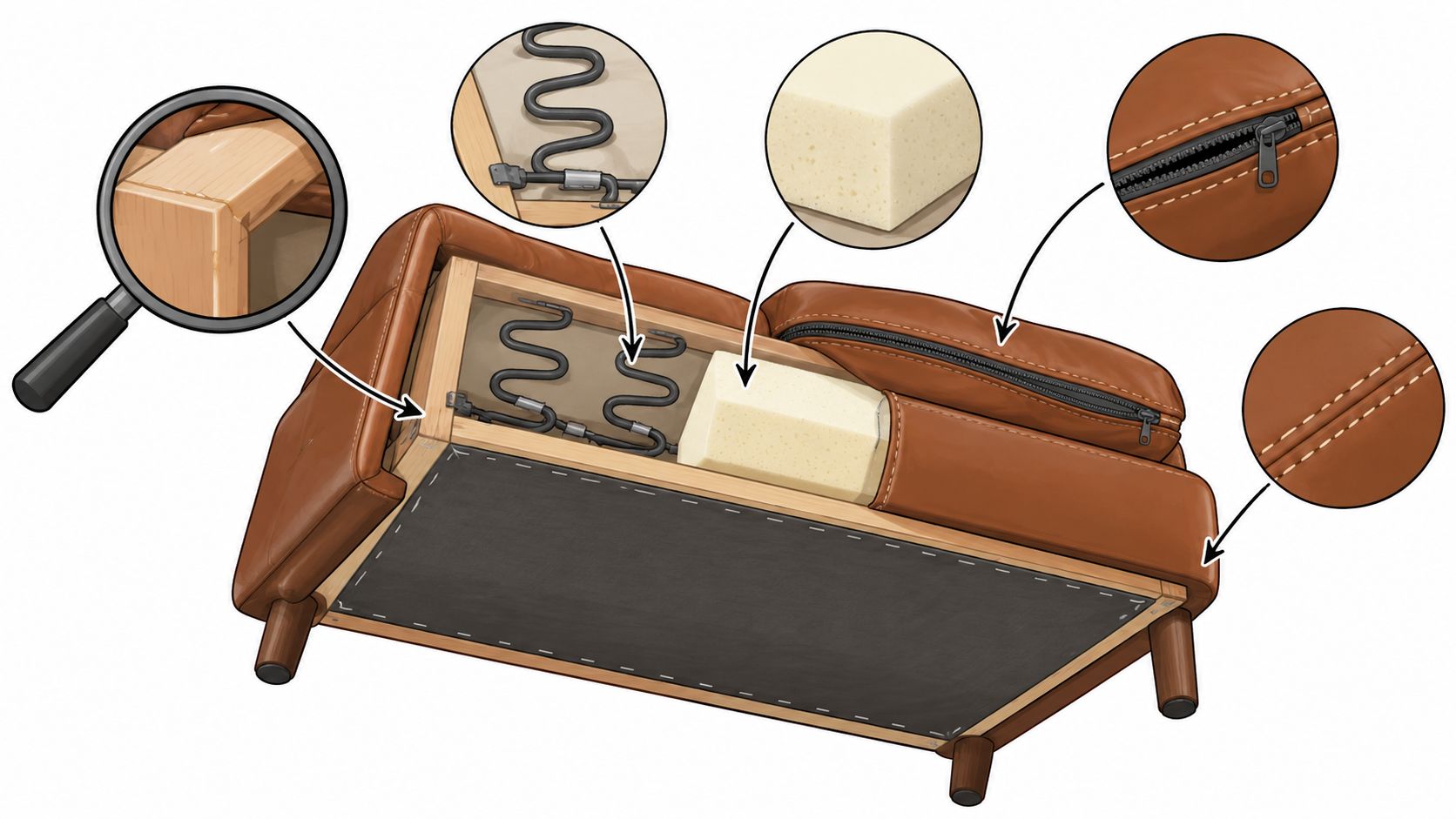
Ask what the frame is made of and how its parts are joined. The seller should be able to describe the construction without asking shoppers to take anything apart. Look for visible gaps or loose-looking joints, but remember that an exterior inspection can't confirm every detail inside the frame. A neatly finished sofa is a good thing to notice, not proof on its own of long-term performance.
Sit in the sofa as someone in the household would use it. Does the seat feel supportive? Does the back suit the way the family likes to sit? Ask what kind of suspension supports the cushions and whether the construction is designed for the sofa's intended use. BILTRITE's USA-made leather furniture selection can be a starting point for discussing furniture origin and construction details in person.
Check cushions, seams, and visible finish
Press the seat cushions and sit long enough to notice whether they feel too soft, too firm, or uneven. Ask what the cushion cores contain and whether foam-density information is available. If parts are removable, find out which ones and how they should be handled for cleaning or upkeep.
Then check the seams. Look for stitching that follows a consistent line, seams that sit evenly, and cushions that appear aligned rather than twisted or crooked. A loose thread, irregular seam, or uneven cushion isn't a complete diagnosis of the sofa's structure, but it's a sensible reason to ask more questions. Take a look at welts, fasteners, and other hardware too, and ask whether the back is upholstered to the same standard as the front if the sofa will sit where people can see it.
Use the same simple routine on each sofa under consideration:
- Look: Scan the upholstery for finish defects, uneven seams, gaps, or misalignment.
- Sit: Test the seat and back in a familiar posture, and notice whether support feels balanced.
- Ask: Find out about frame construction, suspension, cushion cores, foam information, removable parts, and upholstery coverage.
- Compare: Decide whether the sofa's feel and visible details suit the room and its expected use.
A sofa that feels comfortable in a quick sit still deserves questions about hidden construction. Conversely, one imperfect-looking natural marking doesn't prove poor quality. The aim is to gather enough information to make a fair comparison, not to diagnose the entire sofa from a quick glance.
Match Leather Sofa Choices to Daily Life
The same leather can feel like a sensible choice in one room and a fussy one in another. A lightly used formal room might make natural variation part of the appeal. A sofa used every evening by children, pets, and visiting family may call for more attention to protective finish, cushion support, and the upholstery on the seats and arms.
| Household Need | Qualities to Prioritize | Trade-offs to Discuss | Showroom Questions |
|---|---|---|---|
| Lightly used formal room | A look and feel that suit the room, with clear information about the leather and finish | Natural markings and surface changes may be more noticeable | Which hide layer and finish are used? |
| Everyday family room | Documented durability, supportive cushions, and well-finished high-contact areas | A more protected finish may look more uniform than natural leather | What tests apply to the finished upholstery? |
| Home with pets or children | Practical surface protection and clear care guidance | Leather can still show scratches, stains, or wear; finish choice doesn't remove every risk | Which areas are leather, and what damage or cleaning does the care guidance address? |
| Color consistency is important | A consistent surface appearance and clearly described material coverage | A corrected or pigmented surface shows less original grain character | Is the finish corrected or pigmented, and is the upholstery consistent across panels? |
The seats, cushion bends, arm tops, and front edges experience repeated flexing and contact. Those areas deserve close attention when a sofa will see daily use. Split leather deserves a placement question too: ask whether it appears on the seat and arms, the sides and back, or elsewhere in the upholstery package. Where it's used matters to the comparison, especially if different sofa panels face different amounts of contact and movement.
A corrected surface can be a practical option for households that prefer a more uniform look and added surface protection. It's not automatically better or worse than a less-corrected leather; it reflects a different balance between visual character and everyday practicality. For shoppers thinking through how pets fit into that balance, leather furniture considerations for homes with dogs can help frame useful questions.
The best choice is the one that fits a household's habits and expectations. A family that's relaxed about marks may enjoy a different leather from one that wants a consistent color and a simpler cleanup routine. In both cases, the frame, cushion construction, seams, and upholstery placement should be part of the decision.
Plan for Leather Sofa Care
Leather changes with use, and its care needs depend on the particular hide and finish. A clear care plan helps prevent avoidable damage and gives a household a more realistic sense of what sofa ownership will involve. There isn't one cleaning routine that suits every leather.
Build a gentle routine
Start by removing loose dust with a soft cloth or another method recommended for that sofa. When a spill happens, follow the care instructions promptly; avoid scrubbing, which can damage the surface. Don't reach for harsh cleaners or treatments unless the manufacturer or retailer confirms they're suitable for the exact leather and finish.
Sunlight also deserves attention. Placing a sofa in direct sunlight can affect its color over time, so consider how the room's windows and furniture layout will expose the upholstery. A protected finish may be more practical for a household that wants a consistent appearance, while a less-corrected surface may show more natural variation. Neither choice removes the need to follow the care directions for that specific material.
Guidance on caring for leather furniture can help shoppers prepare questions before a sofa comes home. Ask what to do about spills, which cleaning products are allowed, whether any conditioning is appropriate, and how to respond to a mark before trying a product on a visible area.
Know what to watch for
Whitening or fine cracks at bend points, flaking, peeling, and color transfer are signs worth discussing. A finish that looks uniform on a new sofa doesn't by itself show how it will respond to repeated flexing or rubbing. If test information is available, ask whether it covers the finished upholstery and which conditions the result represents.
Care questions belong in the showroom conversation, not just after a stain appears. A household should understand what routine upkeep is expected, what can harm the finish, and whether the sofa's leather suits the care habits people can realistically maintain. That way, the family can choose with eyes open instead of assuming every leather surface cleans or ages in the same way.
Make Your Final Leather Sofa Decision
Before choosing, gather the details that make it possible to compare one sofa with another. A good value isn't necessarily the lowest-priced option or the one with the most impressive-sounding leather label. It's the sofa whose materials, construction, comfort, and care needs make sense for the room and the people using it.
Bring the details together
Use this checklist while comparing sofas:
- Upholstery coverage: Identify the material on the seats, arms, sides, and back.
- Leather and finish: Confirm the hide layer and how the surface has been treated.
- Performance information: Ask what test methods apply to the finished upholstery and what each result measures.
- Frame and support: Ask about frame construction and suspension rather than relying on appearance.
- Cushions: Sit down, compare the feel, and ask about cushion cores and available foam information.
- Seams and hardware: Check for consistent stitching, aligned cushions, and securely fitted details.
- Household fit: Consider traffic, pets, children, preferred seating feel, and tolerance for natural marks.
- Ownership details: Ask about the warranty, delivery access, and care guidance before purchase.
A sofa with clear answers about its upholstery, support, and maintenance may be a stronger fit than one that offers a prestigious label but leaves practical details vague. If the household loves natural character, a less-corrected surface may be worth discussing. If consistent color and easier surface care matter more, a protected finish may be a better match. Either way, shoppers should favor clear material descriptions and ask follow-up questions when details about construction, care, or upholstery placement are missing.
Comfort deserves the same attention as the specification. A sofa may look inviting and still feel too deep, too firm, or awkward for the people who'll use it. Sitting in person lets each person check the seat and back, compare cushions, and see how the sofa fits the room's needs. No label can make that decision on the family's behalf.
BILTRITE Furniture-Leather-Mattresses is a family-owned showroom in Greenfield, where shoppers can look over leather sofas and talk through upholstery, construction, and care questions with the team. A no-pressure visit gives families a chance to test comfort in person and decide what fits their home.
Visit BILTRITE Furniture-Leather-Mattresses in Greenfield to explore furniture and mattresses in person and compare leather sofa details with the help of the showroom team. Bring questions about upholstery, construction, comfort, and care, then take the time to see what feels right for your household.