


How to Choose the Color of Sofa for Real Life


A family in Metro Milwaukee finds a sofa they love under bright showroom lights. At home, though, the fabric looks different beside the oak floor, the busy hallway leaves little room for careful lounging, and the family dog sheds on the cushions. The sofa still feels comfortable, but its color now has to work harder than it did in the store.
That's why choosing the color of sofa is about more than picking a favorite shade. A sofa stays put while wall paint, rugs, and artwork change. The right choice fits the room and the people who use it, not just the latest look.
Table of Contents
- Why the Color of Sofa Outlasts a Trend
- Read the Light Before You Trust a Hue
- Match Color to Kids Pets and Daily Wear
- Line Up Floors Walls and Solid Wood
- Compare Colors and Fabrics That Stay Flexible
- Test Swatches Then Come See Them with Us
Why the Color of Sofa Outlasts a Trend
A sofa can remain part of a living room through several rounds of new paint, rugs, and artwork. Since 1928, BILTRITE has served Greenfield and Metro Milwaukee families as their homes and furnishing choices have changed. A lasting sofa color helps the room feel connected as those other details shift.
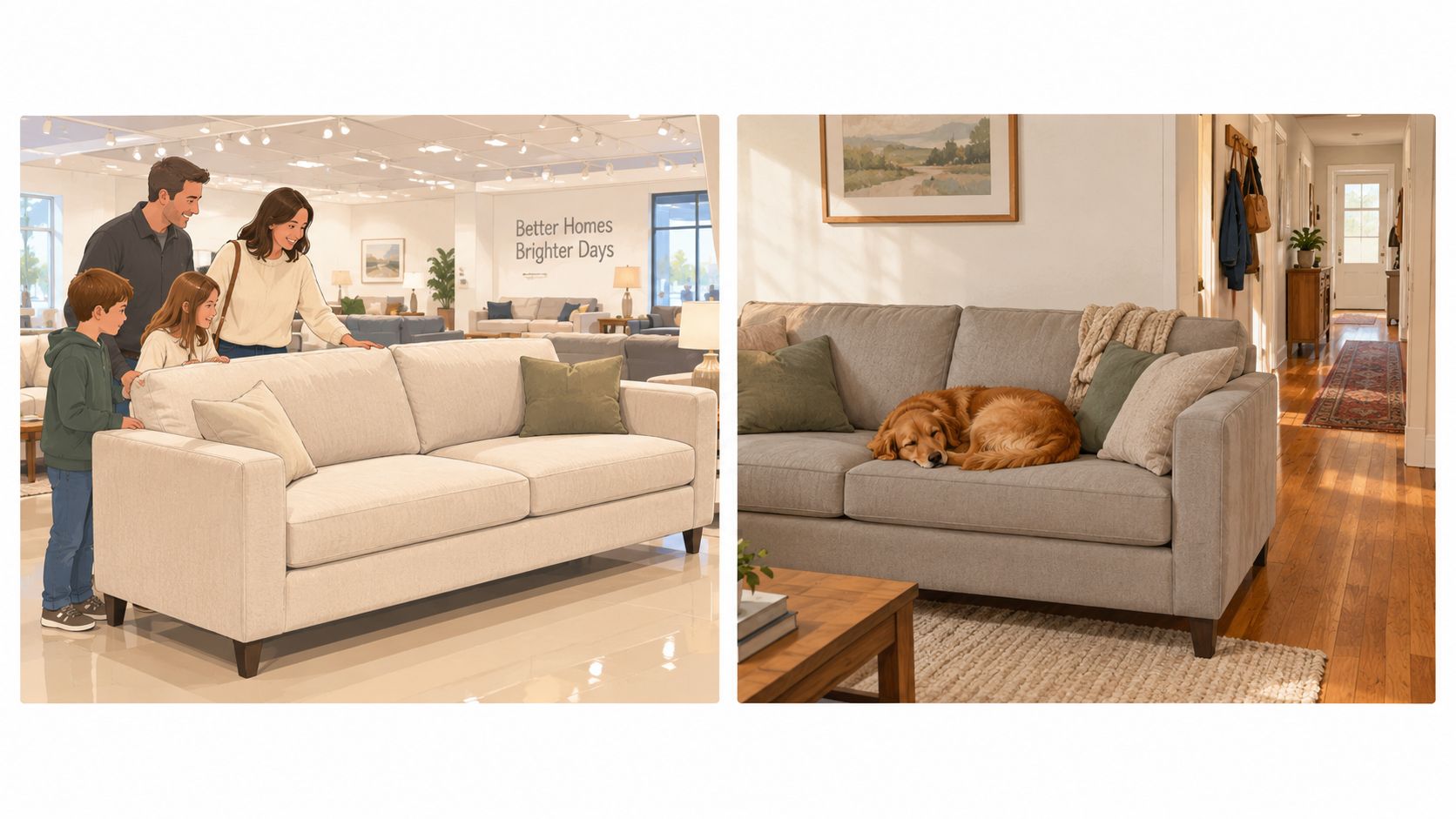
Fashion changes, furniture stays
An analysis of sofa catalogs from 1960 through 2021 shows that color preferences shifted over time, while neutral shades remained a recurring choice (catalog color analysis). Green and blue featured prominently in the 1960s. Beige, tan, brown, cream, and white became more visible in the 1970s and 1980s. In the 1990s, the mix broadened to include black, red, green, blue, and patterns. Gray, white, black, and beige gained prominence in the 2000s. The most neutral palette appeared in 2011, and gray or beige was generally the most common sofa color from 2013 through 2021.
History offers a useful guide, not a rule. A blue, green, or patterned sofa can bring personality to a room. A flexible base color can also make it easier to change the room's feel with pillows, throws, and art, without replacing the largest piece.
A useful distinction: The sofa can anchor the room without deciding every color in it.
For a household with a shedding dog, color is one part of the decision. Consider how the upholstery will sit with the room's wood and flooring, how it will feel in the light the family uses, and whether it suits everyday life. Those same considerations apply in a compact apartment or a busy family room. The goal is a sofa color that works with the home as it is, while leaving room for smaller details to change.
Read the Light Before You Trust a Hue
A cream sofa beside a sunny window can look crisp at noon and more golden under evening lamps. A warm gray may also shift, appearing cooler after dark. That change matters: the color you like in a showroom may not be the color you see at home.
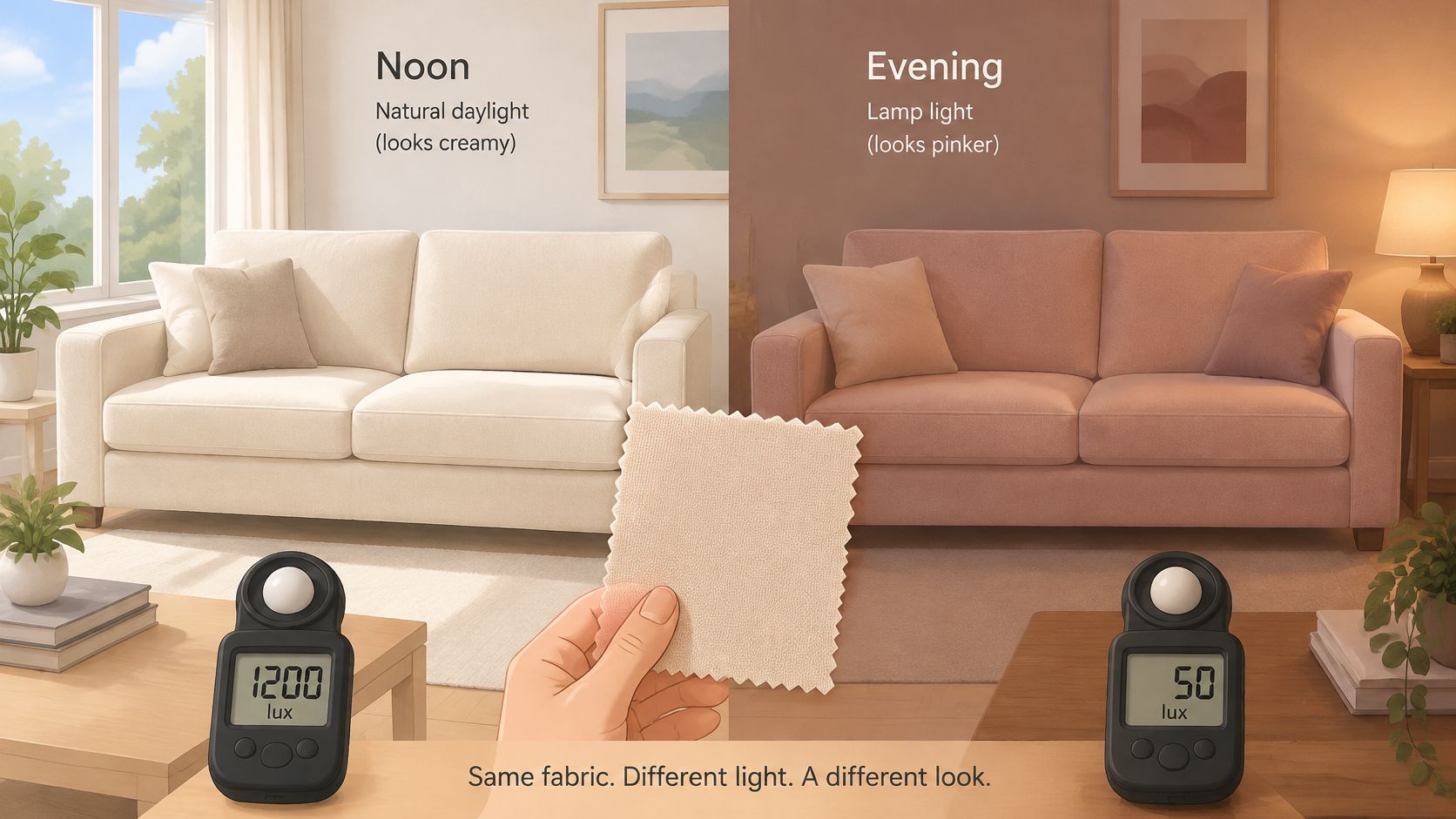
Try the same swatch under three conditions
First, check the fabric in daylight. CIE Standard Illuminant D65 is a reference for average daylight at about 6500 K. The kelvin value describes the light source, not the warmth of the fabric.
Then view the swatch under the lights you use at home after dark. Incandescent bulbs and warm LEDs can resemble Illuminant A at 2856 K, so the fabric may look different than it does in daylight. Finally, hold the swatch beside your floor, wall paint, nearby wood, and metal finishes. This helps reveal whether its color turns warm, cool, pink, or muddy in your room.
Why two materials can disagree
Color can shift under different light sources, a phenomenon called metamerism. Two fabrics may look close under showroom lights yet appear different in your living room. Compare each swatch in daylight, evening light, and beside nearby finishes to catch those changes.
If you're ordering custom upholstery, record the fabric name, dye lot, lighting conditions, and the direction the swatch faced. That orientation matters with textured cloth, whose surface can reflect light differently when turned. One phone photo or a glance beneath an overhead bulb won't show the full range of its color.
Textile labs can measure color using CIELAB coordinates and express a difference as ΔE. You don't need a meter for a useful home check. Make a note of how the swatch looks in morning, midday, and evening light. Our guide to putting a living room in the best light offers more ideas for checking how light works across the room.
Match Color to Kids Pets and Daily Wear
A child climbs onto the sofa with a snack while the dog settles on a cushion. In a busy home, the right color depends on who uses the sofa, what they bring with them, and how much care fits the family's routine. Light upholstery can help a compact room feel open, while showing spills, pet hair, and wear. Very dark upholstery may disguise some marks but make dust, lint, and fading easier to spot.
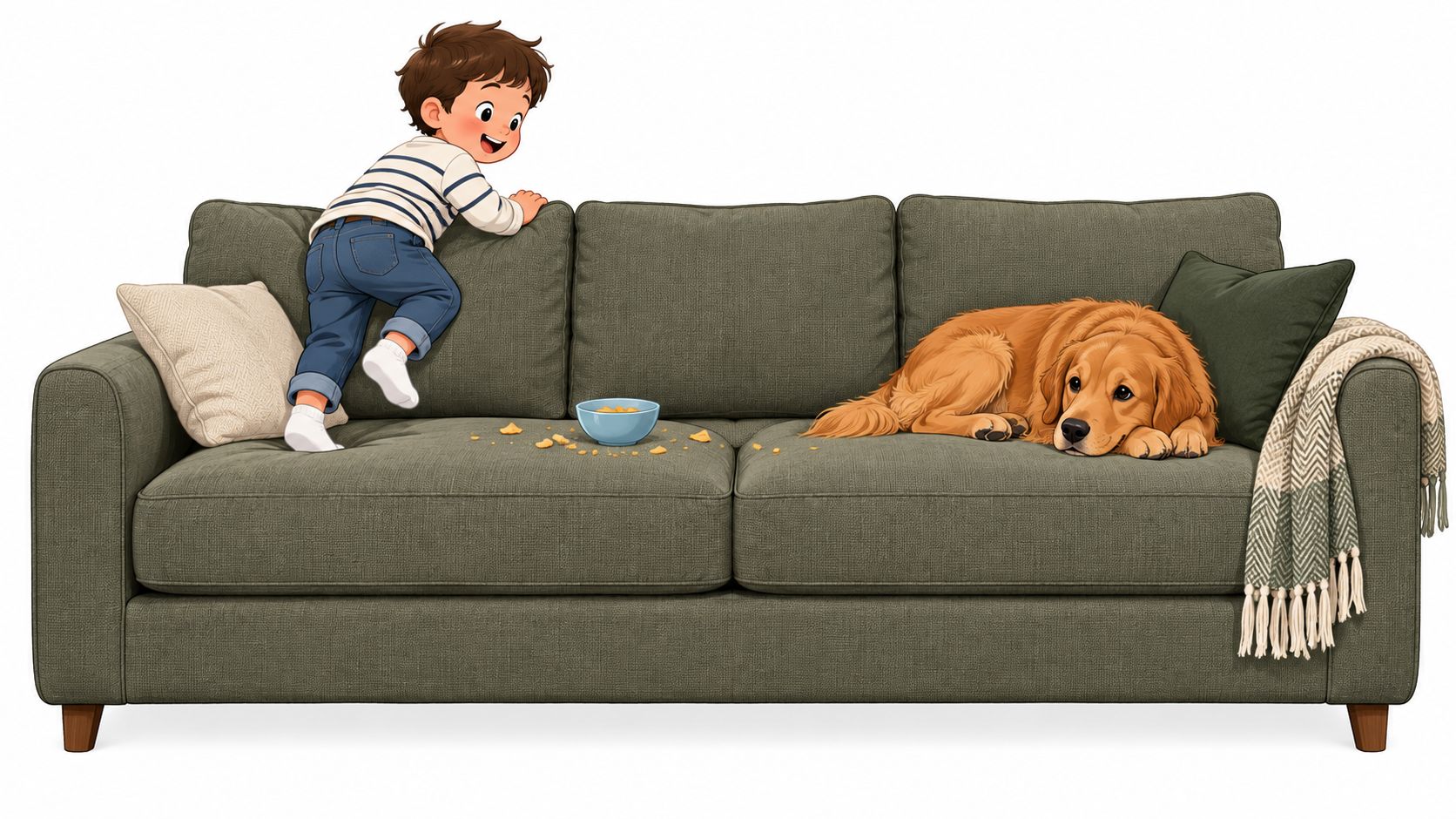
Think about value, not just hue
Value describes how light or dark a color appears. Two sofas may both be called green, yet one can be pale and the other deep, with different everyday trade-offs. Pale fabric may reveal juice, lotion, or paw prints. Dark fabric can make light pet hair and dust stand out.
A mid-value warm earth tone can offer a practical middle ground, especially in a room with solid-wood furniture. It brings warmth without putting every mark in the spotlight or creating a dark surface where lint is easy to see. Texture and pattern can also soften the appearance of everyday debris, much like a mottled path hides a few leaves better than a smooth, pale one. They do not replace proper care, so ask how the particular fabric should be cleaned.
Let the household guide the shortlist
| Household situation | A useful color direction | What to keep in mind |
|---|---|---|
| Young children and everyday snacks | Mid-value or patterned upholstery | Check how spills and marks show on the actual fabric. |
| Pets that shed | A color and texture close to the pet's hair | Compare a swatch with the pet's usual resting spot. |
| Strong sunlight near the sofa | A shade that keeps fading concerns in view | Consider how much sun reaches the upholstery during the day. |
| A quiet, formal living room | A lighter shade may suit how the room is used | Consider whether its care fits the household routine. |
Design preferences can offer context, but they don't tell us whether a fabric resists stains or will hold resale value. Warm neutrals and dark earthy greens may appeal to some designers; that preference is about appearance, not upholstery performance.
A light sofa can still be a good choice when its look and care suit the household. Judge the actual fabric rather than assuming white is the only way to brighten a room or black the easiest way to hide daily wear. Our performance-fabric furniture guide can help you compare upholstery options with the needs of your home.
Line Up Floors Walls and Solid Wood
A sofa color looks different in context. A beige swatch that seems warm on its own may read cool beside a honey-toned floor. A gray that looked quiet in a showroom may feel out of place next to orange-leaning oak. Before choosing a color family, gather a floor sample if available, a paint chip, and a photo of nearby trim and wood furniture.
Compare undertones beside the pieces that stay
A color's name is only a starting point. Warm beige, taupe, camel, muted green, and soft blue can all offer room to change rugs or accessories later, but their undertones still need to work with what's already in the home. A highly saturated red or a shade with an unexpected undertone may be harder to coordinate if the room changes.
Wood makes that comparison especially useful. Solid wood has natural grain variation, and its appearance depends on the species and finish. Oak and cherry can bring visible warmth to a room; a cool gray sofa may feel different beside them than it does beside a lighter or less warm finish. A softer blue or greige may sit more calmly with some lighter woods. These are starting points, not rigid rules, so compare samples directly.
BILTRITE offers USA-made and Amish-made solid-wood furniture, including tables and consoles. Amish-made hardwood furniture may use species such as oak, cherry, maple, hickory, or walnut, and some drawers use dovetail joinery. Shoppers should ask which components are solid wood rather than assuming every panel is, and can also ask about the species and finish. Those details help clarify how a piece will look beside a sofa, as well as how it's constructed.
Choose with the room's future in mind
A sofa doesn't have to match every surface exactly. It can echo a warm undertone, offer contrast, or connect a wood finish with another color in the room. The useful test is whether the combination looks intentional beside the floor, wall, and existing furniture.
Domestic origin is another detail to clarify when comparing furniture. A USA-made label raises a practical question: which parts were built in the United States, and where did the other components come from? The answer can vary by product, so asking is more useful than relying on a general label alone.
Space and delivery also matter to the choice. A smaller-scale sofa can suit an apartment or condo, while a come-apart sofa or sectional may help with a narrow doorway. Those details don't change the color rules. Whether the sofa sits in a roomy living room or a tight condo, compare its upholstery with the wood and finishes that will remain around it. BILTRITE's warm, earthy color palette guide offers ideas for building those connections.
Compare Colors and Fabrics That Stay Flexible
A family choosing a sofa for a bright living room may want a different color than one choosing for a busy room with pets, kids, and frequent visitors. Survey preferences can offer context, but they don't settle that household decision. A 2016 upholstered-furniture survey found broad preference for brown, beige, cream, and ecru, with gray also popular. Those familiar color families are starting points, not a rule for every home.
Compare the fabric as well as the color
The same color can read differently on different upholstery. Leather shows scratches differently than textured fabric, while a busy weave may make lint less noticeable than a smooth, pale surface. Check the actual material, its care instructions, and how its texture and shade look alongside the room's finishes.
At BILTRITE, shoppers can compare seating options, including USA-made and Amish-made pieces, apartment-scale frames, and heavy-duty choices. Custom options may include fabric or leather, along with choices of wood, finish, and hardware. Since BILTRITE doesn't sell online, the showroom lets households see upholstery in person instead of judging it from a screen. Our fabric selection guide can help you prepare useful questions before comparing samples.
| Household situation | Safer sofa direction | Where stronger color belongs |
|---|---|---|
| A small room that needs a lighter feel | Light or medium neutral, checked in the room | Pillows, throws, and artwork |
| A busy family room with children or pets | Mid-value or textured fabric | Smaller accents that can be changed |
| A wood-centered room | A color whose undertone sits well beside the wood | A rug or cushions that connect the tones |
| A formal space with lighter daily use | A light shade, if its care fits the household | Art and accessories for contrast |
| A home with changing décor | A flexible color family, chosen beside fixed finishes | Replaceable accents in current favorite shades |
A sofa is a larger, more fixed color choice than a pillow or throw. Removable accents can bring in a trend or a favorite bold shade, then change as the household's taste shifts. That leaves the upholstery working with daylight, daily wear, and the room's existing finishes.
Color still has a place. Compare a few upholstery samples for both shade and texture, then use accents for stronger seasonal or personal choices.
Test Swatches Then Come See Them with Us
A sofa color can look settled in the store, then change once it meets your room's daylight, floors, and wood finishes. Try the finalists at home first. Gather photos or samples of the floor, wall, trim, and nearby wood, then choose three values in colors you already like: one light, one medium, and one dark.
Give the swatches a full-day check
Put each sample where the sofa will sit. Look at it in morning, midday, and evening light, and hold it beside the room's fixed finishes. Run a hand over the fabric, too. Lint, soil, pet hair, and wear can matter as much as the color.
Two fabrics labeled gray may differ in both brightness and warmth. In lab terms, L* describes lightness, while a* and b* describe color direction, including red-green and yellow-blue. That helps explain why one gray may look lighter or warmer than another, even when their names sound alike.
A light shade such as beige, light gray, ecru, or natural linen can reflect more light and help a small living room feel open. Deep upholstery may feel visually heavy in a room with little natural light, while a brighter, more spacious room may suit deeper shades. Use these as starting points, then compare samples in the actual room before deciding.
Keep a brief note beside each swatch: how it looks through the day, how it sits beside the floor and wood, and whether its texture seems practical for your household. If you are considering a custom order, our advice on avoiding color mismatch when ordering online can help you know what to check.
BILTRITE's fourth-generation family has helped Greenfield and Metro Milwaukee shoppers since 1928. Our sales team has more than 400 years of combined experience, and we're here to answer questions without pressure. The showroom is closed on Sundays and Mondays so our team can spend time with family.
Bring your notes and samples to 5430 West Layton Avenue in Greenfield. You can sit on a sofa, compare upholstery beside a wood finish, and ask questions in person. We offer in-stock and custom options, so you can compare choices at the showroom and find a color that works for your room and household.
BILTRITE Furniture-Leather-Mattresses offers affordable, better-quality sofas in fabric and leather, with choices for wood, finish, and hardware. Bring a few swatches or room photos to BILTRITE Furniture-Leather-Mattresses in Greenfield for a no-pressure visit. Compare colors, test comfort, and talk through your questions with our team.