Power Reclining Console Loveseat: Best of 2026


A power reclining console loveseat is a two-person upholstered seating unit with individual electric motors for reclining and a central console for storage, USB charging, and cupholders. Room planning often requires 12–18 inches behind a standard rear-pivot recliner, 4–6 inches behind a wall-hugger, and 20–24 inches in front for the footrests.
That distinction matters on a busy Milwaukee evening. The loveseat may look compact while upright, but it becomes a moving piece of furniture once the backs tilt and the legrests extend. The right choice brings easier relaxation, better organization, and more independent comfort. The wrong one can crowd a walkway, complicate transfers, or leave a family dependent on a motor system nobody evaluated closely.
At BILTRITE, the practical question isn't whether a power reclining console loveseat looks comfortable. It's whether the frame, controls, clearances, upholstery, delivery plan, and service support make sense for the people and rooms that will use it every day.
Table of Contents
- Imagine Your Perfect Movie Night Setup
- What Exactly Is a Power Reclining Console Loveseat
- Key Features That Make Life Easier
- Sizing and Delivery Considerations for Your Home
- Durability and Safety for the Whole Family
- How to Choose the Right Option for You
- Visit Our Showroom to Find Your Match
Imagine Your Perfect Movie Night Setup
It's a chilly evening in a Milwaukee living room. One family member is searching under a cushion for the television remote, another is balancing a drink on the armrest, and someone has already dropped popcorn between the seats. The movie hasn't even started, yet the room feels more like a scavenger hunt than a place to relax.
A power reclining console loveseat changes that routine. Two people can sit together while adjusting their own positions, and the center console keeps drinks, remotes, reading glasses, and small items within reach. Built-in charging can reduce the need for a cord stretched across the room, while cupholders give each person a stable place for a beverage.
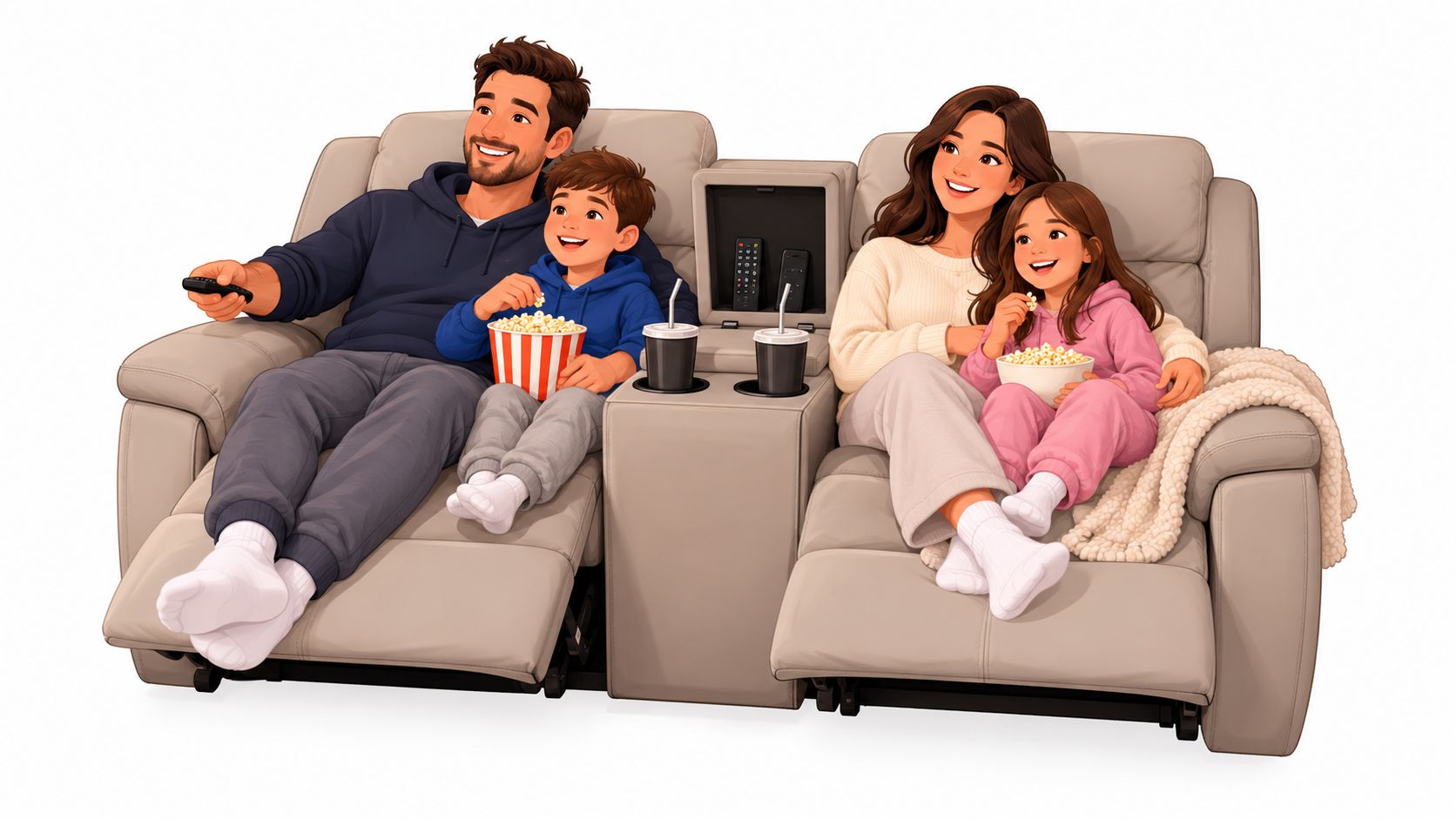
The console loveseat becomes more than a seat. It acts as the family room's comfort station, especially when one person wants to sit upright for conversation while the other stretches out for a film. That flexibility can make shared time easier for couples, parents, grandparents, and guests with different comfort needs.
Comfort starts with the room around it
A beautiful loveseat still needs space to move. Before choosing upholstery or color, the household should consider the television position, walking routes, side tables, lamps, mobility aids, and the path from the entryway to the seating area. BILTRITE's guidance on finding the optimal TV position can help connect the seating layout to the rest of the room.
Practical rule: The best movie-night seat is one that can recline without blocking the path to the kitchen, bathroom, or front door.
That family-friendly convenience is the true appeal. A console, cupholder, and charging port matter because they remove small interruptions that happen repeatedly. The power controls matter because each person can settle into a position without asking someone else to operate a lever or push against a footrest.
What Exactly Is a Power Reclining Console Loveseat
The name describes the furniture in three parts.
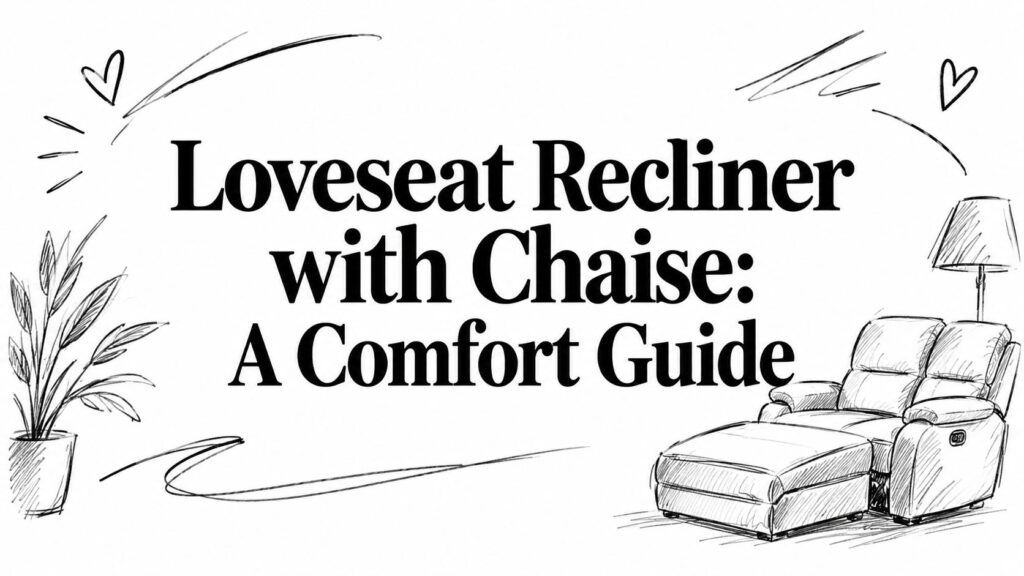
A loveseat is a compact upholstered seating unit designed for two people. Reclining means the back and leg support articulate so the occupant can move from an upright sitting position toward a more relaxed posture. A console is the shared center section between the seats, usually containing storage, cupholders, charging ports, or controls.
The word power refers to motor-driven movement. Instead of pulling a manual release and using body pressure to move the chair, the occupant presses a control to activate the mechanism. The motor moves the backrest, footrest, or both, then stops when the user releases the button or reaches the desired position.
How the mechanism serves two people
Many models use a motor for each reclining seat. Shoppers should still confirm the exact design, because some products pair a single motor with linked back and leg movement, while other designs use separate motors for more independent adjustment. A dual-motor arrangement can let a person raise the legs while keeping the back more upright for reading, eating, or talking.
That difference is more useful than a long feature list suggests. One person may want full-body relaxation, while the other wants support without feeling laid back. Independent controls preserve the loveseat's shared purpose without forcing both occupants into the same posture.
The category also has a long engineering history. A reclining-chair mechanism patent records prior art dated May 29, 1935, and the patent was published on November 16, 1937. Another reclining-chair patent was filed on May 21, 1953, and issued on February 19, 1957, showing continued development of articulated backs, footrests, and locking systems in the decades before modern powered seating. The founders of La-Z-Boy established their furniture company in 1927, and the Henry Ford collection identifies a patent for their first reclining chair dated January 24, 1929, as documented in the historical reclining-mechanism patent record.
A mature category, not a novelty
A power reclining console loveseat extends that established idea into a shared living-room format. It combines two adjacent reclining seats with a practical center section, then replaces manual effort with electric control.
The category is mature, but the individual construction still varies widely. The frame, linkage, motors, wiring, control design, cushion support, and service process all influence how well the piece performs over time. A product can have an attractive silhouette and still be a poor fit if the controls are awkward, the seat is too deep, or the footrest movement creates a hazard.
For a broader look at seating formats, the guide to types of power reclining seating offers useful context before a household narrows the search to a console loveseat.
Key Features That Make Life Easier
The strongest features are the ones that solve problems people have. A console loveseat doesn't need every available electronic option, but its controls and storage should support the way the household sits, watches television, reads, visits, and charges devices.
The center console earns its space
A shared console can hold remotes, magazines, glasses, game controllers, and other small items that tend to disappear into sofa cushions. Cupholders reduce the chance of a drink tipping from an armrest, although they don't replace sensible supervision around children or pets.
Storage also changes the visual rhythm of the room. Instead of adding a separate table between the occupants, the loveseat keeps frequently used items in the middle. That can be especially helpful in a compact apartment, condo, senior living room, or family room where every piece has to work harder.
Charging ports add another layer of convenience. A phone or tablet can remain close while the user reclines, but the cable still needs to stay clear of the moving frame. A charging port is useful only when the cord is routed safely and the control panel remains easy to reach.
Independent movement is the comfort feature
Power adjustment gives each occupant more positions than a manual mechanism with fixed release points. A single-motor design commonly moves the back and footrest together. A dual-motor design can separate those movements, allowing a reader to lift the legs while keeping the upper body more upright.
The difference becomes clear during a long movie. One person may want to stretch out, while another may want to keep a better view of the room or maintain an upright position for a snack. Independent adjustment prevents one person's comfort from becoming the other person's compromise.
Controls should have readable buttons, a logical layout, and enough clearance that a seated person can operate them without twisting. Families should check whether each side has its own control, whether the controls are attached to the seat or console, and whether a wired or wireless remote is easier for the intended users.
Support matters more than sinking in
A soft seat may feel inviting for a few minutes, but excessive depth or a low front edge can make standing harder. Recline geometry also changes pressure distribution and shear. The RESNA evidence review reports that recline can spread pressure across a larger contact area, while combined tilt and recline produced stronger reductions in some studies. Those studies reported meaningful reductions at approximately 25–45 degrees of tilt and 110–150 degrees of recline, with one condition showing about 20% lower peak pressure at the ischial tuberosities and about 10% lower pressure at the sacrum. A 40-degree tilt condition produced reductions of about 40% at both regions in one study, as detailed in the RESNA review of tilt and recline.
Those findings don't mean every household needs a clinical positioning system. They do support a practical test: the legrest should support the lower legs without pushing the pelvis forward, and the back should stop at useful intermediate positions. Users with mobility or skin-integrity concerns should vary positions rather than staying fully reclined for long periods.
For households comparing charging options and everyday electronics, the guide to reclining sofas with USB ports provides another helpful feature reference. The key is to treat USB ports as a convenience, not as a substitute for safe cord management or sound construction.
Sizing and Delivery Considerations for Your Home
A power reclining console loveseat is a moving puzzle piece. Its upright footprint is only the starting point, because the backs travel toward the wall and the footrests travel into the room.
A standard rear-pivot mechanism typically needs 12–18 inches of clearance behind the back, while a wall-hugger generally needs about 4–6 inches. The footrests commonly require 20–24 inches of open space in front, according to recliner dimension guidance. Exact manufacturer measurements should always control because mechanisms differ.
Measure the active footprint
Before visiting a showroom, measure:
- Overall width: Include the arms and console, not just the seat area.
- Fully reclined depth: Allow for the back and extended footrest.
- Rear clearance: Measure from the wall, window trim, radiator, or other obstacle.
- Front clearance: Protect the walking path and leave room for the legrests.
- Side clearance: Make sure end tables, walls, and neighboring furniture don't block controls or upholstery.
- Delivery route: Check the front door, hallways, stair turns, elevators, and room entry.
A wall-hugger can help in a small apartment or family room because the seat moves forward as the back reclines. It still occupies floor space in front, so “zero wall” doesn't mean zero clearance. Typical wall-hugger guidance ranges from 3–6 inches behind the piece, compared with 12–18 inches for a conventional recliner, as explained in this wall-hugger clearance guide.
A loveseat that fits on paper can still fail at the doorway, the stair landing, or the turn into the living room.
Ask about come-apart construction
Some seating arrives in sections that separate for delivery, then reconnect inside the home. This can make a major difference in an older house with narrow doors, a condo with tight hallways, or a senior living community with limited access.
The delivery team should know the assembled dimensions, the separated dimensions, the weight of each section, and whether the electrical connections can be made without pinching wires. The buyer should also ask where the transformer, battery pack, and service connections will sit after installation.
The loveseat sizing guide can help establish the basic footprint, but the final decision should use the exact model specification. A paper outline made with painter's tape can reveal whether the fully extended footrests interfere with a coffee table or the main walking route.
Durability and Safety for the Whole Family
Comfort at the showroom doesn't tell the whole ownership story. A power reclining console loveseat adds motors, switches, wiring, linkages, and electrical connections to a frame that must support two people through repeated movement. A strong upholstery choice won't compensate for poor access to replacement parts or an unstable base.
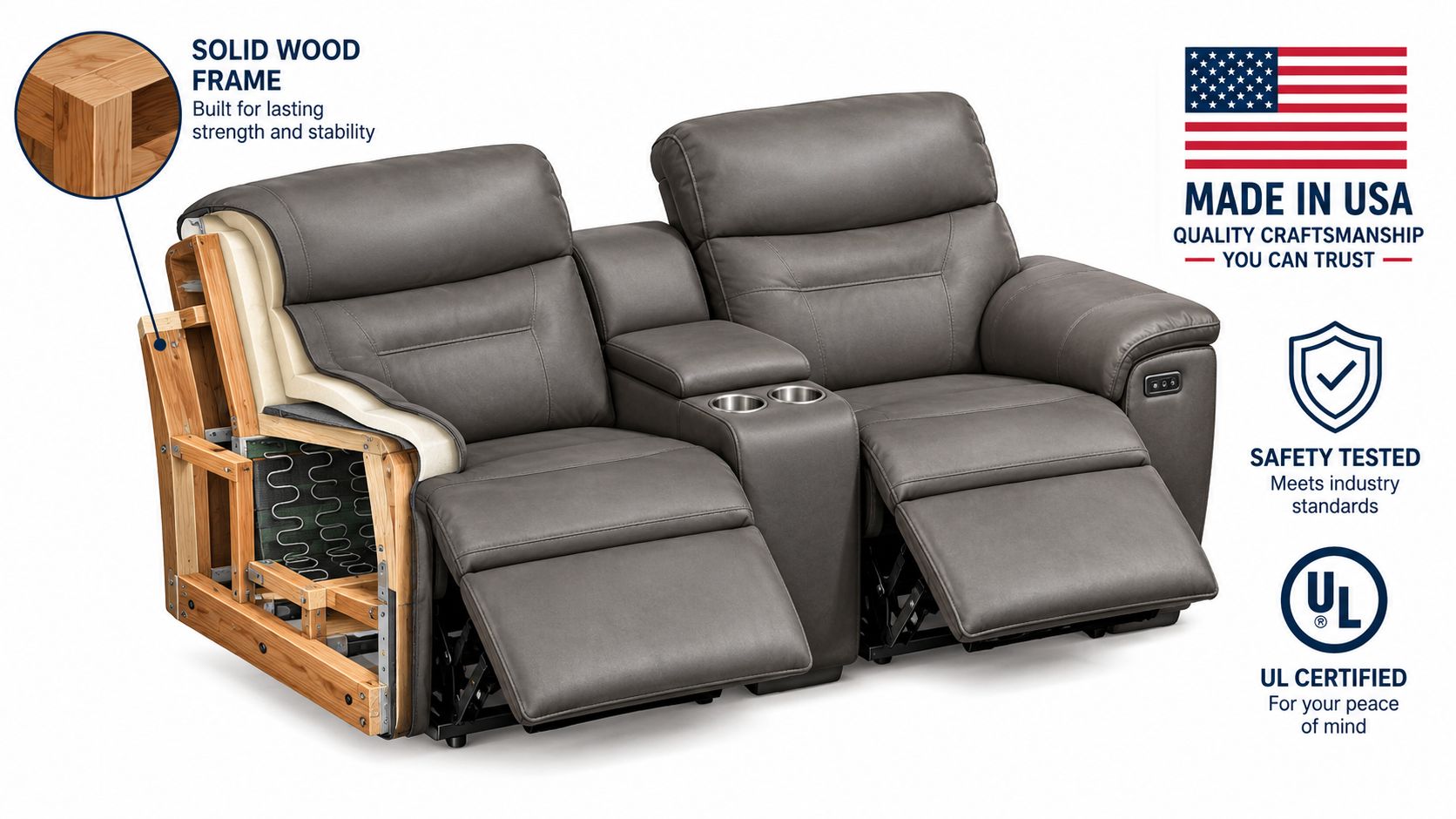
Solid wood construction and USA-made craftsmanship can support a long-lasting furniture plan, but shoppers should inspect the entire system rather than relying on one material label. They should ask about frame construction, seat support, motor access, control replacement, transformer replacement, and warranty service. The same care applies to upholstery. A family should choose a surface suited to children, pets, spills, and the amount of daily use, then review fabric durability ratings before deciding.
Safety deserves a seat at the table
A U.S. Consumer Product Safety Commission report estimated 717,700 emergency-department-treated fall injuries associated with chairs among older adults, averaging 143,540 injuries annually, with a calculated rate of 264.2 injuries per 100,000 older adults. The report also found 33.8 fall-related emergency-department injuries per 100,000 people involving recliner chairs among adults aged 65 and older, compared with 2.7 per 100,000 among adults aged 25–64. Older adults were 12.5 times more likely than younger adults to be injured in recliner chairs, according to the CPSC report on older-adult chair hazards.
These figures don't show that powered reclining causes injuries, and they don't measure console loveseats specifically. They do show why senior users, caregivers, and families should assess the whole environment instead of treating a softer seat as the complete solution.
Look for a stable base, protected wiring, guarded switches, strain relief at cable connections, and clear space around the legrest. Children and pets should stay away from moving parts during operation. Caregivers should check whether a user can operate the controls independently, transfer without catching a foot on the console, and return the seat to an upright position.
Verify the electrical system
ANSI/UL 962 covers motor-operated household and commercial furniture rated up to 600 V AC. The standard addresses stability, mechanical strength, fire resistance, and, where applicable, electrical testing of power-distribution components, as described in the ANSI/UL 962 standard information.
The important question is whether the complete powered seating system has been evaluated to the applicable requirements, not merely whether the adapter carries a safety mark. Shoppers should request documentation, confirm that the electrical rating matches the household supply, and keep cables away from moving joints.
A practical pre-purchase inspection includes:
- Pinch points: Watch the underside, legrest, gaps, and moving joints during a full cycle.
- Emergency behavior: Ask what happens if the power stops while the chair is extended.
- Transfer height: Check whether the seat makes standing easier or harder for the intended user.
- Clear controls: Make sure each occupant can reach and understand the controls.
- Service access: Ask who replaces motors, switches, transformers, and wiring harnesses.
Power can improve positioning and accessibility, but it also creates dependence on electricity and adds failure points. A durable frame is valuable. It isn't a guarantee that every electronic component will last equally long.
How to Choose the Right Option for You
The right configuration depends on the people using the seats, the room layout, and the household's tolerance for electrical components. A simple comparison can narrow the field before anyone focuses on color.
| Choice | Works well when | Watch closely |
|---|---|---|
| Manual recline | The user prefers a simpler mechanism and can operate a lever comfortably | Body pressure and side-lever reach may not suit every user |
| Power recline | Users need gradual positioning or easier control | Motors, wiring, controls, and outage planning require attention |
| Single motor | Linked back and leg movement is acceptable | The user can't position the back and legs independently |
| Dual motor | Two occupants want different positions or one user needs separate leg and back adjustment | Confirm whether each seat has independent motors |
| Standard mechanism | The room has generous rear clearance | The back may need more space from the wall |
| Wall-hugger | The room is compact and the seat can move forward | The extended footrest still needs clear floor space |
A senior user should test the seat from upright to reclined, then return to standing. The seat height, depth, arm support, console width, and transfer path all matter. A deep seat that feels luxurious to one person may make another person feel buried.
Families should also consider who controls the room. If children use the loveseat, controls should be easy for adults to supervise. If a caregiver assists an older adult, the footrest path and the space beside the loveseat should remain open.
Test before making the room commitment
In-person testing reveals details that measurements can't capture. Sit fully back, raise the legs, try an intermediate stop, reach the controls, and stand without using the console as a support. Listen for unusual sounds and examine whether the upholstery shifts awkwardly as the mechanism moves.
A showroom also lets shoppers compare small-scale seating for apartments with heavier-duty options for active families. BILTRITE's sales associates bring over 400 years of combined experience, making a conversation about fit, delivery, construction, and service more useful than a quick glance at a product photograph.
Visit Our Showroom to Find Your Match
A power reclining console loveseat deserves to be tested as a working part of the home, not judged only by its appearance. The right piece should support shared family time, provide independent comfort, fit the room when fully extended, and give caregivers confidence that controls and transfers are manageable.
BILTRITE is a fourth-generation, family-owned business serving the Metro Milwaukee community since 1928. The Greenfield showroom includes affordable, better-quality furniture, USA-made and Amish-made pieces, solid wood options, small-scale furniture, heavy-duty selections, and a mattress department with over 60 models. The store doesn't sell online, so shoppers can sit down, operate the mechanism, feel the upholstery, and discuss delivery with a local team.
The showroom is located at 5430 West Layton Avenue in Greenfield, Wisconsin. BILTRITE is closed on Sundays and Mondays so the family-owned team can protect family time, a small tradition that reflects the store's local, community-first values.
Come on down to the showroom and see how the loveseat feels in motion. A friendly conversation, a careful measurement plan, and a real test of the controls can help a Milwaukee household choose seating that works long after movie night ends.
BILTRITE Furniture-Leather-Mattresses offers locally guided furniture shopping, including power reclining seating, USA-made and Amish-made furniture, solid wood pieces, small-scale options, and senior-friendly furnishings. Visit BILTRITE Furniture-Leather-Mattresses in Greenfield to test a power reclining console loveseat, review delivery needs, and get practical help from the local team.