Twin Sleeper Chair Buying Guide for Small Spaces

A friend is staying over, but the apartment has no spare bedroom. The couch is too short, an air mattress feels temporary, and a full sleeper sofa may not make it through the doorway. In a Metro Milwaukee condo, apartment, or older bungalow, the best answer often isn't the biggest piece of furniture. It's the one that serves the room every day and still gives one guest a proper place to sleep.
A twin sleeper chair fills that middle ground. It looks and functions like a single chair when closed, then converts into a twin-size sleep surface when needed. The right model can add useful seating without making a small living room feel like a guest room all the time. The wrong model, however, can block a walkway, strain a narrow stairwell, or open into a space that isn't deep enough.
Why a Twin Sleeper Chair Might Be Your Best Small-Space Solution
A downtown apartment resident may need an occasional guest bed but have no room for a sofa sleeper. A homeowner in an older Milwaukee bungalow may have more floor space, yet still face narrow rooms, tight turns, and doorways that make large furniture difficult to deliver. In both situations, a twin sleeper chair offers a practical compromise, seating by day and sleeping space by night.
The category is part of a long-established convertible-furniture tradition. A 1975 New York Times report on convertible furniture described sofa beds as a commercial extension of the same basic idea, seating that transforms into a bed when the household needs it. Twin sleeper chairs apply that logic to a smaller footprint and a single sleeper.

The everyday advantage
A chair can work in a living room, office, reading corner, or finished basement without announcing that guests may be staying over. Upholstery, arm shape, and back styling help the piece blend with the rest of the room, while the hidden mechanism stays out of sight until bedtime.
That makes the twin sleeper chair especially useful for households that host occasionally rather than every week. It gives one visitor a dedicated sleep surface without committing an entire wall to a bed or sacrificing the room's primary seating.
Where the compromise appears
The sleeping surface is generally intended for one person, and it's often narrower than a residential twin mattress. A current product specification lists a mattress surface measuring 71.5 inches long by 32 inches wide and 5.5 inches high. That size can work well for an overnight guest, but taller sleepers and anyone expecting nightly use should test the mattress before choosing.
A helpful starting point for Metro Milwaukee shoppers is the small-space furniture guide from BILTRITE. It's sensible to evaluate the chair as both furniture and a temporary room transformation, including its closed footprint, open length, bedding needs, and delivery route.
Understanding Twin Sleeper Chair Dimensions and Space Requirements
The chair's closed size tells only half the story. A model that fits neatly against a wall can extend dramatically into the room once its mechanism is deployed, so shoppers need to measure the open configuration before making a decision.
One leading specification lists a closed chair at 54.0 inches wide, 38.5 inches deep, and 38.0 inches high. When opened, its total length reaches 90.5 inches, while the mattress surface measures 71.5 inches long, 32 inches wide, and 5.5 inches high. Another listed chair remains 47.75 inches wide, changes from 41.5 inches deep when folded to 80.5 inches deep in bed form, and stands 32.75 inches high when closed.
Twin Sleeper Chair Dimensions at a Glance
| Measurement | Seated (Closed) | Bed (Open) |
|---|---|---|
| Example width | 47.75 to 54.0 inches | 47.75 to 54.0 inches |
| Example depth or length | 38.5 to 41.5 inches deep | 80.5 to 90.5 inches overall |
| Mattress length | Not applicable | 71.5 inches |
| Mattress width | Not applicable | 32 inches |
| Mattress height | Not applicable | 5.5 inches |
These examples show why a small-space buyer should reserve roughly 7 to 8 feet of front-to-back floor space for deployment, depending on the model and surrounding furniture. The open area also needs room for a walkway, bedding, and access around the sleeper. A coffee table that works in chair mode may need to move elsewhere at night.
Geometry matters more than the label
Open depth can vary substantially. One listing gives an open depth of 96.5 inches and a mattress height of 20.0 inches, while compact designs open to roughly 89 to 90 inches with mattress profiles ranging from 32 by 70 inches to 36 by 72 inches and overall widths around 54 to 56 inches (BILTRITE twin sleeper chair guidance).
The back, arms, and frame also change the usable footprint. Simplified arms may preserve a little space, while overstuffed arms and thick backs add visual and physical bulk. A twin-size bed measurement guide can help shoppers compare the chair's actual sleep surface with the bed dimensions they already understand.
Comparing Twin Sleeper Chairs to Other Compact Sleep Options
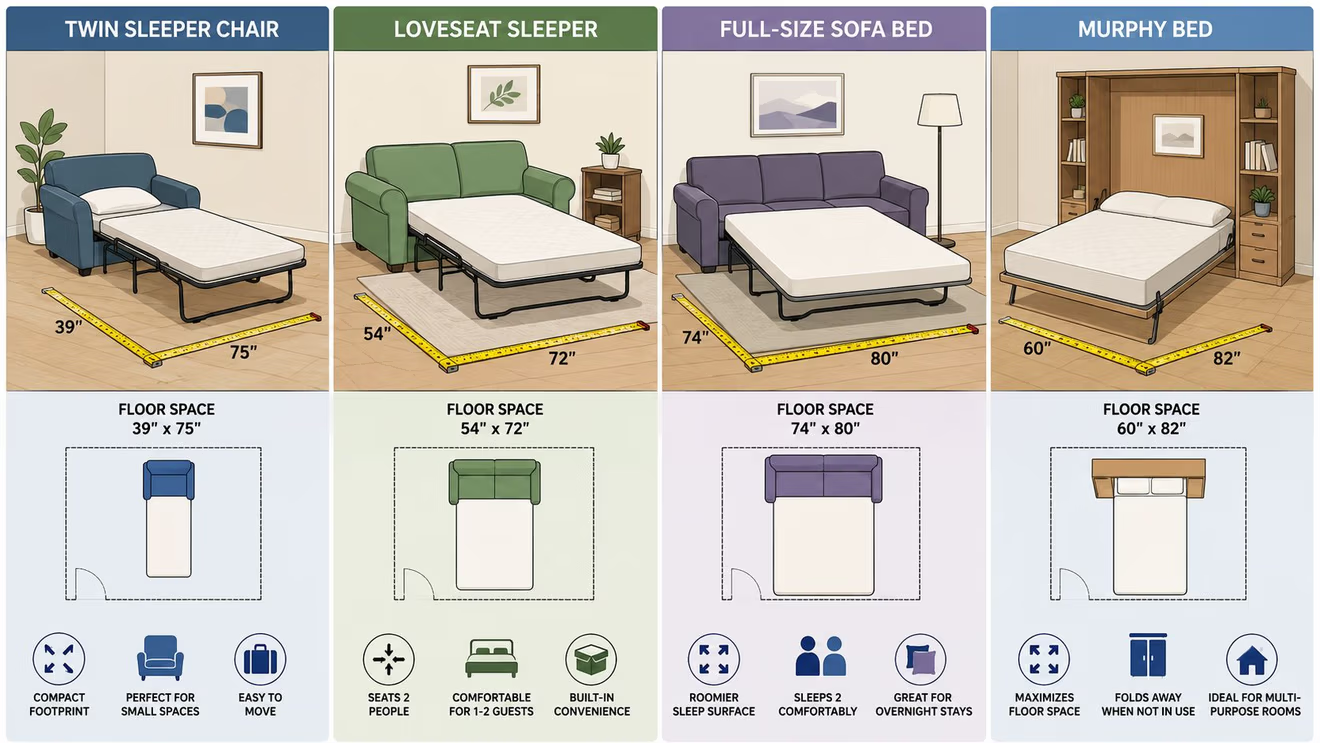
The best choice depends on the room's geometry and how often someone will sleep there. A twin sleeper chair is a focused solution for one guest. A loveseat sleeper offers more seating but generally occupies more width. A full-size sofa bed supports more sleeping capacity, yet brings a larger frame and a more demanding delivery path. A Murphy bed preserves open floor space when closed, but it requires a dedicated wall and a more permanent installation plan.
A twin sleeper chair usually wins when the household needs occasional guest seating and sleeping in a room that can't accommodate a large sofa. It also makes sense when a single sleeper is enough and the chair needs to remain useful every day.
Match the furniture to the room
| Sleep solution | Strongest fit | Main limitation |
|---|---|---|
| Twin sleeper chair | One occasional guest, compact rooms, flexible seating | One sleeper and a narrower mattress |
| Loveseat sleeper | Two-person seating in a smaller seating arrangement | More width than a chair |
| Full-size sofa bed | A larger household or two guests | Bulkier frame and harder maneuvering |
| Murphy bed | Frequent or nightly use with a dedicated wall | Permanent planning and installation needs |
A loveseat sleeper may be the better choice when the room needs two-person seating every day. A sofa bed is more appropriate when two guests must sleep in the same room and the home can support the larger footprint. A Murphy bed deserves consideration when the sleeping area will be used regularly and the homeowner wants the room to return to open floor space during the day.
Be honest about comfort and delivery
A twin sleeper chair can provide a real mattress rather than a padded surface, but comfort varies with mattress thickness, support structure, and the way the frame folds. The category also varies in weight. Contemporary listings include examples weighing 69 pounds, with one measuring 51 inches wide by 38 inches deep by 34 inches high, and another measuring 69.5 inches wide by 40 inches deep by 36.5 inches high (New York Times convertible-furniture report).
For tight Milwaukee stairwells, a chair may be easier to manage than a full sofa, but that can't be assumed. The delivery path still matters, especially where stairs, turns, elevators, or narrow hallways are involved. The strongest recommendation is simple: choose a twin sleeper chair for occasional, single-person use; choose a larger or more permanent solution when regular sleep, multiple guests, or daytime seating capacity matters more.
How to Measure Your Room and Delivery Path for a Sleeper Chair
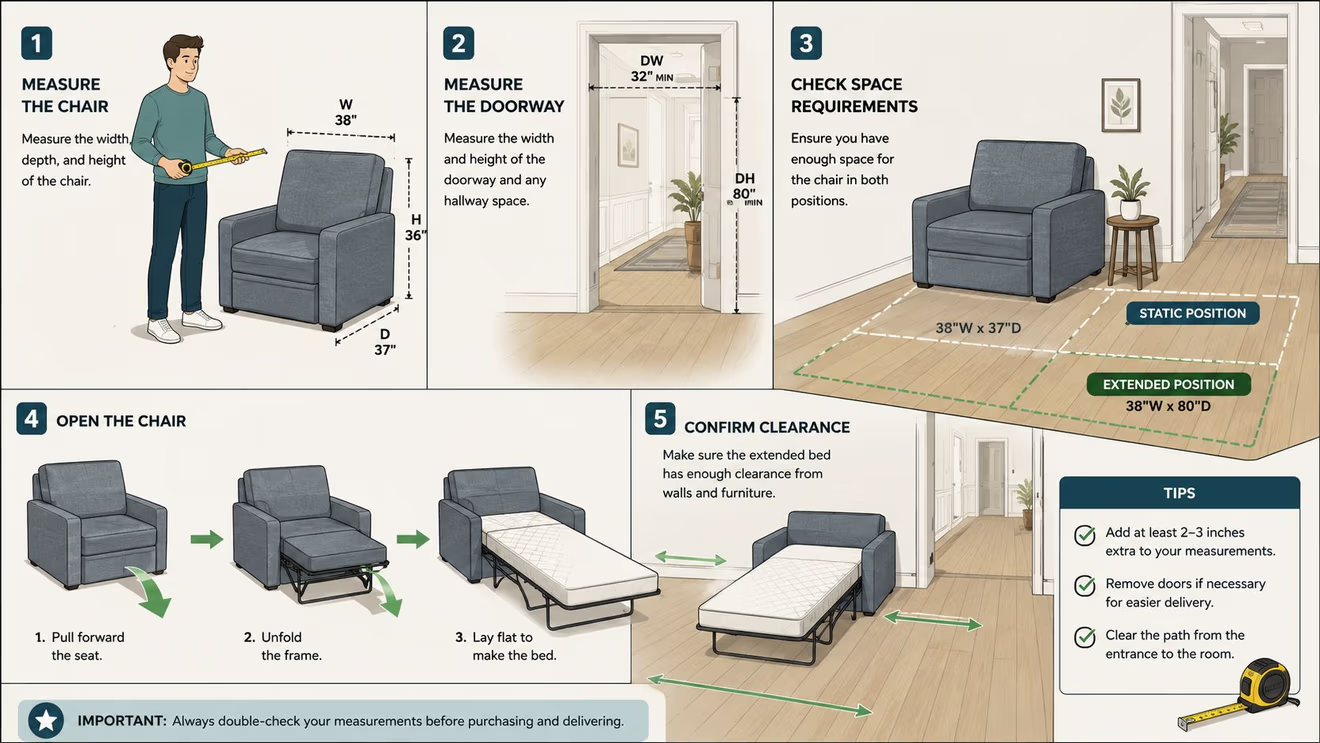
A room measurement isn't enough. The chair must fit through the home, arrive in the intended room, sit safely in its closed position, and open without trapping people against a wall or blocking the main walkway.
Start with the room
Measure the exact width, depth, and height of the chair when closed. Then mark the full open length on the floor with painter's tape or folded cardboard. This makes the mechanism's reach visible and helps reveal conflicts with coffee tables, radiators, doors, and other seating.
Use this checklist before selecting a model:
- Mark the open bed area. Include the mattress and the frame, not just the sleeping surface.
- Check the front walkway. Leave practical room for people to pass and for bedding to be placed.
- Note fixed obstacles. Record baseboard heaters, vents, outlets, windowsills, trim, and doors that swing into the area.
- Test the wall position. Confirm whether the chair needs to sit away from the wall for its mechanism to operate.
- Consider ceiling conditions. A taller back or raised mattress platform may affect placement below shelves, windows, or low architectural features.
Measure the delivery route
Measure the front door, interior doors, hallway width, stairwell landings, stair turns, and elevator opening when applicable. Check the tightest point, not the most generous section of the route. A hallway may be wide enough until the path reaches a corner, railing, closet door, or stair landing.
The BILTRITE guide to furniture for narrow doorways reinforces the practical issue many shoppers discover too late. The true bottleneck may be the doorway path rather than the room itself.
Practical rule: Measure the complete route from the front entrance to the final placement area, then keep a little maneuvering room wherever possible.
Photographs of tight turns can also help a showroom team evaluate the delivery challenge. A chair that arrives in separate sections may be easier to handle, but the exact construction and packaging should be confirmed before the order is finalized.
Choosing USA-Made and Solid-Wood Twin Sleeper Chairs
A sleeper mechanism puts repeated stress on the frame, joints, supports, and hardware. For a household that expects frequent use, construction deserves as much attention as upholstery color.
Solid hardwood, including oak, maple, and quartersawn white oak, offers a substantial frame material for furniture designed to be handled repeatedly. The important distinction is not merely the word “wood.” Shoppers should ask which parts are solid wood, which components are engineered, and how the frame supports the fold-out mechanism.
Why construction affects long-term value
Particleboard and engineered wood can have appropriate uses, but a heavy-use sleeper needs careful attention at stress points. Hinges, rails, joints, and support members should feel stable during operation. If the mechanism flexes, catches, or feels loose in a showroom, that sensation shouldn't be dismissed.
American-made and Amish-made furniture also gives shoppers a clearer opportunity to discuss materials, finishes, fabric choices, and special-order details. BILTRITE carries USA-made, Amish-made, and solid-wood furniture for local buyers who want to inspect those features in person. Its solid-wood furniture guidance offers additional context for evaluating construction beyond surface appearance.
Pay for the use case, not the label
Premium construction can cost more at the beginning. The sensible question is whether the chair will serve as an occasional guest bed or a frequently used sleeping solution. Occasional users may prioritize compactness and upholstery, while households expecting repeated conversion should put frame quality, mechanism feel, mattress support, and repairability higher on the list.
BILTRITE is a fourth-generation, family-owned business serving the Metro Milwaukee community since 1928. The store focuses on affordable, better-quality furniture, including American and Amish-made pieces, with sales associates who bring over 400 years of combined experience. That kind of showroom conversation is valuable when a shopper needs help separating a durable frame from a chair that only looks substantial.
Mattress Options and Bedding Tips for Maximum Comfort
The mattress determines whether a twin sleeper chair feels like a useful guest bed or a last resort. Common constructions include innerspring, memory foam, and hybrid designs, and each affects firmness, flexibility, weight, and how smoothly the chair folds.
| Mattress Type | Comfort Level | Durability | Weight Impact | Best For |
|---|---|---|---|---|
| Innerspring | Familiar, responsive feel | Depends on coil and frame construction | Often lighter and flexible | Occasional guests who prefer traditional support |
| Memory foam | Contouring, pressure-relieving feel | Can provide consistent comfort when properly supported | May add weight and affect folding clearance | Sleepers who prefer a softer, body-conforming surface |
| Hybrid | Mix of spring support and foam cushioning | Balanced, depending on materials | Can be heavier than simpler builds | Households seeking a middle-ground feel |
Exact dimensions matter more than the word “twin.” One listed sleeper mattress measures 71.5 inches long, 32 inches wide, and 5.5 inches high, with a recommended twin sheet size of approximately 66 by 96 inches (La-Z-Boy mattress and sheet specifications). That narrower width means standard twin bedding may not fit correctly, so the mattress specifications should be checked before buying sheets.
Bedding that won't fight the mechanism
A fitted sheet or custom-size sheet is usually safer than an oversized bedding set that bunches inside the fold. A thin mattress topper may improve comfort, but it should be tested with the chair in its closed position. If the topper prevents the mechanism from folding completely, it belongs in a nearby closet rather than on the chair between guests.
A washable protector helps manage spills, dust, and normal wear. After a guest leaves, airing the mattress and following the manufacturer's cleaning directions can help keep the sleeping surface and upholstery fresh. Rotation may also help distribute wear when the mattress design permits it.
Showroom testing remains worthwhile. Sitting in the chair, lying on the open mattress, and operating the mechanism reveal firmness and support differences that photographs cannot show.
Visit BILTRITE to Find Your Ideal Twin Sleeper Chair
A twin sleeper chair should be tested with the same care as a mattress. A shopper can sit, recline, open the mechanism, lie on the mattress, and check whether the arms or frame feel restrictive. That hands-on process also makes it easier to compare upholstery colors and wood finishes under showroom lighting before taking samples home.
BILTRITE's Greenfield showroom gives Metro Milwaukee shoppers a place to discuss room size, delivery paths, mattress firmness, fabric, leather, wood, finish, and custom USA-made configurations. The store also has a large mattress department with over 60 models, so guests can discuss sleep comfort with specialists instead of judging a hidden mattress by its exterior upholstery.
The showroom team can also talk through local delivery considerations, including tight hallways and staircases. Seasonal promotions may change, and Amish-crafted frames can involve extended lead times, so early planning helps households that have a specific room deadline.
Readers who want to review a relevant twin sleeper option before visiting can look at BILTRITE's twin sleeper sofa selection, then bring room measurements and delivery-path notes to the showroom. BILTRITE doesn't sell online, and the in-store experience is the practical part of the process. The team is there to answer questions without pressure, and the store is closed on Sundays and Mondays for family time.
BILTRITE Furniture-Leather-Mattresses offers small-scale seating, twin sleeper furniture, USA-made and Amish-made options, and a mattress department with over 60 models for Metro Milwaukee homes. Visit BILTRITE Furniture-Leather-Mattresses in Greenfield with room and doorway measurements, test the sleeper chair in person, and let the local team help find a space-saving guest bed that fits the home.