Measurements of a Twin Size Bed: A BILTRITE Guide

You’re standing in a bedroom with a tape measure in one hand and a cup of coffee in the other, trying to answer a simple question that somehow never feels simple.
Will a twin bed fit?
Maybe it’s for your child’s first “big kid” room. Maybe it’s for a guest room that also needs to hold a dresser. Maybe it’s for an apartment, a condo, or a senior living space where every inch matters. Around Milwaukee, we see all of those situations all the time.
At BILTRITE, our family has been helping local families furnish their homes since 1928. After all these years, one thing hasn’t changed. The measurements of a twin size bed are more important than often considered.** It’s not just about the mattress. It’s about the room, the frame, the doorway, and the person who’ll sleep on it every night.
Thinking About a Twin Bed? Let's Talk Measurements!
A twin bed has been a household favorite for a long time, and there’s a good reason for that. It solves real problems in real homes.
We’ve watched families use twin beds in kids’ rooms, guest rooms, bunk rooms, lake cottages, apartments, and senior spaces all across Metro Milwaukee. When a room isn’t huge, a twin often makes the layout work.
Why twin beds have lasted so long
Twin beds didn’t just appear out of nowhere. Historically, twin size beds evolved from 19th-century “single” cots to the modern 38 by 75 inch standard by the 1920s, alongside a huge rise in U.S. homeownership. After World War II, twin bed production surged as families needed practical sleeping setups like bunk beds for smaller homes, according to this bed size history reference.
That history makes sense when you think about Milwaukee-area homes.
A lot of bedrooms weren’t built with giant furniture in mind. Older bungalows, modest ranch homes, apartment bedrooms, and guest rooms often need furniture that fits without swallowing the whole room. That’s where a twin shines.
A twin bed is often the size that lets a room stay useful instead of feeling crowded.
A common local example
We hear versions of this story all the time.
A family comes in because their child has outgrown a smaller bed. The bedroom has one window, one closet door, and not much open wall space. They don’t want the room to feel packed. They still need space for toys, a nightstand, maybe a desk later on.
A twin usually gives them breathing room.
That’s why the measurements of a twin size bed are worth understanding before you shop. Once you know the actual size, plus how frames and room layout affect that size, decisions get easier.
Why this matters beyond kids’ rooms
A twin isn’t only for children.
It can also be a smart choice for:
- A guest room that needs to stay flexible
- A small apartment bedroom where floor space matters
- A senior living setup where clear walking paths are important
- A shared kids’ room with two separate beds
- A daybed, bunk bed, or trundle setup where a larger mattress just won’t make sense
The key is simple. Start with the true mattress dimensions, then think about everything around it.
The Official Numbers for Twin and Twin XL Mattresses
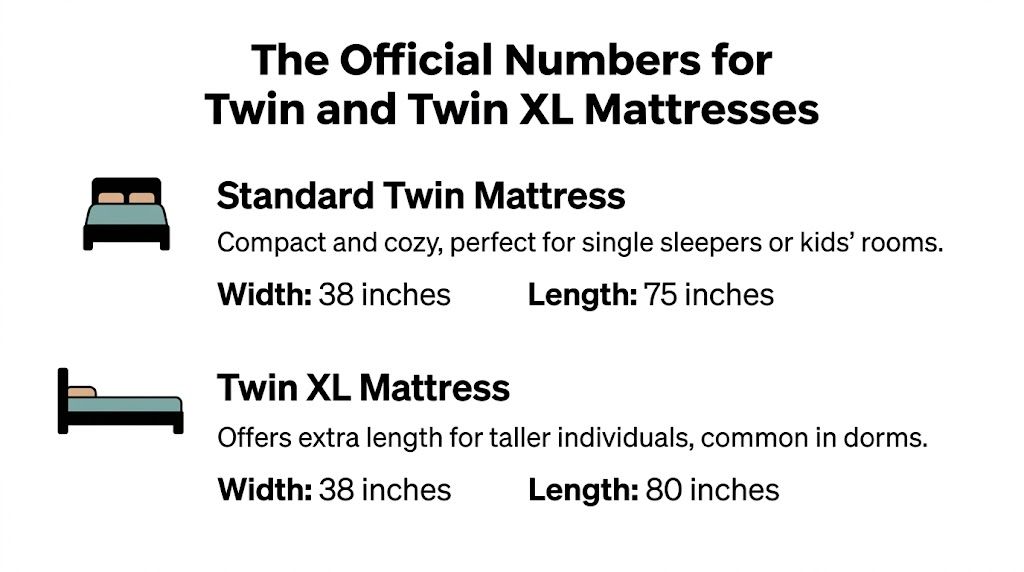
Let’s get right to the part everybody wants. A standard twin mattress measures 38 inches wide by 75 inches long, which gives you about 19.8 square feet of sleeping surface, according to Sleep Foundation’s twin size mattress guide.
Twin XL keeps the same width but adds length.
Twin vs Twin XL at a glance
| Feature | Standard Twin | Twin XL |
|---|---|---|
| Width | 38 inches | 38 inches |
| Length | 75 inches | 80 inches |
What those numbers really mean
The easiest way to think about it is this.
A Twin XL is basically a regular twin with extra legroom. The width stays the same. Only the length changes.
That’s why shoppers sometimes get tripped up. They assume Twin XL is both wider and longer. It isn’t. It’s just longer.
Inches and centimeters
If you prefer metric, the verified measurements are:
- Twin: 96.5 cm x 190.5 cm
- Twin XL: 38 inches x 80 inches in U.S. sizing terms, as noted in the verified data tied to BILTRITE’s sizing guidance and this Twin XL page
Who usually fits a standard twin
A standard twin is a smart fit for many sleepers, especially when the room is small.
It’s commonly a good match for:
- Kids moving into a first larger bed
- Single sleepers
- Guest rooms
- Petite adults
- Anyone under 6 feet tall, based on the verified sizing guidance already cited from Sleep Foundation
When Twin XL makes more sense
Twin XL is often the better choice when the sleeper needs more length, not more width.
That can include:
- Growing teens
- College students
- Taller adults
- Guest rooms used by different people
Practical rule: If the sleeper’s height makes a standard twin feel short, move up to Twin XL before you move up in width.
A quick note on bedding
Many people accidentally buy the wrong linens for these sizes.
A twin mattress takes twin sheets. A Twin XL mattress takes Twin XL sheets. Since Twin XL is longer, regular twin fitted sheets won’t give you the right fit.
That sounds obvious once you say it out loud, but in the store we’ve seen this mix-up more times than we can count.
Why these measurements matter in everyday shopping
When you know the exact measurements of a twin size bed mattress, you can shop with more confidence. You can compare bed frames, foundations, headboards, and bedding without guessing.
You also avoid one of the most common mistakes. People measure for the mattress only, then forget the bed around it takes up more space.
That’s where the next step comes in.
Why Your Bed's Total Footprint is Bigger Than the Mattress
The mattress size is only the starting point.
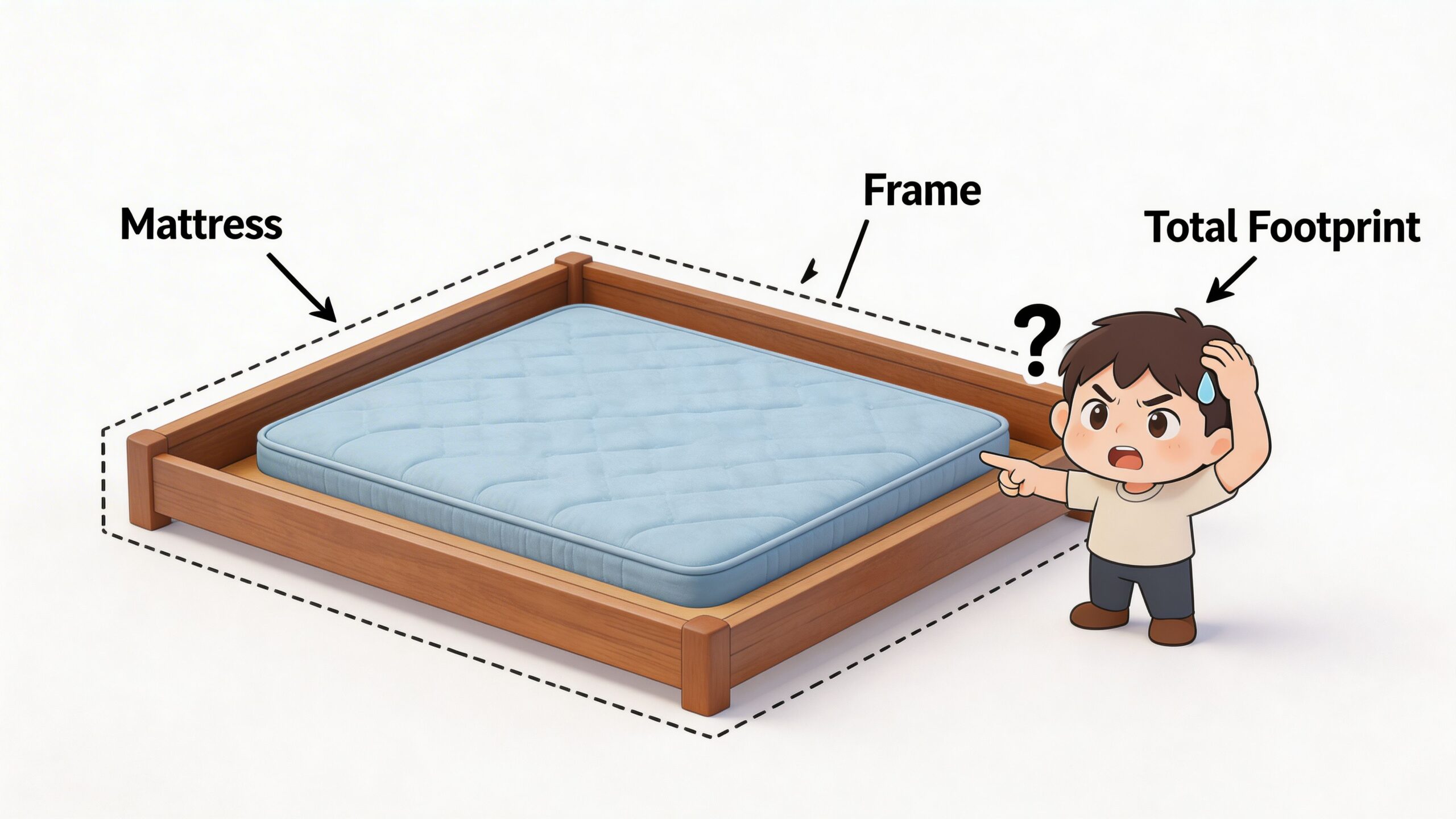
Once you add a bed frame, the total setup gets bigger. That surprises a lot of people, especially when they’ve carefully measured a wall and think they’re all set.
The frame adds size
While a twin mattress is 38 inches wide, the frame can add 2 to 5 inches. That extra size matters for room planning and delivery, as noted in this standard twin bed size guide.
In plain terms, your bed frame can end up wider and longer than the mattress itself.
If you’ve never thought about the parts of a bed, it helps to break it down into simple pieces:
- Side rails hold the mattress in place
- Headboards add presence and style
- Footboards can add length to the overall setup
- Slats, platform tops, or support systems affect how the mattress sits
- Foundations or box springs add height, though not width or length
Why solid wood frames need extra attention
This matters even more with well-built furniture.
USA-made and Amish-made solid wood frames often have thicker rails, sturdier posts, and more substantial headboards than lighter imported pieces. That’s a good thing for durability, but it also means you need to think beyond mattress size.
A twin mattress may be compact. A solid wood twin bed can still have a stronger visual and physical footprint in the room.
Mattress size vs bed size
Here’s a simple way to remember it:
- Mattress size tells you what sheets you need
- Bed size tells you how much room the whole setup needs
Those are not the same thing.
Don’t stop measuring once you know the mattress dimensions. Measure for the whole bed you’re bringing home.
Don’t forget height
Height doesn’t change the floor footprint, but it changes how the bed feels in daily life.
A foundation or box spring adds height. So does a thicker mattress. That can matter for a child climbing into bed, an adult guest, or a senior who needs easier entry and exit.
A lower profile can feel sleek. A taller setup can feel easier to get in and out of. Neither is automatically right. It depends on who’s using the bed.
Bedding confusion happens here too
The good news is simple. Sheets match the mattress size, not the outer frame size.
So even if the frame is wider than the mattress, a standard twin mattress still takes twin bedding. If the mattress is Twin XL, the bedding needs to be Twin XL too.
That’s another reason the measurements of a twin size bed can feel confusing. People use “bed” to mean the mattress, the frame, or the whole setup. In furniture shopping, those are three different conversations.
How to Fit a Twin Bed in Your Room Without the Guesswork
Once you know the mattress size and the likely frame footprint, room planning gets much easier.
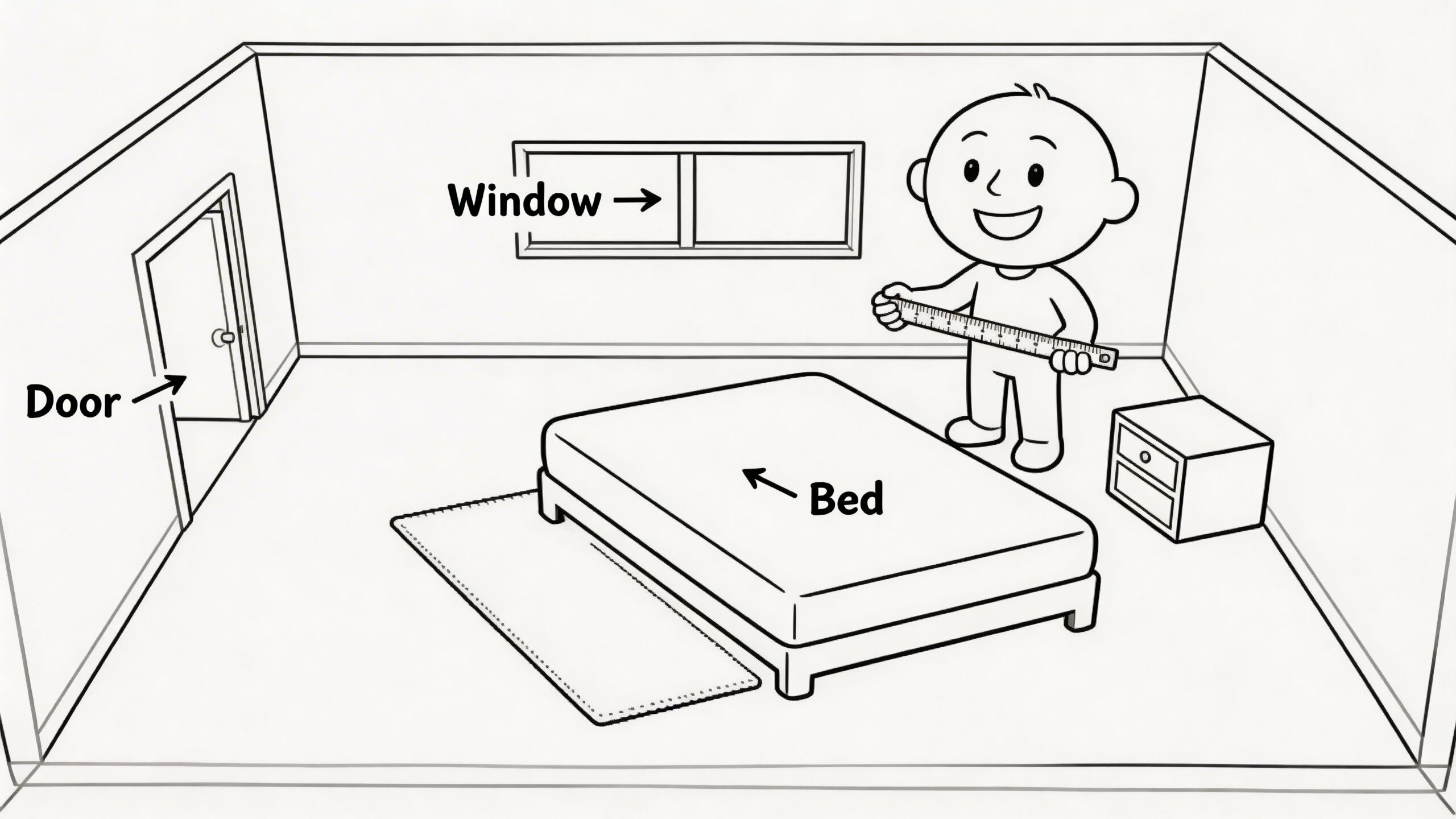
For a twin bed, a minimum room size of 7 feet by 10 feet is recommended so you can leave about 18 to 24 inches of clearance on the sides for movement and bed-making, according to Avocado’s twin bed dimensions guide.
Start with the wall, not the bed
A lot of people measure the mattress and stop there. A better approach is to measure the room first.
Grab a tape measure and check:
- Wall length
- Window placement
- Closet door swing
- Radiators, vents, or trim
- Where the room entry door opens
Then think about where the bed can go without blocking any of those.
A simple layout approach
In many smaller rooms, a twin works well in one of two spots:
- Along the long wall, which can leave more open floor area
- Centered on a short wall, if you want a more traditional bedroom look
If the room also needs a dresser or desk, wall placement matters even more. Sometimes moving the bed a few inches changes everything.
What clearance actually does for you
Clearance isn’t just about looks.
It helps with:
- Walking around the bed
- Changing sheets without wrestling the wall
- Opening drawers
- Reaching windows
- Safer movement in tight spaces
That last one matters a lot in apartments and senior living settings. A room can technically hold a bed and still feel awkward if the walking path is too tight.
A small-room checklist
If you’re planning around the measurements of a twin size bed, use this checklist:
- Measure the mattress area
- Add the frame footprint
- Mark the bed outline on the floor with painter’s tape
- Open every door and drawer fully
- Leave a clear walking path
- Check if a nightstand still fits
That tape-on-the-floor trick is simple, but it works. It lets you “see” the bed in the room before anything gets delivered.
Think in furniture groups
The bed never lives alone.
In most bedrooms, you’re also trying to fit some combination of:
- A nightstand
- A dresser
- A chest
- A desk
- A chair
- A lamp
- Storage bins or baskets
If the room is tight, smaller-scale furniture usually works better than bulky pieces. That’s one reason many Milwaukee shoppers look for options designed for condos, apartments, and compact homes. If you’re comparing layouts, our guide to beds for small spaces can help you think through proportions.
In a smaller bedroom, the right bed size doesn’t just fit. It leaves the room usable.
Common room mistakes
These are the ones we see most often:
- Pushing the bed where it blocks a closet
- Forgetting the frame is larger than the mattress
- Buying a wide nightstand that crowds the walkway
- Ignoring where dresser drawers need to open
- Planning around empty-room measurements, then forgetting baseboards and trim
Those little details are where a room either feels calm or cramped.
Will It Fit? Your Guide to Measuring for a Smooth Delivery
Room fit is one question. Delivery fit is another.
A twin bed might look compact on paper, but getting it through a tight stair turn or older doorway can still be tricky. Around Milwaukee, especially in older homes and apartment buildings, that happens plenty.
Why delivery measurements matter
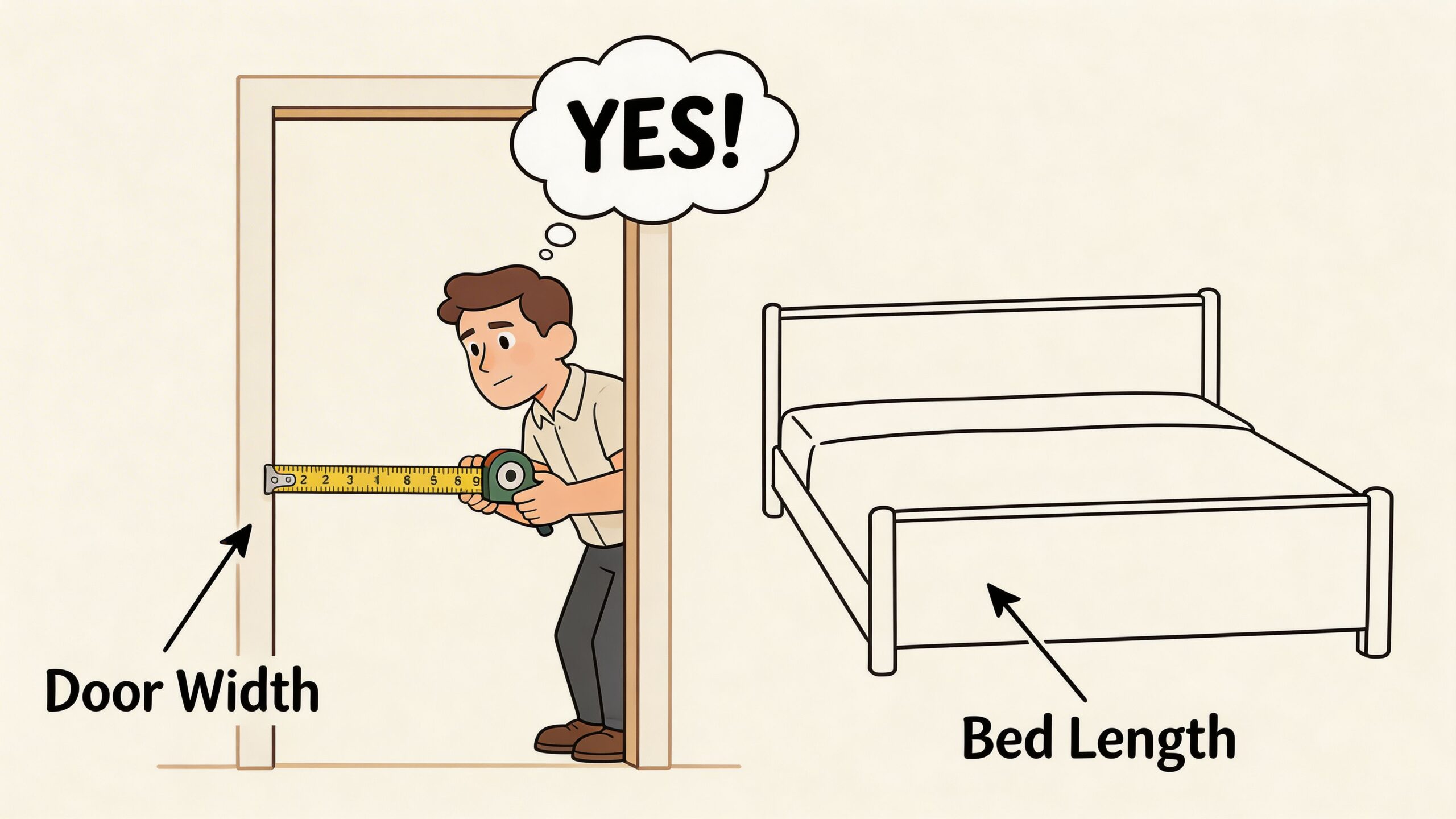
A twin mattress is 38 inches wide, but the frame can add 2 to 5 inches, and many older homes have doorways narrower than 32 inches, according to the verified delivery guidance in the earlier-cited sizing material from Novilla.
That doesn’t mean the bed won’t fit. It means you need to plan for how each piece travels into the room.
Measure the path, not just the room
Start at the outside entry and follow the exact route the furniture will take.
Measure these:
- Entry door width
- Hallway width
- Stairway width
- Ceiling height above stairs
- Sharp corners and turns
- Bedroom door opening
If there’s a handrail, a low ceiling, or a narrow landing, note that too.
The two measurements people forget
Most shoppers remember doorway width.
They often forget these:
- Door height
- Depth at the turn
A piece may fit through the doorway itself but not make the turn into the room. That’s especially common in upper-unit flats and older staircases.
A simple delivery checklist
Before delivery day, do this:
- Remove wall hangings from tight stairwells or halls
- Move small furniture out of the delivery path
- Measure door openings with the door fully open
- Check for tight turns at the top or bottom of stairs
- Ask whether the bed disassembles if you’re buying a wood frame
Why disassembly can save the day
Many bed frames come apart into manageable pieces. That’s one reason bed delivery is often easier than people expect.
Still, some styles are bulkier than others. Tall headboards, solid wood side rails, storage beds, and platform styles can all require a little more planning. In homes with tight access, it helps to look at furniture designed for narrow doorways.
One more thing to check
Don’t forget the mattress itself.
A mattress can flex some, depending on construction, but it still takes up real space while being carried. If the hallway is tight or the stair turn is sharp, that should be part of the conversation before delivery day.
A few careful measurements before you buy can prevent a lot of stress when the truck arrives.
Choosing the Right Twin Bed for Your Family's Needs
A twin bed gets labeled as a kid bed all the time. That’s too narrow a view.
Twin beds are increasingly popular for adults in smaller homes, and for long-term durability, especially for adults or in senior living, a 9 to 12 inch thick, 2-sided heavy-duty mattress is recommended for proper support, according to Dimensions.com’s twin bed guidance.com’s twin bed guidance](https://www.dimensions.com/element/twin-beds).
Twin beds aren’t only for children
A twin can make sense for:
- A single adult in a smaller bedroom
- A guest room that also needs floor space
- A senior who wants easier room navigation
- A shared room with two separate sleepers
- A spare bedroom used for both sleep and storage
That’s why the measurements of a twin size bed matter beyond just kids’ furniture. The smaller footprint can support a more practical room setup for all kinds of households.
When to choose Twin XL instead
The biggest deciding factor is often height.
If the sleeper needs more room at the foot of the bed, Twin XL is worth a hard look. You keep the narrow profile, which is often helpful in a smaller room, while adding useful length.
That can be a nice middle ground when a full-size bed would make the room feel too crowded.
Why mattress construction matters
Not all twin mattresses are built for the same job.
A child’s room might be well served by a standard twin setup. An adult sleeper or a senior may do better with a sturdier mattress that offers more support and holds up better over time.
That’s where details matter:
- 2-sided construction can allow flipping
- Heavier-duty support can feel steadier
- Thicker profiles can change bed height and comfort
- Stronger foundations and frames help the whole setup last longer
For mattress shopping, one practical place to compare options is how to choose the right mattress.
Frame choice matters too
The bed frame changes more than the look of the room.
A well-built USA-made or Amish-made solid wood twin frame can be a smart choice for shoppers who care about long-term durability, repairability, and a more grounded feel. Some shoppers want something simple for a guest room. Others want something sturdy enough to hold up for years.
One option people compare in this category is BILTRITE Furniture-Leather-Mattresses, which carries twin beds, heavy-duty options, and 2-sided flip-able mattresses in a showroom setting rather than online checkout.
Match the bed to the person
That sounds obvious, but it’s where good decisions happen.
Ask these questions:
- Who will sleep on it most often?
- How tall are they?
- Do they need easier access in and out of bed?
- Will this bed be used every night or only occasionally?
- Does the room need open floor space for mobility or other furniture?
Those answers usually point you in the right direction faster than chasing trends ever will.
A twin bed is a practical size. The right mattress and frame are what make it comfortable for the person using it.
Ready to Find Your Bed? Come Visit Us at BILTRITE!
By now, the measurements of a twin size bed probably feel a lot less mysterious.
The key points are simple. A standard twin mattress is 38 inches by 75 inches. Twin XL keeps the same width and adds length. The frame makes the full setup bigger than the mattress alone. And the room isn’t the only thing that needs measuring. The delivery path matters too.
Bring your measurements with you
If you’re shopping for a twin bed, it helps to bring a few notes:
- Room dimensions
- Wall measurements
- Doorway widths
- Any tight stair turns
- Whether the sleeper needs Twin or Twin XL
That little bit of prep makes the shopping process smoother and less stressful.
Why seeing it in person helps
A bed can look one way online and feel completely different in real life.
That’s especially true with:
- Bed height
- Frame thickness
- Headboard scale
- Mattress feel
- Solid wood construction
- Small-scale furniture proportions
When you see these pieces in person, you can tell much more quickly whether they’ll work in your home.
Our family’s approach
We’ve been serving Metro Milwaukee since 1928, and we still believe furniture shopping should feel helpful, not pushy.
We don’t sell online. We focus on the in-store experience. That means you can walk the showroom, compare materials, look at USA-made and Amish-made options, and talk with people who do this every day.
We’re also proud of the family side of our business. We’re closed on Sundays so our team can spend time with their families, and that value has been part of who we are for generations.
A twin bed can be a smart long-term choice
For the right room and the right sleeper, a twin isn’t a compromise.
It can be the choice that keeps a child’s room open, helps a guest room stay flexible, makes a senior space more accessible, or gives a smaller Milwaukee home a more comfortable layout. When you choose carefully, the size works with the room instead of fighting it.
If you’ve got measurements written down on a scrap of paper, bring them in. That’s often how the best furniture conversations start.
Come see us at BILTRITE Furniture-Leather-Mattresses in Greenfield. Bring your room measurements, doorway sizes, and questions. We’d love to help you sort through twin beds, Twin XL options, supportive mattresses, and solid wood frames in a friendly, no-pressure way.