Types of Lounge Furniture for Every Room

A living room can look spacious on paper and still feel awkward once a sofa, chair, coffee table, and lamp are in place. One person wants a firm seat for reading, another wants to stretch out for movie night, and someone else needs arms that make standing easier. The right piece isn't just the one with the nicest upholstery. It needs to support the way the household truly sits.
The many types of lounge furniture exist because people use rooms differently. Sofas, loveseats, recliners, chaise longues, daybeds, sectionals, and lounge chairs each encourage a different posture and kind of activity. A small apartment living room, a finished basement family room, a sunny reading nook, and a senior's main-floor sitting area may all need different answers.
Table of Contents
- A Quick Tour of the Seating Aisle
- The Geometry That Makes Seating Feel Right
- Matching Furniture to the Way You Actually Sit
- The Main Types of Lounge Furniture Explained
- Smart Picks for Small Spaces and Tight Doorways
- Choosing Lounge Furniture That Works for Seniors
- Putting It All Together Room by Room
- Questions Shoppers Ask Before They Visit the Showroom
A Quick Tour of the Seating Aisle
A visitor walking through a well-stocked showroom sees rows of sectionals, armchairs, chaises, recliners, and sofas. Each one appears to promise comfort, but comfort has several forms. A tight-backed lounge chair may support upright reading, while a deep sofa invites television viewing, a chaise supports extended legs, and a recliner changes position as the sitter relaxes.
That distinction goes back further than many shoppers realize. The Getty Research Institute describes a sofa as a long, upholstered seat with a back and two ends, intended primarily for sitting, while reclining couches are designed mainly for relaxed or recumbent use in its historical furniture terminology. The history also separates sofas, settees, easy chairs, chaise longues, and recliners as related but distinct seating forms.
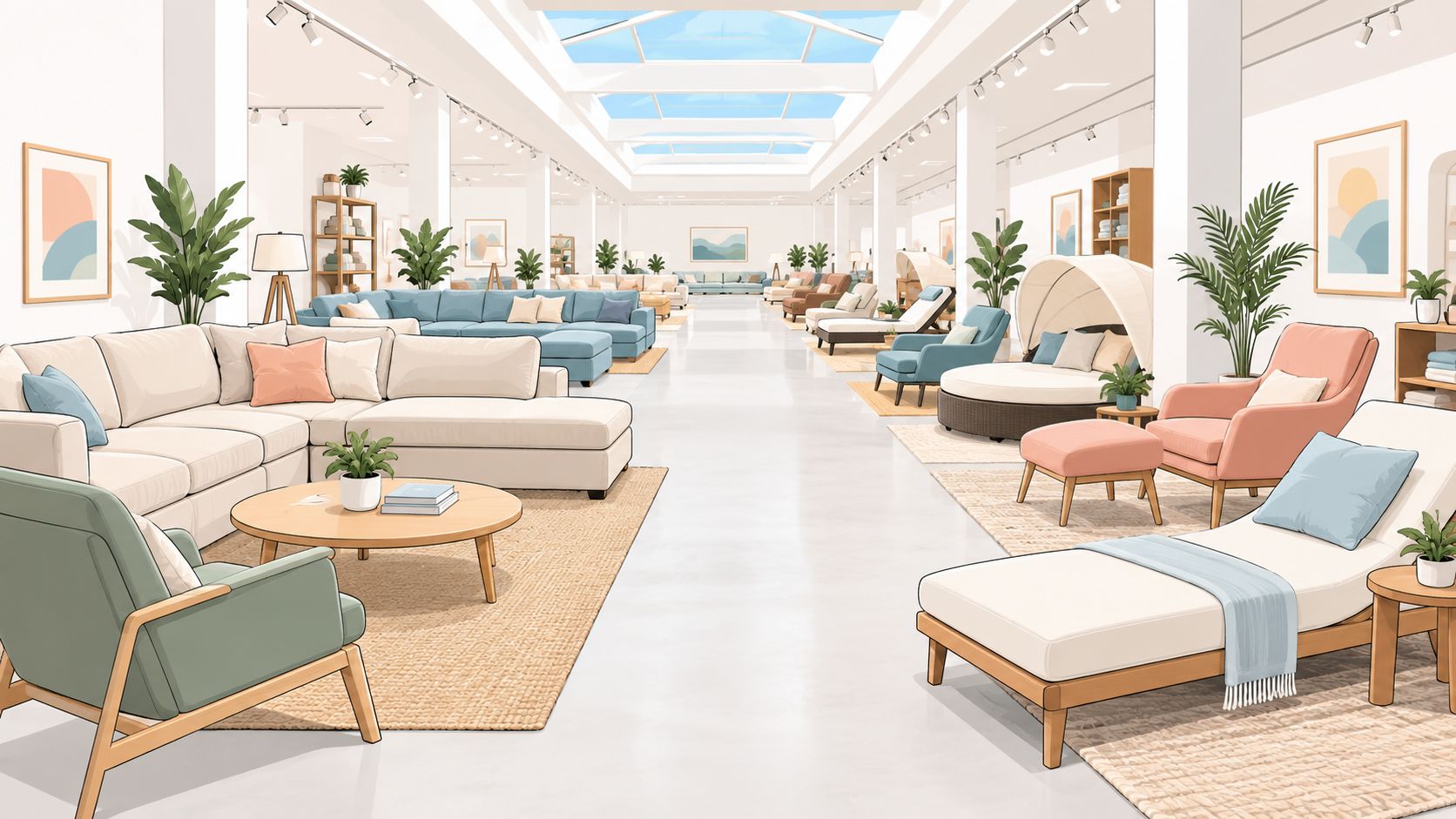
A seating aisle with a purpose
A small apartment may need a compact sofa with a separate chair. A finished basement may call for a deep sectional with reclining sections. A sunlit nook often works better with one supportive chair and a footstool than with a full sofa. In a senior's sitting area, stable arms, firm cushions, and an easy-to-use seat can matter more than a low, fashionable profile.
The practical lesson is simple: lounge furniture is a family of shapes, not one universal category. Readers comparing styles can also use BILTRITE's guide to types of furniture styles to consider how construction and appearance fit into the broader room.
A showroom visit becomes easier when shoppers stop asking, “Which piece looks comfortable?” and start asking, “Which posture should this piece support?” That question narrows the choices quickly.
The Geometry That Makes Seating Feel Right
A chair can look inviting and still leave a sitter unsupported. Three measurements usually explain why: seat height, seat depth, and armrest height. The back angle, cushion firmness, and distance between the arms also influence how the body settles into the furniture.
Seat height affects transfers. Inclusive-furniture guidance identifies 16 to 18 inches as a useful baseline, with armrests positioned 9 to 12 inches above the seat and a seat-to-back angle of 100 to 105 degrees in many applications, as detailed in the inclusive furniture recommendations. Active-use seating guidance also identifies 18 to 20 inches as a useful range for easier sit-to-stand movement.
Depth changes the posture
Standard sofas generally offer 20 to 24 inches of seat depth, which supports more upright sitting. Deeper lounge sofas may extend to 31 to 39 inches, while extra-deep designs can reach 40 to 48 inches and are generally intended for reclining, television viewing, or napping, according to guidance on deep seating construction and ergonomic sofa design.
A shorter adult may feel swallowed by a deep cushion. A taller adult may find a shallow seat restrictive. One practical showroom check is to sit fully back and see whether the knees remain supported without the front edge pressing behind them. Buttock-to-popliteal length, the distance from the back of the buttocks to the bend behind the knee, gives a more useful guide than appearance alone.
Practical rule: Feet should rest flat, the lower back should meet the back cushion, and the sitter shouldn't need to perch on the front edge.
Arms and cushions matter
Usable arms help with conversation, reading, and standing. Firm cushions tend to support transfers, while soft, highly compressible cushions encourage a relaxed, sinking posture. Neither is automatically better. The right choice depends on whether the room is used for upright conversation, casual lounging, or extended relaxation.
Shoppers can find more guidance on lounge chair dimensions before visiting a showroom. Measurements should be compared with the intended user's height, leg length, hip breadth, mobility, and daily habits, not treated as universal rules.
Matching Furniture to the Way You Actually Sit
Furniture names can confuse shoppers because one product may serve several purposes. A sectional can support upright conversation in one arrangement and sprawling television watching in another. A lounge chair can be a reading chair, a nursing chair, or a decorative accent depending on its depth, arms, and cushion feel.
A posture-first approach makes the differences clearer.
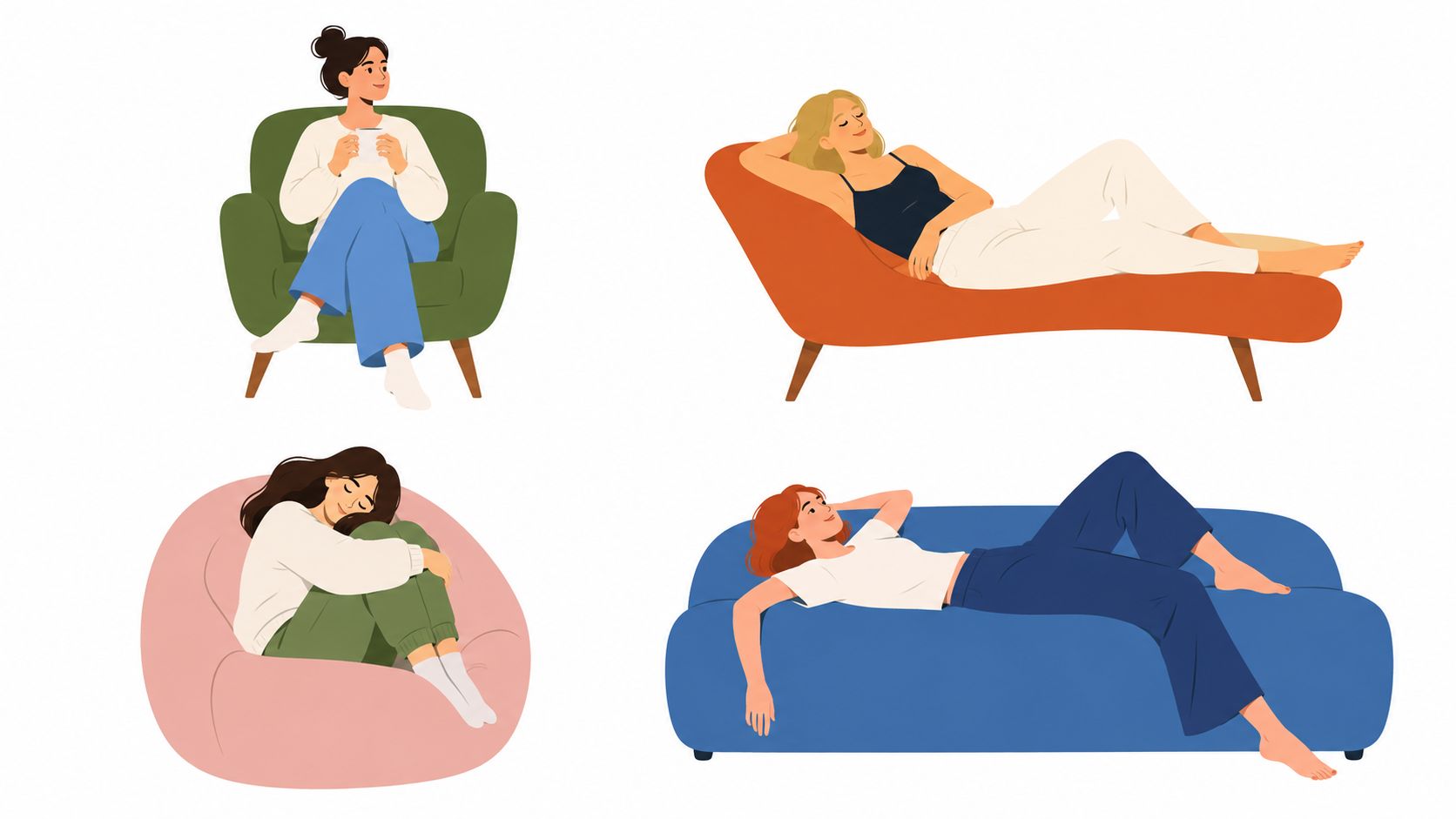
Upright seating
Upright seating includes firm-cushion lounge chairs, settees, and loveseats with supportive backs. These pieces suit reading, conversation, card games, and visits where people want to remain alert. A modest seat depth and supportive arms make it easier to sit down and rise without pulling on a table or nearby furniture.
This family often works well in a front living room, sitting area, home office corner, or reading nook. A tight back can provide a refined appearance and consistent support, while a firm loose cushion may offer easier maintenance or adjustment.
Casual seating
Casual seating includes soft sofas and relaxed armchairs intended for everyday lounging. The sitter may shift position, tuck up a leg, lean into a corner, or watch television for an extended period. Deeper cushions and a more open back angle encourage that informal posture.
A family room sofa often belongs here. Parents may want enough room for children, while households with pets may prioritize cleanability and durable upholstery over a delicate finish.
Reclining seating
Recliners, chaise sections, and rocking lounge chairs lean the body back and lift the legs. Reclining furniture developed through several stages, from an adjustable design published in 1813, to advertisements for “reclining, elevating, and revolving” chairs and sofas in 1855, to a patented mechanical reclining-chair mechanism in 1928 and an upholstered version in 1930, as summarized in this history of the recliner.
This family suits movie rooms, basement seating, and anyone who prefers changing position without moving to another piece. Motion furniture needs operating space, so a showroom test should include the fully open position.
Extended seating
Daybeds, futons, sleeper sofas, and sleeper sectionals turn a sitting surface into a place for stretching out or hosting an overnight guest. Their value comes from flexibility, but their mechanisms, mattresses, and open positions can affect weight, access, and room planning.
Extended seating works especially well in guest rooms, multipurpose offices, and smaller homes where one piece must serve more than one role. The best choice depends on whether daily sitting or occasional sleeping is the main priority.
The Main Types of Lounge Furniture Explained
The furniture type gives shoppers a starting vocabulary, but posture, dimensions, upholstery, and access determine whether a piece suits a particular household. Overall sizes vary by design, so the measurements below should guide showroom questions rather than replace measuring.
Lounge chair
A lounge chair gives one person a defined place to sit. Upright models suit reading and conversation, while deeper versions support casual lounging. A petite user may prefer a shallower seat, while a taller user may need more depth and back height.
A chair can anchor a reading nook, fill an empty living-room corner, or provide a personal seat beside a sofa. Tight-back upholstery usually looks structured, while loose cushions can feel softer and more adjustable. Leather and performance fabric also create different maintenance and tactile experiences.
Chaise longue
A chaise longue emphasizes extended leg support rather than shared upright seating. It can sit alone in a bedroom, reading area, or sunroom, or form part of a sectional.
The best user is someone who likes to stretch out without operating a mechanism. A chaise needs enough clear floor space for the legs and should be tested for hip, back, and shoulder support.
Loveseat
A loveseat provides shared seating in a smaller footprint than a full sofa. It suits a compact apartment living room, bedroom sitting area, or secondary conversation zone.
Its posture depends on the build. A firm, upright loveseat supports conversation, while a deep, soft model encourages casual lounging. The name doesn't guarantee a particular seat height or depth, so both users should test it together.
Three-seat sofa
A three-seat sofa is a general-purpose anchor for a living room. It can support conversation, reading, daily relaxation, and family television time, depending on cushion firmness and depth.
A conventional sofa is intended mainly for sitting, while a deeper lounge sofa encourages more reclined use. A sofa may fit a single adult who wants generous room, a couple who share daily seating, or a household that needs a central gathering place.
Sectional
A sectional combines multiple seating positions in an arrangement such as an L shape or another configuration. It works well in a family room or finished basement where shared lounging is the main activity.
Chaise sections support stretched legs, while reclining sections add adjustable movement. Before choosing a sectional, shoppers should compare its footprint, traffic paths, delivery route, and future rearrangement options. A helpful comparison of sectional versus couch can clarify which format better suits the room.
Sleeper sofa
A sleeper sofa provides everyday seating and a sleeping surface. It suits a guest room, office, or living room that occasionally hosts visitors.
The open bed position matters as much as the closed sofa dimensions. Shoppers should check mattress comfort, operating clearance, walking space, and whether the frame or cushions are manageable during conversion.
Ottoman and pouf
An ottoman can serve as a footrest, extra seat, or surface paired with a lounge chair. A pouf usually offers a softer, lighter accent that can move around the room.
Storage ottomans help households keep blankets, games, or small items close to the seating area. The upholstery should match the intended use. A family may prefer a cleanable performance textile, while a formal room may favor a refined fabric or leather finish.
Daybed
A daybed bridges sofa and bed. It works in a guest room, window nook, office, or child's room where daytime seating and occasional sleeping need to share one footprint.
Backless designs can make a small room feel visually open, but they need wall placement, cushions, or bolsters to create a comfortable sitting posture. The user should test both the sitting and lying positions.
Modular lounge set
A modular lounge set uses separate components that can be combined, separated, or rearranged. It suits households whose needs change, especially when a room must shift from everyday seating to guests, games, or a larger gathering.
The components should be easy to move without damaging floors or walls. Modular construction can also help with delivery, although each connection and loose piece should be checked for stability.
| Furniture Type | Typical Size | Best Posture | Best Room / User |
|---|---|---|---|
| Lounge chair | Single-person footprint, varying by depth | Upright or casual | Reading nook, living room, single adult |
| Chaise longue | Extended single-seat footprint | Reclining and stretched | Bedroom, sunroom, tall user |
| Loveseat | Compact shared seating | Upright or casual | Apartment, bedroom, couple |
| Three-seat sofa | Shared central seating | Upright to relaxed | Living room, family household |
| Sectional | Multi-piece footprint | Casual, reclining, or extended | Family room, finished basement |
| Sleeper sofa | Sofa footprint with open sleeping surface | Sitting and sleeping | Guest room, multipurpose room |
| Ottoman or pouf | Compact movable piece | Foot support or short sitting | Living room, lounge corner |
| Daybed | Long single-person or guest surface | Sitting, reclining, or lying | Guest room, office, nook |
| Modular lounge set | Reconfigurable components | Changes with arrangement | Small home, flexible family room |
Most households combine types rather than choosing one universal piece. A sectional may anchor the family room, while a lounge chair and ottoman create a separate reading corner.
Smart Picks for Small Spaces and Tight Doorways
A small living room isn't only a floor-plan challenge. It is also a delivery and reconfiguration challenge. A sofa that fits the room may still fail at the entry, hallway turn, stairwell, elevator, or final doorway.
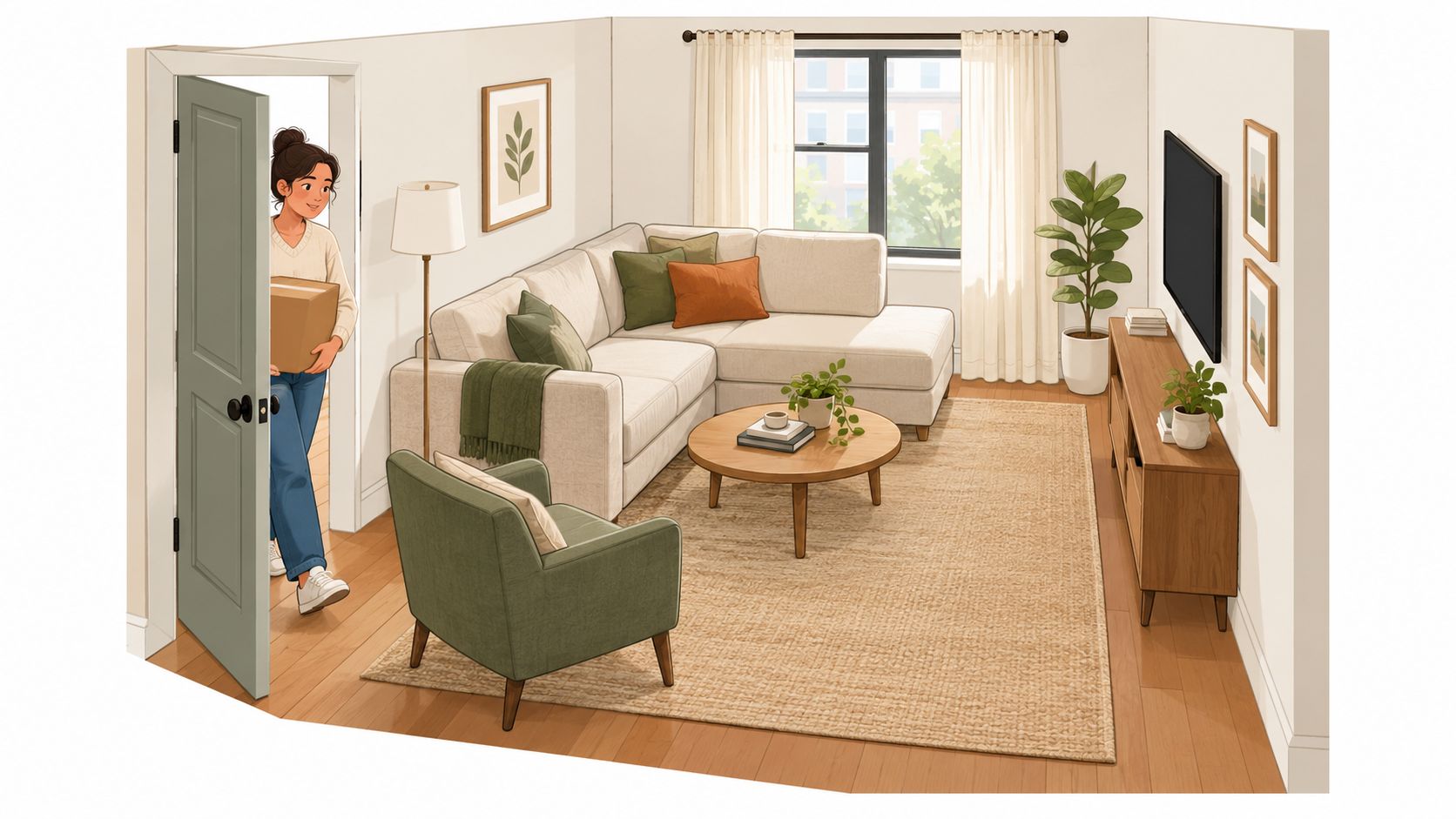
Consider a pre-war apartment with a modest living room and a narrow entry door. The shopper may initially focus on finding the shortest sofa, but a come-apart design can solve a more important problem. Separate components can travel through difficult access points and then connect inside the room.
Measure the route, not just the room
Every turn matters. Shoppers should record the width and height of doors, hallway sections, stair landings, elevator openings, and tight corners. The widest part of the furniture, including packaging when applicable, should be compared with the narrowest point on the route.
A compact sofa, apartment-scale sectional, backless daybed, or modular set may create more options than a single large piece. A narrow design can still feel generous if it has slim arms, raised legs, and a useful seat depth.
Keep movement in mind
Traffic space should remain clear around seating, doors, and storage. Recliners need room to open fully, and sleeper sofas need a usable path when the bed is extended. A coffee table placed too close to a sofa can make an otherwise spacious room feel cramped.
Small-space rule: The piece that looks smallest in the showroom isn't always the piece that uses space most efficiently at home.
Storage ottomans can replace a separate storage unit. Nesting ottomans can separate for guests and tuck together afterward. Modular lounge sets can reshape for movie night, visitors, or an open floor area.
BILTRITE's furniture for narrow doorways includes come-apart seating options for shoppers who need to plan around restricted access. A proper delivery conversation should happen before purchase, not after the furniture arrives.
Choosing Lounge Furniture That Works for Seniors
A daughter shopping for her mother may begin with appearance, but transfer support should come first. A senior-friendly chair or sofa needs to let the user sit down with control, remain supported, and stand without excessive effort.
Start with the seat
A useful starting range for many older adults is a seat height of 16 to 18 inches, although active-use guidance identifies 18 to 20 inches for easier sit-to-stand transitions. Inclusive-furniture recommendations also emphasize the relationship between seat height, depth, armrests, and the user's lower-leg length rather than treating one dimension as suitable for everyone.
Seat depth deserves equal attention. A seat that is too deep can leave the feet unsupported and encourage slumping. A practical showroom test is to sit fully back and check whether the knees remain supported without the front edge pressing behind them.
Firmness matters too. A firm seat cushion can help the user rise, while a cushion that compresses heavily may make the person feel trapped. Firm back support and stable arms usually provide more useful assistance than a low, soft profile.
Look at transfer features
Armrests positioned around 9 to 12 inches above the seat appear in inclusive-furniture guidance, while some senior-oriented shopping advice focuses on arms roughly 7 to 9 inches above the seat for pushing off. The correct position depends on the user's arm length, shoulder comfort, and preferred transfer motion.
Lift-recline chairs can help users change position with powered assistance. Zero-gravity positioning may distribute support differently as the back and footrest move, but the user should test the controls, entry position, and fully open position before deciding.
Stable legs, rounded edges, clear walking paths, washable covers, and stain-resistant performance fabric can make everyday use easier. Caregivers should also check whether cords, mechanisms, and footrests create trip hazards.
The guide to comfortable sofas for seniors can help families prepare questions before a showroom visit. The most supportive chair in the room often becomes the seat everyone wants, so senior-friendly furniture doesn't need to be isolated in a separate area.
Putting It All Together Room by Room
Room purpose provides the final filter. A living room used for shared television viewing needs a different arrangement from a bedroom used for quiet reading. The household's posture needs, access route, upholstery demands, and available floor area should all influence the choice.
| Room | Best Furniture Type | Why It Works |
|---|---|---|
| Living room | Sofa, sectional, or modular set | Creates shared seating for conversation and daily use |
| Primary bedroom | Chaise longue or upholstered bench | Supports dressing, reading, and short periods of relaxation |
| Guest room | Daybed or sleeper sofa | Combines daytime seating with occasional overnight use |
| Finished basement | Deep sectional or reclining seating | Supports extended television viewing and group lounging |
| Sunroom or reading nook | Lounge chair with ottoman | Gives one person a dedicated place to stretch and read |
| Entryway | Small accent chair or bench | Offers a place to sit without crowding the passage |
A family room may benefit from one large sectional, but a living room with several activities may work better with a sofa, lounge chair, and movable ottoman. A primary bedroom can use a chaise for putting on shoes and laying out the next day's clothing. A guest room gains flexibility from a daybed that looks like a sofa during the day.
In Metro Milwaukee, BILTRITE Furniture-Leather-Mattresses offers showroom guidance across sofas, chairs, sectionals, recliners, small-scale seating, and supportive furniture. The in-person experience lets shoppers test cushion firmness, compare seat depths, and discuss delivery access before committing to a configuration.
A showroom team can also help a household compare American-made, Amish-made, solid-wood, leather, fabric, small-scale, and heavy-duty choices without reducing the decision to appearance alone. The goal is a room where each seat has a clear job.
Questions Shoppers Ask Before They Visit the Showroom
How should a sofa be measured for a doorway or elevator? Measure the widest diagonal of every door, hallway, and stair turn, then allow extra clearance rather than assuming a straight path will work.
How long should a sectional last? Frame construction, spring support, cushion materials, household use, and maintenance all affect service life. Quality frames with sinuous springs are commonly discussed as supporting ten plus years of daily use, but shoppers should ask about the specific construction.
Can fabric be special-ordered? Many furniture lines offer fabric and leather swatches, including performance textiles. Lead times depend on the selected material and configuration.
Does delivery include removal? Some showrooms offer white-glove delivery and haul-away options. The service should be confirmed before the order is finalized.
What is a fair budget? Pricing varies by construction, upholstery, size, mechanism, and configuration. A showroom consultation can compare an entry-level sofa with a premium sectional or sleeper without treating price as the only measure of value.
BILTRITE Furniture-Leather-Mattresses offers sofas, loveseats, lounge chairs, sectionals, recliners, small-scale seating, and come-apart options for homes with challenging access. Visit BILTRITE Furniture-Leather-Mattresses in Greenfield to test the seating, measure the fit, and talk with a local showroom team about the furniture that suits each room and each member of the household.