Twin Sleeper Chair Buyer’s Guide for Small Spaces

A twin sleeper chair makes sense when the guest room is also the home office, or when the den has to do three jobs at once. It gives a host a real place for a visitor to sleep without handing over the whole room to a bulky bed, which is exactly why compact convertibles keep coming back in different forms over time. For Metro Milwaukee homes, that mix of seating, sleeping, and space-saving practicality is often the difference between a room that works every day and one that only works once in a while.
Why a Twin Sleeper Chair Might Be Your Best Furniture Investment
A spare room in a Milwaukee bungalow often ends up as a desk space, a craft room, or a catchall for everything that doesn't have a home. Then a cousin stays overnight, or a friend drives in from out of town, and suddenly there's nowhere to put them that feels comfortable or intentional. A twin sleeper chair handles that problem cleanly, because it keeps the room usable during the day and still gives a guest a real sleep surface at night.
That's not a new idea. The broader history of twin beds shows a long cycle where smaller sleep solutions gained popularity when space and household needs changed, then faded when tastes shifted again, with scholars tracing that arc from roughly 1870 to 1970 in A Cultural History of Twin Beds (OAPEN reference). By the 1920s, twin beds were seen as fashionable and modern in homes that had room for them, and by the 1940s they were already being dismissed by some as old-fashioned. The point for shoppers is simple, flexible sleep furniture sticks around because it solves a real problem.
Practical rule: if a room needs to work as both a lounge and a guest spot, the furniture should earn its floor space every day, not just on the weekend.
For neighbors who want to keep a room open without giving up hospitality, BILTRITE's small space furniture solutions fit that same logic. The right piece should feel like part of the room, not a compromise shoved into it.
Understanding Twin Sleeper Chair Dimensions and Mechanics
The biggest mistake shoppers make is judging a sleeper chair by its closed size alone. A chair can look compact against a wall and still need a long open runway once the bed is deployed, because the mechanism has to store a full sleeping surface inside the seat and back. One listed model closes at 54.0"W x 38.5"D x 38.0"H, yet opens to a twin mattress measuring 71.5"L x 32"W x 5.5"H with a fully extended overall length of 90.5".
The two basic motion styles
Most shoppers will run into two broad styles. A pull-out design hides the mattress and frame inside the chair, then brings them forward when needed. A pop-up or fold-down style uses a different motion path, and some versions can feel easier for everyday setup because they rely less on lifting a heavy inner frame.
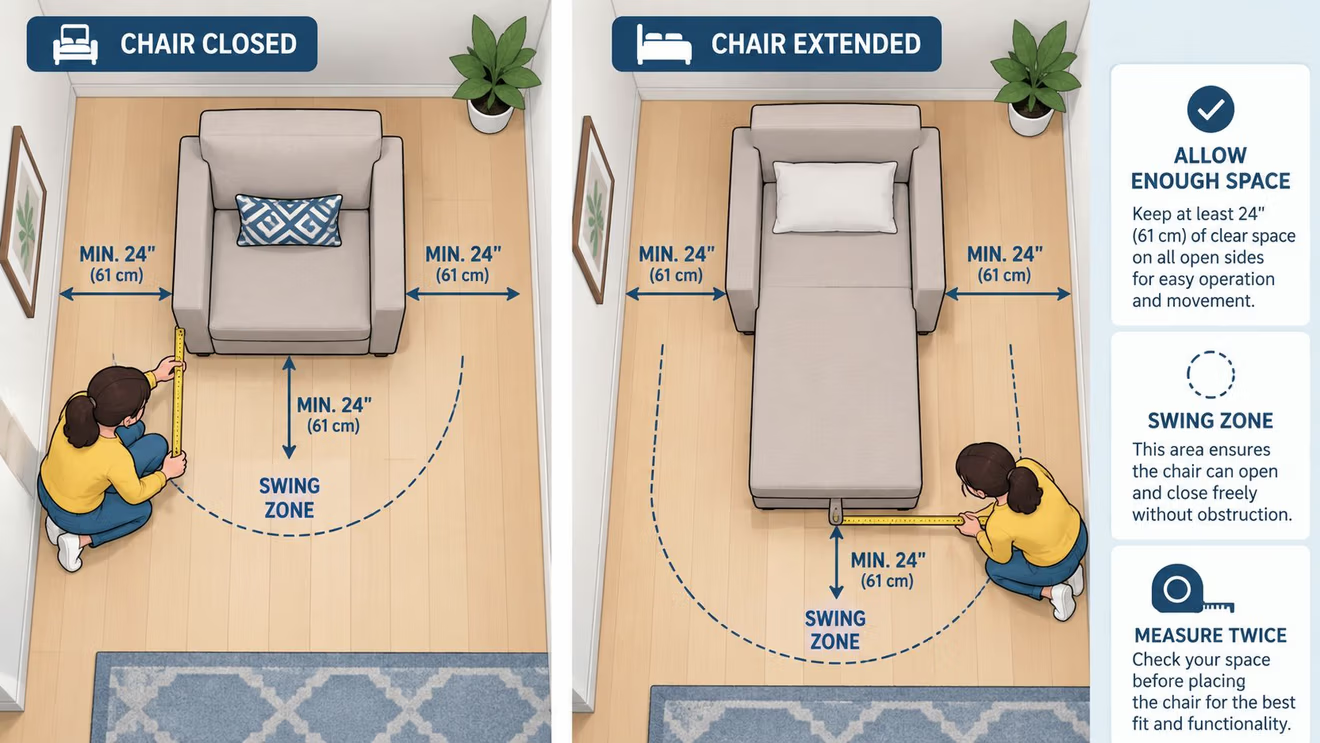
The room math matters more than the brochure photo. One listed model opens to 96.5" depth, which is why a buyer has to plan for clearance beyond the chair's closed footprint. In practical terms, a setup like that can demand roughly 5.5 to 8 feet of open floor run from the wall or the front edge of the chair, depending on the model and where the piece sits in the room.
What shape means for comfort
Seat geometry matters in both modes. The seat needs to be comfortable for sitting during the day, but it also has to transition into a flat enough sleep surface at night. If the arms are too high, the seat is too shallow, or the frame sits awkwardly, the chair can feel fine for reading but lousy for sleeping.
BILTRITE's dimensions of a sofa bed guide is useful as a reminder that sleeper furniture is always a measurement purchase first. A buyer should measure the room, the traffic path, and the open-bed footprint before falling in love with fabric or finish.
Mattress Options and Comfort Trade-Offs
A twin sleeper chair lives or dies on the mattress inside it. Some models use a traditional pull-out mattress, some use a foam-based sleep surface, and some use a newer bar-free system that gets rid of the hard ridges guests dislike. A twin sleeper chair can also come in Twin XL form, which is the better pick for taller sleepers who need extra length without giving up a smaller furniture footprint.
A Twin XL sleeper chair and a half can feature mattress dimensions of 39 inches by 80 inches, with a 4-inch-thick mattress and a patented sleep system described as having no bars, no springs, and no sagging. That kind of build tells you exactly where the value is. The chair can still look and sit like a real living-room seat, but the sleep side is designed to avoid the metal-bar feel that makes some sleeper furniture miserable overnight.
A 5-inch to 5.5-inch mattress can work for an occasional guest, but it is a weak choice for frequent use if the sleeping surface feels thin or uneven.
Published specs also show that many twin sleeper chairs use mattresses around 5" to 5.5" thick, which fits occasional guest use rather than full-time bed duty. A buyer who expects bed-like comfort should pay attention to how the seat converts, whether the mechanism creates pressure points, and whether the mattress stays flat across the middle. Seating comfort and sleep comfort rarely peak at the same time, so you have to decide which one matters more in your house.
Use the mattress type to match the job:
| Twin Sleeper Chair Mattress Comparison | Typical Thickness | Best For |
|---|---|---|
| Foam-based sleeper surface | Varies by model | Casual naps, light guest use |
| Traditional pull-out mattress | About 5" to 5.5" | Occasional overnight guests |
| Twin XL sleep surface | 4" on one listed model | Taller guests who need more length |
| Bar-free patented system | Listed with a 4-inch mattress | Shoppers who want a cleaner sleep feel |
BILTRITE's how to choose the right mattress advice applies here too. The right comfort choice comes down to how often the piece will serve as a bed, how much support your guests need, and whether you want to prioritize a better seat or a better night's sleep.
How to Measure Your Space for a Sleeper Chair
A tape measure prevents more buyer's remorse than a showroom pitch ever will. Before you bring home a twin sleeper chair, measure the wall where it will sit, the open floor in front of it, and the route it needs when it is pulled open. The chair has to fit closed, then fit again in bed mode without blocking a doorway, a desk, or the hall.
A chair that opens near 90 to 96.5 inches can turn a tidy corner into a room that feels jammed the minute the bed comes out.
Measure the room the right way
Start with the closed footprint, then add the deployed length. That second number is the one people skip, and it is the number that creates problems. Measure the full open path, not just the spot where the chair sits, because the sleeper section needs room to extend without forcing the rest of the room to work around it.
A good fit depends on more than the wall behind the chair. If the bed opens into a walkway, the room will feel crowded every time someone uses it. That is why the best measurement routine checks both sitting mode and sleeping mode before you fall in love with the style.
Check the showroom details that matter
Sit in the chair before you worry about sleep. Test seat depth, arm height, and the way the cushion supports the hips and lower back. Then ask how the bed feels when it opens, because a chair that feels great for sitting can still sleep poorly.
Use this quick checklist:
- Wall clearance: Leave enough room for the sleeper mechanism to open without scraping paint or pinching the baseboard.
- Traffic flow: Make sure the open bed will not block a closet, desk chair, or door swing.
- Floor length: Measure from the chair's front edge to the nearest obstacle, not just from the wall.
- Day and night use: Sit long enough to judge whether the chair works as real seating, not just a display piece.
BILTRITE's how to measure furniture guide fits this process well. The point is to fit a sleeper chair into the room without making the room harder to live in after the bed is opened.
Choosing Durable USA-Made and Amish-Crafted Options
A sleeper chair works hard in ways a regular side chair never does. The frame has to support daily sitting, the mechanism has to open and close without strain, and the whole piece has to stay steady once the bed is extended. If a family expects guests to use it more than once in a while, construction should come before the fabric sample and the style trim.
Published product specs show a wide range in build weight, from about 69 lb for a pop-up twin sleeper chair to 189 lb for a roll-arm twin sleeper chair. That spread matters. Lighter pieces are easier to move into place, while heavier frames often feel more planted when someone sits down or when the bed is pulled out. Mattress height also tends to sit around 5" to 5.5", which is a good reminder that these pieces are meant to solve a guest-bed problem without pretending to be a full mattress setup.
What to look for in the frame
Start with the frame and joints. Look for tight construction, no wobble when you sit down, and a mechanism that opens with a steady motion instead of a lot of force. If the chair twists in the showroom or the sleeper hardware feels sticky, that weakness will show up faster at home.
Upholstery deserves the same honest look. A sleeper chair gets handled more often than a standard accent chair, so the covering should stand up to repeated use without looking tired quickly.
A sleeper chair should feel steady when someone drops into it and stable when the bed is fully extended. If it flexes in the showroom, it will feel worse in a real living room.
For Metro Milwaukee homeowners who want a piece that holds up, USA-made, Amish-made, and solid wood construction are smart places to focus. Those choices usually prioritize long service life, careful joinery, and fewer shortcuts in the build. BILTRITE's advantages of Amish furniture overview matches that way of thinking. A sleeper chair that will get real use belongs in that category, not in the throwaway-furniture mindset.
Care and Maintenance for Long-Lasting Comfort
A sleeper chair lasts longer when it gets treated like a mechanism, not just upholstered decor. The moving parts need to open and close cleanly, and the mattress or cushion system needs regular attention so it doesn't settle in one spot. If the chair is used often, small habits make a big difference.
Keep the conversion path clear. Toys, books, cords, and side tables crowd the mechanism and can damage the frame over time. If the design includes a mattress that can be flipped or rotated, follow that pattern regularly so wear doesn't concentrate in one place.
- Clean spills fast: Blot, don't rub, so liquid doesn't push deeper into the fabric.
- Open it fully now and then: That helps the mechanism move smoothly and keeps owners aware of any stiffness or scraping.
- Check fasteners occasionally: Loose hardware can turn into squeaks or wobble before anyone notices.
Fabric care matters too. A chair used in a family room gets touched, leaned on, and converted more than a normal accent chair, so upholstery should be vacuumed and brushed on a routine basis. The goal is simple, keep the chair looking like furniture and functioning like a guest bed without making maintenance a chore.
Experience the BILTRITE Difference in Greenfield
A sleeper chair is not the kind of purchase that should happen from a small photo on a screen. The sitting feel, the arm height, the mattress surface, and the ease of conversion all need to be tested in person, because what looks compact online can feel very different once someone sits down and opens it up. That matters even more for families trying to make one room do double duty.
BILTRITE Furniture-Leather-Mattresses has been serving Metro Milwaukee since 1928, and that family-owned history shows up in how the showroom works. The team knows small-scale furniture, guest-room planning, and better-quality construction, and the store's mattress center includes over 60 models with 500+ mattresses in stock for shoppers who want to compare comfort options in one trip. The business is also closed on Sundays and Mondays, which says a lot about its family-first approach and local roots.
That in-person help matters for sleeper seating because the questions are practical. Will the chair fit through the doorway on delivery day? Does the mechanism feel smooth? Is the sleep surface comfortable enough for overnight guests? Those are showroom questions, not internet questions.
For neighbors in Greenfield and across Metro Milwaukee, the visit is worth it. Come say hi, sit in the chair, and let the team help narrow the choices based on the room and the way the piece will be used.
Frequently Asked Questions About Twin Sleeper Chairs
Can a twin sleeper chair work as a primary bed?
Usually not the way a real bed does. The published mattress thickness on these pieces often sits around 4" to 5.5", which is a strong sign that the chair is meant for occasional guests or short stays. A better use is a den, office, or guest room that needs a sleep option without becoming a bedroom full time.
What should buyers ask about delivery?
The first question is whether the chair can get through the home's tight spots and into the room where it will live. Sleeper chairs are heavier and mechanically complex, so delivery planning matters more than it does with a simple lounge chair. A good showroom conversation should cover doorway width, hallway turns, and whether any pieces need to be separated for access.
What makes a warranty worth paying attention to?
Look for coverage that matches how the chair will be used. If the piece will be opened often, the buyer should care about the mechanism, frame, and mattress support, not just the upholstery fabric. A warranty is only useful when it protects the parts most likely to wear from daily sitting and repeated conversion.
How can a shopper tell if the chair will sleep well enough for guests?
Test it in the showroom if possible, and pay attention to how the chair feels in both modes. A comfortable seat does not guarantee a comfortable bed, especially if the transition leaves a ridge or the surface feels too narrow. That is why a real sit-and-lie-down test matters more than the sales tag. For Metro Milwaukee homes, the best sleeper chairs are the ones that hold up well in daily use and still give guests a decent night's rest.
Which build quality details matter most?
Start with the frame, the mechanism, and the upholstery stitching. A chair that looks polished on the outside can still feel flimsy if the inner structure is weak or the conversion hardware binds. For buyers who want something made to last, durable USA-made and Amish-crafted pieces usually stand out because the construction shows in the way the chair sits, opens, and closes over time.
What trade-off should buyers expect with a twin sleeper chair?
You are always balancing seating comfort against sleep comfort. A chair that feels soft and roomy as a seat can sometimes give up support on the mattress side, while a firmer sleep surface may feel less plush for everyday lounging. The right choice depends on how often the piece will be used for sitting versus sleeping, and honest showroom testing makes that decision easier.
Are there options worth considering for long-term use?
Yes, but the better choices are usually the ones built with stronger materials and straightforward mechanisms. In a family room, office, or guest space, that matters more than flashy features. If you want a piece that feels solid and is built with care, focus on USA-made and Amish-crafted construction, because those options are often where you find the best balance of comfort, durability, and everyday practicality.