Affordable Couches for Small Spaces


The sofa is sitting in the hallway, the coffee table is shoved against the wall, and the delivery team has just discovered that the couch is two inches wider than the apartment doorway. The room looked generous on the floor plan. In real life, the arms pinch the walkway, the cushions crowd the knees, and the bargain doesn't feel like a bargain anymore.
That's the trouble with shopping for affordable couches for small spaces. A low price matters, but so do the sofa's footprint, frame, comfort, fabric, and route into the room. A compact couch should make daily life easier, not turn every move, movie night, or visit from family into a furniture problem.
Table of Contents
- Why Affordable Couches for Small Spaces Deserve a Real Plan
- How to Measure Your Room Before You Shop
- Choosing the Right Style for Tight Rooms
- What Makes an Affordable Couch Actually Last
- Budgeting Without Sacrificing Comfort
- Delivery and Come-Apart Sofas for Tricky Doorways
- Why Shopping Local in Greenfield Pays Off
Why Affordable Couches for Small Spaces Deserve a Real Plan
A small sofa used to be treated like a compromise or a clearance item. That attitude no longer fits how many households live. Apartment rooms often need to handle relaxing, working, hosting, and sometimes sleeping, all without the breathing room of a large family room.
The market reflects that shift, although published estimates vary widely. One report valued the global small space furniture market at $52.4 billion in 2025 and projected $94.8 billion by 2034, with a 6.8% CAGR. That report also placed the residential segment at about 72.4% of global revenue in 2025, linking demand closely to homes and apartments seeking space-efficient furniture. Another estimate placed the market at $14.25 billion in 2025 and projected $23.32 billion by 2032, with multifunctional sofas and beds representing 41.4% of product share in 2025.
Those figures point to a practical truth. Buyers aren't looking for a shorter version of a standard sofa. They're looking for usable comfort in a restricted footprint, with enough flexibility for changing apartments, growing families, guests, pets, and real delivery routes.
The cheap purchase can become the expensive one
A rushed buyer usually checks one measurement, the wall where the couch will sit. That misses the doorway, stair turn, elevator, hallway, and the circulation space around the finished piece. A sofa can fit the wall and still block a passage, crowd a coffee table, or fail to make the final turn into the room.
The same problem appears in construction. A low sticker price doesn't reveal whether the frame is sturdy, whether the cushions recover after daily use, or whether the fabric can handle a busy household. Replacing an uncomfortable or sagging couch costs more than choosing a modestly priced piece with better bones in the first place.
Practical rule: A small couch earns its keep by preserving comfort and movement, not simply by measuring less.
The right target is lasting value. That may mean a loveseat in a studio, an apartment-scale sofa in a narrow living room, or a come-apart sectional for a home with a difficult entry. Families around Metro Milwaukee have been solving those problems for generations. Since 1928, BILTRITE has served the community with a family-first approach, helping shoppers treat a compact sofa as a serious furniture purchase rather than a temporary placeholder.
How to Measure Your Room Before You Shop
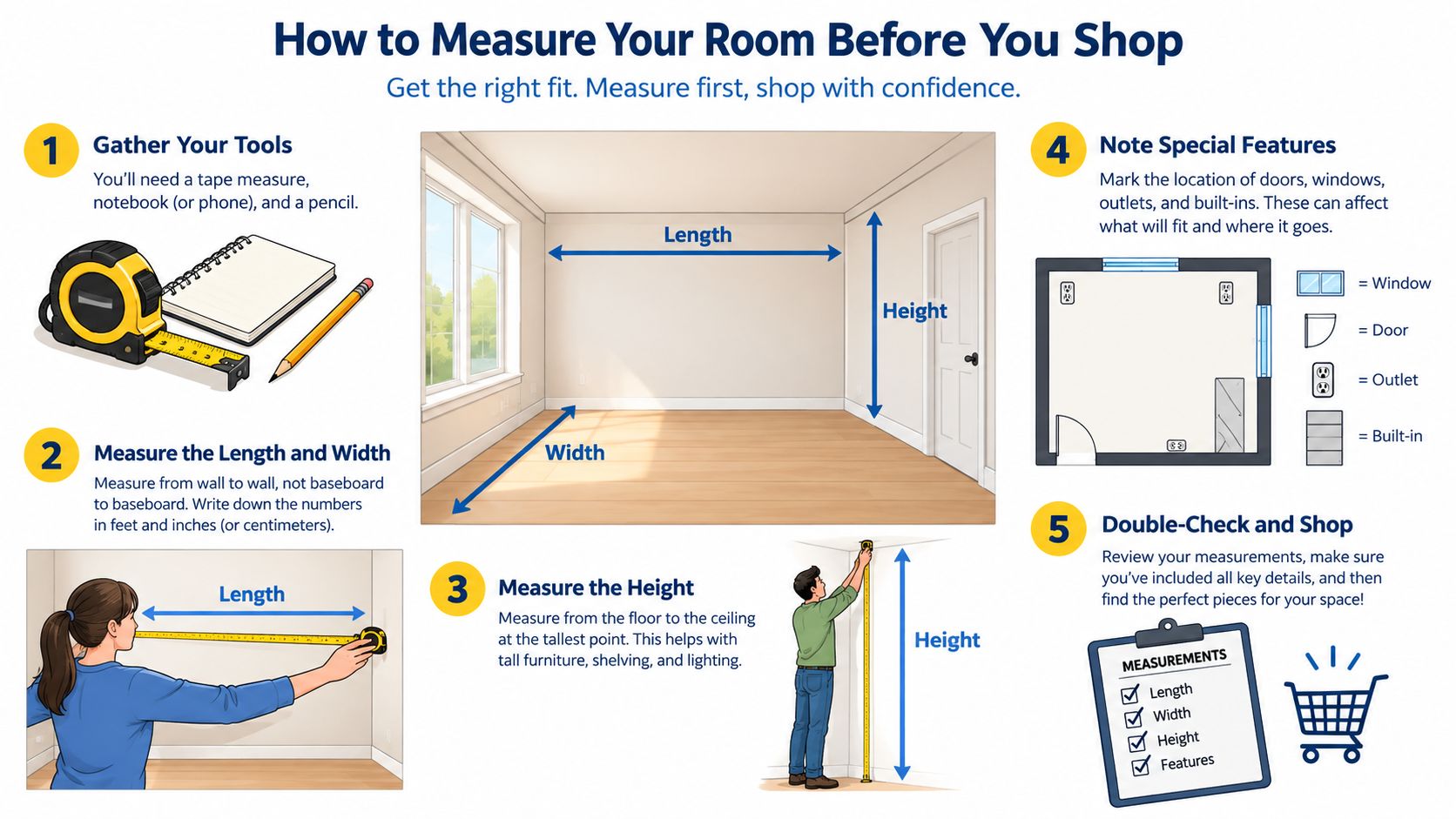
A couch that fits the wall can still fail at the doorway. Before visiting a Milwaukee showroom, measure the room, the walking paths, and the route from the truck to the final spot. That habit has guided our family's furniture work since 1928, and it prevents a budget purchase from becoming an expensive mistake.
Measure the wall span. A loveseat or compact sofa commonly fits within the 52 to 72 inch length range. Many small-space guides place an affordable sofa around 60 to 80 inches wide, while another compact-room recommendation favors a piece taking roughly two-thirds of the wall, with 60 to 72 inches of width and about 32 to 34 inches of depth (Lumens' sofa sizing guidance, small living room sofa benchmarks, compact-sofa sizing guidance). Use those figures as a starting point, then leave room for arms, end tables, and the way people move.
Protect circulation. Keep main walkways near 30 to 36 inches. Around the sofa, allow at least 18 inches of walkway space, and leave about 36 inches between facing furniture, following the same room-planning benchmarks cited above. Mark the coffee table before you shop. A couch that leaves no comfortable path to the kitchen is too large, even if it fits the wall.
Separate overall depth from seat depth. Overall depth runs about 30 to 40 inches for many compact couches. A room under 10 feet deep generally benefits from a sofa no deeper than 32 inches, as the same Lumens guide explains. Seat depth is a different measurement: 21 to 22 inches supports upright conversation seating, while 30 to 34 inches suits lounging but can crowd a coffee table in a room under 10 feet deep.
Measure the route, not just the destination. Record the narrowest doorway, its height, the open-frame width, and the diagonal clearance. Check the sofa's length, depth, and height, then measure the narrowest doorway with the door open. When the piece tilts, its back height may determine whether it clears the opening.
Use BILTRITE's furniture measuring guide for a room-by-room checklist. Our Milwaukee showroom can also help you plan for come-apart delivery when a stair turn, hallway, or older doorway makes a one-piece sofa risky. That is the kind of practical detail a 98-year family perspective brings to furniture meant to last longer than a lease.
Make the layout visible
Painter's tape is the cheapest design tool in the house. Trace the complete sofa footprint, including the arms, then mark the coffee table and nearby chairs. Walk through the taped layout carrying a laundry basket, vacuum, or child's toy. If the route feels awkward now, the finished couch will feel worse.
Mark outlets, vents, radiators, doors, and cabinet or closet swings. A couch that blocks an outlet or catches a door is poorly placed, regardless of its measurements on paper. A small couch earns its keep by preserving comfort and movement, not by measuring less.
Choosing the Right Style for Tight Rooms
The best configuration depends on what the room must do. A loveseat saves wall space and works well in a studio nook or alongside a separate chair. An apartment-scale sofa gives a household more continuous seating, while a small sectional can use a corner that would otherwise sit empty.
A convertible sleeper or futon adds a second job, which helps when guests have no dedicated room. The trade-off is usually cushion longevity and everyday comfort. Convertible mechanisms add moving parts, and a piece designed to sleep may feel firmer or less relaxed for long movie nights.
Match the shape to the room
A narrow rectangular room usually favors a shallow apartment sofa with slim arms. In a corner layout, a reversible chaise can give a sectional flexibility without locking the room into one orientation. Renters often benefit from lighter pieces, removable configurations, and raised legs that make moving and cleaning simpler. Owners can consider a more custom sectional or specific upholstery when the layout is likely to remain stable.
Armless designs recover usable seat width, while track arms use less visual and physical bulk than broad rolled arms. Raised legs also let light pass beneath the frame, making the room feel less crowded. In a high-traffic household, removable covers or practical woven upholstery can matter more than a decorative silhouette.
| Style | Typical Width | Best Room Shape | Key Trade-Off |
|---|---|---|---|
| Loveseat | Up to 72 inches | Studio nook or short wall | Seats fewer people |
| Apartment sofa | About 70 to 80 inches | Narrow living room | Less room for deep lounging |
| Small sectional | Compact corner configuration | Corner room or studio layout | More difficult to move unless it comes apart |
| Convertible sleeper | Varies by design | Multipurpose room | Sleeping function can reduce cushion comfort |
| Armless sofa | Varies by design | Very tight wall or open plan | Less arm support |
| Track-arm sofa | Varies by design | Narrow room | Cleaner look, sometimes firmer arm feel |
A useful style vocabulary makes showroom shopping easier, and BILTRITE's furniture styles guide can help shoppers identify the shapes that fit their homes.
One warning deserves attention. Curved and oversized lounge silhouettes may look visually soft, but a rounded arm or deep seat still consumes floor space. In a tight room, the measuring tape gets the final vote.
What Makes an Affordable Couch Actually Last
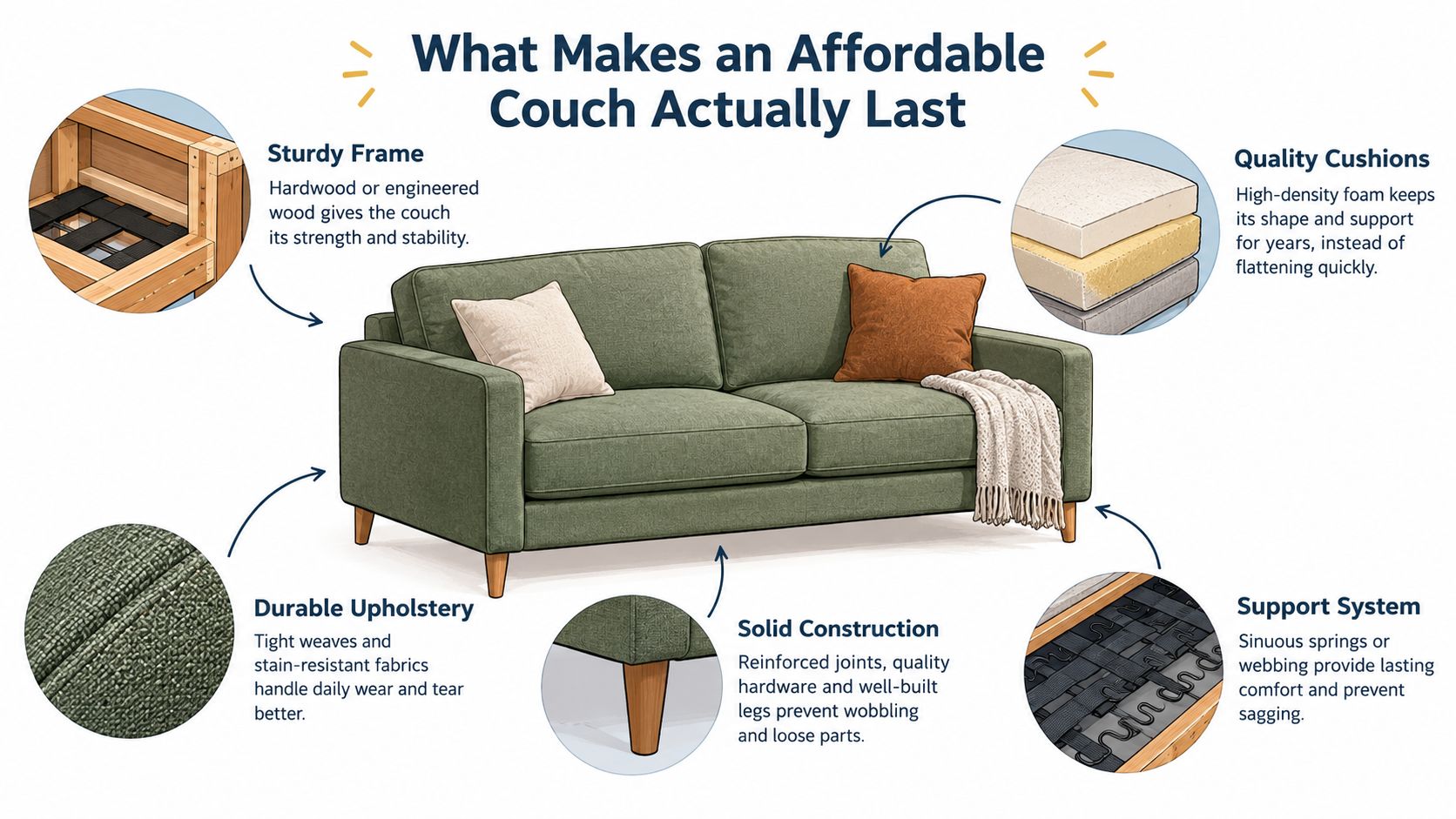
Durability lives in the couch's bones, not in the price tag. A shopper can inspect those bones without becoming an upholsterer, provided the couch is approached with a little patience.
Start with the frame. Hardwood, properly dried lumber, and strong corner reinforcement usually offer a more dependable foundation than thin panels or poorly joined sections. Look underneath and behind the piece. Exposed staples, hollow-looking legs, loose joints, and visible gaps deserve questions.
Test the frame and support
Joint construction matters. Corner blocks, dowels, screws, and secure fasteners generally give a frame more structural support than a connection relying on staples alone. Support systems vary, too. Sinuous springs can provide reliable comfort when properly installed, while more elaborate hand-tied systems offer a different construction approach. Pocketed coils can add a more responsive feel in some cushions and sleeper designs.
Cushion material changes the experience just as much. Basic polyfoam may feel comfortable in the showroom but lose resilience sooner than higher-resilience foam. Down-wrapped cushions add softness around a supportive core, while a spring or coil cushion can offer a distinct blend of bounce and structure.
The five-minute sit test is simple:
- Sit upright. Feet should rest comfortably on the floor, and the lower back shouldn't fight the cushion.
- Lean back. The back cushion should support the shoulders without forcing the head forward.
- Shift position. A cushion that immediately bottoms out or slides may become irritating at home.
- Stand up. Notice whether the seat recovers quickly or keeps a deep impression.
- Check the edges. Sit near an arm and inspect whether the edge holds firm.
Choose upholstery for the household
A woven performance fabric may suit children, pets, and frequent use better than a delicate textile. Leather has its own maintenance and aging characteristics, while bonded leather should not be treated as equivalent to top-grain leather. Stain treatments can help, but no finish eliminates the need for sensible care.
Fabric durability ratings provide useful context, and BILTRITE's fabric durability guide explains how to read that information instead of judging fabric only by color or hand feel.
A practical fabric benchmark sometimes used in furniture shopping is a rating above 30,000 double rubs, but the number must be read alongside construction, seam quality, cushion design, and household use. A durable fabric cannot rescue a weak frame.
Budgeting Without Sacrificing Comfort
A sensible couch budget starts with use, not wishful thinking. A starter piece can cover basic seating, while a mid-tier couch typically gives the buyer more choices in frame construction, cushion support, upholstery, and configuration. An investment piece may make sense when the sofa will remain through multiple moves, family stages, or room changes.
The price bands below are practical planning categories, not guarantees. Construction varies within every tier, so the shopper still needs to sit, inspect, and ask questions.
| Price Tier | Frame Quality | Cushion Fill | Upholstery |
|---|---|---|---|
| $599 to $799 | Basic to solid construction, inspect joints carefully | Basic foam or standard blended fill | Stock fabric options |
| $899 to $1,499 | More substantial frames and support choices | Better-resilience foam, wrapped or upgraded fills | Broader fabric selection |
| $1,500 and above | More customization and stronger long-term construction options | Expanded cushion and support choices | Premium, custom, or upgraded fabrics and leather |
Every dollar figure in this planning framework should be treated as a shopping range, not a promise of a particular build. A lower-priced couch with a sound frame can serve a renter well, while a more expensive couch with the wrong depth can still fail in the room.
Spend on the parts that affect daily life
A family should prioritize frame integrity, seat comfort, correct dimensions, and a fabric suited to the household. Decorative legs, extra pillows, and ornate details can come later. Leather may cost more upfront than stock fabric, but the right choice depends on care expectations, touch, appearance, and how the room is used.
Custom ordering can stretch value when the shopper already knows the room measurements. Choosing a fabric, leg finish, cushion feel, or configuration at the same store may prevent the cost of replacing a couch that never worked. It also avoids chasing a low sticker price while overlooking delivery, assembly, or return complications.
Stock furniture offers speed, while made-to-order pieces bring more control and may require patience. Floor models, seasonal clearance, holiday-weekend promotions, financing, and bundled delivery can change the final calculation. The hidden expense is the couch that can't enter the home, because a discount doesn't solve a doorway problem.
Delivery and Come-Apart Sofas for Tricky Doorways
A couch can be small enough for the room and still be impossible to deliver. Narrow hallways, sharp stair turns, elevator doors, and older door frames create the true test. That's why come-apart construction deserves attention before the purchase, not after the delivery truck arrives.
A modular or separable sofa may use removable arms, detachable legs, split backs, or sections that reassemble inside the home. Those details can turn an awkward delivery into a manageable one, especially when the entry route includes a tight turn. Shoppers seeking this feature can review BILTRITE's come-apart sofa guidance before visiting the showroom.
Run the delivery route
Measure the narrowest doorway with the door open, then check the hallway width and every turn. For stairs, note the width at the turn rather than measuring only the straight run. For an elevator, record the interior width, depth, and door opening. Photograph the route from the entrance to the room, including railings, light fixtures, and low ceilings.
Before scheduling, ask the store these direct questions:
- Which parts detach? Confirm whether the arms, legs, back, or sections come off.
- Who reassembles the couch? Find out whether the delivery crew handles assembly in the room.
- What service reaches the room? Curbside, threshold, in-home placement, and white-glove delivery are different services.
- Can the old piece leave? Ask about old-furniture removal and any preparation required.
- What happens during a tight delivery? Confirm how the team handles wall protection, damage concerns, and an unsuccessful route.
- How many people arrive? A heavy sectional needs an appropriate crew, not a hopeful one-person carry.
A two-person crew, clear scheduling window, and measured path prevent avoidable surprises. Keep the necessary fasteners and basic tools accessible if the delivery plan calls for on-site assembly, though the store should explain exactly what the crew handles.
Delivery wisdom: The narrowest point on the route matters more than the size of the living room.
For Metro Milwaukee shoppers, a showroom conversation can settle these questions before money changes hands. The right sofa may be compact, modular, or specifically designed to come apart, but the delivery plan should always match the home.
Why Shopping Local in Greenfield Pays Off
A photograph can't show how a cushion gives under the hips. A dimension chart can't tell whether an arm sits comfortably under a family member's elbow. Online descriptions also struggle to show how a frame feels when someone sits on the edge, leans back, or shifts position.
A showroom solves those unknowns quickly. Shoppers can sit upright, lounge, test arm height, compare seat depth, examine fabric texture, and look under the frame. That hands-on check matters even more in a small room, where a few inches can change both comfort and traffic flow.
Local knowledge has practical value
BILTRITE is a fourth-generation, family-owned furniture business serving the Metro Milwaukee community since 1928. The store offers small-scale furniture for apartments and compact homes alongside heavy-duty choices for households that need extra support. Its selection includes USA-made, Amish-made, and solid-wood furniture, plus custom options with choices of fabric, leather, wood, finish, and hardware.
The sales associates bring over 400 years of combined experience. That depth matters when a shopper needs help matching a couch to pets, children, frequent moves, an older home, or a difficult stairway. The conversation can stay focused on the room, the household, and the budget rather than on pressure to choose quickly.
BILTRITE Furniture-Leather-Mattresses offers in-store financing, in-stock furniture, custom ordering on selected pieces, delivery coordination, and options for old-piece removal. The Greenfield showroom at 5430 West Layton Avenue serves shoppers from across the Milwaukee area, with access from communities including New Berlin, Franklin, Oak Creek, Wauwatosa, Brookfield, Shorewood, Kenosha, Racine, and surrounding areas.
The store also carries a broad mattress selection, with over 60 models and 500-plus mattresses in stock, so a furniture visit can cover more than the living room. That broader household focus fits a family business that thinks beyond one transaction.
A sofa purchase should have a memory
Local shopping gives a household a place to return when a room changes or the next move creates a new measurement problem. A knowledgeable associate can keep the original dimensions, fabric preferences, and delivery concerns in view instead of making the shopper start from scratch.
That relationship is part of the value described in BILTRITE's guide to supporting local businesses. BILTRITE is closed on Sundays and Mondays to support family time, a policy that reflects its community-first values and #BUYLOCAL commitment.
BILTRITE Furniture-Leather-Mattresses offers small-scale sofas, loveseats, come-apart sectionals, USA-made and Amish-made furniture, plus custom options for compact homes and tricky delivery routes. Visit BILTRITE Furniture-Leather-Mattresses in Greenfield, bring the room measurements, and let the experienced team help find a comfortable couch that fits the space and the household.