Lift Chairs Leather vs Fabric Our Family’s Guide


A loved one needs a chair that feels comfortable after a long day, but getting up from the sofa has become a chore. The family starts asking practical questions. Will the chair help with standing? Will it hold up to daily use? Is leather easier to clean, or will fabric feel more secure and comfortable?
Those are the right questions. Leather lift chairs and fabric lift chairs solve the same mobility problem, but they feel very different in everyday life. The right upholstery depends on the user, the room, the cleaning routine, and how often the chair will move.
BILTRITE Furniture has helped Metro Milwaukee families make furniture decisions since 1928, and the fourth-generation, family-owned business approaches lift chairs the same way it approaches every major purchase. Comfort matters. Construction matters. So does knowing whether a chair fits through the doorway and works for the person who'll use it every day. The family story and local showroom experience are shared in BILTRITE's history.
Table of Contents
- Welcome to the Family A Guide to Lift Chairs
- What Makes a Lift Chair Special Anyway
- Leather vs Fabric The Head to Head Comparison
- Long Term Care for Your Lift Chair
- Choosing for Seniors and Caregivers
- Find Your Chair at BILTRITE in Greenfield
Welcome to the Family A Guide to Lift Chairs
A lift chair shouldn't feel like medical equipment dropped into the middle of a living room. It should feel like a useful, welcoming part of the home, one that gives a family member more support without taking away the comfort and dignity of choosing a favorite seat.
That's why the leather-versus-fabric decision deserves more thought than a quick glance at color samples. A senior who deals with frequent spills may appreciate a surface that wipes clean. Another person may feel more secure in a breathable, textured fabric that doesn't allow as much sliding during transfers. A caregiver may care most about seams, drying time, and keeping cleaning products away from the electronics.
Start with the daily routine
The best choice begins with the chair's hardest moment, not its showroom appearance. Does the user need help rising? Does the chair serve as a reading seat, television seat, napping spot, or recovery station? Will a caregiver assist with transfers?
Leather often brings a polished appearance and straightforward spot cleaning. Fabric offers broad variety in texture, color, and hand feel. Neither material automatically wins. The chair has to match the person's habits.
Practical rule: Choose upholstery for the life happening around the chair, not only for the way it looks under showroom lighting.
BILTRITE's team helps neighbors think through those details without pressure. The store doesn't sell online because a lift chair needs to be sat in, operated, and measured against the user's body. A remote can look simple on paper and still feel awkward in the hand. A seat can look roomy and still be too deep for a safe transfer.
That local, face-to-face approach matters in Greenfield and throughout Metro Milwaukee. Families deserve furniture advice that considers the whole room and the whole person, not just a product description.
What Makes a Lift Chair Special Anyway
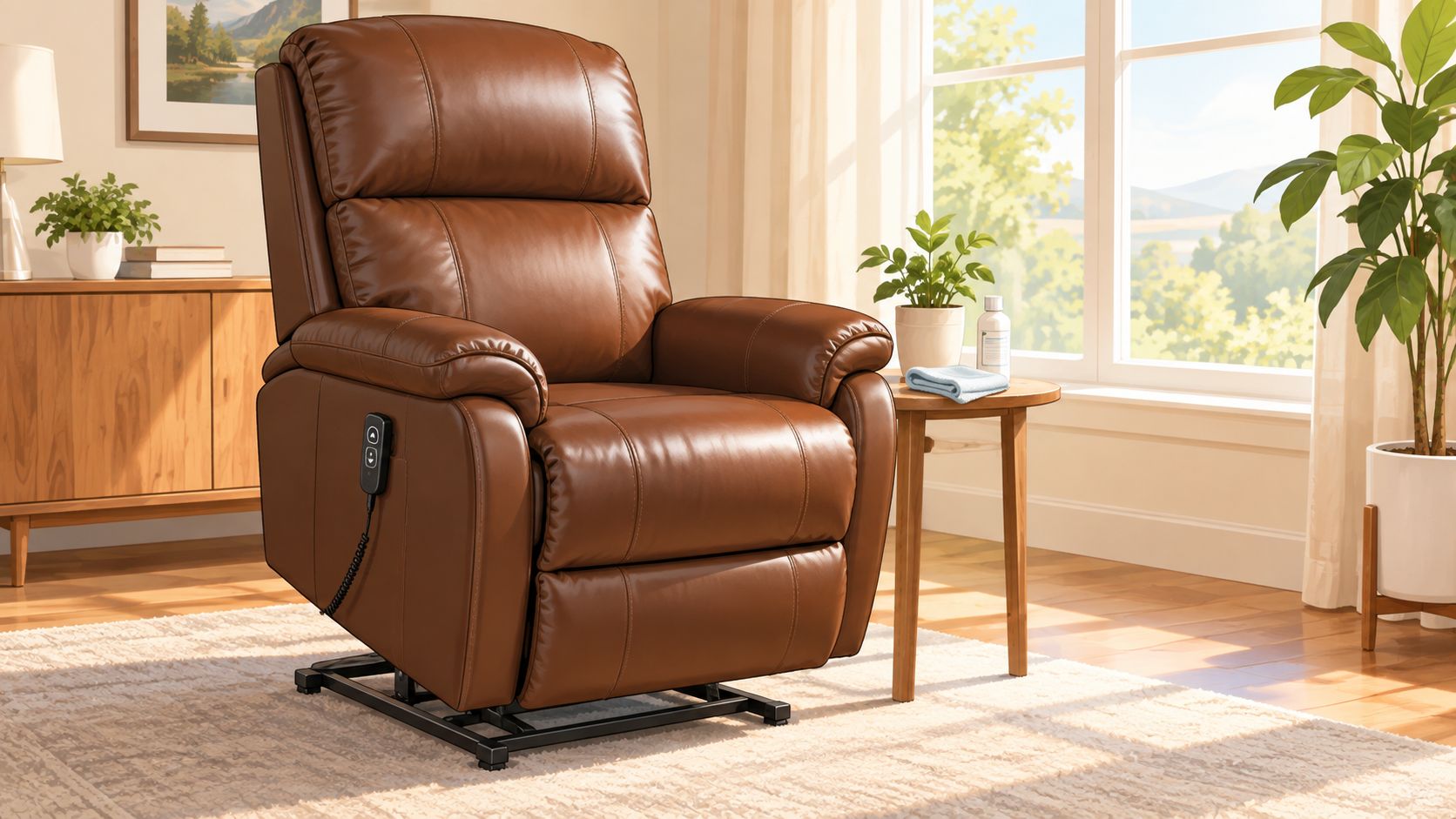
A lift chair is a powered recliner with an added job. It does more than lean the back and raise the footrest. Its lift mechanism tilts and raises the seating position so the user can move toward standing with less effort.
The process is simple for the person using it:
- Sit fully back with both feet positioned comfortably.
- Press the controller button to select lift or recline.
- Allow the chair to move steadily, rather than trying to stand before the seat reaches a supportive position.
- Use the armrests for balance once the chair reaches its upright setting.
Two motors, one smoother transition
A power lift recliner typically works with a base motor and a back motor. Pressing the controller sends an electrical signal to a motor, which moves a linear actuator and guides the chair into a reclining or vertical standing position, as explained in this overview of power lift recliner mechanics.
The technical explanation matters because it separates the upholstery from the mechanism. Leather doesn't create the lift, and fabric doesn't control the recline. The electrical system handles movement. The upholstery determines how the chair feels against the skin, how it looks in the room, and how the family will care for it.
A lift chair also needs sensible placement. Clearance behind the chair, an accessible outlet, and a remote that the user can operate all affect daily safety. Families comparing features can find more practical guidance in BILTRITE's lift chair benefits guide.
The strongest lift chair choice gives the user support without making the chair feel complicated. A large, clear control can matter more than a long list of extras. A stable seat and useful armrests can matter more than an oversized cushion.
Leather vs Fabric The Head to Head Comparison
The upholstery decision becomes easier when the trade-offs sit side by side.
Leather vs. Fabric Lift Chairs at a Glance
| Feature | Leather | Fabric |
|---|---|---|
| Everyday feel | Smooth, tailored, and often substantial | Soft, varied, and available in many textures |
| Cleaning | Spills can be blotted and the surface wiped carefully | May require more attention when liquids reach the weave |
| Wear focus | Inspect seat edges, arm tops, seams, and headrest contact areas | Inspect seams, cushions, and high-contact areas |
| Appearance | Classic and furniture-like | Cozy, casual, or decorative depending on the weave |
| Transfer feel | Some finishes may feel slick | Texture may offer a more secure seated feel |
| Best fit | Homes that value wipe-down convenience and a polished look | Homes that prioritize softness, breathability, and color variety |
Where leather earns its place
Leather makes sense for a busy household that wants a chair to look like traditional living-room furniture. Its surface can be easier to wipe after a small spill, and a well-chosen finish can complement wood tables, flooring, and other upholstered pieces.
Durability should be judged by evidence, not by the word “leather” alone. Upholstery leather can be evaluated with standardized abrasion methods, including ASTM D7255-20, because areas such as the seat edge and armrests endure repetitive contact. A documented test result offers more useful information about resistance to premature wear than a vague marketing phrase, as outlined in this standardized upholstery abrasion reference.
That point matters even more in a lift chair. The user may sit, recline, rise, and transfer from the same spots every day. Motion durability should outrank luxury language.
Where fabric pulls ahead
Fabric gives shoppers more variety in texture, pattern, and visual warmth. A textured fabric may feel less slippery during transfers, while a breathable weave can feel more comfortable during long seated periods. Those qualities can matter to a senior who dislikes the cool or smooth sensation of leather.
Fabric isn't automatically fragile, either. Its performance depends on the construction, finish, seams, and care instructions. Families should ask how the upholstery handles spot cleaning and whether a cushion or cover can be serviced if a problem develops.
BILTRITE's broader upholstery materials guide can help shoppers compare the hand feel and practical characteristics of upholstery before visiting the showroom.
The cost question
A premium leather lift chair may require a larger investment than a comparable fabric chair, but price alone doesn't settle the decision. A chair that looks attractive yet creates transfer trouble or difficult cleanup can cost a family more frustration over time.
The better question is simple: Which material will the user tolerate, maintain, and enjoy every day? For a spill-prone living space, leather may be worth considering. For someone sensitive to heat or sliding, fabric may be the more comfortable answer.
Long Term Care for Your Lift Chair
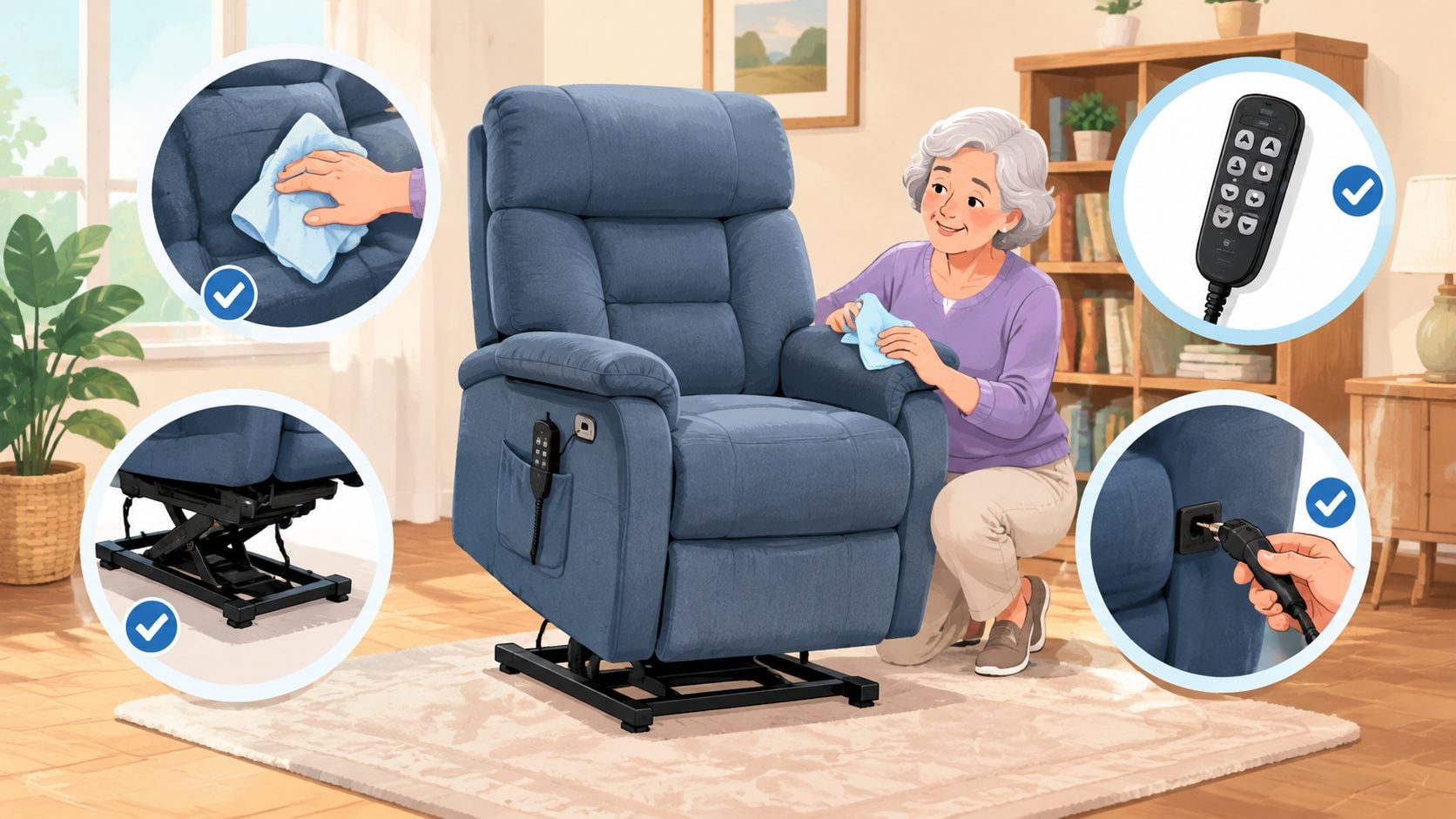
A lift chair earns daily attention because every rise, recline, and transfer stresses the same areas. Inspect the seat edge, back, arms, headrest, seams, and crevices instead of wiping only the visible cushion. That routine protects the upholstery and helps you spot wear before it affects comfort or operation.
Leather benefits from regular dust removal. Use a suitable vacuum attachment along seams and between panels, where grit can collect. Blot spills promptly and let the surface air-dry. Keep hair dryers and other heat sources away, since heat can damage the material.
A simple cleaning rhythm
Dust with a soft cloth. For a deeper clean, mix mild soap with distilled water and apply the solution to a cloth, never directly to the upholstery. Wipe gently, follow with a separate cloth dampened with clean water, and dry the surface with another cloth. The leather furniture care guidance supports this approach: handle leather gently, blot spills quickly, and avoid harsh chemicals or abrasive tools.
For product-specific upholstery instructions, use BILTRITE's upholstery cleaning tips. Follow the chair's care label before trying any cleaner.
Fabric also needs frequent vacuuming, particularly along seams and beneath removable cushions when the design permits. Absorb spills instead of rubbing them into the weave. The care label and manufacturer instructions should determine which cleaner, if any, you use.
Protect the moving system
Upholstery care is only part of ownership. Keep liquids away from controls, motors, plugs, and connections. Unplug the chair before cleaning near powered components, then wait until every damp area has dried before reconnecting or operating it.
Check the chair during routine cleaning. Loose stitching, changed cushion support, unusual movement, or an inconsistent remote response calls for attention before a small issue becomes a larger repair.
Daily-use advice: A few careful minutes of dusting and inspection protect upholstery better than an aggressive cleaning session after neglect.
Condition supported leather only with a product suited to its finish. Too much conditioner can leave the surface slippery or create residue, which may affect transfers. Consistent, gentle care paired with the chair's specific instructions is the right long-term routine.
Choosing for Seniors and Caregivers
A senior's lift chair must work through the whole daily routine, from sitting down and standing up to cleanup and caregiver assistance. In a Milwaukee home, measure the room and consider the user's strength, reach, clothing, and usual transfer habits before choosing leather or fabric.
Leather suits routines involving spills, meals, or incontinence because a smooth surface lets caregivers address messes promptly. It is not waterproof, so use gentle cleaners and protect the finish from harsh chemicals. The care guidance for lift-chair ownership reinforces the practical balance: easier wipe-down care still requires attention to the upholstery.
Transfer comfort comes first
Some leather finishes feel slick, particularly with smooth clothing or users who need firm positioning. Test the chair in person. Have the user sit, recline, return upright, and operate the lift function in ordinary clothing. A chair that looks supportive may still make transfers harder if the seat or upholstery shifts beneath the user.
Fabric often offers more grip through its texture and may feel warmer and more breathable. Liquids can soak into the weave, however, which makes the likely messes and the caregiver's cleaning routine part of the material decision.
Families may also want a supportive seat height, firm armrests, and a scale that fits the user. Those details are central to choosing the best lift chairs for seniors, especially when a caregiver helps with transfers.
Look closely at the contact points
Inspect the areas that receive the most daily use:
- Seat edge: Repeated sliding and transfer pressure can wear this area quickly.
- Arm tops: Users often depend on the arms for balance and support.
- Headrest: Hair, skin, and regular contact can leave oils and residue.
- Seams: Flexing places added stress on stitched areas.
- Remote placement: The user should reach the control without twisting or leaning.
For caregivers: Easy cleanup matters, but stability and control access matter just as much. Test temperature comfort, positioning, and the user's ability to operate the remote before deciding.
Leave a clear path around the chair. Do not wedge it against a wall or nearby furniture where caregivers cannot move safely. Choose the smallest chair that provides proper support, then confirm the fit in person. That long-term fit is where American-made quality and advice from a local, family-owned furniture store earn their value.
Find Your Chair at BILTRITE in Greenfield
Choosing a lift chair from a screen is difficult because the important details are physical. The seat may be too deep. The arms may be too low. The leather may feel cooler or smoother than expected. The remote may be simple for one person and confusing for another.
BILTRITE Furniture-Leather-Mattresses offers an in-store setting where families can sit, test the lift function, compare upholstery, and discuss room fit with sales associates who bring over 400 years of combined experience. The showroom includes affordable, better-quality furniture, USA-made and Amish-made pieces, solid wood furniture, small-scale options for apartments and senior living spaces, and heavy-duty choices for households that need extra support. The mattress department includes over 60 models, giving families another place to find practical comfort guidance while they're visiting.
BILTRITE is located at 5430 West Layton Avenue in Greenfield, Wisconsin. The store is closed on Sundays and Mondays so the family can protect family time, a value that remains part of its Metro Milwaukee roots.
Come down with the person who'll use the chair, if possible. Bring room measurements, think about the usual transfer routine, and let the team help narrow the choice without pressure.
BILTRITE Furniture-Leather-Mattresses offers lift chairs, leather furniture, mattresses, USA-made pieces, Amish-made furniture, and practical senior living options for Metro Milwaukee homes. Visit BILTRITE Furniture-Leather-Mattresses in Greenfield to try leather and fabric lift chairs in person and talk with a friendly, experienced team.