Small Space Bedroom Furniture Ideas from Our Family to Yours

That back corner of the bedroom is full again. The laundry basket is wedged between the bed and the dresser. One nightstand fits, the other doesn't. Getting to the closet means turning sideways. That's how a lot of small bedrooms feel in Metro Milwaukee, especially in older homes with charm, tight footprints, and not much extra breathing room.
A small bedroom doesn't need more stuff. It needs smarter furniture, a layout that respects the room, and a little honesty about what belongs in there. That's where the good small space bedroom furniture ideas live. Not in flimsy scaled-down pieces that look clever for a season, but in furniture that fits, works hard, and still feels solid years later. Since 1928, BILTRITE has helped local families sort through that exact challenge, and the lesson hasn't changed. Buy less, choose better, and make every inch earn its keep.
For neighbors hunting for ideas, small bedroom inspiration from BILTRITE is a strong starting point, but progress comes from understanding why some rooms feel calm and useful while others feel jammed from day one.
Table of Contents
- Welcome to Your Small Bedroom Makeover
- Start with a Smart Plan Not Just a Tape Measure
- Choosing Your Bedroom's Star Player The Bed
- Smart-Scale Furniture That Works Harder
- Layout Magic to Make Your Room Feel Grand
- Come On Down and Let Our Family Help Yours
Welcome to Your Small Bedroom Makeover
A small bedroom usually starts the same way. Someone moves in with good intentions, places the bed where it seems to fit, adds a dresser from the last house, squeezes in a nightstand, and suddenly the room feels defeated. The space isn't broken. The choices just weren't made for that room.
That's common around Milwaukee. Plenty of bedrooms have character, but they weren't built for oversized case pieces and bulky furniture that eats the walkway alive. A cozy room can still feel restful, useful, and pulled together. It just needs furniture scaled for real life, not furniture that bullies the floor plan.
Small bedrooms respond fast to smart decisions. One right piece can calm the whole room down.
BILTRITE has been part of the Metro Milwaukee community since 1928, and that long view changes how small rooms get furnished. A bedroom doesn't need a quick fix that looks tired a few years later. It needs a bed that adds storage, a dresser that fits the wall instead of overpowering it, and materials that won't sag or wobble after a handful of seasons.
A better way to think about a tight room
Small space bedroom furniture ideas should start with one opinionated rule. Stop trying to recreate a large bedroom in a smaller shell. That's the mistake. A small room needs its own strategy.
A good setup usually comes down to a few choices:
- Keep only what earns its space: If a piece stores nothing, solves nothing, and blocks movement, it's probably the first thing to question.
- Favor function over matching sets: Full matching bedroom suites often crowd a small room faster than people expect.
- Think long-term: Replacing cheap pieces again and again costs more space, more money, and more patience.
That's the heart of it. Small doesn't have to feel skimpy. It can feel warm, practical, and finished.
Start with a Smart Plan Not Just a Tape Measure
A small bedroom usually goes wrong before a single drawer gets loaded. Someone measures one wall, guesses at the rest, buys a cute little piece online, and then finds out the door clips the nightstand, the bed eats the walkway, and the room feels tight every time they step in. A good plan saves you from that mess.
Measure the room like it matters
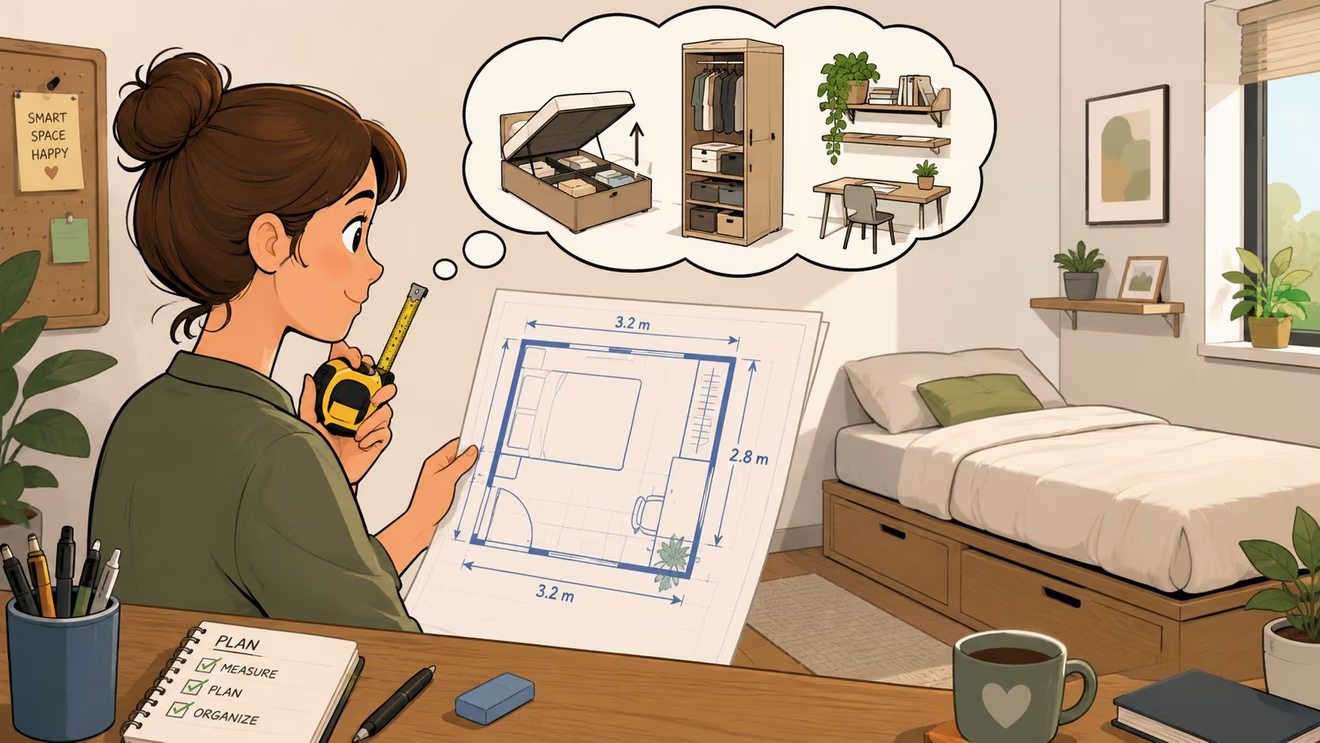
Start with the full picture, not just the floor dimensions. Measure the walls, note the door swing, mark the windows, vents, outlets, and radiator if you have one. Then sketch the room before you shop.
Good layout comes down to usable clearance. People need room to walk, open drawers, make the bed, and move through the space without bumping a shin every morning. Once those paths get pinched down too far, even a clean room starts to feel crowded.
Practical rule: If someone has to turn sideways to get around the bed, the piece is too big, the layout is wrong, or both.
That simple sketch also helps you avoid a common small-room trap. Cheap, nano-scale furniture can look like the safe choice on a screen, but a tiny dresser with shallow drawers or a flimsy nightstand that wobbles after a year does not add real value. In a small bedroom, every piece needs to earn its footprint for the long haul. Fewer, better-built pieces usually win.
If you want a clean way to catch the details people miss, use BILTRITE's furniture measuring guide before you buy anything.
Sketch first and shop second
Keep the sketch simple. A notebook page works fine. What matters is testing the room before the furniture shows up at your door.
Use this order:
- Draw the room accurately: Include wall lengths, windows, outlets, vents, and door swing.
- Place the hard-working pieces first: Start with the bed and clothing storage.
- Check the walking space: Leave clear paths where your feet travel every day.
- Question every extra piece: If it looks nice but stores little and blocks movement, leave it out.
Here is the blunt truth. A small bedroom does not have room for buying twice. That bargain piece that chips, sags, or loosens up in a few seasons costs more in the end, especially when replacing it means reworking the whole layout again. Smart planning helps you choose pieces with the right scale, but it also helps you choose quality that lasts. In a tight room, durability is part of the floor plan.
Choosing Your Bedroom's Star Player The Bed
You walk into a small bedroom, and the bed decides almost everything in the room before a dresser or nightstand ever enters the picture. Get this piece right, and the room feels calm and useful. Get it wrong, and every day starts with squeezed walkways, stubbed toes, and storage piled somewhere it should not be.

Pick a bed that earns its footprint
A small bedroom cannot afford a bed frame that does one job and wastes the space under it. Storage beds make a lot more sense here. Blankets, off-season clothes, extra linens, even shoes can live under the mattress instead of taking over a dresser, chest, or closet floor.
Size matters just as much.
A queen is not automatically the right answer. In plenty of smaller rooms, a full or twin gives the room back to you. That extra floor space often turns into a real walking path, room for a proper nightstand, or enough breathing room to keep the whole space from feeling boxed in. If you are comparing options, these small-space bed styles and storage bed choices show the kinds of designs that solve space problems without sacrificing comfort.
A small bedroom should protect sleep first, then storage, then style.
That order saves people from a lot of bad purchases. Lofted shortcuts and ultra-tiny frames can look clever online, but many adults want a bed that is easy to get into, solid under load, and comfortable for years.
Buy for ten years, not ten months
Here is the part too many small-bedroom articles skip. Fit is only half the job. The bed also needs to last.
Cheap nano-scale furniture often wins on price and loses everywhere else. Thin slats bow. Hardware loosens. Veneers chip. Drawers stop tracking straight. In a larger room, a weak piece is annoying. In a small bedroom, it is worse because the bed is the main piece, and replacing it means disrupting the whole room again.
Solid wood and well-built joinery hold up better over time, especially in storage beds that have moving parts and weight to carry. Amish-made and USA-made pieces usually cost more upfront, but they pay you back in years of steady use, fewer repairs, and a room that does not need to be reworked every time a flimsy frame gives out.
Construction matters on delivery day too. Older homes around Milwaukee often have tight stairs, narrow turns, and smaller door openings. Beds that come apart cleanly are easier to bring in and set up, and that practical detail matters just as much as the finish or headboard shape. BILTRITE Furniture-Leather-Mattresses is one local place where shoppers can compare those access-friendly designs alongside solid wood and storage options in person.
Smart-Scale Furniture That Works Harder
Once the bed is set, every other piece has to justify the floor space it takes.
Choose pieces that do two jobs
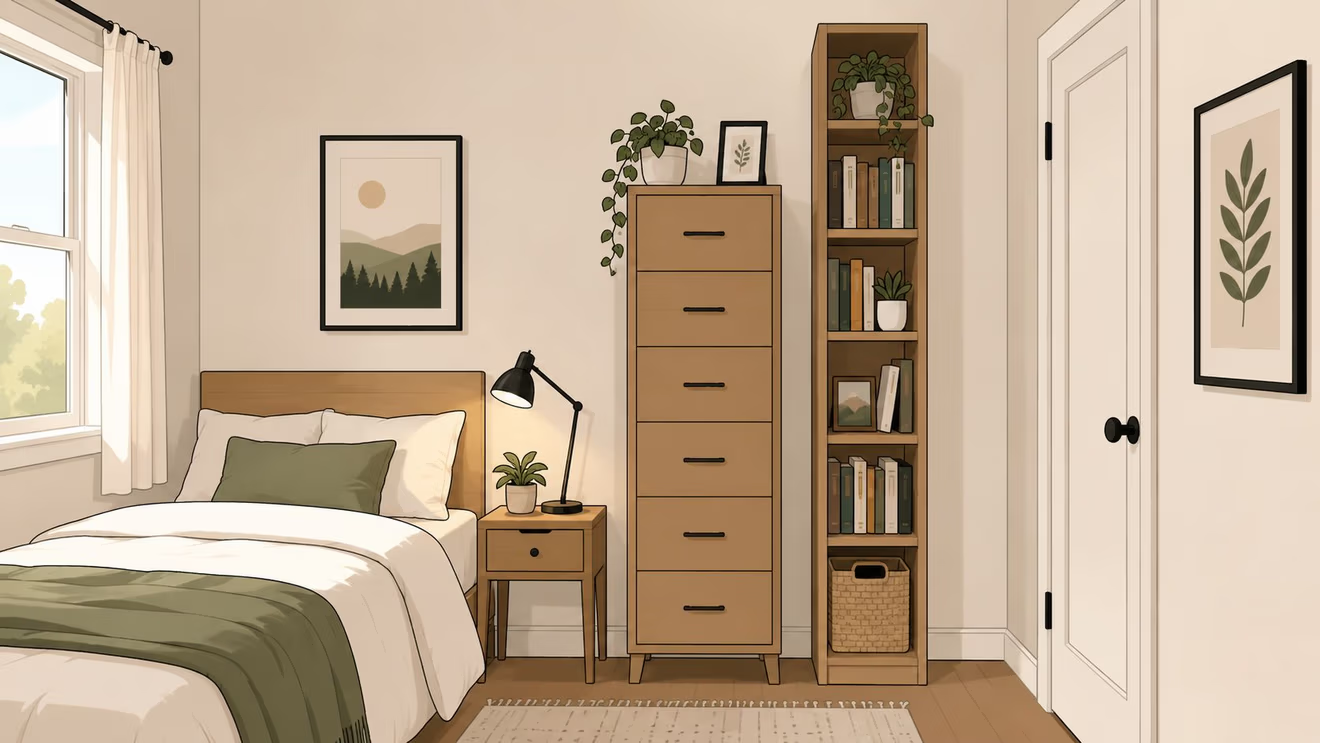
Small bedrooms do better with fewer, better pieces. A desk that also works as a vanity beats cramming in both. A storage bench at the foot of the bed earns its keep every day. A tall chest often does more good than a long, low dresser because it stores plenty without eating up the wall.
That is the real test. If a piece only does one small job, it needs a very good reason to stay.
Cheap small-scale furniture often misses this point. It saves inches by thinning everything down, then asks you to buy extra organizers, extra shelves, or a second piece later. That is not smart design. That is delayed clutter. Quality smart-scale furniture gives you usable storage, solid surfaces, and dimensions that fit the room without feeling disposable.
A practical short list looks like this:
- A narrow desk that doubles as a vanity: one surface, one footprint, two daily uses
- A storage bench or ottoman: useful for blankets, shoes, bags, or off-season clothes
- A taller dresser: better storage capacity with less demand on floor space
- A nightstand with a drawer and open shelf: closed storage up top, easy access below
Pick furniture that looks lighter
Size matters, but shape matters too. Furniture that sits up on legs usually feels easier in a tight room because you can see more floor beneath it. That visible floor helps the room read as more open and less packed in.
A nightstand with some air under it often looks better than a chunky box planted flat on the floor. The same goes for dressers, benches, and even accent chairs if you have room for one.
The more floor your eye can follow, the less crowded the bedroom feels.
Do not confuse lighter-looking with flimsier. That is where a lot of people get burned. Thin imported pieces with spindly legs may look airy for a season, then start wobbling, loosening, or racking out of square. Well-made USA and Amish-built pieces solve that problem. They keep the visual lightness, but they are still built with stronger materials, better joinery, and the kind of drawer action that holds up year after year.
If you want pieces sized for tighter rooms without settling for throwaway construction, small scale furniture for apartments and smaller homes is the right place to start. The good stuff is not just smaller. It is proportioned with purpose, built to work hard, and made to stay useful long after the cheap nano-scale options have been hauled to the curb.
Layout Magic to Make Your Room Feel Grand
A small bedroom can have good furniture and still feel awkward if the layout fights the room. Placement changes everything. A few simple moves create that “why does this feel better now?” reaction.
Use the walls wisely
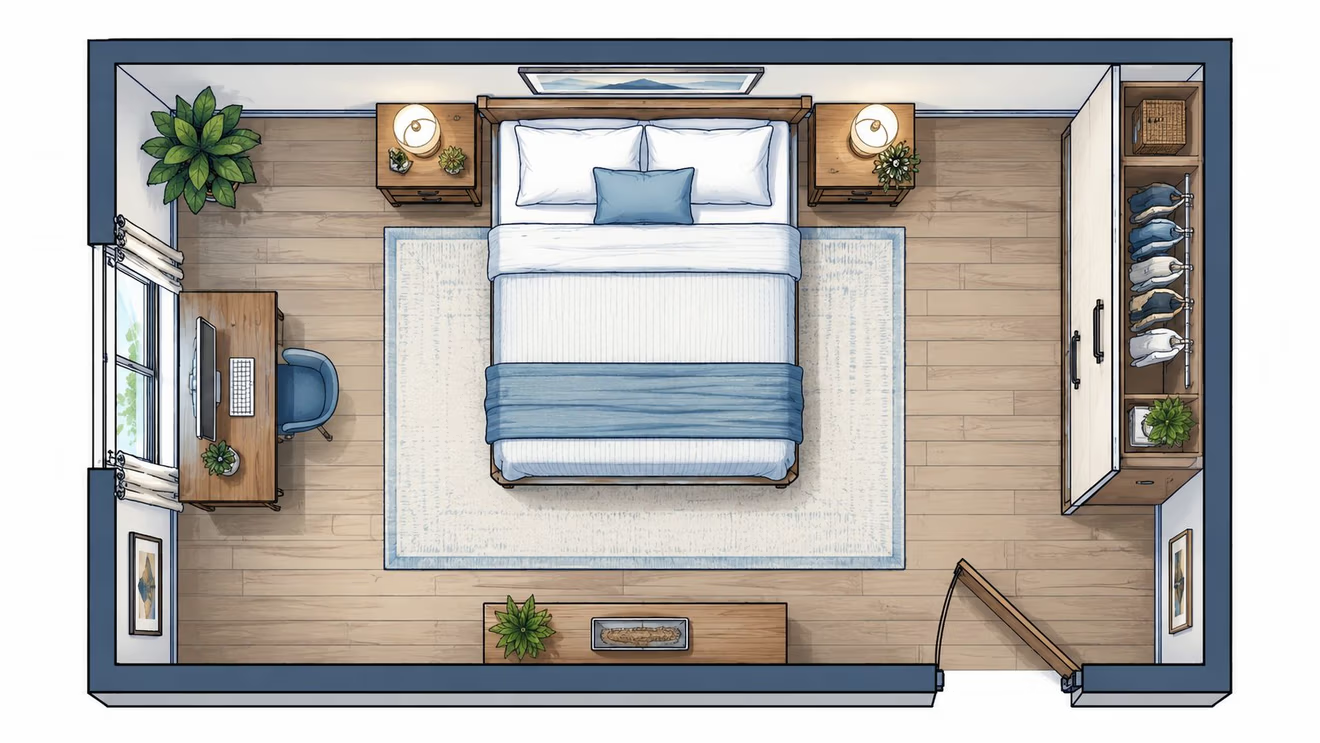
The strongest anchor in most small bedrooms is the longest solid wall. Putting the bed there usually calms the room and frees up circulation elsewhere. From there, wall-mounted lighting, floating shelves, and tall storage help the room stretch upward instead of outward.
Small-scale furniture built for apartments, condos, and senior living is specifically engineered for rooms under 100 square feet, including standard 8×10 foot spaces, so the furniture can function without overwhelming the room, as described on BILTRITE's history and small-scale furniture overview.
That matters because layout isn't just decoration. It's engineering on a household scale. A room under 100 square feet doesn't forgive lazy placement.
A few dependable moves help right away:
- Mount sconces instead of using floor lamps: That frees corners and keeps the floor cleaner.
- Use shelves above a desk or nightstand: Storage goes vertical without widening the footprint.
- Push furniture with purpose: Random floating pieces often break up the center of the room.
Let light and proportion do some heavy lifting
A mirror across from a window can brighten the room and add depth. Lighter finishes also help. So do tall bookcases and narrower case pieces that pull the eye upward.
There's a reason those tricks work together. A tight room feels larger when the floor stays open, the light travels, and the furniture respects the wall line instead of jutting into the walkway.
For homeowners experimenting with placement, BILTRITE's guide to arranging furniture in a small bedroom gives a helpful visual path. The big takeaway is simple. Don't decorate around a bad layout. Fix the layout first, and the decorating gets easier.
Come On Down and Let Our Family Help Yours
The good news is that a small bedroom can turn around fast. One smart bed, one right-size dresser, and a cleaner layout can change the whole feel of the room. The hard part is choosing pieces that fit the space and still feel worth bringing home.
That's where a local showroom still has real value. Families can open drawers, check the construction, compare scale with their own eyes, and see the difference between lightweight throwaway furniture and better-built small-scale options. That matters even more when durability is the whole point.
What the in-store process looks like
The process is usually straightforward and neighborly. Shoppers bring room measurements, note any tight hallways or stair turns, and talk through what the bedroom needs to do. Sometimes the answer is a storage bed. Sometimes it's a taller chest and one lean nightstand. Sometimes it's removing a piece that never belonged there in the first place.
BILTRITE has served Metro Milwaukee since 1928, and that family-owned history still shows up in how the showroom operates. The team is there to help people sort through real-life needs, not push them into a giant set that swallows the room.
Better small-room furniture isn't about cramming more in. It's about finally making the room work.
Why seeing furniture in person still matters
This store doesn't sell online, and that's an honest choice. Furniture is tactile. Wood species, drawer glide feel, mattress comfort, height, depth, and visual weight are all easier to judge in person. That's especially true for shoppers comparing USA-made and Amish-made pieces built for long-term use.
The Greenfield showroom also gives people access to a mattress department with over 60 models, plus a team whose sales associates bring over 400 years of combined experience. That kind of guidance helps when a small bedroom also needs better sleep, easier access, or furniture that can handle everyday family life. The store is closed on Sundays and Mondays so families can have family time, and that says plenty about the values behind the place.
Ready to make that bedroom feel calmer, more useful, and built to last? Visit BILTRITE Furniture-Leather-Mattresses in Greenfield and bring the room measurements along. The team would love to help neighbors compare small-scale options, see solid wood craftsmanship up close, and find furniture that fits the room without giving up comfort.