Gray Sleeper Sofa Buying Guide for Milwaukee Homes


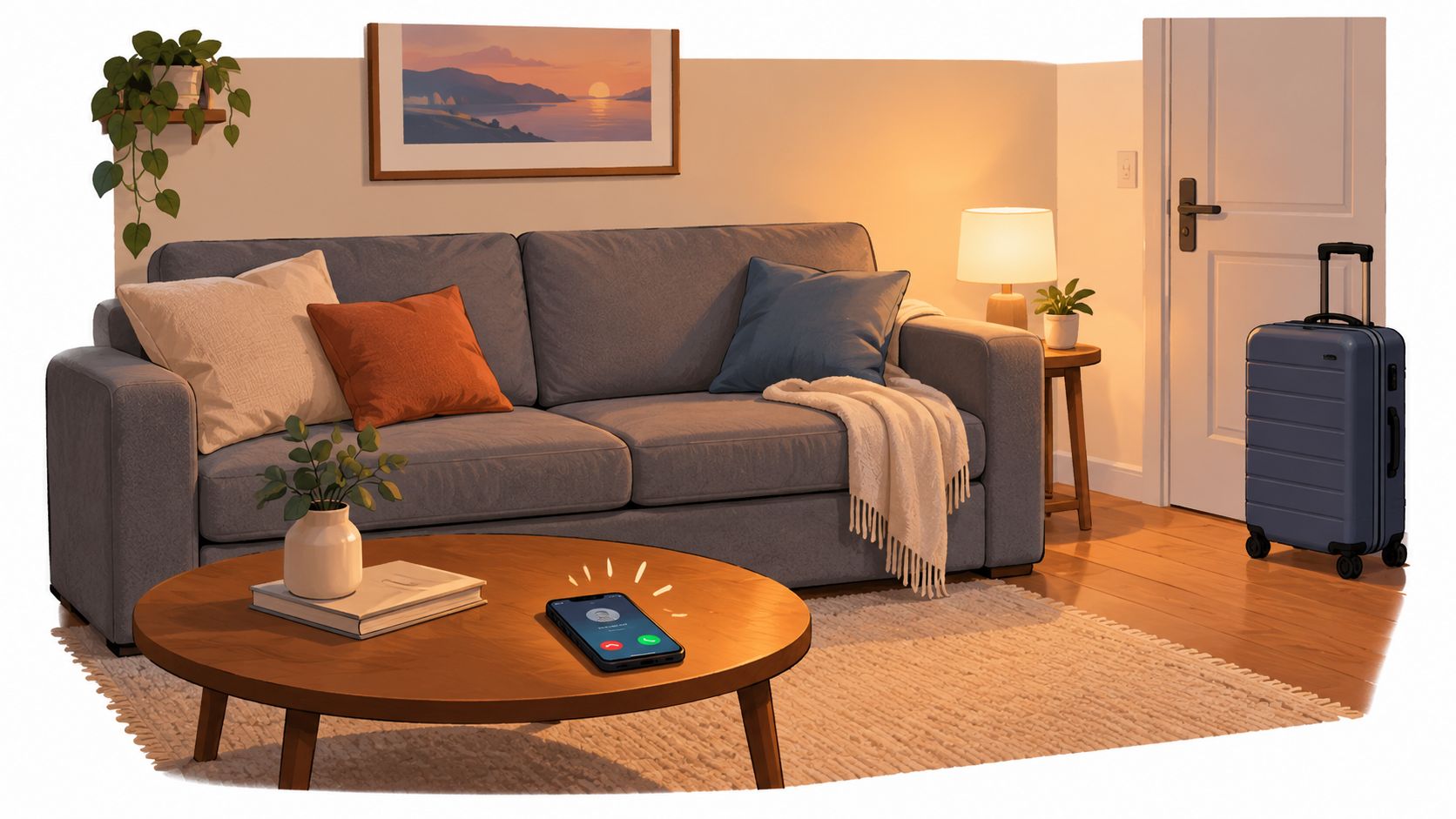
Friday evening, the phone rings. Family is coming to stay, and the living room has to become a guest room without turning the whole house upside down. In a Milwaukee apartment, condo, or smaller home, that's a familiar puzzle. A gray sleeper sofa can help, but only if it works as both a sofa your household enjoys every day and a bed your guests can sleep on comfortably.
That's the decision to keep in view: you're choosing two products in one footprint. Color matters, but so do the opening mechanism, mattress, upholstery, room measurements, delivery route, and materials inside the frame. A little checking in the showroom can save a lot of frustration after delivery.
Table of Contents
- Why a Gray Sleeper Sofa Earns Its Spot in Your Home
- The Three Sleeper Mechanisms Worth Knowing
- Why Gray Still Works and Which Shade to Choose
- Choosing Fabric That Survives Real Family Life
- Sleeper Mattress Sizes and What Actually Fits
- Small Spaces, Senior Guests, and Come-Apart Delivery
- What Is Actually Inside the Sofa You Sleep On
- Your Showroom Visit Checklist and a Friendly Invite
Why a Gray Sleeper Sofa Earns Its Spot in Your Home
The best reason to consider a sleeper sofa is simple: one piece gives a room a useful daytime setup and an overnight option. In a home office, it can provide a place to sit between work calls and a bed for a visiting relative. In a guest room, it can leave more of the room open for everyday use. And in an apartment, it can spare the floor space a separate sofa and bed would take up.
Gray makes that two-job piece easier to work into a home. It sits comfortably alongside wood, leather, black metal, white, blue, green, and warmer earth tones, so a change of paint or pillows doesn't automatically leave the sofa looking out of place. That flexibility matters when the furniture needs to stay useful through room updates, growing families, and different guests.
There's a long history behind the idea of furniture doing double duty. The foundation for modern sleeper furniture dates to July 18, 1899, when American inventor Leonard C. Bailey filed a patent for a folding bed with a metal frame designed to fold for storage and unfold for use; the metal mechanism offered a more compact, repeatable alternative to earlier all-wood convertible beds (history of the sofa bed). William Murphy's wall-bed patent followed in 1900, then came a Davenport bed patent in 1905, a patent identified with the modern sofa bed in 1925, and the Castro convertible in 1931. The gray sleeper sofa carries that same practical idea forward, with seating by day and a sleeping surface when guests arrive.
The useful question isn't just “Will it fit?” Ask whether the room will still work when the bed is open, and whether you'd be happy sitting on the sofa when it's closed.
For senior living spaces and homes with older guests, the same two-in-one promise needs a closer look. A compact sofa may be easy to place but hard to sit down on or get up from, while a bed that blocks the walking path can make the room awkward overnight. Think about who will use it and how often, not just how tidy it looks against the wall.
The Three Sleeper Mechanisms Worth Knowing
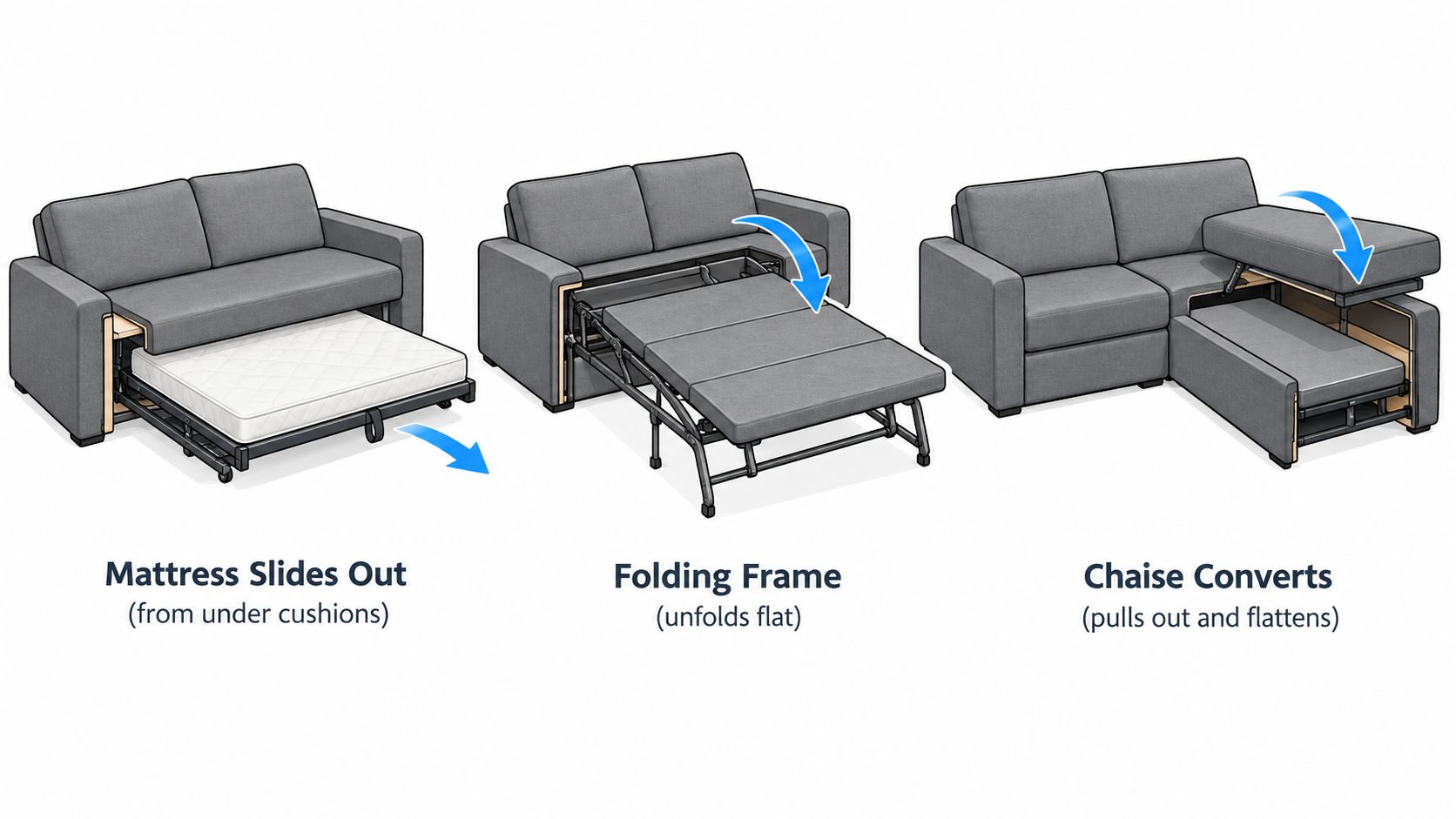
Start by finding out how the piece turns into a bed. The word “sleeper” covers different mechanisms, and the mechanism changes what you'll need to move, how much floor space the bed occupies, and what your guest sleeps on. For a plain-language overview, see BILTRITE's guide to sofa-bed mechanisms.
| Mechanism | How It Works | Best For | Trade-Off |
|---|---|---|---|
| Pull-out | A separate mattress and folding frame are stored beneath the seat cushions. The cushions come off, and the frame pulls forward and unfolds. | Guests who'll appreciate a separate mattress and a more bed-like setup. | Needs open floor space in front, and setup involves unfolding the frame. |
| Fold-down | The sofa back folds down to make a flat sleeping surface, often using the sofa's own seat and back. | Rooms where a simpler conversion and compact setup matter. | The sleeping surface may feel more like a converted sofa than a separate mattress. |
| Trundle-style | A lower platform slides out from beneath the main seating area to create a second surface. | Smaller rooms where a pull-out mattress frame may be difficult to accommodate. | The sleeping area and setup can differ from a conventional pull-out, so test the exact model. |
Match the mechanism to the room
A pull-out can be a sensible choice when guests need a separate mattress and the room has enough clear floor space. But don't measure only the sofa's parked position. Open the frame fully and check whether the bed leaves a workable route to the door, hallway, or bathroom.
A fold-down or trundle-style option may suit a room where a projecting mattress would interrupt daily traffic. That doesn't mean every compact design will feel comfortable for every guest. The flat surface, joins between cushions, and ease of conversion all deserve a hands-on test.
Test the routine, not just the label
Ask the associate to show the exact opening and closing steps, then try them yourself. Check where the cushions go, whether the frame locks flat, and whether the process feels manageable for the person who'll set it up at home. If the room is tight, make a floor plan that includes the open bed and the furniture that has to move.
Why Gray Still Works and Which Shade to Choose
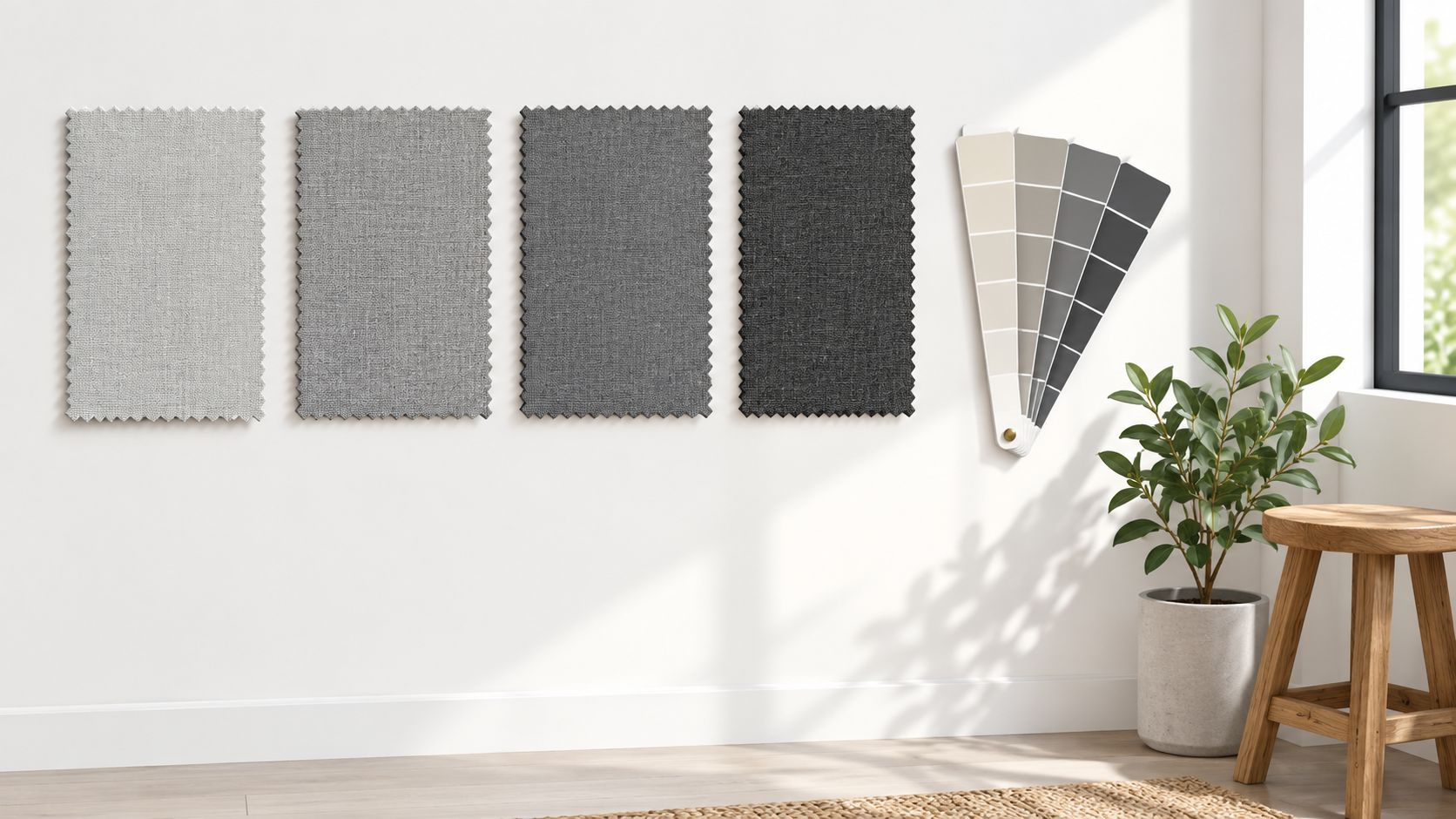
Gray isn't the runaway décor choice it once was, but it remains a useful furniture neutral. During the 2010s, gray became a frequent default for walls and furnishings, often taking the place of beige. In a 2020 color-trends report cited by the Indianapolis Business Journal, 20% of design experts believed gray would remain highly popular, while more than half expected people to keep using it (reporting on gray's staying power). That points to a practical conclusion: gray is still versatile, even if it no longer leads every room trend.
Shade matters. Cool, blue-toned gray has attracted more criticism as warmer neutrals and earthier palettes have gained attention. For a piece that may stay through several décor changes, consider warm gray, greige, charcoal, or textured gray before settling on a stark, cool shade. Each can sit comfortably with a range of finishes and accent colors without demanding that the rest of the room follow one narrow palette.
Let the room make the final call
Check the fabric in the actual light where the sofa will sit, or bring home a swatch if that's an option. Daylight and evening lamps can change how a gray reads. Compare it with the floor, wall color, wood tones, and the rug rather than choosing from a small sample under showroom lighting alone.
Textured fabric can also bring depth to a neutral sofa and make it feel less flat. Then use pillows and throws to bring in a color that can change more easily than the upholstery. For ideas on coordinating the rest of the room, BILTRITE's guide to rug colors that work with a gray couch offers another starting point.
A good gray should work with the room you have and the room you may want later. Choose the tone in person, beside the colors and materials already at home.
Choosing Fabric That Survives Real Family Life
A sleeper sofa's upholstery has a busy assignment. People sit on it, sleep against it, open the mechanism, and clean it after everyday spills and household traffic. For families with children, pets, or frequent overnight guests, the fabric spec deserves the same attention as the mattress.
Ask for the test method and its result, not just a “heavy duty” label. ASTM D4157 (Wyzenbeek) reports abrasion in double rubs. ASTM D4966/ISO 12947 (Martindale) reports abrasion in cycles. The tests use different motions, so their results shouldn't be directly converted into one another.
For general contract-level performance, a neutral commercial textile guide identifies about 15,000 Wyzenbeek double rubs or 20,000 Martindale cycles. It identifies about 30,000 double rubs or 40,000 Martindale cycles as heavy-duty upholstery (textile quality standards). For a busy Metro Milwaukee household, a practical target is at least 30,000 Wyzenbeek double rubs or 40,000 Martindale cycles, provided the manufacturer names the standard used.
Ask for the rest of the fabric story
Abrasion resistance doesn't tell you how the fabric handles every other challenge. Ask about seam slippage, pilling, colorfastness, and cleaning code. Those details help distinguish a fabric that holds up to rubbing from one that's also manageable when a drink spills or the sofa sees regular use.
Gray may make some dust less obvious, but it can show oils, lint, and pet hair that contrasts with the fabric. A well-documented cleaning method is more useful than choosing gray on the assumption that it won't need care. BILTRITE's performance fabric furniture guidance is a helpful place to start a conversation about upholstery options.
A quick showroom checklist
- Confirm the standard: Ask whether the number uses Wyzenbeek or Martindale, and get the result in that test's own units.
- Check cleanability: Find out what the cleaning code allows before bringing the sofa home.
- Look at the weave: Consider how the texture and color will look with your household's usual dust, lint, and pet hair.
- Ask about other tests: Request available information on pilling, seam slippage, and colorfastness.
A fabric that suits your life is usually the wiser pick over one chosen for a swatch's first impression.
Sleeper Mattress Sizes and What Actually Fits
Don't assume a sleeper-sofa mattress matches a standard bed because the label says “queen.” A commonly listed queen sleeper mattress is about 60 inches wide by 72 inches long, while a conventional queen mattress is typically 60 by 80 inches. That difference in length can matter to a taller adult or teen who expects the proportions of a regular queen bed.
Typical sleeper mattress ranges are about 35–39 by 72 inches for twin, 52–54 by 72 inches for full, and 60 by 72 inches for queen. The sofa itself is wider than the mattress because the arms and frame add bulk; a queen sleeper sofa may be roughly 78–90 inches wide. Measure the actual model's closed width and opened depth rather than relying on its mattress category.
Check the mattress and frame together
A pull-out mattress has to fold within the mechanism. One guide reports that many sofa-bed frames accommodate a mattress around 4.5 inches thick, with about 5 inches sometimes possible on premium frames. A thicker replacement can stop the frame from closing correctly or put extra stress on the mechanism (sofa-bed mattress guidance).
That limit is a mechanical one, not a promise that a thicker mattress will feel better. Confirm the manufacturer-approved mattress dimensions before replacing one, and test the mattress that comes with the sofa. Lie down and check whether the surface supports the hips and shoulders, stays level, and keeps bars or hinges from pressing through.
Measure the sleep surface, not the sales label. The guest's actual body and sleeping habits matter more than the bed-size name printed beside the sofa.
For the room, measure the sofa's closed footprint, the bed's fully opened depth, and the route through the home. Include the hallway, stair turns, and doorway, then consider where the coffee table or other furniture will go at night. BILTRITE's guide to sofa-bed dimensions can help frame those measurements before a showroom visit.
Small Spaces, Senior Guests, and Come-Apart Delivery
A small sofa isn't automatically the most practical choice for a small room. The closed footprint may be compact, but the bed can block a path or force the coffee table into an awkward corner. The useful measure is how the room works in both modes, plus whether the furniture can get through the home's entrance and stairway.
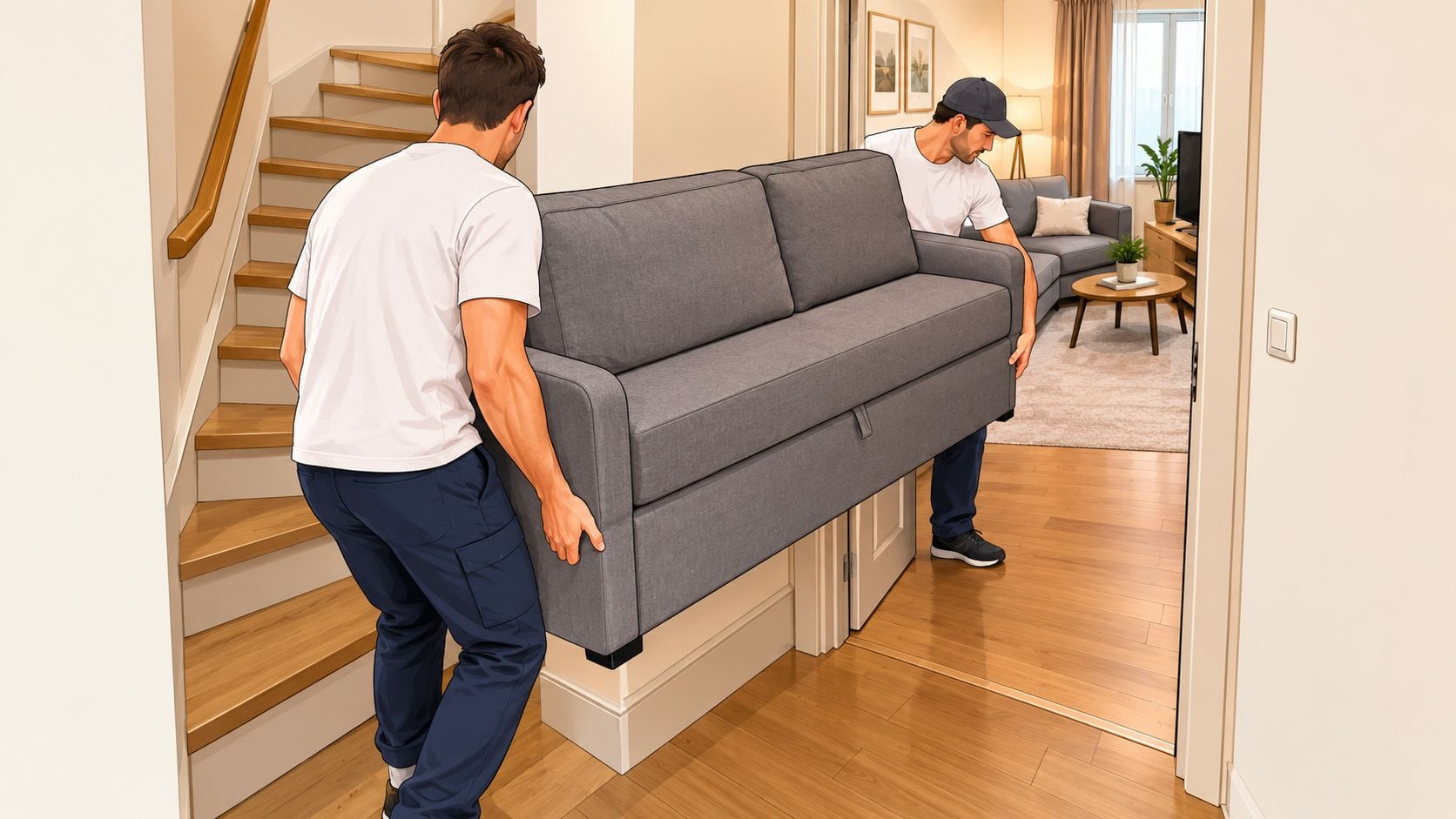
That matters across Metro Milwaukee, where apartments, condos, senior living spaces, and older homes can have tight hallways or narrow doorways. Measure the full delivery route, including turns and stair landings, not just the front door. Some sofas, loveseats, sectionals, and recliners are built to come apart for delivery, which can make a difficult route manageable without making the furniture itself feel flimsy. BILTRITE's information on furniture that can come apart explains the option.
Compact has to mean usable
Small-scale furniture can help a room feel less crowded, but compact dimensions can come with reduced seat depth. That may be fine for a short visit and less comfortable for someone spending a long evening on the sofa. The bed needs its own assessment too, especially if an older guest or taller adult will use it regularly.
Before choosing the smallest available option, check seat height, arm height, mattress thickness, edge support, and how easily the mechanism opens. A senior guest may value an easier rise from the seat more than a few inches saved in sofa width. And if the bed blocks circulation every night it's open, the compact closed size hasn't delivered much practical space-saving.
The best fit is the piece that can be delivered, used as a sofa, and opened as a bed without turning the room into an obstacle course. Mark the sofa and bed footprints on the floor, then walk the route people will use when guests are staying. If the plan only works when nobody needs to pass through, keep looking.
What Is Actually Inside the Sofa You Sleep On
Gray is a color, not a safety certification. An upholstered sleeper sofa may contain foam, adhesives, composite wood, finishes, fabrics, and treatments, so the construction deserves its own questions. The EPA identifies textile and foam components of upholstered furniture as potential formaldehyde-emitting materials, and notes that furniture-related materials and finishes can also be sources (EPA indoor-air exposure assessment).
The Center for Environmental Health notes that furniture can emit formaldehyde and other volatile organic compounds, and that indoor VOC concentrations can be up to ten times higher than outdoors (furniture emissions and indoor air). That's a reason to ask what a specific model is made of, not to assume every sofa has the same materials or emissions profile.
Ask before deciding
- Frame and substrate: Is the frame solid wood or composite, and what other substrate materials are used?
- Foam: What type and density of foam does the sofa use?
- Emissions: Is there low-emissions documentation or a certification such as GREENGUARD Gold?
- Flame retardants: What does the TB 117-2013 label indicate about added flame-retardant chemicals?
- After delivery: What ventilation steps does the seller recommend if the sofa has a noticeable odor?
The American Lung Association advises airing furniture out for two to three days before bringing it indoors and notes that laminated furniture surfaces generally release less formaldehyde than unfinished pressed wood. BILTRITE's focus on USA-made, Amish-made, and solid-wood furniture gives shoppers a chance to ask direct questions about construction and materials. Whatever the origin, request information about the particular model rather than treating a broad label as a substitute for details.
Your Showroom Visit Checklist and a Friendly Invite
A sleeper sofa needs a hands-on test. Since BILTRITE doesn't sell online, a visit lets shoppers operate the mechanism, lie on the mattress, inspect fabric, and ask about the materials before making a decision.
Bring measurements of doorways, hallways, stair turns, room clearance, and the bed's open footprint. Then check the sofa in person:
- Open and close it repeatedly: Try the conversion at least five times and see whether the frame locks flat without excessive force.
- Test the bed: Lie down and check hip and shoulder support, levelness, and whether a bar or hinge is noticeable.
- Ask about materials: Get the foam type and density, plus any emissions documentation.
- Review upholstery: Confirm the abrasion-test method, cleaning code, and fabric-care guidance.
BILTRITE is a fourth-generation, family-owned business serving Metro Milwaukee since 1928, with a large in-stock selection, affordable custom options, and a focus on USA-made and Amish-made furniture. The team has over 400 years of combined sales experience and is there to help without pressure. The showroom is closed on Sundays and Mondays for family time.
BILTRITE Furniture-Leather-Mattresses offers a hands-on showroom experience, furniture in a range of sizes and materials, and guidance on choosing a sleeper sofa that suits both your room and your guests. Visit BILTRITE Furniture-Leather-Mattresses in Greenfield to test the mechanism, check the mattress, and ask our team anything, with no pressure to buy.