Commercial Grade Furniture: Why It Lasts & Where to Find It


A lot of people land in the same spot. The sofa looked good under the showroom lights, the dining chairs seemed solid enough, and the price felt manageable. Then real life showed up. Kids dropped onto the cushions, guests leaned back at dinner, a dog claimed the corner seat, and suddenly the furniture started telling the truth.
That truth usually sounds like squeaks, wobbles, sagging, loose joints, and fabric that looks tired way too soon.
Around Metro Milwaukee, that story has been walking through furniture store doors for generations. Families want something that looks warm and welcoming, but they also want furniture that can take a beating and keep going. Small business owners want something presentable, but they can't afford to replace it after a short run. That's where commercial grade furniture enters the conversation. Not as a buzzword. As a smart filter for buying better.
Table of Contents
- Tired of Furniture That Just Does not Last
- What Exactly Is Commercial Grade Furniture
- The Secrets to Built-to-Last Construction
- Who Uses Commercial Grade Furniture You would be Surprised
- The BILTRITE Difference Where Durability Meets Family Values
- Your Smart Shopper Checklist for Heavy-Duty Furniture
- Finding Real Long-Term Value Here in Milwaukee
Tired of Furniture That Just Does not Last
A wobbly chair doesn't start as a big problem. At first, somebody tightens a screw. Then they tighten it again. Before long, that chair becomes the one nobody wants to sit in at Thanksgiving. The same thing happens with sagging sofas. The seat dip starts small, then everybody in the house knows exactly where the weak spot is.
That frustration is common because many shoppers are buying for how furniture looks on day one, not how it behaves after daily use. Busy homes put furniture through a lot. So do rental units, waiting areas, home offices, and family rooms that run from breakfast through movie night.
Why this keeps happening
A lot of residential furniture is built for lighter, more predictable use. That's fine for some spaces. It isn't fine for every space. A house with kids, pets, frequent visitors, or aging parents often puts more strain on furniture than people expect.
That's why it helps to learn how long furniture should last in different rooms and situations. A chair for occasional use and a chair for constant use shouldn't be judged by the same standard.
Furniture failure usually isn't bad luck. It's often a mismatch between how a piece was built and how a family actually lives.
What shoppers in Milwaukee really want
Individuals aren't asking for flashy terminology. They want three simple things:
- Stability: no rocking, shifting, or looseness after regular use
- Staying power: cushions, joints, and surfaces that hold up over time
- Value: fewer replacements and fewer headaches
Commercial grade furniture matters because it answers those needs directly. It shifts the question from “Does this look good today?” to “Will this still feel solid after years of use?” That's a much smarter question, especially for households that need furniture to work hard.
What Exactly Is Commercial Grade Furniture
Commercial grade furniture is furniture built for places where people use it all day, every day. Offices, hospitality spaces, healthcare settings, schools, and public waiting areas rely on it because those environments don't forgive weak construction.
A simple way to think about it is this. A sedan handles everyday errands just fine. A dump truck is built for repeated heavy work. Both move. Both have a purpose. But nobody confuses the two once the job gets demanding.

Built for use, not just display
That's the heart of commercial grade furniture. It isn't just bulkier residential furniture. It's designed from the start for tougher service. The frame, joints, finishes, and seating components are chosen with repetition in mind.
That matters because demand in this category is substantial. North America generated over USD 21 billion annually in commercial furniture sales when including Canada and Mexico, with the United States alone at over USD 15 billion as of 2023. Buyers don't spend at that level by accident. They do it because heavy-use spaces need furniture that keeps performing.
Where it fits best
Commercial grade furniture usually makes sense in spaces like these:
- Busy family rooms: households with kids, pets, and constant use
- Home work areas: desks and chairs that get daily wear
- Shared properties: rentals, common areas, and multi-use rooms
- Small businesses: reception seating, guest chairs, break areas, and offices
A good rule is simple. If a piece will get used by many people, used every day, or used hard, commercial grade deserves a serious look.
It's not only for businesses
Often, shoppers are surprised that commercial grade doesn't mean cold, stiff, or institutional. It means the bones of the furniture are built for more punishment. The appearance can still feel warm, classic, refined, and right at home in a Milwaukee living room.
That's why this category matters beyond office buildings. A family that wants durability without giving up comfort often benefits from the same construction standards that public spaces depend on.
The Secrets to Built-to-Last Construction
The biggest differences in commercial grade furniture usually aren't the parts people notice first. They live underneath the seat, inside the frame, and at the joints where stress shows up over and over again.
That's why two chairs can look similar from across the room and perform very differently after regular use.

Stronger materials change everything
One clear example is metal chair construction. Commercial grade furniture often uses 18-gauge steel frames, while residential metal furniture commonly uses 20 to 22-gauge steel. Thicker steel gives the frame more resistance to bending and fatigue under frequent daily use.
That same source notes that this heavy-duty construction can deliver a 2 to 3 times longer service life than residential counterparts when used in demanding settings. That's the kind of detail that affects ownership cost in actual use, not just on a sales tag.
Joinery matters more than most shoppers think
Wood furniture tells the same story. A sturdy piece depends on how the parts lock together, not just how the finish looks. Better joinery helps a chair stay square, helps a table stay firm, and helps drawers keep working without slop.
For wood construction, it helps to understand what a mortise and tenon joint is and why it matters in lasting furniture. Strong joinery is one of those quiet signs of quality that pays off for years.
What commercial testing looks for
Commercial grade furniture also gets judged against recognized performance standards. BIFMA outlines benchmarks for durability and safety, including 100,000+ cycles for chair mechanisms and weight capacity ranges that often fall between 300 and 500 lbs per seat.
That kind of testing matters because it checks things shoppers can't easily measure with a quick sit in the showroom.
| Construction detail | Why it matters in daily use |
|---|---|
| Thicker frame material | Resists bending and fatigue |
| Reinforced joints | Reduces wobble and loosening |
| Durable surfaces and fabrics | Handles abrasion and cleaning better |
| Standardized testing | Confirms performance under repeated stress |
Practical rule: If the seller can't explain what's inside the frame, how the joints are secured, or what testing the piece has passed, the shopper still doesn't know what they're buying.
Commercial grade furniture earns its reputation from these hidden details. That's where the value lives.
Who Uses Commercial Grade Furniture You would be Surprised
A lot of people hear the phrase and think of conference rooms, hotel lobbies, or waiting areas. Sure, those spaces use it. But some of the toughest furniture environments aren't commercial buildings at all. They're homes.
A family room with kids, pets, snacks, backpacks, and constant traffic can be rougher on furniture than a quiet office. A dining chair in a busy household might see homework, dinners, game nights, and somebody leaning back when they've been told not to since middle school.
Homes that need more muscle
Commercial grade furniture makes a lot of sense in homes where furniture doesn't get a day off.
- Family households: sofas, sectionals, and dining sets get hit with repeated use
- Smaller homes and condos: every piece has to earn its footprint and last
- Multi-generational homes: seating needs to feel stable and dependable
- Landlords and property owners: furnishings need to hold up through real-world wear
That last group needs to pay close attention. Furniture placed in rentals, shared spaces, or business settings may need a different level of durability and warranty protection than standard residential pieces provide.
A strong option for senior living needs
This category also matters for older adults and caregivers. Stability isn't just a comfort issue. It can be a safety issue. A chair that shifts, a seat that sinks too low, or a dining piece that loosens over time can create unnecessary problems.
That's one reason many families looking into furniture for assisted living facilities and senior-friendly spaces pay close attention to heavy-duty construction, dependable support, and easier everyday use.
The surprise isn't that offices use commercial grade furniture. The surprise is how many homes would benefit from it just as much.
It also works for style-conscious buyers
Some shoppers assume “heavy-duty” means oversized or unattractive. That's outdated thinking. A piece can be scaled for an apartment, designed for a condo, or styled for a warm home interior and still be built like it means business.
That's the sweet spot. Furniture that fits the room, fits the lifestyle, and doesn't give up after a short run.
The BILTRITE Difference Where Durability Meets Family Values
For a family business that started in Milwaukee in 1928, built-to-last furniture isn't a slogan. It's the standard that shaped the whole store. BILTRITE Furniture was founded in 1928 by Irwin Kerns and his wife Frieda Kerns as an upholstery shop in Milwaukee, and it remains a fourth-generation, family-owned business serving Metro Milwaukee.
That long view changes how a furniture store thinks. It pushes the focus away from fast turnover and toward pieces that families can live with, use hard, and feel good about bringing home.

Why local values matter here
There's a reason so much attention goes to USA-made, Amish-made, and solid wood furniture in the showroom. Those categories line up with the same values behind commercial grade thinking. Better materials. Better joinery. Better odds that the piece will still be doing its job years from now.
An inside look at BILTRITE's local legacy in leather, mattresses, and furniture shows how that approach grew over generations. The store also closes on Sundays and Mondays to protect family time, which says a lot about what kind of operation this is.
What shoppers should look for in the showroom
The useful part for a shopper isn't nostalgia. It's clarity. Good stores help people identify stronger furniture quickly.
At BILTRITE Furniture-Leather-Mattresses, shoppers can look for in-store icons that identify USA Made and Amish Made pieces, along with categories like heavy-duty, solid wood, and small-scale furniture. That makes it easier to connect construction quality with real-life needs instead of guessing from appearance alone.
- USA Made: helps identify American-built craftsmanship
- Amish Made: signals handcrafted, durable construction
- Solid Wood: points buyers toward longer-lasting case goods and dining pieces
- Heavy-Duty: helps narrow the field for tougher-use spaces
Good furniture buying gets easier when a store makes quality visible instead of burying it in fine print.
Durability and family values meet in a practical way. The goal isn't to fill a room fast. It's to furnish a home with pieces that keep serving the people who use them.
Your Smart Shopper Checklist for Heavy-Duty Furniture
Most shoppers can spot a color they like in five seconds. Spotting quality takes a little more discipline. That's fine. A better buying process doesn't need to be complicated. It just needs the right questions.
Start with the hands-on test
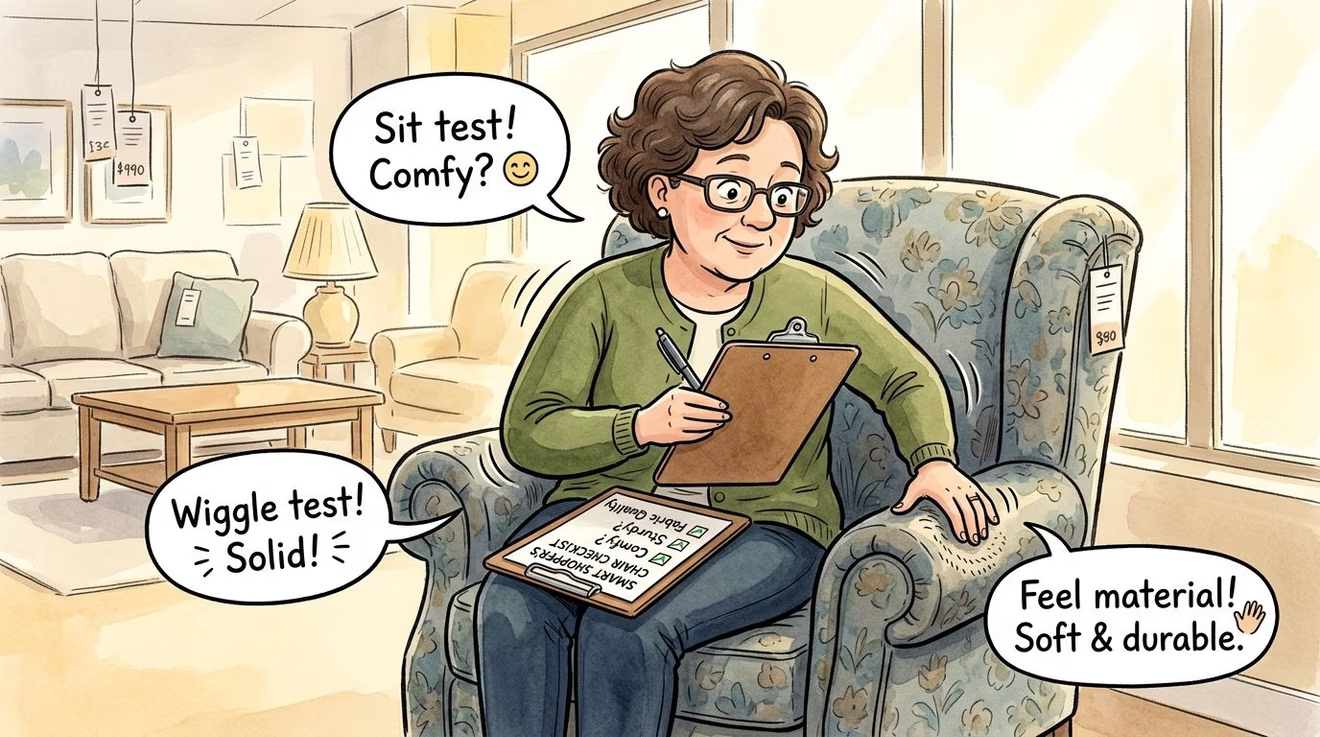
The first step is simple. Sit in the piece. Shift your weight. Grip the arms. Feel whether it flexes, creaks, rocks, or settles in a way that suggests weakness.
Then go one step further. Use this guide to buying quality furniture as a framework for what to inspect beyond the fabric and finish.
Questions worth asking in the store
A smart shopper doesn't need fancy language. Plain questions work better.
- Ask about the frame: What is it made of, and how is it reinforced?
- Ask about the joints: Are they glued, screwed, bolted, doweled, or otherwise strengthened?
- Ask about testing: Has the piece been evaluated against commercial or institutional standards?
- Ask about cushion support: Does the seat feel likely to keep its shape with repeated use?
- Ask who will use it: A guest room chair and a daily-use family room chair are different jobs
The warranty cliff is real
This is the part many people miss, and it's a costly mistake. Data shows that 99% of residential furniture warranties are voided the moment the piece enters a commercial environment. That includes many situations small business owners and landlords assume are still covered.
That means a “heavy-duty” residential item may still leave the owner unprotected if it's placed in an office, rental property, lobby, or other business setting.
Ask one direct question before buying: “If this piece is used in a business or rental setting, does the warranty still apply?”
A short checklist to carry in
| What to check | What the answer should tell the shopper |
|---|---|
| Frame and material details | Whether the structure is built for real use |
| Joinery and hardware | Whether the piece will stay tight and stable |
| Commercial testing or standards | Whether durability has been verified |
| Warranty language | Whether the protection matches the intended use |
A solid buying decision usually comes down to this. Don't confuse “looks sturdy” with “is built for hard use.” Those are not the same thing.
Finding Real Long-Term Value Here in Milwaukee
Commercial grade furniture often costs more upfront. That's normal. Better construction, stronger materials, and tougher standards usually don't come from bargain-bin manufacturing.
The smarter question is whether the piece gives better long-term value. In many homes and small businesses, the answer is yes. Replacing weak furniture over and over is expensive, annoying, and wasteful. One well-built piece often beats a string of disappointing ones.
Why value is bigger than price
The payoff shows up in everyday life. Fewer repairs. Less wobble. Less cushion breakdown. Less second-guessing every time somebody drops into a chair a little too hard.
There's also the comfort factor. People relax differently around furniture that feels stable. Customers notice it. Guests notice it. Families notice it every single day.
Why Milwaukee shoppers still come into a showroom
For quality furniture, an in-person visit still matters. Shoppers can test seat support, inspect wood construction, compare scale, and ask real questions. That's especially useful when choosing among heavy-duty, small-scale, solid-wood, or senior-friendly options.
The mattress side matters too. BILTRITE offers over 60 mattress models and 500+ units in stock, including flip-able and 2-sided mattresses, which gives shoppers a chance to compare comfort and durability in a hands-on way.
A local showroom also means help from people who know furniture, not just sales scripts. The team brings over 400 years of combined experience, and the store doesn't work like a high-pressure online funnel. It works like an old-school Milwaukee business that still believes service matters.
Ready to find furniture that can keep up with real life? Visit the Greenfield showroom, take a good long sit, ask the hard questions, and see the construction for yourself.
BILTRITE Furniture-Leather-Mattresses has served Metro Milwaukee since 1928 with affordable, better-quality furniture and mattresses, including USA-made, Amish-made, solid-wood, heavy-duty, and small-scale options. The showroom is at 5430 West Layton Avenue in Greenfield. Readers can learn more at BILTRITE Furniture-Leather-Mattresses.