Small Scale Recliner Chairs for Apartments and Smaller Homes


A recliner can be the most-used seat in an apartment, but the wrong one can wreck the entire room. A full-size chair may block the walkway, crowd a side table, or refuse to make it through the front door. Small scale recliner chairs solve more than a square-footage problem. They must fit the room, the delivery path, and the person sitting in them.
BILTRITE has helped Metro Milwaukee shoppers work through those details since 1928. The practical approach is simple: measure first, compare the chair's open footprint, then test the seat before choosing upholstery or features.
Table of Contents
- When a Big Recliner Just Will Not Fit
- What Makes a Recliner Small Scale
- Measuring Your Space and Doorways the Right Way
- Manual Versus Power in a Compact Frame
- Features That Actually Matter in Smaller Rooms
- Matching BILTRITE Options to Your Situation
- Your Pre-Purchase Checklist Before You Visit
When a Big Recliner Just Will Not Fit
A one-bedroom apartment in Walker's Point can look spacious until a full-size recliner opens. The chair reaches forward, the footrest cuts across the path to the sofa, and the remaining wall space disappears. A bookshelf, lamp, or side table suddenly has nowhere to go.
That's why compact seating earns its place in apartments, condos, finished basements, assisted living studios, and narrow homes. A smaller frame can preserve a usable walking lane while keeping the television seat comfortable. It also gives family members room to move around the chair instead of treating the recliner like an obstacle course.
The category has been moving in this direction for decades. Recliners expanded from a niche product into a mass-market U.S. furniture segment during the 1970s. A 1975 report recorded recliner growth of about 3% in 1974, even while overall furniture sales fell 10%, and projected 11.6% compound annual growth from 1974 through 1978. By 1973, sales had reached roughly 3.8 million chairs and $250.8 million in retail value, with prices from $125 to $800. The designs that helped drive that growth made reclining furniture resemble standard easy chairs, creating a path toward more apartment-friendly forms. (recliner market history and U.S. category context)
Room-planning rule: A recliner should support the household without dictating the entire layout.
Small scale doesn't mean flimsy or uncomfortable. It means the chair uses its space intelligently. A wall-hugger may sit close to the wall, while a come-apart back can make a tight stairway manageable. The right seat geometry can also help a shorter adult keep both feet planted instead of sliding forward.
Before choosing a style, shoppers should inspect the path from the delivery truck to the final room. BILTRITE's furniture for narrow doorways resources help frame that problem early, because a chair that fits the living room still fails if it can't reach the living room.
What Makes a Recliner Small Scale
Small scale is a measurable design choice, not just a label. Compact recliners commonly measure about 29.1 to 30 inches wide, 33.5 to 37.4 inches deep, and 39.8 to 42.8 inches high, according to this compact recliner size range. Those figures describe the outside frame, not the space the sitter needs to use the chair comfortably.
Usability depends on more than the footprint. Arm thickness, inside seat depth, seat height, back angle, and footrest travel all affect how compact a recliner feels. A narrow frame can still crowd a room if the seat pan pushes shorter users forward or the open footrest blocks the main route.
The measurements that matter most
For a smaller adult, seat depth deserves close attention. Petite-scale guidance commonly places seat depth around 19 to 21 inches and seat width around 18 to 22 inches. Those proportions help the sitter keep lumbar contact without sliding forward. Seat height also matters because it affects foot placement, knee position, and ease of standing.
Use this shortlist when comparing chairs:
- Outside width: Check the arm-to-arm measurement and preserve circulation around the frame. General chair width standards are a starting point, not a substitute for the actual model specification.
- Inside seat depth: Measure the cushion area, not just the catalog width.
- Seat height: A range of about 16 to 19 inches often supports easier standing and useful knee and hip positioning.
- Outside-arm thickness: Slimmer arms can provide more usable seat width within the same overall footprint.
- Reclined depth: Confirm the chair's complete open envelope before choosing its location.
- Swivel clearance: If the chair swivels, allow room for the turning arc so nearby furniture does not limit movement.
The mechanical design sets the final trade-off. A traditional recliner sends the back backward as the footrest extends. A wall-hugger moves the base forward, reducing the rear gap but often limiting the recline arc. A come-apart back can also make delivery through a tight Milwaukee-area doorway or stairway more manageable.
Before visiting BILTRITE, bring your doorway and room measurements, then ask to sit in the chair with your back against the cushion. The correct small-scale recliner leaves enough support behind the knees, keeps both feet planted, and still permits the footrest to open without taking over the room.
Measuring Your Space and Doorways the Right Way
A Milwaukee apartment can have enough floor area for a recliner and still reject it at the doorway. Measure the chair's usable footprint, its operating space, and the route into the room before choosing a style.
Start with the chair's footprint
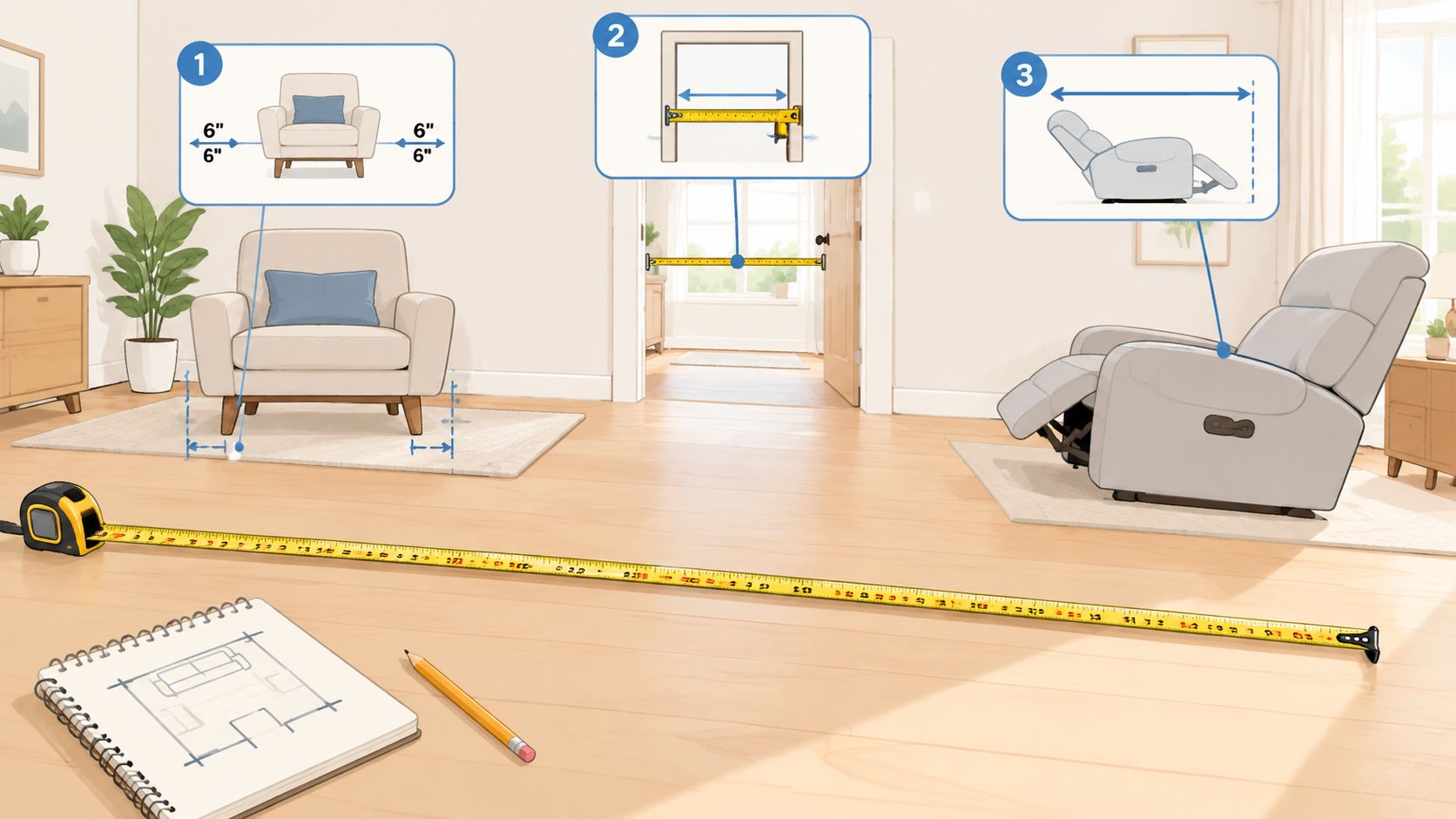
Mark the proposed location with painter's tape. Measure the available width between nearby furniture, the wall, and the walking path. A small recliner needs more than space for its arms. Leave room for the seat to function without narrowing circulation.
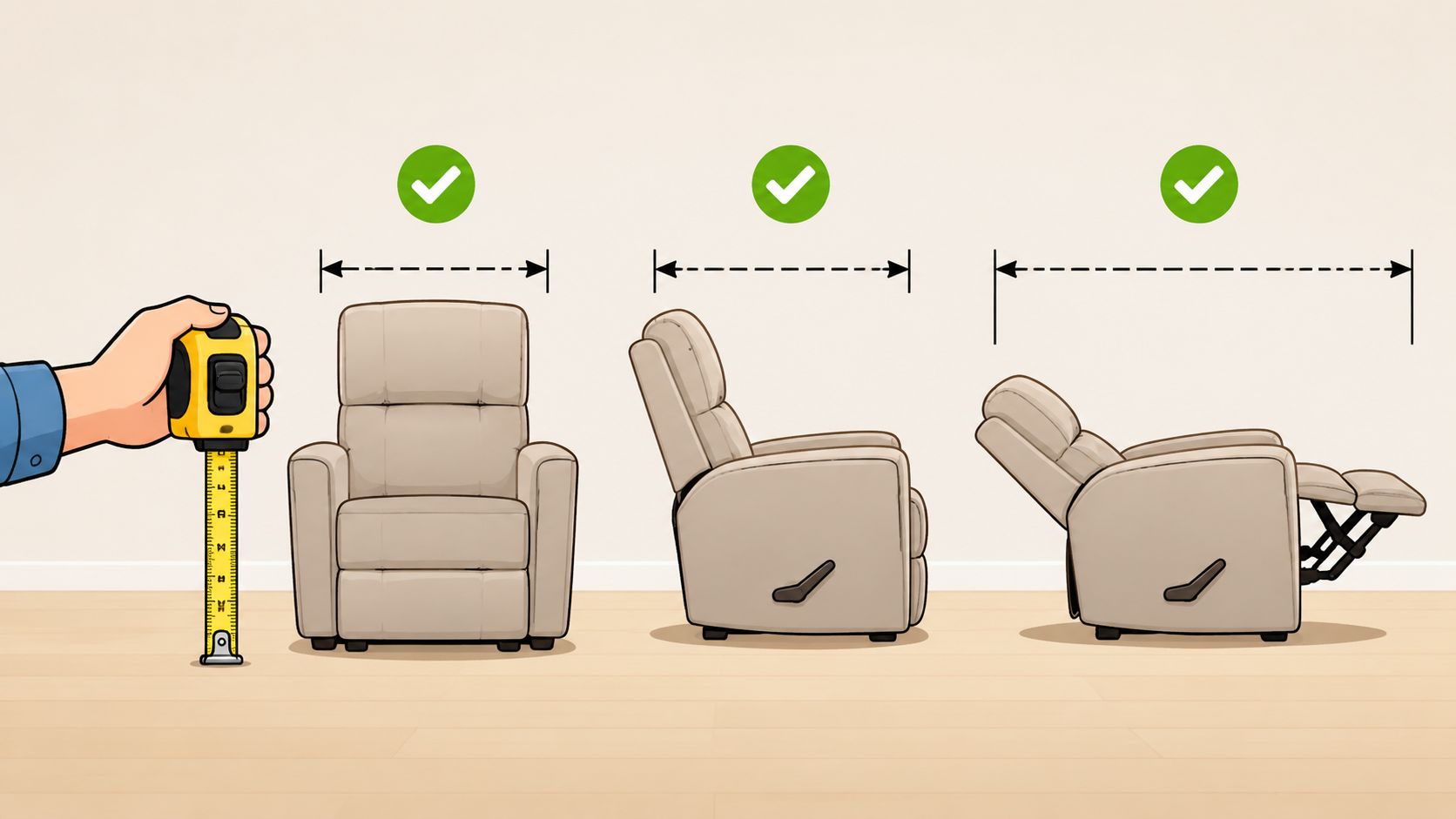
Measure the full depth with the chair open, not only its upright depth. The back moves, the footrest projects, and the usable footprint changes as soon as someone reclines. Keep the extended footrest clear of tables and walkways. Recliner room-measuring guidance offers a practical way to check the room before shopping.
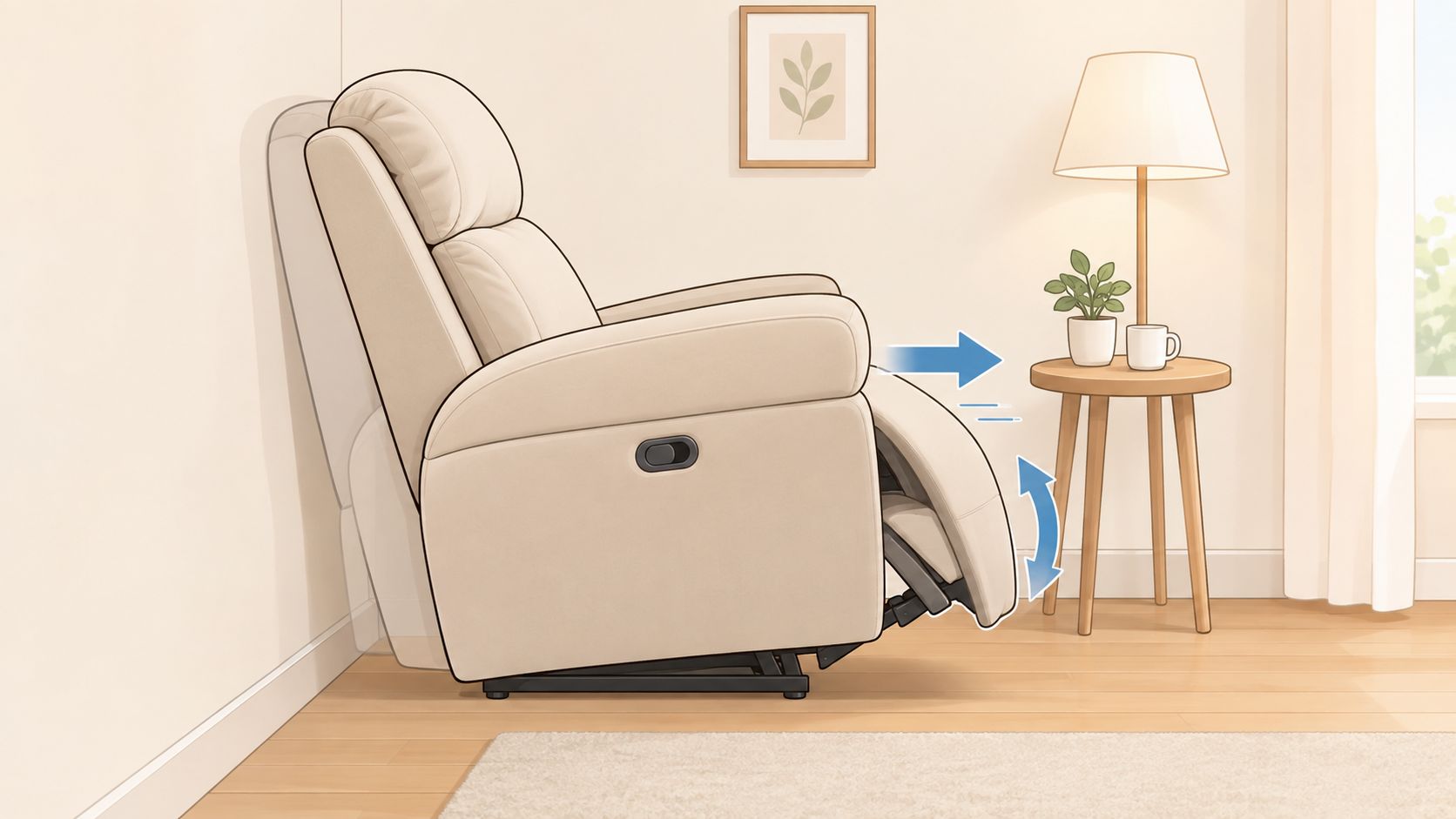
Wall-hugger designs usually need a rear gap of about 2 to 6 inches. Traditional recliners may require 8 to 18 inches behind the back as the recline arc opens. Rear-clearance guidance for compact recliners explains why that mechanism changes placement. Even a wall-hugger still needs clear space in front of the footrest.
Trace the delivery route
Measure the front entry, interior doors, hallways, stair landings, and turns around door trim. A manual recliner around 38 to 40 inches wide can often pass through a standard doorway when tilted. Removing the back or door trim may add roughly 1.5 to 2 inches from hinges and another 0.5 to 0.75 inches per side from stop moulding. Use this recliner doorway fit guidance to check tight openings.
The packaged chair may be harder to move than the assembled chair. Ask for both dimensions, especially if the delivery route includes a narrow Milwaukee stairway. A removable back can change the delivery plan more than a small difference in outside width.
Before visiting BILTRITE, record these details:
- Room width: Mark the chair location and the walking route.
- Open depth: Measure from the wall to the extended footrest.
- Doorway clearance: Check every opening, not only the front door.
- Turning space: Note where the chair must tilt, rotate, or turn on a landing.
BILTRITE's furniture measuring guide provides a useful checklist. Bring the sketch and doorway photographs to the showroom. That lets us test the chair's geometry against your actual space, not just its catalog dimensions.
Manual Versus Power in a Compact Frame
Manual and power recliners can both work in smaller rooms, but they serve different priorities. A manual chair usually has fewer mechanical and electrical components, no power cord, and less weight to manage when the room needs rearranging. A push-back mechanism or side handle also keeps operation straightforward.
Power earns its place when smooth control matters more than easy repositioning. Buttons can provide gradual movement and may help users who have limited arm or leg strength. The tradeoff is a heavier chair, a cord that needs a safe route, and more components to inspect if the chair eventually needs service.
| Factor | Manual Recliner | Power Recliner |
|---|---|---|
| Movement | Usually easier to reposition | Often heavier to move |
| Operation | Push-back, lever, or handle | Button-controlled adjustment |
| Cord | No cord required | Needs a safe power route |
| Maintenance | Fewer electrical parts | Motor and control components need attention |
| Small-room placement | Flexible for rearranging | Plan outlet access before delivery |
| Best fit | Renters and frequent rearrangers | Users who value controlled movement |
Compact power furniture also needs honest feature selection. A power headrest, lumbar adjustment, heat, massage, or zero-gravity position may improve daily comfort, but each added component makes the chair more involved than a basic manual model. Coverage of current recliner features notes that power models account for over 50% of recliner sales in some reports, with these functions becoming common in the category.
A power chair should solve a daily mobility or comfort need, not simply add buttons to a small room.
Lift-recline models deserve a separate conversation because the motor supports standing as well as reclining. Battery backup can be useful during an outage, but shoppers should confirm how the battery is positioned and whether the chair still fits the intended clearance when fully raised.
Clearance usually matters more than the drive type. Both manual and power wall-huggers can preserve a tight rear gap, and the difference in fully reclined depth is often less than an inch. The power recliner chair selection can be evaluated in person alongside manual mechanisms, where the shopper can feel the effort and listen for movement.
Features That Actually Matter in Smaller Rooms
A compact recliner earns its floor space by making daily use easier. In a smaller room, prioritize movement, delivery, standing support, upholstery, and body fit before decorative stitching or extra electronics.
Wall-hugger movement
A wall-hugger moves the seat forward as it reclines, so the back does not travel deep into the wall. That design preserves the walkway behind the chair and gives you more flexibility with furniture placement. Review wall-saver recliners when a sofa, window, or narrow passage limits rear clearance.
The trade-off is a different reclining arc. A wall-hugger may not open with the same broad motion as a traditional recliner, but preserving a usable pathway matters more in an apartment. Measure the chair in both its upright and reclined positions, then mark those footprints on the floor with painter's tape.
A come-apart back
A removable back reduces the largest piece that must pass through a doorway or turn on a stair landing. It does not solve every delivery problem, yet it can make a two-person carry safer and reduce the risk of removing trim or forcing the chair through an opening.
Ask whether the back detaches before you buy. Confirm the packaged width as well as the assembled width, because a chair that fits the room can still fail at the entry door.
Lift assist
Lift assist helps an older adult or someone recovering from surgery stand from a rocker-recline frame. It is different from a full lift chair, so test how far the seat rises and whether the arms provide steady support. The chair should help the user stand without making the room feel crowded or the controls difficult to reach.
Upholstery and body fit
Bonded leather, top-grain leather, and performance fabric each handle everyday use differently. A tight-weave performance fabric suits households dealing with spills, pets, or grandchildren. Leather offers a different cleaning routine and hand feel, while bonded materials require close attention to construction and expected wear.
Arm height and cushion shape affect usable comfort as much as upholstery. Arms should support standing without pushing the shoulders upward. Within a compact seat, a tall cushion crown can shorten the usable depth, while wide arms reduce room for the elbows. Sit fully back and check that the cushion supports the lower back without forcing the knees upward. A removable headrest cushion can also help where a low window, ceiling fan, or soffit limits height.
Matching BILTRITE Options to Your Situation
A third-floor apartment renter has different priorities from a senior moving into assisted living. The right match starts with the move, the user, and the household routine, not the chair's color.
The apartment renter
A renter in a walk-up should start with a manual push-back chair that has a removable back. A narrow frame, manageable weight, and no power cord simplify both delivery and a future move. Performance fabric can also make sense when the household needs an easy-care surface and wants to protect a security deposit.
The renter should bring doorway dimensions to the showroom and ask for the packaged measurements. BILTRITE's come-apart options can be evaluated for narrow entries and tight stair turns, while USA-made and solid-wood furniture categories provide additional choices for shoppers building a longer-term home.
The family with children and a dog
A busy family may prefer a compact power recliner when smooth operation matters and the chair will stay in one location. A wall-hugger frame helps the chair sit near a sectional without consuming the entire seating area. Stain-treated upholstery and wipe-clean arm areas deserve more attention than decorative details.
The family should test the footrest with toys, pet beds, and walking lanes in mind. A chair that technically fits can still be a poor choice if the extended footrest creates a daily trip hazard.
The senior moving to assisted living
A senior downsizing from a family home may need a lift-recline chair with accessible controls, supportive arms, battery backup, and a come-apart back. BILTRITE's senior-friendly furniture and lift-chair categories can be compared in the Greenfield showroom, where the user can test standing assistance rather than judging it from a photograph.
BILTRITE operates showrooms in Greenfield, Brookfield, Whitefish Bay, and New Berlin, with the Greenfield location serving as the main place to compare categories side by side. Brookfield can support direct pickup needs, while the other locations offer additional browsing options. Most come-apart small-scale recliners can be delivered within the Milwaukee metro in two to five business days, depending on availability and the specific piece.
BILTRITE Furniture-Leather-Mattresses is a fourth-generation, family-owned Metro Milwaukee business with a broad selection of affordable, better-quality furniture. The showroom also includes USA-made, Amish-made, and real solid-wood options, along with a mattress department featuring over 60 models. The sales team brings over 400 years of combined experience, and its role is to help shoppers compare fit, not pressure them into a decision.
Your Pre-Purchase Checklist Before You Visit
Three checks will save a frustrating trip and make the showroom visit more productive.
Run the tape measure test
Record the chair's upright width, upright depth, full recline length, and rear clearance. A wall-hugger may work with as little as 4 inches behind the back, but the exact model still needs confirmation. Mark the footprint on the floor with tape, then walk around it while imagining the footrest open.
Check the doorway route separately. Measure the clear opening, hallway turns, stair landings, and the carton dimensions. An assembled chair may fit the room while its packaging fails at the front door, so both sets of measurements belong on the notepad.
Run the seat fit test
Measure the sitter's thigh from hip to knee, then compare that body length with the chair's internal seat depth. In the store, the lower back should meet the backrest without sliding forward, the feet should rest flat, and the knees should remain near a comfortable right angle. Seat width matters too, especially when wide arms reduce the usable interior.
Bring photographs of the room, doorway trim, stairs, and the proposed chair location. Those images can reveal obstacles that a written measurement misses.
Run the in-store sit test
A proper test includes at least five minutes in both upright and reclined positions. The shopper should check lumbar contact, headrest height, footrest support, arm height, and the location of the lever or buttons. Short users should pay close attention to dangling feet and excess cushion depth, while taller users should watch for pressure behind the knees.
The Greenfield showroom is the right place to bring those measurements and photos, compare manual and power mechanisms, and ask whether a come-apart back or wall-hugger design suits the delivery route.
BILTRITE Furniture-Leather-Mattresses offers small-scale recliners, wall-saver designs, lift chairs, come-apart furniture, and USA- and Amish-made pieces for Metro Milwaukee homes. Visit BILTRITE Furniture-Leather-Mattresses in Greenfield with room measurements and doorway photos, and let the showroom team help match the chair to both the space and the person using it.