Small Scale Wingback Chairs: A Complete Buyer’s Guide

A lot of folks start the same way. They spot a handsome wingback chair, fall for the shape, the high back, the cozy look, then realize it would swallow half the room or never make it through the front door. That's especially common in apartments, condos, bungalows, guest rooms, and senior living spaces around Metro Milwaukee, where every inch has a job to do.
Small scale wingback chairs solve a real problem when they're chosen well. They can add character, support, and a tucked-in seat without crowding the room. They can also disappoint if the scale is only “small” on a tag and not in the places that matter, like seat depth, overall footprint, and delivery access. That's where old-school furniture know-how still helps.
BILTRITE Furniture was founded in 1928 by Irwin Kerns and his wife Frieda Kerns as an upholstery shop in Milwaukee that created custom-made sofas, making it one of the oldest furniture stores in the Metro-Milwaukee area with nearly a century of continuous operation, as noted on BILTRITE's history page. That long view matters with a chair like this. A wingback isn't just a style choice. It's a fit choice, a comfort choice, and sometimes a safety choice too.
Table of Contents
- Your Cozy Corner Awaits
- What Is a Small Scale Wingback Chair Anyway
- Why a Small Wingback Is a Big Win for Your Home
- Built to Last for Generations with USA and Amish Quality
- The Goldilocks Rule Finding Your Just Right Fit
- Styling Your Space with a Classic Wingback
- Why Seeing It in Person Matters So Come Say Hi
Your Cozy Corner Awaits
A small room can still have a lot of personality. That's the happy surprise many homeowners discover when they stop trying to force oversized furniture into every corner and start looking for pieces that suit the space. A wingback chair often lands on that shortlist because it brings shape, height, and comfort all at once.
For plenty of Milwaukee-area homes, the challenge isn't taste. It's scale. A chair can look balanced in a photo and feel enormous once it sits next to a loveseat, in a bedroom corner, or by a fireplace wall. Small scale wingback chairs work because they keep that classic silhouette while giving the room some breathing space.
A chair like this can do more than fill an empty corner. It can become a reading seat, a conversation chair, or the one place everyone reaches for in the evening. That's one reason accent chairs continue to matter so much in real homes, and five practical ways to use an accent chair can spark a few ideas.
A good chair should make the room easier to live in, not harder to walk through.
Families often come in wanting the cozy look of a traditional chair but needing the footprint of something much leaner. That's a familiar balancing act in local homes with narrower living rooms, tighter bedroom layouts, and multi-use spaces. The right small scale wingback chair gives that polished look without making the room feel boxed in.
What Is a Small Scale Wingback Chair Anyway
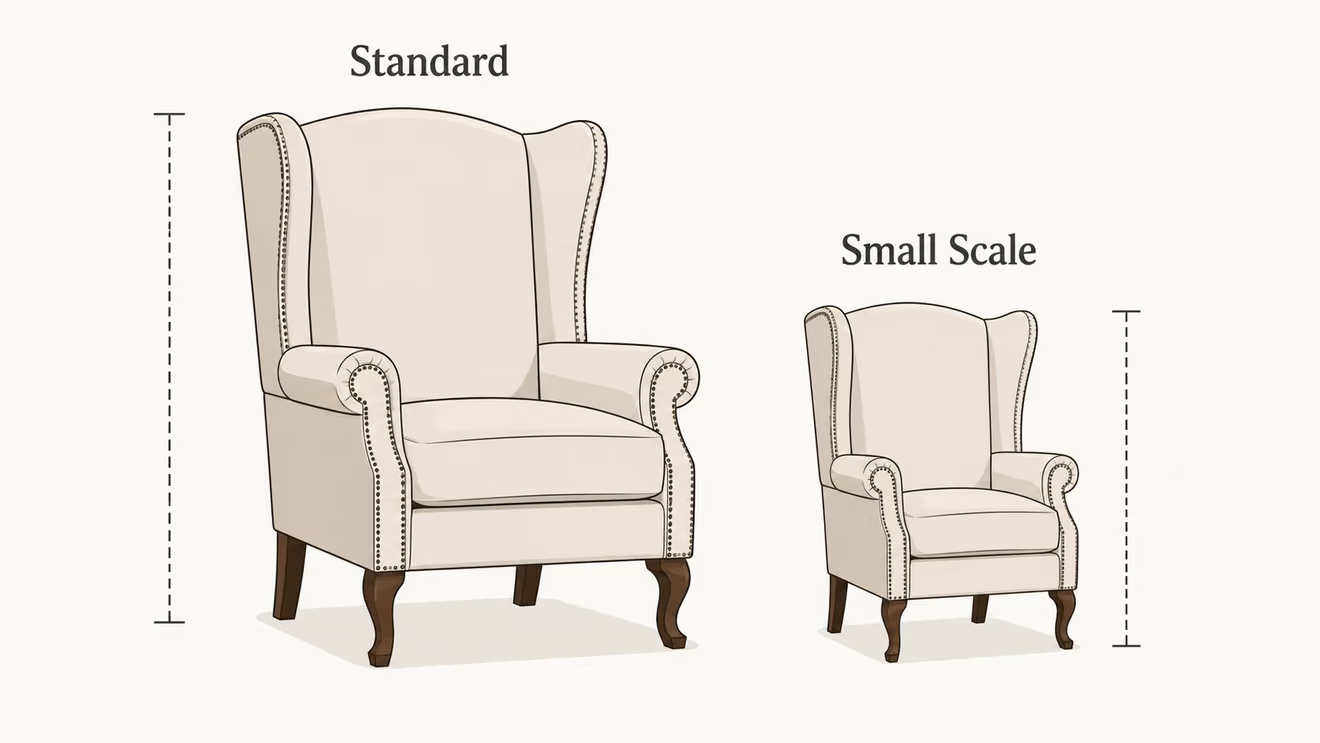
A small scale wingback chair is a wingback that keeps the familiar high back and side wings, but trims the overall footprint so it fits real rooms better. In our store, that usually means a chair that still has presence from across the room without eating up the walking space around it.
A classic shape with practical roots
The wingback started as a practical chair, not a decoration. Historically, it was used near the fireplace, where the wings helped shield the sitter from drafts and hold warmth around the upper body. That old purpose still explains why the shape feels sheltered and comfortable now.
The wings also do something visually. They frame the head and shoulders, so the chair looks substantial even when the seat itself is scaled down. That balance is a big reason people like this style in smaller Milwaukee-area homes. You get the character of a traditional chair without the bulk that can make a room feel tight.
What small scale usually means
The label matters less than the proportions. Some chairs are narrowed a little but still sit too deep for a compact living room or bedroom corner. Others cut so much size that they lose the comfort that made a wingback appealing in the first place.
A good small scale wingback usually has a narrower stance, a shallower depth, and a lighter visual footprint than a standard version. The back should still feel tall enough to support the sitter well, and the wings should still look in proportion to the body of the chair. If those pieces are out of balance, the chair can feel skimpy instead of well scaled.
That is why floor plans matter as much as product tags. Our guide to who small scale furniture is for helps explain which households benefit most, especially in condos, bungalows, apartments, and multipurpose rooms.
Practical rule: Judge a wingback from the side as well as the front. Width gets attention, but depth is often what makes a chair fit the room well or crowd it.
In day-to-day shopping, the best small scale wingback is not merely the smallest one on the floor. It is the one that keeps the comfort, posture, and visual weight of a proper wing chair while fitting your room, your doorway, and the person who will truly use it. That is a detail big online photos tend to gloss over, and it is one of the first things we check in person with local customers.
Why a Small Wingback Is a Big Win for Your Home
A small wingback earns its keep in ways that go beyond looks. It adds height to a room, gives one person a defined place to sit, and can fit where a bulkier club chair would feel clumsy. In homes where square footage has to work harder, that's a valuable combination.
Where these chairs shine
In a living room, a small scale wingback chair can anchor one end of a seating group without stealing attention from the sofa. In a bedroom, it can turn a bare corner into a quiet spot for reading or getting dressed. In a home office, it softens a room that might otherwise feel too square or too utilitarian.
These chairs also make sense in senior living settings, but that's where shoppers need to slow down and look closer. A chair can be visually smaller and still be harder to use. That's the trap in a lot of “petite” marketing.
Where shoppers need to be careful
Most existing content misses the gap between a petite label and actual ergonomic fit for seniors. As noted on this wingback collection reference, small-scale wingbacks often have seat depths under 17 inches and heights exceeding 38 inches, which can compromise knee support and ease of standing for seniors.
That matters in everyday life. If the seat is too shallow, the legs don't feel supported. If the chair sits too high in the wrong way, getting settled can feel awkward. If it's too deep in the back but narrow in the seat, the user may perch instead of sit comfortably.
For caregivers and family members shopping for an older adult, these are the trade-offs worth watching:
- Seat depth: Too shallow can reduce thigh support.
- Seat height: Too high or too low can make sit-to-stand movement tougher.
- Arm firmness: Stable arms provide support for rising.
- Back angle: A very loungy chair may look inviting but can be harder to get out of.
The best chair for a compact room isn't always the best chair for the person using it every day.
That's why the strongest small wingback choices combine tidy dimensions with sensible support. The chair should feel easy to enter, easy to exit, and comfortable enough to stay in for a while. Style counts, but comfort that works in daily life counts more.
Built to Last for Generations with USA and Amish Quality
A small scale wingback chair has to do more than look trim in the corner. It still carries the same job as a full-size chair. It has to hold its shape, stay steady at the arms, and give reliable support year after year. If the build is light, you feel it fast. The chair starts to flex, cushions lose their shape, and the whole piece quits feeling dependable.

What better quality looks like
In our store, I tell shoppers to start underneath the fabric. A pretty wingback can hide a lot. What matters is the frame, the seat support, the way the upholstery is fitted, and whether the chair still feels solid after years of regular use.
Good compact wingbacks often use hardwood frames and better spring support instead of relying on lighter materials to cut cost. Those details matter even more in a smaller chair because every inch is working harder. The wings, arms, and back all meet in a tighter footprint, so weak construction shows up sooner.
That is one reason shoppers who care about long-term value tend to ask about the advantages of Amish furniture. Solid wood, careful joinery, and repairable construction are still hard to beat if the goal is to buy once and enjoy the piece for a long time.
BILTRITE also marks USA-made furniture in the showroom, which makes origin easier to verify when a customer wants American craftsmanship and domestic materials. That may sound like a small thing until you are comparing two chairs that look similar on the floor but are built very differently once you check the frame and support system.
Why materials still matter
The covering changes how the chair lives in your home. Fabric usually feels softer and more relaxed. Leather brings a more refined appearance and often wears in a way some families really enjoy. Neither is automatically better. The right pick depends on who will use the chair, how often, and how much upkeep you want.
Here are the trade-offs I usually walk through with customers:
- Tighter woven fabrics: Tend to keep a neater appearance in busy rooms.
- Textured fabrics: Feel warmer and more casual in reading nooks and bedrooms.
- Leather: Shows character over time and can be easier to wipe clean.
- Higher-quality cushion cores: Hold their shape better and keep the chair from feeling tired too soon.
BILTRITE Furniture-Leather-Mattresses carries small scale, solid wood, USA-made, Amish-made, and heavy-duty furniture, so shoppers can compare those differences in person instead of guessing from a product photo.
Worth checking: Ask what supports the seat and what fills the cushion. Those two answers tell you a lot about how the chair will feel five years from now.
A wingback that lasts for generations is rarely the cheapest one on the tag. It is the one built well enough to stay comfortable, stay square, and keep earning its place in the room.
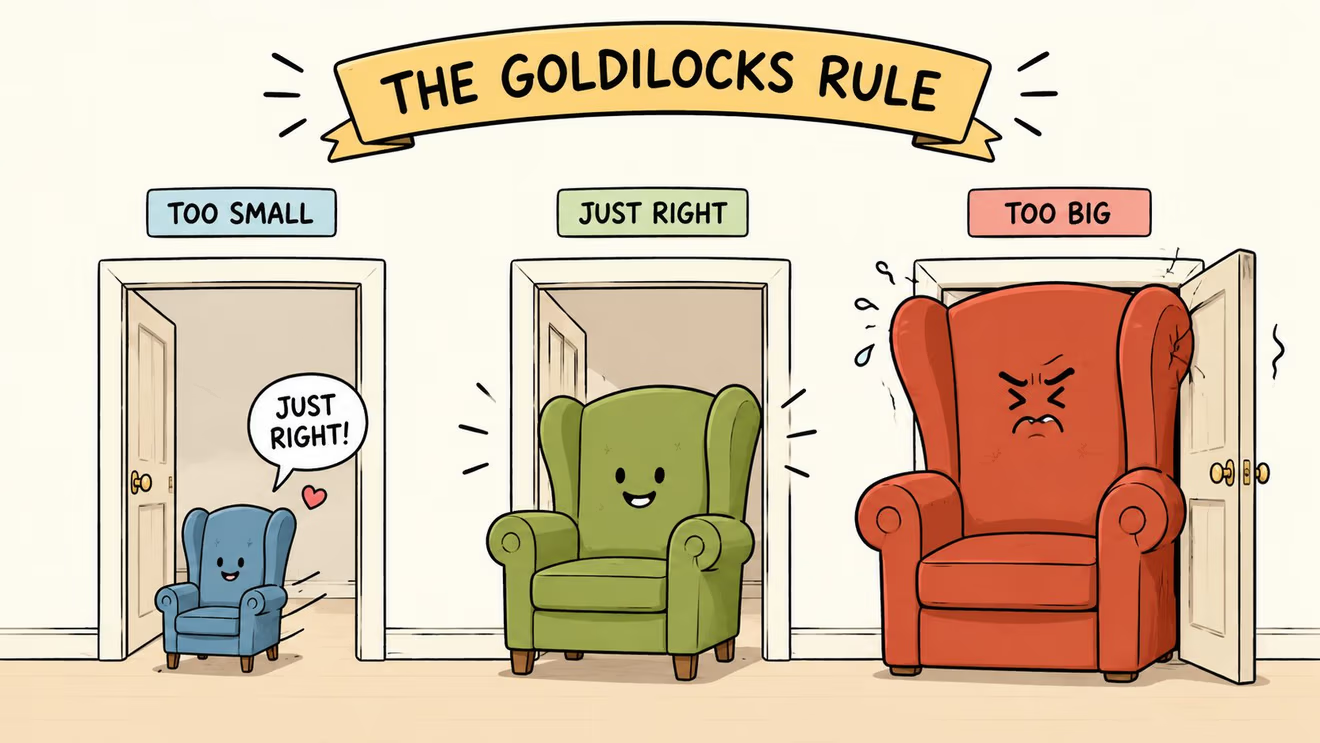
The Goldilocks Rule Finding Your Just Right Fit
The right small scale wingback chair should fit the person, the room, and the path into the room. Miss any one of those, and delivery day can get exciting in all the wrong ways.
Measure the room first
Start where the chair will live. Tape off the footprint on the floor if possible. That quick step often answers questions faster than a spec sheet because it shows how much walking room remains once the chair is in place.
Pay attention to more than width. Wingback chairs have visual height and side projection, so they can affect how open a room feels even when the footprint is compact.
A simple checklist helps:
- Mark the width and depth: Use painter's tape to outline the chair footprint.
- Stand back and walk around it: Check whether traffic still feels natural.
- Notice nearby pieces: Side tables, lamps, ottomans, and radiators can change the fit fast.
- Think about use: A reading chair needs enough elbow room to feel relaxed, not squeezed in.
For shoppers sorting through dimensions, this guide to standard chair width can help frame what “small” really means in a room.
Check the path before delivery day
This is the part too many shoppers skip. A chair can fit the room and still fail the trip from the truck to the corner where it belongs.
A frequently overlooked issue is doorway clearance. As noted in this industry observation on wingback delivery bottlenecks, small scale wingback chairs may have narrow seat widths, but the wings often extend the total depth beyond 36 inches, which can create a delivery problem that size charts don't always make obvious.
That's why the delivery path needs its own review:
- Front entry and storm door: Open both and measure the usable space.
- Hall turns: Tight corners can be harder than the doorway itself.
- Stair rails and landings: These often decide whether a piece can pivot.
- Apartment elevators: Interior depth matters as much as door width.
Measure the narrowest point on the path, not just the room where the chair will end up.
In tighter homes, come-apart furniture can be a lifesaver. Some seating is designed to separate for delivery and reassemble in place, which can make difficult layouts much more manageable. That's the kind of detail worth discussing before purchase, not after the truck arrives.
Styling Your Space with a Classic Wingback
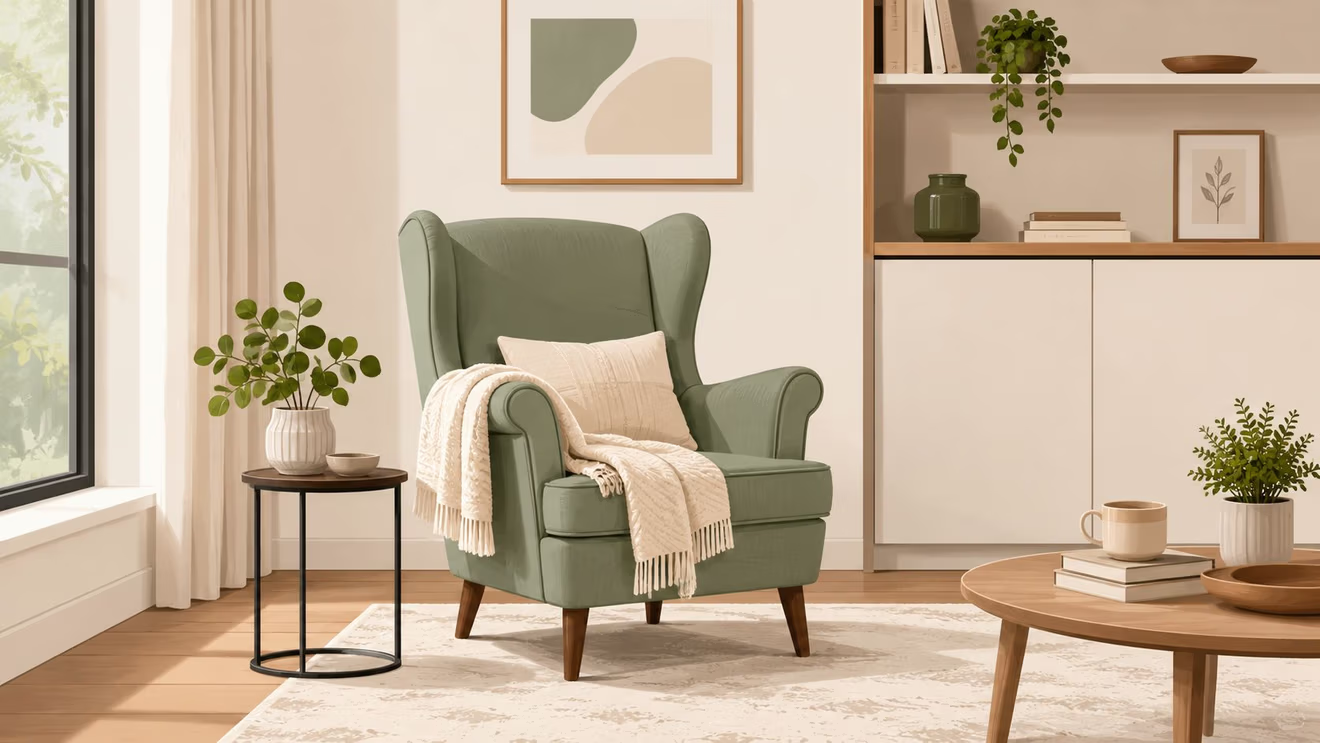
A small scale wingback chair can do a lot of visual heavy lifting. It adds height where a room feels flat, introduces shape where everything else looks boxy, and creates a destination inside the room instead of just another seat.
Three easy ways to use one chair well
One of the easiest placements is the reading nook. Tuck the chair near a window, add a modest side table, and place a lamp where the light falls across the shoulder instead of directly into the eyes. That creates a corner with purpose, even in a room that doesn't have much extra space.
Another good use is as a living room accent chair. A wingback can balance a sofa by adding vertical interest and a slightly more refined note. It's especially useful when the main upholstery in the room is low, wide, or casual.
Bedrooms can benefit too. A single wingback near a dresser, in an empty corner, or beside a bookshelf makes the room feel more finished and more useful. It becomes a place to sit while dressing, reading, or winding down.
Simple details that finish the look
Styling usually works best when it stays restrained. The chair already has a strong silhouette, so it doesn't need much fuss.
A few easy pairings tend to work well:
- A small side table: Gives the chair a function right away.
- One throw pillow: Adds softness without cluttering the seat.
- A folded blanket: Warms up the look and makes the chair more inviting.
- A floor lamp or sconce nearby: Turns the chair into a destination, not just décor.
A wingback usually looks strongest when it has a little breathing room around it.
For a broader room plan, these living room styling ideas can help tie the chair into the rest of the space. The key is letting the chair play a clear role. It can be cozy, polished, traditional, or fresh, but it should look intentional.
Why Seeing It in Person Matters So Come Say Hi
A wingback chair is one of those pieces that asks to be tried in person. Photos can show color and shape, but they can't tell someone how firm the seat feels, how supportive the back is, or whether the arms land at a comfortable height. Those details decide whether a chair becomes a favorite or just looks nice from across the room.
That's especially true with small scale wingback chairs. A few inches one way or the other can change the whole experience. The chair might look right online and still feel too perched, too deep, too upright, or too bulky once someone sits in it. Fabric texture, cushion support, and finish color all read differently in real life too.
BILTRITE's showroom is located at 5430 West Layton Avenue in Greenfield, WI 53220, and it has been in its current Greenfield location since 2006, serving the broader Metro-Milwaukee community for more than 95 years, according to Sleep Savvy Magazine's profile of the store. That local, in-person approach still matters. It gives shoppers the chance to sit, compare, ask questions, and see craftsmanship up close instead of guessing from a screen.
The store doesn't sell online, and it's closed on Sundays so the family and team can be with their families. That's an old-fashioned value, and around here, that's something to be proud of. If a small scale wingback chair is on the shopping list, a visit to Greenfield makes the decision a whole lot easier.
Ready to find a small scale wingback chair that fits the room, the doorway, and the way the home is used? Visit BILTRITE Furniture-Leather-Mattresses in Greenfield and chat with the team in person. They'd love to help neighbors across Metro Milwaukee sort through styles, comfort, scale, and quality without the guesswork.