Small Scale Wingback Chairs: Find Your Perfect Fit


A lot of people are in the same spot right now. The room looks good, but it feels tight. There's an empty corner begging for a chair, yet every classic wingback they've seen looks like it would swallow the space, crowd the walkway, or make the whole room feel heavier than it should.
That's exactly why small scale wingback chairs deserve a serious look. They keep the charm, the height, and that tucked-in feeling people love, but they fit real homes better. In Metro Milwaukee, that can mean a condo living room, a bungalow bedroom corner, or a senior living apartment where every inch matters.
Finding Big Comfort in a Small Space
One of the most common decorating frustrations goes like this. Someone falls in love with the look of a wingback chair, brings home the idea in their head, then realizes the room can't handle the size. Suddenly the chair isn't cozy. It's in the way.
That's where small scale wingback chairs shine. They solve a very practical problem without giving up personality. In a downtown apartment, they can turn a blank corner into a reading spot. In a condo, they can add height and shape without making the room feel boxed in. In a senior living space, they can offer comfort without the bulk that makes furniture harder to live with day to day.
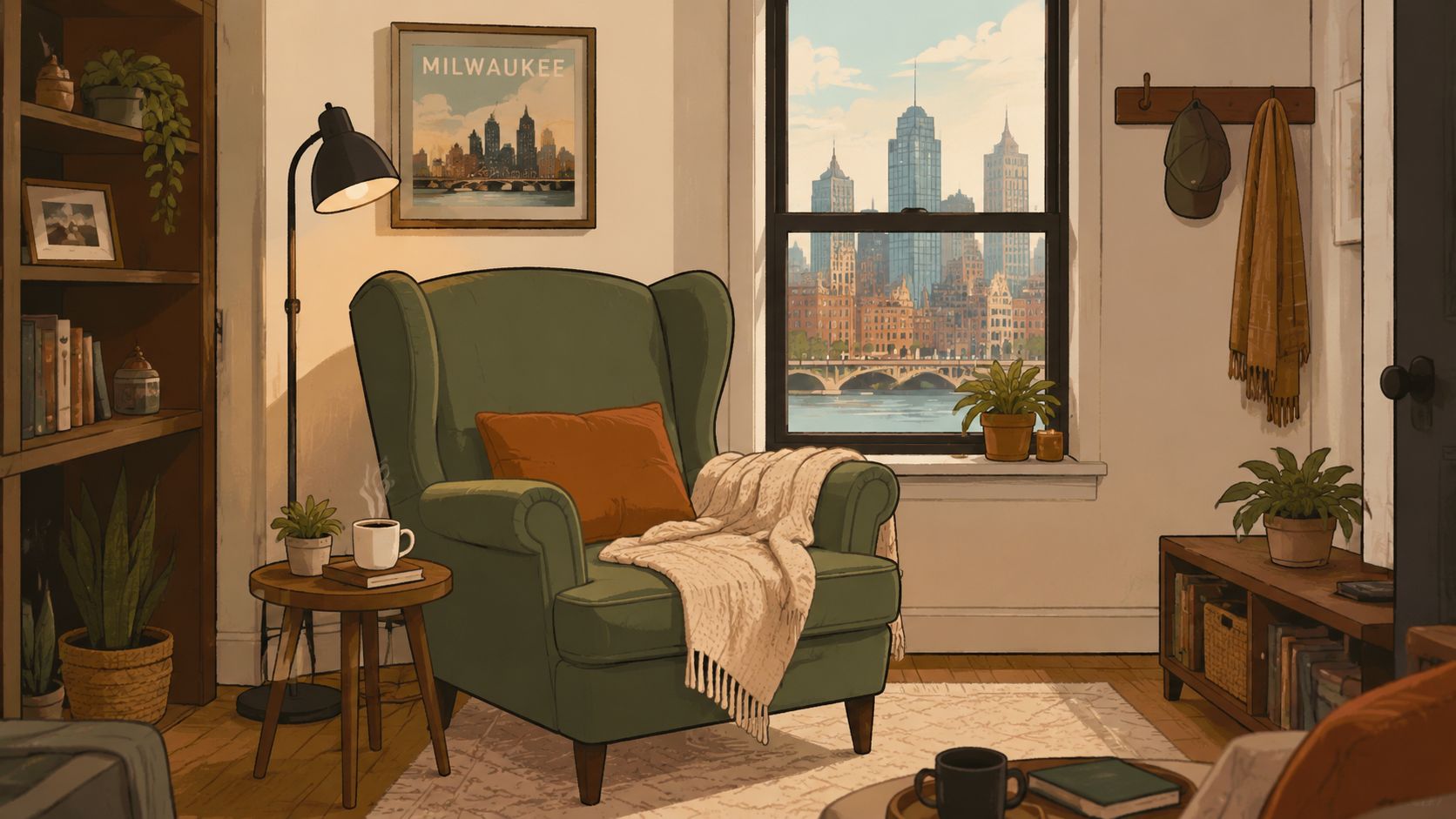
A well-chosen chair doesn't just fill a corner. It changes how the room works. That's why shoppers looking for small space furniture ideas often end up drawn to this style.
Why the wingback still matters
The wingback chair has history behind it. The style began in the 17th century as an “easie” or “cheeked” chair, built to shield the sitter from drafts and fireplace embers while adding a sense of privacy with wraparound wings, according to the wing chair history overview.
That old purpose still makes sense today. While a chair may no longer be commonly parked next to a roaring hearth, the appeal persists for a seat that feels sheltered, supportive, and a little special.
Small spaces need furniture that earns its footprint. A small scale wingback chair usually does exactly that.
The best part is simple. This style doesn't read as a compromise. It reads as smart.
What Makes a Wingback Chair Small Scale
“Small scale” shouldn't be a fuzzy marketing phrase. It should mean something clear enough to shop by. For wingback chairs, it does.
The most useful guideline is this. A small scale wingback chair tops out at 32 inches in overall width and 23 inches in depth, with a seat width typically between 18 and 20 inches. That sizing reduces the traditional footprint by about 15 to 20% while keeping an accessible seat height, according to these small scale chair specifications.
That's the number range that matters when a room is tight, a walkway is narrow, or a chair has to sit beside other pieces without creating clutter.
The dimensions that matter most
A chair can look small in a photo and still be a problem in an actual room. Three measurements reveal the full picture:
- Overall width: If it's over 32 inches, it may stop feeling small scale in a compact room.
- Overall depth: 23 inches is a strong benchmark when floor space is limited.
- Seat width: 18 to 20 inches is usually enough for comfort without unnecessary bulk.
For shoppers comparing styles, a quick look at standard chair width guidelines can help put proportions in context.
Why these numbers work
Smaller doesn't mean skimpy. It means edited. A chair with a narrower arm profile and shallower depth gives the room breathing room. It's easier to place near a side table, in a bedroom corner, or across from a sofa without forcing everything else to shift around it.
Here's a simple way to look at this:
| Measurement | Small scale guideline | Why it helps |
|---|---|---|
| Overall width | Up to 32 inches | Keeps the chair from dominating the room |
| Overall depth | 23 inches | Helps preserve walking space |
| Seat width | 18 to 20 inches | Keeps comfort while trimming bulk |
Practical rule: If the chair fits the room on paper but looks heavy in person, the arms are often the culprit.
The biggest mistake people make is focusing only on style. Scale comes first. If the size is right, the classic wingback shape can work in places where a full traditional chair won't.
The Big Benefits of a Smaller Chair
A small scale wingback chair isn't just a backup plan for a cramped room. In many homes, it's the better choice.
Oversized seating can make shorter sitters feel unsupported. Deep seats often push them forward so they perch instead of settling back comfortably. That's especially important in senior living, guest rooms, and multipurpose spaces where a chair needs to feel easy to use every day. As noted in this discussion of wingback comfort and posture, many deep-seated chairs cause shorter sitters or seniors to “perch rather than relax,” while the wings can also reduce convective heat loss by up to 12% in drafty environments.
That makes these chairs more than decorative. The shape still does a job.
Better comfort for more people
Not everyone wants to sink into a giant chair. A lot of people want a chair that supports the back, lets their feet plant more naturally, and doesn't feel like a climb to get out of.
Small scale wingback chairs often work well for:
- Shorter adults who get lost in deep seating
- Seniors who want a seat that feels more approachable
- Apartment dwellers who need comfort without crowding the room
- Anyone creating a reading nook where upright support matters
A smaller frame can also make a room feel calmer. One chair near a window, paired with a lamp and a small table, can create a dedicated spot for conversation, reading, or quiet time without demanding a full furniture reshuffle.
The wings aren't just decorative
The wingback earns its name from its distinctive side panels. Those side panels help create a tucked-in feel that many open rooms are missing. In a drafty corner or near an exterior wall, that sheltered shape can feel noticeably more comfortable.
A good wingback chair gives the sitter a sense of place. Not just a place to sit, but a place to settle in.
That's part of why this design has lasted so long. It doesn't rely on trends. It gives the room structure and gives the sitter a sense of enclosure.
Why small scale often looks better, too
Design-wise, smaller wingbacks have another advantage. They add vertical interest without adding sprawl. A sofa takes up horizontal space. A wingback brings the eye upward.
That makes them especially useful in rooms that need a little lift. They can soften a bare corner, balance a low-profile sofa, or bring shape to a bedroom that feels flat.
The short version is simple. If the room is modest and the chair still needs to feel warm, polished, and comfortable, small scale is usually the smartest route.
Built to Last Our USA and Amish Made Choices
A small chair still needs a strong frame. In fact, scale makes construction matter even more. When a chair has a compact footprint, every part of it has to work harder. Weak materials show up fast in the seat, arms, and overall feel.
That's why solid construction matters more than buzzwords. A well-made wingback should feel stable when someone sits down, supportive through the back, and balanced through the arms and legs. If it creaks, flexes, or feels hollow, it's not a value. It's a future replacement.

What better quality looks like
People shopping for small scale wingback chairs should pay attention to what's underneath the fabric. That's where lasting value lives.
A stronger chair usually includes:
- Solid wood components: These help the frame stay firm over time.
- Thoughtful upholstery choices: Fabric and leather should fit the household, not just the color scheme.
- Balanced proportions: Small scale should feel intentional, not chopped down.
Shoppers curious about handcrafted construction can get a solid overview through this guide to what Amish furniture is.
Upholstery should match real life
The right cover depends on how the chair will be used. A bedroom accent chair can handle a different fabric than a daily-use living room seat. A quiet reading corner has different demands than a chair in a family room with constant traffic.
That's why broad advice doesn't help much. A practical choice often comes down to questions like these:
| Home situation | Smarter upholstery direction |
|---|---|
| Everyday sitting | Durable, easy-care fabric |
| Formal corner use | Texture or pattern can take the lead |
| Homes with heavier use | Tighter weaves and sturdier surfaces tend to make more sense |
| A warm, classic look | Leather can add richness and age well with the right care |
The best furniture value usually isn't the lowest price on the floor. It's the piece that still feels good years later.
There's also a style advantage to American-made and Amish-made furniture. It often avoids the disposable look. The details feel grounded. The wood feels honest. The chair looks like it belongs in a home, not a photo set.
For buyers who care about affordability and quality together, that's where the sweet spot usually is.
Finding Your Fit Sizing Scale and Delivery
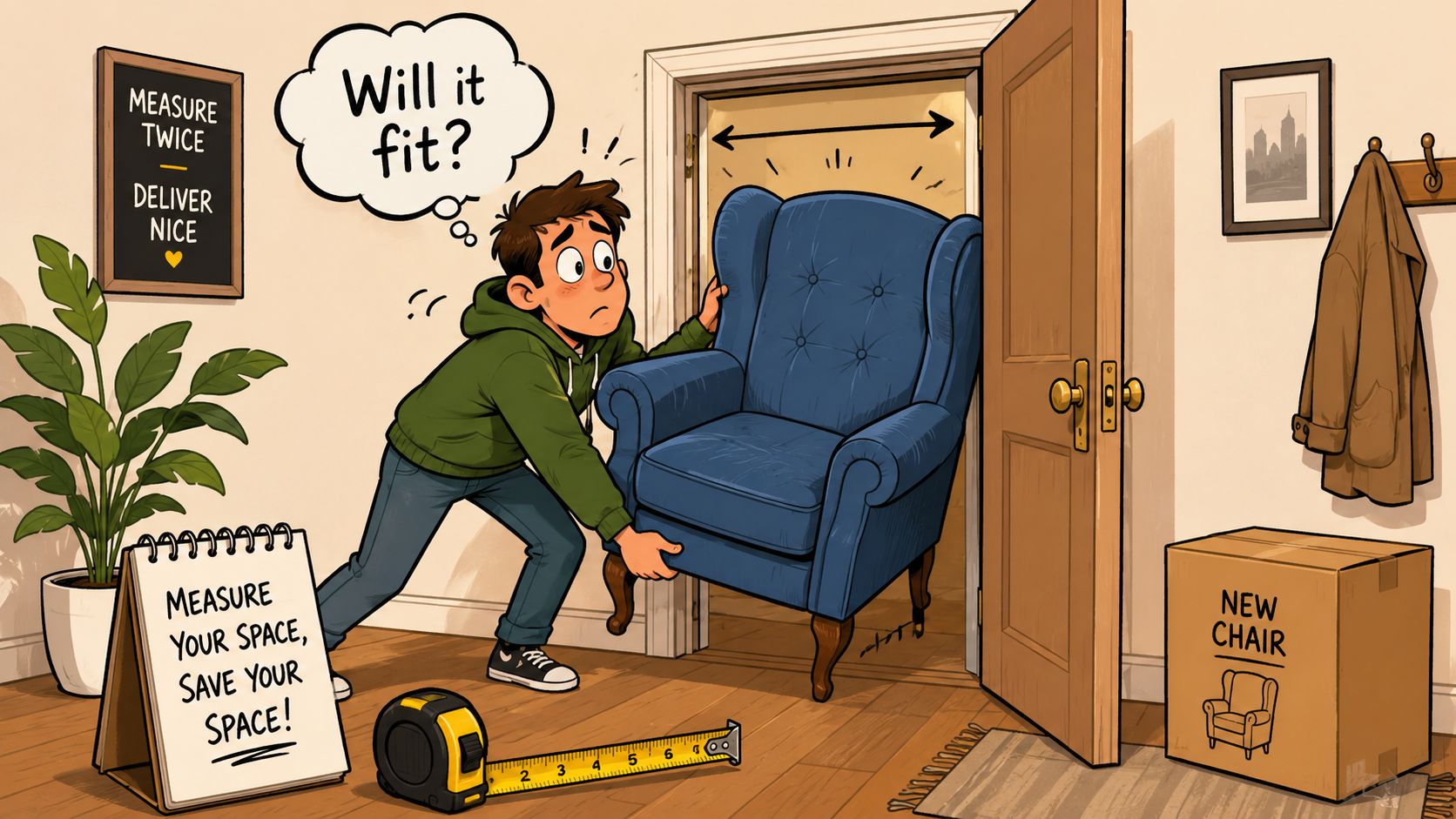
Buying the right chair starts with a tape measure, not a fabric swatch. A lot of delivery headaches happen because people measure the space where the chair will sit, then forget the path it has to travel to get there.
That matters even more with wingback chairs because the shape can be deceptive. The footprint might be compact, but the height, wings, and arm shape can still create trouble in narrow entries or tight turns.
Measure the room and the route
A simple checklist saves a lot of frustration:
- Measure the chair's destination first. Check width, depth, and the clearance around nearby tables, sofas, and walkways.
- Measure every doorway on the path. That includes entry doors, apartment hall doors, and room-to-room openings.
- Check hallways and stair turns. Tight corners often cause more trouble than the front door.
- Notice ceiling angles and railings. Older homes and condos can have sneaky pinch points.
- Write everything down. Memory gets unreliable once dimensions start stacking up.
For anyone who wants a cleaner process, this guide on how to measure furniture before delivery is worth reviewing.
Don't assume a smaller chair functions the same
This is one place where honesty matters. Buyers often worry whether scaled-down wingbacks still block drafts or feel private enough. That concern is valid. There's limited hard data on how reduced wing spans affect thermal efficiency in smaller versions. That's why guidance on scaled-down wingback function points out that in-store experts can help assess how a specific chair will work for a specific space.
That's good advice. A smaller chair can absolutely feel cozy, but shape matters as much as size. Wing angle, back height, arm shape, and where the chair sits in the room all influence how sheltered it feels.
Sit in the chair before making the call if that option exists. The body notices scale faster than the eye does.
Tight spaces need smarter delivery options
Some homes don't accommodate bulky furniture. Upper-level condos, narrow bungalows, and older Milwaukee layouts can make delivery a significant challenge.
That's where come-apart furniture earns its keep. Pieces designed to separate for delivery can make tight entries far more manageable, especially when the home has sharp turns or restrictive hallways. Even when shopping for a wingback, it helps to ask about delivery strategy early instead of treating it like an afterthought.
A chair can look right on the floor and still be wrong for the home if it can't get through the door comfortably.
Styling and Placing Your New Favorite Chair
A small scale wingback chair works best when it gets a job. That job might be reading, conversation, or giving the room one strong visual anchor. When the placement is thoughtful, the chair looks natural instead of dropped in as an afterthought.
A window corner is one of the strongest placements. The chair gets light, the room gains height, and the whole setup feels intentional with very little effort. Add a compact side table and a floor lamp, and the corner starts pulling its weight.
Three placements that almost always work
Some layouts make this easy.
- Bedroom corner: A wingback can warm up a blank spot and create a place to sit while dressing or winding down.
- Living room accent seat: One chair across from a sofa gives the room shape and helps conversation flow.
- Paired seating: Two smaller wingbacks can create a more intimate arrangement than one oversized loveseat.
For readers wanting more room planning ideas, this article on how to style a living room can help with scale and balance.
Keep the extras light
This style already has presence. It doesn't need a pile of accessories around it. Usually, the best supporting pieces are simple:
| Pairing item | Why it works |
|---|---|
| Small round side table | Keeps the footprint light |
| Floor lamp | Adds function without crowding |
| Throw pillow | Softens the lines and adds color |
| Light blanket | Makes the chair feel welcoming |
One strong chair in the right spot often does more for a room than several smaller accents scattered around.
The biggest styling mistake is overfilling the area. A wingback has shape, height, and character already. Let it breathe a little. That's usually what makes it look polished.
Why Visiting Our Showroom Makes All the Difference
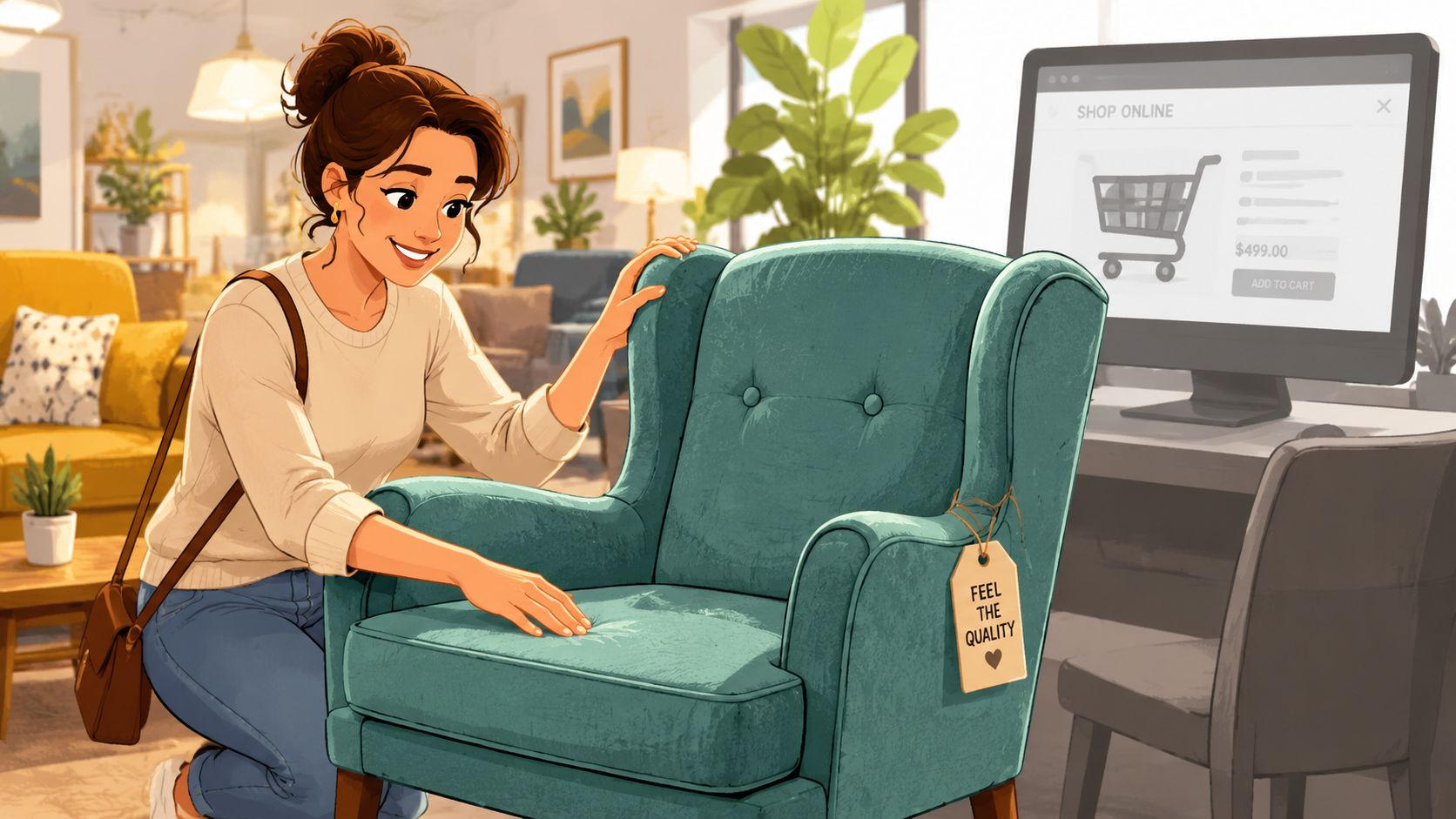
Furniture is one of the few things people still shouldn't buy by guesswork alone. A photo can show color and silhouette. It can't show whether the seat feels supportive, whether the arms hit at a comfortable height, or whether the scale feels right once someone is sitting in it.
That's especially true with small scale wingback chairs. A quarter-inch here and a slightly different arm shape there can completely change how a chair feels in real life. What looks compact online can feel tight in person. What looks modest on a screen can turn out to be the most inviting seat in the room.
What people learn in person
Walking a showroom gives shoppers answers fast. They can compare scales side by side. They can sit in a firmer chair and then a softer one. They can see whether a fabric looks calm, rich, casual, or formal under real lighting.
That kind of comparison matters more than people expect.
- Seat depth feels different in person
- Back height changes the whole experience
- Arm shape affects comfort and usability
- Fabric texture often looks better live than on a screen
Local experience still matters
There's also value in talking to people who've helped families furnish Milwaukee-area homes for generations. That kind of guidance isn't about pressure. It's about catching issues before they turn into regrets, especially with compact rooms, senior living needs, and delivery challenges.
A family-owned showroom that's been serving Metro Milwaukee since 1928 brings perspective that big anonymous shopping channels just don't. A team with over 400 years of combined experience has seen just about every floor plan, comfort concern, and sizing mistake. That's useful when a shopper wants better quality, practical advice, and honest help.
Then there's the simple fact that some things still matter face to face. Solid wood has a feel. American-made upholstery has a feel. Amish craftsmanship has a feel. No product listing can replace that.
The in-store experience also fits a different set of values. Buy local. Support family business. Work with people who are closed on Sundays because family time still means something. A lot of shoppers appreciate that once they walk through the door.
Ready to find a chair that fits the room and feels right the first time? BILTRITE Furniture-Leather-Mattresses has been serving Metro Milwaukee since 1928 with affordable, better-quality furniture, strong USA-made and Amish-made selections, senior-friendly options, and a showroom experience that still puts real people first. The Greenfield store is the place to see the scale, feel the comfort, and talk with a team that's there to help, not hover. Come say hello and let the family at BILTRITE help your family find a new favorite piece for home.