3 DAY MATTRESS SALE! THURSDAY - FRIDAY - SATURDAY!
LABOR DAY SALE HELD OVER ENDS SATURDAY, SEPTEMBER 19 AT 5PM!
NO CREDIT CARD FEES!
1000's of Items IN-STOCK + 500 Mattresses!
Largest selection of USA Made Furniture & Mattresses + Amish Made!
FREE In-Store Design Services!
BUY LOCAL & LOVE YOUR HOME!
3 DAY MATTRESS SALE! THURSDAY - FRIDAY - SATURDAY!
LABOR DAY SALE HELD OVER ENDS SATURDAY, SEPTEMBER 19 AT 5PM!
NO CREDIT CARD FEES!
1000's of Items IN-STOCK + 500 Mattresses!
Largest selection of USA Made Furniture & Mattresses + Amish Made!
FREE In-Store Design Services!
BUY LOCAL & LOVE YOUR HOME!
OPEN LABOR DAY | Tuesday-Thursday 10am to 6pm | Friday 10am to 7pm | Saturday 10am to 5pm | Sunday Closed To Be With Family & Friends | Monday Showroom Closed
5430 West Layton Ave, Greenfield - Metro Milwaukee
You know the moment. Family is coming over, the table looks great, dinner’s almost ready, and someone says, “Can we squeeze in one more chair?”
Sometimes the answer is yes. Sometimes that extra chair turns the whole meal into an elbow-bumping event.
That’s why chair width standard matters more than generally appreciated. A chair can look nice in a showroom or online photo, but if the width is off for your body, your table, or your room, it won’t feel right once real life starts happening around it.
Our family has been helping Metro Milwaukee homes get furniture right since 1928, and one lesson has stayed the same across generations. Small measurements make a big difference. A few inches can decide whether a dining room feels welcoming or crowded, whether a reading chair feels cozy or bulky, and whether a lift chair helps daily life or makes movement harder.
Finding the Right Fit in a World of Chairs
A lot of folks assume chair sizing is a modern thing. It isn’t.
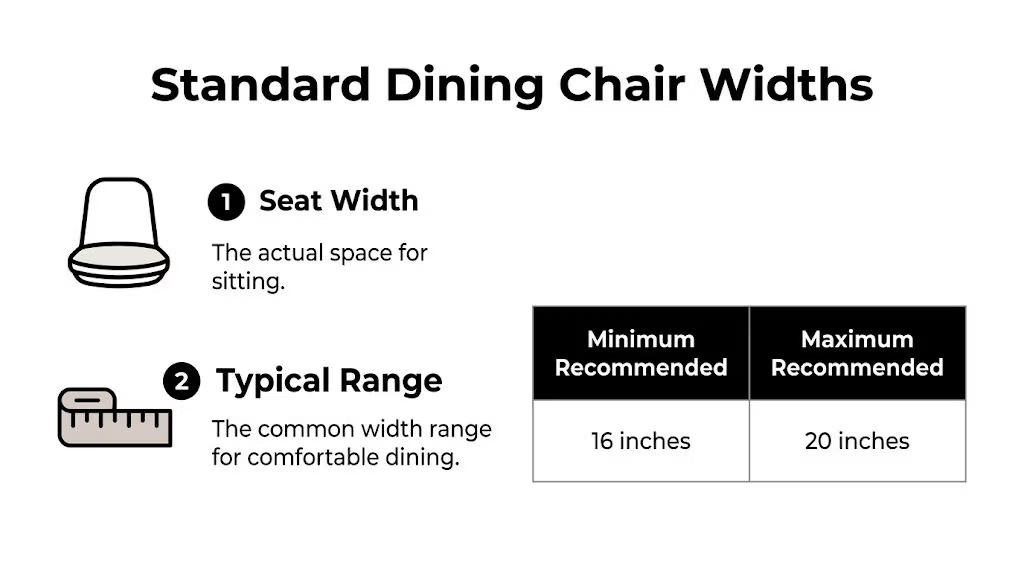
The basic seat width commonly sought today comes from a long furniture history. Standard chair seat width has roots in the 16 to 20 inch range, and that range has carried forward because it works well for comfort and body proportions across time, as outlined in this history of chair dimensions.
That old range survived changing styles, changing homes, and even changing clothing. In some eras, chairs widened to accommodate fashion, then narrowed again when that need disappeared. The interesting part is that modern furniture still lands close to that same range.
A “standard” size isn’t a rule. It’s a starting point that has lasted because many people sit comfortably within it.
That’s helpful, but it also causes confusion. People hear “standard” and think every chair should fit every person and every room. That’s not how it works.
A chair for a family dining room has a different job than a chair for a condo reading nook. A chair for a senior who needs strong arms to push up from the seat has a different job than a slim side chair tucked under a small table. Width affects all of that.
If you’re shopping, measure before you fall in love with a style. A quick guide like this one on how to measure furniture for your home can save a lot of frustration later.
Why people get tripped up
Most sizing mistakes happen because shoppers focus on one of these and forget the other:
Body fit: Will the seated area feel comfortable?
Room fit: Will the chair physically work in the space?
Use fit: Will it support how you live, dine, relax, or get up and down every day?
Once you separate those three, chair shopping gets a whole lot easier.
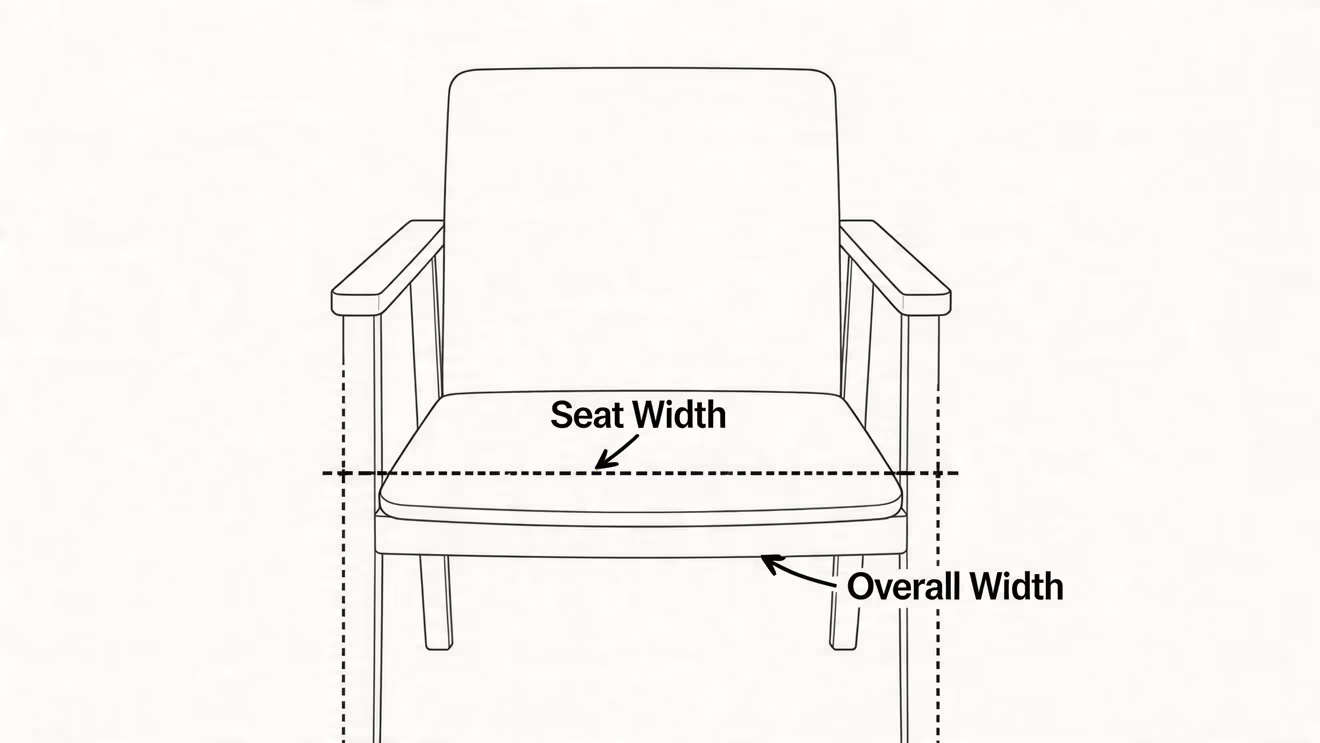
The Two Numbers That Matter Seat Width vs Overall Width
This is the part that clears up most confusion fast.
Seat width is the part you sit on. Overall width is the total outside width of the chair, including arms, frame, and sometimes the widest part of the legs.
Consider clothing: Your waist size and the width of a winter coat aren’t the same thing. Both matter, but for different reasons.
Seat width is your sitting space
When someone says a dining chair has a 16 to 20 inch seat, they’re talking about the usable space between the sides of the seat.
That number tells you whether the chair will feel supportive, snug, or cramped.
Overall width is the chair’s footprint
A chair can have a comfortable seat and still take up more room than expected. Arms add width. Thick frames add width. Legs that angle outward add width.
That matters if you want the chair to slide under a table, fit between other chairs, or sit neatly in a corner.
A simple measuring routine
Use a tape measure and check these in order:
Measure the seat at its widest sitting area. Don’t guess from the chair back.
Measure the full outside width. Go from the farthest outside point on one side to the farthest outside point on the other.
Check the space where it will live. Dining table opening, wall space, desk nook, or path through the room.
Check surrounding furniture too. A roomy chair can still feel awkward if it crowds a sofa or blocks traffic.
If you want another plain-English measuring guide, this overview of sofa dimensions in inches helps because the same idea applies. The usable seat area and the full exterior size are different numbers, and both matter.
Quick rule: If a chair looks slim but has broad arms, trust the tape measure, not your eyes.
Standard Chair Widths for Your Dining Room
Saturday dinner in a Milwaukee bungalow can get crowded fast. One extra guest shows up, the kids scoot closer together, and suddenly a table that looked plenty big starts feeling tight at the elbows.
That is why dining chair width matters so much in real homes.
For most dining chairs, the seat usually falls in the mid-to-compact range, while the full chair gets wider once you add the frame, legs, or arms, as noted earlier. In plain terms, the space you sit on and the space the chair claims are often two different things. That gap is what surprises families when they shop by looks alone.
A dining room works a lot like a parking row. Even a few extra inches per chair can decide whether everyone fits comfortably or whether chairs bump into each other every time someone stands up.
More chairs or more breathing room
A narrower dining chair helps you squeeze in more seating along the sides of a table. That can be a smart choice for holiday meals, birthday dinners, or apartment dining areas where every inch has a job.
A wider chair changes the feel of the room. People have more elbow room. Long meals feel easier. Homework at the table feels less cramped. If your family uses the dining room for more than eating, that extra width often pays off in comfort.
Neither choice is automatically better. A young family in a smaller Milwaukee condo may prefer slimmer chairs that tuck in neatly. A larger family in a suburban dining room may be happier giving each person a little more space.
Armless chairs keep layouts flexible
Armless dining chairs are usually the easiest fit. They slide under the table cleanly, work well on the sides, and help smaller rooms feel less crowded.
Arm dining chairs bring a different kind of comfort. They can feel more supportive, especially for lingering meals or for anyone who likes a little help getting in and out of the chair. The tradeoff is simple. Arms increase the chair’s footprint, so you need to plan for them before you fall in love with the look.
Many families land on a mixed setup. Armchairs at the heads of the table. Armless chairs along the sides. That gives you support where it is most noticeable without giving up too many seats.
Why wood furniture makes width matter even more
With USA-made and Amish-crafted dining furniture, this choice sticks with you for years. These are not throwaway pieces you replace after one lease cycle or one busy season. They become part of family routines, from Tuesday tacos to Thanksgiving pie.
That is why we always tell Greenfield shoppers to test the chair the way they live. Pull it up to a table. Sit for a few minutes. Slide it back. Pretend someone is passing a casserole beside you. Real comfort shows up in those little moments.
A few checks help:
Measure the usable space along each side of the table.
Compare the chair’s full outside width, not just the seat.
Leave room for everyday movement, especially in busy family dining rooms.
If you are choosing for a smaller home or apartment, favor chairs that tuck in neatly and do not flare out.
If you want help pairing style, comfort, and fit, our guide on how to choose dining chairs walks through the details.
Some families want to fit every possible seat around the table. Others want dinner to feel relaxed and roomy. The right width is the one that matches how your family gathers.
A Guide to Living Room Chair Widths
Living room chairs are a different animal entirely.
Dining chairs have fairly clear standards. Living room chairs don’t. And that’s because comfort means different things in different homes.
A chair for reading by a lamp should feel different from a chair meant for movie night. A formal accent chair should take up space differently than a recliner you sit in every evening.
Three common living room chair personalities
Accent chairs tend to feel visually lighter. They work well when you need seating without making the room feel heavy. In a smaller living room, that lighter look can matter just as much as the tape measure.
Traditional armchairs usually land in the middle. They often offer enough width to feel welcoming without dominating the room. For many families, this is the most versatile choice.
Recliners and deep lounge chairs give you more body room and more comfort features, but they also claim more floor space. Even when the seat feels just right, the overall width can change how the entire room flows.
Match the chair to the job
Ask what the chair needs to do first.
If the answer is “hold a cup of coffee, a throw blanket, and a person who wants to read for an hour,” a clean-lined armchair might be your best friend.
If the answer is “support someone every night through a full movie and maybe a nap,” a broader chair with more cushioning may make more sense.
Here’s a simple way to think it through:
Reading corner: look for a slimmer profile and easy placement near a lamp or side table
Conversation area: focus on chairs that relate well to the sofa in scale
TV room: prioritize seat comfort, arm support, and how the chair feels after a while
Multipurpose family room: choose a style that won’t block traffic or overpower the room
What shoppers often miss
People tend to test a chair by sitting in it once. That’s useful, but not enough.
Pay attention to how your shoulders feel, where your arms land, and whether the chair looks oversized next to the pieces around it. A good living room chair shouldn’t just feel nice on its own. It should belong in the room.
If a chair gives you that relaxed “ahh” feeling but takes over the whole layout, it’s not the right fit yet.
That’s why living room width is always a balancing act between comfort and proportion.
Making It Work Tips for Small Spaces and Apartments
Small homes need smarter furniture, not lesser furniture.
That matters in Milwaukee apartments, condos, bungalows, and senior living spaces where every inch has a job. A bulky chair can make a room feel boxed in fast, even if the room itself is lovely.
One challenge is that standard guidance often skips over small-scale furniture. Existing recommendations note that office chair widths often fall in the 430 to 510 mm range, but they don’t offer much direction for narrower residential seating in tighter homes, which is exactly the gap discussed in this small-space chair fit article.
Small-scale works because proportion works
A small room doesn’t just need a narrower chair. It needs a chair that looks right in the room.
That usually means cleaner lines, slimmer arms, less visual bulk, and shapes that don’t stick too far into pathways. Armless chairs can help. So can exposed legs, because they let you see more floor and make a room feel more open.
Delivery matters too
This gets overlooked all the time.
A chair can fit the room once it’s in place and still be a headache getting through the building, hallway, or doorway. That’s why compact frames and come-apart designs are so practical in compact homes.
A few smart habits make a big difference:
Choose less bulky arms: They reduce total width without necessarily making the seat feel tiny.
Look for leggy silhouettes: More visible floor often helps a room feel less crowded.
Measure entry points: Doorways, turns, stair landings, and elevators can matter as much as the room itself.
Use multipurpose pieces: A smaller chair paired with an ottoman can be easier to place than one oversized lounge chair.
Most generic sizing advice assumes average rooms and average layouts. Real homes aren’t that neat.
In a smaller space, a chair’s width affects more than seating. It affects whether you can open a cabinet, walk comfortably, add a side table, or keep the room from feeling cluttered. That’s why a thoughtfully scaled chair often feels better than a “full-size” one, even before you sit down.
Widths for Comfort and Safety Seniors and Heavy-Duty Needs
For seniors and heavy-duty seating, width isn’t just a comfort detail. It’s part of everyday safety.
A chair that’s too narrow can feel pinched and make getting seated more awkward. A chair that’s too wide can leave someone without the support they need from the arms and sides. The best fit usually feels steady, easy to enter, and easy to rise from.
Updated ergonomic guidance recommends a minimum seat width of 19.2 inches (48.8 cm) for office and heavy-duty chairs to accommodate broader users more comfortably, according to this updated chair standards overview.
That wider guideline reflects a simple truth. People need room to sit without pressure, especially during longer periods of sitting.
What to look for besides width
Width matters, but it doesn’t work alone.
For seniors, supportive arms are a big deal because they make it easier to sit down and stand up. Seat height, firmness, and stability matter too. A soft chair that’s hard to get out of can be more frustrating than a firmer one that offers better support.
For heavy-duty seating, the chair should feel planted and well-balanced. A broad seat works best when the frame, arms, and cushioning all support that width properly.
A practical home checklist
When evaluating a chair for a parent, grandparent, or someone aging in place, look for these signs:
The sitter can place their arms naturally on the armrests: not reaching outward too far or squeezing inward
The seat feels supportive across the body: not tight at the hips, not loose and unstable
Standing up looks controlled: not a struggle, not a drop into the cushion
The chair fits the room and the pathway around it: comfort still has to work with the home
A supportive chair should help daily life feel easier, not make every sit and stand feel like a chore.
Lift chairs deserve special attention here because they combine width, arm support, and assisted motion. If that’s the kind of seating you’re researching, this guide to lift chairs for elderly family members can help you think through the details.
Why this is worth slowing down for
Families sometimes rush this purchase because the need feels urgent. That’s understandable.
Still, this is one category where trying the chair in person matters a lot. Safety and comfort show up in the little things. How the arms meet the body. Whether the seat feels centered. Whether the chair encourages confidence instead of hesitation.
The Golden Rules for Chair Spacing and Clearance
A chair can be the right width and still make a room feel wrong if the spacing around it is too tight.
Furniture makers have been working around this issue for a very long time. During the Stuart period from 1603 to 1714, furniture dimensions changed as table heights dropped from 34 inches to 30 inches, and earlier narrow trestle tables at 26 to 30 inches directly influenced chair spacing and dining efficiency, as described in this history of table and chair proportions.
The lesson still holds. Chair width and chair clearance belong together.
Three spacing checks to use at home
Behind the chair
Make sure there’s enough room for someone to sit down, push the chair back, and get up without scraping into a wall or another piece of furniture.
In a dining room, this is often the difference between a room that feels easy and one that feels tense.
Between chairs
Don’t only count how many chairs can physically line up. Think about whether people can sit, eat, and move their arms comfortably once everyone is seated.
A tight fit can work occasionally. It gets old fast if that’s your everyday setup.
Walkway paths
Look at the natural walking route through the room. Can someone pass behind a seated person? Can a family member carry dishes through the space without twisting sideways? Can kids move through without bumping every chair back?
A quick room test
Stand in the room and act it out.
Pull the chair back. Walk behind it. Turn as if carrying a tray or laundry basket. If the motion feels awkward without people in the room, it will feel worse when the room is in use.
Here’s a simple checklist:
Dining area: pull every chair back once, not just one
Living room: check paths to windows, lamps, and end tables
Entry or small nook: make sure the chair doesn’t block natural movement
Multi-use rooms: leave enough breathing room for both seating and traffic
Good furniture placement feels almost invisible. People move naturally because the room isn’t fighting them.
Come Say Hi and Find Your Comfy Seat
A chair can look perfect in a photo and still feel wrong the minute you sit down. That happens all the time. The numbers may be right, but the fit for your family, your room, and your routine can still be off.
That is the big lesson behind any chair width standard. It gives you a starting point, the way a recipe gives you measurements. Real life is the taste test. In a Milwaukee bungalow, a condo dining nook, or a busy family dining room with kids sliding chairs in and out all day, the best chair is the one that fits the people using it and the space around it.
After decades in the furniture business, our family has seen this firsthand. One home needs slimmer dining chairs so everyone can gather comfortably. Another needs a broader seat for long visits after dinner. Another needs a sturdier, easier-to-use chair that helps a parent or grandparent sit down and stand up with confidence.
That is why sitting in the chair matters so much.
You notice the arm placement. You feel whether the seat gives you enough room without wasting space. You can tell if the chair looks balanced next to your table, sofa, or walkway. Paper measurements help you narrow the choices. Sitting confirms the choice.
If you are in the Milwaukee area, visit BILTRITE Furniture-Leather-Mattresses in Greenfield and try a few for yourself. We are a fourth-generation, family-owned showroom, and we love helping neighbors compare dining chairs, living room seating, lift chairs, and Amish-crafted or USA-made furniture side by side. Come in, ask questions, bring your room measurements, and let us help you find a comfy seat that fits your home.