Small Scale Wingback Chairs: A BILTRITE Family Guide

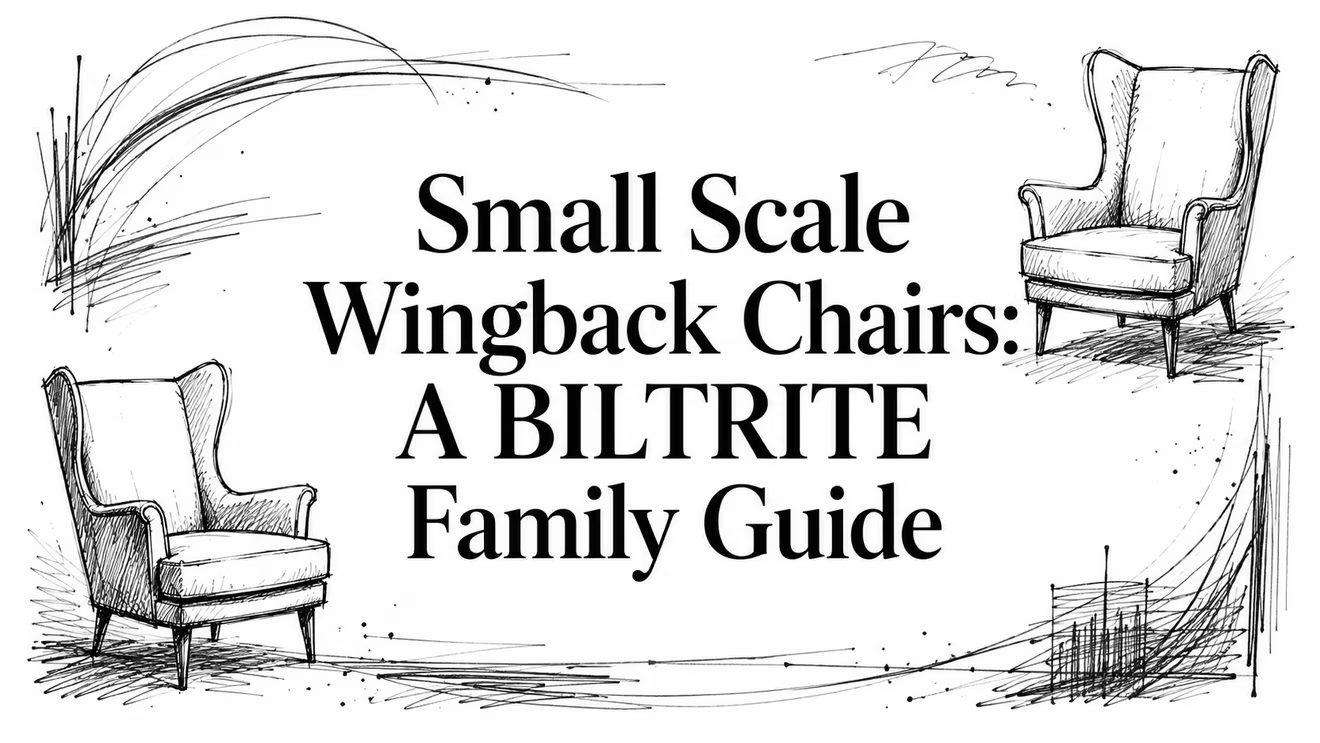
A lot of people land on small scale wingback chairs the same way. They've moved into a condo, helped a parent settle into senior living, downsized into a cozier home, or finally admitted that the old oversized chair is winning every battle with the room. The chair might be comfortable, but if it blocks the walkway, crowds the fireplace, or makes the whole room feel pinched, comfort stops feeling relaxing.
That's where a small scale wingback starts to make sense. It keeps the familiar high back, the tucked-in feeling, and the classic shape people have loved for generations, but in a footprint that fits real life a lot better. For many homes around Metro Milwaukee, that balance is the sweet spot.
That kind of fit has mattered to local families for a long time. BILTRITE Furniture was founded in 1928 by Irwin Kerns and his wife Frieda Kerns as an upholstery shop in Milwaukee that made custom furniture, establishing a 4th-generation family-owned legacy serving Metro-Milwaukee for nearly a century. Helping people make a room feel comfortable, useful, and welcoming has always been the work.
Welcome to the World of Small Scale Wingbacks
A small room usually tells the truth fast. One bulky chair and suddenly the end table has nowhere to go, the lamp looks squeezed in, and getting around the space turns into a side-step routine. That's often when people start looking for something with presence but less bulk.
Small scale wingback chairs answer that problem in a way that still feels warm and classic. They don't read like tiny furniture. They read like smart furniture. The shape still gives the room some height and personality, but it doesn't take over the whole floor.
Why this style still speaks to people
Wingback chairs have been around for centuries because the shape does something useful and comforting at the same time. The wingback chair, including small-scale variants, originated in late 16th-century England and became especially prevalent during the Restoration period, between 1660 and 1680, when the design leaned harder into comfort and luxury, with high backs and wrap-around wings made to buffer drafts and trap heat near the fireplace, as described in this history of the wingback chair.
That old function still helps explain the appeal today. Even in a modern room, the wings make a seat feel sheltered. A reader can settle in with a book. A grandparent can enjoy morning coffee in a chair that feels supportive. A bedroom corner can turn into a quiet little retreat instead of dead space.
A good wingback doesn't just fill a corner. It gives that corner a purpose.
Why smaller homes benefit first
In apartments, condos, and senior living spaces, furniture has to earn its keep. A chair can't just look nice from across the room. It has to leave enough space to move around, work with the room's traffic flow, and still feel inviting when someone sits in it.
That's why this category has become so useful for local shoppers. It blends old-school comfort with better scale for the way many people live now.
What Exactly Makes a Wingback Small Scale
A lot of shoppers hear “small scale” and picture a chair that looks nice but feels skimpy once they sit down. In our family's experience, that is the wrong picture. A small scale wingback is a properly built wing chair with tighter proportions, made to fit the room and the person more comfortably.
This visual helps show the idea.
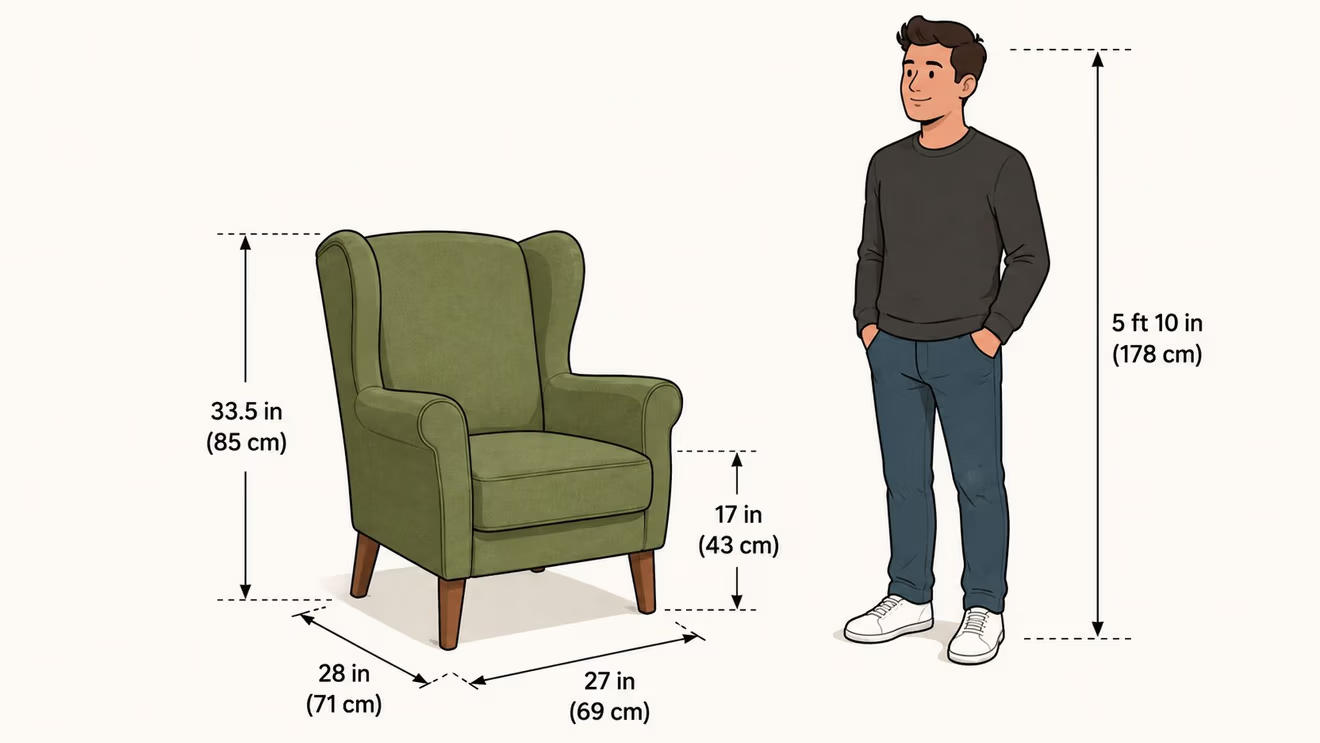
The measurements that usually put a wingback in the small-scale category
Across furniture retailers, product listings for smaller wingbacks commonly cluster around a seat height of about 18 to 20 inches, a seat depth near 20 to 22 inches, and an overall width in the upper 20s to low 30s. Those ranges are a helpful starting point because “small scale” is not a strict industry label. It is more like calling a jacket a trim fit. The idea is clear, but you still want the actual measurements before you bring it home.
| Feature | Typical small scale range |
|---|---|
| Seat height | 18 to 20 inches |
| Seat depth | 20 to 22 inches |
| Overall width | 28 to 32 inches |
Those numbers matter because a chair can look modest in a photo and still feel bulky in a real room. Width affects how much visual space it takes up. Seat depth affects whether you sit upright with your feet planted or slide back and have to scoot forward to stand.
How it compares to a full-size wingback
A standard wingback usually gives you more overall bulk through the arms, wings, and seat box. A small scale version keeps the familiar high back and side wings, but trims the footprint so it fits more naturally on a shorter wall, in a bedroom corner, or beside a small table. A general sizing guide from Dimensions.com's wing chair reference shows how broad the category can be, which is exactly why comparing listed width, depth, and seat height matters more than relying on the label alone.
We often tell neighbors to picture the difference the way they would compare a full dining hutch to a well-proportioned sideboard. Both can be useful and handsome. One asks less of the room.
For shoppers trying to judge proportions before a store visit, our guide to standard chair width measurements gives a useful baseline.
Size is only half the story
Here is the part many articles skip. A wingback can measure small and still be uncomfortable if the seat is too deep for the person using it, the arms sit too low to help with standing, or the back pitch pushes the body into an awkward slouch.
That matters even more for seniors. A chair that is easier to get into and out of usually has a sensible seat height, supportive arms, and a back angle that encourages a more upright sit. So yes, measurements matter. But at BILTRITE, we have learned over generations that comfort lives where dimensions and construction meet.
Practical rule: If the width creeps well past the low 30-inch range, or the seat gets deep enough that your feet do not rest comfortably on the floor, the chair may stop feeling truly small scale in everyday use.
Big Benefits for Smaller Homes and Senior Living
A small scale wingback earns its place by doing several jobs at once. It adds comfort, defines a space, and keeps a room from feeling overloaded. In compact homes, that combination is hard to beat.
One chair can create a destination. Put it by a window with a lamp and it becomes a reading spot. Place it near the fireplace and it becomes the chair everyone gravitates to first. Tuck it into a bedroom corner and the room suddenly feels more finished and more useful.
Why the shape feels so inviting
Part of the appeal comes from the wingback's familiar “shelter” feeling. The back is tall. The wings frame the sitter a bit. The seat often encourages a more upright, settled posture than a deep lounge chair. For someone who wants a chair for reading, conversation, needlework, or quiet TV time, that can feel just right.
That's especially helpful in homes where every piece needs a clear role. A giant overstuffed chair may feel tempting in the store, but in a smaller room it can dominate everything around it. A small scale wingback often gives the same sense of comfort in a tidier package.
Why seniors and caregivers often notice this style
Families shopping for senior living furniture often focus first on measurements, and that makes sense. But daily use matters just as much. A chair with supportive arms and a more upright sit can make transitions easier for many people than a low, deep seat that's hard to get out of.
A few reasons this style often works well:
- Supportive posture keeps the sitter from feeling swallowed by the chair.
- Defined arms give hands a place to brace during sitting and standing.
- Smaller footprint leaves more open floor around the chair.
- Classic styling helps practical furniture still feel attractive and home-like.
A chair for senior living shouldn't feel clinical. It should still feel like part of a real home.
There's also an emotional side to this choice. Downsizing can be difficult. Moving into a smaller home or a senior community often means giving up familiar furniture that no longer fits. A small scale wingback can bring back some of that traditional, settled feeling without creating a space problem.
Look Deeper What's Inside Your Chair Matters
A lot of chairs look good from the front. The fabric is nice, the shape is charming, and the price tag seems easy to live with. Then a few years pass. The seat softens too much, the frame starts feeling loose, and the chair that looked so promising turns into the one nobody reaches for.
That's why construction matters so much with small scale wingback chairs. When a chair is compact, every part of the build has to work harder. There's less room to hide poor structure.
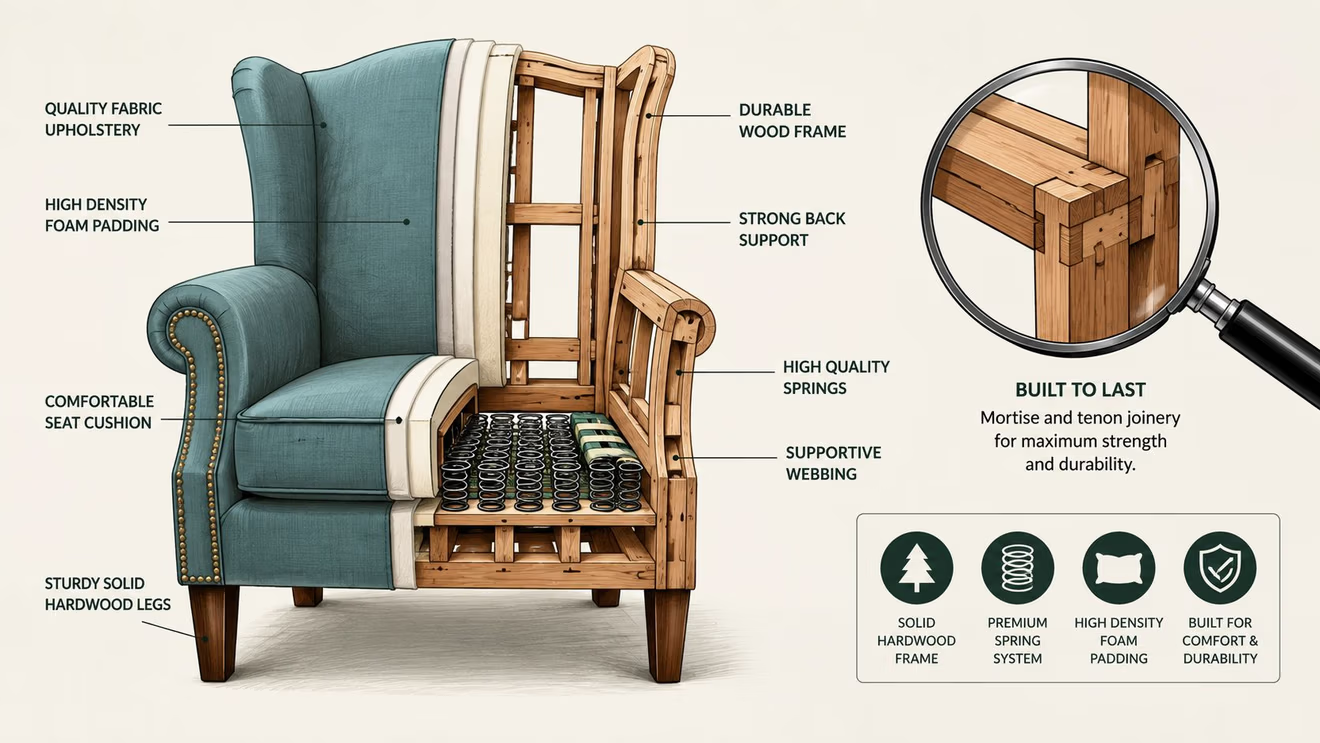
Why frame construction deserves real attention
One of the biggest gaps in the market is how little clear information shoppers get about what's inside the chair. Search results show petite models priced as low as $288 with “birch wood legs” often implying veneered or partial solid wood, yet no authoritative source contrasts durability metrics between small-scale Amish-made solid wood wingbacks and mass-produced alternatives.
That matters because visible wood legs are not the same thing as a solid, well-built internal frame.
A shopper can ask a few simple questions:
- What is the frame made of
- Is the structure solid wood, engineered material, or a mix
- How does the seat support work
- Can the chair handle everyday use in a high-use room
- Is the upholstery attached and padded in a way that will age well
The hidden difference between “looks nice” and “lasts”
A compact chair often ends up in heavy rotation. It might be the reading chair, the TV chair, the conversation chair, and the chair guests use when the room fills up. That's not light duty.
When solid wood framing is important, shoppers often start leaning toward USA-made and Amish-made construction. The appeal isn't just tradition. It's the idea that the chair was built with long-term use in mind, not just showroom appearance.
For anyone comparing upholstery choices, this guide to upholstery materials is worth reading before making a final fabric decision.
Construction check: If the listing talks a lot about color and almost nothing about the frame, that's a sign to ask more questions.
What shoppers often miss in a compact chair
People usually notice fabric first and silhouette second. Construction tends to come later, if it comes at all. But with a small scale wingback, the smarter order is the reverse.
A chair built with stronger bones tends to hold its shape better, sit better over time, and feel more dependable day after day. That's especially important in smaller homes, where there may not be room to rotate in backup seating when one chair starts failing.
A Practical Checklist for Choosing Your Chair
This is the part that saves people from frustration. A small scale wingback can be a smart purchase, but only if the chair fits the room, fits the body, and fits the way the home works. A tape measure and a few honest questions can prevent a lot of disappointment.
This showroom view gives a good sense of how different chair styles and scales come together in person.

Start with the room, then the route
A chair has to fit into the home before it can fit the room. That sounds obvious, but a lot of delivery headaches start here.
Use this checklist before shopping:
- Measure the wall space where the chair will sit.
- Measure the walking space around it so the room still feels open.
- Check the doorway, hallway, stairwell, and elevator if any of those are part of the route.
- Notice nearby pieces like end tables, radiators, or fireplace hearths that can crowd placement.
For more chair-shopping basics, this article on what to look for in a new sofa or chair gives a useful framework.
Measure the sitter too
It's a common point of surprise for many. A chair can fit the room and still feel off because the proportions don't match the person using it most.
Pay attention to:
- Seat depth: A shorter user may like a shallower seat that lets the back rest against the cushion while feet stay grounded.
- Arm height: Arms that are too high can feel awkward during reading or conversation.
- Back support: A tall back can feel comforting, but only if the seat depth and pitch also work.
- Ease of exit: Some users need a chair that supports a cleaner sit-to-stand motion.
Watch the wings if shoulder movement is limited
This is one of the least-discussed details in compact wingbacks. Existing content rarely addresses the trade-off between the therapeutic wing enclosure and actual shoulder mobility in petite wingbacks for seniors or users with limited range of motion, a nuanced ergonomic gap unaddressed in current retail descriptions.
That doesn't mean wingbacks are a bad choice for seniors. It means the chair should be tested thoughtfully.
A few smart sit-test questions:
| Sit-test question | Why it matters |
|---|---|
| Can the user reach the arms comfortably? | Helps with support and balance |
| Do the wings crowd the shoulders? | Important for limited range of motion |
| Does the seat force a forward perch? | Can reduce comfort over time |
| Is getting up smooth or awkward? | A daily-use reality check |
Sit all the way back, then try reading position, conversation position, and standing up. One quick sit doesn't tell the full story.
Some shoppers also need sturdier construction, heavy-duty seating, or pieces designed to come apart for delivery into tight spaces. Those practical features can matter every bit as much as the chair's style.
Styling Tips to Make Your Wingback Shine
A small scale wingback doesn't need a giant room to make an impression. In fact, it often looks better when it has a clear job and a little breathing room around it. That's part of the charm.
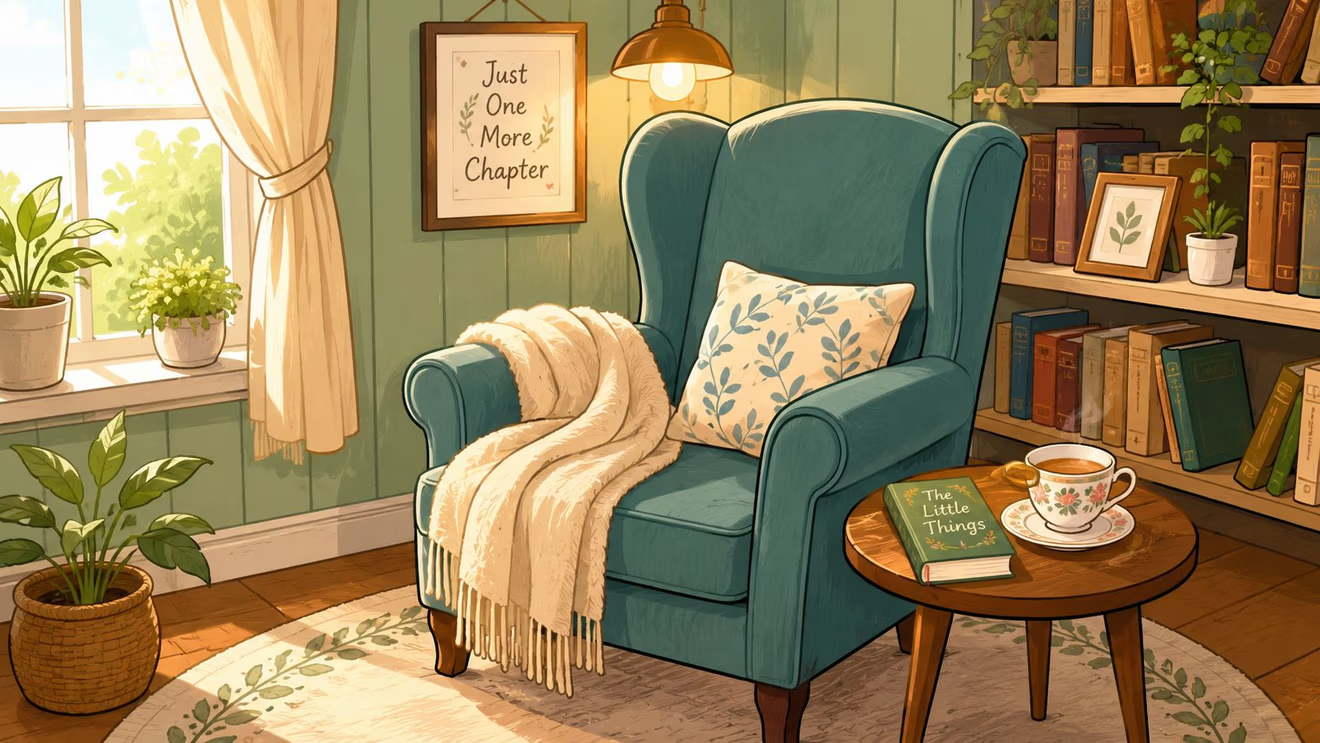
A few easy ways to use one well
One of the nicest arrangements is the classic reading corner. A wingback, a small table, a lamp, and a throw can turn an underused corner into the seat people drift toward for relaxation.
Other strong uses include:
- Bedroom retreat: A chair in the corner can give the room a finished, restful feel.
- Living room accent: A patterned or richly colored wingback can wake up a neutral space.
- Alternative to a loveseat: Two smaller chairs can sometimes make a room feel lighter and more flexible than one bulkier piece.
- Fireplace companion: The shape still feels naturally at home near a hearth.
Let the chair carry some personality
Because the frame is smaller, fabric can do a lot of the talking. A soft solid can keep things calm. A stripe or print can make the chair feel more collected and expressive. In a simple room, a wingback is often the piece that gives the whole space its point of view.
This article on ways to use an accent chair offers more inspiration for placement and styling.
Sometimes the chair that solves the scale problem also becomes the most interesting thing in the room.
The goal isn't to follow rigid decorating rules. It's to make the chair feel intentional, useful, and welcoming.
Find Your Chair The Fun and Easy Way
A small scale wingback usually sounds straightforward until a shopper starts comparing them in real life. One looks lovely but sits too deep. Another fits the room but feels narrow through the shoulders. Another has a nice fabric but raises questions about what's under the upholstery. That's why this category is much easier to shop in person.
Touch matters. Sit matters. Getting in and out of the chair matters. Seeing the scale next to other furniture matters. Online photos can't do that work for people.
That's one reason local showroom shopping still makes so much sense for seating. A shopper can compare shapes, test comfort, ask about frame construction, and talk through real room constraints with someone standing right there. For someone furnishing an apartment, condo, or senior living space, that conversation can save a lot of trial and error.
Why the in-store experience helps with this category
The challenge with wingbacks is that two chairs can look almost alike and feel completely different. One may support reading beautifully. Another may push the sitter too far forward. One may be easier for a senior to stand up from. Another may look compact but still feel bulky in a smaller room.
That's where an experienced team becomes useful. The article body only mentions the store name once, so this can be said plainly: BILTRITE Furniture-Leather-Mattresses offers small scale furniture, USA-made and Amish-made options, and in-person guidance for shoppers who want to compare fit, scale, and construction before choosing.
For anyone browsing styles ahead of a visit, this collection of unique accent chairs for living rooms is a good starting point.
A local family rhythm still matters
Family values show up in the way a store operates, not just the way it advertises. BILTRITE closes its showroom on Sundays to support family time and on Mondays for in-home delivery operations only, with showroom hours Tuesday through Thursday 10am to 6pm, Friday 10am to 7pm, and Saturday 10am to 5pm. That rhythm fits the old-fashioned idea that furniture shopping should feel personal, not rushed.
The same family-centered approach shows up in service too. The mattress side of the business includes value extras such as free white-glove delivery on qualifying purchases, old mattress removal in donatable condition, and a complimentary mattress protector or heavy-duty frame on select sets.
A small scale wingback may be a compact chair, but it's not a small decision. When the size is right, the support feels good, and the construction is sound, it can become the chair that makes the whole room work.
Ready to find a small scale wingback chair that feels comfortable, fits the room, and stands up to everyday life? BILTRITE Furniture-Leather-Mattresses would love to welcome shoppers to the Greenfield showroom, answer questions, and help them sort through styles, scale, and construction in person.