Premium USA Leather: A Friendly Buyer’s Guide to Quality


You're probably standing in a showroom right now, or at least scrolling through sofa options with one hand on your coffee cup and the other on a budget. The tag says premium leather, the sign says USA made, and the whole thing sounds reassuring, but those two claims don't mean the same thing. That's where shoppers get tangled up, and that's exactly where a little plain talk helps.
At BILTRITE, we've seen this confusion for generations. Since 1928, families around Metro Milwaukee have asked the same smart questions, and leather still rewards the people who slow down, feel the material, and check the details before they buy.
What Premium USA Leather Really Means at the Showroom
A couple walks in, spots a leather recliner, and runs a hand over the arm. One person asks if premium USA leather means the sofa was made here, the leather came from here, and the hide is top-shelf all at once. It sounds tidy, but the tag usually mixes two separate promises, not one.
One promise is leather grade, which tells the shopper what part of the hide is being used and how much of the natural grain is still there. The other promise is USA origin, which tells the shopper where the piece was built, and sometimes where the hide was processed. Those are related, but they're not identical.

Why the tag gets confusing
Marketing likes short phrases. Shoppers need precise ones. A sofa can be USA made without using the highest leather grade, and a beautifully graded leather can still be imported or finished elsewhere. That's why the words sound connected, but they answer different questions.
Practical rule: ask, “What is the leather grade?” and “Where was the piece built?” as two separate questions.
The market size helps explain why this gets blurred. The U.S. leather goods market was estimated at USD 50.08 billion in 2023 and is projected to reach USD 76.53 billion by 2030, a 6.5% CAGR from 2024 to 2030, according to Grand View Research's market report (market report). In a market that large, labels do a lot of talking, so the buyer has to ask the right follow-up.
For a first-time shopper, the easiest move is simple. Read the tag, then ask whether the leather is full-grain or top-grain, and separately ask where the upholstery was built. That one habit cuts through a lot of showroom noise.
Leather Grades Explained Without the Jargon
Leather grades are easier to understand if they're treated like floors in a house. Full-grain is the penthouse, top-grain is the upstairs, and lower grades are the lower levels where the finish does more of the talking. That picture sticks because the grade tells a buyer how much of the hide's natural structure is still doing the work.
Premium leather isn't an official leather grade. Expert guides consistently connect the term with full-grain or top-grain leather, which preserve more of the hide's natural grain and stronger fiber structure than split or bonded leather (guide to leather grades). In plain terms, the higher the grade, the more of the hide's original character stays in the material.
A simple way to read the grades
Full-grain keeps the outermost layer of the hide, so it carries the strongest fiber structure and usually develops the richest patina over time. Top-grain is lightly sanded and finished, which smooths out more marks and gives the surface a more uniform look. Lower grades can be useful in some price ranges, but they usually give up long-term toughness or a natural surface feel.
Useful shortcut: if a sofa has to handle kids, pets, and daily sitting, the grade matters as much as the color.
| Common Leather Grades at a Glance | Where It Comes From on the Hide | What It Looks and Feels Like | Best For |
|---|---|---|---|
| Full-grain | Outer layer of the hide | Natural marks, rich character, strongest surface | Long-term use, visible patina, buyers who like character |
| Top-grain | Outer layer, lightly sanded and finished | More uniform, smoother look, slightly softer feel | Family rooms, coordinated interiors, easier visual consistency |
| Split or genuine | Lower layers after the top is removed | Less natural grain, more processed finish | Budget-conscious purchases with lighter expectations |
| Bonded | Reconstituted material from leather fibers and backing | Most uniform, least durable of the common grades | Short-term or lower-cost use where longevity matters less |
For a shopper comparing options in a showroom, the table usually answers the first round of questions fast. The next question is about how the leather was processed, because finishing changes how the material will age. BILTRITE has a useful difference between top-grain and full-grain leather guide for anyone who wants to compare those two grades side by side.
Tanning and Finishing Practices Worth Knowing
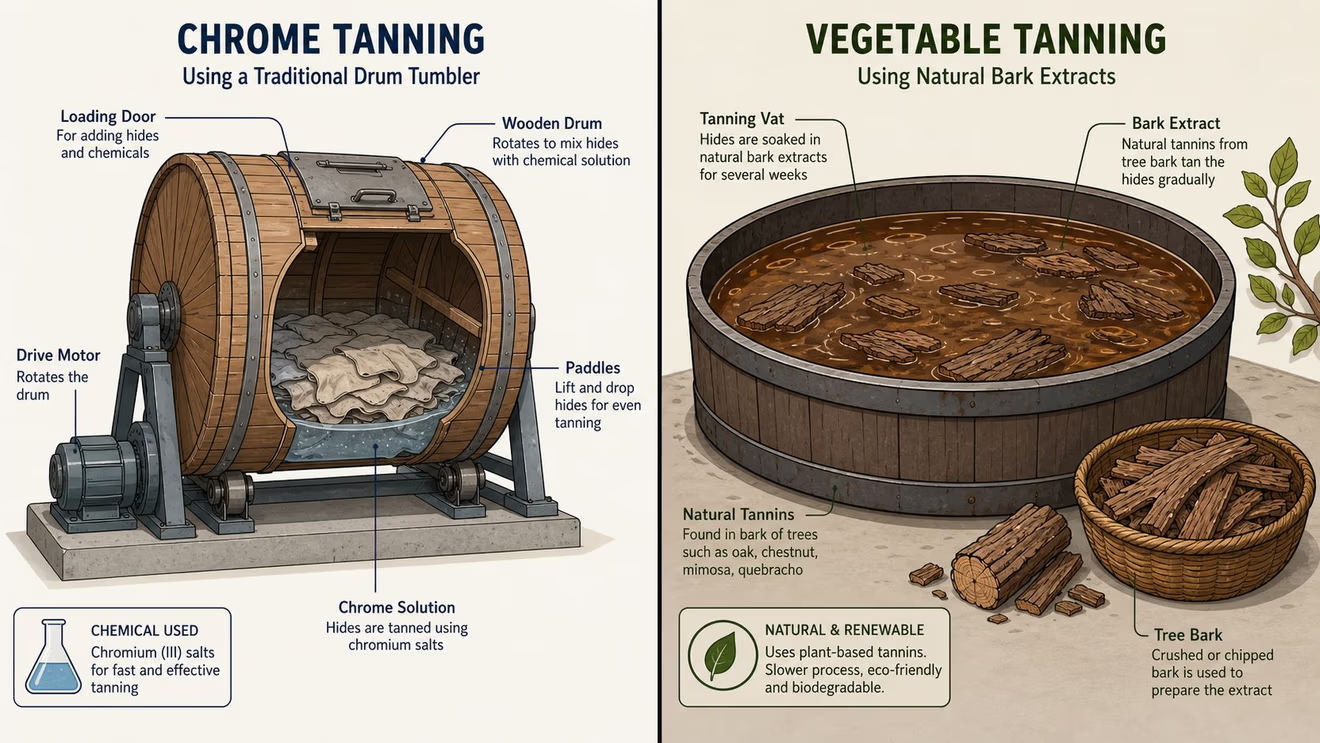
Leather starts as animal hide, but tanning turns it into something stable enough for everyday use. A simple way to think about it is this, tanning preserves the hide the way pickling preserves a cucumber, and finishing decides what the surface will look and feel like in the room.
The tanning method changes the starting point. Vegetable-tanned leather usually feels firmer at first and darkens with age. Chrome-tanned leather tends to feel softer out of the box and can be made in more colors. Those differences matter because a sofa doesn't just sit there, it gets leaned on, warmed up, cleaned, and exposed to light.
What finishing changes
Finishing is where the surface gets its final personality. Some finishes keep more of the natural marks visible, while others use pigment and protective coatings to create a more uniform appearance. That choice changes how the leather handles scuffs, how much character shows through, and how the color ages.
Premium leather is generally understood to refer to full-grain or top-grain leather, where full-grain preserves the hide's natural grain layer, which is the strongest fiber structure, while top-grain is lightly sanded and finished for a more uniform appearance (premium leather explanation). That's why the tanning and finishing notes on a spec sheet are so useful. They tell the buyer more than the word premium alone.
A sofa tag that names the tanning method usually gives a cleaner signal than a vague style label. If the finish is heavily coated, the buyer should expect more visual uniformity and less of the hide's natural story showing through. If the finish is lighter, natural marks may show, and that's not a flaw, it's part of the material.
For shoppers who want to ask one more smart question, BILTRITE's protective coatings guide helps explain what that finish is doing on the surface.
Why USA-Made Leather Is Its Own Quality Signal
A leather sofa made in the USA sends a different signal than one built far away and brought in later. It points to accountability, craft control, and a clearer path for questions if the piece needs attention down the road. That matters because furniture lives in a home for years, not days.
The U.S. leather and allied products industry was projected to generate USD 4.1 billion in revenue in 2021 and grow at only 0.7% annually from 2022 to 2026, according to industry data, while the producer price index for leather in the U.S. stood at 203.86 index points in 2026 and declined by 0.18% that year. Those figures point to a mature manufacturing base, not a fast-moving commodity market.
What buyers usually notice first
Shoppers usually notice the details before they notice the label. Clean stitching, even edges, solid hardware, and clear origin labeling often point to careful work. A maker-focused guide notes that transparent labeling builds trust and that workmanship details matter, because American-made leather goods are presented as a mix of premium materials, skilled craftsmanship, and strict quality standards. You can also use BILTRITE's American-made leather goods guide as a simple reference point when you are comparing what a tag says with what the sofa shows.
Buying USA-made is not just about geography. It helps you know who built the piece and how clearly they stand behind it.
That is why the BILTRITE showroom leans on its USA Made icon. Families can spot the pieces with domestic origin more quickly, then compare construction and leather grade as separate questions. BILTRITE has been serving Metro Milwaukee since 1928, and that long history shows up in the way the floor team talks about leather, with details instead of hype.
A good showroom conversation should leave a shopper with three answers. Where was it built, what grade of leather is on it, and what kind of support comes after the sale? If those answers are clear, the buyer is in a much better position. For shoppers who want a closer look at domestic options, BILTRITE's USA-made leather furniture selection gives a useful starting point.
Smart Questions to Ask Before You Buy Leather Furniture
A leather sofa can look straightforward on the floor, yet the good ones are built from several choices working together. A buyer usually gets a better result by starting with questions that reveal how the piece is made, how it will live in the home, and how it will hold up over time.
Here is the short checklist that belongs on a shopping trip. It stays simple on purpose, because a sofa should be judged with clear eyes, not marketing fog.
- What is the leather grade? Ask whether it is full-grain, top-grain, split, or bonded. That tells you how much of the natural surface remains and how much strength is built into the hide.
- Where was the leather sourced, and where was the piece built? A sofa can be built in the USA with leather from different places, so both parts matter.
- What is the frame made of? A strong leather cover cannot make up for a weak frame, and the structure underneath affects how the sofa feels after years of use.
- What kind of suspension and cushion fill are used? Those parts shape sitting comfort and also show how quickly the seat may relax over time.
- Is the finish protected or more natural? That helps set expectations for marks, color shifts, and day-to-day care.
How to think about value
Price makes sense when it is tied to years of use. A more durable leather sofa can feel expensive on day one and reasonable over time if the frame, leather, and cushions all hold up. That is why a showroom conversation should include how the piece is expected to live in a real home, not just how it looks under bright lights.
Demand for premium positioning in the leather goods category is real, and a market report shows that shoppers continue to look for higher-end options. Even so, the sofa in front of you still has to earn its place. One family may want a smoother, more uniform finish for a formal room. Another may want a tougher surface that can take more everyday wear in a busy family room.
Showroom habit: sit, stand up, and sit again before you talk yourself into a sofa because it looks good on the floor.
At a good furniture store, the staff should be ready for these questions. They should talk about leather grade, construction, origin, and support after the sale without making you guess. BILTRITE's team has more than 400 years of combined experience, so these are the kinds of questions they hear every day, and the kind that help shoppers get to the right fit faster, whether the room is large, small, or somewhere in between.
Common Leather Myths and Simple Care Habits
Leather gets talked about in extremes. People say it doesn't need care, that every scratch is a disaster, or that it'll feel awful in every season. None of those are useful when someone is trying to live with a sofa for years.
Leather does need cleaning, just not fussy cleaning. A soft cloth and regular dusting go a long way, and gentle conditioning on a steady schedule helps the material stay supple. BILTRITE's leather care guide is a practical place to start for routine upkeep.
A few myths worth setting down
Some scratches are normal. On better leather, small marks can blend into the character of the piece instead of ruining it. That's especially true when the finish and grain are left more natural, because the leather is meant to age, not stay frozen.
Leather also isn't doomed to be uncomfortable through the seasons. What usually bothers people is the room, not the material. Direct sunlight can fade and dry the surface over time, so keeping the sofa out of harsh light matters more than chasing a myth about hot summers and cold winters.
A simple routine is enough for most homes.
- Dust weekly: Use a soft cloth to keep grit from building up on the surface.
- Condition on a steady schedule: Condition every six to twelve months, or according to the care instructions for the specific leather.
- Keep it out of direct sun: That slows fading and helps the finish last longer.
- Wipe spills quickly: Leather usually does better when messes are dealt with early.
Small marks often mean the sofa is being lived on, not failing.
Premium leather tends to reward attention instead of punishing it. That's the part many buyers like once they settle in, because the furniture starts to feel like part of the home instead of a fragile showroom piece.
Bringing It All Together at BILTRITE in Greenfield
The cleanest way to shop for leather is to separate the claims. First, ask about grade. Then ask about origin. After that, look at construction, finish, and the kind of everyday life the piece is supposed to handle. Once those pieces are clear, the word premium starts to mean something useful.
At our showroom at 5430 West Layton Avenue in Greenfield, families from Milwaukee, New Berlin, Franklin, Waukesha, and beyond have been sorting through those same questions since 1928. The USA Made, Amish Made, solid wood, and heavy-duty icons make the floor easier to read at a glance, and the team can point shoppers to pieces that match the room and the routine.
BILTRITE's custom leather furniture options also give shoppers a way to think about leather as a fit, not just a finish. That's useful when the room has odd dimensions, when a family wants a specific color, or when the upholstery needs to work with the rest of the house.
A few questions come up again and again. A quality leather sofa often lasts for many years when the frame, leather, and care routine all line up well. Bonded leather can be tempting on price, but it usually asks the buyer to give up the durability and aging behavior that make leather appealing in the first place. And yes, it still helps to sit on the piece before deciding.
Ready to compare leather grades, feel the difference between finishes, and talk through the spec sheet with a real person? Come on down to our showroom and see for yourself!
BILTRITE Furniture-Leather-Mattresses has affordable, better-quality furniture, a huge mattress selection, and plenty of USA- and Amish-made pieces that let shoppers compare leather grade, construction, and origin the right way. Visit BILTRITE Furniture-Leather-Mattresses in Greenfield and bring your questions, we'd love to help you sort through the details in person.