Ottoman with Storage: The Complete Milwaukee Buyer’s Guide


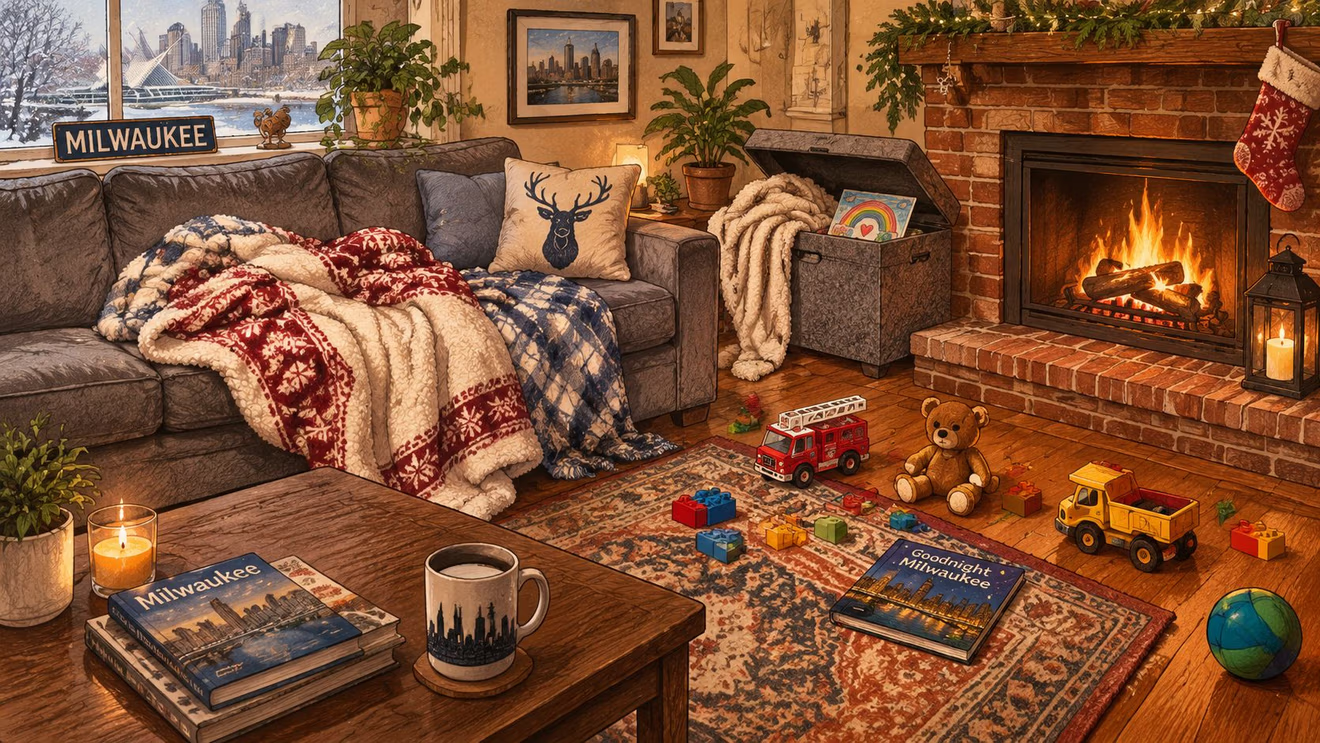
A winter evening in a Milwaukee living room can get crowded fast. Blankets collect on the sofa, toys spread across the floor, and the coffee table becomes a landing place for remotes, books, and yesterday's mug. In a Brady Street apartment, a Wauwatosa bungalow, or a senior living space, the challenge is often the same: there's limited room, so every piece needs to earn its place.
An ottoman with storage can help by combining a footrest, extra seating, table surface, and concealed storage in one compact form. The right model can make a room feel calmer without asking for another cabinet or a larger floor plan. The wrong model, however, may offer less usable storage than expected, wobble under seated weight, or create a lid hazard.
Why an Ottoman With Storage Is a Game-Changer for Your Home
A storage ottoman works best when it solves a specific household problem. A family might use one near the sofa for toys and soft blankets. A condo resident might place one at the foot of the bed for extra linens. A homeowner in Bay View could use a bench-style version in the entryway for shoes, scarves, or seasonal accessories.
The appeal comes from combining functions without adding visual clutter. A low ottoman can provide a place to rest feet during a Bucks game, hold a tray for snacks, and hide the items that make a small living room feel unsettled. That flexibility matters in older Milwaukee homes, where charming layouts often include compact rooms, narrow passages, and fewer built-in storage options.
Practical rule: The best storage ottoman is the one that stores items the household reaches for often, without blocking the path through the room.
A small footprint with several jobs
A storage ottoman doesn't need to dominate a room to be useful. Compact cube formats can fit beside a chair or under a console, while longer benches can define a zone at the foot of a bed or along an entry wall. The key is matching the form to the traffic pattern.
For households trying to reduce clutter, BILTRITE's summer decluttering and storage furniture tips offer a useful reminder: storage works better when it's placed close to the items people need to put away. A toy-storage ottoman belongs near play, not across the house. A blanket ottoman belongs within easy reach of the sofa.
The furniture form itself has an interesting history. The ottoman traces its roots to the Ottoman Empire in modern-day Turkey, where it began as a central seating piece, a low wooden platform covered with cushions. It first developed as sectional furniture that wrapped around three walls of a room, then adapted into smaller corner and circular versions before arriving in Europe in the late 18th century. Its name comes from its place of origin, making it a clear example of furniture shaped by cross-cultural exchange. Learn more about the ottoman's furniture history).
A storage ottoman isn't automatically the right answer for every room. Buyers need to consider opening clearance, interior volume, seated weight limits, upholstery, hinge behavior, and the difference between occasional seating and everyday seating. Those details matter even more in apartments, condos, and senior living settings, where a bulky or unstable piece can interfere with movement.
Types of Storage Ottomans and How to Choose the Right One
The shape of the ottoman should follow its primary job. A family storing bulky throws needs different access than a homeowner looking for an entryway seat or a flexible playroom piece.
Four useful formats
Lift-top ottomans usually provide broad access to the storage cavity because the lid can be removed or lifted away from the opening. They suit blanket storage and other larger soft goods, especially in front of a sofa. Their drawback is that a loose lid needs a safe place to rest while the ottoman is open.
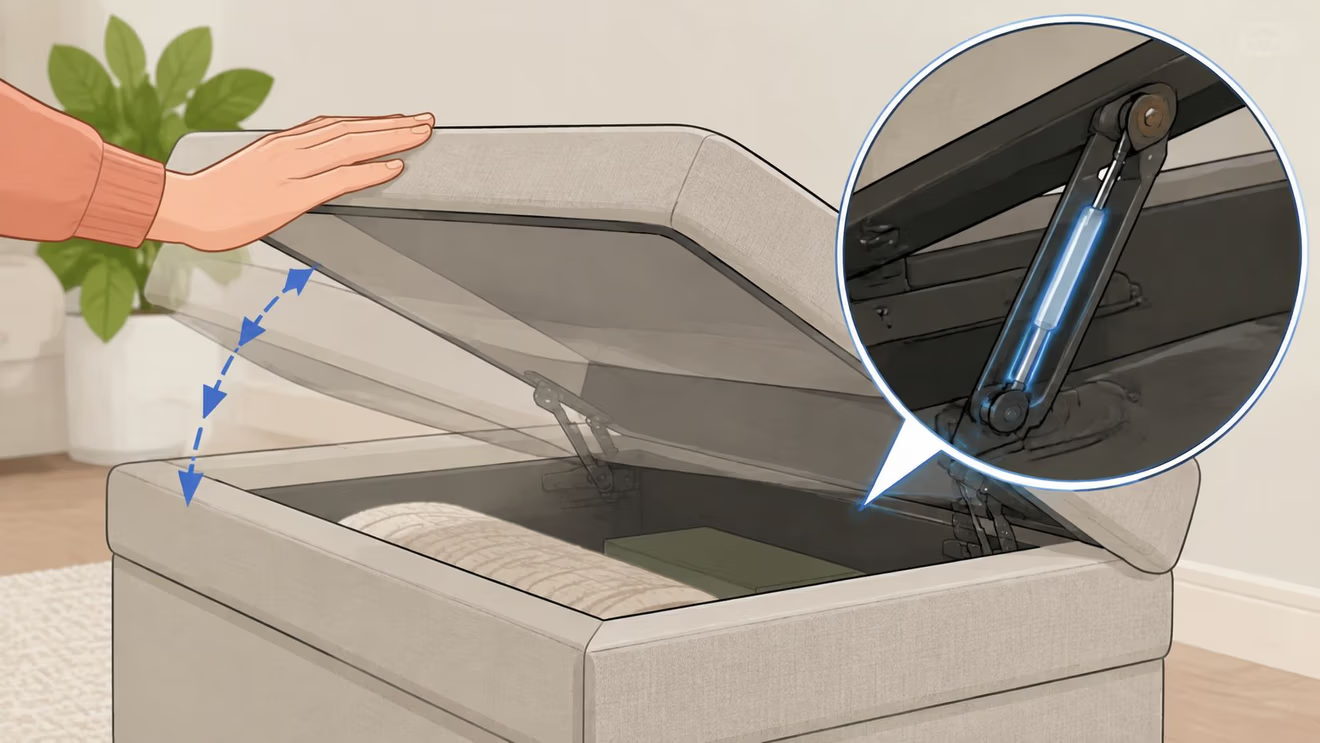
Hinged-lid ottomans keep the lid attached and can be easier to manage in a busy household. A quality hinge or controlled-lift mechanism matters because an attached lid can create pinch and slam hazards if it drops unexpectedly. These work well in family rooms where toys, pillows, and blankets need frequent access.
Storage benches stretch storage along a longer footprint. They're a strong choice at the foot of a bed, beneath a window, or in a Bay View entryway where people need a place to sit while putting on shoes. Their elongated shape can offer useful volume, but it also requires careful walkway planning.
Cube ottomans are compact and flexible. A cube can serve as a footrest, occasional seat, or movable side table, and modular versions can be arranged as needed in a playroom or small condo. The tradeoff is straightforward: smaller exterior dimensions generally mean less storage capacity.
| Type | Best For | Typical Capacity | Ideal Room |
|---|---|---|---|
| Lift-top ottoman | Easy access to bulky soft goods | Small to moderate, depending on cavity depth | Living room |
| Hinged-lid ottoman | Frequent family access | Moderate | Family room or bedroom |
| Storage bench | Seating plus longer storage | Moderate to large | Entryway or foot of bed |
| Cube ottoman | Flexibility and compact seating | Small | Apartment, dorm, or playroom |
Match the piece to the main task
If seating is the priority, choose a rigid frame, supported lid, and published seating limit. If the goal is a table surface, select a broad, stable top that can hold a tray without rocking. If the goal is storage volume, compare the interior cavity rather than judging by exterior size alone.
BILTRITE displays storage options in its Greenfield showroom, where shoppers can test lid mechanisms, sit on the piece, and open the cavity to judge practical capacity. A storage trunk table can also help shoppers think beyond the standard upholstered cube when they need a more substantial table-and-storage combination.
Materials and Construction That Actually Last
A storage ottoman can look attractive and still disappoint if its frame, lid, or hardware isn't built for the way a household uses it. A piece that serves only as a footrest faces less stress than one that becomes a daily seat, toy chest, or coffee table.
Start with the frame
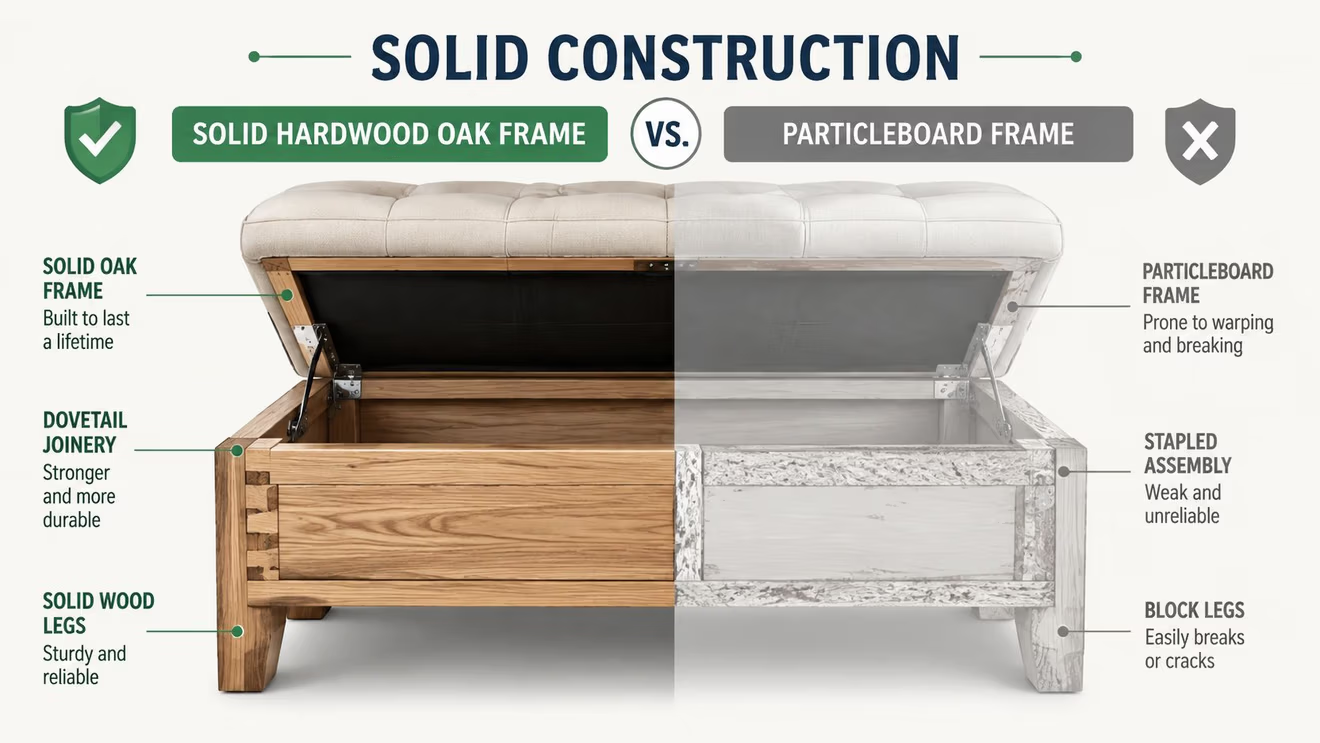
Storage ottomans commonly use MDF-based box frames with foam-padded fabric or synthetic-leather tops. Independent product specifications document static load support ranging from 220 pounds to 660 pounds for reinforced MDF panels, with the higher end generally associated with thicker panels and corner reinforcement. Review an example of reinforced storage ottoman construction.
That range shows why shoppers shouldn't assume every storage ottoman can handle the same use. Thicker panels, corner guards, and a rigid lid reduce flex. Lightweight collapsible designs usually prioritize portability and lower cost, so they may carry a lower weight rating.
BILTRITE focuses heavily on USA-made, Amish-made, and solid-wood furniture. For shoppers seeking a long-term piece, a solid hardwood frame deserves close inspection. Oak, maple, or cherry can provide a more substantial foundation than a thin engineered panel, especially when the ottoman will serve as regular seating. Mortise-and-tenon joinery, kiln-dried lumber, corner blocks, and reinforced attachment points are construction details worth asking about.
Upholstery and hardware shape daily performance
Top-grain leather is easy to wipe clean and can develop character over time. Performance fabrics suit households with children and pets because they're designed for easier care. Woven textiles offer texture and visual warmth, but the right cleaning method should be confirmed before purchase. Product documentation also shows common combinations including faux leather, linen-look fabric, polyester, microfiber, engineered wood, and steel frames. Compare common ottoman materials and frame combinations.
A storage ottoman used for seating needs more than attractive upholstery. The foam should feel supportive rather than soft enough to bottom out, and the lid should remain stable when someone sits down. Hardware deserves equal attention. Soft-close mechanisms, child-safe lid supports, metal-reinforced corners, and a lined interior can make the difference between a pleasant daily-use piece and a frustrating one.
Before choosing, shoppers should ask:
- Frame: Is the base hardwood, engineered wood, steel, or a combination?
- Joinery: Are corners blocked or reinforced, or are panels mainly stapled together?
- Interior: Is the cavity lined, sealed, or left raw?
- Lid: Does it stay attached and controlled while open?
- Care: Can the upholstery be cleaned with the household's normal routine?
BILTRITE's guide to upholstery materials and furniture care can help shoppers compare fabric and leather choices before visiting the showroom.
Sizing and Measuring for Your Space
A storage ottoman should fit the room before it fits the decorating plan. Measuring first prevents a common mistake: choosing a piece that looks manageable in a showroom but blocks a walkway once it sits in front of the sofa.
Measure the outside first
Measure the intended zone, whether it's in front of a sofa, at the foot of a bed, beneath a window, or beside a reading chair. Mark the footprint with painter's tape or folded paper so the household can test how people move around it. A clear walkway of at least 18 inches is a useful planning threshold for many compact rooms, although the actual clearance should reflect the needs of everyone using the space.
Height matters, too. A documented storage ottoman example measures 36 inches wide, 24 inches deep, and 18 inches tall, with the 18-inch height matching a sofa seat. Review the documented storage ottoman dimensions. A piece close to the sofa-seat height can work comfortably as a footrest or table surface, while a much taller ottoman may feel awkward in front of a low sofa.
Calculate usable volume, not showroom volume
Exterior dimensions don't equal storage space. Thick walls, foam padding, hinge hardware, and interior dividers all reduce the cavity. A practical estimate is:
Interior width × interior depth × interior height, divided by 1,728, equals approximate cubic feet.
The measurements need to be taken inside the cavity, not from the outside. A buyer's guide identifies 2.5 cubic feet as a useful minimum threshold and describes 2.5 to 4 cubic feet as a common working range for meaningful storage. See practical guidance on storage ottoman capacity.
| Room / Use Case | Recommended Size Range | Est. Usable Volume | Best Ottoman Type |
|---|---|---|---|
| Apartment living room | Compact footprint | Around 2.5 cubic feet or more | Hinged or cube |
| Condo bedroom | Medium, matched to bed width | Around 2.5 to 4 cubic feet | Bench |
| Entryway | Long and shallow | Varies by cavity | Storage bench |
| Reading nook | Small and movable | Small | Cube |
Documented examples range from 15 × 15 × 15 inches for dorm-style models to 24 × 24 × 17 inches and 36 × 24 × 18 inches for larger versions. Review documented ottoman size examples. For additional guidance, BILTRITE's furniture measuring guide can help households plan doorways, hallways, and the final placement area.
Safety and Durability Features You Should Not Ignore
A storage ottoman isn't just a soft accessory. It has a cavity, a lid, a base, and a surface that people may sit on, so safety needs to be part of the buying decision.
Treat the lid as moving hardware
A hinged lid can pinch fingers, slam shut, or remain open in an unstable position. Controlled-lift, soft-close, or slow-close hardware is especially valuable in homes with young children and seniors because it reduces sudden movement. The U.S. Consumer Product Safety Commission has documented work on a voluntary standard addressing hazards associated with furniture used for storage, including storage ottomans. Review the CPSC storage ottoman safety meeting log.
A lid support should hold the lid in a controlled position, not force the user to balance it manually. Families should also teach children that the cavity is for storage, not climbing or hiding. Seniors and caregivers should look for an opening motion that doesn't require excessive force.
Read the load label
Weight ratings are specific to the product and the type of use. One round storage ottoman lists a recommended seating limit of 250 pounds, while a folding model lists a seated limit of 330 pounds. Review published storage ottoman seating limits.
Those figures aren't interchangeable with a general promise of strength. A person dropping onto a lid creates different stress than someone sitting carefully, and the lid may have a separate support limit. A stable base, reinforced corners, and a rigid top are more reassuring than upholstery alone.
Check stability and movement
Wide bases are generally less prone to tipping than narrow legs, especially on smooth hardwood floors. Casters can help with repositioning, but they should lock securely and shouldn't allow the ottoman to roll when used as a seat. Walkers and canes need a clear path around the piece.
BILTRITE's guide to heavy-duty living room furniture is useful for households that need stronger construction. The showroom team can also help compare frames, lid behavior, and upholstery wear points in person.
Styling Tips for Milwaukee Homes and Small Spaces
A storage ottoman should look intentional, not like a container dropped into the room. Its upholstery, legs, height, and placement can connect separate furniture pieces while keeping everyday items out of sight.
Let the top do useful work
For a coffee-table role, place a sturdy tray on top. The tray creates a stable landing place for drinks, books, or a small lamp and can be lifted away when the household needs the full surface. Soft upholstery works especially well when the room needs a safer edge than a hard table provides.
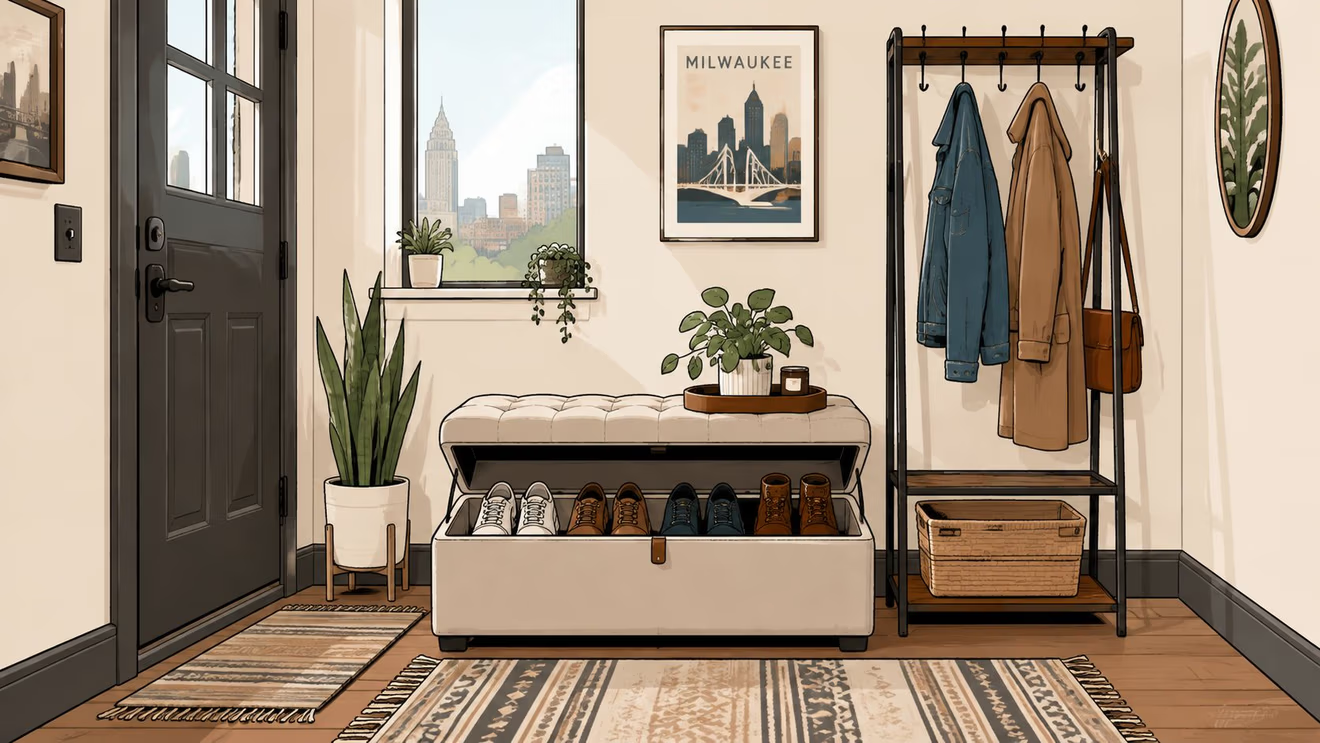
At the foot of a bed, a bench-style ottoman can hold blankets while adding a convenient place to sit. In an entryway, it can store shoes or seasonal gear, but the lid should open without striking a nearby wall or door. A shallow, longer profile often suits a narrow Milwaukee entry better than a deep cube.
Coordinate style with purpose
Neutral upholstery gives a small room flexibility. A bold pattern can become the focal point in a restrained space, while leather suits households that want a surface that can be wiped clean. A warm wood leg can bridge a Craftsman room, tapered legs can complement mid-century furniture, and turned or substantial legs can support a traditional setting.
Senior living spaces benefit from practical contrast and easy movement. A lighter-weight ottoman on locking casters can be repositioned without heavy lifting, while a contrasting upholstery color can make the piece easier to see. Low-profile designs can help preserve sightlines, but they shouldn't obstruct walkers or canes.
Seasonal rotation keeps the storage useful. Winter blankets can move into the cavity when spring arrives, making room for summer throws or lighter pillows. The habit prevents the ottoman from becoming a forgotten bin and keeps its contents connected to the room's current needs.
The global storage ottoman category reflects this broad residential appeal. One market study valued the category at $4.2 billion in 2025 and projected it to reach $6.1 billion by 2034, with a 5.3% compound annual growth rate. The same study reported fabric storage ottomans holding 38.2% of the share and residential use accounting for 72.5% of revenue, indicating that home furnishing drives the category. Review the storage ottoman market data.
Why Shopping Local at BILTRITE Makes All the Difference
A showroom changes the decision because shoppers can test the furniture instead of guessing from a photograph. In Greenfield, a customer can run a hand across a solid-wood surface, sit on the lid, open the cavity, and feel whether the hinge moves smoothly. That hands-on check reveals details a product image can't show.
The BILTRITE team has served the Metro Milwaukee community since 1928 as a fourth-generation, family-owned business. The store emphasizes affordable, better-quality furniture, with USA-made, Amish-made, and solid-wood options alongside custom choices in fabric, leather, wood, finish, and hardware.
What a local visit helps answer
A design associate can help a shopper compare:
- Scale: Whether a cube, bench, or larger ottoman fits a Bay View bungalow or Wauwatosa condo.
- Comfort: Whether the top feels firm enough for seating and comfortable enough for foot support.
- Capacity: Whether the interior holds the blankets, toys, or entryway items the household needs.
- Construction: Whether the frame, corners, lid support, and upholstery suit daily use.
- Finish: Whether the color and texture work under the home's real lighting.
BILTRITE's sales associates bring more than 400 years of combined experience, and their role is to guide shoppers without pressure. The showroom also includes a large mattress department with over 60 models, along with furniture for apartments, family rooms, bedrooms, dining areas, home offices, and senior living spaces.
White-glove delivery across the Milwaukee metro area adds another practical benefit. Qualifying purchases can arrive assembled, be placed where requested, and have the packaging removed, so the household doesn't need to wrestle a bulky piece through the home.
A storage ottoman is a small purchase in physical size, but its effect depends on fit, construction, and daily usability. Local help makes it easier to choose a piece that supports the room instead of creating another problem.
BILTRITE Furniture-Leather-Mattresses offers affordable, better-quality furniture with USA-made, Amish-made, solid-wood, small-scale, and heavy-duty options that can suit a storage ottoman need. Visit BILTRITE Furniture-Leather-Mattresses in Greenfield to test ottoman seating, inspect lid mechanisms, compare upholstery, and get practical guidance from the local showroom team.