Mattress Dreams and Furniture Guide for Milwaukee Homeowners


A Milwaukee homeowner wakes before sunrise, still half in a dream. In it, the old guest room mattress had turned soft and welcoming again. The bed frame looked steadier. The room felt calmer. By breakfast, that dream lingers for a simple reason. It doesn't feel random. It feels like a nudge.
That happens more often than people think. A mattress dream usually isn't about furniture in a literal sense. It's about comfort, support, routine, and the feeling of being settled at home. For a retired couple in Greenfield, that might show up as a dream about replacing a worn bed in the primary bedroom. For a young family in Milwaukee, it might show up as a child's room that suddenly feels too small, too cluttered, or not restful enough.
That's where mattress dreams and furniture start to overlap in a useful way. A dream about a mattress can lead to very practical questions. Is the current bed still supportive? Does the room need a better layout? Would a sturdier bed, a different mattress style, or more thoughtfully scaled furniture make everyday life easier?
For local homeowners, those questions often turn into a more personal kind of shopping. Instead of chasing quick fixes, they begin thinking about how a bedroom should feel. Quiet. Supportive. Easy to live in. That mindset fits a family business that has served Metro Milwaukee since 1928, as shared in BILTRITE's local legacy in Milwaukee.
Introduction to Mattress Dreams and Furniture
A woman in Bay View dreams she's trying to make a bed that never looks right. The mattress sags in the middle, the frame creaks, and the nightstand crowds the walkway. The next morning, she doesn't need a dream dictionary to know something feels off. Her bedroom isn't working for her anymore.
That kind of dream has a way of making an everyday problem feel visible. A mattress that once seemed “good enough” suddenly feels too soft, too old, or out of step with the room around it. A too-large dresser starts to seem less charming and more frustrating. The furniture hasn't changed overnight, but attention has.
Mattress dreams and furniture often meet at that exact moment. A sleeper starts with a vague feeling, then notices concrete details. The bed is harder to get in and out of. The bedroom doesn't support a restful routine. The guest room still has a hand-me-down mattress no one enjoys sleeping on.
A dream about comfort often points back to a real room, a real routine, and a real need for better support.
For Milwaukee homeowners, that can turn into a rewarding project instead of a mystery. Some people start with the mattress because sleep comes first. Others realize the room itself needs help. A more supportive mattress, a solid wood bed, a smaller-scale chest for a condo, or a heavier-duty frame for daily use can all change how the space feels.
That's why the topic matters. Dream symbolism may be fuzzy, but the home decisions it sparks can be clear, practical, and long lasting.
Understanding Mattress Dreams and Sleep Psychology
A Wauwatosa homeowner told us she kept dreaming about a mattress that looked clean and comfortable, but every time she tried to lie down, one corner dipped. The dream felt strange until she noticed the underlying issue. Her mattress had started to sink near the edge, and the old frame underneath had loosened over time.
That pattern shows up often. The sleeping mind borrows ordinary bedroom objects and gives them emotional weight. A mattress can represent rest, safety, pressure, or the feeling that home no longer supports you the way it should.
Sleep research gives that idea a sensible foundation. The National Institute of Neurological Disorders and Stroke explains that dreaming is most vivid during REM sleep, a stage that repeats several times through the night and is closely tied to brain activity, memory, and emotion in its overview of brain basics and sleep.
Why the brain picks a mattress
Dreams rarely hand over a tidy message. They pull from recent discomfort, familiar routines, and unresolved feelings. If someone has been waking up sore, dreading bedtime, or feeling boxed in by a crowded bedroom, the mattress can become the image that carries all of it.
That helps explain why mattress dreams often feel personal instead of random.
Psychologists who study dream continuity have long observed that dream content often reflects waking life concerns. In plain terms, people tend to dream about what their minds have been working on already. A spotless mattress, a stained one, or one that will not fit the room can reflect comfort, stress, embarrassment, change, or the need for better support at home.
Practical rule: Treat a mattress dream like a clue. Then check the room.
Start with the details. Was the mattress too high to climb onto? Too cramped for two people? Soft in a way that felt comforting, or soft in a way that felt unstable? Those clues often point back to real issues with sleep quality, layout, or body support, which is why many Milwaukee shoppers also read about how your mattress affects mood and mental health.
Turning symbolism into action
A dream cannot diagnose your bedroom, but it can get your attention.
- If the dream mattress felt peaceful and supportive, the room may need fewer distractions, better bedding, or a mattress that matches how you sleep.
- If the mattress looked worn, lumpy, or uneven, inspect your bed for sagging, body impressions, weak edges, or a frame that no longer holds steady.
- If the mattress seemed awkward to reach or hard to use, bed height, room spacing, or mobility-friendly furniture may need a closer look.
For Milwaukee homeowners, that is where dream symbolism becomes useful in a practical way. The image shows the feeling first. The bedroom confirms whether the problem is comfort, support, space, or all three at once.
Exploring Flip-able Mattress Benefits
A Wauwatosa couple came into BILTRITE after months of waking up with the same complaint. The middle of the bed still felt fine, but each person's side had started to feel familiar in the wrong way. Their dream the week before was oddly specific. They kept trying to smooth out dips in a mattress that would not stay even. Once they checked their actual bed at home, the pattern made sense.
That kind of wear is one reason some Milwaukee homeowners still ask about two-sided construction. A flip-able mattress gives you two sleep surfaces instead of one, so pressure does not stay concentrated in the same spots year after year. Consumer guidance from the Sleep Foundation's overview of flippable mattresses explains the same basic advantage. Flipping helps spread out use and can help a mattress keep a more even feel over time.
Why flipping changes the outcome
Night after night, bodies settle into habits. One partner sleeps closer to the edge. A side sleeper presses harder at the shoulder and hip. A guest room mattress may sit untouched for weeks, then host family for a long weekend. Those patterns matter.
With a single-sided mattress, all of that compression stays on one surface. With a two-sided model, you have another side available when the first side has carried the load for a while. That simple option appeals to shoppers who like upkeep that feels practical, not complicated.
For a closer look at construction and care, the benefits of a two-sided mattress explain why many families still prefer this design.
Flip-able vs Single-Sided Mattress Comparison
| Feature | Flip-able Mattresses | Single-Sided Mattresses |
|---|---|---|
| Sleep surfaces | Two usable sides | One usable side |
| Wear distribution | Can be spread across both sides | Stays concentrated on one side |
| Maintenance style | Rotation plus flipping | Rotation only |
| Long-term feel | Helps limit concentrated compression in one spot | More exposed to one-surface wear |
| Shopper fit | Good for people who do not mind simple upkeep for longer use | Good for people who want a simpler routine |
A flip-able mattress asks for a little participation from the owner. Many homeowners are happy to make that trade.
A simple care routine
The routine is straightforward.
- Check the label first. Some mattresses are built to flip. Others should only be rotated.
- Use proper support underneath. Slats, foundations, and frames all affect how evenly the mattress carries weight.
- Set a reminder. Seasonal flips or rotations are easier to keep up with than waiting until the bed feels uneven.
For primary bedrooms, guest rooms, and homes where people plan to stay put for years, that extra attention can pay off in comfort. It also fits the larger theme behind mattress dreams. Sometimes the dream points to a feeling of unevenness before the bedroom checklist catches up.
Choosing the Right Furniture Categories
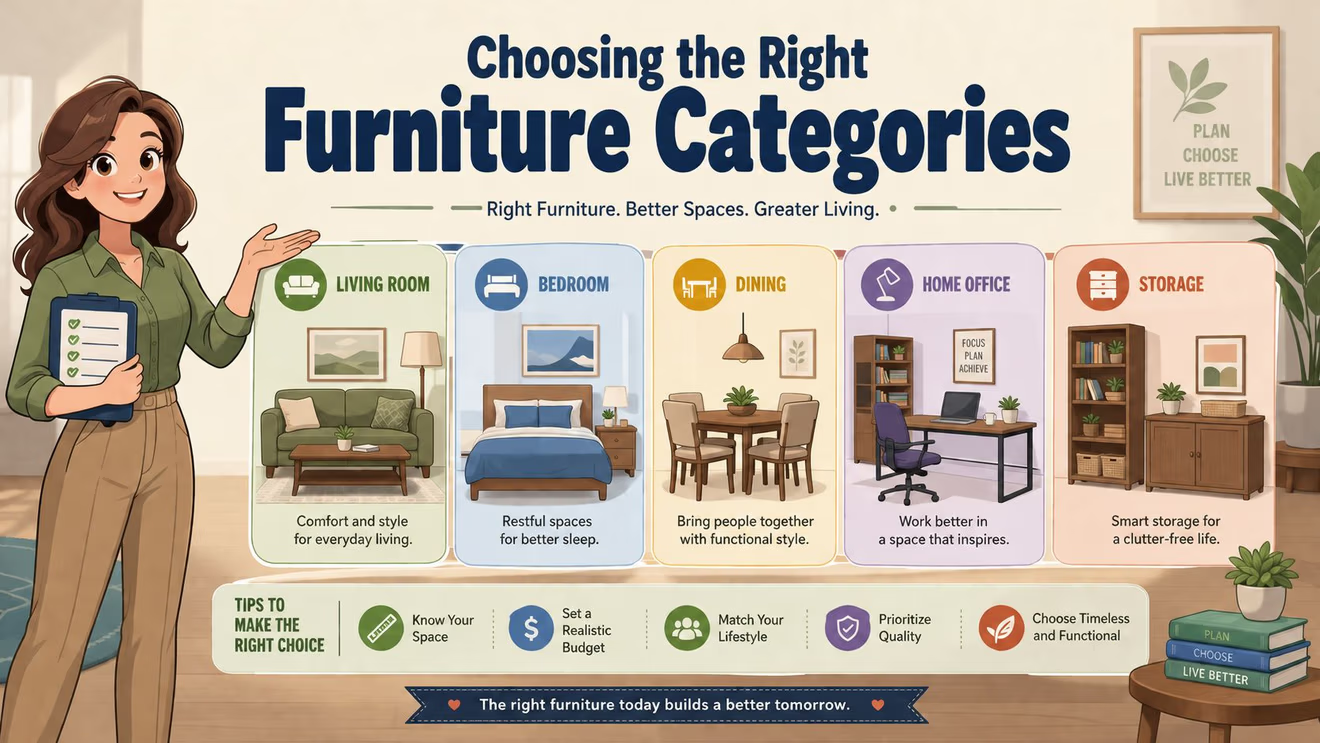
A mattress rarely works alone. The furniture around it shapes how the room functions, how easy it is to move through, and whether the space feels restful. That's why mattress dreams and furniture belong in the same conversation.
Small-scale pieces for tighter homes
A condo owner near downtown may love a full bedroom set in theory, then realize the chest blocks the closet and the nightstand pinches the walking path. Small-scale furniture solves a real problem here. It helps apartments, condos, smaller homes, and senior living spaces stay usable without feeling sparse.
That doesn't mean giving up character. It means choosing pieces with the right footprint.
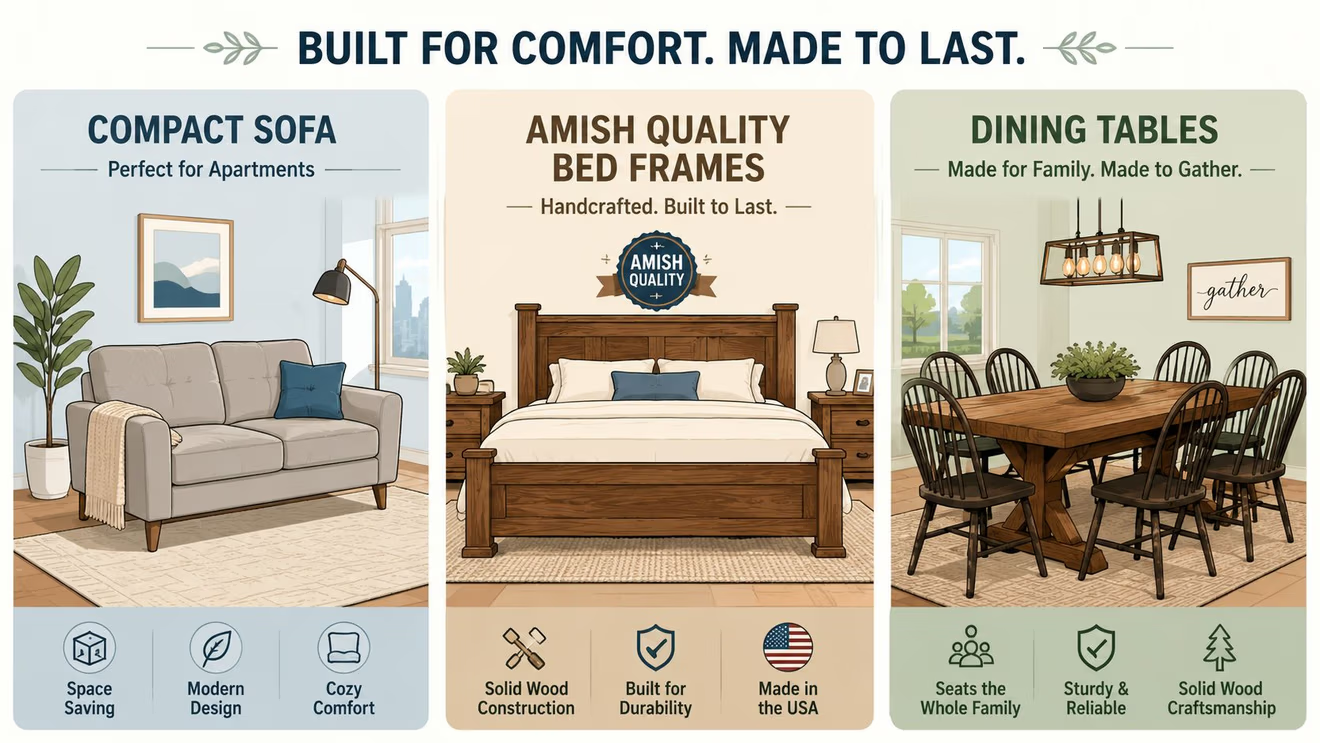
Solid wood and Amish-made choices for long-term homes
Some homeowners want furniture that feels settled the moment it arrives. Real solid wood and Amish-made pieces often fit that goal. They bring weight, texture, and a sense of permanence that works especially well in bedrooms, dining rooms, and family spaces meant for everyday life.
A growing family may want a bed that feels sturdy through years of use. Empty nesters may want a dining set that looks at home during both quiet weeknights and holiday gatherings. In both cases, material and construction matter as much as style.
Heavy-duty and come-apart furniture for real-life use
Some rooms need furniture that can take more daily pressure. Families with active kids, households furnishing a main living room, and shoppers looking for stronger support often do better with heavy-duty options.
Then there's the delivery puzzle. Older Milwaukee bungalows, upper flats, and homes with narrow stair turns don't always cooperate with large pieces. Come-apart sofas, sectionals, and recliners can make those spaces workable without forcing a design compromise.
A helpful way to sort the options is by asking what the room asks from the furniture.
- For compact bedrooms or condos, lean toward smaller-scale beds, nightstands, and storage.
- For heirloom-minded shoppers, solid wood and Amish-made pieces usually make the most sense.
- For active family spaces, stronger frames and durable construction rise to the top.
- For tricky entries or tight staircases, furniture that comes apart can save a lot of hassle.
Homeowners comparing looks, layouts, and construction styles can also browse different furniture styles and categories before walking the showroom.
Local Shopping Advantages at BILTRITE
A Milwaukee couple walks into the showroom on a Saturday after three bad nights of sleep. They are sure they want one mattress because it looked right online. Ten minutes later, after sitting on the edge, stretching out in their usual sleep positions, and feeling how one model shifts less when the other person moves, their choice changes.
That kind of course correction happens in person.
Mattresses are personal, and furniture is physical. Seat depth, bed height, wood tone, drawer glide, and cushion support are easier to judge under real lights, with real hands, in real rooms built to help shoppers compare. For homeowners trying to make sense of a strange mattress dream, that matters too. A dream about sinking, crowding, or restless sleep may point to a comfort problem, but the fix still has to feel right when you test it yourself.
BILTRITE's local roots shape that experience. The family business has served Metro Milwaukee for generations, and the showroom still reflects the kind of practical help people want close to home. Shoppers can ask about support, delivery access, room size, and daily use without trying to decode product pages alone.
Why the showroom still matters
The mattress center gives people room to compare different feels and constructions side by side, and many mattresses are available for quick delivery. That helps when someone comes in convinced they need one type of bed, then learns their back, shoulders, or sleep partner prefer something else.
Sleep problems rarely improve from guesswork.
There are also everyday advantages that fit Milwaukee homes and routines:
- Hands-on comparison: You can test edge support, motion transfer, firmness, and height in one visit.
- Quicker solutions: In-stock options help when a mattress problem needs attention soon, not weeks from now.
- Delivery help: White-glove delivery and old mattress removal can make replacement much easier for busy households.
- Local guidance: Staff can help sort through bedroom layout, stair access, mobility concerns, and long-term use face to face.
That local advice is often the missing piece between a symbolic sleep concern and a practical purchase. If a mattress dream has already nudged someone to pay attention, shopping close to home makes it easier to turn that nudge into a better night's rest. For a closer look at the value of in-person buying, BILTRITE explains why buying a mattress locally can make sense.
How to Choose the Right Mattress and Furniture for Milwaukee Homeowners
A Milwaukee homeowner wakes up after dreaming about a sagging mattress, walks into a narrow bedroom in a 1950s bungalow, and realizes the problem is not only sleep. The bed sits too high, the dresser crowds the doorway, and getting around the room feels harder than it should. That is often how a vague comfort concern turns into a smart home decision.
At BILTRITE Furniture-Leather-Mattresses, families often come in with a feeling before they have a plan. A sore shoulder. A guest room that never feels welcoming. A condo bedroom that looks fine in photos but feels cramped every morning. The right choice usually starts by matching real life in Milwaukee homes to the way a mattress and furniture will be used every day.
Start with the sleeper's real routine
Sleep position matters, but daily habits usually tell the fuller story.
A side sleeper with hip pressure may need more cushioning at the surface. A back sleeper may feel better on steadier support through the center of the mattress. A combination sleeper often notices whether it is easy to change positions without fighting the bed. An older adult may care just as much about bed height and ease of entry as firmness.
Write down the problem in plain language. Waking up hot. Rolling toward the middle. Feeling your partner move. Needing a bed that is easier to get into after knee surgery. Those details are more useful than broad labels on a showroom tag.
Let the room shape the decision
In Milwaukee, room size and home layout change the answer fast.
A Bay View bungalow bedroom may need a bed with a smaller footprint so the walkway stays open. A condo near downtown may need bedroom storage that works upward instead of outward. A house with tight stairs may rule out certain case pieces before style even enters the conversation.
Good furniture fits the room on an ordinary Tuesday, not only on delivery day.
That means measuring the bed wall, checking door swings, and noticing how people move through the space with laundry baskets, kids, walkers, or a dog underfoot. A beautiful piece that blocks a closet or pinches the path to the bathroom stops feeling beautiful pretty quickly.
Choose furniture by the way the household lives
One Milwaukee family may need a primary bedroom that feels calmer and more supportive by the end of a long workweek. Another may be setting up a guest room that doubles as a home office. Someone downsizing to a condo may want fewer pieces, better function, and easier reach.
That is why furniture categories help most when they solve a household problem:
- Bedroom furniture should leave enough clearance to move comfortably and support the mattress height that feels right.
- Living room furniture should match how often the room is actually used, whether that means sturdier seating for family movie nights or a smaller-scale sofa for a tighter floor plan.
- Dining furniture should fit the number of people who gather there most often, not only holiday plans.
- Home office furniture should support the hours spent working there, especially in multipurpose rooms.
- Storage pieces should reduce clutter without making a room feel boxed in.
A few Milwaukee examples
A young couple in a starter home may do better with a queen mattress that preserves walking space, two compact nightstands, and a dresser scaled to the wall instead of the wish list.
A family with school-age kids may need a more durable primary mattress, a dining set that can take daily wear, and living room seating built for constant use.
An older homeowner planning to stay put may focus on safer movement around the bed, reachable storage, supportive seating, and furniture that does not ask too much of the body.
Each case starts in a different place. The pattern is the same. Comfort, fit, and daily use decide more than trends do.
Bring priorities, not perfection
The most prepared shoppers usually arrive with a short list.
- Name the sleep complaint. Soreness, heat, crowding, or weak support.
- List the space limits. Tight staircase, narrow hall, smaller bedroom, awkward corners.
- Note the household needs. Kids, pets, overnight guests, recovery, aging in place.
- Pick the materials or build qualities that matter. Solid wood, Amish-made, USA-made, or heavier-duty construction.
That kind of shortlist makes the visit easier and more useful. A mattress dream may have been the nudge, but the better result comes from choosing pieces that suit the room, the body, and the way a Milwaukee household really lives.
Conclusion and Next Steps
A mattress dream may feel strange at breakfast, but it often points to a real home need by lunchtime. Sometimes the answer is better sleep support. Sometimes it's a stronger bed, smarter room layout, or furniture scaled to the way a Milwaukee household lives.
The most useful takeaway is simple. Pay attention to the symbol, then inspect the room. A dream about a mattress can become a helpful reason to rethink comfort, durability, accessibility, and daily routine.
For homeowners thinking about mattress dreams and furniture together, local shopping makes that process easier. Trying mattresses in person, checking solid wood construction up close, and talking through room size or delivery concerns can turn a fuzzy idea into a clear plan.
Bring the wish list, the room measurements, and even that odd dream detail about the sagging bed or crowded bedroom. It might be more useful than it sounds.
Ready to turn those comfort clues into real bedroom and furniture choices? BILTRITE Furniture-Leather-Mattresses welcomes Milwaukee-area shoppers to the Greenfield showroom to explore supportive mattresses, solid wood furniture, Amish-made pieces, and space-smart options for every stage of home life.