Leather Sofa Sectional Sale: A Family Buying Guide

The search usually starts the same way. A family wants more room to stretch out, host movie night, or finally replace that tired sofa, so they types in Leather Sofa Sectional Sale and gets buried in flashy prices, endless leather labels, and photos that all look better than real life.
That's where people get tripped up. The cheapest sectional on the screen often isn't the best value in the room. A smart sale purchase isn't about chasing the lowest number. It's about using a sale to step up into better leather, stronger construction, and a layout that still works years from now.
Your Guide Through the Sofa Sale Maze
A lot of shoppers are dealing with the same headache right now. They've found one sectional that looks gorgeous online, another that seems suspiciously cheap, and a third that claims it's “genuine leather” without saying much else. By that point, the fun is gone and the doubt sets in.
That uncertainty makes sense. A sectional is a big purchase, and it becomes the center of daily life fast. Kids pile onto it. Guests claim corners. Someone always ends up napping on it. Nobody wants to spend good money on something that starts looking tired way too soon.
Why sale shopping gets confusing fast
Most sale ads push urgency instead of clarity. They highlight the markdown, not the leather grade. They talk about style, not how the piece will age in a real household. They show the sofa in a giant sunny room, but they don't help a homeowner figure out whether it will work in a Milwaukee bungalow, condo, or family room.
That's why a local perspective still matters. BILTRITE Furniture has been a family-owned, fourth-generation business serving the Metro Milwaukee community since 1928, making it a nearly century-old Wisconsin staple, as noted by Milwaukee Magazine's look at BILTRITE's long history.
A sale should lower the cost of a good decision, not lure a family into a bad one.
A better way to think about a sale
The strongest approach is simple. Start with quality, fit, and daily use. Then look at price. That order matters.
A family that buys the right sectional on sale usually asks practical questions first:
- Who's using it every day: a quiet couple, a big family, guests, pets, or all of the above.
- How the room really works: open-concept lounging, TV viewing, reading, or a little of everything.
- What matters more: fastest delivery, long-term durability, or custom choices.
Timing helps too. For shoppers trying to plan around promotions instead of impulse buying, BILTRITE's advice on the best time to buy furniture gives a useful starting point.
A leather sofa sectional sale can absolutely be the right time to buy. It just works best when the shopper treats the sale as an opportunity to buy better, not merely cheaper.
Decoding Leather Quality Beyond the Price Tag
The biggest mistake in a Leather Sofa Sectional Sale is trusting the word “leather” by itself. That word doesn't tell the whole story. In many sale situations, the underlying issue isn't color, style, or even comfort. It's whether the material will still look good after years of daily use.
The labels that deserve a closer look
Some shoppers see “genuine leather” and assume they're buying a high-grade hide. That assumption gets expensive. Sale pricing can hide weak materials under nice photography and broad language.
The clearest rule is this: top-grain and full-grain leather are the grades worth chasing when long-term value matters. Bonded leather is the one that should make a buyer pause.
This explanation of top-grain and full-grain leather helps sort out the language, but the practical takeaway is even simpler. If the listing or sales tag gets vague, ask direct questions until the answer gets specific.
What lasts and what disappoints
The durability gap is the whole story. High-quality real leather sofas last 15–25 years, while low-grade bonded leather often cracks within 2–5 years, according to BILTRITE's leather sectional buying guidance.
That difference changes how a sale should be judged. A lower upfront price can still be a poor value if the sectional starts peeling long before the frame should be retired.
Practical rule: If the leather description sounds polished but not precise, the shopper should slow down and ask what the seating surfaces actually are.
A helpful comparison is footwear. A cheap pair can look fine on day one and fall apart after a season. A well-made pair costs more up front, but it wears in instead of wearing out. Leather sectionals work the same way.
What to ask before saying yes
A smart buyer doesn't need to become a leather technician. A few straightforward questions usually reveal whether the sale is worth serious attention.
- Ask for the leather grade. “Top-grain,” “full-grain,” and other clear terms are more useful than broad marketing language.
- Ask where the leather is used. Buyers should know whether all seating areas use better leather or whether some surfaces use lower-grade material.
- Touch the surface if possible. Good leather usually has natural variation and a richer hand. Lower-grade material often feels more uniform and plasticky.
- Ask how it ages. A good answer sounds realistic. Leather should develop character. It shouldn't flake apart.
Some high-end sectionals also use technical leather or top-grain Italian leather, and sale pricing can reflect seasonal turnover rather than weaker quality. In the example noted by this product reference discussing technical leather and sale pricing, markdowns can reach 35-40%, including a drop from $3,899.99 to $2,549.00.
The lesson isn't that every markdown is amazing. It's that a real sale can create room in the budget for stronger leather, which is exactly where value lives.
Measure Twice Buy Once for Your Sectional
The best-looking sectional in the store becomes a problem fast if it doesn't fit the room or the delivery path. Smart shoppers save themselves the biggest headache by measuring before they shop seriously, not after they've fallen in love with a layout.
Start with the room, not the sofa
A sectional should fit the way a room is used. That means leaving enough space to walk, open doors, reach tables, and keep the room from feeling swallowed.
A simple measuring routine keeps things under control:
- Measure the wall and floor space where the sectional will sit.
- Mark the footprint with painter's tape so the family can see the shape on the floor.
- Check traffic flow around coffee tables, recliners, fireplaces, and door swings.
- Write everything down before stepping into a showroom.
For buyers who want a clear measuring checklist, this sectional measuring guide is worth a look.
Don't forget the delivery path
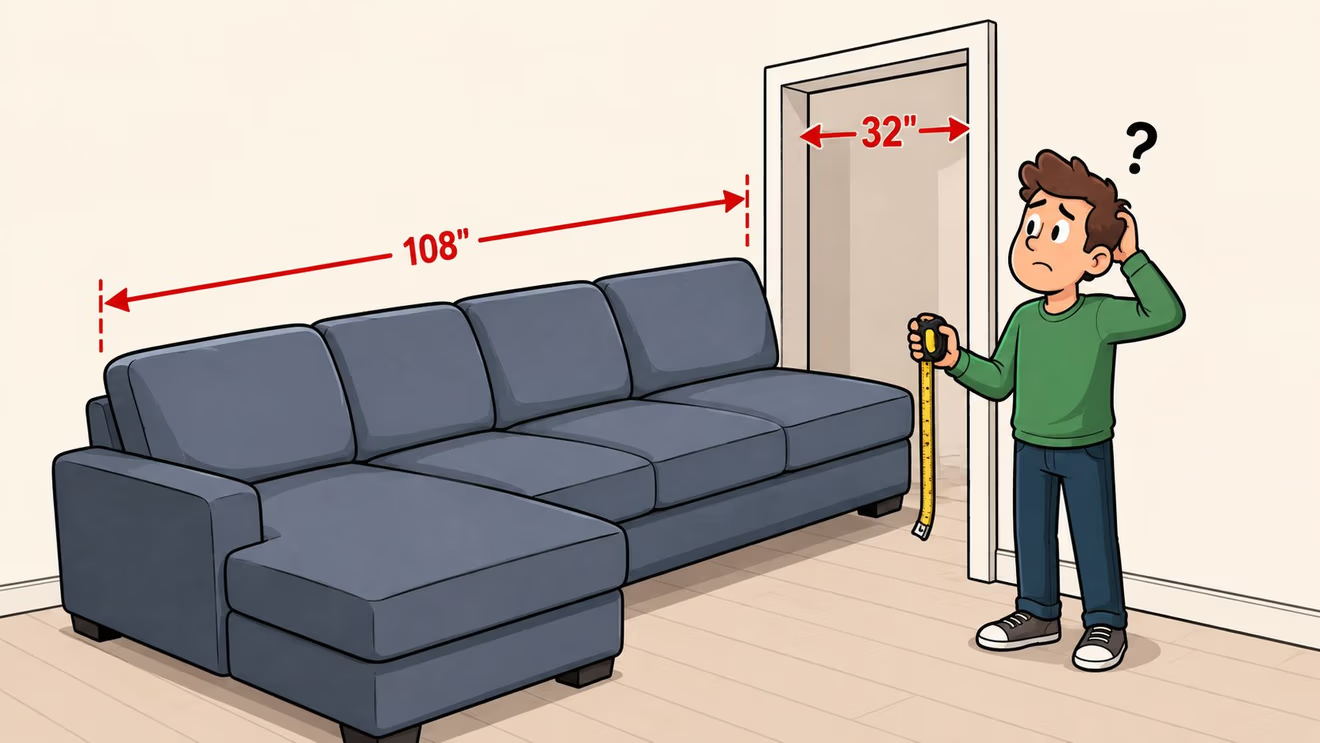
This is the part people skip, and it's the part that causes the panic. The sectional has to make it from the truck to the room. That includes front doors, side doors, apartment entries, hallways, stair landings, and basement turns.
Measure every opening on the path, not just the front door. The tightest turn usually matters more than the widest wall.
That advice matters even more with larger sectionals. According to this sectional sizing reference, leather true sectionals can be up to 172 inches wide, but come-apart designs allow these large units to fit through narrow doorways, which is especially helpful for condos or senior living communities.
The hero solution for tricky spaces
Come-apart sectionals solve a very real Milwaukee-area problem. Older homes, tighter hallways, condo elevators, and narrow staircases don't always play nicely with big furniture. A sectional built in pieces can still deliver the roomy look people want without the delivery-day drama.
Here's when that feature deserves serious attention:
- Older homes: Tight entries and sharp turns are common.
- Condos and apartments: Elevators, common hallways, and smaller doorways can limit options.
- Basement family rooms: Low ceilings and stair turns create delivery bottlenecks.
- Senior living spaces: Easy navigation matters just as much as comfort.
A smart Leather Sofa Sectional Sale shopper checks dimensions, but a sharper one also asks, “Does it come apart?” That question can save a lot of frustration.
In-Stock Savings vs Custom Creations
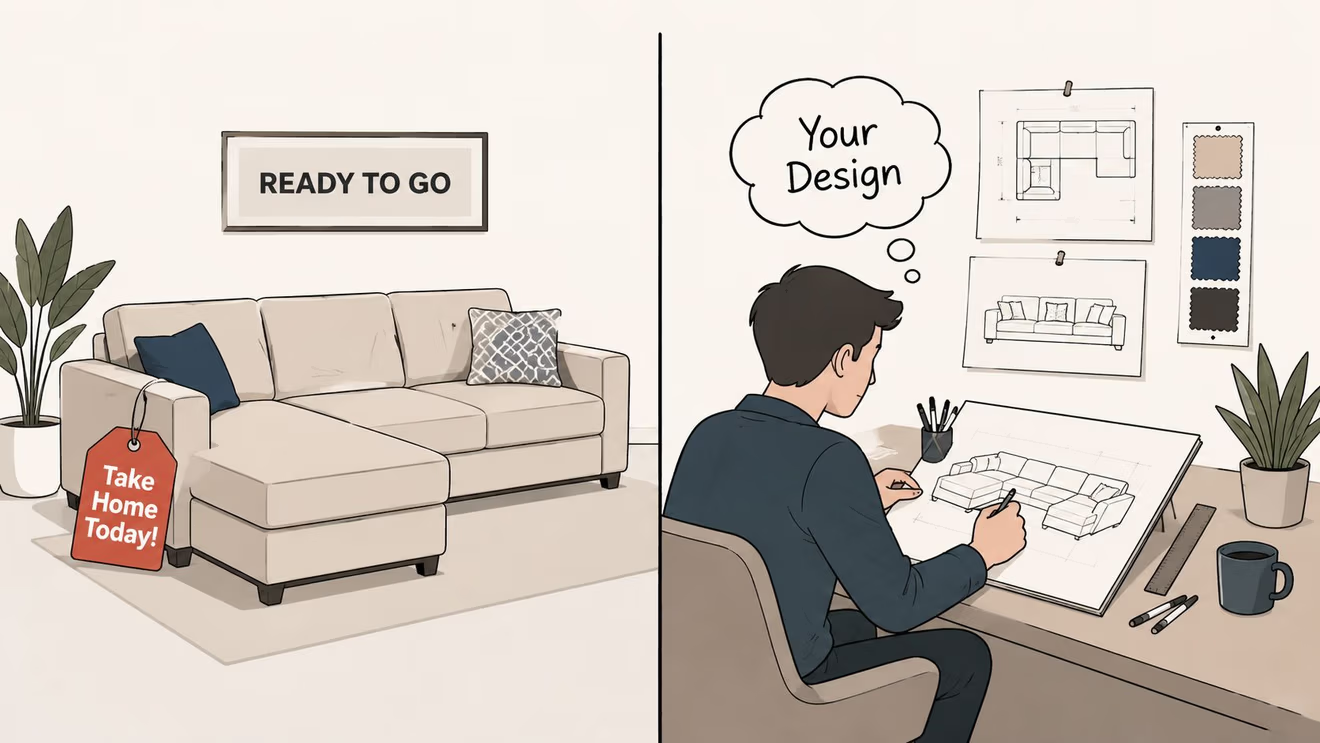
Sale shopping usually leads to two strong options. One path is finding an in-stock sectional that checks the boxes and gets home sooner. The other is using the sale period as motivation to order something configured for the room and the household. Neither option is automatically better. The better choice depends on what matters most.

A side-by-side way to decide
| Choice | Best for | Main advantage | Main tradeoff |
|---|---|---|---|
| In-stock sectional | Shoppers who want a faster room refresh | The buyer can often see the exact piece and move quickly | Fewer choices in leather, configuration, or finish |
| Custom sectional | Households with specific size, layout, or style needs | The sectional can be shaped around the room and preferences | It takes more patience |
This isn't really a speed-versus-quality decision. Either route can lead to a strong long-term purchase. The central question is whether the shopper values immediate availability or more control.
When in-stock makes the most sense
In-stock sectionals shine when the need is practical and immediate. Maybe the old sofa gave out. Maybe a move is happening now. Maybe the family just wants to stop waiting and start enjoying the room.
An in-stock sale can be excellent value when the sectional already has the right scale, the right seat feel, and the right leather quality. The buyer gets certainty. What's on the floor is what's going home.
When custom is worth the wait
Custom ordering makes sense when the room has quirks or the shopper has a clear vision. Sectionals aren't one-size-fits-all. Some families need a left-facing layout instead of a right-facing one. Others need a particular leather tone, firmer sit, or dimensions that work with an unusual floorplan.
These tips for special-order furniture are useful because they frame custom buying the right way. The shopper should come prepared with measurements, color goals, and honest priorities.
The best custom orders start with a real room problem, not just indecision.
A Leather Sofa Sectional Sale doesn't have to push everyone toward whatever is sitting in a warehouse. Sometimes the smartest value is using the budget wisely to get a sectional that fits the home instead of forcing the home to adapt to the sectional.
Why Visiting Our Showroom Makes All the Difference
A leather sectional is one of those purchases that shouldn't live only on a screen. Photos can flatter anything. Lighting changes color. Camera angles hide scale. A sales description can say “soft,” “supportive,” or “luxurious,” but none of that tells a shopper how the sectional feels at the end of a long day.
What a showroom visit reveals immediately
The biggest benefit of visiting in person is that uncertainty disappears fast. A shopper can sit, lean back, stretch out, and feel whether the depth is relaxing or awkward. That matters a lot with sectionals because comfort is personal. One family wants a loungey seat. Another wants a tidier sit that's easier to get in and out of.
Color becomes clearer too. Brown leather isn't just brown. Some tones read warm and casual. Others feel dressier. Some have more variation and character than expected. That's hard to judge from a screen.
A showroom visit also helps with scale. A sectional can look modest online and turn out to be huge in person. Or it can look oversized in a staged photo and fit beautifully in a real room.
Why local craftsmanship stands out in person
Quality is easier to spot face to face. Shoppers can inspect stitching, look at arm shape, test seat support, and compare the overall feel of one piece against another. That's especially important for buyers who care about domestic craftsmanship.
BILTRITE specializes in USA-made and Amish-made solid wood furniture, identifiable in-store by a dedicated “USA Made” icon that guarantees locally crafted, job-supporting pieces, as shown on BILTRITE's USA-made furniture page.
That matters because local craftsmanship often shows up in the little things a website photo can't communicate well:
- Stronger construction choices: the piece feels steady, planted, and substantial.
- Better tailoring: cushions, seams, and proportions look more intentional.
- More meaningful customization: the shopper can ask practical questions instead of guessing from a dropdown menu.
Advice is better when it's personal
A good showroom conversation saves people from expensive mistakes. Someone can point out that a family with pets may want a leather with a certain look and wear pattern. Another shopper may learn that the sectional they love needs a come-apart design for delivery. That kind of guidance is hard to replace.
There's also a confidence boost that comes from seeing several options side by side. A family can compare comfort, scale, leather feel, and construction all in one visit instead of bouncing between tabs and hoping the photos are honest.
A screen can narrow choices. A showroom helps people make a decision they'll still feel good about later.
For a purchase this central to daily life, in-person shopping still gives the clearest answer.
Let Our Family Help Your Family Find the One
The smartest Leather Sofa Sectional Sale shoppers don't chase the lowest price and hope for the best. They focus on value. They look for better leather, solid construction, the right fit for the room, and a layout that works for real life.
That's the whole game. A good sale should help a family stretch the budget into a stronger purchase. It should make a better sectional more attainable, not make a disposable one more tempting.
The value-first checklist that matters
Before saying yes, a shopper should be able to answer a few simple questions:
- Is the leather quality clearly identified, or is the wording vague?
- Will the sectional fit the room and the delivery path?
- Does an in-stock option solve the problem, or is custom the smarter move?
- Has the buyer sat on something similar and tested the feel?
Those questions protect the budget better than any giant sale banner ever will.
A warm invitation to shop the old-fashioned way
There's still a lot to be said for walking into a real showroom, asking honest questions, and seeing furniture with one's own eyes. Families in Metro Milwaukee who want that kind of experience can find it in Greenfield.
The showroom at 5430 W Layton Ave is closed on Sundays and Mondays to prioritize family time, reflecting those #BUYLOCAL and family-first values, as noted on the Greenfield showroom listing. For anyone who wants to know more about the people behind the store, BILTRITE's story shows how that family approach has stayed central over the years.
The right sectional should feel welcoming on day one and still feel like a smart decision years later. That's the kind of sale purchase worth making.
BILTRITE Furniture-Leather-Mattresses would love to help local families find a leather sectional that fits their home, their style, and their budget the right way. Stop by the Greenfield showroom, say hello, and spend some time with pieces built for real living.