Assembled TV Stand: Your Best Buying Guide for 2026


The box is in the hallway, the TV is already on the wall, and the last thing anyone wants after dinner is a night of tiny screws, missing dowels, and a manual that somehow feels longer than the stand itself. That's usually the moment people decide they don't want another flat-pack headache. An assembled TV stand solves that problem in the most practical way possible, because the furniture arrives ready to place, or with only a small final step left to do.
For shoppers who want a cleaner setup and fewer surprises, that convenience matters. It also changes the long-term value of the purchase, because the question isn't just what looks good in the showroom, it's what arrives safely, fits the room, supports the equipment, and still feels solid years later.
What Makes an Assembled TV Stand Different
A flat-pack box can turn a simple living room upgrade into a weekend project nobody asked for. One panel is upside down, the screws don't line up, and suddenly the “easy build” needs a second person and a lot more patience. An assembled TV stand avoids most of that mess because it comes to the home ready for use, or nearly ready for use, with only minor setup in some cases.
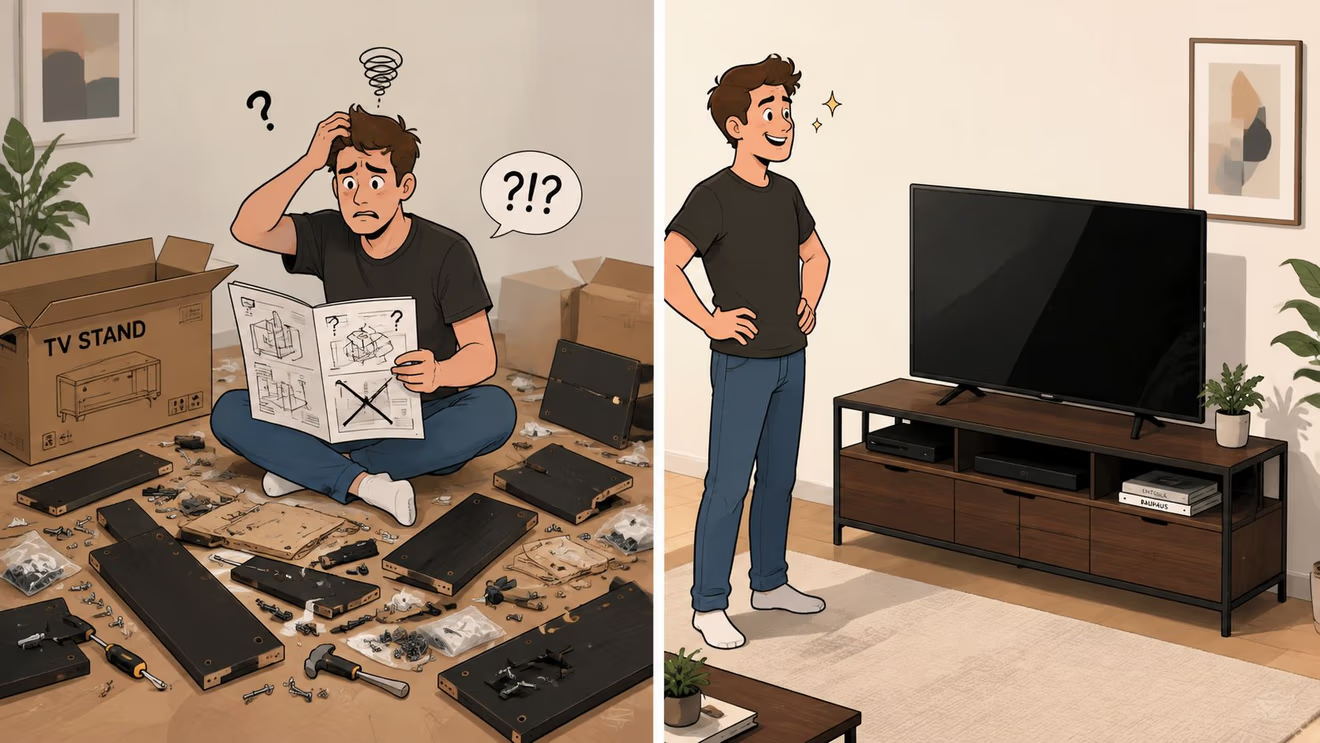
Ready-to-use is the real appeal
The practical difference is simple. A fully assembled piece saves time, cuts down on tool use, and lowers the chance of crooked doors, loose hardware, or a shelf that ends up a little out of square. That last part matters more than most shoppers realize, because factory-assembled furniture is often described as arriving square with stronger factory-set joinery, while flat-pack pieces depend more on panel thickness, hardware, and cross-bracing for strength.
Practical rule: if a stand is going in a main living room, convenience is not a luxury. It's part of the value.
Even “fully assembled” does not always mean zero effort. Some models still need the legs attached or a wall-mounting cleat installed after delivery, and that final step may only take a few minutes with basic tools. Still, that is a very different experience from building a whole cabinet from scratch.
Shoppers who want a quick framework for the basics can also review how to shop for TV stands, then use that list against the actual piece instead of the marketing photos.
What assembled really means in the home
In real homes, assembled usually means fewer moving parts and less risk of setup error. That makes it a strong fit for buyers who value a straightforward delivery day, especially in apartments, senior households, or rooms where the furniture needs to work right away. It also helps when the stand is part of a larger entertainment setup, because there's already enough to manage with the TV, cables, consoles, and speakers.
An assembled piece is not automatically better in every situation, but it is usually calmer, cleaner, and easier to trust. For a lot of buyers, that's the whole point.
Assembled vs Flat-Pack The Real Tradeoffs
The honest comparison starts with a basic truth. Flat-pack looks cheaper at checkout, but the hidden costs show up later in time, frustration, and the risk of assembly mistakes. An assembled unit usually costs more upfront, but it pays back in convenience and a lower chance of getting something put together incorrectly.
Explore customization options for TV stands if a standard size or finish doesn't fit the room. Customization and assembly are different questions, but shoppers often need both decided before they buy.
Side-by-side comparison
| Factor | Assembled TV Stand | Flat-Pack TV Stand |
|---|---|---|
| Delivery day | Arrives ready or nearly ready | Arrives in parts and needs full build |
| Time at home | Very little setup | Can take anywhere from a short session to several hours, depending on design |
| Assembly risk | Lower chance of missed hardware or crooked alignment | Higher risk of setup error if instructions, tools, or parts are mishandled |
| Stability | Often benefits from factory-set joinery and consistent squareness | Depends more on build quality, hardware, and how carefully it was assembled |
| Move-in convenience | Strong when speed matters | Useful if disassembly makes tight access easier |
| Best fit | Buyers who want less friction and fewer mistakes | Buyers who want to save money and don't mind doing the work |
When flat-pack actually makes sense
Flat-pack still has a place. If a home has narrow stairways, a tight condo entry, or a hallway that barely clears the corner, a piece that comes apart can be easier to get inside. It can also make sense for buyers who like building furniture and don't mind spending the time.
But the tradeoff is real. A stand that arrives in pieces can be assembled loosely, misaligned, or over-tightened. That kind of error may not show up on day one, but it can affect how stable the stand feels once a TV and accessories are on top of it.
A furniture piece shouldn't demand a repair mindset on move-in day.
When assembled wins
An assembled stand wins when the buyer wants immediate usability, fewer tools, and less guesswork. It also wins when the piece is meant to last in a main room, because factory assembly often gives the structure a more finished, square feel. For many households, that's worth more than shaving a little money off the ticket.
Getting the Measurements Right
A TV stand can look beautiful and still fail badly if the sizing is off. The safest rule is to choose a stand that's 2 to 3 inches wider on each side than the TV, and sizing guidance also says the TV shouldn't be roughly 8 inches larger than the stand's diagonal-size recommendation Dimensions.com. That gives the screen enough visual support without making the base look cramped.
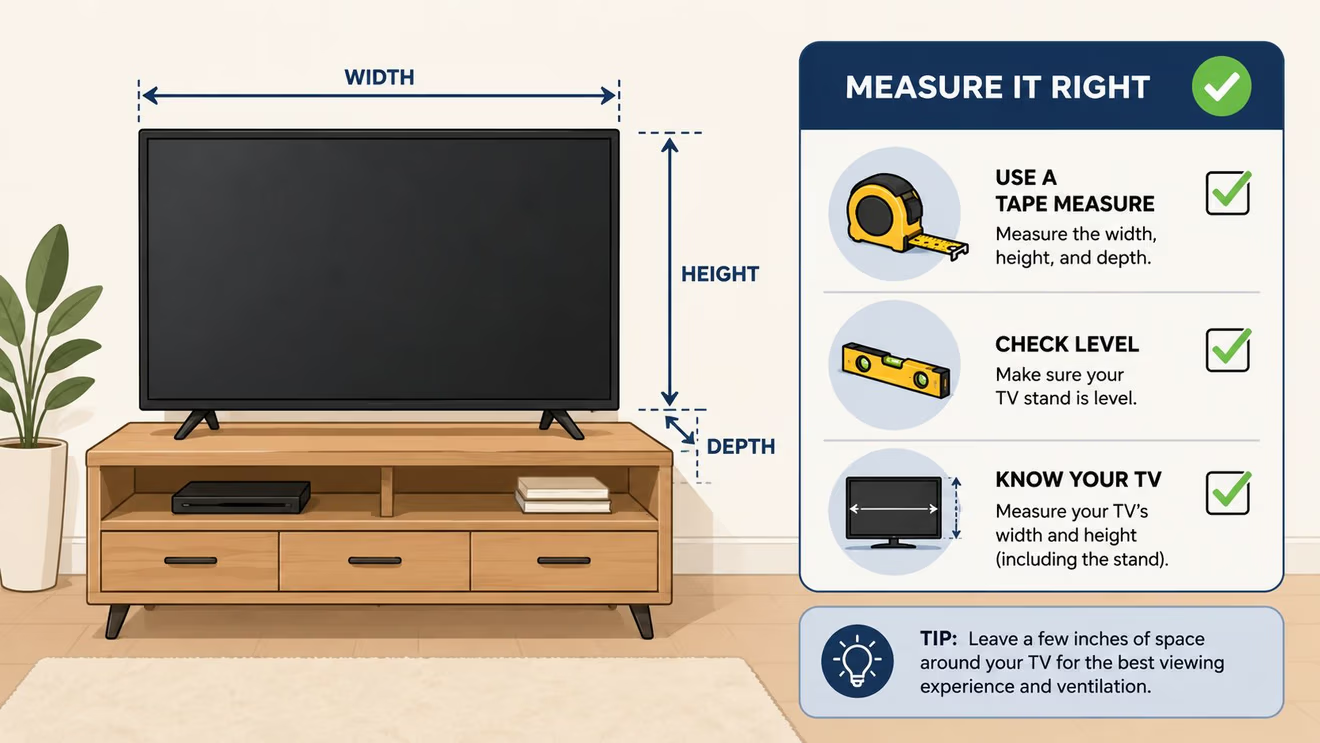
Measure the room, not just the TV
The first mistake shoppers make is measuring only the television. The second is forgetting the wall, the walkway, and the door opening. A stand that fits the screen can still overwhelm the room if the surrounding space is tight.
For comfortable seated viewing, the screen center should sit near 42 inches from the floor Dimensions.com. That height works best when the stand, the TV mount height, and the sofa all relate to each other instead of fighting for attention.
Use the TV size as a starting point
A 65-inch TV is commonly paired with a 65- to 75-inch stand Dimensions.com. For smaller rooms, the same logic still applies, just scaled down. A 55-inch TV usually needs a stand that leaves breathing room on both sides and still feels grounded under the screen.
See the fit details for a stand made for a 36-inch TV if the room is compact or the setup is secondary, like a den or guest room.
Don't ignore delivery clearance
Assembled furniture can become either a blessing or a headache. A fully assembled stand may fit the living room beautifully but still get stuck at the front door, the staircase landing, or the final hallway turn. Door widths, ceiling angles, and tight corners matter just as much as the stand dimensions themselves.
The better habit is simple. Measure the TV, measure the space, then measure the path into the home. A beautiful stand that can't get through the door is just a very expensive obstacle.
Materials, Weight Capacity, and Durability
The safest shoppers do not buy on looks alone. They check the weight rating, the shelf layout, and the materials first, because those details determine whether the stand can hold the equipment without sagging, wobbling, or wearing out early. One guide lists a maximum TV weight of 100 lb, with a 100 lb top-shelf limit and 50 lb for middle and bottom shelves, while another assembled stand is rated for 99 lb total with a tempered glass top and metal frame Best Buy guide PDF.
Capacity should exceed the load
A good rule is to choose a stand whose top capacity is at least 20 to 30 percent higher than the TV's weight POVISON buying guide. That leaves room for a soundbar, decor, or future equipment changes. It also keeps the stand from working at the edge of its limit every single day.
Strong advice: never let the TV weight be the only number you check. The real load includes the screen, the soundbar, game systems, and anything stored on the shelves.
Solid wood changes the conversation
Material choice matters just as much as load rating. Solid wood is the material worth looking for when the goal is long-term use, because it handles daily stress better than lightweight composite builds and is easier to live with for decades. Factory assembly also helps here, since consistent joinery and squareness usually improve the overall feel of the piece.
For shoppers comparing construction methods, the case for solid wood furniture is especially relevant when the stand is part of a main living room instead of a temporary setup.
What to inspect in person
A good stand should feel stable when the doors open and close. The finish should look even across edges and high-touch surfaces. Hardware should feel substantial, not flimsy, and shelves should sit firmly in place without flexing under normal use.
For a family room, those details matter more than decorative extras. The right stand should support the equipment and disappear into the room instead of asking for attention every time someone walks past it.
Why American-Made and Solid Wood Matter
A furniture purchase should earn its keep over time. That is why American-made and Amish-crafted pieces matter so much, because the value is not only in the finished look, but in the durability, repairability, and consistency that come with better construction. A stand built from solid wood and handled by experienced makers can stay useful far longer than a cheaper piece that starts loosening after a few moves or seasons of daily use.
There's also a practical local advantage. Established neighborhood retailers can help people judge quality in person, explain the construction clearly, and stand behind what they sell. That matters to families who want fewer surprises and more accountability after the sale.
Long-term value beats short-term savings
Cheap furniture can look fine on delivery day. The problem is what happens after the first move, the first heavy TV upgrade, or the first year of living with cabinets that don't quite line up anymore. A sturdier piece costs more up front, but it often avoids the cycle of replacing furniture every few years.
BILTRITE Furniture-Leather-Mattresses has built its reputation since 1928 as a fourth-generation, family-owned showroom in Metro Milwaukee, and that kind of continuity says something important. It means the store isn't chasing the fastest sale. It's helping people buy pieces that will last.
Why craft still matters
American manufacturing and Amish craftsmanship usually bring a higher level of consistency in the way a piece is put together. That shows up in the small things, like cleaner joinery, better fit, and a finish that looks good in everyday light instead of only in product photography. For a TV stand, those details are not decorative. They're part of the structure.
Good furniture should feel calm every time it's used. If it wobbles, chips, or shifts too easily, the problem will keep showing up in the room.
That's why a quality assembled TV stand is more than a convenience buy. It's a practical investment in fewer headaches and a longer service life.
Delivery, Setup, and Cable Management
A beautiful stand can still frustrate the household if the delivery path is wrong or the back panel turns cable routing into a mess. That's why delivery and setup deserve as much attention as the finish. For larger pieces or tricky access, white-glove delivery service makes a lot of sense because it reduces the stress of moving, placing, and unpacking heavy furniture.
Measure the path before the purchase
Doorways, stair rails, hallway turns, and elevator openings all need to be checked before an assembled piece is ordered. If the unit can't be broken down, the home has to accept the furniture as one solid form. That's where buyers get caught off guard.
A smaller piece may slip through easily, while a larger fully assembled cabinet can turn into a very awkward puzzle. The smart move is to compare the stand's full dimensions against the narrowest point in the delivery path, not just the main room.
Cable management is part of the design
Modern setups are cable-heavy. Soundbars, game consoles, streaming boxes, and receivers need more than a flat top surface. They need rear access, shelf depth, and enough breathing room so cords don't get crushed behind the cabinet.
An assembled stand can help if it includes well-placed openings and usable interior space. It can also cause problems if the back is too closed off, because the convenience of a ready-made piece disappears fast when cords have nowhere to go.
Small setup still matters
Some assembled pieces still ask for a quick final step after delivery. That might be attaching legs, securing a cleat, or tightening a few hardware points. The job may be short, but it still needs to be done carefully, especially if the piece will hold a large TV or wall-mounted display above it.
For the cleanest look, keep the visible cords grouped, leave service access behind the stand, and avoid stuffing components so tightly that heat and air flow become an issue. A neat entertainment setup is usually the result of good furniture design plus a little planning, not luck.
Making Your Final Decision
The right choice comes down to a short checklist. The stand should fit the TV, support the weight, leave room for the gear, and make delivery realistic in the actual home. If any of those pieces fail, the pretty finish won't save the purchase.
Use this decision filter
- Choose assembled if delivery convenience matters, the room is used every day, or setup mistakes would be a problem.
- Choose flat-pack if access is tight, budget matters more than speed, and someone at home is comfortable assembling furniture.
- Prioritize solid construction if the stand will anchor the main living room and needs to last for years.
- Check cable access first if the room has a soundbar, gaming setup, or multiple connected devices.
- See it in person if the room layout is unusual or the buyer wants to judge finish, scale, and build quality firsthand.
That last point is where a local showroom earns its keep. Photos never tell the whole story about depth, hardware feel, or how a stand looks beside real seating. The better question is not just “Does it fit online?” It's “Will it work in the room?”
BILTRITE Furniture-Leather-Mattresses offers assembled entertainment furniture, in-home delivery options, and a showroom experience where customers can compare construction, storage, and size with help from a knowledgeable team. For shoppers in Greenfield and Metro Milwaukee, that hands-on visit is the fastest way to avoid a costly mismatch.
Ready to choose a stand that fits the TV, the room, and the way the home gets used? Visit BILTRITE Furniture-Leather-Mattresses in Greenfield to see assembled entertainment furniture in person and talk through the details with a team that knows how to help people buy once and buy well.