TV Stand Height: How to Find the Right Fit

You've settled onto the sofa, the snacks are ready, and the opening scene starts. A few minutes later, your chin is tipped upward and your neck is asking why the television had to climb so high. The room may look polished, but the wrong TV stand height can make every movie night less comfortable.
A good setup starts with the people who use it, not with a generic furniture chart. Seat height, screen size, viewing distance, recline angle, soundbar clearance, and the room's overall scale all matter. The right console should support the television while keeping the middle of the screen close to the viewers' natural sightline.
Table of Contents
- Finding the Ideal TV Stand Height for Your Living Room
- Measuring Seated Eye Level and Screen Dimensions
- Adjusting for Viewing Distance and Room Layout
- Navigating Special Cases for Bedrooms and Gaming
- Choosing a Solid Wood Console That Fits Your Space
- Getting Personalized Advice at Our Greenfield Showroom
Finding the Ideal TV Stand Height for Your Living Room
Your sofa may look perfect, yet the first episode reveals the problem: the television sits too high, and everyone tilts their heads upward. Set the TV stand height for the people and furniture in the room, not for an inflexible chart.
The strongest starting point is straightforward. The center of the screen should sit near seated eye level. For many sofas, that point is around 40–42 inches from the floor, while a typical console is often 24–28 inches high. Standard furniture guidance places many TV stands around 24–30 inches, but treat those figures as starting points rather than rules. (TV stand height guide)
A television mounted or placed too high keeps the neck extended during a long show or double-feature. That upward angle can cause discomfort and eye strain. A slightly lower screen usually feels better because the head stays neutral and the eyes meet the display naturally.
Practical rule: Choose the stand from seated eye height and the television's actual height, not its diagonal measurement alone.
A tall cabinet that fills an empty wall may still be wrong for a deep sectional or recliner. Measure the room's real seating position before shopping, then review this guide to finding the optimal TV position for practical sightline advice.
Low furniture suits floor seating, a low-profile sofa, or a relaxed modern room. Low-profile pieces may sit around 14–20 inches high, while consoles in the mid-20-inch range work well with many standard sofas. Those ranges help narrow the search, but cushion depth and posture decide the final height.
Solid wood furniture adds another consideration. A console can feel far taller or lower in person than it appears online, especially beside deep family sofas or slim modern seating. Check its proportions from the main seat, and choose the piece that keeps the screen center close to viewers' eyes.
Measuring Seated Eye Level and Screen Dimensions
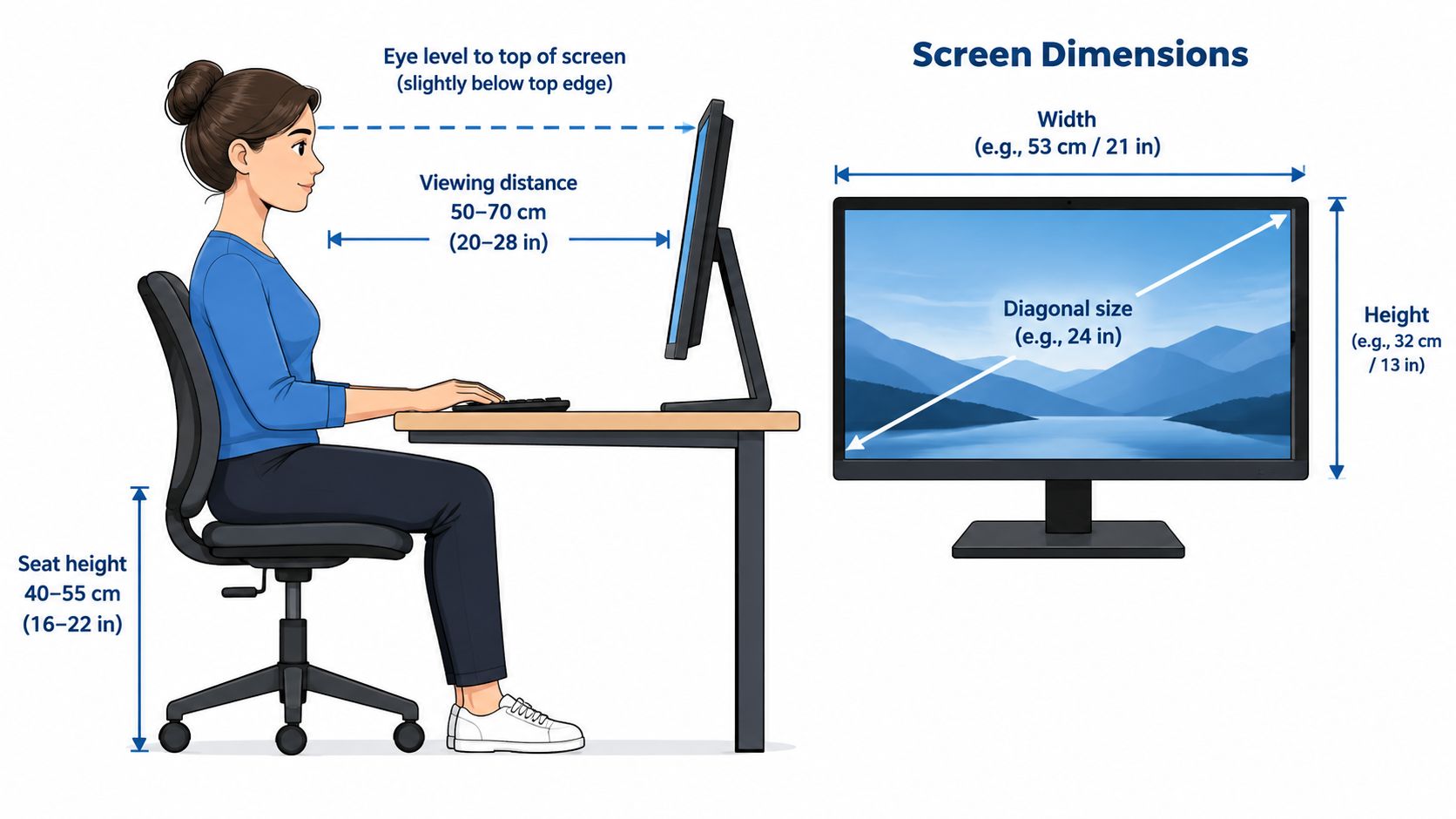
A tape measure, a helper, and your actual sofa are all you need. Sit in the main viewing position, in the posture your household uses for television. Measuring while standing, or from an unused dining chair, gives you a target that belongs to another room.
Start with the sofa
- Sit normally. Keep your back against the cushion and place your feet as usual.
- Measure seated eye level. Ask a helper to measure from the floor straight up to the center of your eyes. Keep the tape vertical.
- Repeat for the main viewers. If household members sit at different heights, measure the person or pair who watches most often. For a shared room, choose a practical midpoint.
Deep family sofas, plush cushions, and recliners can lower seated eye level more than a standard chart suggests. Low-profile modern seating may require a lower console, while a firm upright sofa supports a higher screen position. Your room and posture set the answer.
Measure the television itself
Measure from the television's top edge to its bottom edge, including the bezel. If it will sit on the console, measure the feet or pedestal as well. The diagonal size printed on the box does not provide the vertical measurement needed for this calculation.
Use this formula:
Target stand height = seated eye level − half of the TV's actual height
For a practical example, a 65-inch television is about 32.5 inches tall. With seated eye level at about 40 inches, half the screen height is roughly 16.25 inches, leaving a target stand height of about 24 inches. That example appears in modern TV placement guidance and shows why a larger screen often needs a lower console. (TV stand measurement guide)
Check what sits under the screen
Leave room for a soundbar, center speaker, game system, or other equipment between the console and television. That clearance can raise the screen, so account for it before choosing furniture.
A calculation narrows the search. A full-size mock-up makes the final choice clearer. Stack sturdy boxes to the proposed stand height, mark the screen center on the wall with painter's tape, and sit in the usual spot. If your eyes meet the mark without lifting your chin, the height suits the room.
Finally, judge the console in person when possible. Solid wood furniture can look lower or taller beside a deep sofa than it did online. Check its proportions from the main seat, then choose the piece that keeps the screen center comfortable for the people who use the room.
Adjusting for Viewing Distance and Room Layout
A large screen can feel overwhelming when the sofa sits close, while a smaller television may seem lost across a long room. Set the viewing distance and stand height together. The main sofa's position, the screen size, and the angle to the wall all affect comfort.
A deep sectional lowers the viewer after the cushions compress. That change matters in family rooms where people sink into the same seats each evening. A console that suits a firm, low-profile sofa may place the television too high for a deep one. Recliners shift the sightline again, since a relaxed back angle makes a slightly lower screen feel more natural.
Screen size and viewing distance guide
| TV Screen Size | Ideal Viewing Distance | Approximate Console Height |
|---|---|---|
| 32 inches | 4–7 feet | Measure from seated eye level |
| 55 inches | 7–11 feet | Often around 20–24 inches |
| 65 inches | Coordinate distance with the main sofa | Often around 24 inches |
| Common sofa setup | Confirm the room's primary sightline | Often around 24–28 inches |
Use these figures as starting points, not fixed answers. Console height depends on the television's actual height, the sofa's seated eye level, and the equipment below the screen. Common TV furniture may measure around 48–67 inches wide and 21–32 inches tall, while low benches can sit below that range.
A short viewing distance paired with a large screen calls for tighter height control. Raising the television makes a dominant screen feel even more imposing. In a longer room, the viewing angle feels flatter, but seated eye level still determines the most comfortable screen position. Use this guide to calculate sofa and television placement before committing to a console.
The main seat gets the deciding vote. Measure from the sectional, recliner, or low-profile chair the family uses, rather than a rarely occupied accent seat.
When possible, view solid wood consoles in person. Their depth, top thickness, and visual weight can look different beside a deep sofa than they do online. Stand where the family sits, check the sightline, and choose the piece that fits both the room and its everyday posture.
Navigating Special Cases for Bedrooms and Gaming
A bedroom television follows a different viewing posture from a living-room screen. People may watch while lying back, leaning against pillows, or sitting against a headboard. That raises the viewer's eye line and can justify a taller dresser or console than the living room would tolerate.
The furniture still shouldn't force the head forward or upward. The bedroom's actual posture should be measured, with the screen center placed where the eyes naturally rest from the pillows. A low console can look stylish, but it may leave a reclining viewer staring downward for the entire program. This guide to placing a couch in a bedroom also helps illustrate how seating choices affect screen relationships in smaller rooms.
Gaming needs a tighter sightline
Gaming often brings the viewer closer to the television and changes the body position. Players may lean forward, sit on a lower chair, or shift frequently during play. A slightly lower console can keep the action centered without making the player tilt the head upward.
The right solution depends on the actual gaming seat. Measure from that seat, not from the living-room sofa, and test the setup with the controller in hand. If the screen center sits comfortably in the forward gaze, the height is doing its job.
Above-fireplace placement deserves caution
Mounting a television above a fireplace often places it well above seated eye level. The arrangement can solve a wall-planning problem, but it usually asks the neck to work harder and may create an uncomfortable viewing angle. If the fireplace is the only practical location, a tilting mount can help the screen face the viewers more directly, though it doesn't eliminate the height issue.
A lower console on another wall is usually the more comfortable answer. If that isn't possible, the family should test the proposed position from the main seat before installation rather than judging the layout from across the room while standing.
Choosing a Solid Wood Console That Fits Your Space
Once the target height is known, the furniture search becomes much easier. The console needs to meet the measurement while also carrying the television securely, storing equipment, and fitting the room's scale. Solid wood earns serious consideration because it brings a substantial feel and long-term durability to a piece used every day.
USA-made and Amish-made furniture can also suit families looking for careful construction and a piece with lasting character. At BILTRITE, shoppers can look for the store's USA Made, Amish Made, and solid wood icons when examining furniture in person. Those markers identify the categories, while the finish, joinery, hardware, and overall fit still deserve a hands-on inspection.
Match the console to the household
A compact apartment or condo may need a narrower, small-scale console that keeps walkways open. A busy family may need a heavier-duty piece with storage for controllers, remotes, speakers, and everyday clutter. The television shouldn't overhang an unstable surface, and the console should have enough depth for the television base and equipment.
Storage deserves a practical review:
- Open compartments keep frequently used electronics accessible and allow airflow.
- Closed doors and drawers hide remotes, cables, games, and household clutter.
- Rear openings make it easier to route cords without pulling the television forward.
- A broad, stable base helps the furniture feel secure in a family room.
A console also needs visual balance. A very small piece beneath a large display can look lost, while an oversized cabinet can crowd a compact room. Warm wood can connect naturally with nearby tables, shelving, or flooring without requiring every piece to be identical.
The custom solid wood furniture options can be useful when a calculated height falls outside common furniture dimensions. A custom piece may also solve unusual width, storage, finish, or hardware needs.
For shoppers who want to compare construction by touch, BILTRITE Furniture-Leather-Mattresses offers furniture in categories that include solid wood, USA-made, Amish-made, small-scale, and heavy-duty pieces. The important decision remains the same: select a console that meets the measured sightline and handles the household's daily use.
Getting Personalized Advice at Our Greenfield Showroom
A tape measure can identify the target, but furniture still needs to be experienced in person. A console's listed height doesn't reveal how its proportions feel beside a sofa, how deep its storage runs, or whether the finish works with the rest of the room. Sitting on furniture also reveals whether a family's “normal” viewing posture is upright, relaxed, or fully reclined.
BILTRITE is a fourth-generation, family-owned business serving the Metro Milwaukee community since 1928. The showroom in Greenfield offers affordable, better-quality furniture, with USA-made, Amish-made, and solid-wood options alongside pieces for apartments, larger households, and unusual room layouts.
The sales associates bring over 400 years of combined experience. They can help a shopper compare a lower bench with a taller console, think through soundbar clearance, assess a deep sectional, or discuss custom dimensions without turning the visit into a high-pressure sales conversation.
The store doesn't sell online, and that's useful for a measurement-sensitive purchase. Families can bring their television dimensions, seated eye-level measurement, and room notes to the showroom, then see how different consoles relate to real seating. Location details and showroom information are available through BILTRITE's Greenfield location page.
BILTRITE Furniture-Leather-Mattresses offers USA-made, Amish-made, solid-wood, small-scale, and heavy-duty furniture, along with a large mattress department featuring over 60 models. Bring the TV measurements and seating details to the Greenfield showroom, then visit BILTRITE Furniture-Leather-Mattresses to explore comfortable options with a knowledgeable local team.