3 DAY MATTRESS SALE! THURSDAY - FRIDAY - SATURDAY!
LABOR DAY SALE HELD OVER ENDS SATURDAY, SEPTEMBER 19 AT 5PM!
NO CREDIT CARD FEES!
1000's of Items IN-STOCK + 500 Mattresses!
Largest selection of USA Made Furniture & Mattresses + Amish Made!
FREE In-Store Design Services!
BUY LOCAL & LOVE YOUR HOME!
3 DAY MATTRESS SALE! THURSDAY - FRIDAY - SATURDAY!
LABOR DAY SALE HELD OVER ENDS SATURDAY, SEPTEMBER 19 AT 5PM!
NO CREDIT CARD FEES!
1000's of Items IN-STOCK + 500 Mattresses!
Largest selection of USA Made Furniture & Mattresses + Amish Made!
FREE In-Store Design Services!
BUY LOCAL & LOVE YOUR HOME!
OPEN LABOR DAY | Tuesday-Thursday 10am to 6pm | Friday 10am to 7pm | Saturday 10am to 5pm | Sunday Closed To Be With Family & Friends | Monday Showroom Closed
5430 West Layton Ave, Greenfield - Metro Milwaukee
You're standing in a showroom, one hand on a dining chair and the other on a table edge, trying to answer a simple question. Is this wood furniture made in USA something that'll still feel solid in a few years, or is it just dressed up to look that way today? That's the core decision most shoppers are making, even if the label on the back seems to settle it in seconds.
The tricky part is that furniture shopping often blurs together origin, materials, and build quality. A clear label can still leave room for imported parts, softer substrates, or shortcut construction. A smart buyer looks at all three, then thinks one step farther ahead, because furniture is a long-term part of the home, not a one-time errand.
What Wood Furniture Made in USA Really Means
A family shopping for a dining set usually starts with the same hope. They want something sturdy, attractive, and worth the money, and they want the phrase made in USA to mean something real. That matters, because wood furniture is a big part of everyday home buying, not a niche corner. Grand View Research estimated the U.S. furniture market at USD 180.55 billion in 2025, with wooden furniture accounting for 39.26% of that market by material and residential furniture making up 60.21% by application, which shows how central wood pieces are in homes, not just offices or showrooms (Grand View Research).
What shoppers are really asking
They are not only asking where the last screw went in. They want to know whether the piece was built with domestic craftsmanship, whether it was assembled from mixed-source parts, and whether the construction is strong enough to earn its place in daily life. A label by itself can leave too many questions open, like a recipe that lists the finished dish but leaves out the ingredients. A useful guide has to connect the sticker to the structure underneath it.
Practical rule: treat origin as the first question, not the last one.
U.S. manufacturing has a deep furniture legacy, especially in the industrial South and Midwest. North Carolina still leads in total furniture manufacturing facilities, followed by California, Texas, Ohio, Michigan, Illinois, and Pennsylvania, which tells a simple story, American wood furniture is part of a long-running production base (House of Leon). For shoppers in Metro Milwaukee and beyond, that matters because it means the category has both scale and staying power.
For readers comparing options, our overview of American-made furniture makers can help put the scene in context. The bigger goal, though, is more practical, learning how to judge whether a piece is likely to serve the home well over time. That starts with the label, but it does not end there.
How to Read the Made in USA Label
The federal standard behind a Made in USA claim is stricter than many shoppers expect. The FTC requires a product to be “all or virtually all” made in the United States for an unqualified claim, which means the phrase should point to more than just final assembly or a domestic finish. In furniture, that's where things get murky, because a piece can include domestic wood, imported hardware, mixed subassemblies, or finishing work done here while other components came from elsewhere (Bilt-Rite furniture guidance on the FTC standard).
Ask four plain questions
A showroom conversation gets clearer when it stays simple. Instead of asking, “Is this American?” ask four separate questions.
Where was the main body built? The carcass, frame, or casework tells more than a decorative label.
What parts came from outside the country? Hardware, veneers, and subcomponents can change the meaning of the claim.
Is the origin language precise? “Made in USA” means something different from “Designed in USA” or “Made in USA of Imported and Domestic Components.”
Can the retailer explain the supply chain? Clear answers usually come with clear labels, brochures, or product notes.
A good label should reduce confusion, not create it.
The easiest way to think about it is like a recipe. If the final dish is plated locally but most of the ingredients came from elsewhere, the plate tells only part of the story. Furniture works the same way. A clean origin claim should match the way the piece was built, not just where it was assembled at the end.
That's why clearer labeling helps so much. It gives the buyer a better chance to separate real domestic manufacturing from marketing language that sounds close enough to trust. When a store can explain the difference between fully domestic production and mixed sourcing in plain English, shoppers usually get a much stronger read on whether the piece fits their expectations.
Solid Wood, Veneer, and Engineered Materials Explained
Two tables can look almost identical from across a room and still age very differently. One may be built from solid wood, another from a thinner surface layer over a softer core. The first usually offers better repairability and stronger edge wear, while the second can be lighter and cheaper up front. That's why material choice matters so much in USA-made wood furniture.
A consumer guide from The Stated Home recommends prioritizing solid wood or plywood with a substantial veneer layer, while avoiding veneer over MDF or particle board because those substrates are more prone to edge failure, peeling, and weak fastener holding over time (The Stated Home on quality wood furniture). That advice lines up with what shoppers notice in real life. Heavier pieces often feel steadier. Edges that stay tight usually hold up better. Fasteners that bite into a sturdier substrate tend to keep doing their job.
Wood Furniture Materials at a Glance
Material
Durability
Repairability
Best For
Solid wood
Strong for long-term use
High, since sanding and refinishing are often possible
Tables, case goods, heirloom pieces
Plywood
Good when well built
Moderate, depending on finish and edge treatment
Carcasses, shelves, structural panels
Veneer over plywood
Good if the veneer is substantial
Moderate
Attractive surfaces with better structural support
MDF or particle board with veneer
More vulnerable at edges and fastener points
Low
Light-duty use, short-term budget pieces
What to feel for in the showroom
Lift one corner. Does the piece feel dense and stable, or light in a way that suggests a softer core? Run a hand along the edge. Clean edges usually tell a better story than bubbly veneer or chipped corners. Open drawers and look at the contact points. A drawer that glides cleanly and keeps its shape says more than a glossy finish ever could.
Simple test: if the edge work looks fragile, the long-term repair story probably isn't great either.
BILTRITE's wood furniture guide for choosing the right hardwood fits naturally here, because hardwood selection affects both style and lifespan. The key idea is straightforward, the surface matters, but the structure underneath matters more.
Joinery and Construction Details That Matter
A pretty wood finish can hide weak construction for only so long. The test comes from how the piece holds itself together when somebody leans on it, slides a chair back, or opens the same drawer every day. Strong furniture usually shows its quality in the quiet places, the joints, the corners, and the way the frame resists wobble.
What to inspect with your hands
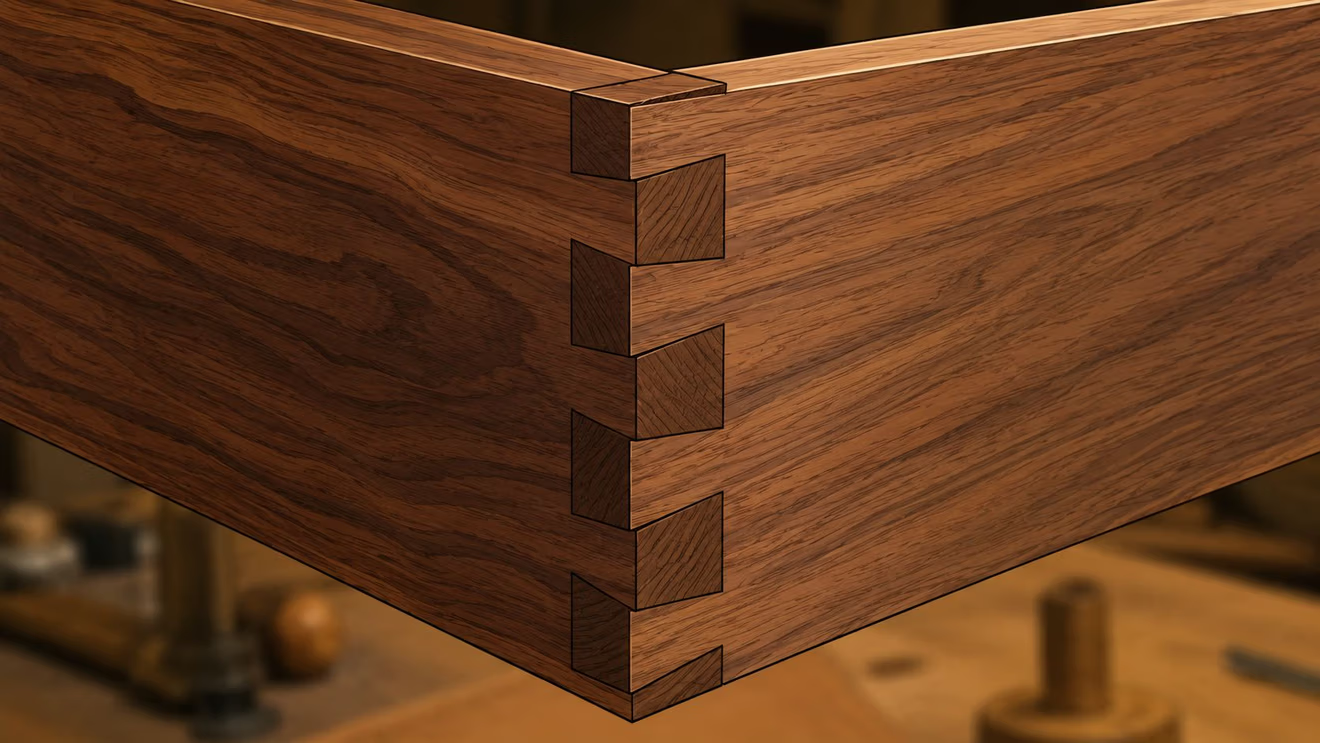
Start with the joints. Tight-fitting dowels, mortise-and-tenon, and tongue-and-groove construction all suggest that the maker expected the piece to last and stay aligned. Then check the glue lines. They should look neat, not messy, with no obvious squeeze-out around the seams. The Utah State University extension checklist says a piece can be considered high-quality wood furniture when features like these are present, along with sturdy corner blocks, reinforced chair legs, stretcher bars or rungs, and level legs that stay steady under pressure (Utah State University extension checklist).
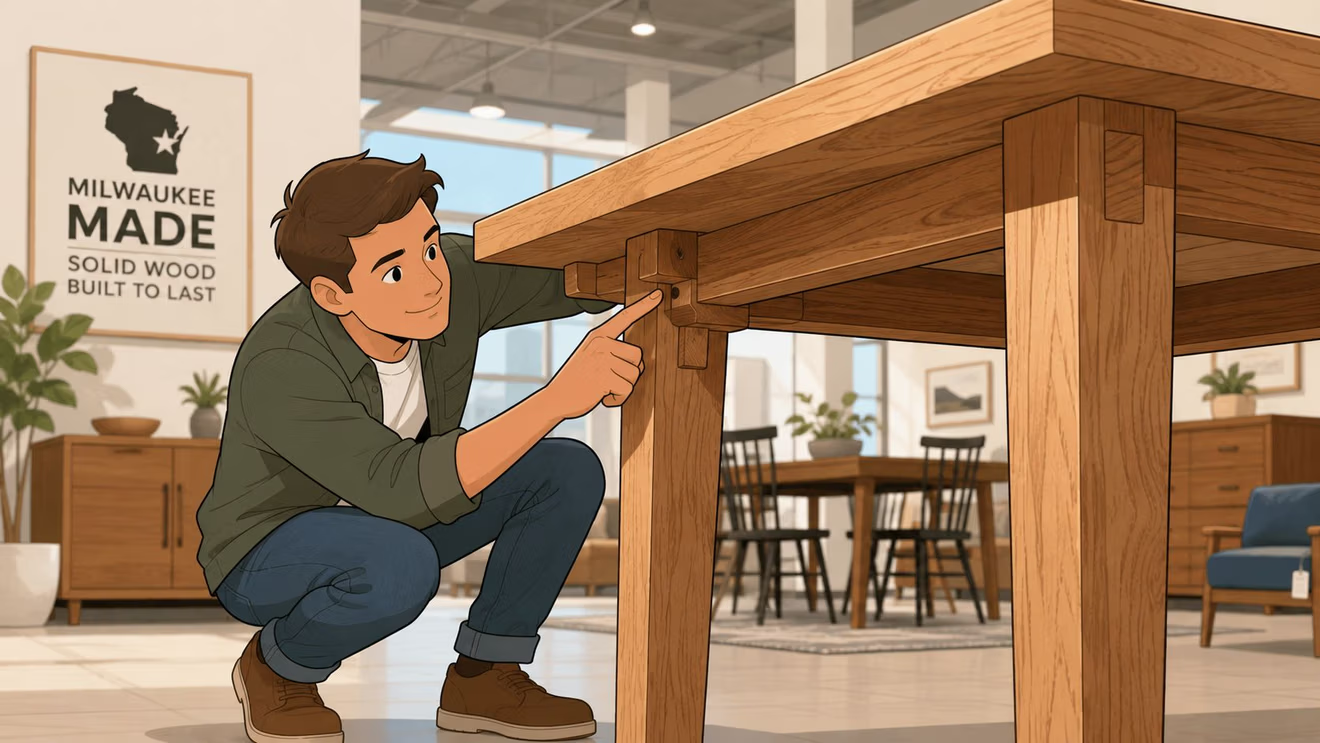
A chair is the easiest test piece. Press down on the seat and rock it gently. A sturdy chair should feel like one unit, not four legs negotiating with each other. Look underneath for corner blocks and stretcher bars. Those parts spread the load and help resist racking, which is just a fancy way of saying the frame won't twist itself loose.
Quick showroom checklist
Check the seams: tight joints usually point to careful work.
Look at the corners: glued-and-screwed blocks often hold stress better than shortcuts.
Push the legs lightly: level, sturdy legs should stay calm under pressure.
Open and close moving parts: drawers, doors, and leaves should work smoothly without catching.
If a piece wobbles in the store, it won't magically settle down at home.
For a closer look at one of the most trusted furniture joints, BILTRITE's mortise-and-tenon guide is a useful companion read. The bigger point is simple. Good furniture gives away its quality in the places you might not notice at first glance.
Why Buying USA-Made Wood Furniture Pays Off
A lot of shoppers start with the sticker price. That makes sense at the store, but furniture lives in a home for years, so the better question is what the piece costs over time. A well-built chair, dresser, or table can save frustration later because it holds up better, repairs more easily, and fits into family life without constant replacement.
The market size helps explain why this category keeps mattering. Mordor Intelligence valued the U.S. furniture market at USD 193.60 billion in 2025 and projected it to reach USD 232.61 billion by 2030 at a 3.74% CAGR. That points to a large, steady market rather than a passing fad. Global Market Insights also estimated the global wooden furniture market at USD 417.5 billion in 2025 and the U.S. wooden furniture market at USD 91.4 billion in 2025, with the U.S. expected to grow at a 4.9% CAGR from 2026 to 2035. Those figures show how wood furniture fits into the wider home-furnishings world.
What the buyer actually feels
Better construction shows up in ordinary moments. A drawer slides cleanly instead of scraping. A table keeps its shape after years of family meals. A headboard does not creak every time someone leans back. That is the reward of choosing a piece that is built to be lived with.
Material and origin matter too. American-made furniture often uses solid hardwood and traditional joinery, which support long service life and make repairs more practical, while lighter, lower-density constructions are often harder to fix cleanly once they start failing. In a home, that difference becomes very real when a leg loosens or a surface needs refinishing.
Long-lasting furniture usually feels less exciting on day one than a bargain piece, then far more satisfying on year five.
That is why a long-term lens makes sense. The best value is not always the lowest starting price. It is the piece that keeps doing its job without asking for attention every season. For shoppers who want a closer look at the ownership side of the equation, solid wood furniture benefits are worth reading alongside the market context.
Shopping Smart at the Milwaukee Showroom
A showroom visit makes all the difference because hands can tell the truth fast. Labels, photos, and product descriptions help, but a person can only learn so much without feeling the joints, checking the finish, and seeing how a piece sits in real light. That's where a local store can help, especially when the staff knows the difference between origin claims and actual build quality.
BILTRITE uses USA Made, Amish Made, and Solid Wood icons in-store to help shoppers sort through options quickly, and that kind of visual cue can save time when several pieces look similar at first glance. The same showroom also carries furniture and mattress options built for different households, from small-scale pieces to heavier-duty choices, which matters when a family is shopping for a specific room or a tighter space. For a broader look at the store's approach to quality, BILTRITE's USA-made furniture page gives a useful sense of how those icons fit into the shopping experience.
Three maintenance habits that help furniture last
Keep humidity steady: wood moves a little with seasonal changes, so consistent indoor conditions help it stay happier.
Clean gently: a soft cloth and mild care usually beat harsh products that strip finish or dull the surface.
Tackle small issues early: a loose screw, nick, or wobbly leg is easier to handle before it grows into real wear.
A local showroom can also make the rest of the purchase easier. Custom finish choices, careful delivery planning, and in-person guidance all help buyers fit furniture to the home instead of forcing the home to fit the furniture. The store's family-first approach matters too, because a furniture decision often touches the whole household, not just one shopper.
Your Local Game Plan for Buying Wood Furniture Made in USA
A good plan starts with the room that needs help most. Dining rooms usually ask for durability. Bedrooms often need storage that opens and closes smoothly. Living rooms need comfort and structure that can survive daily use. Once the room is clear, the shopper can use the same three checks every time, origin, materials, and construction.
That means reading the label carefully, then looking past the label. It means choosing solid wood or well-built panel construction when longevity matters. It also means touching the joints, checking the legs, and asking how the piece is meant to age. Small maintenance habits matter too, especially once the furniture gets home and becomes part of the routine.
BILTRITE's Greenfield showroom gives Metro Milwaukee shoppers a place to compare those details in person, ask questions, and get help from a team that knows furniture construction from the inside out. The family-owned shop has served the area since 1928, and its in-store approach makes the buying process feel a lot less risky when the goal is choosing something that lasts.
Ready to find your next piece of wood furniture made in USA with confidence? Visit BILTRITE Furniture-Leather-Mattresses in Greenfield, walk the showroom, and let the team help you sort through the labels, the materials, and the build details before you bring anything home.