Solid Wood Furniture Kits: Your DIY Project Starts Here

A lot of homeowners start in the same place. A dining table leg cracks, a bookcase wobbles, or a bedroom set starts looking tired far sooner than expected. Then comes the tempting thought. Maybe a solid wood furniture kit would be a smart middle ground between cheap flat-pack furniture and commissioning something from scratch.
That idea makes sense. A kit can look approachable, hands-on, and even fun for a weekend project. It can also be more complicated than it first appears, especially when solid wood enters the picture. Real wood behaves differently than particleboard, finishes take patience, and good construction details matter more than most shoppers realize.
That's why this topic is worth slowing down for. Since 1928, BILTRITE has served Metro Milwaukee as a fourth-generation family furniture store, and that long view tends to make furniture decisions look a little different. The goal isn't to talk anyone out of a project. It's to help families understand what solid wood furniture kits are, where they shine, where they can frustrate, and when a finished USA-made or Amish-made piece may be the steadier choice.
Table of Contents
- So You Want to Build Your Own Furniture
- What Exactly Are Solid Wood Furniture Kits
- The Fun and Frustration Pros and Cons of Kits
- What to Look for in a Quality Kit
- The Big Question Kits vs Buying from BILTRITE
- Your Home Your Choice Our Family Is Here to Help
So You Want to Build Your Own Furniture
It usually starts with a video, a photo, or a late-night scroll. A Milwaukee-area homeowner sees a clean little dining set, a handsome unfinished dresser, or a solid wood bench kit and thinks, that doesn't look too hard. There's a real appeal in bringing something home in a box and ending up with a piece the family can use every day.
That appeal isn't niche, either. The solid wood segment held 42.3% of North American wooden furniture demand in 2024, which shows how many shoppers still want the durability and timeless look of real wood, according to North America wooden furniture market data. People still care what furniture is made from. They want something that feels substantial, not disposable.
For some households, a kit really is a good fit. A retired couple may enjoy a small project for a guest room. A parent may want a simple unfinished nightstand they can stain to match older furniture. A hobby-minded homeowner may already have clamps, sandpaper, and a corner of the garage ready to go.
Solid wood attracts buyers for a reason. It looks warmer, feels sturdier, and usually offers a longer road for repair and refinishing than throwaway furniture.
Still, solid wood furniture kits can create confusion because the words sound simpler than their true nature. “Solid wood” tells part of the story. It doesn't automatically explain the joinery, hardware, finish work, or how that piece will behave through Wisconsin humidity shifts and dry winter heat.
Families who want a deeper primer on wood types can get that background from BILTRITE's guide to choosing the right hardwood for longevity and style. That kind of knowledge helps before a single screw gets tightened.
What Exactly Are Solid Wood Furniture Kits
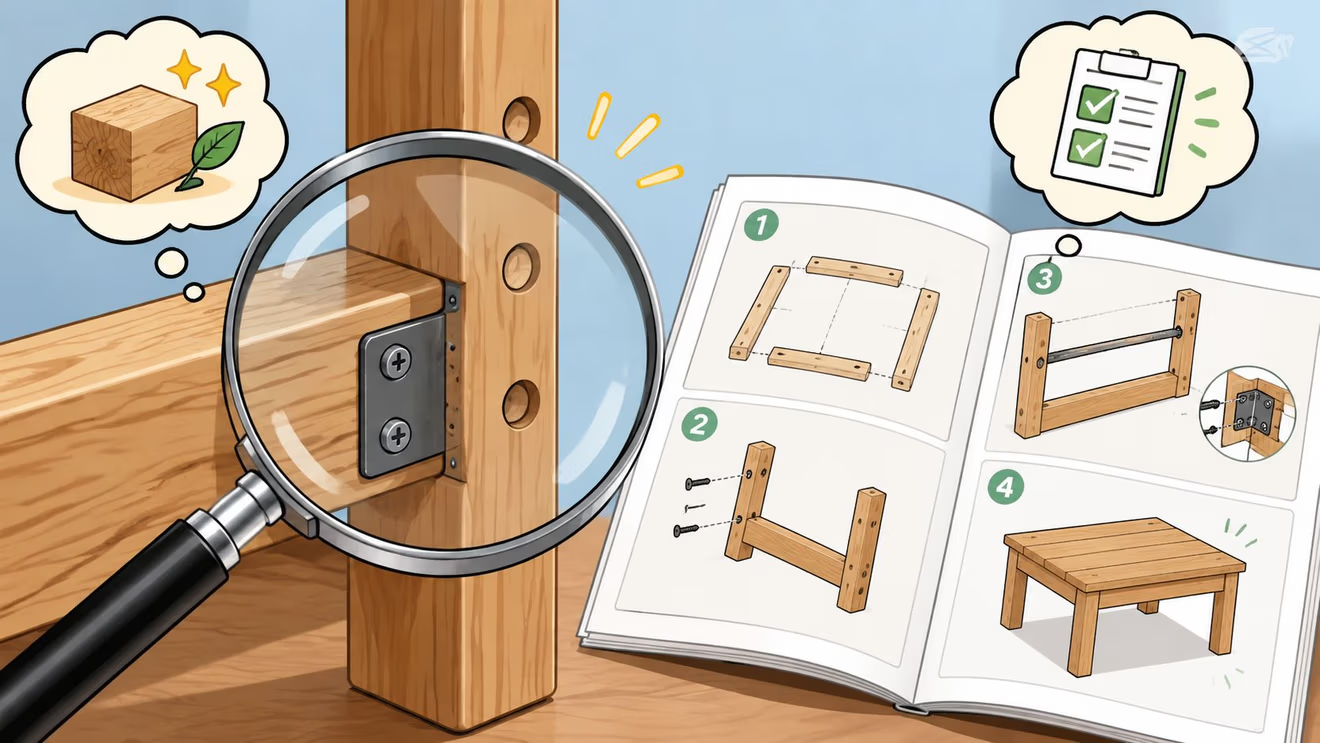
A solid wood furniture kit is a furniture project that arrives with pre-cut wood parts, hardware, and assembly instructions. Instead of milling lumber from scratch, the buyer handles the assembly and often the final finish. That puts kits somewhere between raw woodworking and buying a finished piece off the showroom floor.
What comes in a kit
Most kits include the main components already shaped and sized. That often means panels, legs, rails, shelves, fasteners, and a printed instruction sheet. Some arrive unfinished, which gives the buyer freedom to stain or paint. Others may come sanded and ready for the final steps.
That sounds straightforward, and sometimes it is. But there's a big range within the category. One kit may be a basic side table with simple assembly. Another may involve alignment, glue-up, squaring the frame, sanding, stain testing, and several coats of finish before it's ready for daily use.
A useful clue is how the seller describes the materials. BILTRITE's article on solid wood vs engineered wood helps explain why those words matter so much in real-life furniture shopping.
What solid wood really means
Understanding the true definition can be tricky for many shoppers. A true solid wood furniture kit means all visible and load-bearing parts are built from real wood, not particleboard or veneer, and that matters because the piece can be sanded, repaired, and refinished over time, as explained in this overview of real wood furniture fundamentals.
A simple way to think about it is this:
| Material type | What the buyer gets | What happens later |
|---|---|---|
| Solid wood | Real wood through the full thickness of the part | Can usually be sanded, repaired, and refinished |
| Veneer over composite | Thin real-wood surface over another core | Surface options are more limited if it gets damaged |
| Particleboard-based furniture | Compressed wood particles and resin | Often less forgiving after wear, moisture, or impact |
A shopper doesn't need to become a wood scientist. But it helps to know the difference between a piece that can age with the family and a piece that only looks similar on day one.
Practical rule: If a scratch, dent, or worn finish would matter a lot over time, solid wood gives a household more room to fix the problem instead of replacing the whole piece.
The Fun and Frustration Pros and Cons of Kits
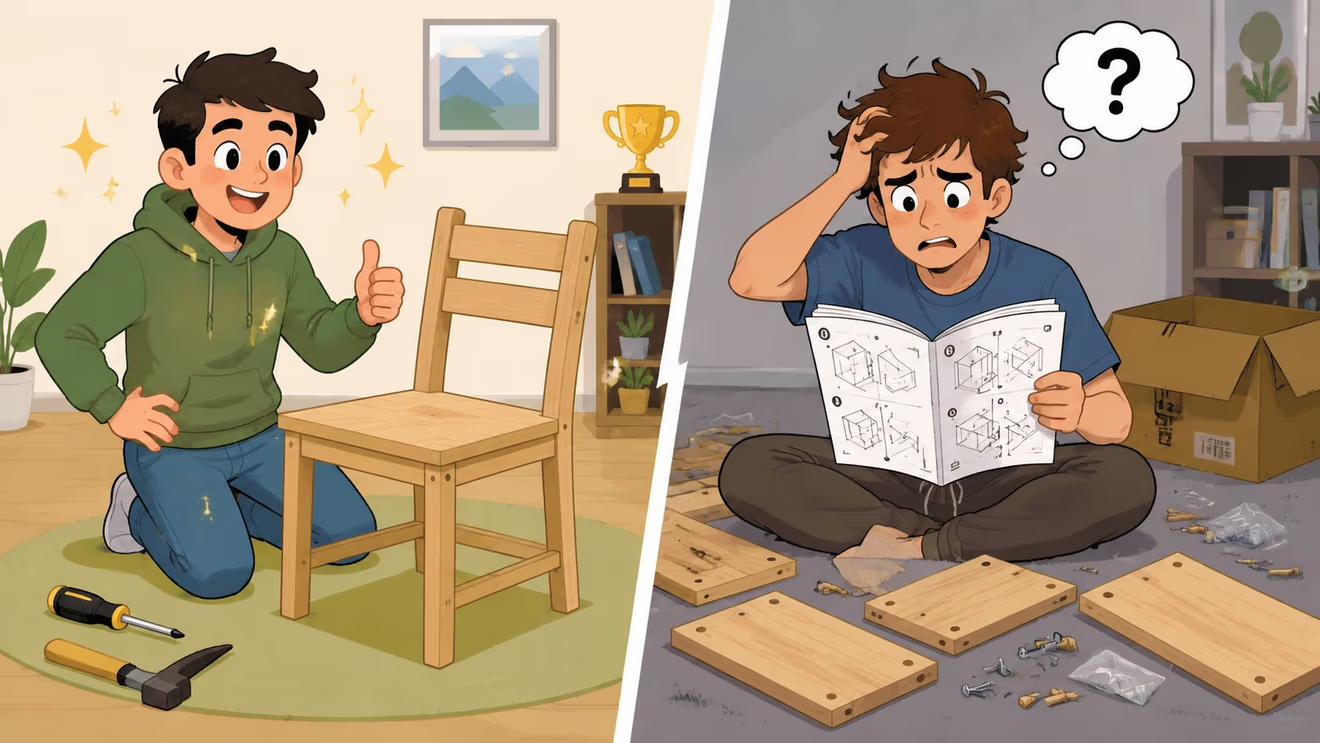
Kits can be satisfying. They can also turn a free Saturday into a long cleanup project with sawdust in the garage and hardware spread across the floor. Both sides are real.
Why people enjoy them
Some families like the ownership that comes with building something themselves. A child helps hand over screws. A spouse picks the stain. The finished piece carries a story, not just a receipt. That can be a lot of fun, especially for a smaller item like a bench, end table, or plant stand.
The other big draw is customization. Unfinished kits let the buyer choose a lighter natural look, a darker stained look, or a painted finish that ties into the rest of the room. That flexibility appeals to people who want something more personal than a standard boxed piece.
There's also a confidence factor. A kit can feel like a manageable first step for someone who's curious about woodworking but doesn't want to buy rough lumber and cut every part from scratch.
Where the headaches show up
The trouble usually starts when buyers underestimate the whole job. Assembly is only one part. There may also be sanding, glue management, drying time, stain testing, finish application, and waiting between coats. Even simple projects can stall if the garage is cold, the weather is damp, or the piece can't be left untouched long enough to cure properly.
Common friction points include:
- Tool gaps. A household may have a screwdriver but not clamps, sanding blocks, pads for finish application, or the patience for repeated light sanding.
- Mess and space. Staining and finishing aren't kitchen-table jobs for most families. They need ventilation, drop cloths, and room to leave parts undisturbed.
- One small mistake spreading. An over-tightened fastener, misread diagram, or uneven stain test can change the final result fast.
A lot of homeowners also discover that “unfinished” doesn't always mean “ready for finish.” Some commercial unfinished table kits are prepared to a 150 grit sanding level, which is a practical surface for stain adhesion because it smooths machining marks while still leaving enough texture for the finish to grip, as shown on unfinished table kit specifications. That's helpful, but it still doesn't remove the need for prep, testing, and care.
For households considering a makeover project rather than a fresh kit, BILTRITE's advice on how to refinish wood furniture gives a realistic sense of the work involved.
A kit works best when the project itself is part of the reward. If the family mostly wants a finished piece in place and ready to use, the project can start feeling less charming pretty quickly.
What to Look for in a Quality Kit
“Solid wood” is a starting point, not a final answer. Two kits can both use real wood and still perform very differently in a home over time.

Start with the wood but don't stop there
The species matters because it affects look, hardness, and how the final piece fits daily life. A softer wood may suit a lower-impact room or a rustic style where small dents don't bother the owner. A harder wood may make more sense for dining, kids' bedrooms, or high-use storage.
But the species alone won't tell the full story. Buyers also need to ask whether the visible parts and stress-bearing parts are all wood, whether the boards are thick enough for the job, and whether the hardware feels like an afterthought or part of a durable design.
A useful shopping lens is this short checklist:
- Wood clarity. The seller should be clear about what is solid wood and what isn't.
- Hardware quality. Repeated assembly and disassembly puts stress on fasteners.
- Surface prep. Buyers should know whether additional sanding is likely before stain or topcoat.
Construction details that matter later
The distinction of quality becomes clear. Real wood expands and contracts across the grain as humidity changes. A good kit accounts for that movement. A poor design fights it, and the wood eventually wins.
True durability depends on design details that allow for wood movement. Because wood expands and contracts with humidity, quality furniture uses techniques like slotted holes or specific joinery that prevent the piece from damaging itself over time, according to this explanation of wood movement and long-term furniture stability.
That sounds technical, but the basic idea is simple. If a tabletop or side panel is locked down too rigidly, seasonal movement can lead to cracks, loosened joints, or warping. Milwaukee-area homes feel those seasonal swings. Winter heating dries the air. Summer can bring much more moisture. Furniture notices.
Joinery deserves attention too. Better-built solid wood furniture is commonly associated with joinery such as dovetail and mortise-and-tenon, both of which are widely treated as signs of higher-quality construction. Buyers who want a clearer explanation of that second term can read BILTRITE's guide to what a mortise-and-tenon joint is.
If a kit description talks a lot about “solid wood” but says very little about joinery, movement allowance, or hardware, that's a sign to slow down and ask more questions.
The Big Question Kits vs Buying from BILTRITE
Saturday morning often starts with good intentions. A family clears space in the garage, opens a furniture kit, and pictures a finished dresser in the guest room by Sunday night. Then the little questions show up. Which parts need sanding again? Is the stain going on evenly? Did that panel shift a hair out of square? By the time dinner rolls around, the project can still be rewarding, but it no longer feels as simple as it did in the box photo.
For most families, the decision isn't just “kit or no kit.” It usually comes down to three practical paths. Build from scratch as a serious woodworking project. Buy a kit and finish the job at home. Or choose a finished solid wood piece that is already built, finished, and ready for daily life.
Three paths families usually consider
Building from scratch offers the most freedom. It also asks the most from the buyer. Tools, space, skill, and patience all matter, especially if the piece needs to look good in a bedroom or dining room, not just function in a workshop.
A kit narrows the gap. The parts are already cut, so the project feels more manageable. That can be a great fit for a handy homeowner who enjoys the process. Still, a kit is not the same as a finished piece. The buyer is taking responsibility for assembly quality, finish quality, and the small decisions that affect how the furniture looks and holds up a few years from now.
The third path is to buy a completed piece from a store that specializes in solid wood furniture. BILTRITE Furniture-Leather-Mattresses fits that role for many Milwaukee-area families. The showroom includes Amish-made, USA-made, and custom solid wood furniture options that let shoppers choose wood species, finish, and hardware without turning the dining table into a weekend workshop.
The hidden costs behind a cheaper-looking option
A kit can look like the lower-cost choice at first. Then the extras start stacking up. Finish materials, applicators, sandpaper, touch-up supplies, and cleanup all add to the total. Time counts too, especially for households already balancing school events, work, and the usual pace of family life.
Mistakes have a cost as well. A slightly uneven stain coat can bother you every time sunlight hits it. A drawer that sits just a little out of line may still open, but it never feels quite right. Furniture is a lot like baking with a family recipe. The ingredients matter, but the result also depends on timing, technique, and how carefully each step is handled.
That does not make kits a bad choice. It means the fair comparison is not just price tag against price tag. It is project cost, time, skill, and long-term satisfaction against the cost of buying something already finished well.
| Option | Upfront involvement | Finish work | Long-term confidence |
|---|---|---|---|
| Build from scratch | Highest | Fully self-managed | Depends heavily on skill and design |
| Buy a kit | Moderate to high | Often required | Depends on materials, hardware, and assembly |
| Buy finished solid wood | Lowest at home | Already done | Depends on maker and construction quality |
Why finished solid wood changes the experience
A finished, well-made piece removes several points where things commonly go wrong. The color is already consistent. The protective topcoat has already been applied under controlled conditions. The joints have already been fitted, tested, and put together as furniture, not as a project waiting for a free weekend.
For busy families, that difference is easy to appreciate. Parents with young kids, homeowners without a dedicated workspace, and anyone who wants a room to feel complete sooner often prefer furniture they can use right away.
There is also the confidence that comes from seeing the piece in person. You can run a hand across the top, check drawer action, look at the grain under real lighting, and compare wood tones to your floors or trim. That part matters more than many shoppers expect.
Our family has been helping Milwaukee-area homes furnish for the long haul since 1928. We have seen plenty of customers enjoy building projects of their own, and we respect that. We have also seen how often families want solid wood furniture for its lasting value, but do not want to gamble on finish work, assembly headaches, or whether a kit will age gracefully in a home that gets used every day.
Your Home Your Choice Our Family Is Here to Help
A furniture kit often starts with good intentions. The boxes arrive, the wood looks promising, and everyone can picture the finished piece in the room. Then real life steps in. The dining table is still covered with parts, the finish needs another coat, and the project that sounded fun now has to compete with soccer practice, homework, and a Saturday you hoped to keep free.
For some households, that project is still worth it. Building can be satisfying, especially for someone who enjoys the process as much as the result. There is pride in saying, “I put that together myself.”
But solid wood is not cardboard, plastic, or a one-size-fits-all material. It behaves more like a living material than people expect. It expands a little, shrinks a little, and responds to the conditions inside your home. A kit has to be designed well, assembled carefully, and finished properly if you want it to look good not just this month, but years from now.
That long-term part is where many families pause.
A well-made finished piece removes several hidden variables at once. The joinery has already been fit. The finish has already been applied with consistency. The drawers, doors, and tops have already been built to work as furniture in an active home, not as a project waiting on your next free weekend. If you have kids, pets, guests, or just a busy household, that reliability matters.
Our family has been helping Milwaukee-area families make those judgment calls since 1928. At BILTRITE, we have met plenty of customers who love woodworking and enjoy doing part of the job themselves. We respect that. We have also seen how often people want the warmth of real wood without taking on the risk that comes with finishing mistakes, assembly issues, or a piece that does not age the way they hoped.
That is one reason we believe seeing furniture in person still matters. You can open the drawer. You can feel whether the top is smooth. You can look at the grain under normal room lighting and ask the kind of practical questions that do not show up on a product page. For a family making a purchase meant to last, that kind of clarity is hard to beat.
BILTRITE Furniture-Leather-Mattresses in Greenfield gives Milwaukee shoppers a place to do exactly that. The store is closed on Sundays and Mondays so our own employees can spend time with family, and that value has shaped how we do business for generations. No pressure. Just honest help, solid wood options, and a chance to decide what fits your home, your schedule, and your comfort level.