


Brass Dining Chairs in Milwaukee: Find Your Style


A lot of dining rooms reach the same point. The table still works. The walls still look fine. But the room feels a little flat, and the chairs don't bring much personality to family dinners, holiday meals, or coffee with neighbors.
That's often where brass dining chairs enter the conversation. They add warmth without feeling loud, and they can make an everyday dining space feel more collected. The global dining chairs market was valued at approximately USD 6.2 billion in 2023 and is projected to reach USD 22.72 billion by 2034, growing at a 5.8% CAGR, according to Dataintelo's dining chairs market report. That growth says something simple. People are paying closer attention to dining seating, and metal details like brass have become part of that shift.
There's also a lot of confusion around brass. Some chairs use brass as a finish. Some use brass-tone paint. Some pair brass accents with wood in a way that lasts beautifully. Others only look good from a distance. A helpful guide should clear that up in plain English.
Table of Contents
- That Warm Glow in Your Dining Room
- What Are Brass Dining Chairs Really Made Of
- Styling Your Brass Dining Chairs for Any Home
- Finding the Right Size and Fit for Your Family
- Caring for Your Chairs and The BILTRITE Advantage
- Why Buying Local in Milwaukee Matters
That Warm Glow in Your Dining Room
A dining room refresh often starts with one small thought. The table can stay, but the chairs need a different feel. Maybe the room needs more warmth. Maybe the dark wood feels heavy. Maybe the goal is to make weeknight dinners feel a little less routine.
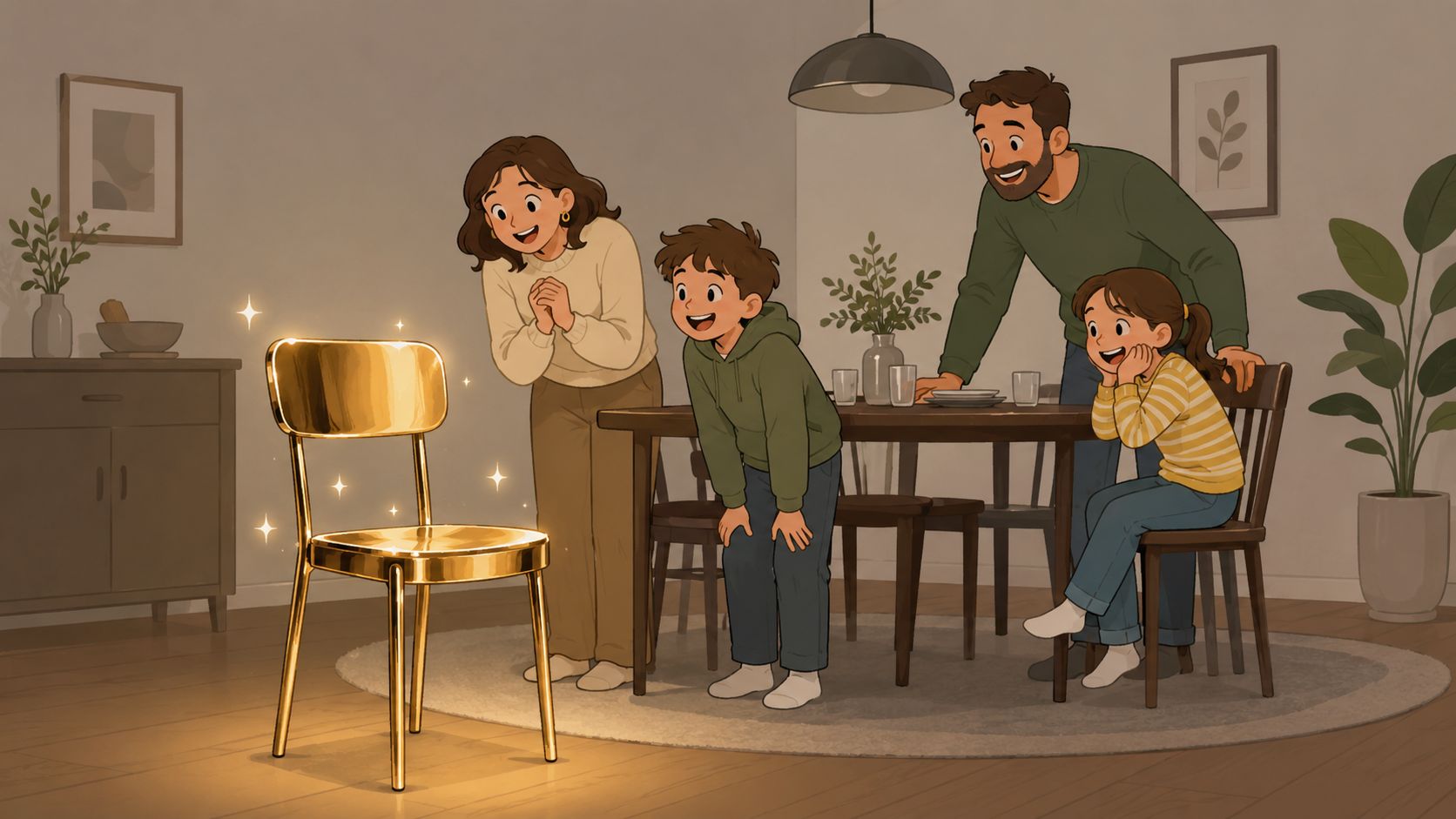
That's where brass catches the eye. It doesn't shout the way some shiny finishes do. It gives off a softer glow, especially when dining rooms already have warm wood floors, cream walls, or evening lamp light. For homeowners who like layered spaces, brass often bridges the gap between classic and current.
A Milwaukee furniture family sees that reaction all the time. BILTRITE Furniture was founded in 1928 by Irwin Kerns and his wife Frieda Kerns as an upholstery shop in Milwaukee that sold custom-made sofas for $1,000, making it a 4th-generation family-owned business serving Metro Milwaukee for nearly a century, as noted by Sleep Savvy Magazine's feature on BILTRITE.
Why brass feels inviting
Brass works because it behaves almost like a neutral, but with more character.
- With wood tables: it softens heavier dining sets and adds some lift.
- With upholstered seats: it keeps a chair from looking bulky.
- With cozy lighting: it reflects a gentle glow instead of a sharp glare.
A helpful rule: If a dining room feels solid but a little predictable, brass can add contrast without forcing a full redesign.
Brass also plays nicely with other warm accents around the room. A chair frame doesn't have to match every detail exactly. It can echo a lamp, mirror, or accessory and make the whole room feel more connected. That's part of why homeowners who like copper table lamps for warm metallic accents often respond well to brass seating too.
The big question isn't whether brass looks good. It usually does. The central question is what that chair is made of, and whether its good looks will still be there after busy meals, kids leaning back, and years of everyday use.
What Are Brass Dining Chairs Really Made Of
The phrase brass dining chairs sounds simple, but it often leads shoppers in the wrong direction. Many people hear “brass” and picture a chair made entirely from solid brass. That usually isn't what they're looking at in a showroom.
In furniture construction, the brass part is commonly the outer finish, not the load-bearing structure. As explained by Cardinal Patio Furniture's materials guide, in brass dining chairs, the brass component is strictly a finish or surface treatment over stronger substrates like solid hardwood (oak, teak) or steel frames to ensure durability under repeated siting loads.
Why the brass look can be misleading
That detail matters because one chair may look nearly identical to another from across the room, yet wear very differently at home. A strong frame can support years of daily use. A weak frame with a thin decorative finish may start to show chips, wobble, or loose joints much sooner.
There's another source of confusion. Brass can describe a real plated finish, a brass-toned coating, or just the color family. Shoppers often use one word for all three. Retailers don't always slow down and explain the difference.
A better way to shop is to ask two separate questions:
- What is the frame made of?
- How is the brass look applied?
If the answers are clear, the decision gets easier fast.
Brass Chair Construction Types Compared
| Construction Type | What It Is | Best For | BILTRITE's Take |
|---|---|---|---|
| Solid hardwood with brass accents | A wood chair frame, often with brass details, caps, hardware, or trim | Homes that want warmth, longevity, and a more timeless look | Usually the strongest long-term value when the joinery is solid and the scale fits the table |
| Metal frame with brass-plated finish | A steel or similar frame covered with a brass-look plated layer | Sleek dining spaces, mixed-material rooms, and homes that want a lighter visual profile | A smart option when the frame is sturdy and the finish quality is well done |
| Metal frame with brass-tone paint or coating | A chair built for appearance first, using a color treatment rather than a richer finish | Lower-commitment style updates or rooms with lighter use | Worth inspecting closely because the visual can be nice, but wear points matter |
| Upholstered chair with brass-finished base | A fabric or leather seat paired with exposed brass-finish legs or trim | Longer meals, softer dining rooms, and homes that want comfort first | Often a strong middle ground if the seat support and frame underneath are well built |
A quick close-up can tell a lot. If a finish already looks thin around corners, joints, or foot rails in the store, that wear usually won't improve at home. A chair that feels steady when someone sits down, shifts weight, and rises from the table is sending a much better signal.
The smartest brass chair purchase usually starts with the frame, not the color.
Shoppers who want a deeper look at mixed-metal furniture details often find it useful to read about how metal accents change the look and feel of furniture. It helps translate showroom language into practical buying choices.
Styling Your Brass Dining Chairs for Any Home
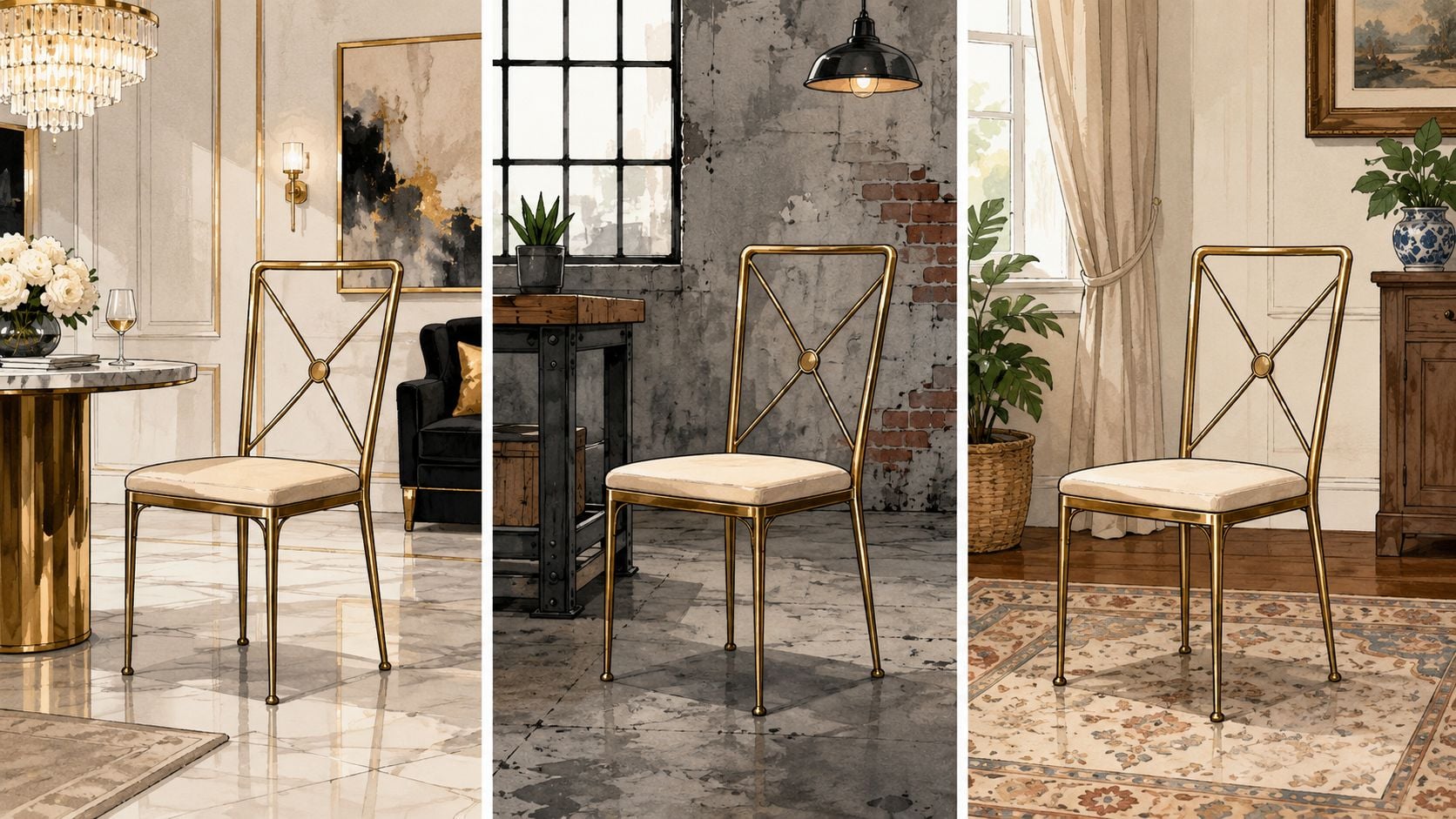
Brass dining chairs can move in a lot of directions. That's one reason they stay relevant. The same finish can lean formal next to a dark table, casual with textured fabric, or more architectural beside clean-lined wood.
That flexibility isn't new. Brassware, including brass components in dining chairs, has evolved significantly, with distinct styles emerging from the 12th century in China to industrial transformations in the 19th and 20th centuries that reshaped chair design and manufacturing, according to Fine Art Restoration's chair design history article. Brass has spent a long time moving between decorative and practical roles, which helps explain why it still fits so many rooms.
A finish with a long design history
Brass doesn't belong to just one style category. It can feel:
- Traditional with walnut, oak, or rich upholstery
- Modern with slim frames and quieter fabrics
- Industrial when paired with darker woods and simpler silhouettes
- Soft and transitional with curved backs and light neutral seating
That range helps Milwaukee homeowners in very different homes. A bungalow dining room may want wood and brass together. A condo may benefit from slimmer brass-finish seating that keeps the room feeling open. A newer suburban home may need chairs that make a standard dining set look more custom.
Three easy ways to pair them at home
One easy approach is to start with the table.
If the table is heavy and rustic, brass can lighten the mood. Upholstered brass dining chairs or wood chairs with brass details can keep the room from feeling too dense.
If the table is simple and straight-lined, brass can become the visual spark. A slim brass-finish chair adds shape and contrast without asking for lots of extra decor.
If the room already has warm tones, brass can tie everything together. Cream textiles, medium woods, tan leather, and soft black accents often sit comfortably with it.
Brass tends to look best when it repeats another warm note in the room instead of standing alone.
Shoppers who want more room-by-room pairing ideas can browse how to style a dining room with balanced materials and finishes. The key is not to force a match. Brass usually looks better when it feels collected rather than coordinated down to the last detail.
Finding the Right Size and Fit for Your Family
A dining chair can be beautiful and still be wrong for the room. That's where many shoppers get tripped up. They fall for the finish first, then discover the seat sits too high, the back is too stiff, or the chair takes up more space than expected once four or six of them are around a table.

Comfort deserves equal weight with style. There is minimal guidance on ergonomic seat heights of 17 to 19 inches and backrest angles of 100 to 110° specifically for brass dining chairs in small or senior-living spaces, despite 41% of Omaha/Milwaukee households purchasing dining chairs for compact apartments or senior communities, according to Edward Martin's dining chair buying guide. That gap shows up in real homes every day.
Comfort matters more than the showroom look
Some brass dining chairs have tall, rigid frames that look sharp in photos. The trouble starts during an actual meal. A straight back may feel fine for ten minutes, then tiring by dessert. A narrow seat might work for a formal room that's rarely used, but not for a home where people linger at the table.
This matters even more in Milwaukee homes with tighter dining areas, condos, smaller kitchens, or multigenerational households. A chair has to move easily, clear the table apron, and give people enough support getting in and out.
A good fit usually includes these basics:
- Seat height: close to that 17 to 19 inch range for many dining setups
- Back angle: enough give to support longer sitting
- Seat width and depth: comfortable without crowding neighboring chairs
- Overall footprint: scaled to the room, not just the table
A simple fit checklist
A useful in-store test is more revealing than any tag description.
- Sit all the way back: the lower back should feel supported, not pushed forward.
- Place both feet flat: if the knees lift too high or feet dangle, the height may be off.
- Slide the chair inward: arms, legs, and frame details shouldn't fight the table base.
- Stay seated for a few minutes: quick sits can hide pressure points.
A chair that looks sleek from the doorway may still be the wrong chair for a family that uses the dining room every day.
Homes with seniors, kids, or frequent guests often benefit from a slightly softer seat, a more forgiving back, and a frame that doesn't require awkward maneuvering. Small-scale furniture can be a real advantage here. So can sturdier, heavier-duty construction when daily use is high.
The right brass dining chair shouldn't just match the room. It should make people want to stay at the table a little longer.
Caring for Your Chairs and The BILTRITE Advantage
Once the chairs are home, the next concern is usually maintenance. The good news is that most brass-finish dining chairs don't ask for complicated care. They need consistency more than special treatment.
A soft cloth, light dusting, and prompt cleanup after spills go a long way. Dining chairs fail early more often from rough use at contact points than from ordinary age. Hands grab the top rail. Shoes catch the legs. Rings, zippers, and dishes bump the finish around edges.
What helps a brass finish last
The simplest care habits are usually the most effective.
- Wipe gently: use a soft cloth instead of abrasive scrubbers.
- Clean spills quickly: especially around joints, trim, and upholstered seams.
- Lift instead of drag: this protects both the finish and the joints.
- Check the wear points: front legs, foot rails, and top edges show stress first.
A well-made chair gives the finish a better chance because the frame underneath stays steady. Less flex means less stress on plated or decorative surfaces. That's why construction and care belong in the same conversation.
What a careful furniture team looks for
A quality-focused store can reduce a lot of guesswork before a chair ever reaches a dining room. That includes checking whether the frame feels solid, whether the finish looks consistent where hands and feet will touch it most, and whether the comfort matches the chair's intended use.
That kind of guidance matters because shoppers can't always tell from appearance alone what will age gracefully. A balanced approach helps. A brass chair should be attractive, but it should also suit the pace of the household, whether that means quiet dinners for two or a busy table with kids and guests moving in and out all week.
For households mixing upholstery, leather, and metal tones in one dining area, care guidance for leather furniture and related surfaces can also help keep the whole setup looking consistent over time.
Why Buying Local in Milwaukee Matters
Furniture is one of those purchases that still benefits from being local. Dining chairs are a good example. Finish, comfort, scale, and stability are hard to judge from a screen. A brass tone can read warm in one room and yellow in another. A seat can look cushioned online and feel firm in person.
Local showrooms give shoppers something online browsing can't. They let people test the chair with their own posture, their own preferences, and their own standards for comfort. That matters even more for styles like brass dining chairs, where finish quality and frame feel can make or break the purchase.
Why in person still matters
Buying local also means buying from people who know the area and the homes in it. Milwaukee-area shoppers aren't furnishing identical spaces. Some need small-scale seating for condos or older homes with tighter layouts. Some need stronger options for everyday family use. Some want American-made or Amish-made craftsmanship that feels grounded and lasting.
There's also a values piece to it. The BILTRITE showroom at 5430 W. Layton Ave. in Greenfield, WI is closed on Sundays to be with family and closed on Mondays to allow the team to recharge, while still offering in-home delivery on Mondays, according to BILTRITE's history page. That says a lot about the kind of business Milwaukee shoppers often want to support.
A Milwaukee habit worth keeping
Local furniture stores do more than stock products. They help shoppers slow down and choose well. That's especially useful with a category like brass dining chairs, where good design and good construction don't always arrive in the same package.
A long-standing local business also carries history with it. BILTRITE has been part of the Metro Milwaukee furniture story for generations, and this local legacy in Milwaukee helps explain why that still matters to so many households. People remember being treated fairly. They remember when a store took time to answer questions instead of rushing the sale.
For brass dining chairs, that kind of experience can save a shopper from bringing home something that looked exciting for five minutes but won't suit the room, the table, or the family.
For anyone ready to compare brass finishes, solid wood craftsmanship, and comfortable dining seating in person, BILTRITE Furniture-Leather-Mattresses is worth a visit in Greenfield. The showroom gives Milwaukee-area shoppers a chance to see materials up close, test comfort for themselves, and talk with a team that values family, quality, and honest guidance.


