Foam Density Ratings: Your Milwaukee 2026 Guide


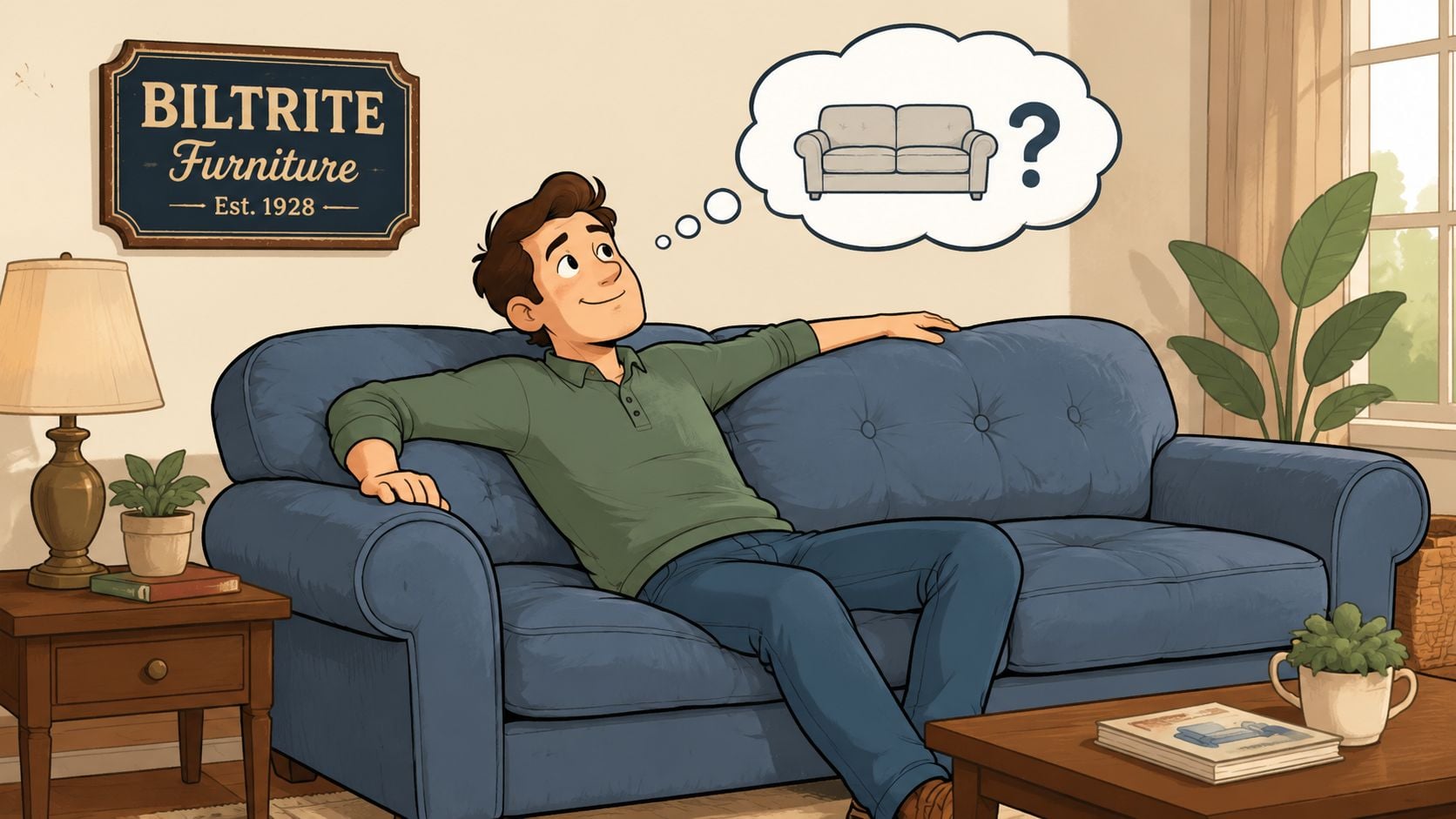
A lot of furniture shopping starts the same way. A Milwaukee family sits on a sofa in a showroom, gives the cushion a little bounce, and thinks, “This feels nice. But what's it going to feel like after movie nights, sick days, holiday guests, and everyday life?”
That question gets to the heart of foam density ratings. Most shoppers hear the term, but many never get a plain-English explanation of what it means, what it doesn't mean, and why it matters so much to comfort, durability, and value. That confusion gets expensive when a cushion starts sagging long before the rest of the furniture is ready to quit.
As a fourth-generation, family-owned business serving Metro Milwaukee since 1928, BILTRITE has spent decades helping neighbors look past surface-level comfort and focus on how furniture will hold up in real homes. The good news is that foam density isn't hard to understand once someone translates the jargon into everyday language.
Table of Contents
- What Are Foam Density Ratings Anyway
- The Biggest Myth in Furniture Foam Density Is Not Firmness
- A Guide to Foam Density in Your Furniture
- Choosing the Right Foam Density for a Great Night's Sleep
- Why Better Foam is a Smarter Family Investment
- Come Feel the Difference at BILTRITE
What Are Foam Density Ratings Anyway
A cushion can feel cozy on day one and still wear out too fast. That's why foam density matters. It tells shoppers something about the material inside the seat, back, or mattress, not just the first impression they get when they sit down.
The brownie pan way to understand density
The easiest analogy is baking. A light, airy cake and a rich brownie might be the same size, but one packs more substance into the same pan. Foam works the same way.
Foam density is measured in pounds per cubic foot, or pcf. A block that measures 12" x 12" x 12" and weighs 2.8 pounds has a density of 2.8 lb/ft³, according to this foam density guide from FoamByMail. That same guide notes that 0.8 to 1.5 pcf is generally low density, 1.6 to 2.4 pcf is medium density, and 2.5 to 3.5 pcf is high density.
That sounds technical, but the practical takeaway is simple. Higher density means more material packed into the same space. More material is generally tied to better durability and better resistance to wear over time.
Practical rule: Density answers “How much material is in this foam?” It does not answer every comfort question, but it does tell shoppers a lot about long-term staying power.
Why families should care
This matters most in places where people sit, sleep, and land every single day. Sofa seats, recliners, sectionals, mattresses, and dining chairs all get repeated pressure. If the foam doesn't have enough substance for the job, the furniture can start looking tired long before the frame or fabric does.
That's one reason many shoppers start asking better questions once they learn the basics. Instead of only asking whether a sofa feels soft or firm, they begin asking what's inside the cushion and how it's expected to hold up.
For mattress shoppers, the same idea shows up in comfort layers and support cores. Anyone comparing specialty foams can get a little more background from BILTRITE's article on what visco foam means in a mattress, especially when memory-style foams enter the conversation.
What density ratings do and don't tell shoppers
Density is a quality clue. It helps people compare one foam to another in a more objective way than marketing words like “luxury” or “premium.”
It doesn't tell the whole story, though. A foam's feel, bounce, and pressure response depend on more than one measurement. Density is one piece of the puzzle. It's just a very important piece, especially for families who want furniture that still feels supportive after everyday use.
The Biggest Myth in Furniture Foam Density Is Not Firmness
One of the biggest showroom mix-ups happens when shoppers assume dense foam must feel hard. That sounds reasonable at first, but it's not how foam works.

Density and firmness are different jobs
Density describes how much material is packed into the foam. Firmness describes how the foam feels when someone presses into it. Those are separate ideas.
A helpful way to think about it is this. Two sponges can be the same size and even close in weight, yet one can feel springy and one can feel stiff. Foam behaves the same way. The internal design changes the feel.
The common misunderstanding is so widespread because shoppers often use one word to describe several different experiences. They may say a sofa feels “strong,” “solid,” “supportive,” or “hard,” even though those aren't all the same thing.
The numbers that prove the point
The confusion becomes easier to clear up with a direct example. Low-density foam at 1.5 pcf can be engineered to feel very firm, while high-density foam at 3.0 pcf can remain plush. That's why the myth that density equals firmness leads so many people in the wrong direction.
In foam language, firmness is often discussed with ILD, while density is discussed with pcf. Shoppers don't need to memorize the letters. They just need to remember that one measurement speaks to feel and the other speaks to material content.
A sofa can feel soft and still be built with more durable foam. A sofa can also feel firm and still use lower-density foam that won't hold up as well.
That distinction matters because a family might sit on a cushion for thirty seconds and think they've judged its quality, when they've really only judged its feel.
Why this myth causes expensive mistakes
When someone buys only by feel, two problems tend to show up.
- A firm seat gets mistaken for a durable seat. That can lead to disappointment if the cushion starts losing shape sooner than expected.
- A plush seat gets mistaken for a weak seat. That can cause shoppers to pass on better-built furniture just because the comfort is softer.
- A mattress gets labeled too soft or too hard without asking about support layers. That often leads to confusion during mattress shopping.
For readers who want a deeper look at the “feel” side of the equation, BILTRITE's article on what mattress firmness really means before buying is a helpful companion.
The smart move is to treat feel and durability as two separate checkpoints. First, ask whether the cushion feels good for the body. Then ask whether the foam inside is built to keep performing in a busy home.
A Guide to Foam Density in Your Furniture
Most homeowners don't need a chemistry lesson. They need a practical way to look at a sofa, recliner, chair, or sectional and decide whether the foam makes sense for the job.
In household furniture, most upholstery foams fall between 1.5 and 2.5 lb/ft³, and 1.8 pcf is a common residential standard, while 2.0 pcf and above is often treated as an upgrade for better sag resistance and longevity, especially in high-use seat cushions, according to the Polyurethane Foam Association's foam performance guidance.
What the numbers usually mean in a home
A guest room accent chair and a family room sofa don't live the same life. One gets occasional use. The other gets daily traffic from adults, kids, pets, naps, snacks, and game-day visitors.
That's why density should match the job.
- Light-use pieces: Lower or mid-range densities may be fine when the furniture won't see constant pressure.
- Daily-use seating: Many families start looking more closely once seat foam reaches the common residential benchmark.
- Busy households: Upgraded seat cushions often make more sense where people use the same spots every day.
- Heavier-duty needs: Seniors, larger individuals, and active family rooms usually benefit from more substantial foam choices.
A shopper comparing upholstery details can also review BILTRITE's guide to upholstery materials and what to ask about them, since fabric, support systems, and cushion construction all work together.
Recommended Foam Density for Furniture
| Furniture Piece | Recommended Density (PCF) | BILTRITE's Tip |
|---|---|---|
| Occasional chair | Around the lower end of common upholstery ranges may suit light use | Ask how often the chair will really be used, not how it looks in the room |
| Everyday sofa seat | 1.8 pcf is a common residential benchmark | Good starting point for many homes, but not always the final answer |
| High-use family room seating | 2.0 pcf and above | Worth a closer look when the same cushions get used every day |
| Dining chair pad | Mid-range densities often make sense | Dining chairs need comfort, but not always the same build as a sofa seat |
| Heavy-duty seat cushion | Look toward the more durable end of the range | Larger users and long sitting sessions call for more support and staying power |
What shoppers should ask in the store
The simplest questions are often the most useful.
Ask what the seat cushion density is, not just whether it's soft or firm. Ask whether the density listed applies to the main seat foam or only to a top layer. Ask how the furniture is expected to perform in a high-use room.
Those questions often separate a quick comfort test from a smart long-term purchase. They also help families compare value more clearly, especially when they're choosing between furniture that looks similar on the outside.
Choosing the Right Foam Density for a Great Night's Sleep
Mattresses bring a different set of questions because the body stays in one place much longer than it does on a sofa. A living room seat has to recover after sitting. A mattress has to support the body through hours of pressure, movement, and repeated nightly use.
That's why mattress foam deserves its own conversation.
Why mattress foam has a different job
A practical benchmark for flexible polyurethane foam is this: 0.8 to 1.5 PCF is often low density, 1.6 to 2.4 PCF is medium density, and 2.5 PCF and above is high density. Those ranges are commonly mapped to uses such as mattress cores or seat cushions for high density, according to this foam density chart from UwinFoam.
For mattress shoppers, that means the more demanding parts of a mattress often call for more substantial materials. The support core has a big job. It has to help the mattress keep its shape and hold the sleeper in healthy alignment over time.
The mattress that feels nicest for five minutes isn't always the mattress that supports a body well through months and years of use.
That doesn't mean every sleeper needs the same density. It means the mattress should be matched to how it will be used.
How shoppers can think through mattress density
Body type, sleeping position, and comfort preference all affect the decision.
A side sleeper may want more pressure relief at the surface. A back sleeper often focuses on steady support through the center of the body. A stomach sleeper usually wants to avoid sinking too far. A heavier sleeper may put more demand on the support layers than a lighter sleeper.
Here's a simple way to think through it:
- Start with sleeping position. Pressure relief and alignment should work together.
- Consider body weight. More load on the mattress can make durable support layers more important.
- Ask where the foam is used. A comfort layer and a support core don't play the same role.
- Test for recovery. The mattress should feel supportive again when the body changes position.
- Don't ignore construction. Two-sided and flip-able designs can add practical long-term value.
BILTRITE's article on choosing the right mattress for a sleeping style gives shoppers another way to organize those decisions before they step onto the showroom floor.
For Milwaukee families, this is one place where in-store testing still matters a lot. A mattress has to fit the sleeper, not just the label. With over 60 models in the mattress department, shoppers can compare different feels, support systems, and foam builds side by side instead of guessing from a product description.
Why Better Foam is a Smarter Family Investment
Furniture budgets are real. Every household has to weigh what it wants today against what it may need to replace later. That's where foam density ratings stop being a technical detail and start becoming a money question.

Price is only part of the story
The upfront ticket price tells only one part of the furniture story. The more useful question is, “How long will this cushion keep doing its job in this home?”
That question gets sharper in a heavy-use household. A 1.8 pcf seat cushion might sag in 3 years for a 250-lb user, while a 2.5 pcf foam could last 10 years for that same user, making the higher-density option the stronger long-term investment. That kind of gap is exactly why cost-per-year thinking matters.
A family doesn't save money when it buys the lower-priced piece and then has to deal with early sagging, discomfort, or replacement sooner than expected. Better foam often asks for more up front, but it can ask for less trouble later.
A simple way to think about cost per year
Shoppers don't need a spreadsheet to grasp the idea. They can ask a few grounded questions instead.
- How often will this furniture be used? A formal living room and a daily family room are not the same.
- Who will use it most? Kids, teens, seniors, taller adults, and heavier users all place different demands on cushions.
- What part wears first? On many pieces, the foam gives out before the frame does.
- Would replacing it early feel like a bargain? That answer usually reveals its value.
A cheaper cushion isn't automatically a cheaper choice. If it loses support much sooner, the family may pay for that difference in frustration and replacement.
This is one reason local furniture guidance still matters. A store can talk through whether a shopper needs small-scale furniture for a condo, heavy-duty seating for daily use, or a two-sided mattress for longer wear. In practical terms, BILTRITE Furniture-Leather-Mattresses offers in-store access to USA-made, Amish-made, small-scale, heavy-duty, and mattress options where shoppers can compare cushion construction directly.
Where better foam pays off most
The return on better foam usually shows up fastest in the most-used spots of the house.
Family room sofas often take the biggest beating. Primary bedroom mattresses do too. Recliners used for nightly TV time and lift chairs used every day can also expose weak foam quickly.
For many Milwaukee households, “affordable” doesn't mean buying the lowest price. It means buying something that keeps serving the family well without creating another shopping trip too soon. That's the smarter way to look at foam.
Come Feel the Difference at BILTRITE
After learning the basics, most shoppers notice something funny. Furniture shopping starts feeling less mysterious. A cushion isn't just soft or hard anymore. It becomes a combination of feel, support, and expected durability.
That's where an in-person visit helps most. Specs matter, but bodies notice details that paper can't fully explain.
What matters most in the showroom
A shopper can sit in a chair and ask better questions right away.
They can ask what foam is used in the seat. They can ask whether the cushion is built for daily use or occasional use. They can compare a softer feel with a sturdier build instead of assuming those two things can't exist together.
For mattress shoppers, the same principle applies. BILTRITE's guide on how to test a mattress in the showroom can help people slow down and judge support more carefully.
Why local guidance still matters
BILTRITE has served Metro Milwaukee since 1928 as a fourth-generation family business, and that history shapes how the showroom works. The store doesn't sell online, which keeps the focus on face-to-face help, real testing, and practical conversations. The team brings more than 400 years of combined experience, and the store is proudly closed on Sundays and Mondays so staff can spend time with their families.
That approach fits the topic of foam density better than a quick online click ever could. Foam can be measured on paper, but furniture still has to work in an actual home with actual people.
Milwaukee families shopping for a sofa, recliner, lift chair, dining set, or mattress don't need pressure. They need honest guidance, a chance to sit, and someone who can translate the specs into everyday value. That's especially true when they're comparing USA-made, Amish-made, solid-wood, heavy-duty, or small-scale options that are meant to stay in the home for years.
Ready to make sense of foam, comfort, and long-term value in person? Visit BILTRITE Furniture-Leather-Mattresses in Greenfield, say hello, and try the furniture for real. The showroom gives Metro Milwaukee families a chance to test cushions, compare mattress feels, and talk with an experienced team that's there to help, not hover.