Stylish Small Space Modern Furniture Solutions


A lot of Milwaukee-area homes look roomy when they're empty. Then the sofa arrives, the dining set goes in, a desk gets squeezed into the corner, and suddenly the walkway feels tight and the whole room looks busy. That's the moment when small space modern furniture stops being a trend and starts being a practical need.
Apartments in Bay View, condos in Franklin, bungalows in West Allis, smaller ranch homes in Greenfield, they all ask for the same thing. Furniture has to work harder, fit better, and still look like it belongs there. That challenge isn't new to BILTRITE. BILTRITE Furniture was founded in 1928 by Irwin Kerns and his wife Frieda Kerns as an upholstery shop in Milwaukee, and the business has grown into a 4th-generation family-owned company serving the Metro Milwaukee community for nearly 100 years, as shared on BILTRITE's company history page.
That long view matters. Small rooms don't need tiny thinking. They need smart choices, careful measuring, and furniture that earns its spot every single day.
Table of Contents
- Welcome to the Family
- Measure Twice Buy Once
- The Secret of Scale and Proportion
- Choose Your Multitasking Furniture Heroes
- Add Your Personality with Finishes and Style
- Why Shopping Local Makes the Difference
Welcome to the Family
A common Milwaukee story goes like this. Someone moves into a sharp little apartment with good light and hardwood floors. The place feels full of promise. Then the furniture shopping starts, and every choice feels like a gamble. Will the sofa swallow the room? Will the dining table block traffic? Will the bedroom still feel calm once the dresser goes in?
That's where a family furniture store still matters.
BILTRITE has been part of this community since 1928, and that history shows up in the advice. The goal isn't to stuff a room with pieces that technically fit. The goal is to make the home feel easy to live in. That means looking at how people move through a condo after work, where they drop a bag, where guests sit, and where extra blankets or board games need to go.
Why small homes need smarter choices
Small space modern furniture works when each piece solves more than one problem. A chair can soften a corner and still leave breathing room. A compact dining set can handle breakfast on weekdays and friends on Friday night. A smaller-scale bedroom can still feel grounded and warm when the proportions are right.
Small rooms don't forgive lazy choices, but they reward thoughtful ones.
That's also why BILTRITE has stayed focused on better-quality furniture instead of throwaway pieces. Affordable matters. So does construction, comfort, and whether a piece still feels right a few years from now.
What Milwaukee shoppers usually need
Most smaller homes around here need help in the same areas:
- Living rooms that do double duty: Seating has to feel welcoming without taking over.
- Dining spaces with flexibility: A table often needs to serve daily meals, homework, and occasional hosting.
- Bedrooms with restraint: Storage matters, but so does leaving enough open floor to keep the room calm.
- Home office corners: A work surface has to fit into real life, not just a catalog photo.
BILTRITE's team has helped generations of local families sort through those choices. The advice is straightforward because that's what works.
Measure Twice Buy Once
Before fabric, color, or style enters the conversation, the tape measure comes out. This is the step people want to skip. It's also the step that prevents the biggest mistakes.
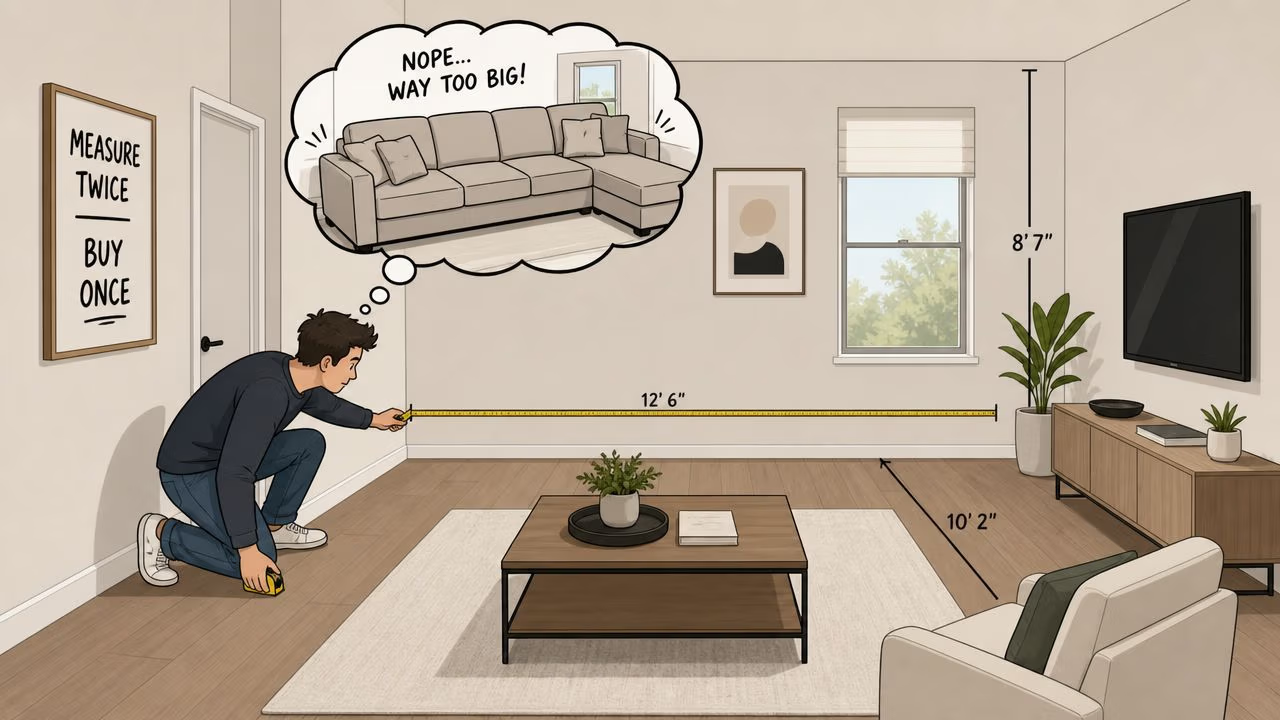
A rigorous measuring protocol that includes doorways and hallways has a 95% success rate in avoiding spatial incompatibility, according to this small-space measuring guidance. That's not a minor detail. It's the difference between a smooth delivery and a miserable afternoon.
What needs measuring
Measuring the room often stops there. That's not enough. Furniture has to travel from the truck to the final spot.
Use this checklist:
- Room dimensions: Measure length and width of the room.
- Wall space: Know how much usable wall is available once vents, windows, and radiators are considered.
- Entry points: Measure every doorway width and height the furniture must pass through.
- Hallways and stairs: Narrow passages and turns matter just as much as the front door.
- Corners and railings: Tight bends can stop a piece cold even when the doorway is technically wide enough.
For anyone who wants a practical walkthrough, BILTRITE has a helpful guide on how to measure furniture before delivery.
A simple measuring habit that saves headaches
Write the numbers down in one place. Keep them on the phone, in a note, or on paper in a wallet. Then bring them into the showroom.
Practical rule: Measure the path, not just the room.
That one habit changes the conversation. It lets the sales team rule out obvious problems fast and focus on pieces that have a real shot of working in the home.
What people miss most often
A few trouble spots come up again and again:
- Apartment building corners: Long sofas hate sharp turns.
- Older bungalow staircases: Bedroom furniture may fit the room but not the stairs.
- Condo elevators: Height and diagonal clearance matter.
- Low basement ceilings: Recliners and sectionals can become a wrestling match.
This is one of those old-school lessons that still wins every time. Good measuring isn't glamorous, but it makes everything after it easier.
The Secret of Scale and Proportion
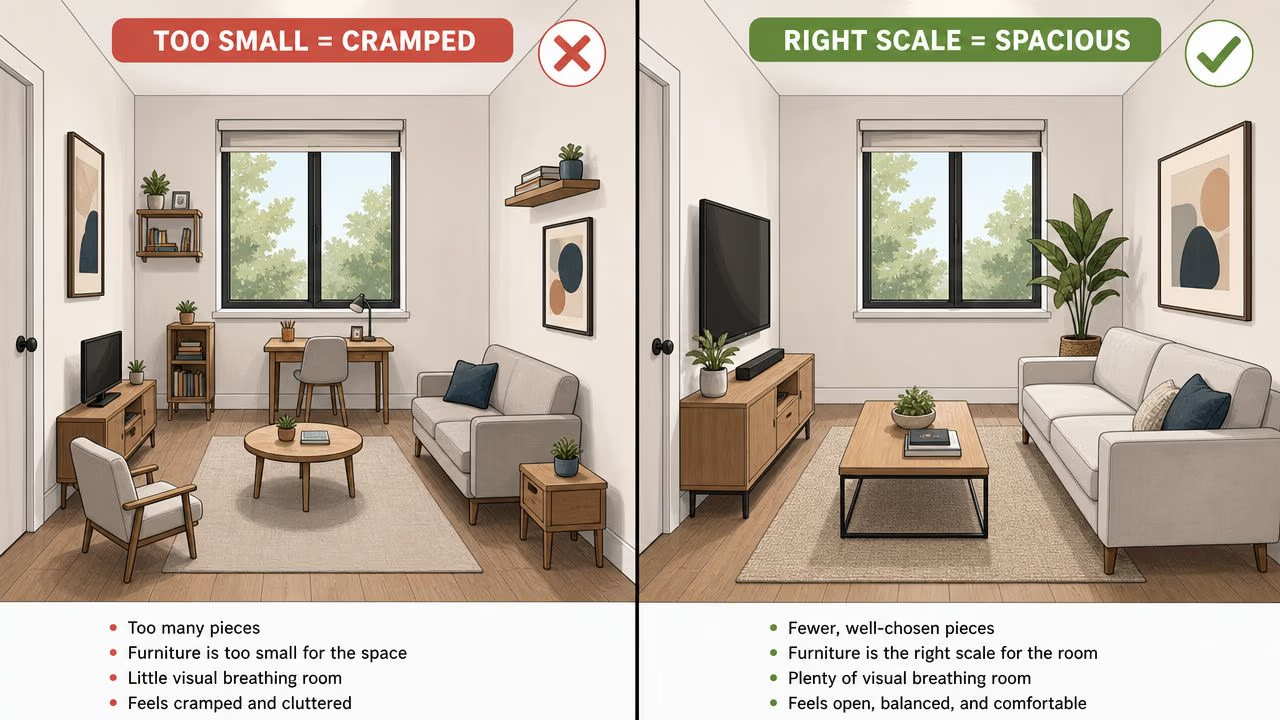
Tiny furniture is not the answer. That advice gets repeated constantly, and it steers people wrong.
Architects and designers have pushed back on that myth. Design guidance highlighted in this discussion of proportion over scale argues that well-proportioned furniture filling 30 to 40% of the floor area works better than automatically choosing the smallest pieces possible. That's the smarter rule.
Why tiny pieces backfire
A room full of undersized furniture often feels unsettled. The sofa looks skimpy. The coffee table looks lost. The chairs feel temporary. Instead of airy, the room ends up looking fussy and scattered.
Good small space modern furniture has presence without bulk. It fits the room, but it still looks intentional.
A Milwaukee condo living room, for example, may handle one well-scaled sofa and one clean-lined chair far better than a jumble of tiny seats. The room feels calmer because the eye can understand it quickly.
What to look for instead
BILTRITE often points shoppers toward these visual cues:
- Clean arms: Thick rolled arms eat up width fast.
- Open bases: Seeing some floor under the furniture keeps the room lighter.
- Simple silhouettes: Fewer visual interruptions make the room read larger.
- Rounded edges where needed: In tighter layouts, they ease traffic flow.
For more ideas in that direction, BILTRITE also shares practical tips on how to make a small room feel big.
A room doesn't need the smallest furniture. It needs the right-sized furniture.
A quick way to judge a piece on the showroom floor
Use a three-part test:
| Question | What a good answer sounds like |
|---|---|
| Does it fit the room? | It leaves usable floor and clear walking space. |
| Does it fit the eye? | It looks anchored, not shrunken or awkward. |
| Does it fit daily life? | People can sit, stretch, reach, and move naturally. |
That's the secret. Scale is physical. Proportion is visual. Small rooms need both.
Choose Your Multitasking Furniture Heroes
In a compact home, every piece should pull its weight. If a table only does one job, or a sofa creates delivery drama before it even reaches the living room, that piece had better be outstanding. Most of the time, it isn't.
That's why multifunction matters so much in small space modern furniture.

BILTRITE uses a distinct Come Apart sofa icon for furniture designed to fit tight apartment and senior living spaces, helping with easier delivery, as shown on BILTRITE's Milwaukee furniture store page. That's a practical local solution for homes where doorways and turns create real limits.
The pieces that earn their keep
Some categories make more sense in smaller homes:
- Storage ottomans: They hide blankets, games, or seasonal clutter while still working as a footrest or extra seat.
- Expandable dining tables: They stay modest day to day and open up when family comes over.
- Beds with built-in storage: They cut the need for extra case pieces.
- Nesting or compact accent tables: They appear when needed and disappear when they're not.
A lot of shoppers don't need more furniture. They need fewer pieces that do more.
Why delivery-friendly upholstery matters
This one gets overlooked until moving day. A beautiful sofa that can't make the turn into a third-floor apartment isn't useful. It's just expensive frustration.
That's where delivery-smart construction comes in. Pieces designed to come apart solve a real problem in older buildings, tighter hallways, and smaller homes. BILTRITE Furniture-Leather-Mattresses is one local option that carries come-apart sofas and sectionals alongside USA-made and Amish-made choices for compact spaces.
For households trying to narrow down the right mix, BILTRITE also offers ideas on choosing multi-functional furniture for modern homes.
A better way to shop for compact rooms
Ask these questions before saying yes:
- Where will hidden storage matter most? Living room, bedroom, or entry.
- Will the piece adapt when guests come over?
- Does it solve a delivery challenge?
- Can it replace another item already in the room?
That last question is the big one. In a small home, the strongest piece often replaces two weaker ones.
Add Your Personality with Finishes and Style
Once the layout works, the room gets to be fun. A compact home then stops feeling like a puzzle and starts feeling like home.
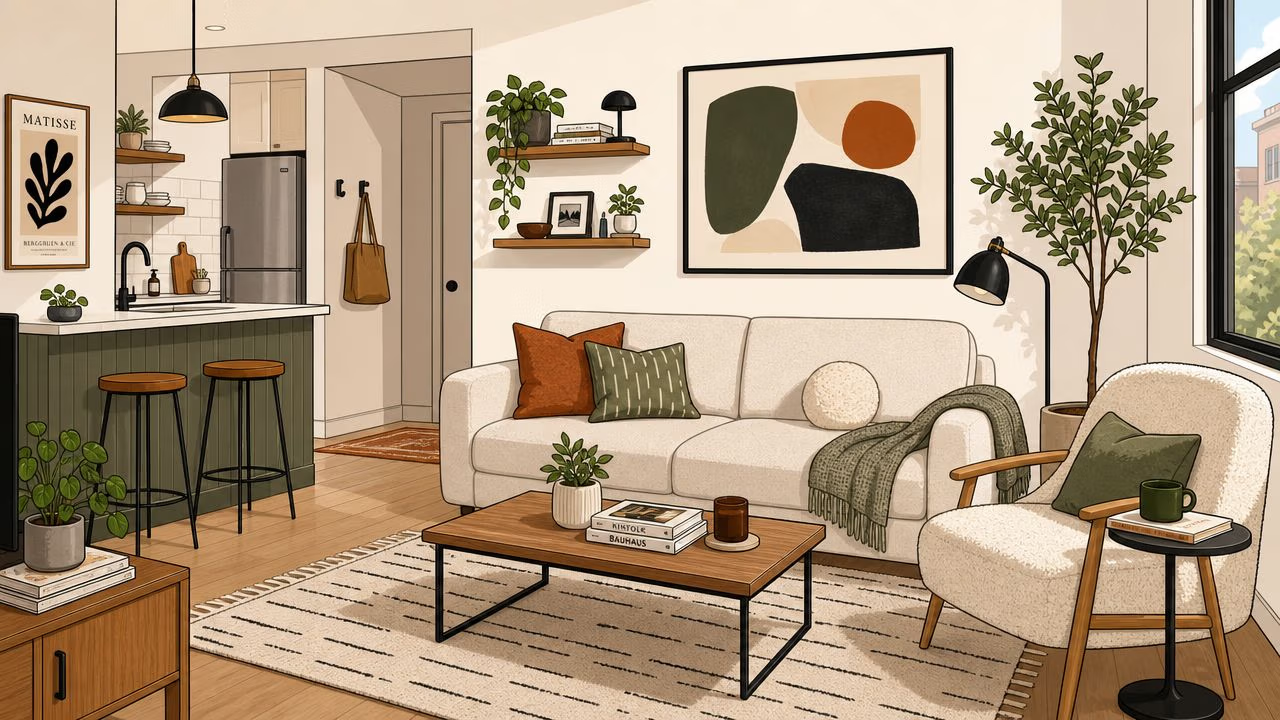
Style in smaller rooms depends on restraint and contrast. Too many heavy finishes can crowd the eye. Too many pale pieces can make the room feel flat. The goal is balance.
Finishes that help a room breathe
A few choices usually make a visible difference fast:
- Lighter upholstery: Cream, soft gray, taupe, and warm neutrals reflect light and keep larger pieces from feeling too heavy.
- Glass or reflective accents: A glass-top table or metallic lamp base bounces light around the room.
- Moderate wood tones: Lighter woods often keep things airy, while a deeper finish can ground the room when the silhouette stays clean.
- Mirrors with purpose: They add depth when placed to catch light or reflect a pleasing view.
The room doesn't need to match from corner to corner. It needs a clear point of view.
Why exposed legs help
Leggy furniture works because it exposes more floor. That visual opening can make a room feel less packed. Expert guidance notes that choosing leggy furniture can enhance spatial perception by up to 25% in controlled tests, as described earlier in the measuring and space-planning research. That's a styling move with real impact, not just a passing look.
Furniture with visible space underneath often feels lighter, even when the piece itself isn't small.
Modern design is a solution here. Cleaner lines, slimmer profiles, and raised bases usually read better in tighter homes than bulky shapes sitting flush to the floor.
How to add warmth without crowding the room
A compact room still needs character. The answer isn't more stuff. It's better contrast.
Try this mix:
- One rich wood piece: A well-proportioned solid wood chest, nightstand, or console can anchor the room.
- One soft texture: Upholstery, a woven rug, or a knit throw keeps modern lines from feeling cold.
- A small hit of color: Green, rust, blue, or black can sharpen the space without overwhelming it.
Shoppers who want to sort through looks in person can browse helpful inspiration on different furniture styles for the home. Seeing finishes side by side usually makes decisions much easier.
Why Shopping Local Makes the Difference
Reading furniture advice is useful. Sitting on the sofa is better.
That's especially true in smaller homes, where a few inches, a fabric choice, or the shape of an arm can change the whole result. Local shopping gives people a chance to test comfort, compare scale, and talk through delivery realities with someone who understands the kinds of homes found around Milwaukee.
What in-store guidance changes
An experienced showroom team can help with the details that photos don't show:
- Seat depth: Some sofas look compact but sit much larger than expected.
- Arm shape: Slim arms can free up room without giving up comfort.
- Wood finish and grain: Real solid wood has a different presence in person.
- Delivery practicality: A piece may suit the room but still need a smarter path into the home.
BILTRITE's store has been at 5430 W. Layton Ave. in Greenfield since 2006 and offers over 60 mattress models and 500+ mattresses in stock, according to this feature on the Greenfield showroom and Mattress Center. That broad selection matters because comfort isn't one-size-fits-all, and neither is small-space living.
Why local values still matter
BILTRITE doesn't sell online, and that says something important. The store experience matters. So does taking time with customers, showing construction transparently, and helping people compare options without pressure. The business is also proud to be closed on Sundays so families can be with families.
For readers who want to keep exploring before visiting, BILTRITE has more practical advice on furniture for small spaces.
This kind of shopping is slower in a good way. It gives people a chance to make a smart decision once, instead of making a rushed one twice.
Ready to find furniture that fits the way Milwaukee homes really live? Visit BILTRITE Furniture-Leather-Mattresses in Greenfield, walk the showroom, and talk with the team about small-scale seating, Amish-made dining, USA-made solid wood, and the right fit for every snug corner of the house.