A Complete Guide to the Parts of a Bed

A modern bed is a system of separate parts rather than a single piece of furniture: the mattress provides cushioning, the foundation or slatted base supports it, and the frame carries the overall load while often adding a headboard, footboard, rails, or storage. The choice of mattress construction has measurable consequences for expected service life. Sleep Foundation reports that traditional innerspring mattresses generally last about 5.5 to 6.5 years, while all-foam models average 6 to 7 years, hybrids 6.5 to 7.5 years, and latex mattresses 7.5 to 8.5 years Sleep Foundation.
Bed size is another measurable part of the buying decision, particularly in North America, where room dimensions and household habits strongly influence mattress demand. In the North American mattress market, queen-size models represented 47.61% of market share in 2025, making queen the leading size by a wide margin. The same market analysis identified innerspring products as the largest product category in 2025, with a 43.22% share, while foam products were forecast to expand at a 6.46% compound annual growth rate through 2031. These figures show why a showroom’s selection of queen mattresses North America mattress market report
How We Identified the Most Important Parts of a Bed
When defining the essential components of a bed, we focused on parts that directly affect structural integrity, mattress longevity, and sleep ergonomics. Our criteria for inclusion were:
- Structural Necessity: Does the part bear weight or connect frame components? (e.g., side rails, center support)
- Mattress Compatibility: Does the part affect warranty validity or sleep surface performance? (e.g., slat spacing, foundation height)
- User Interaction: Does the part impact how users enter, exit, or interact with the bed? (e.g., headboard, footboard)
We excluded decorative accessories like bed skirts, toss pillows, and blanket racks, as well as non-structural elements like mattress toppers. This approach ensures the guide answers the practical questions shoppers ask when buying or repairing beds.
Your Friendly Guide to Bed Components
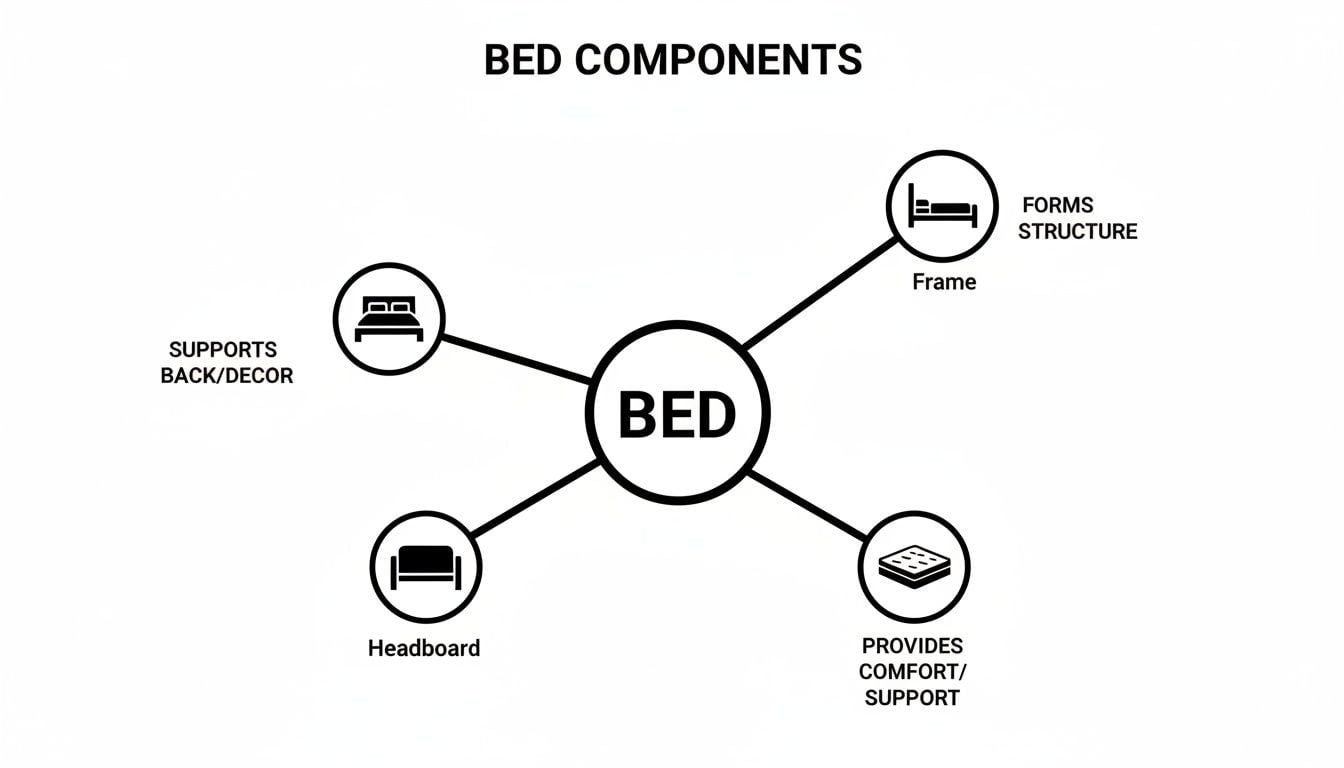
Understanding the anatomy of a bed helps you make smarter purchasing decisions and avoid costly mistakes like voiding a mattress warranty. Below is a scan-friendly breakdown of the core components that make up a complete bed system. For more details on the overall room design, including accessorizing the bed of your dreams, our guides can help tie everything together.
Structural vs. Decorative Parts
It’s important to distinguish between parts that hold the bed together and parts that define its style.
| Bed Part | Category | Primary Function |
|---|---|---|
| Side Rails | Structural | Connect headboard/footboard; carry slat weight. |
| Center Support Beam | Structural | Prevents sagging in Queen+ beds; required for warranty. |
| Slats/Foundation | Support | Distributes mattress weight; enables airflow. |
| Headboard | Decorative/Structural | Anchors frame; provides back support for sitting. |
| Footboard | Decorative | Completes frame aesthetic; prevents bedding slip. |
| Mattress | Comfort | Primary sleep surface; determines ergonomics. |
This distinction clarifies why a flashy upholstered headboard won’t save a bed with weak center support, while a simple wooden frame with sturdy slats can support a premium hybrid mattress for decades.
The Bed Frame: Side Rails, Center Support, and Hardware
The bed frame is the skeleton of the system. While headboards and footboards catch the eye, the side rails and center support do the heavy lifting. If these components fail, the mattress sags, the frame squeaks, and the warranty is often voided. For a deeper look at durability, see our research on the strongest bed frame materials available.
Side Rails and Cross Rails
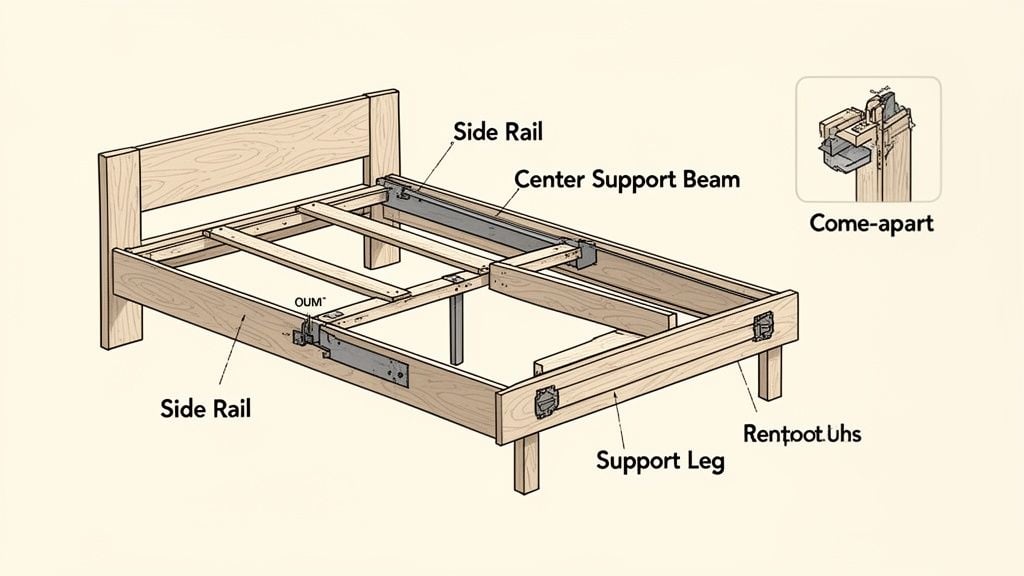
Side rails run the length of the bed, connecting the headboard to the footboard. In larger beds (Queen, King, California King), these rails are often split into two halves that meet in the middle. Cross rails connect the side rails to the center support beam, adding lateral stability and preventing the frame from racking side-to-side.
- Material Matters: Solid wood or heavy-gauge steel rails resist warping and bending. Particleboard rails, common in flat-pack imports, often crack under dynamic load.
- Connection Points: Look for reinforced corner brackets or metal joiners. Screws alone in wood rails tend to loosen over time.
The Center Support Beam and Legs
The center support beam (also called a center leg or mid-support) is the most critical structural component for beds Queen size and larger. It runs down the middle of the frame, anchored to the side rails and supported by one or more legs that touch the floor.
Why it’s non-negotiable:
- Sag Prevention: Without it, the distance between side rails is too great for slats to bridge without bending. This creates a dip in the center of the mattress.
- Warranty Protection: Nearly all major mattress manufacturers require a center support beam for Queen/King sizes. Absence of this beam voids the warranty.
- Stability: It eliminates the "bounce" or flex felt when getting in and out of bed.
At BILTRITE, we emphasize frames with adjustable center support legs that fit uneven floors—a common issue in older Milwaukee homes. This adjustability ensures the leg is always bearing weight, not just touching the ground.
The Support System: Slats, Foundations, and Box Springs
The support system sits between the frame and the mattress. Its job is to distribute weight evenly and allow airflow. Choosing the wrong support type can damage your mattress or compromise comfort. For more on whether you need a specific foundation, read our guide on whether to learn more about if you need a box spring for your mattress.
Slats vs. Foundation vs. Box Spring
| Component | Construction | Best For | Airflow | Notes |
|---|---|---|---|---|
| Wood Slats | Solid hardwood planks | Hybrids, Latex, Foam | High | Spacing must be ≤ 3 inches for foam. |
| Metal Slats | Spring steel wires | Innerspring, Hybrids | Medium | Often pre-installed in metal frames. |
| Platform Foundation | Solid wood or mesh | All types (esp. Foam) | Low | No box spring needed; low profile. |
| Box Spring | Wooden frame + coils | Traditional Innerspring | Low | Adds height; absorbs shock. |
Decision Guide: What Supports Your Mattress?
- Memory Foam/Latex: Requires a solid surface or closely spaced slats (≤ 3 inches apart). Wide-gap slats allow foam to sag between them, creating pressure points and potentially voiding the warranty.
- Hybrid: Works well with standard slats (≤ 4 inches apart) or a platform foundation. Ensure the slats are rigid, not flexible, to support the coil unit.
- Innerspring: Traditionally paired with a box spring. However, many modern innersprings perform equally well on slats or foundations. Check the manufacturer’s guidelines.
- Platform Beds: These frames have built-in slats or a solid base, eliminating the need for a separate box spring or foundation. This is a cost-effective and space-saving choice.
After testing various support systems, the standout feature is always slat spacing. A 2-inch gap is the sweet spot for foam compatibility, while 3-inch gaps are acceptable for hybrids. Anything wider risks warranty issues.
Bed Parts Names With Pictures
Visual identification is key to understanding bed anatomy. Below are labeled diagrams of the most common bed types and frame components.
- Panel Bed: Simple, clean lines with a low headboard/footboard. Ideal for small spaces.
- Sleigh Bed: Curved headboard and footboard. Classic style, often in solid wood.
- Upholstered Bed: Fabric or leather-covered frame. Adds softness and sound dampening.
The Headboard and Footboard
Let’s start with the parts of a bed that make the biggest first impression: the headboard and the footboard. These pieces do so much more than just frame your mattress—they really set the style for your entire bedroom. A headboard gives the bed a visual anchor and a comfortable spot to lean against with a good book, while a footboard adds a classic, finished look to the room.
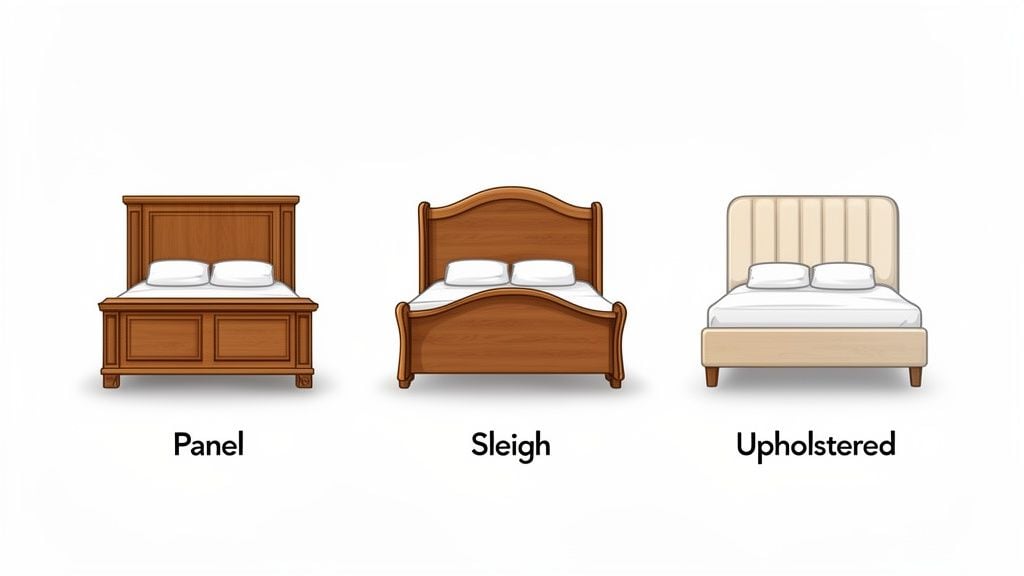
The great thing is, you can find a style that fits your family’s unique taste. Whether you prefer the clean, simple lines of a panel bed, the elegant curves of a sleigh bed, or the soft, cozy feel of an upholstered one, these pieces are what give a bed its personality. Since 1928, our family at BILTRITE has seen how the right choice can completely transform a space.
Materials and Quality That Last
We’re huge fans of real, solid wood. So many of our favorite pieces are USA and Amish-made, which means they’re built with incredible care and are meant to last. A solid wood headboard isn't just beautiful; it's a heavy-duty piece that won’t start to wobble or squeak after a few years. Think of it as an investment that will stand strong for your family for a long, long time.
At BILTRITE, we believe quality construction is everything. When you visit our showroom, you can actually feel the difference in a well-made headboard. It’s sturdy, substantial, and built with pride—something you just can't experience online.
Choosing the right size is also key. A tall, grand headboard can make a stunning statement in a room with high ceilings. On the other hand, a lower-profile headboard—or even skipping the footboard altogether—can make a smaller bedroom feel much more open and spacious. If you want to dive deeper, you can explore the different types of beds we carry to see how these styles come to life.
Ultimately, the headboard and footboard are where function meets personal expression. Come on down to our Greenfield store and chat with our team! With over 400 years of combined experience, we can help you find the pieces that not only look great but fit the way you live.
The Heart of Comfort: The Mattress
Now, let's talk about the part of a bed everyone thinks of first, the mattress! It provides all the comfort, support, and sweet dreams. But with so many choices out there, picking the right one can feel like a real puzzle. A little guidance can make that choice much easier.
In our huge mattress center, we've got something for every sleeper, every budget, and every home in the Metro Milwaukee area. From the bouncy feel of a traditional innerspring to the contouring hug of memory foam, our friendly team can walk you through all the options.
Exploring the Different Types
Finding the right mattress is a personal journey, and what works for your neighbor might not work for you. That’s why we believe in having plenty of options to try out in person. Here are the main types you'll find when you visit us:
- Innerspring: The classic choice! These mattresses use a system of steel coils for support, giving them that familiar responsive and bouncy feel. They're also great for breathability, which helps keep you cool at night.
- Memory Foam: Known for its amazing pressure relief, memory foam molds to your body's shape. This makes it a fantastic option for side sleepers or anyone who needs extra cushioning for their joints.
- Latex: Made from the sap of rubber trees, latex is both supportive and responsive. It has a bit more bounce than memory foam and is naturally hypoallergenic and durable, making it a great long-term investment.
- Hybrid: Can't decide? A hybrid mattress combines the best of both worlds, layering pressure-relieving foam over a supportive coil system. You get the bounce of an innerspring with the contouring comfort of foam.
The BILTRITE Difference: Two-Sided Mattresses
One of our absolute favorite things to talk about is our specialty: two-sided, flip-able mattresses. Unlike most mattresses sold today, which are only one-sided, ours are designed to be flipped and rotated regularly.
This simple action distributes the wear and tear evenly, which can nearly double the lifespan of your mattress! It's an incredible value that helps your hard-earned money go further.
At BILTRITE, we believe a mattress is a long-term investment in your family's well-being. That’s why we’re so passionate about two-sided mattresses—they’re built for durability and offer amazing value year after year.
A great mattress is an investment in your health, and the demand for durable, USA-made options has never been higher. At BILTRITE's Mattress Center, we stock over 60 models with 500+ mattresses ready to go. Since 1928, we've proudly served Metro Milwaukee by focusing on quality that lasts.
From small-scale mattresses that are a great fit for apartments to heavy-duty options built for the whole family, we've got you covered. If you want a head start on your search, check out our guide on how to choose the right mattress. Then, come on down to our showroom and test them out for yourself.
Specialty Beds and Optional Parts
Now that we’ve walked through the basic anatomy of a bed, let's get to the fun part: all the specialty options that can truly transform a bedroom. Every family is different, and so is every home. That's why at BILTRITE, we make it a point to carry a massive selection of specialty beds and add-on pieces to fit your unique style and needs.
One of the most popular choices in modern homes is the platform bed. You can think of it as a smart, all-in-one sleep solution. It combines the frame and mattress support into a single, integrated unit, which means you don’t need a separate box spring or foundation. They usually sit a bit lower to the ground and have that clean, minimalist look that works so well in contemporary spaces.
Creating a Statement Piece
If you're aiming to add a dose of drama and elegance to your bedroom, nothing makes an impact quite like a canopy bed or a four-poster bed.
- Four-Poster Beds: These beds feature tall, decorative posts at each of the four corners. They immediately draw your eyes upward, creating a wonderful sense of height and grandeur in the room. Many of our USA and Amish-made solid wood versions are heirloom-quality works of art.
- Canopy Beds: A canopy bed takes the four-poster design a step further by connecting the posts at the top. This creates a frame you can leave open for an architectural look or drape with fabric for a cozy, romantic, and more enclosed feel.
For families with little ones, safety is always priority number one. guard rails are an essential part of any bunk bed or loft bed setup. These sturdy rails are securely attached to the side of the top bunk to prevent accidental tumbles, giving parents and kids alike some much-needed peace of mind. We take safety very seriously, and our team can point you toward heavy-duty options built to keep your children secure.
Fun Fact: A bed skirt, sometimes called a dust ruffle, isn’t just for show! It’s a clever piece that hides any under-bed storage and, just as importantly, helps keep dust bunnies from taking over underneath your bed.
Whether you're a style-savvy decorator searching for that grand canopy bed or a family needing practical and safe solutions for a kids' room, we have something for everyone. Come on down to our Greenfield showroom, and we'll help you find all the right pieces to build the bed you've been dreaming of.
Now that you're armed with all this knowledge about the nuts and bolts of a good bed, it’s time for the fun part—seeing it all come together in person! Reading about quality is one thing, but feeling the solid wood, testing a heavy-duty frame, and lying down on the right mattress is what really makes the difference.
Because we don’t sell online, we’d love for you to come down to our showroom here in Greenfield. It’s the only way to appreciate the craftsmanship. You can touch the smooth finish on an Amish-made headboard, see how our heavy-duty rails are built, and find a mattress that feels just right.
Let Our Family Help Yours
At BILTRITE, we’re all about helping our neighbors find furniture that’s built to last for generations. Our friendly, non-commissioned team is here to help you, bringing over 400 years of combined experience to the table. We enjoy what we do.
We can answer every question you have and help you piece together a wonderful bed for your home, your family, and your budget. As a 4th generation, family-owned business, we’ve been a proud part of the Metro Milwaukee community since 1928. For us, it’s always been about building relationships, not just making a sale.
We’d be thrilled to have you stop by and say hi! Visiting our showroom is the best way to see the craftsmanship and care that goes into every piece we offer.
We're here to guide you every step of the way, without any of the high-pressure sales tactics you'll find elsewhere. Come on in and experience the BILTRITE difference for yourself!
Frequently Asked Questions About Bed Parts
We get a lot of great questions about the different parts of a bed from our friends and neighbors here in Metro Milwaukee. Our family has been helping people find quality furniture since 1928, so we’ve heard just about everything! We're always happy to share what we know.
Here are a few of the most common questions our team answers right here in our Greenfield showroom.
What Are the Parts of a Bed Called?
The main parts of a bed are:
- Headboard: The vertical panel at the head of the bed.
- Footboard: The vertical panel at the foot of the bed.
- Side Rails: The horizontal beams connecting the headboard and footboard.
- Center Support Beam: The mid-frame beam that prevents sagging (required for Queen+ beds).
- Slats/Foundation: The lattice or solid surface that holds the mattress.
- Mattress: The primary sleep surface.
- Legs: The supports that raise the frame off the floor.
Knowing these names helps you communicate clearly with sales staff and understand warranty requirements.
What Is the Middle Part of a Bed Called?
The middle part of a bed is called the center support beam (or center leg). It runs longitudinally down the center of the frame and is supported by one or more legs that touch the floor. This component is critical for Queen, King, and California King beds because it prevents the side rails from bending under the mattress weight. Without it, the mattress will sag in the middle, leading to discomfort and potential warranty voidance.
Do I Need a Box Spring With Every Bed?
That’s a fantastic question, and the answer is: not anymore! While traditional beds almost always used a box spring, many modern bed frames—especially platform beds and beds with strong, solid slat systems—don't require one at all.
What really matters is making sure your mattress has the right support, which is important for comfort and for keeping your mattress warranty valid. Our team can help you figure out a great combination for your specific mattress, ensuring you get the best sleep possible.
What Is the Difference Between a Bed Frame and a Bedstead?
This is a common point of confusion, but it’s pretty simple once you break it down. A bed frame typically refers to the basic metal or wood structure that holds up your mattress and its foundation. Think of it as the essential chassis.
A bedstead, on the other hand, is the whole package! It’s a more complete piece of furniture that includes the frame, headboard, footboard, and side rails, all designed to work together as a single, stylish unit. At BILTRITE, we have a huge selection of both, from simple, heavy-duty frames to beautiful USA and Amish-made bedsteads.
We believe in finding what’s right for your family. Whether you need a simple, sturdy frame or a complete bedstead to be the centerpiece of your room, we’re here to help you find it without any sales pressure.
How Important Are Center Support Legs?
They are absolutely, positively essential, especially for any bed that’s Queen size or larger! We really can't stress this enough. Center support legs prevent the mattress and foundation from sagging in the middle over time, which is one of the biggest reasons mattresses wear out prematurely.
In fact, most mattress warranties for Queen, King, and California King sizes are automatically voided without proper center support. That's why we’re so passionate about our heavy-duty bed frames that have strong center supports built right in. It’s a small detail that makes a huge difference in protecting your investment for years to come.
At BILTRITE Furniture-Leather-Mattresses, our family is dedicated to helping you find furniture and mattress solutions that last. Come visit our showroom in Greenfield to see our quality pieces for yourself!
Learn more about our selection at https://www.biltritefurniture.com.
| Bed Part | Primary Function | BILTRITE Specialty Focus |
|---|---|---|
| Frame | Provides the main structural support for the entire bed. | Heavy-duty steel and solid wood from USA/Amish builders. |
| Headboard | Offers back support for sitting up and adds a decorative element. | Solid wood craftsmanship; custom options for style and function. |
| Footboard | Sits at the foot of the bed, providing a finished look. | Matching solid wood designs; low-profile options available. |
| Rails | Connect the headboard and footboard, holding the mattress support. | Strong steel or thick solid wood for maximum stability. |
| Mattress Support | Holds the mattress; includes slats, foundations, or platform surfaces. | Robust slat systems and true box springs for two-sided mattresses. |
| Mattress | Delivers comfort and ergonomic support for sleeping. | Heavy-duty, two-sided (flippable) mattresses for longer life. |