What Is a Chaise Couch and How to Choose the Right One


A chaise couch is a sofa or sectional with an extended reclining seat section designed for stretching out, while a standalone chaise lounge is a separate reclining chair. Common chaise sections measure about 60 to 72 inches long, so the difference affects both comfort and room planning.
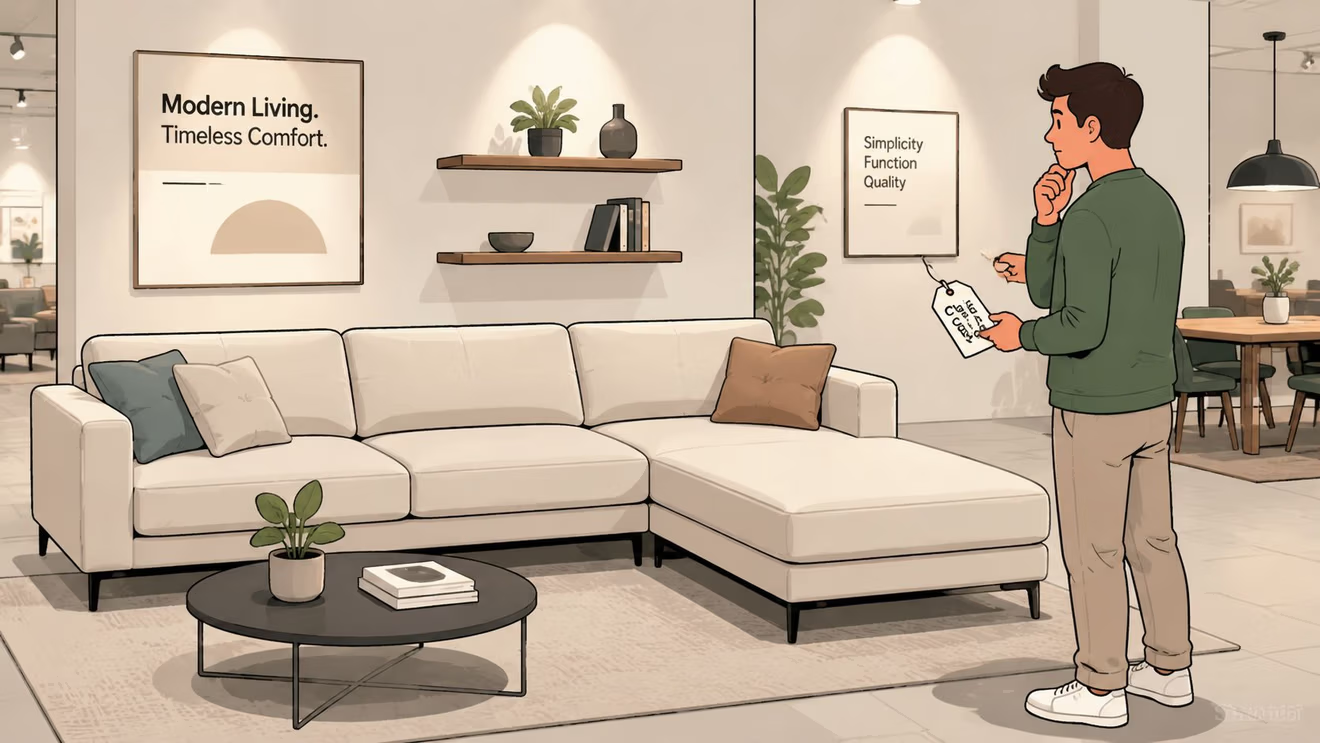
A shopper might see “chaise couch” on a showroom tag and wonder whether it means a long chair, a sectional, or a sofa with an ottoman pushed against one end. The confusion is understandable. Furniture terminology changes across regions, retailers, and product lines, but the physical differences matter when a piece needs to fit a living room, pass through a doorway, or leave enough space for family traffic.
What Is a Chaise Couch and Why It Matters
A chaise couch is generally a sofa with an integrated, extended seat section that supports reclining. The main sofa provides shared seating, while the longer section gives one person room to stretch out without adding a separate recliner or ottoman. Unlike a freestanding chaise lounge, the chaise portion is connected to the sofa and forms one coordinated furniture piece.
The traditional term is chaise longue, which means “long chair.” Authoritative references define it as a “long seat for reclining on” or a “long reclining chair.” The form developed in the 18th century, influenced by earlier furniture such as the late-17th-century daybed and the bergère armchair, with its defining feature being an extended seat that projects beyond the front of the arms. Britannica's history of the chaise longue also notes that the phrase entered English in the late 1700s as “chaise lounge,” a familiar spelling shaped by cultural borrowing and everyday pronunciation.
Why shoppers notice the difference
A chaise couch can suit a family movie room, an open-concept living area, or a smaller apartment where a separate sofa and footstool would consume more usable floor space. It creates a natural lounging zone while keeping the rest of the sofa available for conversation. That combination explains why the style appears so often in media spaces and casual living rooms.
The distinction also affects delivery. A fixed chaise may be one large frame, while a modular design may arrive in separate sections. An ottoman-based arrangement can look similar in a photograph but behave very differently in a room because the ottoman may move, separate, or leave a gap.
Before choosing upholstery or color, shoppers should confirm whether the product has a built-in chaise, a reversible chaise, or a separate ottoman. BILTRITE's ultimate sofa buying guide can help organize those broader sofa decisions, from comfort preferences to construction details.
Chaise Couch vs Chaise Lounge vs Sectional vs Daybed
These four terms describe related but different furniture formats. A chaise couch combines a sofa with a reclining extension. A chaise lounge is usually a freestanding upholstered seat for one person. A sectional is a multi-piece seating system, and a daybed is designed to function as both seating and a sleeping surface.
| Feature | Chaise Couch | Chaise Lounge | Sectional | Daybed |
|---|---|---|---|---|
| Basic structure | Sofa with an integrated extended seat | Freestanding reclining chair | Multiple connected or movable seating pieces | Bed-like frame used for sitting and sleeping |
| Typical use | Shared seating plus individual lounging | Reading, resting, or reclining alone | Group seating and flexible room layouts | Guest sleeping, studio living, or daytime seating |
| Seating pattern | Several people on the sofa, one person stretched out | One person | Varies by configuration | One or more people sitting along the frame |
| Room example | Family movie night | Reading corner or sunroom | Large basement hangout | Guest room or studio apartment |
| Main planning concern | Chaise direction and extended footprint | Standalone placement | Total configuration and module positions | Mattress, bedding, and side clearance |
A chaise lounge typically has upholstery, a back, and one, two, or no arms. It's often described as a chair-and-foot-stool combination, but its long seat and reclining purpose separate it from an ordinary armchair. The chaise lounge dimensions guide provides useful context for shoppers comparing a single lounge chair with a sofa-based chaise.
A sectional may include a chaise, but it doesn't have to. Some sectionals use a corner wedge, armless chair, loveseat, or recliner module instead. A modular sectional can be rearranged, while a fixed chaise couch usually has a predetermined left or right orientation.
A daybed belongs in a different category. It normally has a bed-like platform, back, and side structure, and it's intended to support sleeping as well as sitting. Calling a chaise couch a daybed can lead to incorrect expectations about mattress dimensions, bedding, and overnight comfort.
Practical rule: A connected reclining extension is a chaise couch feature. A movable padded piece placed beside a sofa is an ottoman setup, even if the finished arrangement looks similar.
How to Measure Your Space for a Chaise Couch
Chaise couches need more careful measuring than standard sofas because their footprints aren't symmetrical. The sofa may fit along a wall while the extended section blocks a pathway, door swing, radiator, vent, or nearby chair.
Start with the room, then the route
First, measure the room's length and width. Next, measure the wall where the sofa will sit and mark the area occupied by nearby tables, cabinets, lamps, and media furniture. Independent sectional guides commonly place the chaise portion around 60 to 72 inches long, while sectional depth often falls around 35 to 42 inches. Wayfair's sectional measuring guide explains why the chaise module often determines whether the furniture fits through the home.
Second, measure the delivery path. Record doorway widths, hallway turns, stairwell clearances, elevator openings where relevant, and the distance between the entry door and the intended room. Older Milwaukee-area homes can have compact doorways, narrow halls, and sharp stairwell turns that make a large one-piece frame difficult to maneuver.
Third, confirm the product's full dimensions, not just its advertised sofa length. Manufacturer specifications show chaise seat depths around 48 to 53 inches and overall chaise section depths around 60 to 74 inches in real products. A chaise sectional specification sheet illustrates how much deeper a reclining section can be than an ordinary seat.
Mark the footprint and choose the side
Use painter's tape to outline the sofa and chaise directly on the floor. Leave at least 18 inches around a coffee table for basic passage, and plan for 30 to 36 inches along the main traffic route. Those clearance figures come from the requested room-planning framework, not the cited measurement guides, so they should be treated as practical design targets rather than universal rules.
For orientation, stand facing the wall where the sofa's back will sit. A left-arm-facing, or LAF, chaise has the arm on the viewer's left in that position. A right-arm-facing, or RAF, chaise has the arm on the viewer's right. Check which side keeps the chaise away from the primary walkway and allows doors, vents, and windows to operate normally.
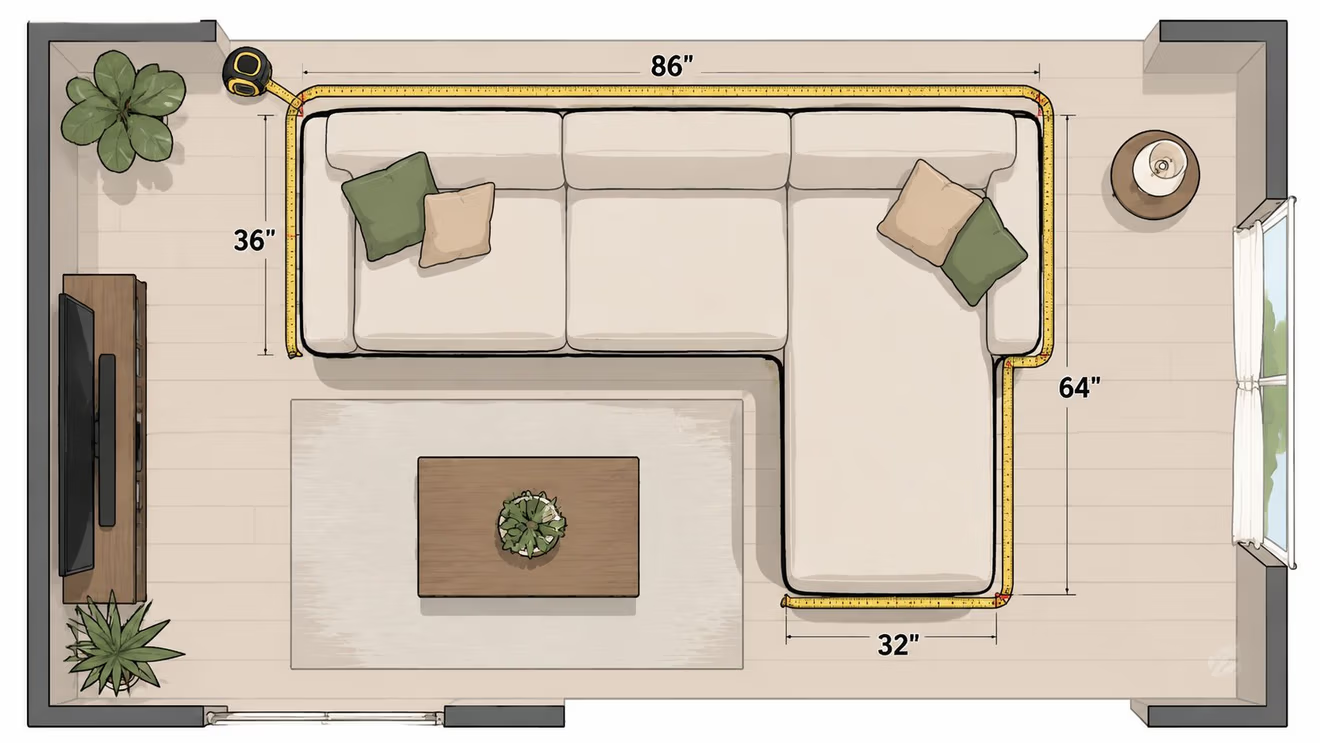
For additional reference, BILTRITE's guide to sofa dimensions in inches can help shoppers compare the chaise footprint with the rest of the room.
Popular Chaise Couch Styles and Configurations
The most familiar chaise couch is an L-shaped sectional, with a standard sofa forming one side and an extended chaise forming the other. This layout works well when the chaise can occupy a corner without cutting across the room's main path. In a long, narrow living room, the extended side may need to run along the shorter wall or sit opposite the entry route.
A modular chaise sectional uses separate pieces that can be repositioned. That flexibility can help households that move furniture for gatherings, change apartments, or want to adjust the seating arrangement over time. A reversible chaise offers a similar advantage by allowing the extended section to switch from left to right, although the exact mechanism and moving process vary by design.
The construction also deserves attention:
- Attached chaise: The chaise connects to the sectional frame and creates a stable, unified silhouette. It usually looks polished but offers less rearranging freedom.
- Floating chaise: A separate ottoman-style piece aligns with the sofa to create a lounge surface. It can move when the room needs an open center or extra seating.
- Sleeper chaise: The chaise may include storage or support a larger sleeping conversion, but shoppers should inspect the mechanism and clearance before choosing it.
- Armless chaise: Removing an arm can preserve usable lounging width and make the piece feel less visually heavy.
Room-shape insight: A fixed chaise often works best when the floor plan already supports its direction. A movable or reversible design makes more sense when furniture placement needs to change.
Style changes the room's visual message as well. Mid-century modern versions often use tapered legs and clean lines. Traditional designs may feature rolled arms and fuller cushioning. Contemporary models often sit lower and use broad, simple silhouettes. A long, narrow room may benefit from a visually lighter frame, while an open-concept area can handle a substantial chaise that helps define the living zone.
Households that entertain frequently may prefer a configuration with more upright seats and a chaise that doesn't interrupt conversation. A solo lounger may prioritize a deep, generously padded extension, even if that choice reduces flexibility around the coffee table. BILTRITE's overview of furniture styles can help connect the chaise shape with the rest of the room's furnishings.
Pros and Cons of Owning a Chaise Couch
A chaise couch earns its place by combining two jobs. It provides communal sofa seating and creates a built-in spot for stretching out, reading, napping, or watching television. That can be more efficient than placing a separate sofa, ottoman, and recliner in the same living area.
The extended section also gives an open floor plan a visual anchor. Instead of allowing furniture to float without definition, the chaise can establish where the living room begins and where another zone, such as a dining area, starts. Families may appreciate that one person can recline without taking the only full sofa out of commission.
The trade-offs are practical:
- Larger footprint: The chaise projects into the room and may overwhelm a compact space.
- Delivery difficulty: A deep or fixed frame can be challenging in narrow hallways and stairwells.
- Uneven wear: The long cushion often receives concentrated use from the person who lounges there most.
- Limited rearranging: A fixed left or right orientation can restrict future room layouts.
- Traffic conflicts: The chaise can block a walkway even when the sofa itself fits the wall.
Pet owners should consider hair, claws, and access beneath the frame. A household that hosts often may prefer movable pieces that open the room for guests. A family that values everyday lounging may accept the larger footprint in exchange for a dedicated comfort zone.
A simple decision test helps. Choose a chaise couch when the household regularly uses a reclining area, has a clear location for the extended section, and can verify the delivery route. Consider a standard sofa with a movable ottoman when the room changes often or when flexibility matters more than a fixed silhouette.
Buying Tips for Milwaukee Area Shoppers
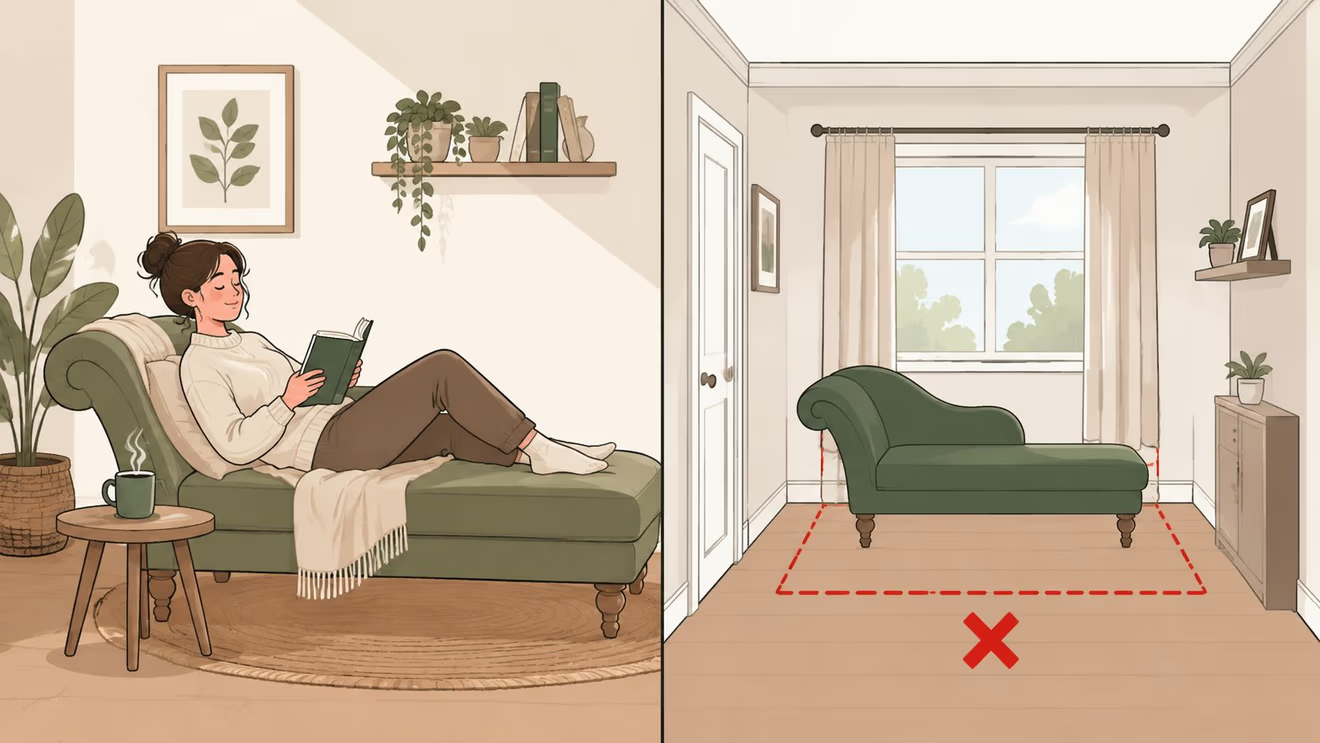
A showroom visit gives shoppers information that a product page cannot fully provide. Seat depth, cushion firmness, arm height, back support, and the point where the chaise begins all affect comfort, and bodies don't experience those details the same way. Sitting upright, leaning back, and lying across the chaise can reveal whether the design supports the household's actual habits.
USA-made and Amish-made furniture can offer options for shoppers who care about American craftsmanship, solid hardwood construction, and long-term repairability. Depending on the manufacturer and collection, shoppers may be able to select fabric, leather, cushion feel, wood finish, and chaise orientation. The construction still needs to be evaluated piece by piece, so questions about joinery, frame materials, suspension, and warranty coverage are worthwhile.
Delivery questions deserve early attention
Milwaukee homes vary widely. Older properties may have tight stairwells, narrow halls, compact doorways, and turns that make a deep sectional difficult to deliver in one piece. A modular design, removable chaise, or come-apart frame may reduce that risk, but the showroom and delivery team should confirm the details before the order is finalized.
Shoppers should ask:
- What separates: Can the sofa, arms, back, or chaise detach?
- What is the lead time: How long will a custom fabric or Amish-made order take?
- What does delivery include: Does the service place the piece in the room and remove packaging?
- What is covered: Does the warranty address the frame, suspension, cushions, or upholstery?
- What happens after delivery: Who handles questions about adjustments, repairs, or care?
BILTRITE Furniture-Leather-Mattresses is a fourth-generation, family-owned showroom serving Greenfield and Metro Milwaukee since 1928. Its selection includes affordable, better-quality furniture, USA-made and Amish-made options, small-scale pieces for apartments, heavy-duty furniture for families, come-apart sofas and sectionals, and a mattress department with over 60 models. The store's sales associates have over 400 years of combined experience, giving shoppers a local place to test dimensions and discuss delivery realities without pressure.
How to Care for Your Chaise Couch
The chaise usually receives more concentrated lounging than the upright sofa seats, so care should focus on that extended cushion and its supporting frame. Follow the upholstery manufacturer's cleaning code first. Performance fabrics may tolerate routine spot cleaning, linen blends often need gentler handling, and top-grain leather should be cleaned with products made for finished leather. Household bleach, harsh solvents, and unapproved abrasive cleaners can damage fibers, color, or protective finishes.
Vacuum pet hair and crumbs from the seat, seams, and space beneath removable cushions. Blot spills promptly instead of rubbing them deeper into the fabric. Keep the chaise away from strong direct sunlight where possible, especially near large bay windows or sunrooms, because prolonged exposure can fade upholstery.
Protect the cushions and frame
If the chaise cushion is reversible, rotate or flip it according to the manufacturer's instructions. Some cushions have a designated top or fixed construction and shouldn't be turned over. Rearranging removable back pillows can also distribute compression, while throws and washable cushion covers help protect frequently used areas.
Avoid dropping heavily onto the chaise edge or using the arm as a step. Repeated concentrated force can stress the frame and legs, particularly when the chaise projects far from the main sofa. Check loose legs, shifting cushions, or new creaking sounds early rather than waiting for a small issue to become structural damage.
A seasonal deep clean can refresh the upholstery, while professional service makes sense for set-in stains, delicate fabrics, extensive pet buildup, or leather conditioning beyond routine care. More ideas for refreshing a room appear in these interior refresh suggestions.
BILTRITE Furniture-Leather-Mattresses offers chaise sofas and sectional options, including configurations designed for different room sizes and delivery challenges. Visit BILTRITE Furniture-Leather-Mattresses in Greenfield to sit on the chaise, compare orientations and construction, and speak with the local team about finding a comfortable fit for a Metro Milwaukee home.